-
-

Vayu Cover Image
-
Hero Story
-
UI Elements
-
The Main Issue at Hand
-

Color Scheme
-
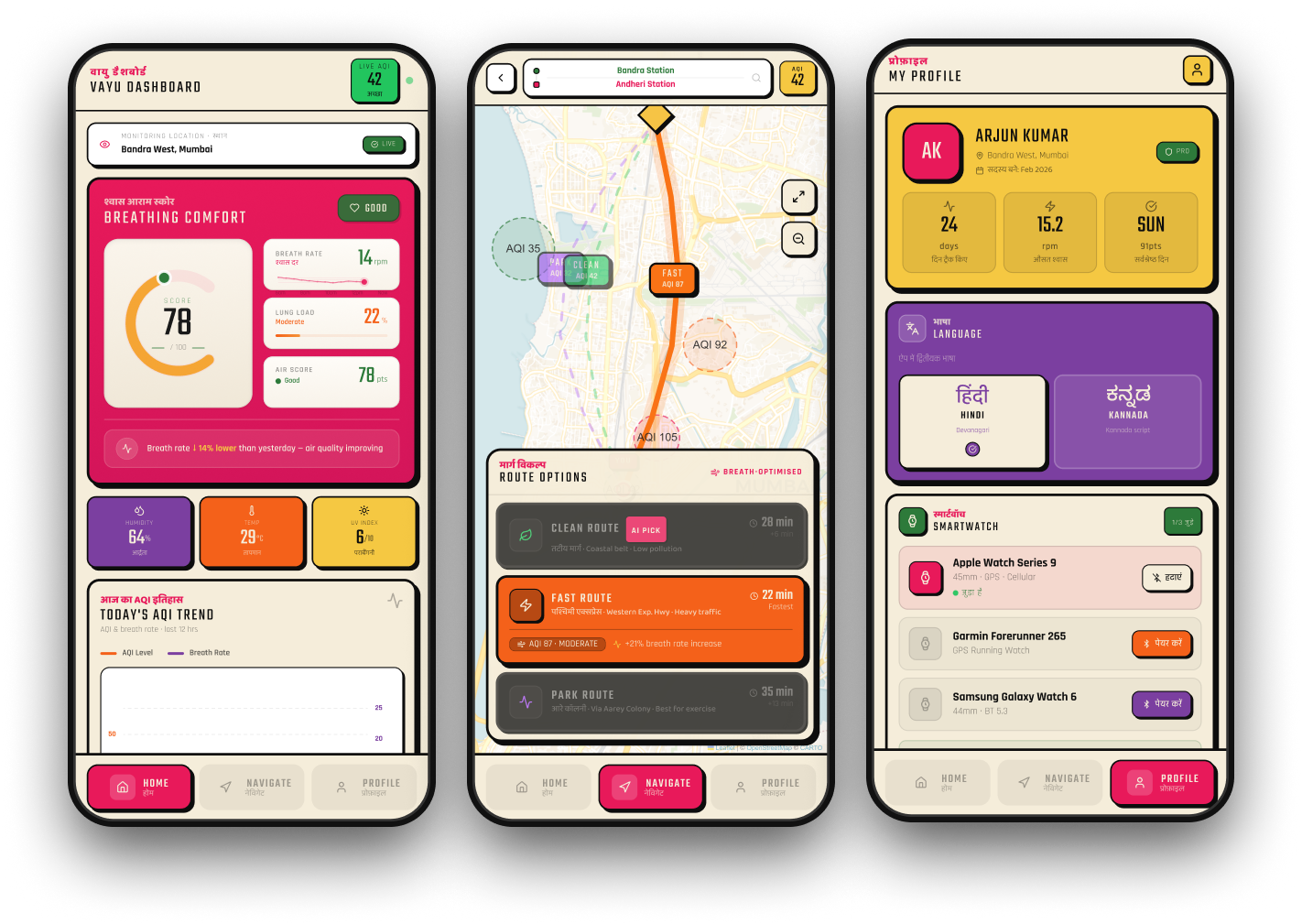
Mobile App Screens
-
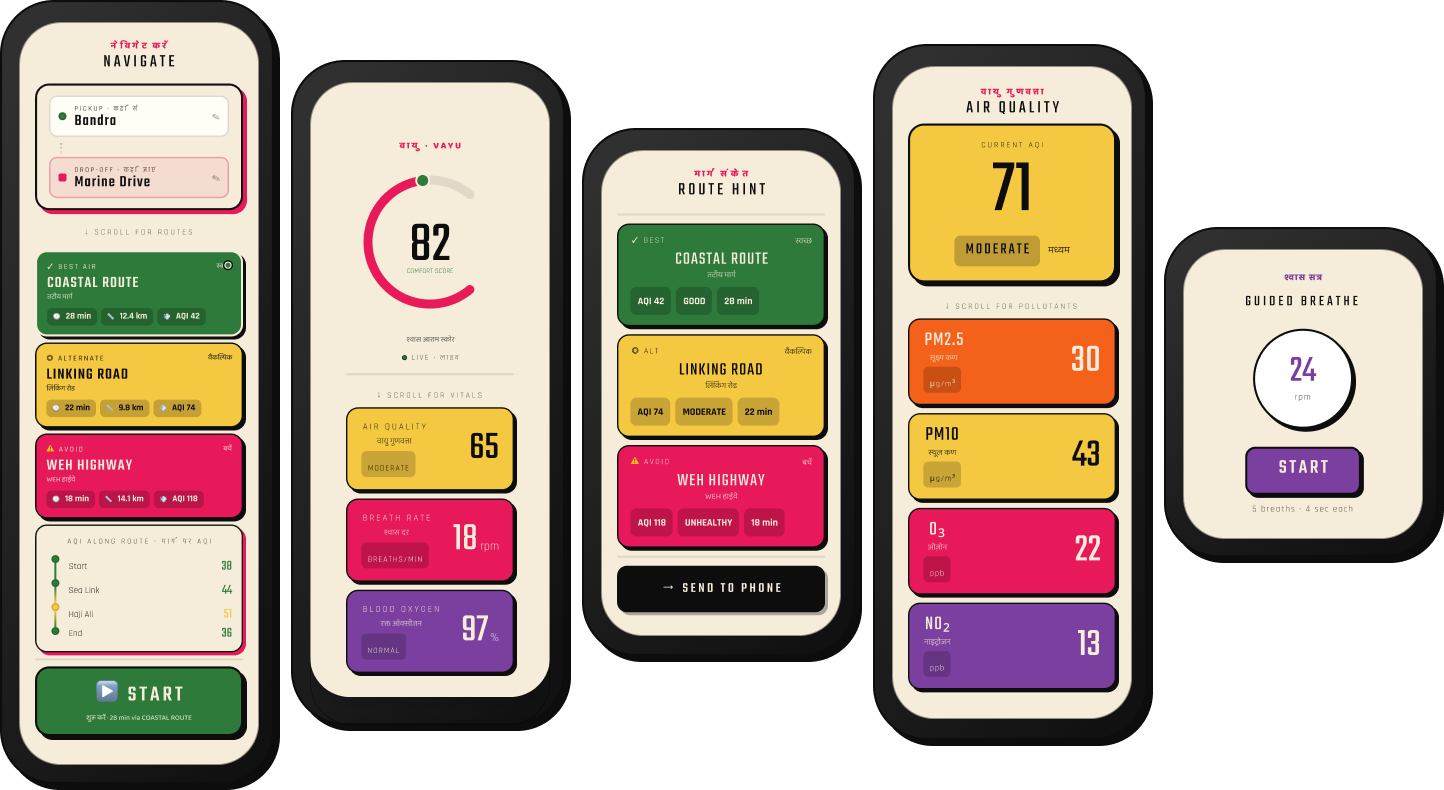
Watch Screens


Vayu - A Cleaner Way to Commute
Inspiration
Apple Watch has a feature called Noise Notifications. When you walk into a loud environment, it detects the sound level and alerts you before it damages your hearing. You don't have to open an app, check a dashboard, or think about it. It just tells you when your ears are at risk.
We asked a simple question: why doesn't something like this exist for air quality?
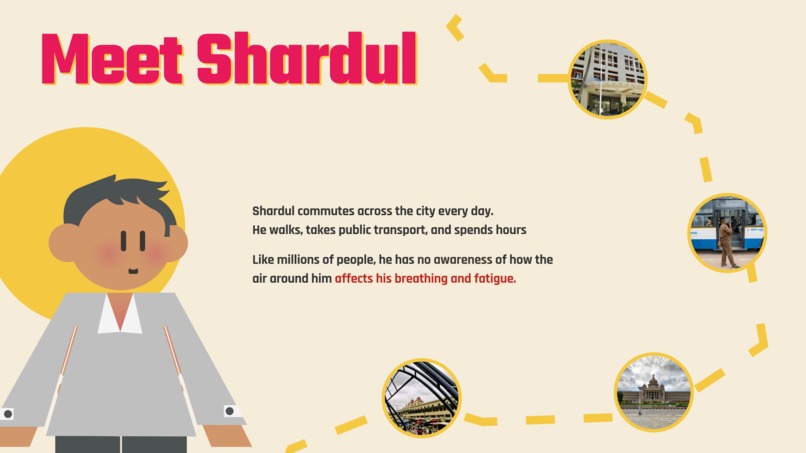
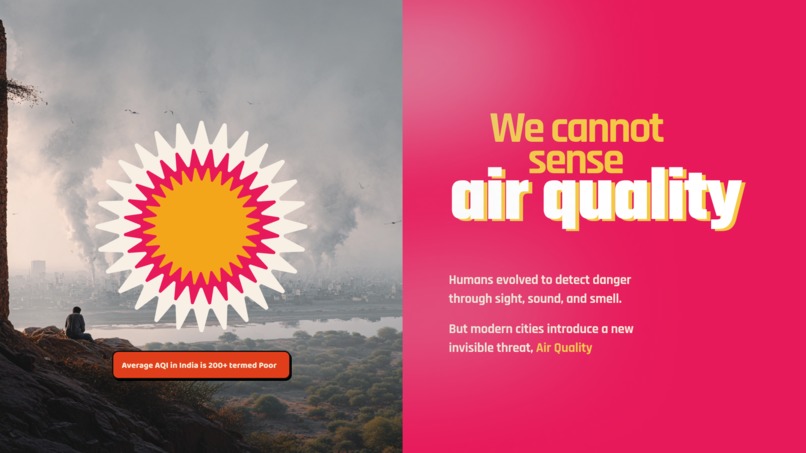
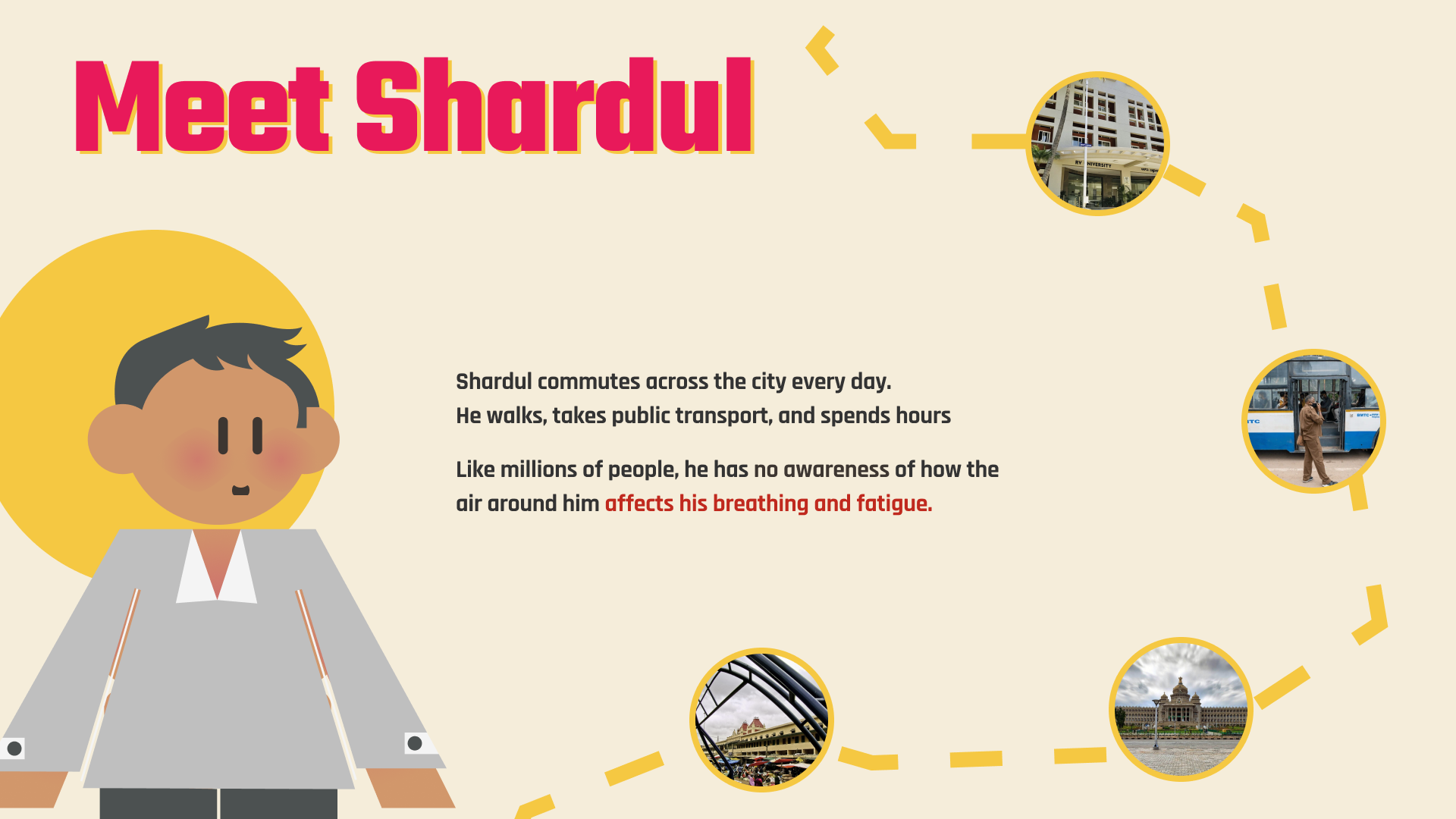
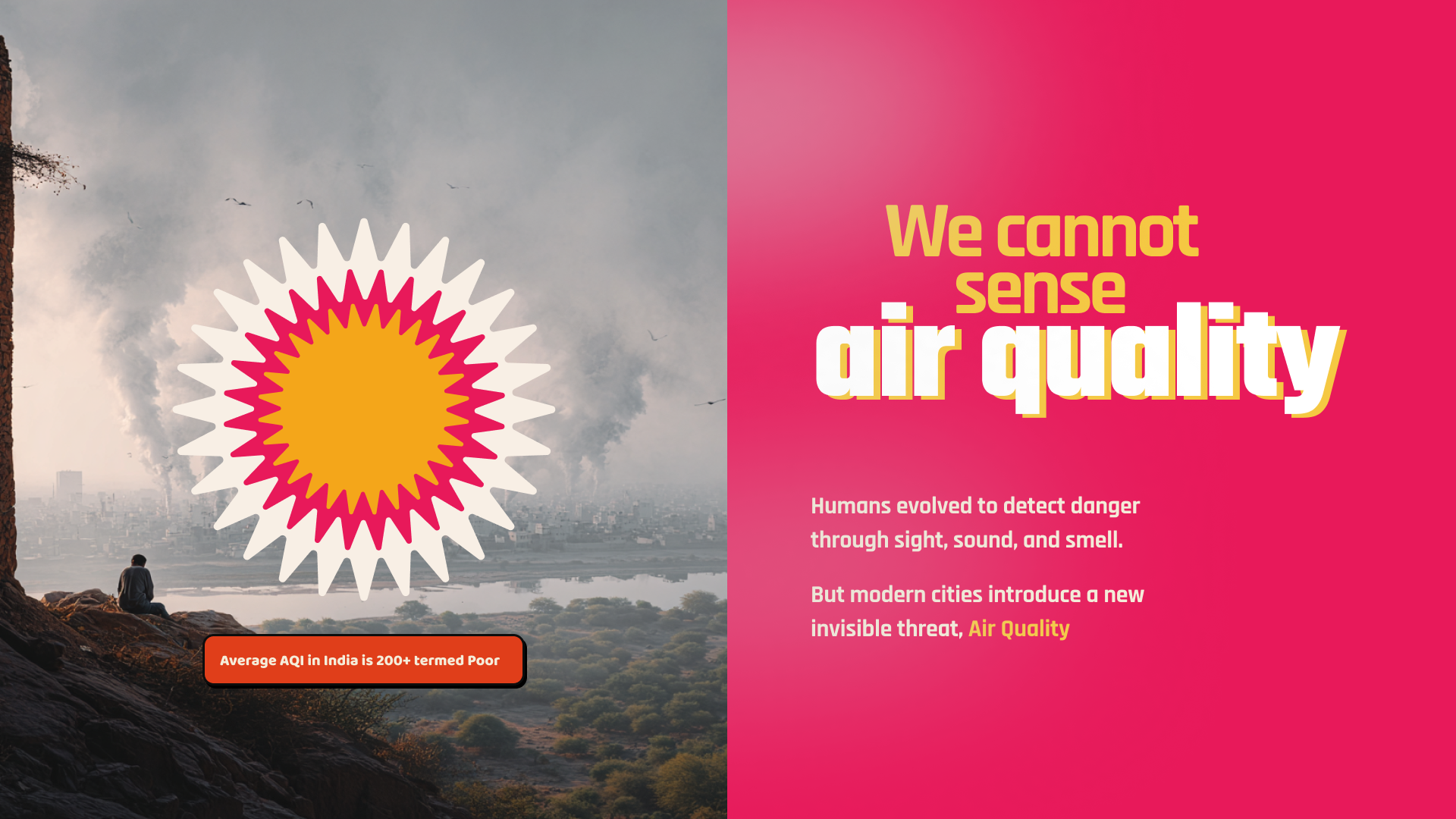
We live in India, and cities like Bengaluru can change drastically within a few streets. One moment you are walking through a green park with clean air, and the next you are surrounded by dense traffic, construction dust, and heavy pollution. Your lungs are being damaged, and you don’t even know it.
What inspired this project was a biological concept called Blood Carbon Dioxide Sensing -Chemoreceptors: You don't actually sense a lack of oxygen; you sense a buildup of carbon dioxide. These receptors in your brainstem trigger the burning panic and the urgent physical need to inhale. Humans do not directly sense a lack of oxygen. Instead, our body detects a buildup of carbon dioxide in the bloodstream.
In simplified terms:
As carbon dioxide levels increase, the brain triggers a stronger urge to breathe. In polluted environments, this response becomes more intense, increasing breathing rate, heart rate, and overall physical stress, often without you realizing what's causing it
Sensors on a modern smartwatch - heart rate, blood oxygen, movement etc, can detect exactly these signals. Cross-reference them with real-time AQI data, and you have something powerful: a system that knows when the air around you is affecting your body, and can actively guide you away from it.
That's Vayu
What It Does
Vayu is a passive air quality monitor and navigation system - think of it as Apple's Noise Notifications, but for pollution, with the ability to guide you out of it.
It runs quietly in the background. When you enter a high-AQI zone, or when your heart rate and SpO₂ patterns suggest your body is responding to poor air, Vayu alerts you on your wrist and immediately pairs that alert with navigation. A cleaner path. A nearby green corridor. A nudge to take the next left instead of walking straight into a traffic junction.
The alert and the way out arrive together. You don't need to open your phone, switch apps, or figure out what to do next. The watch detects, warns, and reroutes - in one seamless flow.
Vayu is a health-aware navigation system that combines air quality data with
Experience Design
Vayu is designed watch-first. The smartwatch isn't a companion to the phone it's where Vayu actually lives. The phone goes deeper, but the watch is where you live the experience.
Smartwatch Monitor, Alert, Navigate
The watch runs three things together: health monitoring, air quality alerts, and navigation. They aren't separate modes they work as one continuous layer.
Monitoring:
- Heart rate and SpO₂ tracked passively against local AQI data
- Breathing rate and lung load surfaced as simple, glanceable indicators
- The watch is always monitoring no interaction needed
Alerts:
- When you walk into a high-pollution zone, Vayu taps your wrist, the same way Apple's Noise Notifications fire when decibel levels get dangerous
- When your heart rate climbs or blood oxygen dips in a way that correlates with your current air quality, Vayu flags it
- Alerts are specific: "High PM2.5 detected. Your heart rate has been elevated for the past 6 minutes." Not just a number, but context.
Navigation, directly on the watch:
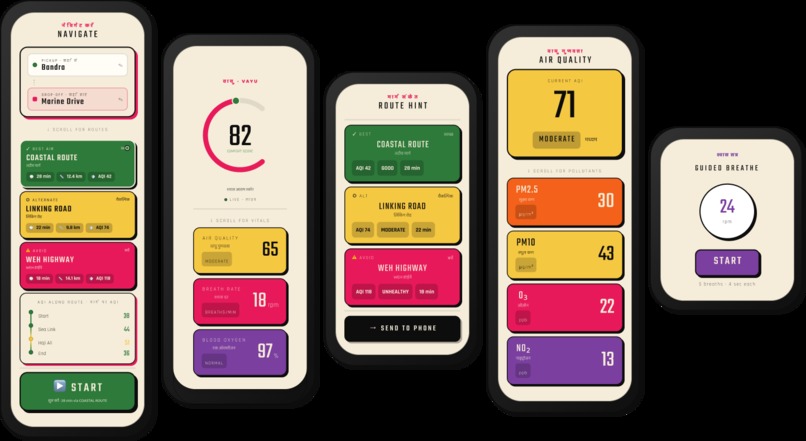
- You can quickly see three route options with pollution levels and travel time. Turn-by-turn navigation starts on your watch with alerts.
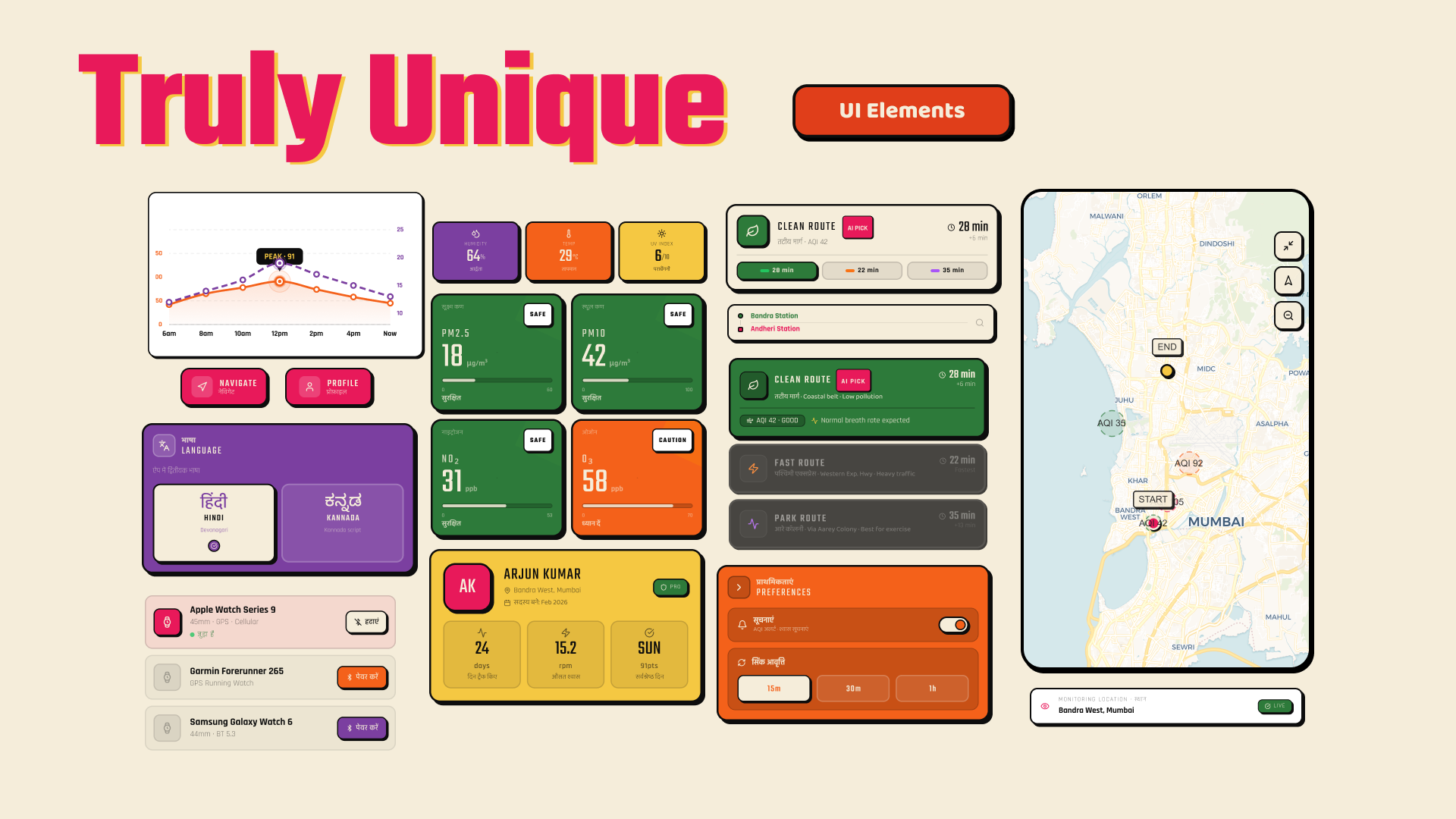
- Clean Route A balanced option that reduces pollution exposure while remaining efficient.
- Fast Route The quickest path, usually through heavy traffic and higher pollution zones.
- Park Route The healthiest option, prioritizing green corridors and parks even if travel time is slightly longer.
- Even without an alert, you can start a navigation session from the watch itself. No phone, no unlocking, no app-switching. Just raise your wrist and go.
- As you walk, Vayu continuously re-evaluates the air quality ahead. If a route that started clean gets worse (a truck idling at an intersection, a construction site you're approaching) it recalculates and nudges you
- Subtle haptic cues guide turns, so you can keep your wrist down and just follow the taps
Breathing exercises:
- Triggered automatically when air quality or physiological signals drop
- Designed for a 30-second window, quick enough to do mid-walk
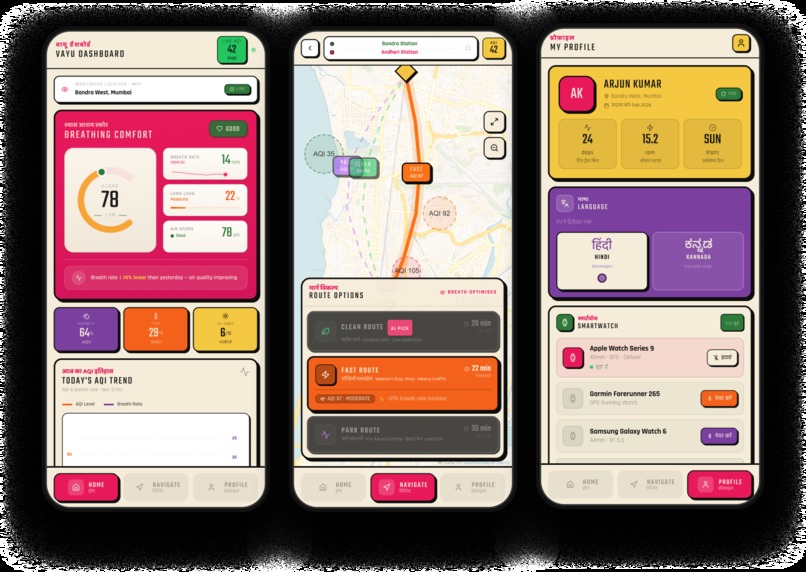
Mobile App: When You Want the Full Picture
The phone app is there when you want to plan ahead or go deeper:
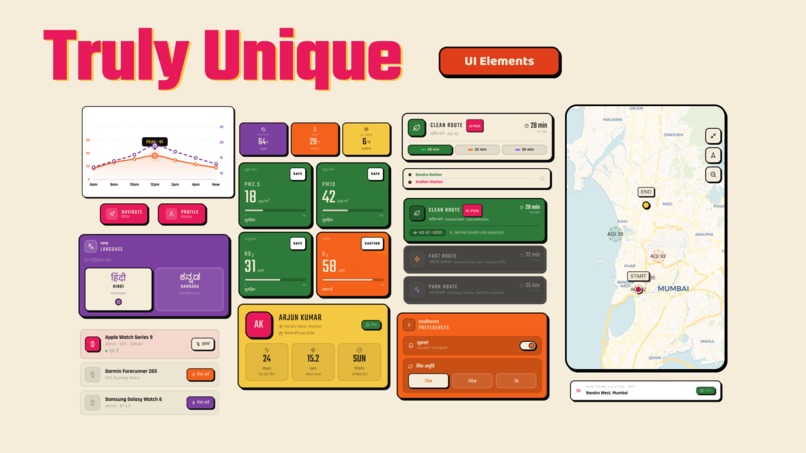
- Live AQI and full pollutant breakdown by location (PM2.5, NO₂, CO, ozone)
- Route comparison view with Fast, Clean, and Park routes displayed side by side, showing predicted pollution exposure across the full journey, not just the destination
- Lung load and air score mapped along each route so you can see exactly where the worst stretches are before you start walking
- Historical exposure data showing how much pollution you've absorbed today, this week, and compared to your average
- Full map view for longer trips or planning routes in advance
Visual Design
The visual system of Vayu is inspired by Indian pop art and street culture.
While pop art arrived in India decades ago, it never really disappeared. It evolved through truck art, festival posters, street signage, and everyday public graphics.
Because Vayu is designed for over a billion people, the interface embraces:
- bold color palettes
- high contrast UI
- expressive visual language
This makes environmental information easier to read and understand quickly.
The app also supports dual-language interaction, allowing regional language layers alongside English to improve accessibility across India.
How We Built It
The project was built as a design and prototype exploration combining environmental data with human physiological signals.
The system integrates multiple layers of information:
- location-based air quality data
- pollution concentration levels
- breathing rate signals
- navigation data
These signals are used to generate route recommendations that balance travel time with pollution exposure.
The user interface and interaction flows were prototyped to simulate how such a system could function in real-world city environments.
Challenges We Faced
One of the biggest challenges was translating environmental data into something meaningful and actionable for everyday users.
Telling someone the AQI is 160 doesn't land the way a wrist tap saying "your heart rate has been elevated for 6 minutes, here's a cleaner route that's 4 minutes longer" does. We focused on pairing body signals with environmental data, and always following an alert with an immediate action: a route, a breathing exercise, a direction to move.
Merging navigation and health monitoring on the watch without it feeling cluttered was a significant design challenge. Navigation UIs are typically map-heavy and information-dense. Health monitors are glanceable and minimal. Getting those two interaction models to feel unified on a small screen, especially mid-commute when users aren't looking for long, required stripping back aggressively and rethinking what information actually matters at each moment.
Continuous route re-evaluation was technically and experientially complex. A route that looks clean at the start might pass through a worse zone three minutes in. Deciding when to reroute, how to communicate that without being disruptive, and how to weight a minor air quality change against the cost of a new detour were all problems without obvious answers.
Another challenge was balancing health optimization and usability. A completely clean route might take much longer, while the fastest route might expose users to high pollution levels. Designing a system that clearly communicates these trade-offs was an important part of the project.
Finally, designing for India's scale and diversity meant thinking about language accessibility, visual clarity, and usability across a wide range of users.
What We Learned
Working on Vayu helped us explore how design, environmental science, and human physiology can intersect.
Most navigation systems today are optimized purely for efficiency. But as cities become more polluted, designing for breathing comfort and environmental awareness may become equally important.
Vayu is an exploration of what navigation might look like if it were designed around how humans actually experience the air around them.
What's Next for Vayu
There's a lot of ground still to cover. A few directions we're excited to explore:
- Personalised respiratory profiles where users with asthma, COPD, or other conditions can input their diagnosis and medication triggers, so Vayu's alerts are calibrated to their specific physiology, not just a general population average
- Community pollution mapping where anonymised sensor data from users collectively builds a more granular, real-time picture of pollution hotspots that official monitoring stations miss
And beyond the product itself, we hope to work with city planners and urban health researchers to surface the data Vayu collects in ways that can actually influence infrastructure decisions: where green corridors are needed, which intersections are the worst, which commute routes are quietly costing people their health.
But if we're being honest about what we truly hope for, it's this:
We hope for a day when no one needs Vayu. A day when the air in our cities is clean enough that an app like this feels unnecessary, when a morning commute doesn't come with a hidden health cost, when children with asthma can walk to school without their parents worrying about what they're breathing. We built Vayu because that day isn't here yet. But every tool that makes people more aware of the air around them, and every data point that pushes cities toward cleaner infrastructure, is a small step toward it. That's the world we're building toward.
Built With
- figma
- figmamake
- midjourney


Log in or sign up for Devpost to join the conversation.