-
-
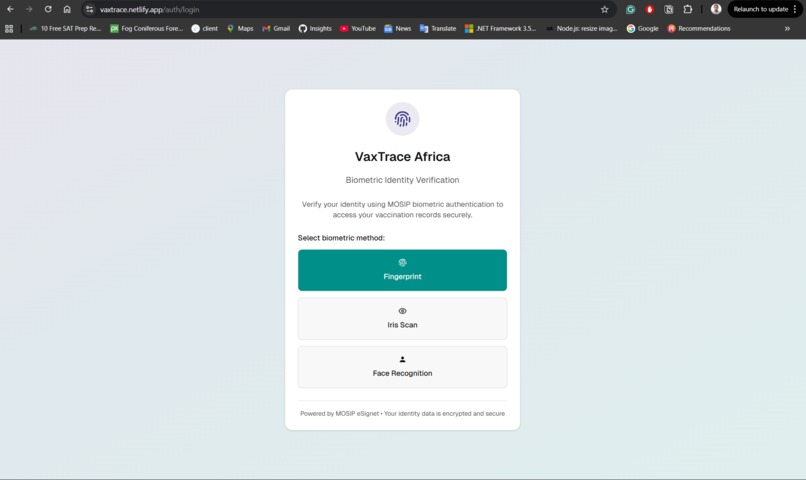
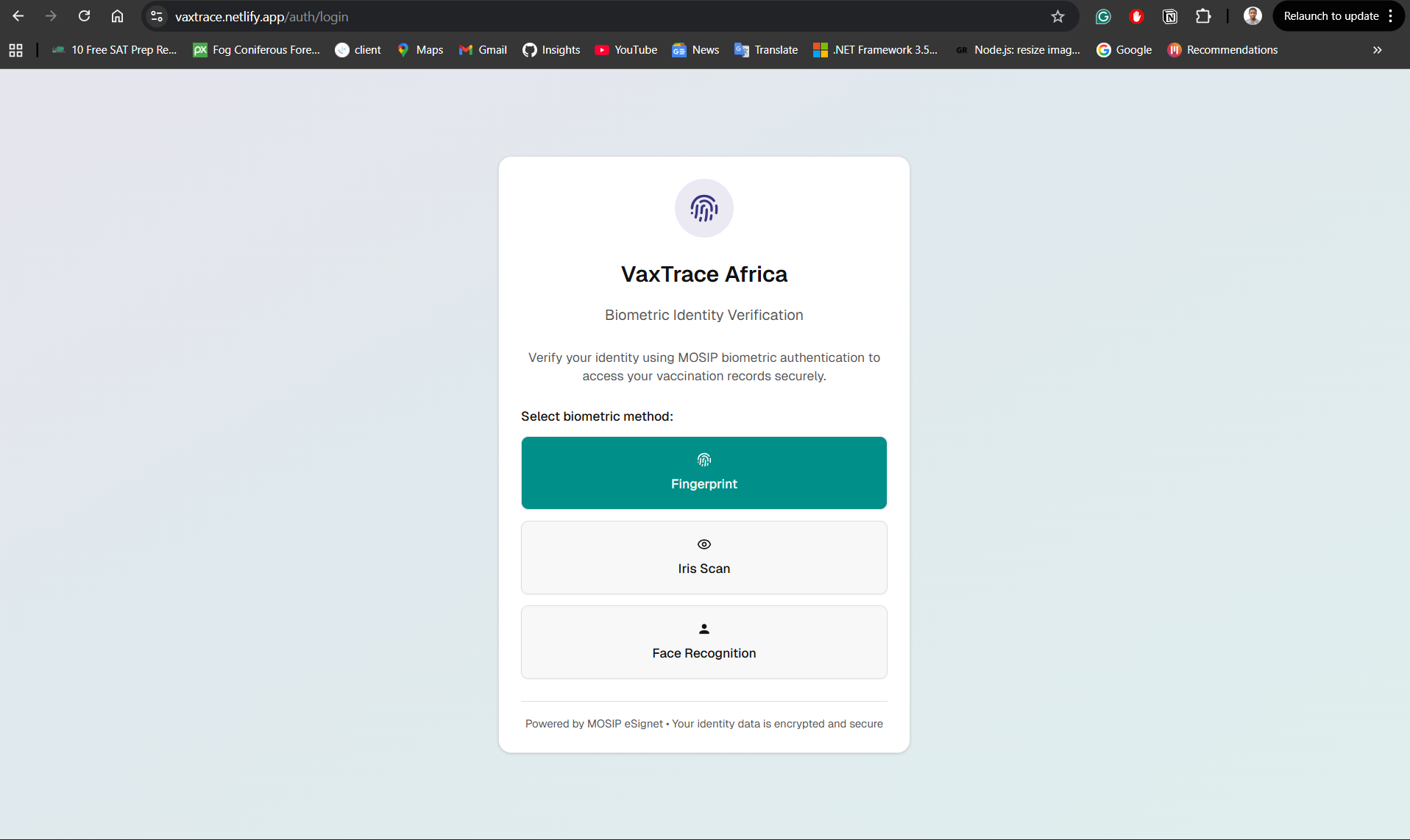
Patient accessing the vaccination history using Digital Id
-

Patient accessing record after being authenticated from the MOSSIP eSignate
-
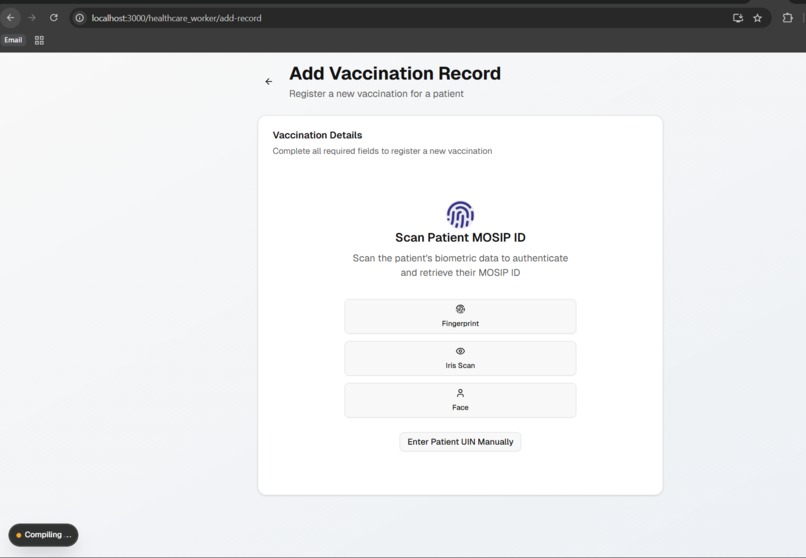
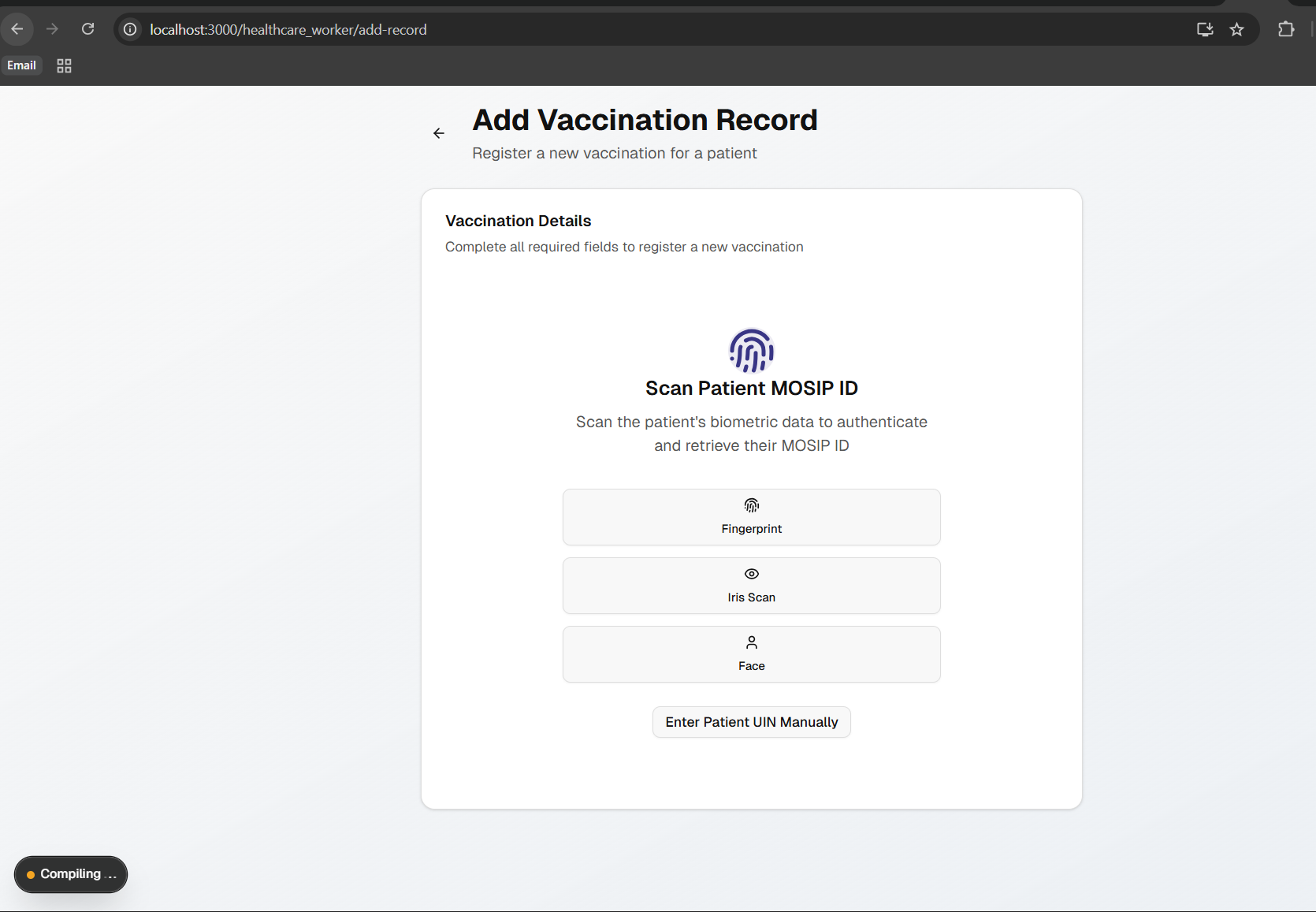
A health worker using Mossip to speed up the process of recording patient information.
-
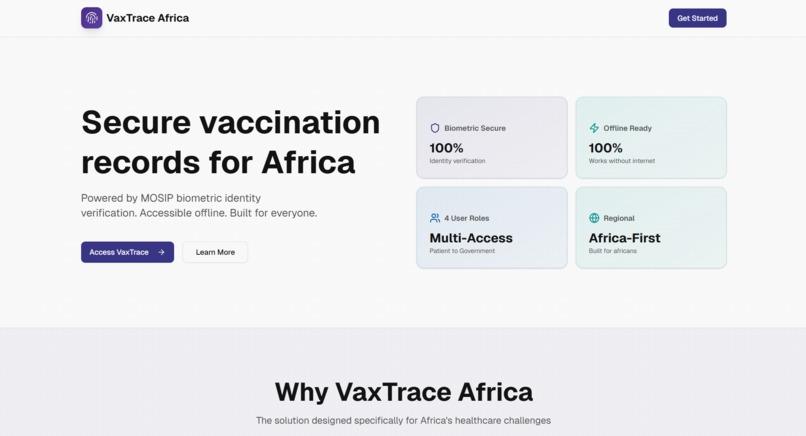
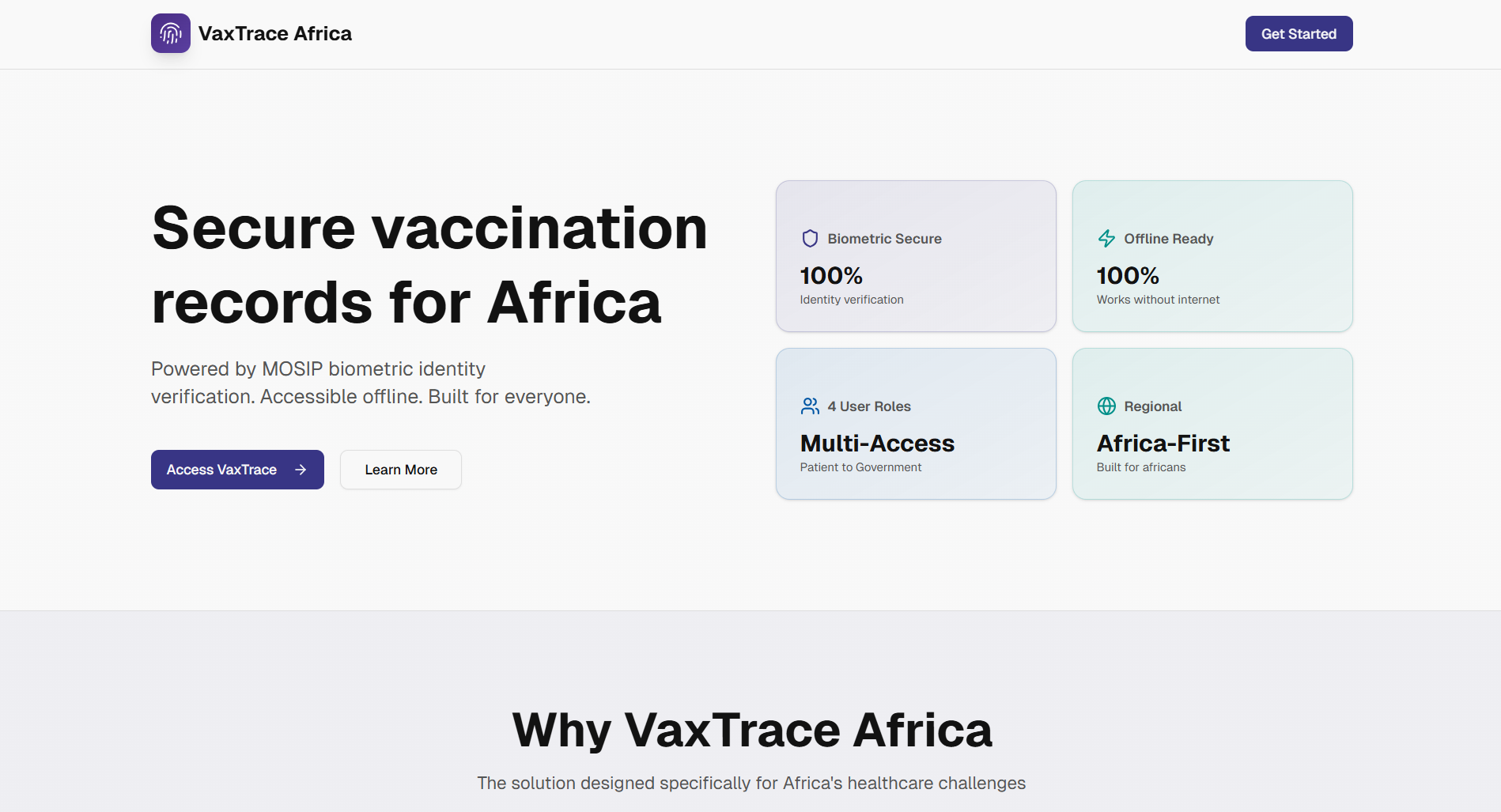
Home page

Inspiration
The idea behind VaxTrace Africa was inspired by a close friend of mine who was a refugee. We attended the same high school, and he shared with me his experience of fleeing from Eastern Congo during the 2019 conflict. When he arrived at Gihembe refugee camp as a child, his family had lost all their documents while escaping the war. His parents knew he had already received the yellow fever vaccine, but they had no way to prove it.
Without any medical records, the camp could not take the risk of keeping an unvaccinated child, so he was required to receive the vaccine again. This situation is common for many displaced families whose medical histories disappear during conflict and migration. Hearing his story made me realize how easily vaccination records can be lost and how this affects both individual health and public health systems.
What it does
VaxTrace Africa will securely link vaccination records to a person’s biometric digital identity. It will allow both children and adult refugees to carry verified immunization histories that can be accessed across camps, clinics, and borders. This will ensure continuity of care, prevent unnecessary repeat vaccinations, and reduce fraud and vaccine wastage.
How we built it
We designed VaxTrace Africa as a portable vaccination verification concept powered by biometric digital identity and built on MOSIP, an open-source digital ID infrastructure. The system design integrates biometric registration, secure record storage, and simple verification at clinics and border points to ensure reliable access to vaccination history for mobile populations.
Challenges we ran into
We anticipate challenges related to deployment in low-resource and high-mobility environments where internet connectivity, devices, and digital infrastructure may be limited. We also expect to address concerns around data privacy, ethical use of biometric information, and building trust among vulnerable populations such as refugees and host communities.
Accomplishments that we're proud of
We conducted extensive research on refugee health systems, immunization gaps, and digital identity solutions across Africa. We explored real-world challenges in vaccination tracking for displaced populations and developed a practical and scalable concept that addresses both healthcare continuity and system transparency.
What we learned
Through our research, we learned how displacement significantly disrupts access to healthcare and how frequently vaccination histories are lost or duplicated. We also gained insights into digital identity infrastructure, public health data systems, and the importance of building solutions that are secure, ethical, and adaptable to low-resource environments.
What's next for VaxTrace
Next, we plan to develop a functional prototype and seek pilot opportunities with health and humanitarian partners. We aim to validate the system in real-world settings, strengthen partnerships with ministries of health and NGOs, and continue refining the solution to ensure that no displaced person loses access to their vaccination history again.

Log in or sign up for Devpost to join the conversation.