-
-
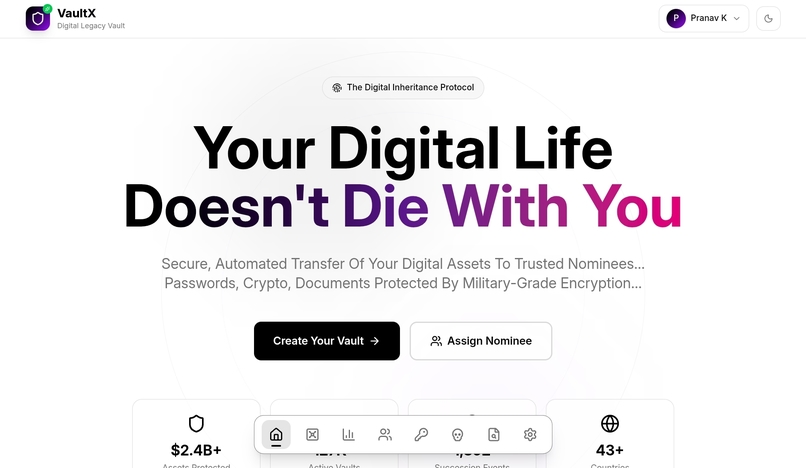
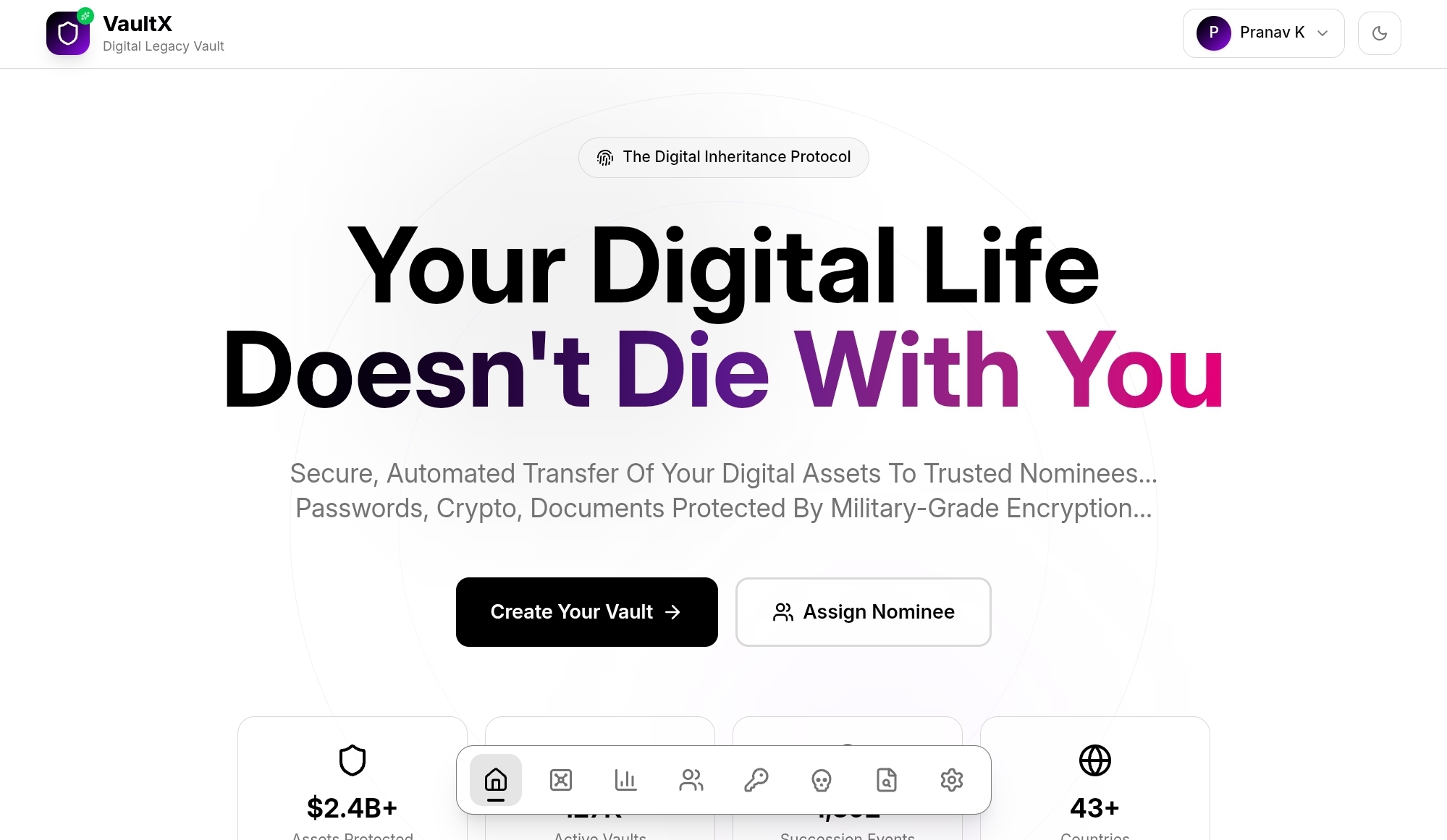
Home Page
-
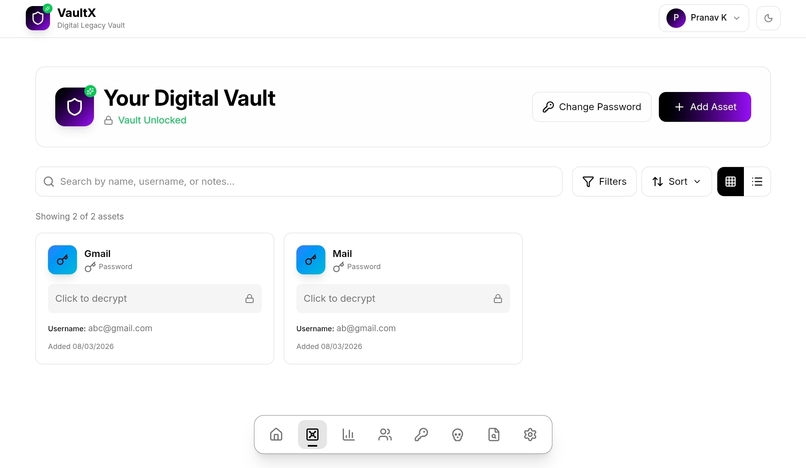
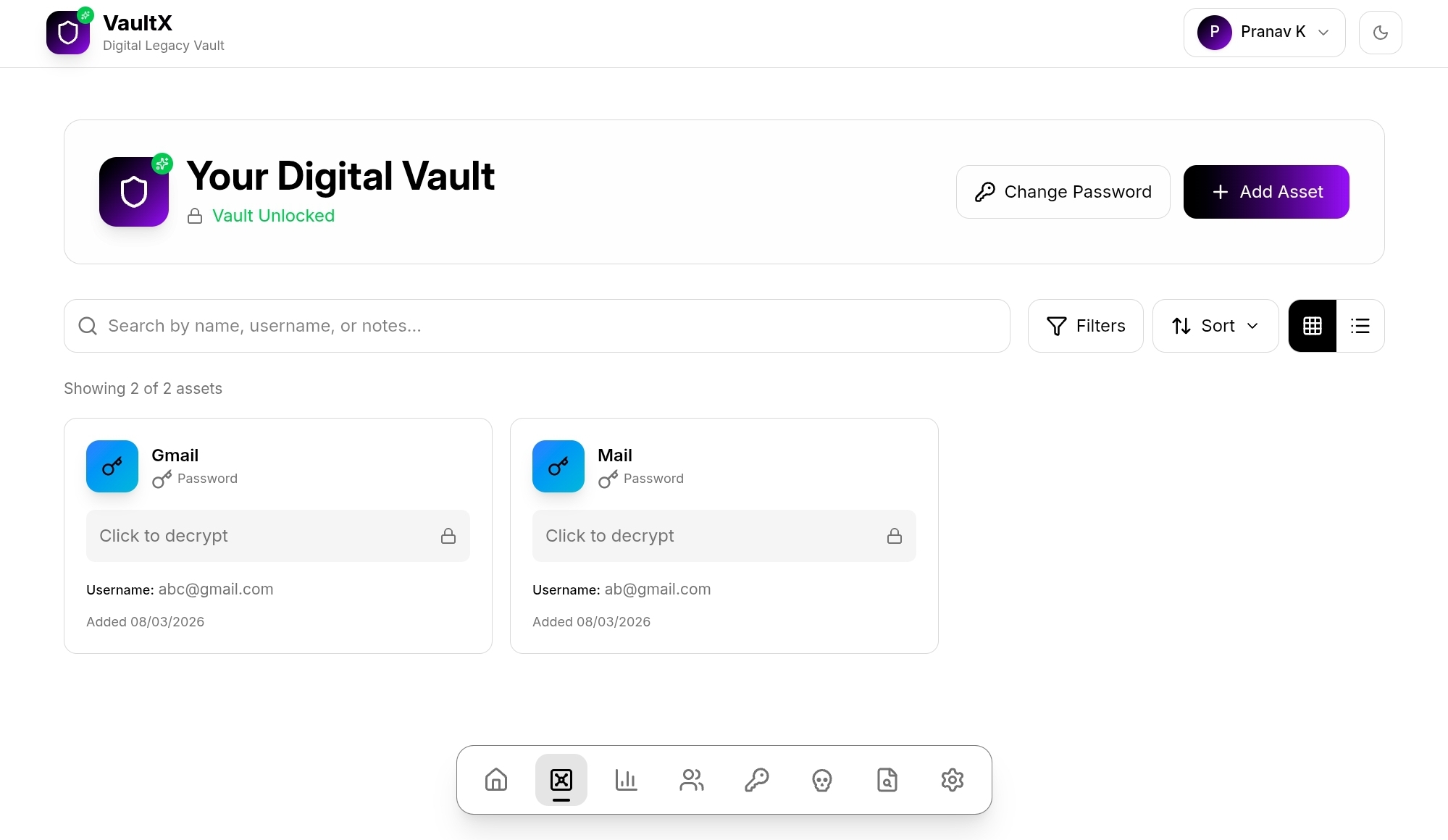
Digital Vault Page
-
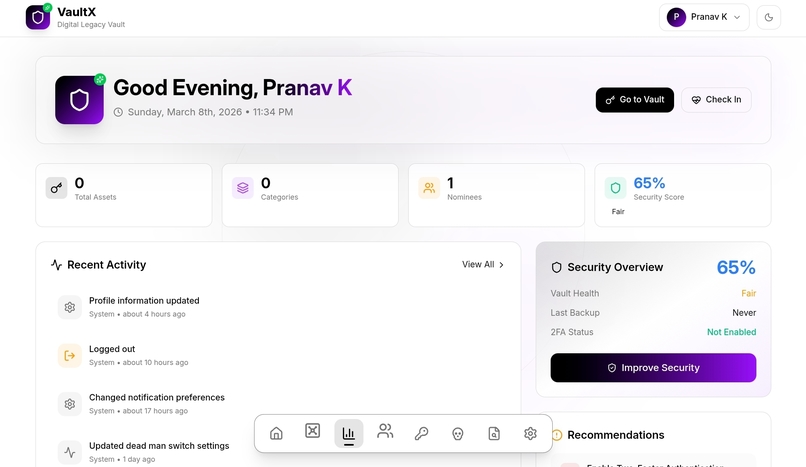
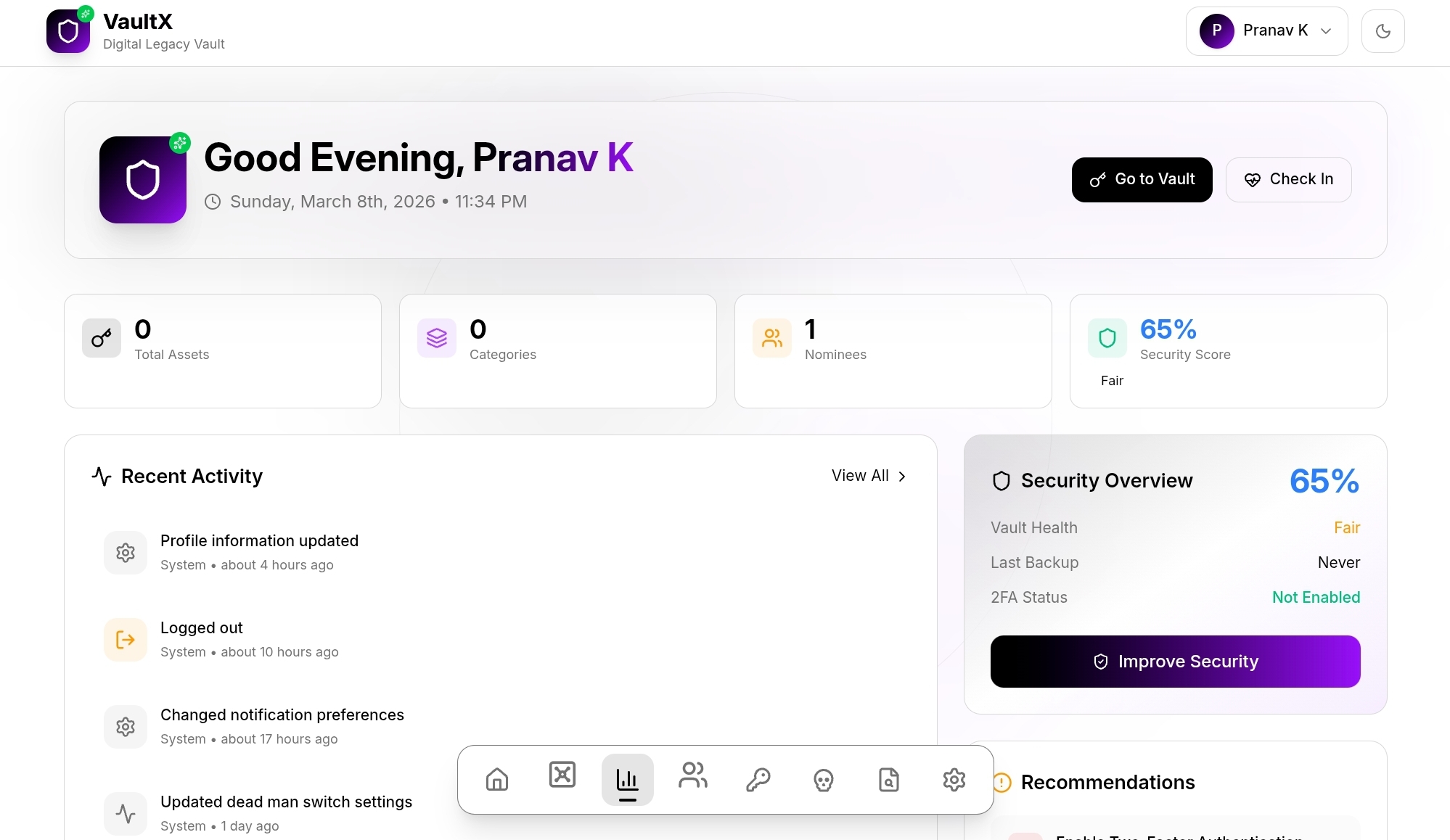
Dashboard Page
-
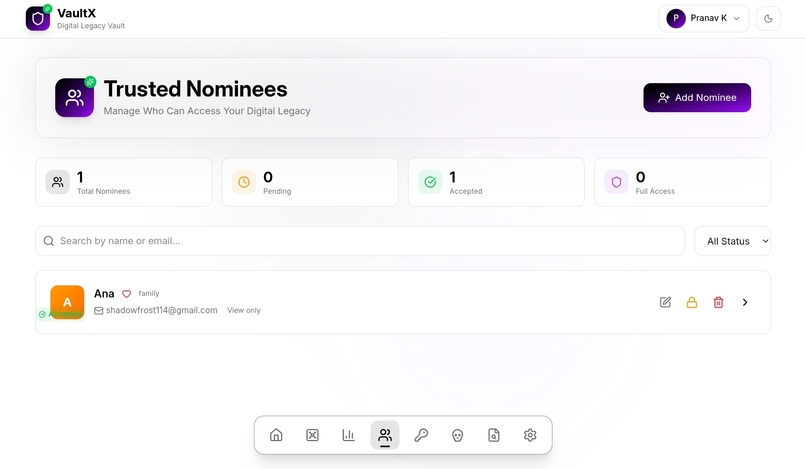
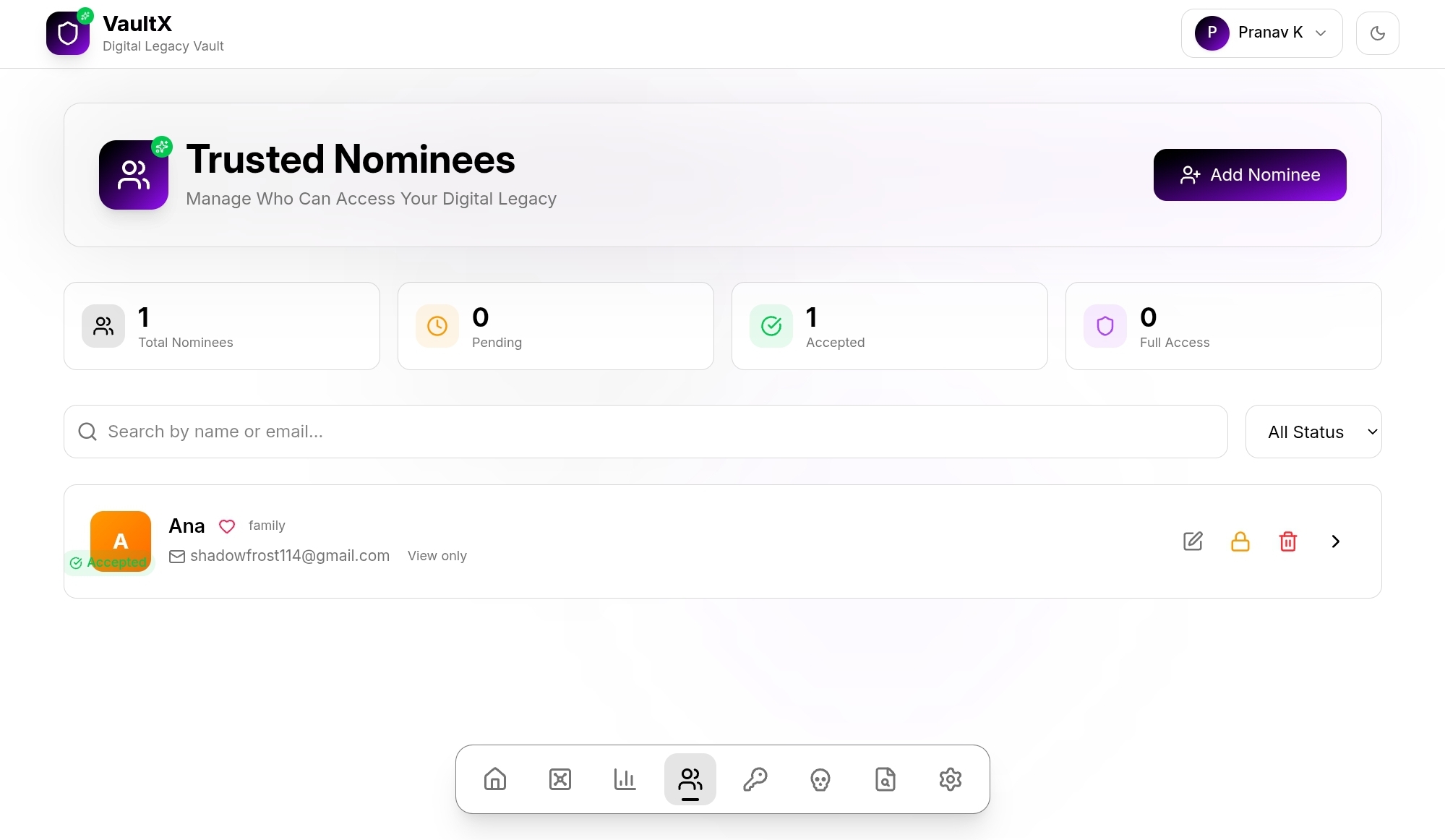
Trusted Nominees Page
-
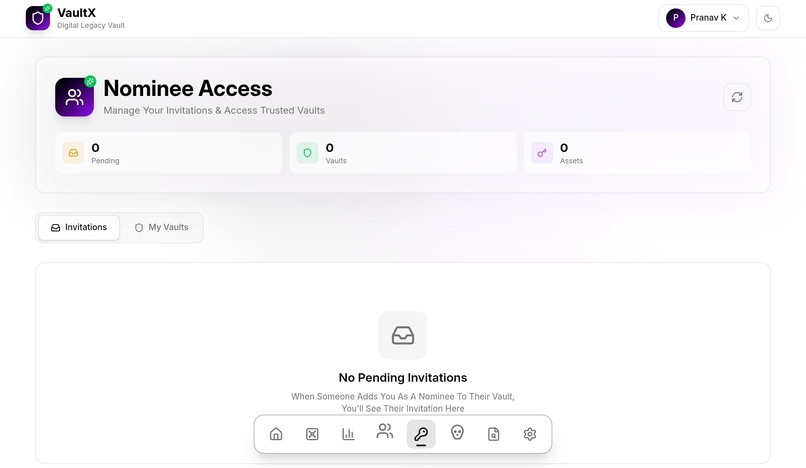
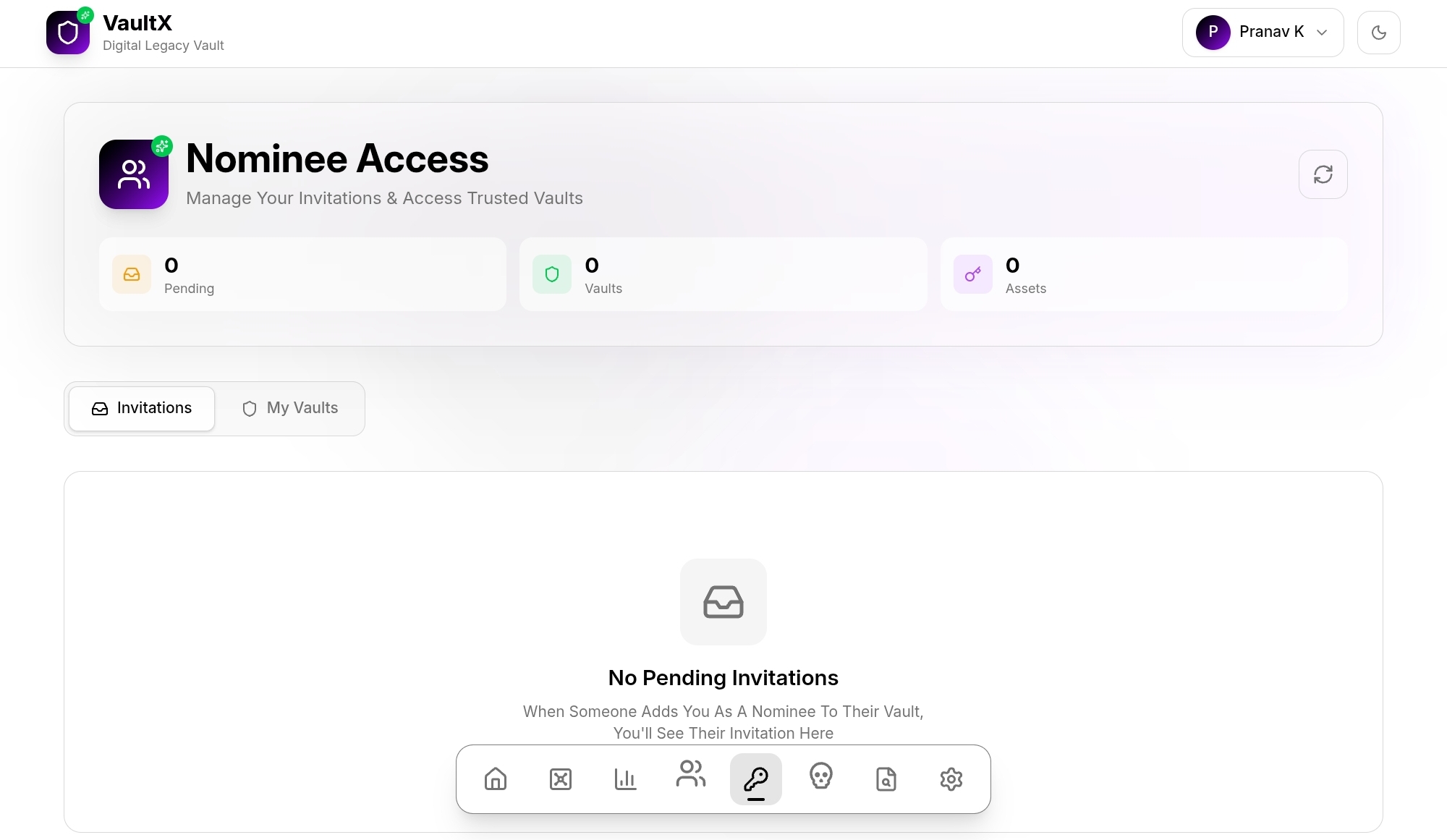
Nominee Access Page
-
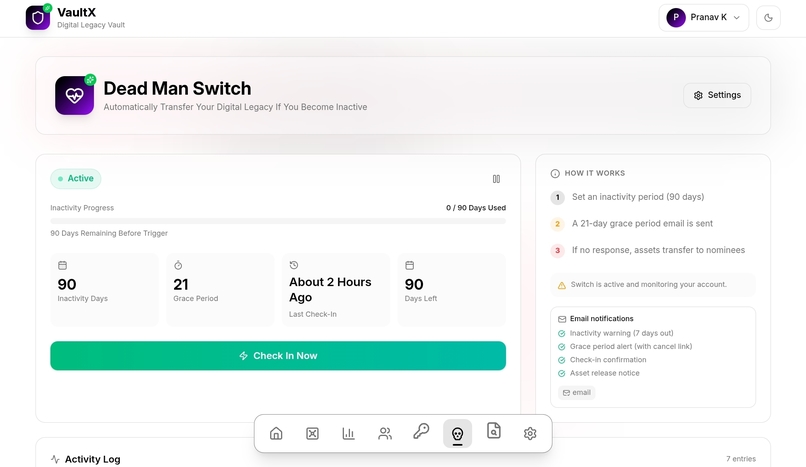
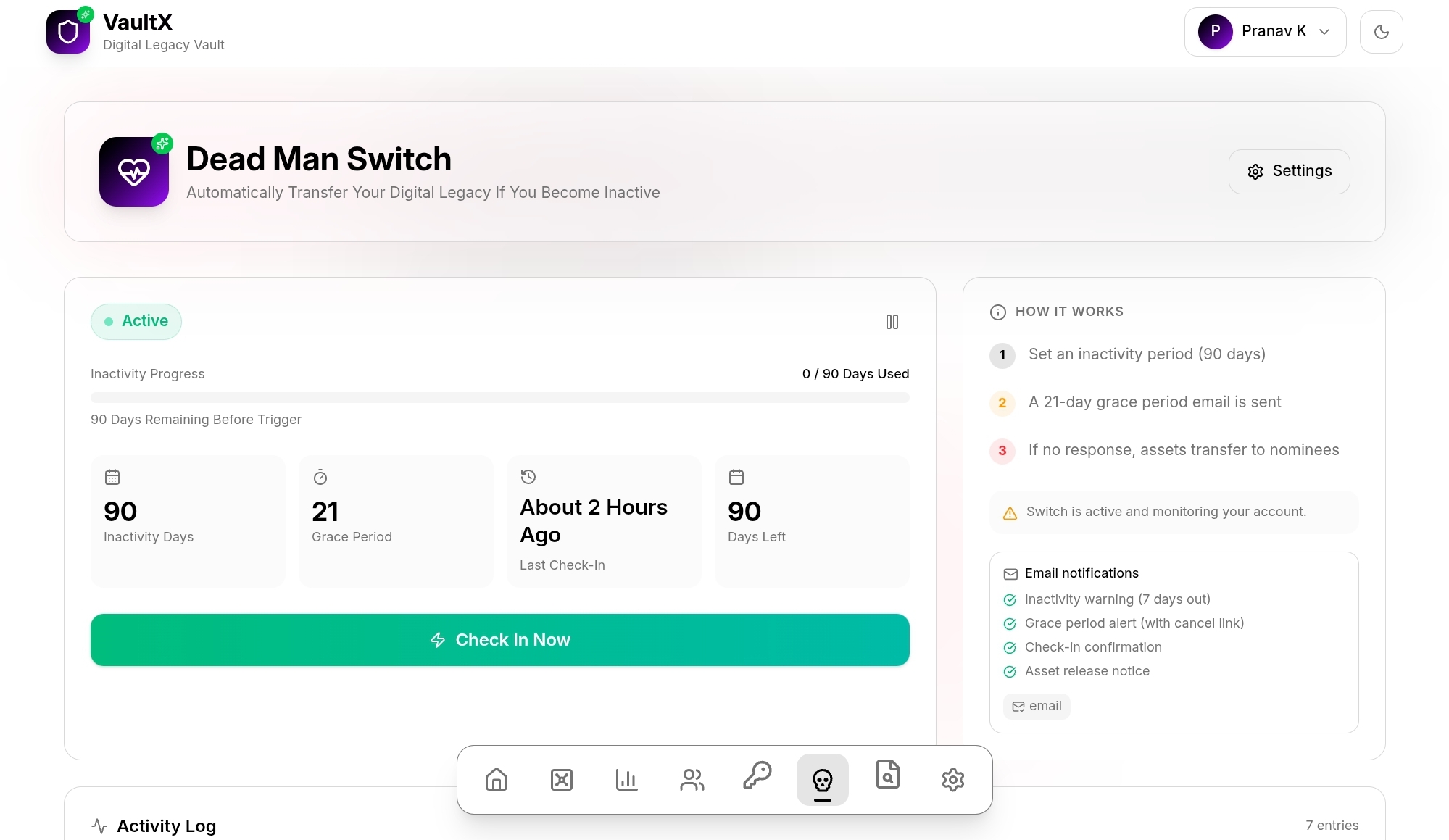
Dead Man Switch Page
-
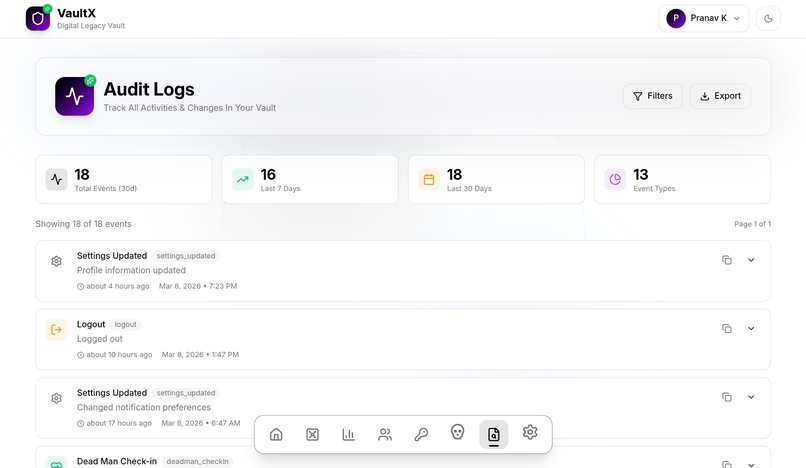
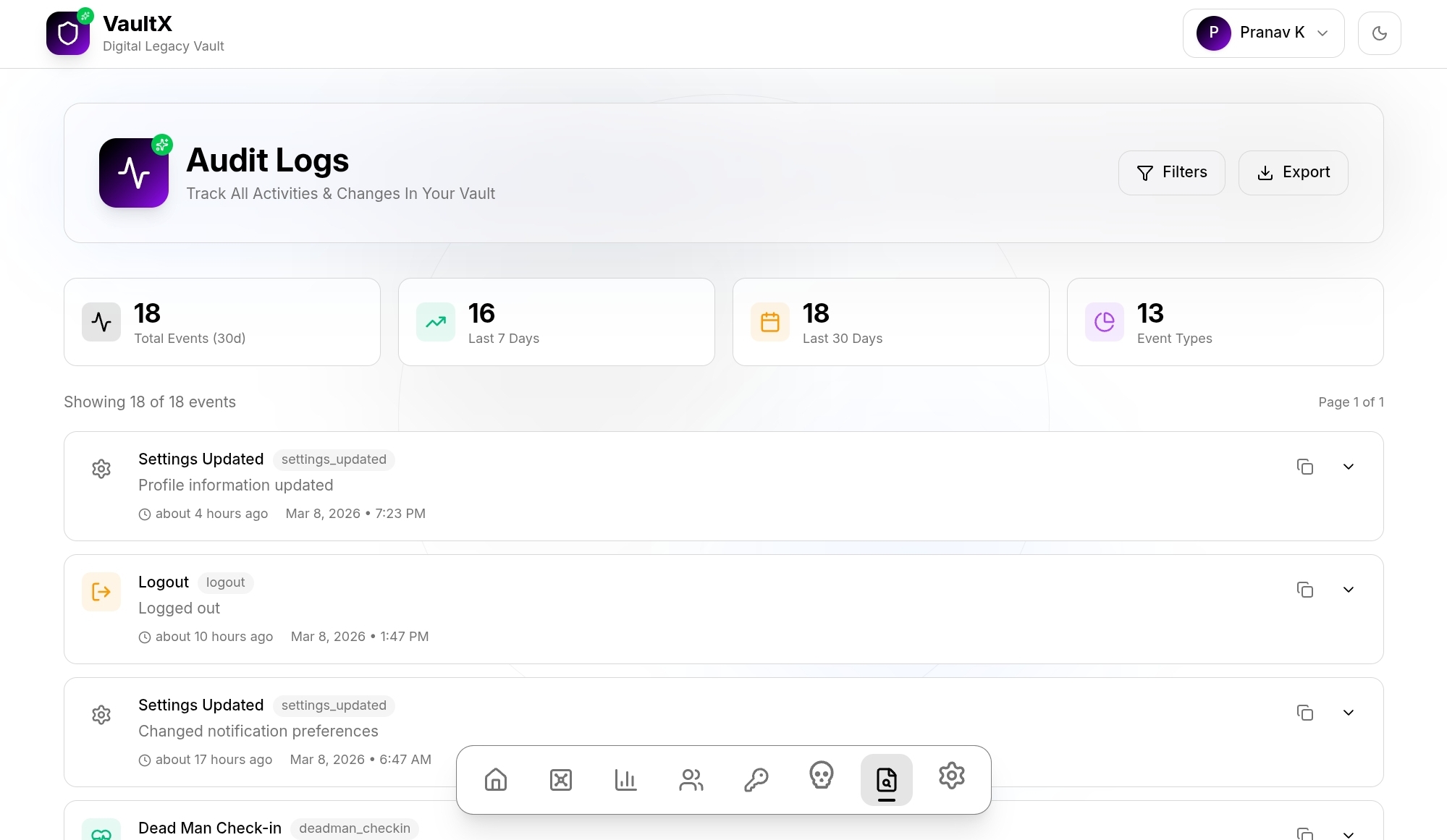
Audit Page
-
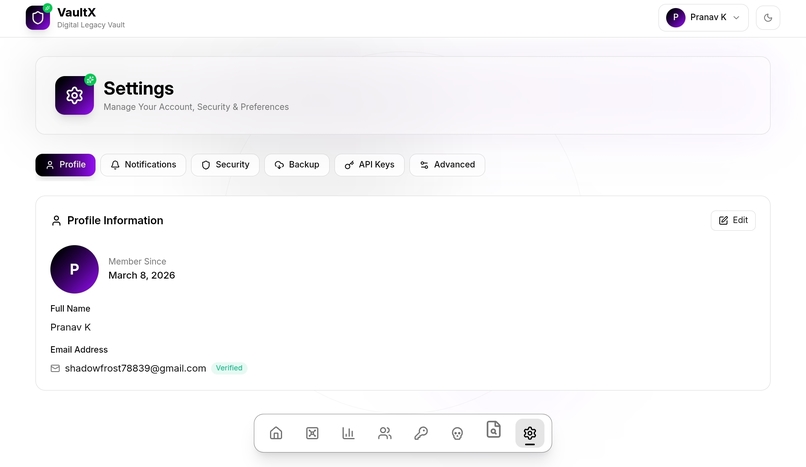
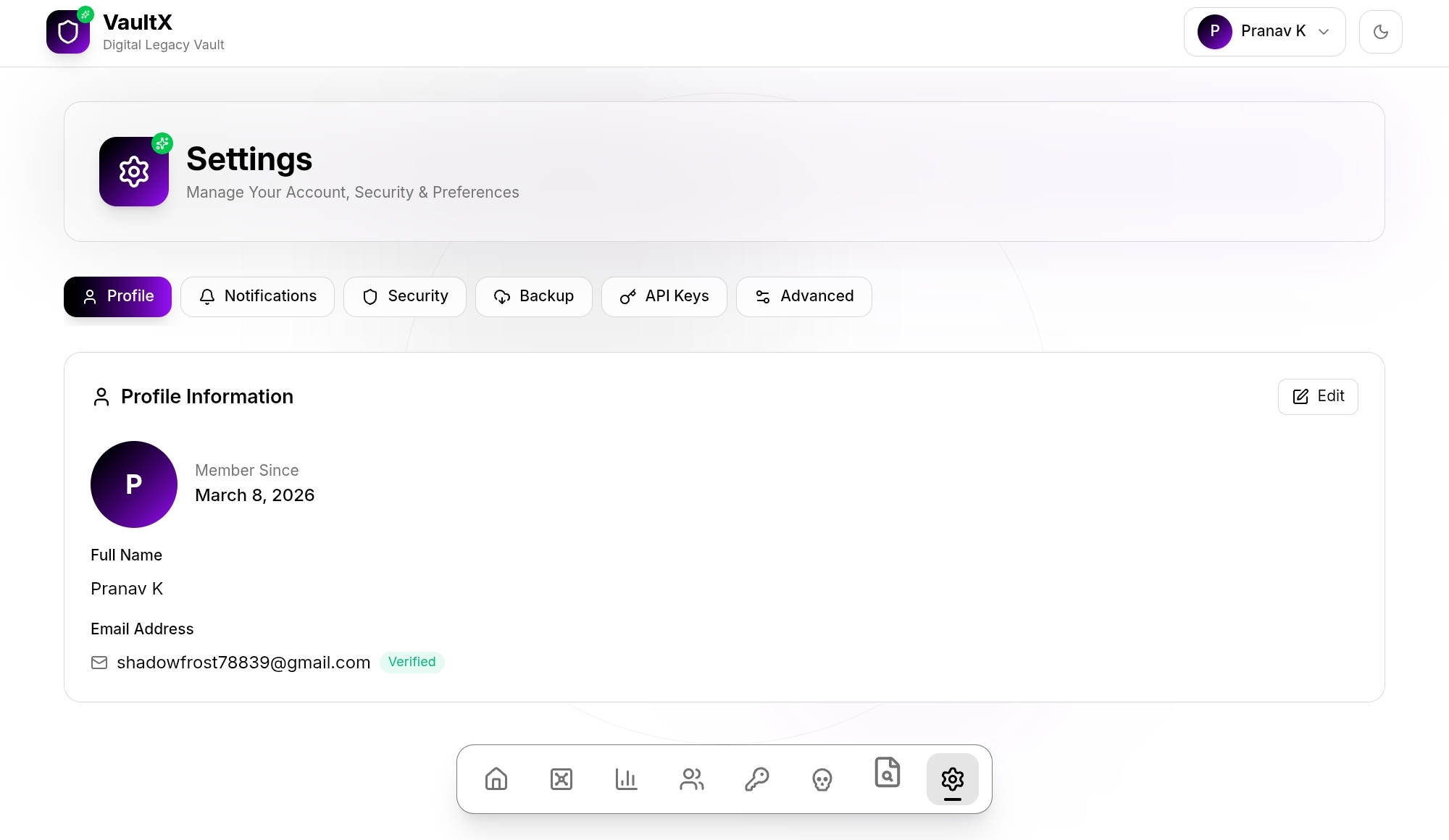
Settings Page
Inspiration
- The modern world is increasingly digital, with people storing passwords, cryptocurrency wallets, personal documents, intellectual property, and memories online.
- When someone passes away or becomes inactive, these digital assets are often lost because there is no reliable system for transferring them securely.
- Traditional inheritance systems focus on physical assets and legal documentation, not encrypted digital information.
- Families frequently struggle to recover important data left behind by loved ones due to inaccessible accounts or lost credentials.
- VaultX was inspired by the need to bridge the gap between digital life and digital inheritance.
- The goal was to create a secure platform that allows digital assets to be preserved and automatically transferred to trusted individuals.
- We aimed to design a system that prioritizes privacy, strong encryption, and user control while solving a real-world problem.
What It Does
- VaultX is a digital inheritance platform designed to securely manage and transfer digital assets.
- It provides a private vault where users can store sensitive information such as passwords, private keys, documents, and personal notes.
- All sensitive data is encrypted locally before being stored, ensuring that even the platform cannot access user information.
- Users can assign trusted nominees and define detailed permissions for each person.
- The system includes a dead-man switch protocol that monitors user inactivity.
- If prolonged inactivity is detected, a multi-step verification process is initiated.
- After verification, designated assets are securely transferred to approved nominees.
- The platform also maintains an audit trail that logs all access requests, activity, and asset transfers for transparency.
How We Built It
- The frontend was built using React and TypeScript to create a scalable and maintainable application.
- Tailwind CSS was used to develop a consistent and modern user interface.
- Framer Motion was implemented to create smooth transitions and improve user experience.
- Supabase was used as the backend platform to provide authentication, database management, and security policies.
- PostgreSQL serves as the primary database for storing encrypted metadata and application data.
- The Web Crypto API was used to implement client-side encryption.
- AES-256-GCM encryption and PBKDF2 key derivation were used to protect sensitive information.
- The application was structured into service modules such as vault management, nominee management, dead-man switch logic, audit logging, and settings management.
- The system was designed with a modular architecture to ensure scalability and maintainability.
Challenges We Ran Into
- Balancing strong security with user-friendly design was one of the biggest challenges.
- Implementing zero-knowledge encryption required ensuring that encryption and decryption happen entirely in the browser.
- Securely managing cryptographic keys without exposing them to the backend required careful implementation.
- Designing the dead-man switch protocol was complex because it needed to detect inactivity without triggering false asset releases.
- We had to implement verification and grace periods to prevent accidental inheritance triggers.
- Creating a flexible role-based nominee system required designing granular permission controls.
- Ensuring that the system remains secure while still being intuitive for users required multiple design iterations.
Accomplishments That We're Proud Of
- Successfully building a working prototype that demonstrates secure digital inheritance.
- Implementing a zero-knowledge encryption architecture that protects user data from both external threats and platform access.
- Designing a functional dead-man switch workflow that models real-world digital inheritance scenarios.
- Creating a modern and intuitive interface that simplifies complex security processes.
- Implementing key features such as nominee management, encrypted vault storage, and audit logging.
- Developing a modular architecture that can easily support future enhancements and scalability.
What We Learned
- We gained practical experience implementing client-side cryptography and zero-knowledge security systems.
- We learned how important usability is when building security-focused applications.
- We discovered that building trust in privacy-focused systems requires transparency and clear design.
- We learned how backend platforms like Supabase can accelerate development by handling authentication and database infrastructure.
- The project helped us understand the growing challenge of digital inheritance in modern society.
- We also learned how modular architecture helps manage complex application features.
What's Next For VaultX
- Add biometric authentication such as fingerprint and face recognition.
- Integrate hardware security modules like security keys and crypto wallets.
- Implement blockchain-based notarization to create immutable records of asset transfers.
- Develop advanced recovery mechanisms using multi-party key recovery systems.
- Expand the platform with native mobile applications for iOS and Android.
- Introduce legal document templates to support digital inheritance planning.
- Build integrations with cryptocurrency wallets and digital asset platforms.
- Improve verification systems to further reduce risks of false triggers.
- Continue evolving VaultX into a complete digital inheritance infrastructure for the future.
Demo Access (For Judges & Reviewers)
You can explore VaultX using the demo account below:
Login Credentials
- Email: [email protected]
- Password: Frost_78839@VaultX
Alternatively, you can create your own account:
- Click Sign Up
- Create a new account with your email
- Verify your email
- Log in to access your personal vault
Both options will give you full access to test the features of VaultX.
Note: The demo account may contain existing data. Feel free to create your own account for a clean experience.
Built With
- framer-motion
- react
- supabase
- tailwindcss
- typescript
- vite

Log in or sign up for Devpost to join the conversation.