-
-
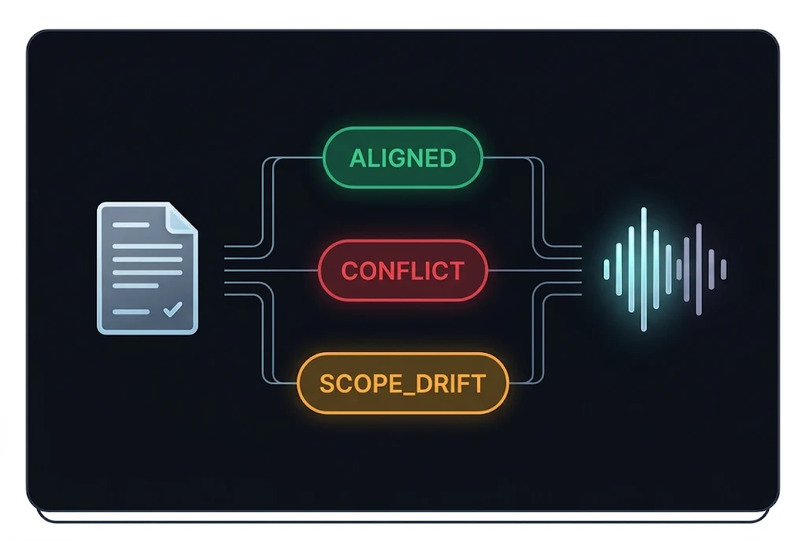
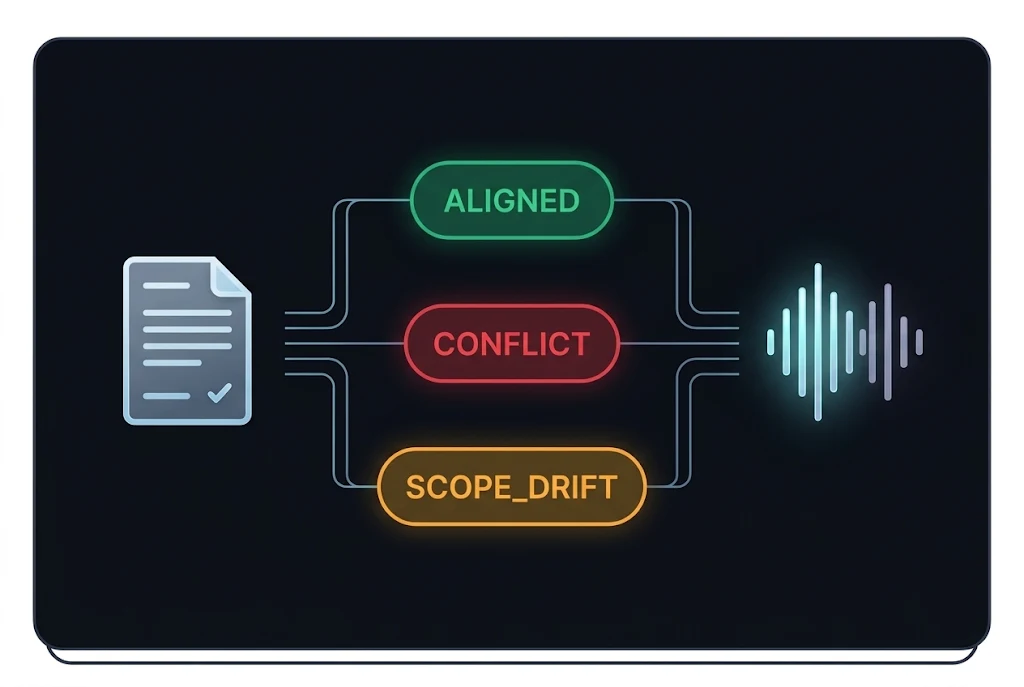
6. Cross-Modal Audit Matrix (ALIGNED vs. CONFLICT vs. SCOPE_DRIFT)
-
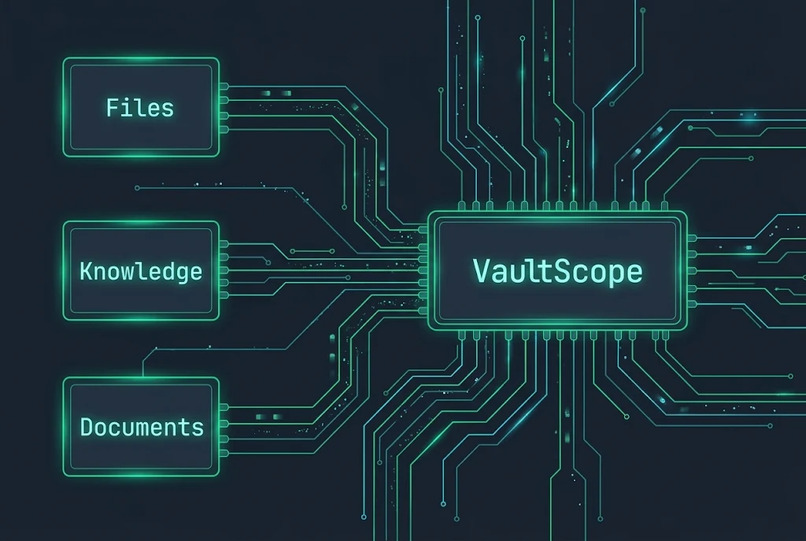
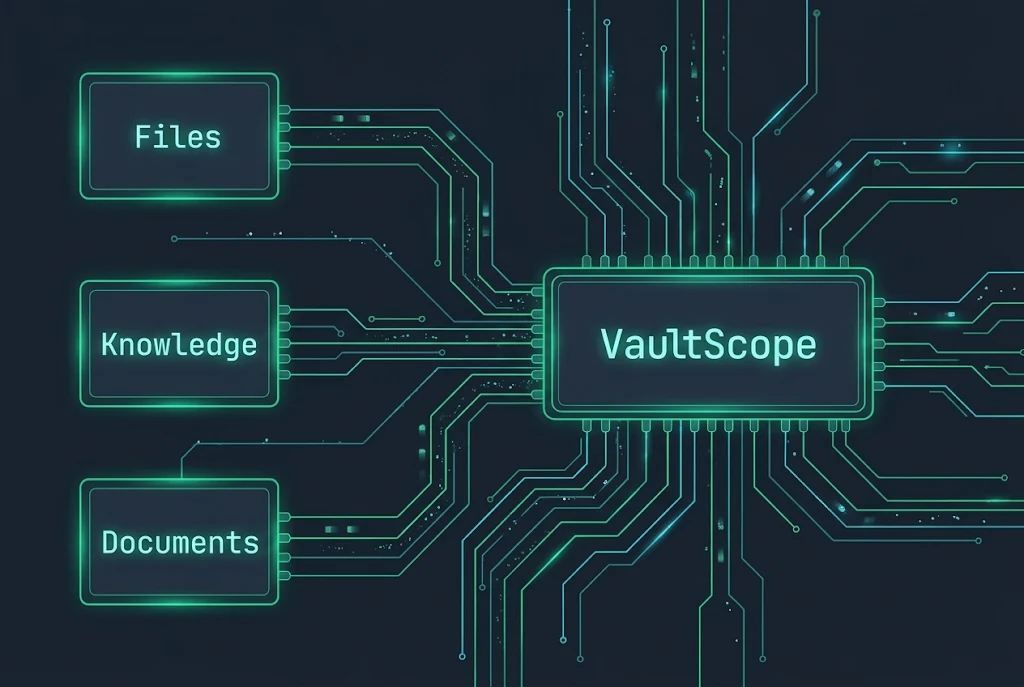
5. Multi-Agent UGOS Architecture (Files + Knowledge + Documents)
-

2. The Problem: Chaotic Intake Folders & Hidden Scope Creep
-
1. Project Identity & Hero Showcase (VaultScope — AethelgardLabs)
-
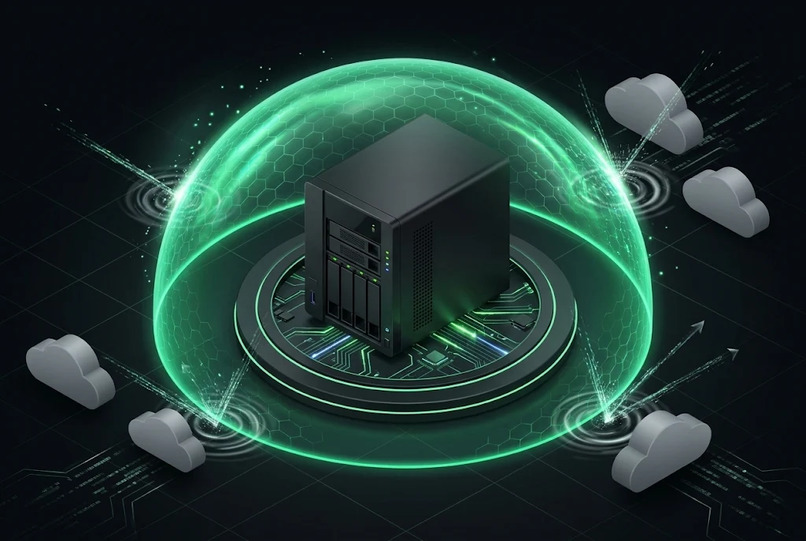
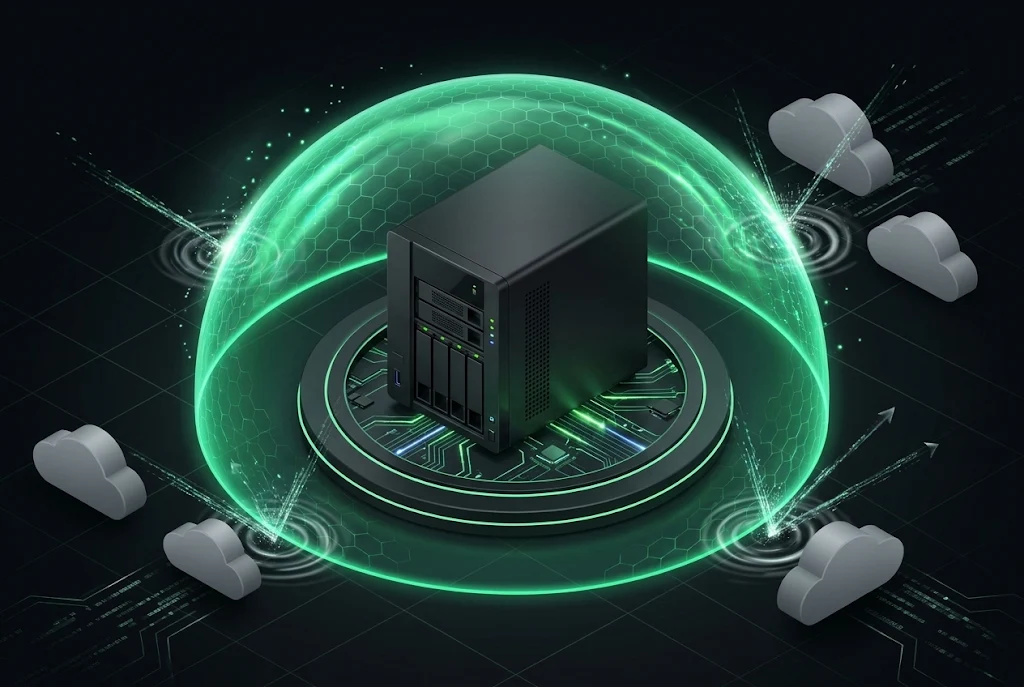
4. AI NAS Fit & Data Sovereignty: 100% Offline Air-Gapped Execution
-

3. The Solution: Cross-Modal Reconciliation Engine
-

7. Two-Phase Commit & Human-in-the-Loop CONFIRM Safety Gate
-
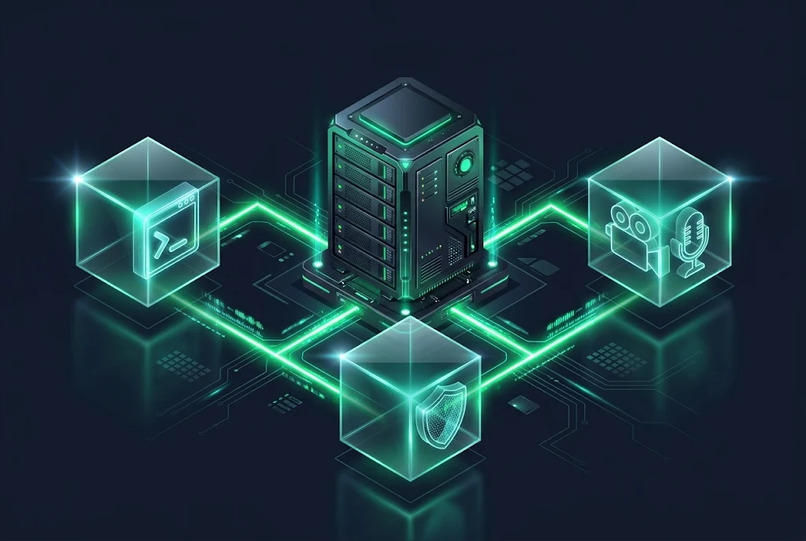
9. Multi-Persona Versatility (Agencies, Creative Studios & Households)
-
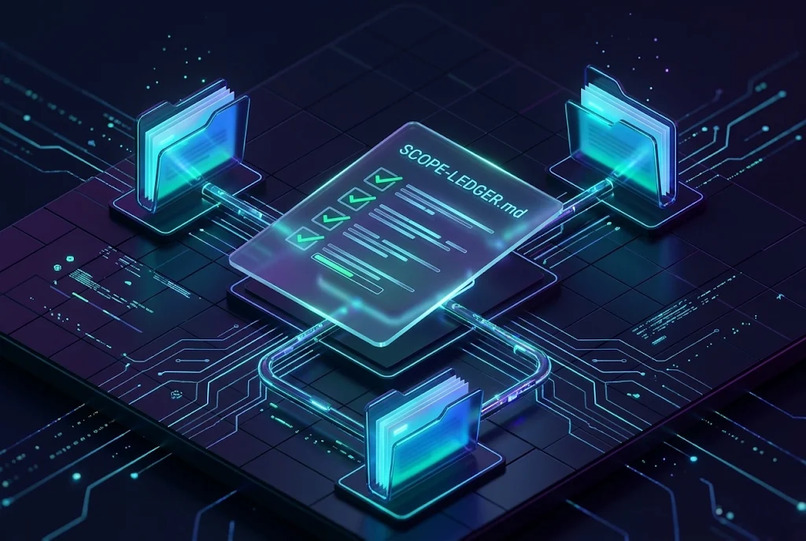
8. Structured Project Workspace & SCOPE-LEDGER.md Output
-

10. Automated Auditing Speed & Workflow Efficiency
-
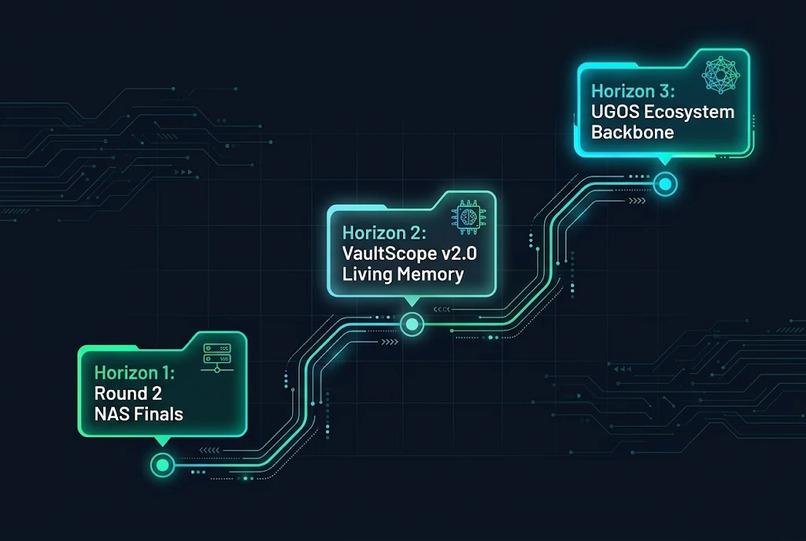
15. Three-Horizon Product & Ecosystem Roadmap (VaultScope v2.0 & UGOS Backbone)
-
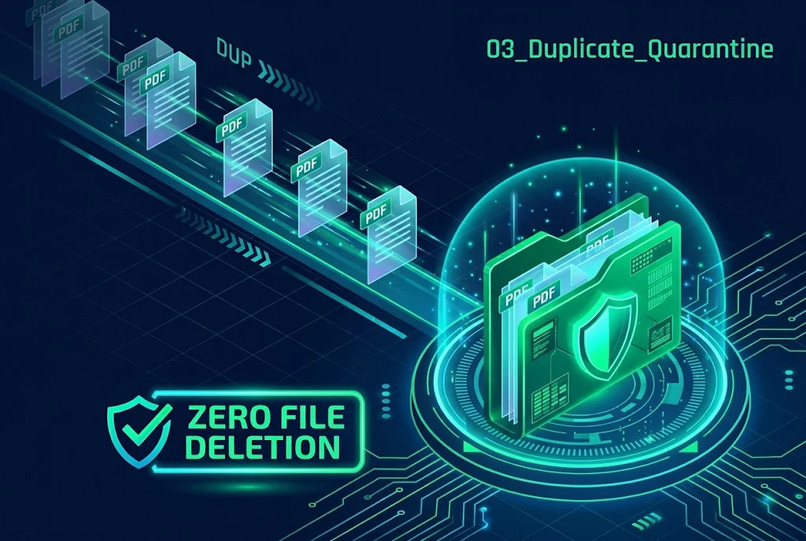
11. Non-Destructive Duplicate Quarantine (03_Duplicate_Quarantine/)
-
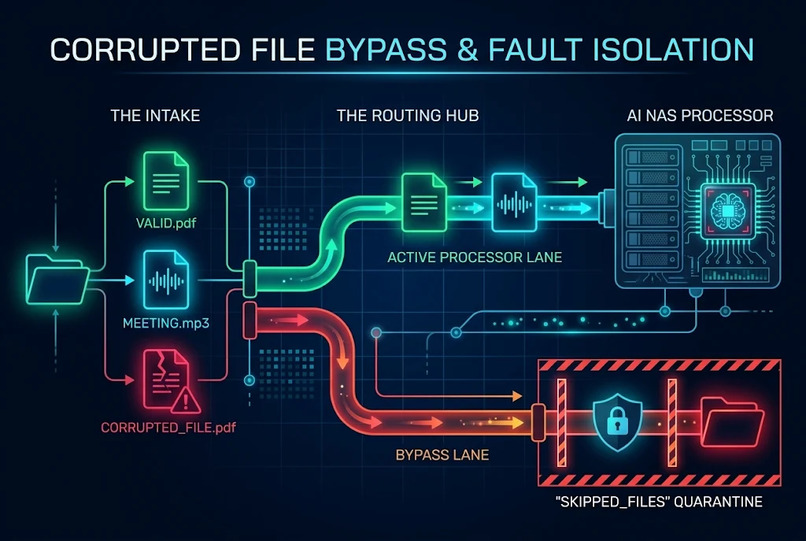
12. Per-File Fault Isolation (SKIPPED_FILES Batch Resilience)
-
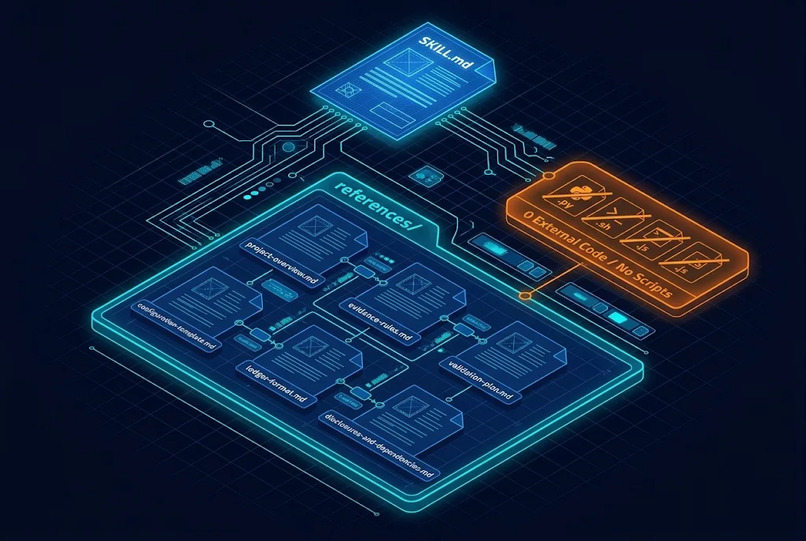
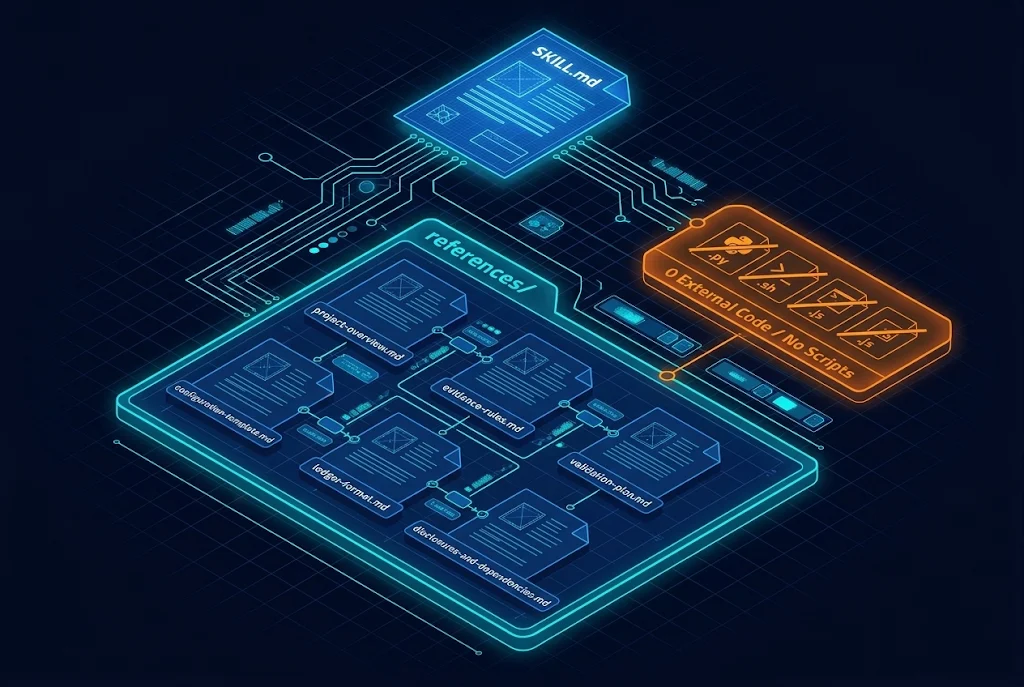
13. Declarative Uliya Skill Architecture (SKILL.md + references/ — Zero Scripts)
-
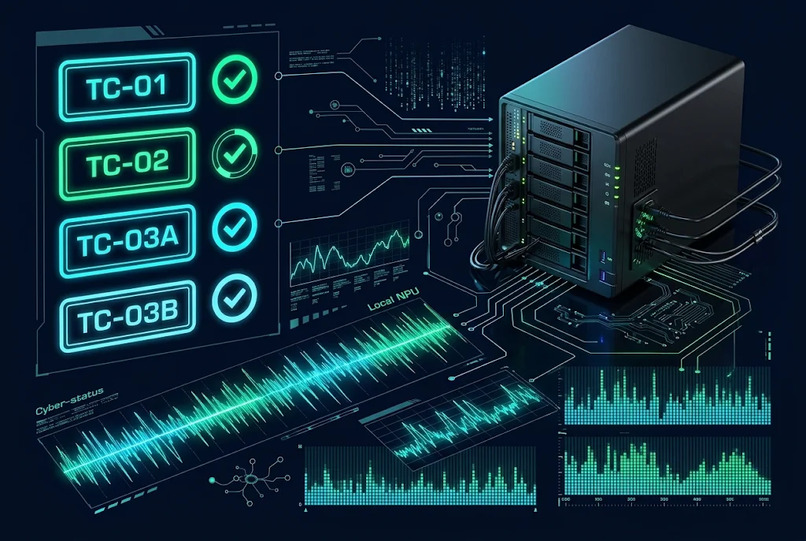
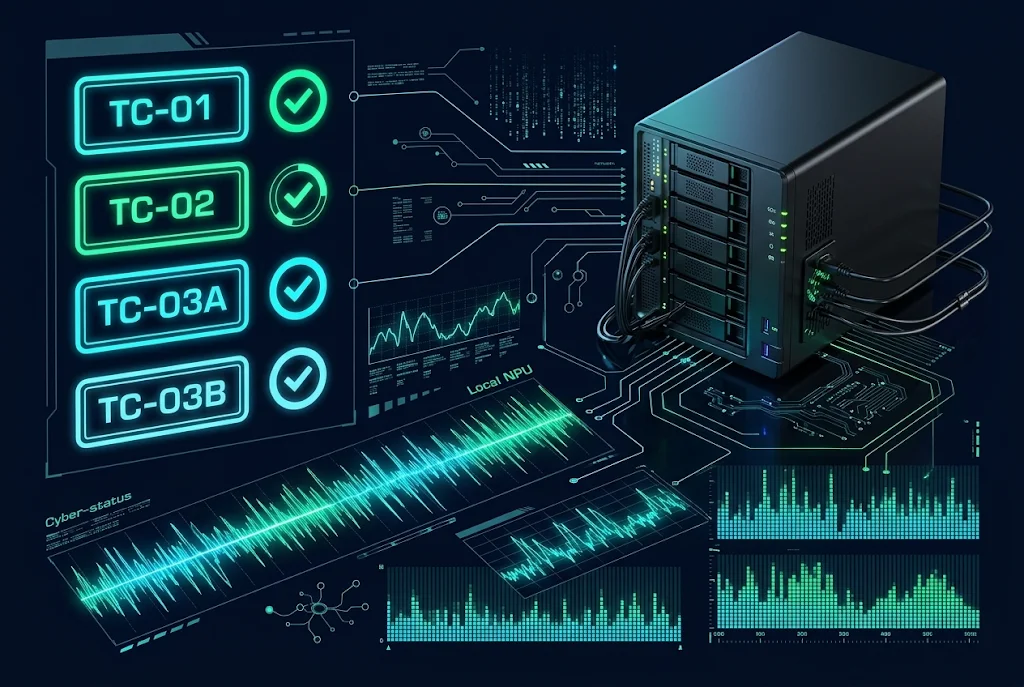
14. UGREEN NASync iDX6011 Pro Hardware Validation Matrix (TC-01 – TC-03B)




Inspiration
At AethelgardLabs, building and shipping multiple software products taught us a hard operational truth: projects rarely fail because of bad code—they fail during chaotic intake and silent scope drift.
Every time a new client sprint, creative production, or critical personal archive comes together, shared drives get flooded with disconnected, multi-format files: a 40-minute recorded discovery call (.mp3), a signed Statement of Work or invoice (.pdf), duplicate revisions, and scattered specification notes. For years, NAS users and teams have been trapped by five unresolved industry failures:
- The "Passive Cold Storage" Trap of Traditional NAS: Historically, Network Attached Storage devices acted like silent digital warehouses—capable of storing terabytes safely, yet completely blind to what lived inside those files. Even when a contract and a meeting recording sat in the same folder, humans still wasted hours manually renaming, deduplicating, and cross-referencing them.
- The Cloud AI Privacy & NDA Dilemma: Cloud AI assistants promise fast summaries, but at an unacceptable cost: forcing founders, agencies, and households to upload confidential NDAs, proprietary specs, financial records, and private voice recordings to external third-party servers.
- Single-Modal Blindness (Why Scope Creep Happens): Industry research shows that over 50% of projects suffer from scope creep. The root cause is disconnected modalities: verbal promises ("Can we add a mobile dashboard by Friday?") live inside audio recordings, while formal deliverables and deadlines live inside written PDFs. Existing tools either transcribe audio or parse PDFs in isolation—none act as an auditor that cross-examines spoken commitments against written contracts.
- Black-Box Hallucination & File-Destruction Anxiety: Users hesitate to let AI organize critical storage because conventional AI tools act like opaque black boxes—fabricating missing details or silently moving and overwriting files without auditability.
- Cloud SaaS Subscription Fatigue: Users invest in dedicated NAS hardware specifically to own their infrastructure—not to pay endless monthly fees for separate cloud transcription, PDF extraction, and workflow tools.
When UGREEN opened UGOS and the Uliya Skill ecosystem—bringing dedicated local NPU compute directly alongside private high-speed NAS storage—the missing piece finally clicked. Intelligence no longer needs to leave your hardware to understand your files.
We built VaultScope to transform the UGREEN AI NAS from passive storage into an auditable, zero-leak project intelligence engine—one that listens to meetings, reads documents locally, flags verbal-vs-written contradictions with exact file citations, quarantines duplicates non-destructively, and organizes every file into a structured workspace without a single byte ever touching the cloud.
What it does
VaultScope (vault-scope) transforms any raw, unorganized intake folder on a UGREEN AI NAS into a structured, conflict-audited project workspace—executing 100% locally on UGOS without ever sending sensitive contracts or recordings to the cloud.
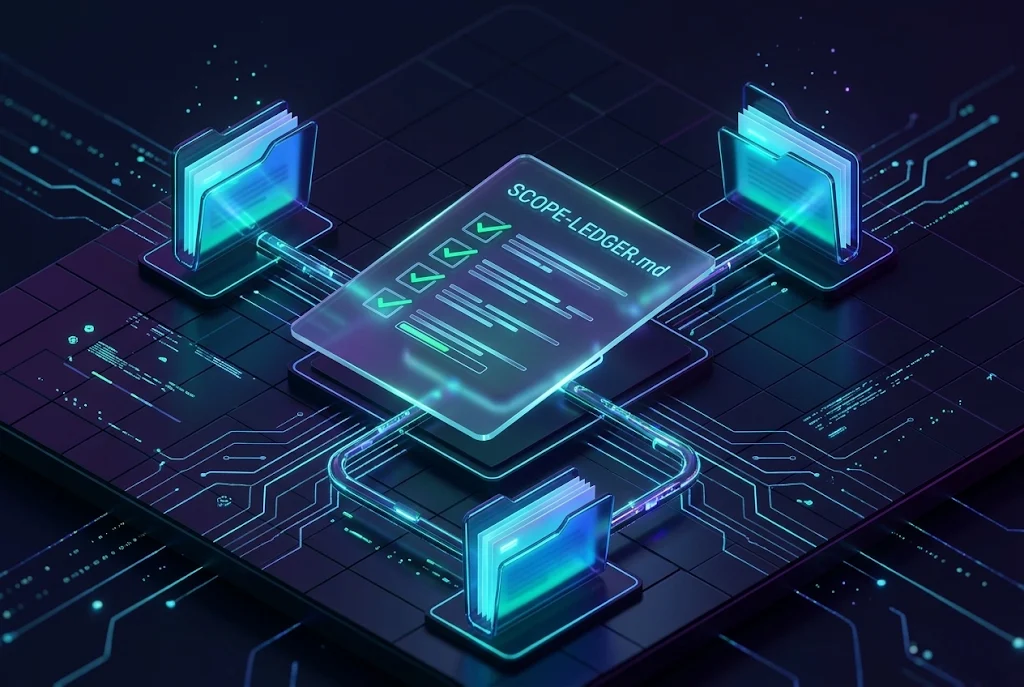
Instead of treating files in isolation, VaultScope acts as an autonomous cross-modal auditor: it listens to your meeting recordings, reads your written documents, cross-examines spoken promises against written contract terms to catch hidden scope drift, generates an auditable SCOPE-LEDGER.md, and reorganizes your workspace only after your explicit approval.
System Architecture & Dataflow
+-----------------------------------------------------------------------+
|                  UGREEN AI NAS (100% LOCAL / OFFLINE)                 |
|                                                                       |
|  [Raw Intake Folder] (e.g., /Shared/Intake/ClientDrop)                |
|           |                                                           |
|           v                                                           |
|  [STEP 1: Files Capability] -> Discovery, MIME Routing & Deduplication|
|      |                  |                        |                    |
|      v                  v                        v                    |
|  (Audio Queue)     (Document Queue)      (Exact Duplicates)           |
|      |                  |                        |                    |
|      v                  v                        |                    |
|  [STEP 2: Knowledge]  [STEP 3: Documents]        |                    |
|  Local Transcription  Clause/Date Parsing        |                    |
|      |                  |                        |                    |
|      +--------+---------+                        |                    |
|               v                                  |                    |
|  [STEP 4: Cross-Modal Reconciliation Engine]     |                    |
|   * Compares Verbal Audio vs. Written Contracts  |                    |
|   * Flags ALIGNED / CONFLICT / SCOPE_DRIFT       |                    |
|   * Attaches Tags |                    |
|               |                                  |                    |
|               v                                  |                    |
|  [STEP 5: Human-in-the-Loop Confirmation Gate]   |                    |
|   * Previews Folder Plan, Moves & Conflict Alerts|                    |
|   * Halts Until User Explicitly Replies: CONFIRM |                    |
|               | (If CONFIRM)                     |                    |
|               v                                  v                    |
|  [STEP 6: Files Capability -> Structured Project Workspace]           |
|   |-- SCOPE-LEDGER.md          (Auditable Reconciliation Report)      |
|   |-- 01_Contracts_And_Docs/   (Verified PDFs, SOWs, Invoices)        |
|   |-- 02_Meeting_Recordings/   (Original Audio Assets)                |
|   +-- 03_Duplicate_Quarantine/ (Non-Destructive Duplicate Isolation)  |
+-----------------------------------------------------------------------+
The 6-Stage Deterministic Execution Pipeline
| Stage | UGOS Capability Used | Core Operation | Output Passed Forward |
|---|---|---|---|
| 1. Discovery & Deduplication | Files |
Enumerates the target intake directory, validates supported file types, detects exact binary duplicates, and splits inputs by modality. | AUDIO_QUEUE, DOCUMENT_QUEUE, and DUPLICATE_LIST |
| 2. Local Audio Intelligence | Knowledge |
Transcribes .mp3, .wav, and .m4a recordings locally and extracts verbal deliverables, dates, and action items. |
Timestamped spoken commitments tagged `` |
| 3. Local Document Parsing | Documents |
Reads .pdf, .docx, .txt, and .md files to extract formal scope items, milestones, budgets, and constraints. |
Structured contractual baseline tagged `` |
| 4. Cross-Modal Reconciliation | Orchestration Logic | Cross-checks normalized audio entities against written document clauses to detect discrepancies and uncontracted additions. | Complete SCOPE-LEDGER.md draft & conflict matrix |
| 5. Safety Confirmation Gate | Interactive Prompt | Displays proposed folder hierarchy, exact file move mappings, conflict alerts, and skipped files; pauses execution. | Explicit user decision (CONFIRM or CANCEL) |
| 6. Workspace Materialization | Files |
Creates /Projects/YYYY-MM-DD_Project-Title/, routes files into clean subfolders, isolates duplicates, and writes SCOPE-LEDGER.md. |
Verified, auditable NAS project workspace |
Cross-Modal Conflict & Provenance Classification
Every extracted requirement is normalized (ISO-8601 dates, explicit currency codes) and assigned one of four auditable statuses inside SCOPE-LEDGER.md:
| Status Flag | Detection Condition | How VaultScope Handles It |
|---|---|---|
ALIGNED |
Verbal statement in audio matches written document terms in scope, deadline, and budget. | Logs under Verified Project Baseline with dual [AUDIO] and [DOC] citations. |
CONFLICT |
Spoken commitment directly contradicts the written contract (e.g., audio demands delivery 7 days earlier than signed PDF). | Elevates to Critical Scope Conflicts Alert Table showing Written vs. Verbal side-by-side. |
SCOPE_DRIFT |
Audio introduces a new deliverable or feature request completely absent from written contracts. | Flags as Uncontracted Scope Addition requiring client sign-off before execution. |
DOC_ONLY |
Formal requirement exists in written documents with no contradicting audio statement. | Preserves as Contractual Baseline with exact [DOC] source provenance. |
Built-In Safety, Privacy & Edge-Case Guardrails
- Zero Cloud Exposure: Every transcription, PDF parse, and reconciliation step runs natively on UGREEN AI NAS hardware—protecting NDAs, legal agreements, and proprietary IP.
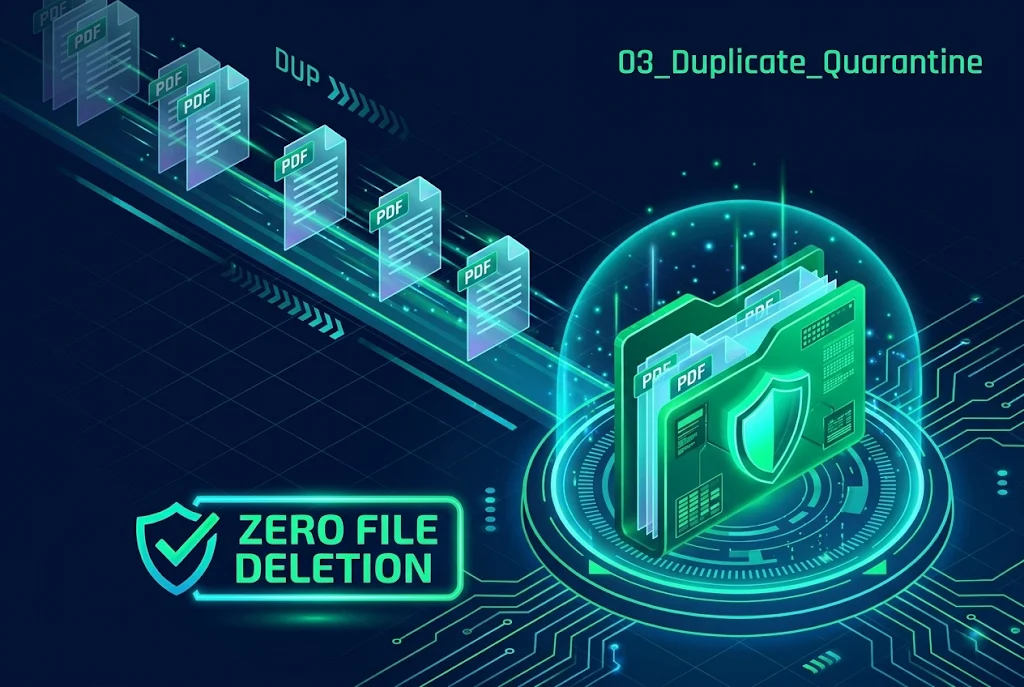
- Non-Destructive Duplicate Quarantine: VaultScope never permanently deletes user data; exact duplicates are safely isolated in
03_Duplicate_Quarantine/only after user approval. - Zero-Hallucination Provenance: Every metric, date, and deliverable in
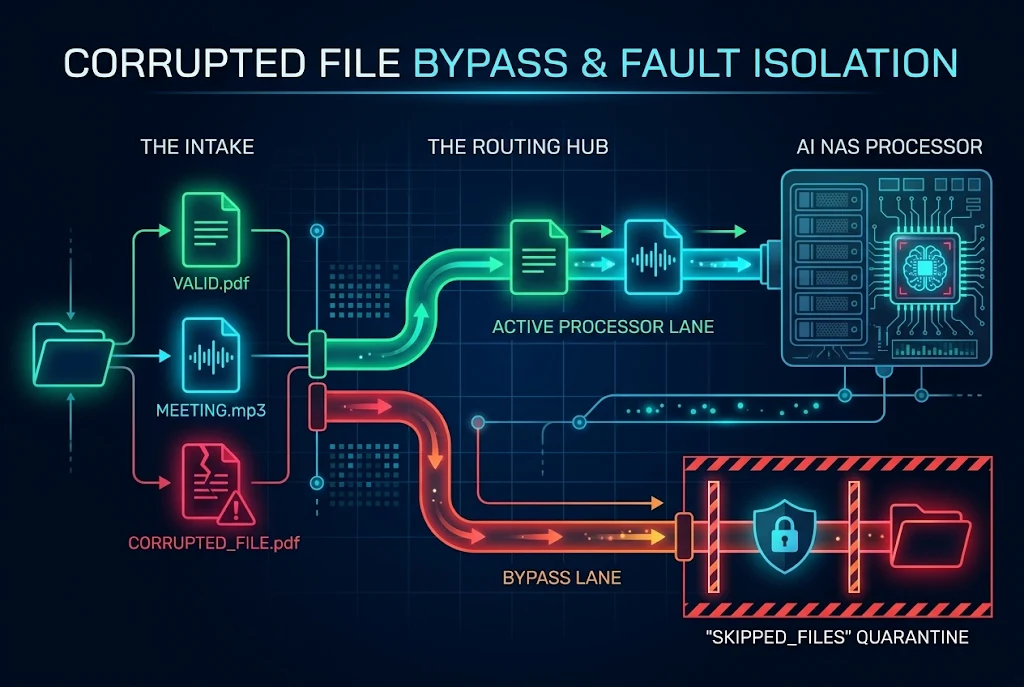
SCOPE-LEDGER.mdis bound to an explicit[SOURCE: filename | DOC/AUDIO]citation—missing fields are strictly markedNot Specified in Inputs. - Graceful Fault Tolerance: Corrupted, zero-byte, or password-protected files never crash the workflow; they are isolated cleanly and logged in an Unprocessed / Skipped Files table with actionable recovery steps.
Real-World Versatility Across NAS Users
| User Persona | Raw Intake Drop | VaultScope Automated Outcome |
|---|---|---|
| Founders & Agencies | Discovery call .mp3 + Signed SOW .pdf + Invoice |
Flags verbal scope creep before coding starts, organizes client assets, and outputs an auditable project baseline. |
| Creative & Media Teams | Director voice brief .wav + Shot list .pdf + Duplicate assets |
Reconciles spoken creative changes against written production briefs and quarantines duplicate media files. |
| Households & Professionals | Advisor call recording .m4a + Policy/Warranty .pdfs |
Extracts renewal dates and coverage terms locally without uploading sensitive family records to cloud AI. |
How we built it
We engineered VaultScope (vault-scope) from first principles to comply 100% with the Uliya Skill Development Standard while squeezing maximum reliability out of the UGREEN AI NAS architecture (such as the NASync iDX6011 Pro with local NPU compute, 64 GB memory, and UGOS Pro).
Rather than relying on fragile, prohibited Python/Bash wrapper scripts or external cloud APIs, we designed VaultScope as a deterministic, declarative multi-agent state machine. Every routing decision, entity normalization rule, conflict check, and storage safety gate is codified in pure, auditable Markdown.
1. Architectural Philosophy: Declarative State-Machine Engineering
Most hackathon submissions treat SKILL.md like a casual chat prompt. That fails on real NAS hardware because unstructured LLM prompts hallucinate file paths, overwrite existing contracts, or break mid-pipeline when a single PDF is corrupted.
We solved this by applying compiler-style pipeline discipline to Uliya agent orchestration:
- Explicit Typed Queues: Step 1 materializes discrete in-memory lists (
AUDIO_QUEUE,DOCUMENT_QUEUE,DUPLICATE_LIST, andSKIPPED_FILES) so downstream capabilities never guess which files to process. - Strict Modality Isolation: Audio transcription (
Knowledge) and document parsing (Documents) run as decoupled extraction stages before any cross-modal comparison occurs. - Immutable Provenance Binding: No requirement can enter
SCOPE-LEDGER.mdwithout an explicit file-level source tag (or). - Transactional Storage Writes: Zero
Fileswrite or move operations are permitted until Step 5 passes an explicit human-in-the-loopCONFIRMgate.
2. Modular 5-File Package Topology
To keep the orchestration engine clean, extensible, and easy for judges and UGOS runtimes to audit, we separated VaultScope into five cohesive Markdown specifications under vault-scope/:
| Package File | Engineering Layer | Core Responsibilities & Enforced Invariants |
|---|---|---|
SKILL.md |
Core Orchestration & State Machine | Defines YAML metadata, required inputs, UGOS capability bindings (Files, Knowledge, Documents), the 6-step deterministic execution pipeline, CONFIRM gate logic, and failure fallbacks. |
references/evidence-rules.md |
Normalization & Audit Engine | Enforces ISO-8601 date formatting, explicit currency standardization, 4 canonical requirement buckets, the 4-state Conflict Classification Matrix, and non-overwrite tie-breaking rules. |
references/ledger-format.md |
Output Schema & Serialization | Defines the exact 5-section Markdown layout of SCOPE-LEDGER.md (Metadata Header, Executive Summary, Critical Conflicts Alert Table, Verified Baseline Table, Workspace Manifest, and Skipped Files Log). |
references/validation-plan.md |
Hardware Verification Matrix | Specifies 4 deterministic Round 2 test suites (TC-01 Multimodal Conflict, TC-02 Cancel Gate, TC-03A Corrupt/Duplicate Resilience, TC-03B Empty Directory Guardrail) for live NAS testing. |
references/disclosures.md |
Governance & Transparency | Certifies original AethelgardLabs authorship, zero external binaries/scripts, zero cloud network transmissions, and full disclosure of AI formatting tools used. |
3. Multi-Agent Capability Chaining & Internal Data Pipeline
To chain native UGOS capabilities without custom glue code, we mapped every stage of the pipeline to strict input/output contracts:
[Raw NAS Folder]
       |
       v
+-------------------------------------------------------------------+
| STAGE 1: Files Capability (Discovery, Hashing & Queue Routing)    |
|  * Validates directory existence & read permissions               |
|  * Isolates exact binary duplicates -> DUPLICATE_LIST             |
|  * Splits valid assets -> AUDIO_QUEUE & DOCUMENT_QUEUE            |
+-------------------------------------------------------------------+
       |                                      |
       v                                      v
+-----------------------------+      +------------------------------+
| STAGE 2: Knowledge Expert   |      | STAGE 3: Documents Expert    |
|  * Local ASR transcription  |      |  * Local PDF/DOCX extraction |
|  * Extracts verbal promises |      |  * Extracts SOW clauses & fees|
|  * Tags |      |  * Tags    |
+-----------------------------+      +------------------------------+
       |                                      |
       +------------------+-------------------+
                          v
+-------------------------------------------------------------------+
| STAGE 4: Entity Normalization & Cross-Modal Conflict Matrix       |
|  * Normalizes dates (YYYY-MM-DD) & currency codes (e.g., USD)     |
|  * Maps items to 4 canonical categories                           |
|  * Classifies: ALIGNED | CONFLICT | SCOPE_DRIFT | DOC_ONLY        |
+-------------------------------------------------------------------+
                          |
                          v
+-------------------------------------------------------------------+
| STAGE 5: Transactional Preview & Human Confirmation Gate          |
|  * Renders exact folder tree, move map & conflict count           |
|  * Blocks all storage writes until explicit user input: CONFIRM   |
+-------------------------------------------------------------------+
                          | (On CONFIRM)
                          v
+-------------------------------------------------------------------+
| STAGE 6: Files Capability (Workspace Materialization)             |
|  * Creates /Projects/{YYYY-MM-DD}_{Sanitized-Project-Title}/      |
|  * Moves docs -> 01_Contracts_And_Docs/                           |
|  * Moves audio -> 02_Meeting_Recordings/                          |
|  * Isolates duplicates -> 03_Duplicate_Quarantine/                |
|  * Serializes final SCOPE-LEDGER.md at workspace root             |
+-------------------------------------------------------------------+
4. Entity Normalization & Cross-Modal Reconciliation Logic
A major technical hurdle in comparing spoken audio against written PDFs is linguistic mismatch—a contract might read "Delivery due December 20, 2026 for a total fee of $4,500," while a client voice note says "We need this shipped by the 12th of December."
We built a three-step reconciliation ruleset in references/evidence-rules.md to make comparisons deterministic:
- Canonical Normalization: All explicit calendar dates are converted to
YYYY-MM-DD(while relative timelines like "within 5 business days" are preserved verbatim), and monetary values are standardized with explicit ISO currency codes. - 4-Bucket Schema Mapping: Every extracted clause or verbal commitment is categorized into
Deliverable,Milestone / Deadline,Budget / Commercial, orSecurity / Constraint. - Contractual Baseline Tie-Breaking: Written documents always serve as the authoritative Contractual Baseline, whereas audio transcripts are evaluated as Change Requests / Discussion Logs. If a spoken deadline or feature contradicts the PDF, VaultScope never silently overwrites the contract—it surfaces both side-by-side in Section 2 of
SCOPE-LEDGER.mdunderCONFLICTorSCOPE_DRIFT.
5. Zero-Destruction Storage Safety & Fault-Tolerance Engineering
Because VaultScope operates directly on valuable local NAS directories, we engineered four defensive guardrails into SKILL.md:
| Safety Mechanism | Failure Mode Prevented | Exact Deterministic Behavior |
|---|---|---|
| Missing/Empty Directory Guardrail | Creating empty project shells or scanning unintended parent folders | Halts immediately at Step 1 with zero storage writes if the target path is missing, unreadable, or holds zero supported files. |
Per-File Fault Isolation (SKIPPED_FILES) |
One encrypted, password-protected, or 0-byte file crashing an entire client batch | Bypasses the unreadable file cleanly, leaves it untouched in the intake folder, logs the exact failure reason in Section 5 of SCOPE-LEDGER.md, and finishes all valid files. |
Mandatory CONFIRM Gate |
Unwanted file moves or directory restructuring | Displays the full destination tree, move mapping, and conflict summary at Step 5; aborts with zero changes on CANCEL or any non-CONFIRM reply. |
| Non-Destructive Duplicate Quarantine | Accidental permanent deletion of slightly different file versions | Routes exact binary duplicates into 03_Duplicate_Quarantine/ post-confirmation rather than invoking destructive delete operations. |
Challenges we ran into
Challenges we ran into
Building an autonomous, privacy-first file orchestrator that operates directly on live UGREEN AI NAS storage without external scripts or cloud fallbacks forced us to solve six hard engineering and architectural challenges:
Overview of Engineering Bottlenecks & Resolutions
| Challenge Domain | Core Technical Bottleneck | VaultScope Architectural Solution |
|---|---|---|
| 1. Declarative State Passing | Uliya Skills prohibit .py, .sh, or custom runtime scripts to store variables or loop over arrays across steps. |
Engineered explicit typed queues (AUDIO_QUEUE, DOCUMENT_QUEUE, DUPLICATE_LIST, SKIPPED_FILES) in SKILL.md with strict step-to-step input/output contracts. |
| 2. Cross-Modal Semantic Asymmetry | Spoken audio uses casual, relative phrasing ("next Friday"), whereas PDFs use formal legal clauses and exact dates. | Built a 3-tier normalization pipeline (YYYY-MM-DD, ISO currency codes, 4 canonical categories) plus a Contractual Baseline Tie-Breaking Policy in evidence-rules.md. |
| 3. Hallucination & Ghost Citations | Local LLMs can blend facts across multiple client PDFs in the same folder or invent missing contract deadlines. | Enforced immutable provenance tags (and) on every claim and mandated Not Specified in Inputs for absent data. |
| 4. Storage Safety & Non-Destruction | Autonomous file movers risk corrupting active directories or permanently deleting near-duplicate file revisions. | Implemented a two-phase commit workflow: read-only memory analysis followed by a mandatory Step 5 CONFIRM gate and non-destructive 03_Duplicate_Quarantine/. |
| 5. Edge NPU & Batch Fault Tolerance | A single encrypted, 0-byte, or corrupted PDF—or an oversized audio file—can stall or crash an entire batch on local hardware. | Added per-file fault isolation (SKIPPED_FILES) so unreadable files are bypassed cleanly and logged in Section 5 of SCOPE-LEDGER.md while valid files finish. |
| 6. Audit Rigor vs. Multi-Persona Clarity | Balancing deep legal/contract traceability for agencies with clean readability for creative teams and households. | Structured ledger-format.md using progressive disclosure—putting an Executive Summary and Critical Conflicts Table up front, backed by full manifests below. |
Deep-Dive Into Each Technical Challenge
1. Chaining Multi-Modal Capabilities Without Imperative Code
Under the Uliya Skill Development Standard, a Skill package cannot bundle Python scripts, shell wrappers, or external JSON state files to pass data between capabilities. When an intake folder holds a dozen mixed .mp3, .wav, .pdf, and .docx files, naive prompt chaining quickly loses track of which files were already parsed or deduplicated.
- How we overcame it: We treated
SKILL.mdlike a deterministic state machine. Step 1 (Files) explicitly partitions discovered assets into named collections (AUDIO_QUEUE,DOCUMENT_QUEUE,DUPLICATE_LIST). Step 2 (Knowledge) and Step 3 (Documents) are strictly scoped to their respective queues, and Step 4 merges both tagged outputs in memory before any workspace mutation occurs.
2. Resolving Spoken vs. Written Linguistic & Temporal Asymmetry
A client on a recorded call rarely speaks in contract syntax—they say "Let's pull delivery up by a week and throw in an admin export," while the signed Statement of Work reads "Final Delivery: 2026-12-20; Scope: Core Web Portal." Comparing raw transcripts against raw PDF text causes either missed scope creep or false-positive conflict alerts.
- How we overcame it: In
references/evidence-rules.md, we codified a normalization pass that standardizes explicit dates to ISO-8601 (YYYY-MM-DD), preserves relative timelines verbatim, and maps every requirement into four canonical buckets (Deliverable,Milestone / Deadline,Budget / Commercial,Security / Constraint). Crucially, we established a Contractual Baseline Tie-Breaking Rule: written documents always anchor the baseline, while contradicting spoken requests are surfaced side-by-side in Section 2 asCONFLICTorSCOPE_DRIFT—never silently overwriting signed terms.
3. Eliminating Cross-Document Bleed & Hallucinated Dates
When a user drops multiple documents (e.g., an NDA, an SOW, and an invoice) alongside multiple audio clips into one intake directory, standard LLM summarization often blends a payment date from the invoice onto a deliverable from the SOW, or fabricates missing dates to fill table cells.
- How we overcame it: We enforced strict Provenance Binding across every stage. Every extracted fact must carry
or, and any attribute absent from all source files must output the literal stringNot Specified in Inputs.
4. Designing Zero-Destruction Guarantees for Live NAS Storage
Users rightfully distrust autonomous agents that reorganize shared network drives without guardrails. A wrong folder path or aggressive duplicate cleanup could disrupt team workflows or erase slightly different contract drafts.
- How we overcame it: We designed VaultScope around a Two-Phase Commit Architecture. Steps 1 through 4 are 100% read-only—computing the entire directory layout, file move map, and
SCOPE-LEDGER.mdin memory first. Execution halts at Step 5 until the user reviews the exact preview and typesCONFIRM. Furthermore, exact binary duplicates are never deleted; they are safely isolated in03_Duplicate_Quarantine/.
5. Local NPU Resource Boundaries & Mixed-Batch Fault Isolation
Even on powerful local NAS hardware like the UGREEN NASync iDX6011 Pro (Intel Core Ultra 7, 64 GB RAM), real-world intake folders contain messy edge cases: password-protected PDFs, 0-byte corrupted downloads, un-OCRed scans, or multi-hour audio recordings that can bottleneck local transcription.
- How we overcame it: Rather than letting one bad file abort the entire workflow, we built graceful per-file fault isolation (
SKIPPED_FILES). Unreadable or encrypted files are left untouched in the intake directory, documented with actionable recovery steps in Section 5 ofSCOPE-LEDGER.md, and excluded from blocking valid files—while ourreferences/validation-plan.mddefines targeted Round 2 latency benchmarks for local NPU execution.
6. Balancing Enterprise Auditability With Everyday Usability
A ledger built strictly for software lawyers would overwhelm a creative director organizing voice briefs or a family archiving insurance policies and advisor calls on their home NAS.
- How we overcame it: We designed
references/ledger-format.mdaround progressive disclosure. A 4-sentence Executive Project Summary and a high-contrast Critical Scope Conflicts & Drift Alerts table sit at the very top for instant 10-second scanning, while granular requirement baselines, workspace manifests, and skipped-file logs sit cleanly below for full auditability. ## Accomplishments that we're proud of
At AethelgardLabs, we set out to prove that a UGREEN AI NAS can be far more than passive network storage—it can act as a private, trustworthy project auditor. We are proud of five major architectural and product breakthroughs we achieved in VaultScope (vault-scope):
Impact Alignment Across Hackathon Judging Pillars
| Judging Pillar | VaultScope Milestone Achieved | Measurable Engineering & User Impact |
|---|---|---|
| Innovation & Differentiation | Cross-Modal Evidence Reconciliation | Replaces passive single-file summaries with active Audio vs. PDF auditing—catching CONFLICT and SCOPE_DRIFT before unpaid rework begins. |
| AI NAS Fit & Privacy | 100% Air-Gapped Local Execution | Chains native UGOS Files, Knowledge, and Documents locally on NAS hardware with zero external cloud APIs, zero NDA leaks, and zero SaaS fees. |
| Technical Quality | Declarative Two-Phase State Machine | Delivers deterministic queue routing, immutable file citations, per-file fault isolation, and a mandatory CONFIRM gate without prohibited scripts. |
| User Value & Versatility | Progressive-Disclosure SCOPE-LEDGER.md |
Serves software agencies, creative production teams, and households alike with an executive conflict alert table backed by full file manifests. |
Deep-Dive Into Our Five Core Accomplishments
1. Pioneering Cross-Modal Reconciliation (Knowledge + Documents Auditing)
Most AI file tools process documents and audio in silos—giving users a summary of a PDF and a separate transcript of a call, while leaving humans to manually spot contradictions. We built an automated cross-modal reconciliation engine that normalizes spoken commitments and written clauses side-by-side, elevating hidden deadline mismatches (CONFLICT) and uncontracted feature requests (SCOPE_DRIFT) into a high-visibility alert table before project execution starts.
2. Achieving 100% Data Sovereignty on UGREEN AI NAS Hardware
Founders, legal teams, and families should never have to choose between AI productivity and data privacy. By orchestrating UGOS Pro native capabilities (Files, Knowledge, and Documents) strictly on local NAS storage and NPU compute, VaultScope keeps confidential NDAs, signed Statements of Work, financial invoices, and private voice recordings completely offline—never transmitting a single byte to third-party cloud servers.
3. Building a Deterministic State Machine Without Custom Scripts
Adhering strictly to the Uliya Skill Development Standard meant engineering multi-step logic without Python, Bash, or external binaries. We achieved compiler-grade reliability in pure Markdown (SKILL.md + four modular references/*.md specifications) by introducing explicit typed queues (AUDIO_QUEUE, DOCUMENT_QUEUE, DUPLICATE_LIST, SKIPPED_FILES) and strict step-to-step input/output contracts.
4. Eliminating Black-Box Anxiety With Provenance & Zero-Destruction Safety
We refused to build an AI agent that guesses missing dates or silently moves critical files. Every single requirement written into SCOPE-LEDGER.md is bound to an immutable file citation (or), missing fields strictly output Not Specified in Inputs, exact binary duplicates are safely isolated in 03_Duplicate_Quarantine/ rather than deleted, and zero storage writes happen until the user explicitly types CONFIRM.
5. Designing Universal Utility Across Professional & Personal NAS Workflows
By structuring SCOPE-LEDGER.md around progressive disclosure—placing a 4-sentence Executive Project Summary and Critical Scope Conflicts Table at the top, followed by granular requirement baselines and workspace manifests—we created a single Skill that works seamlessly for engineering teams onboarding clients, media teams reconciling director voice briefs, and households organizing insurance policies and advisor calls.
What we learned
What we learned
Architecting VaultScope (vault-scope) for the UGREEN AI NAS ecosystem fundamentally reshaped how we design autonomous AI workflows. Moving away from cloud-dependent Python prototypes to a 100% local, declarative Uliya Skill taught us five core engineering lessons:
Summary of Core Technical & Architectural Takeaways
| Learning Pillar | Old Paradigm (Cloud / Scripted AI) | New Paradigm (VaultScope on UGREEN AI NAS) |
|---|---|---|
| 1. Specification Design | Imperative glue scripts (.py, .sh) with fragile regex parsing and ad-hoc prompts. |
Strong Declarative Specifications in Markdown (SKILL.md + references/*.md) with typed queues and strict step contracts. |
| 2. Cross-Modal Truth | Treating audio transcripts and PDF summaries as equal, isolated text blobs. | Asymmetric Contractual Tie-Breaking—anchoring signed PDFs as the baseline and auditing audio as change requests. |
| 3. Hallucination Control | Trusting LLM synthesis to merge dates and deliverables across multiple files automatically. | Immutable Provenance Binding—requiring `on every fact andNot Specified in Inputs` when absent. |
| 4. Storage Autonomy | Letting agents silently rename, overwrite, or delete files in the background. | Two-Phase Commit Architecture—separating read-only analysis from disk writes via a mandatory CONFIRM gate and 03_Duplicate_Quarantine/. |
| 5. Edge Fault Tolerance | Assuming clean, single-file demo inputs where any corrupted file aborts the run. | Per-File Fault Isolation (SKIPPED_FILES)—bypassing unreadable files cleanly while completing valid batches on local NAS hardware. |
Deep-Dive Into Our Five Key Learnings
1. Strong Declarative Specifications Outperform Fragile Glue Scripts
When we first approached the Uliya Skill Development Standard, prohibiting custom .py or .sh scripts felt like a constraint. In practice, it forced us to become better systems architects. We learned that when every stage defines explicit input/output queues (AUDIO_QUEUE, DOCUMENT_QUEUE, DUPLICATE_LIST, SKIPPED_FILES) and deterministic routing rules, native UGOS capabilities (Files, Knowledge, Documents) compose cleanly without brittle runtime dependencies.
2. Cross-Modal Reconciliation Needs Contractual Tie-Breaking Rules
Initially, we assumed comparing an .mp3 transcript against a .pdf contract was a straightforward semantic diff. We quickly realized that spoken language and legal writing have different authority levels: a client casually saying "Can we push this live next Friday?" should never silently overwrite a signed Statement of Work deadline. Codifying a formal Contractual Baseline Policy in references/evidence-rules.md taught us how to surface CONFLICT and SCOPE_DRIFT alerts objectively without corrupting verified baselines.
3. Provenance Tagging Is the Antidote to Multi-Document Bleed
When multiple documents and recordings sit in the same intake folder, LLMs naturally blend payment terms from an invoice with deliverables from a project brief. Enforcing strict source citations (and) alongside a hard ban on guessing missing fields taught us how to make local AI outputs auditable enough for real business and legal use.
4. Trust on Local NAS Storage Requires a Two-Phase Commit Model
A NAS holds a user's most important data—client contracts, family archives, and proprietary work. We learned that true workflow automation is not about removing the human; it is about eliminating manual busywork while keeping the human in command of irreversible storage actions. Separating read-only reasoning (Steps 1–4) from workspace materialization (Step 6) via an explicit Step 5 CONFIRM gate and non-destructive duplicate quarantine builds immediate user confidence.
5. Designing for Edge Hardware Means Planning for Messy Real-World Inputs
Local NAS environments encounter real-world chaos: password-protected PDFs, 0-byte failed downloads, duplicate copies, and empty folders. Designing explicit guardrails—halting cleanly on empty directories at Step 1 and isolating corrupt files into SKIPPED_FILES rather than crashing—taught us how to build resilient edge workflows ready for live UGREEN NASync iDX6011 Pro hardware validation.
What's next for VaultScope
What's next for VaultScope
At AethelgardLabs, we designed VaultScope (vault-scope) not as a one-off hackathon prototype, but as the foundational intelligence layer for how teams, creators, and households manage critical projects on UGREEN AI NAS.
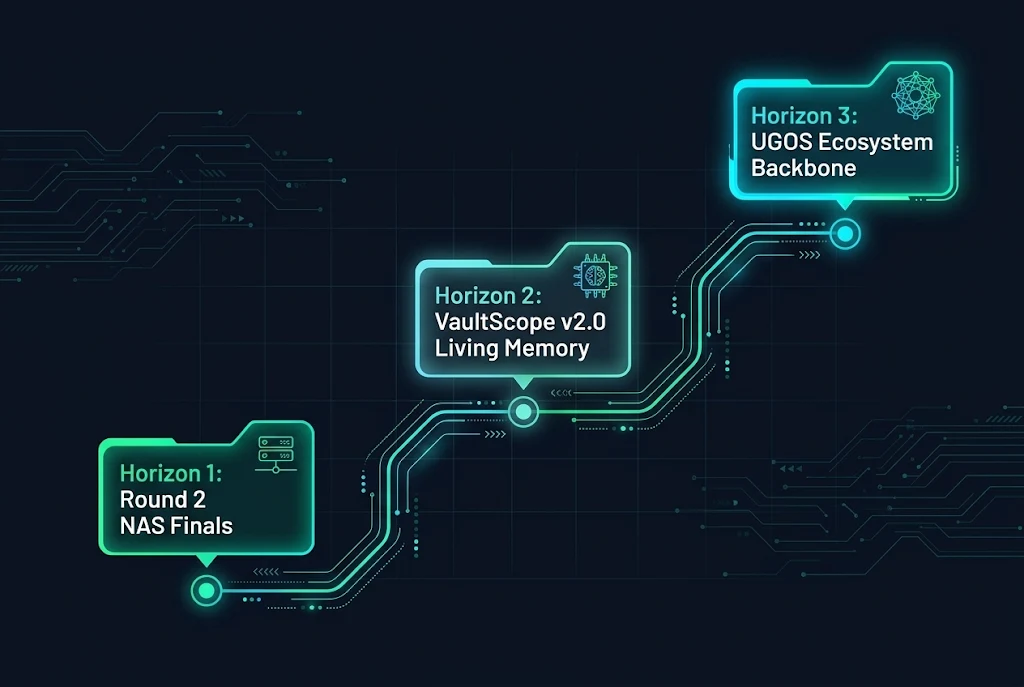
Our roadmap progresses across three clear horizons—from immediate Round 2 live hardware execution to transforming VaultScope into a flagship UGREEN Skills Hub standard:
Three-Horizon Product & Ecosystem Roadmap
| Horizon | Timeline / Phase | Strategic Focus | Core Deliverables & Capabilities |
|---|---|---|---|
| Horizon 1: Round 2 Finals | Nov 22–30, 2026 | Live Hardware Validation & NPU Benchmarking | Execute TC-01–TC-03B on the UGREEN NASync iDX6011 Pro, benchmark local NPU latency, and film our 3-minute UGOS demo video. |
| Horizon 2: VaultScope v2.0 | Q1 2027 | Continuous Living Project Memory & Auto-Addendums | Multi-revision PDF diffing (v1 vs. v2 contracts), incremental weekly call ingestion, and automated CHANGE-ORDER-BRIEF.md drafting. |
| Horizon 3: UGOS Ecosystem | 2027 & Beyond | Cross-Skill Composability & Domain Audit Packs | Plug-and-play industry profiles (Legal, Media, Engineering, Home) and structured ledger APIs for other Uliya Skills on the NAS. |
Deep-Dive Into the Future of VaultScope
1. Immediate Round 2 Execution on Live UGREEN AI NAS Hardware
Upon advancing to the Top 30 Finalists, AethelgardLabs will deploy VaultScope directly onto our assigned UGREEN NASync iDX6011 Pro (Intel Core Ultra 7 255H, 96 peak TOPS AI compute, 64 GB LPDDR5x RAM, running UGOS Pro):
- Full Validation Matrix (
TC-01toTC-03B): Verify end-to-endFiles->Knowledge->Documents->Filesorchestration on live NAS volumes, proving conflict detection,CANCELgate safety, non-destructive duplicate quarantine, and corrupt-file fault isolation. - Local NPU Throughput Tuning: Benchmark multi-file batches (long-form
.mp3client calls alongside multi-page.pdfcontracts) to optimize prompt chunking for zero-timeout reliability. - Live End-to-End Video Showcase: Record an unedited 3-minute walkthrough demonstrating raw files dropped into
/Shared/Intake/, VaultScope catching verbal-vs-written scope drift, andSCOPE-LEDGER.mdmaterializing post-CONFIRM.
2. Evolving From One-Time Intake to a "Living Project Memory" (VaultScope v2.0)
Right now, VaultScope audits initial project onboarding. Next, we will expand it into a continuous lifecycle guardian for every project folder on the NAS:
- Multi-Revision Document Diffing (
v1vs.v2Contracts): Upgradereferences/evidence-rules.mdso VaultScope compares revised PDF contracts (SOW_v1.pdfvs.SOW_v2_Final.pdf) against both earlier drafts and spoken recordings—catching silent redlines in written paperwork as well as verbal calls. - Incremental Check-In Ingestion: Allow users to drop weekly follow-up recordings into an existing
/Projects/{YYYY-MM-DD}_{Project-Title}/workspace so VaultScope appends timestamped audit entries toSCOPE-LEDGER.mdwithout duplicating earlier baseline items. - Automated Change-Order & Addendum Drafting: Whenever
CONFLICTorSCOPE_DRIFTalerts are triggered, VaultScope will automatically generate a ready-to-sendCHANGE-ORDER-BRIEF.mdcontaining exact audio/PDF citations—giving founders and freelancers an immediate, objective document to share with clients for written sign-off.
3. Becoming the "Verified Context Backbone" of the UGREEN Skills Ecosystem
Our long-term vision is for SCOPE-LEDGER.md to serve as a standardized, privacy-preserving Source of Truth across a user's entire UGREEN AI NAS:
- Plug-and-Play Domain Audit Profiles: Ship modular rule packs in
references/tailored for Software & Agency SOWs, Creative & Video Production Briefs, Legal & Compliance Discovery, and Household Insurance & Warranty Vaults. - Cross-Skill Composability on UGOS: Because
SCOPE-LEDGER.mdnormalizes dates (YYYY-MM-DD), deliverables, and budgets into clean Markdown tables with exact file citations, future Uliya Skills on the NAS (such as deadline reminder agents, invoice trackers, or developer workflow tools) will be able to read verified project baselines locally without ever re-parsing raw PDFs or audio files. - Zero-Leak Team Governance: Empower small studios, startups, and families sharing a UGREEN AI NAS to maintain self-auditing project workspaces—turning every NAS into an autonomous, zero-subscription operations hub.
Built With
- ai-agent-orchestration
- audio-transcription
- contract-auditing
- data-sovereignty
- declarative-ai
- deduplication
- document-parsing
- edge-ai
- file-organization
- human-in-the-loop
- local-ai
- markdown
- multi-agent-systems
- multimodal-ai
- nasautomation
- offline-ai
- pdf-processing
- privacy-first
- scope-management
- ugos
- ugos-pro
- ugreen-ai-nas
- uliya-skill-standard
- workflow-automation
- zero-hallucination

