Inspiration
Receipts are easy to lose, and warranty details are hard to find when you need them. Vaultly was inspired by the idea that keeping proof of a purchase should feel simple: save a receipt once, then have its purchase details and deadlines close at hand.
What it does
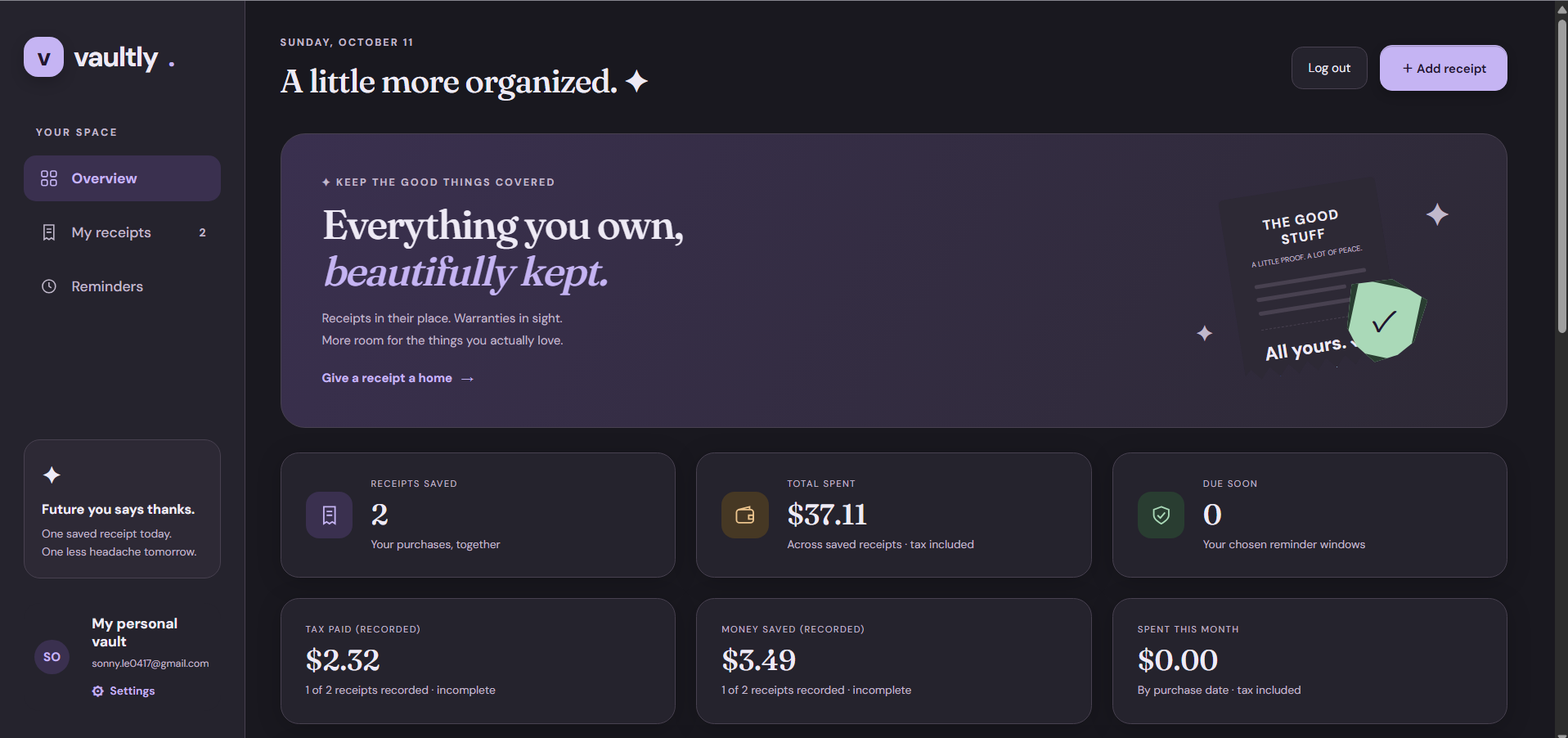
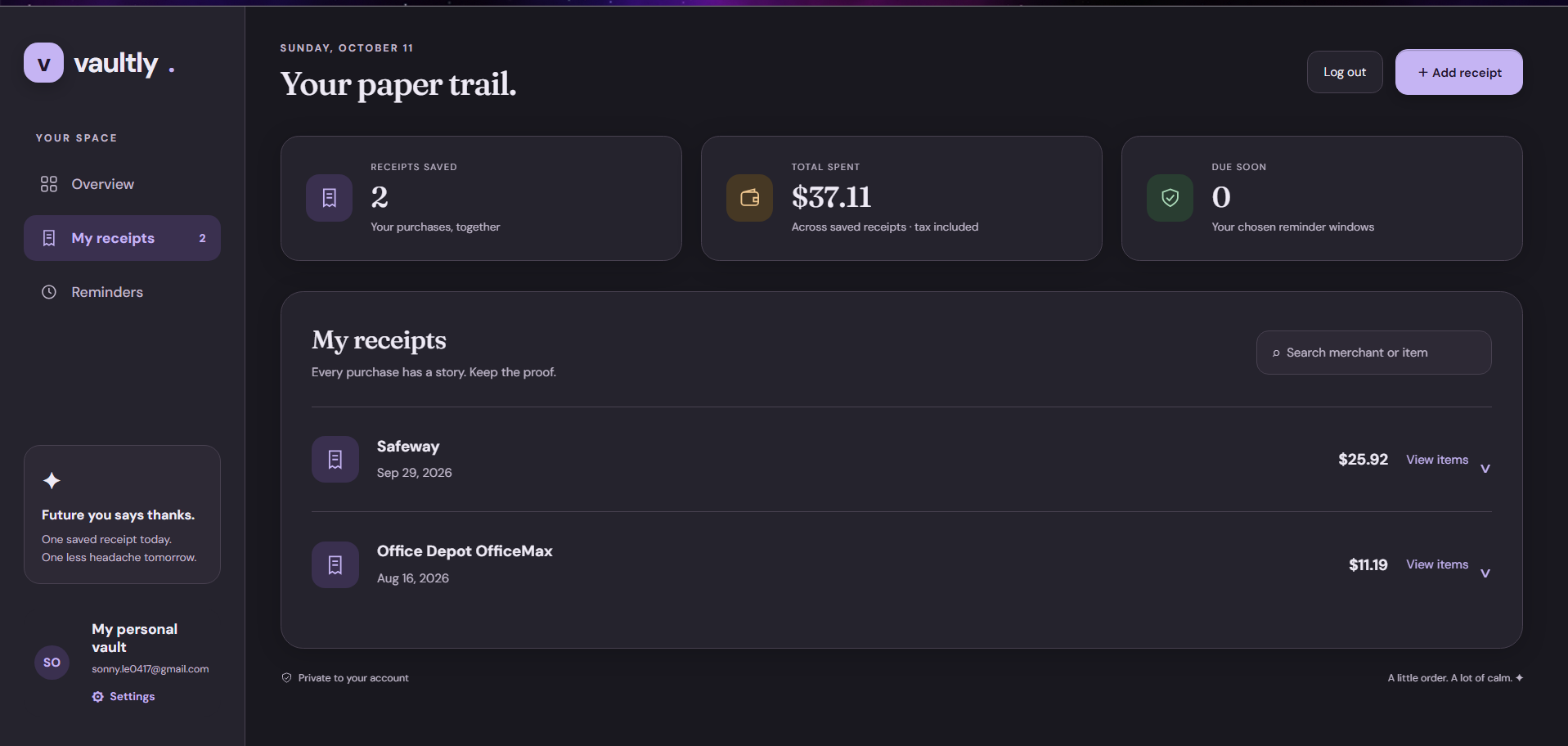
Vaultly is a private receipt and warranty organizer. Users can upload a receipt, use GPT-6 Luna to suggest the merchant, items, total, and purchase date, then review and edit those details before saving. Users can also enter receipts manually, track user-confirmed warranty and return dates, organize purchases by category, and view spending, tax, and recorded savings summaries. Personalization includes profile, appearance, dashboard, category, and reminder settings.
How we built it
We built Vaultly as a responsive web app with a lightweight JavaScript frontend and a Node.js server. Supabase provides authentication, private receipt storage, and the database. The server verifies each user’s Supabase token before accepting a scan, validates uploaded images and PDFs, reserves usage limits, and sends receipt content to GPT-6 Luna through the OpenAI Responses API. Luna returns structured suggestions; the user stays in control of editing and saving. We deployed the app on Render.
Challenges we ran into
Receipts vary widely in quality and format, and a confident-looking guess can still be wrong. We designed scanning to leave uncertain details blank, flag ambiguity, and show results for review instead of saving them automatically. We also had to secure private files and account data, protect API credentials on the server, enforce scan limits, handle failed or cancelled requests, and make the layout work across different screen sizes.
Accomplishments that we're proud of
Vaultly brings receipt scanning, manual entry, private storage, editable purchase details, item lists, spending summaries, and in-app deadline reminders into one usable app. The scan flow keeps a clear human review step, and warranty dates remain user-confirmed. We’re also proud that each account’s receipts and preferences are protected and that the app remains useful when scanning is unavailable.
What we learned
Structured output helps keep AI responses predictable, but it does not guarantee that the extracted information is correct. Reliable AI features need validation, clear uncertainty handling, privacy protections, usage limits, and a review step. We also learned that small interface details—like keeping manual entry available and adapting to a user’s screen—make a practical difference.
What's next for Vaultly
Next, we want to test receipt extraction across more real-world formats and improve suggestions for blurry or unusual receipts. We’ll keep refining item and tax tracking, reminders, and accessibility, while monitoring scan reliability and cost. Our goal is to make Vaultly a dependable place to find purchase proof and understand spending without taking control away from the user.
Built With
- chatgpt
- codex
- cursor
- supabase
