Inspiration
Our inspiration for Vault came from personal experience with the growing threats in the blockchain space. As one of our team members nearly lost tens of thousands of dollars in an elaborate keyboard clipper attack, we realized the critical need for a more comprehensive asset protection solution. With the rapid expansion of blockchain ecosystems like Tron and BitTorrent, and the increasing Total Value Locked (TVL), we saw an opportunity to revolutionize asset security beyond traditional smart contract wallets.
What it does
At a Glance
- Recover Lost or Stolen Assets Securely
- Integrate Web2 APIs into Web3 Gaslessly
- Build Custom Security into Any Smart Contract
Vault introduces a groundbreaking approach to asset security in the blockchain space:
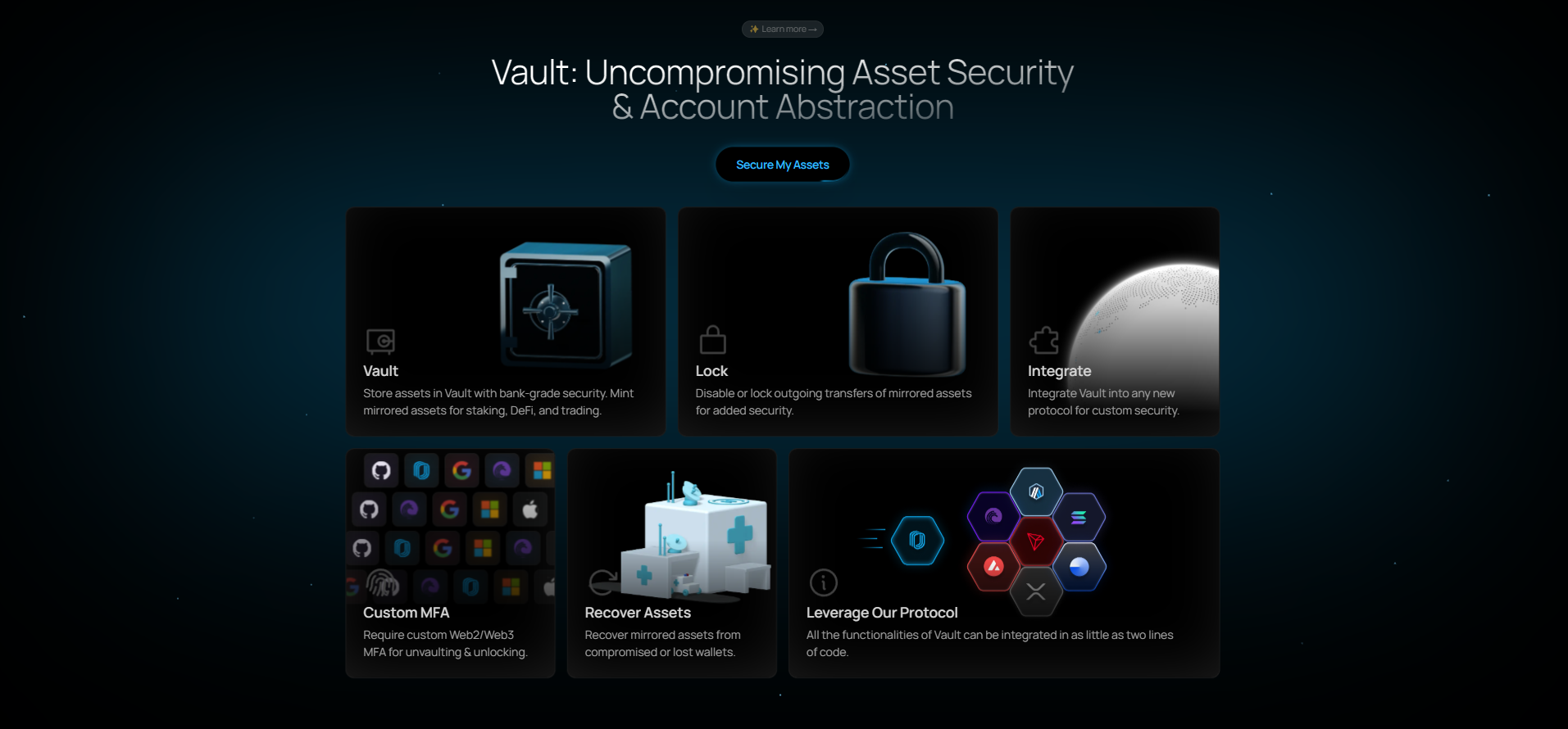
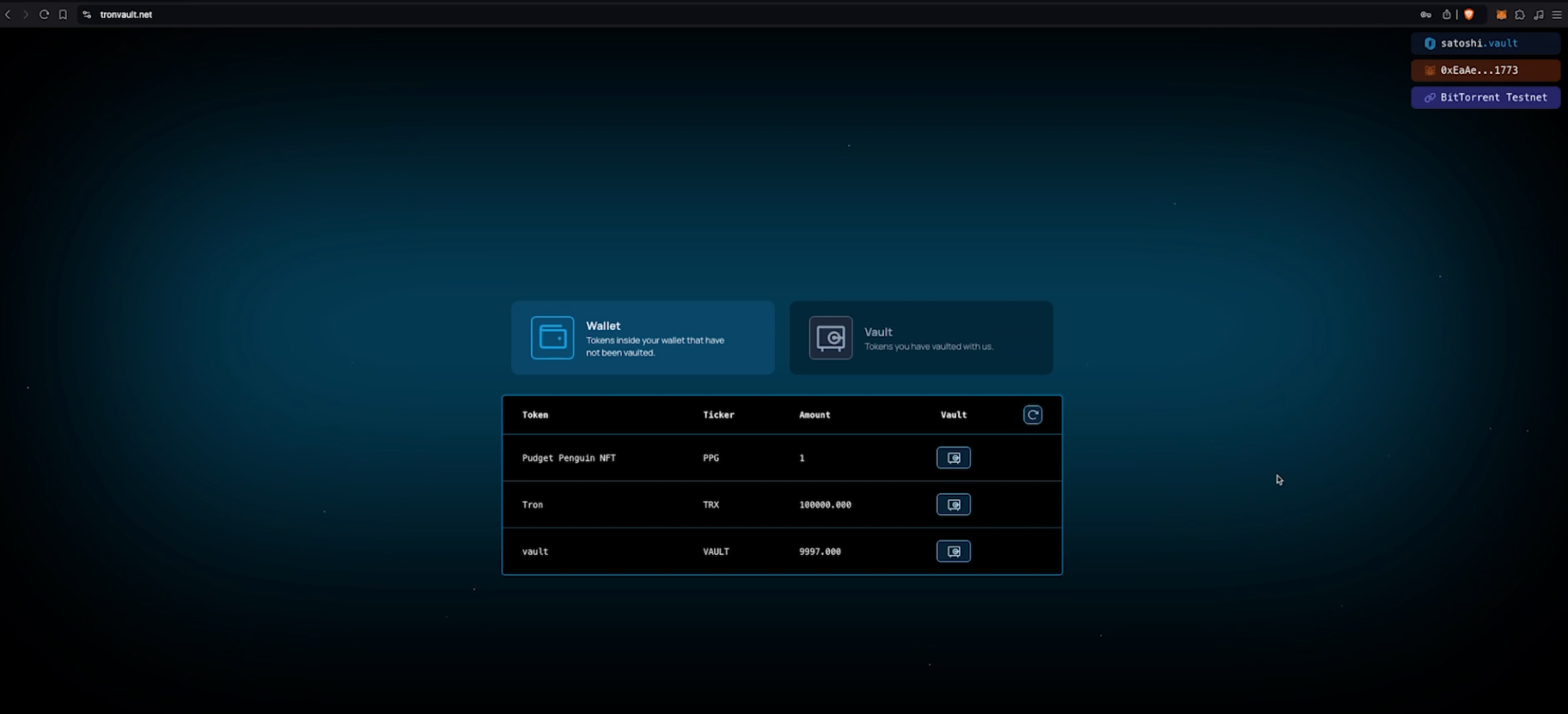
- Asset Vaulting: Users can secure their original tokens within Vault's smart contract, receiving mirrored assets at a 1:1 ratio. These mirrored assets can be freely used across Web3 applications, while the originals remain safely locked away.
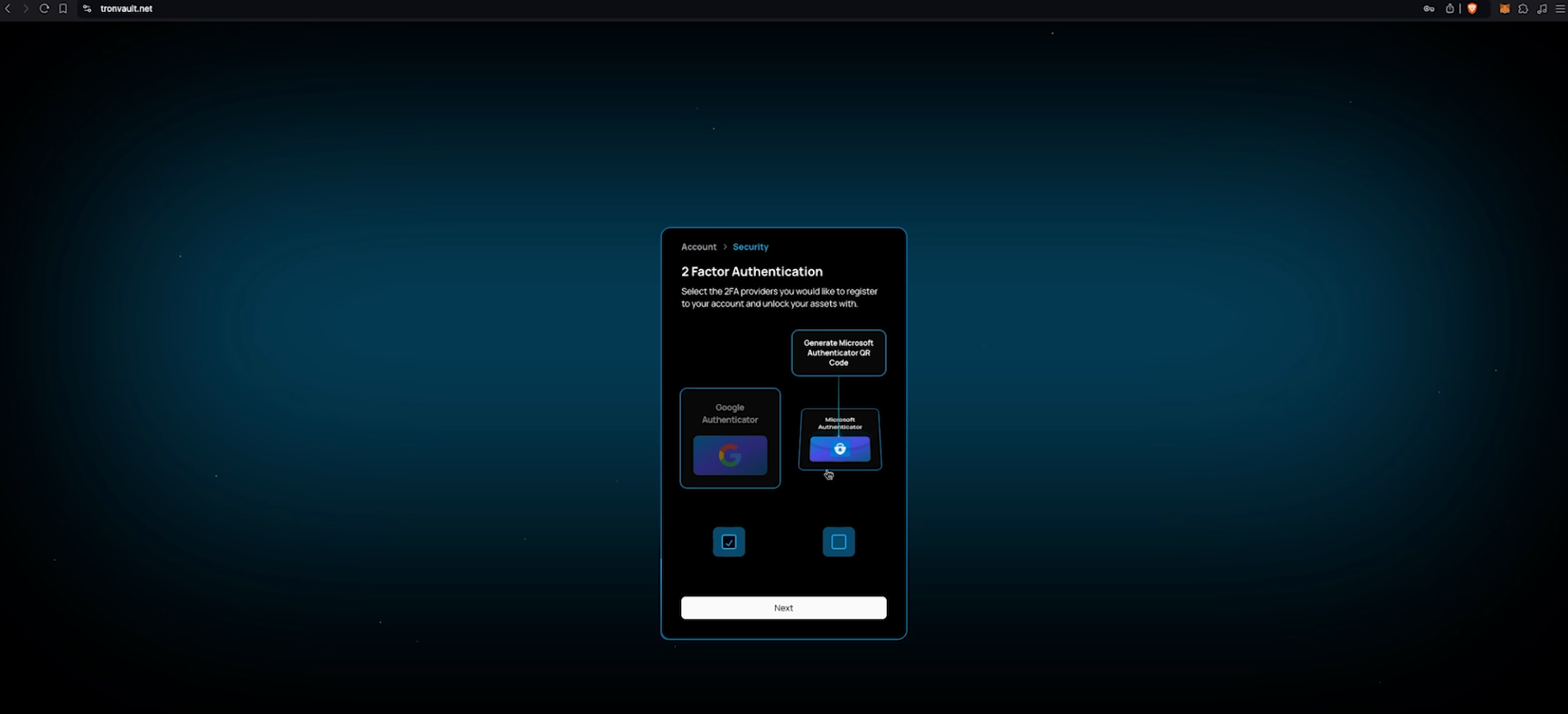
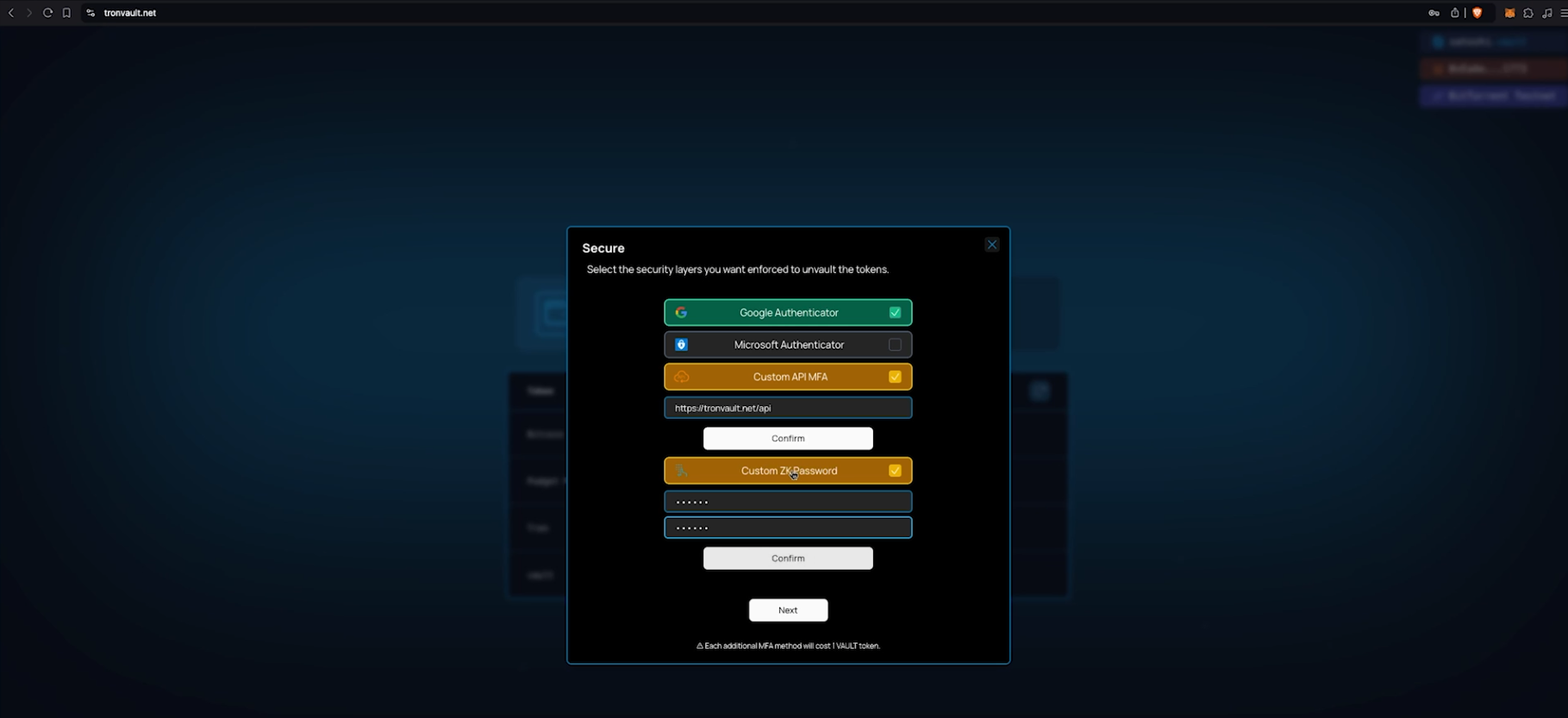
- Customizable Security Layers: Users can implement time-based or Multi-Factor Authentication (MFA) locks on their assets, providing unprecedented control over asset transferability.
- Trustless Asset Recovery: In case of wallet compromise or loss, Vault enables full asset recovery through its completely trustless account abstraction system.
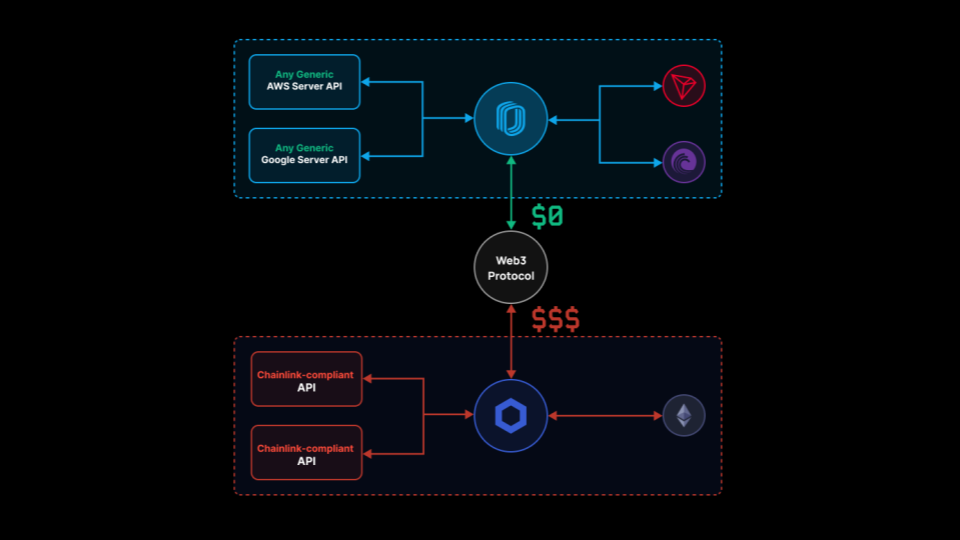
- Web2 API Integration: We've developed a pattern that enables any Web3 application, including Vault, to securely leverage Web2 APIs for enhanced security measures using EIP-191 signatures.
Our solution is designed to appeal to both individual users and institutions. By offering customizable security and recovery options, Vault can significantly reduce the percentage of assets stolen, lost, and not recovered, potentially introducing traditionally apprehensive users, such as banks, to the blockchain space.
How we built it
We built Vault using a combination of advanced technologies:
- Smart Contracts: We developed immutable smart contracts to handle the core functionality of asset vaulting, security layer implementation, and asset recovery.
- Account Abstraction: We implemented a trustless account abstraction system for asset recovery.
- Zero-Knowledge Proofs: We utilized ZKPs for secure verification processes, especially in our VaultMFA implementation.
- Web2/Web3 Integration: We created a novel approach to integrate Web2 APIs with our blockchain solution, using EIP-191 signatures for secure, gasless, and reliable off-chain computations.
- Flexible MFA System: We designed a system that allows for both Web2 API-based providers and custom Web3 providers, implementing the IMFAProvider interface.
- User-Centric Design: We took painstaking care to ensure a high-standard user experience. Our team went through countless design iterations on Figma and spent hours testing user flows to create an intuitive interface. Our style guide, linked below, stands as a testament to our commitment to usability.
Accomplishments that we're proud of
- Creating a novel "vaulting" mechanism with mirrored assets for enhanced security
- Developing a flexible MFA system integrating both Web2 and Web3 providers
- Implementing a user-friendly, intuitive UI/UX despite complex underlying mechanics
- Designing a system that could have prevented real-world asset loss scenarios
- Developing a first-of-its-kind pattern for asset protection and recovery with account abstraction
- Creating a capability to leverage Web2 functionality in any Web3 protocol
- Designing our solution to be easily integrated into other protocols with just two lines of code
What we learned
- The importance of balancing security with usability in blockchain applications
- Techniques for implementing efficient ZKPs in frontend applications
- Strategies for integrating Web2 security measures into Web3 environments
- The complexities of designing tokenomics and governance models for decentralized protocols
What's next for Vault
- Implementing cross-chain account abstraction and asset recovery
- Developing vaulted stable-coin and native asset bridging capabilities
- Integrating DEX functionalities for vaulted assets across chains
- Launching on mainnet with refined tokenomics and governance model
- Expanding recovery options and asset control functionalities
- Implementing quadratic voting and Sybil resistance measures for DAO governance
- Implementing our market strategy to target both Web3 and Web2 sectors:
- Partnering with DeFi, trading, and staking protocols in the Web3 space
- Collaborating with Web2 MFA providers and traditional sectors like banking and government
- Developing blockchain-powered solutions for smart cities, digital identity verification, immutable public audits, and Sybil-resistant voting systems
- Facilitating more secure cross-chain bridging and cross-chain DEX operations with asset translation and quotes, protected by our account abstraction and recovery system
Market Strategy and Ecosystem Contribution
Our market strategy targets both Web3 and Web2 sectors. In the Web3 space, we'll partner with and integrate into DeFi, trading, and staking protocols, offering customizable security solutions to enhance their platforms. Simultaneously, we'll collaborate with Web2 MFA providers and traditional sectors like banking and government, implementing blockchain-powered solutions for smart cities, digital identity verification, immutable public audits, and Sybil-resistant voting systems.
This dual approach positions Vault as a comprehensive security solution bridging Web3 and Web2, facilitating broader blockchain adoption while providing bank-grade security across diverse sectors. Our first-of-its-kind pattern to protect and recover assets with account abstraction, coupled with the ability to leverage Web2 functionality in any Web3 protocol, will enable the Tron and BTT ecosystems and their dApps to build more secure cross-chain operations while benefiting from our robust security and recovery system.
Built With
- adobe-premiere-pro
- amazon-web-services
- bittorrentchain
- blender
- canva
- circom
- css
- discord
- figma
- foundry
- google-suite
- html
- javascript
- lambda
- metamask
- snarkjs
- solidity
- spline3d
- tailwindcss
- tailwindui
- trello
- tron
- vercel
- zero-knowledge-proofs


Log in or sign up for Devpost to join the conversation.