-
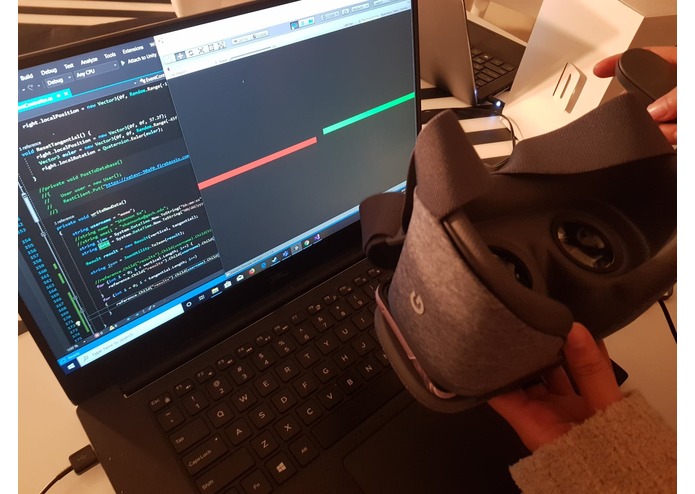
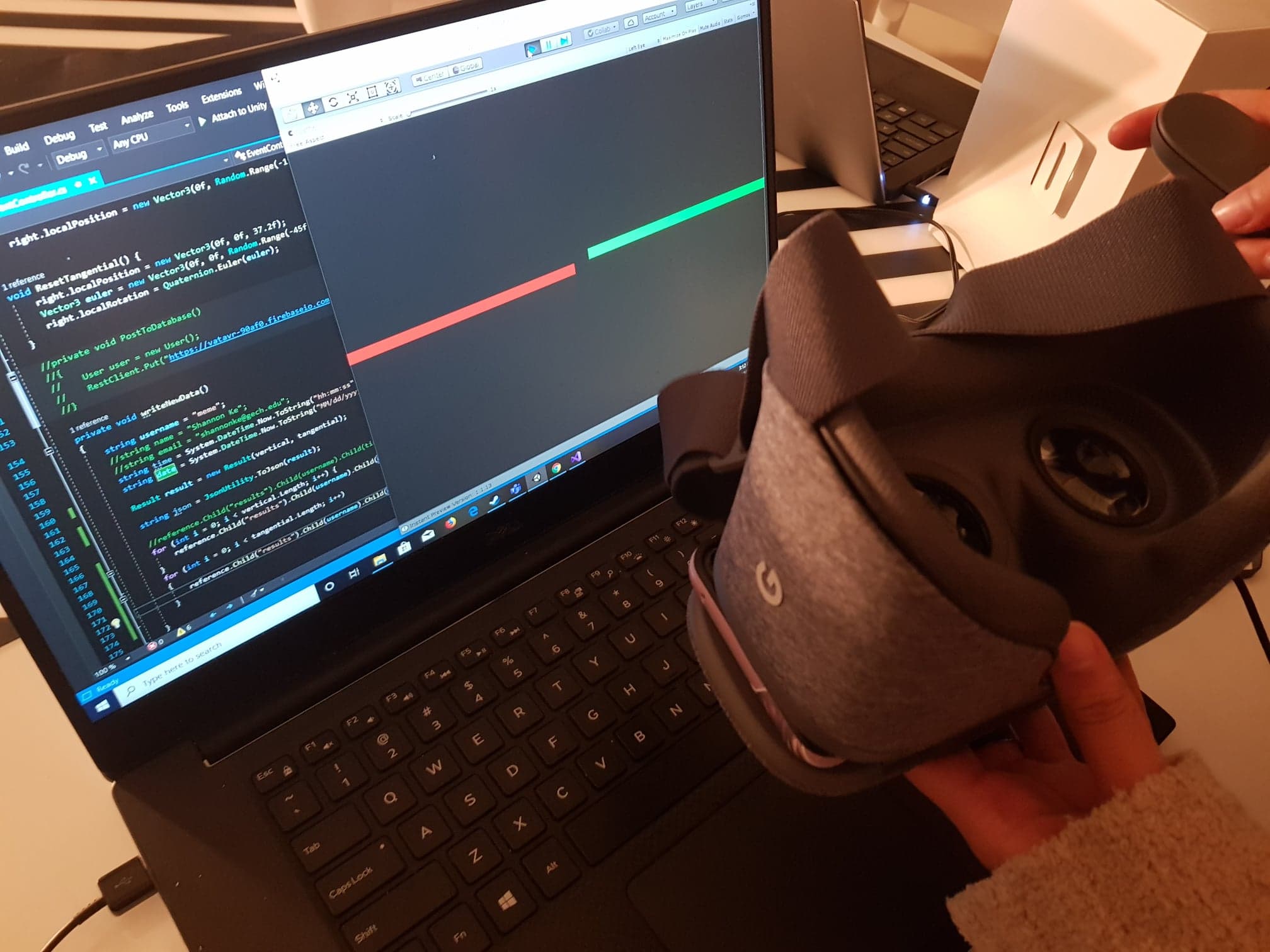
The VR preview and the headset
-
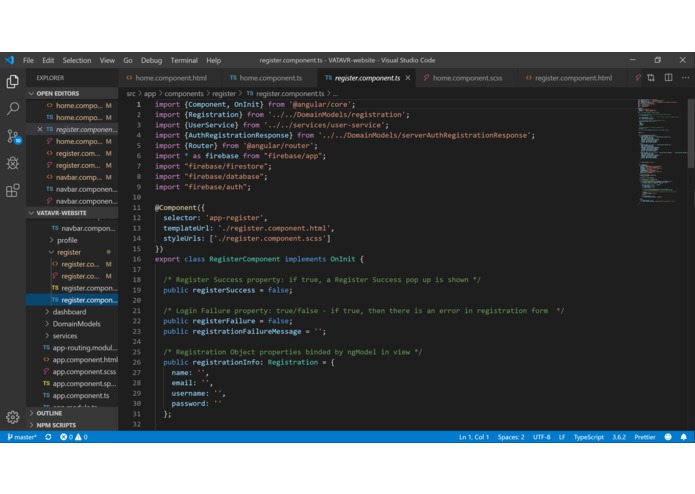
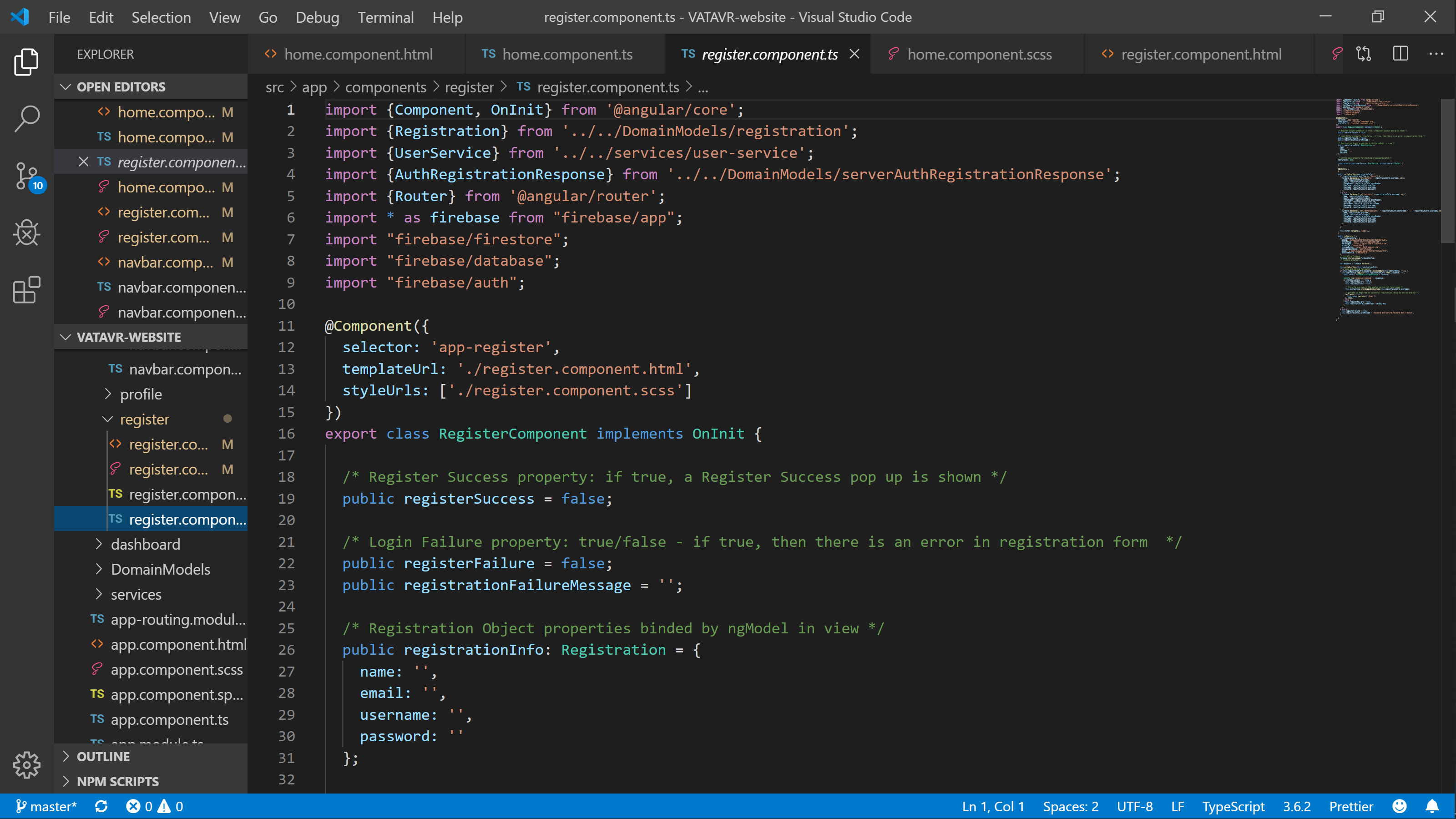
Some backend work
-
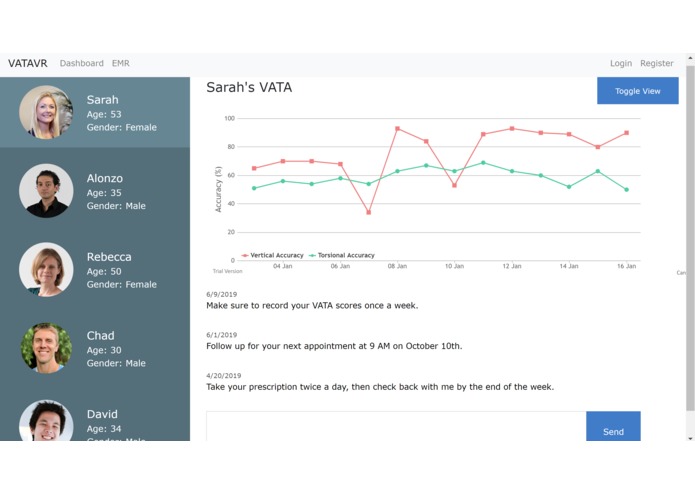
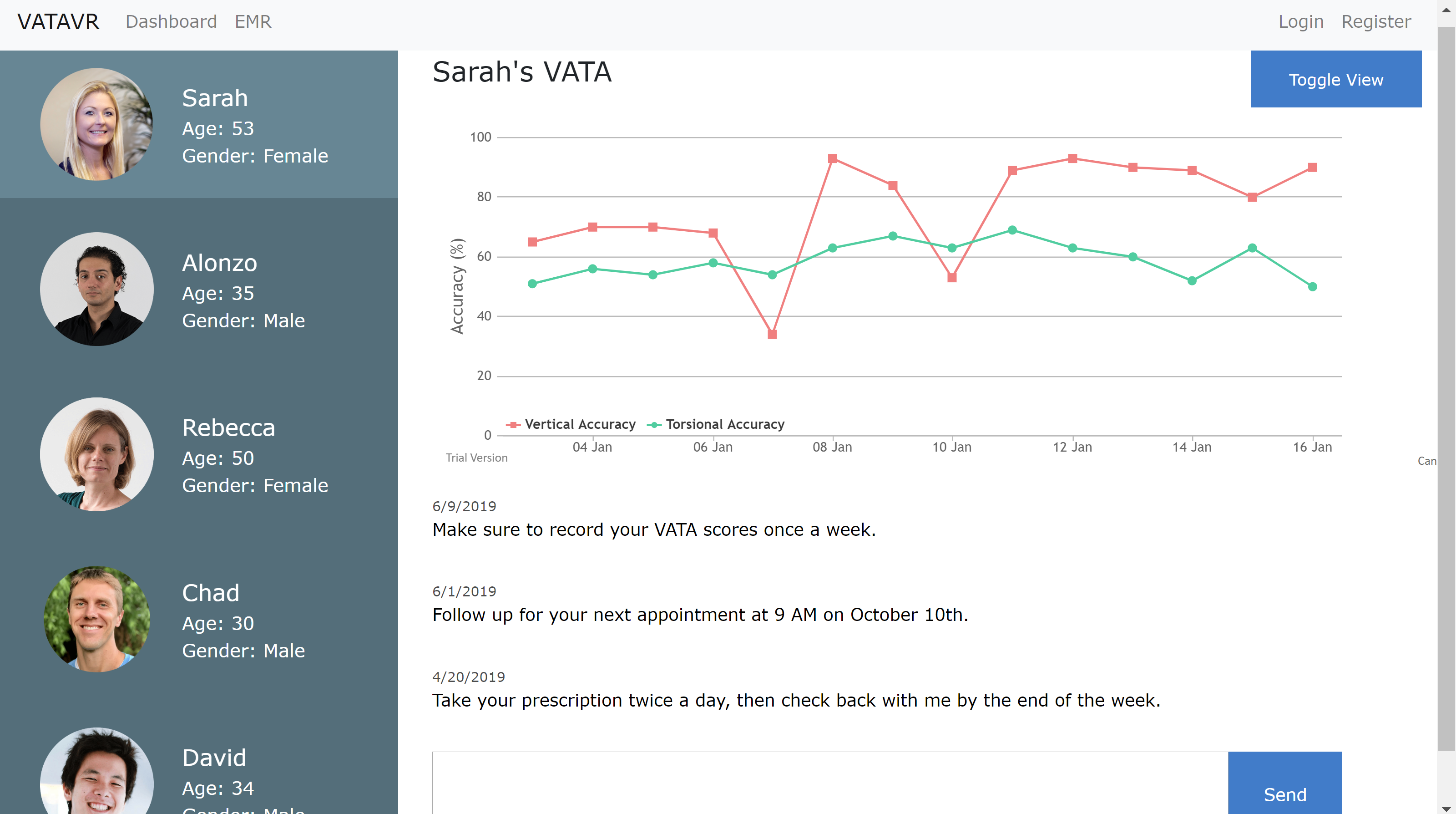
Doctor's dashboard
-
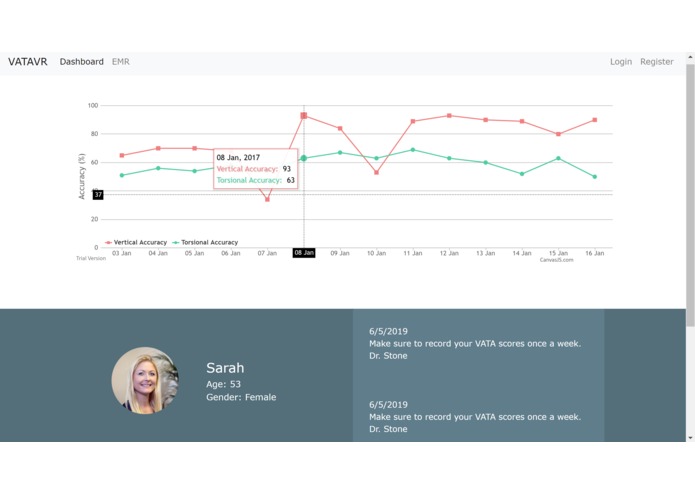
Patient's dashboard
-
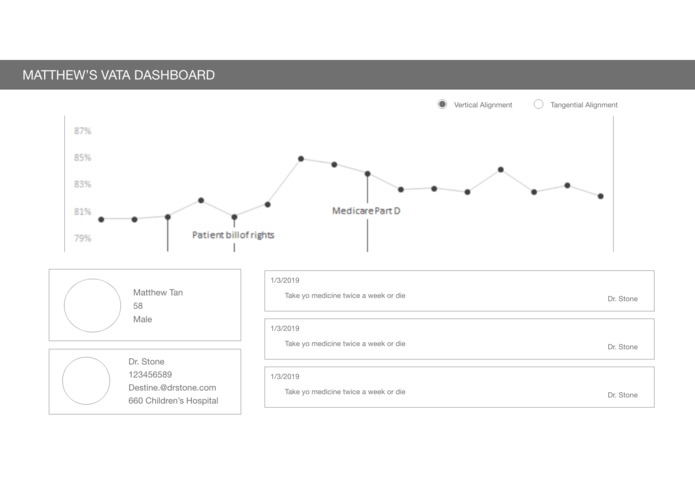
Initial mockups
Inspiration
Binocular diplopia, also known as double vision, is a condition that results from a misalignment of the eyes. Causes include ocular muscle or nerve injury, or it might arise spontaneously, as often seen in children. Treatment options vary significantly from conservative methods (eye-patching) to surgery. We strongly believe that it would be helpful for both patients and physicians to be able to track the changes in eye alignment over time. Patients will be reassured to see improvements over time with continuous eye-patch use. For patients without significant improvement, the doctor can use the data to evaluate the feasibility of surgery, and track post-surgical outcomes of those patients
What it does
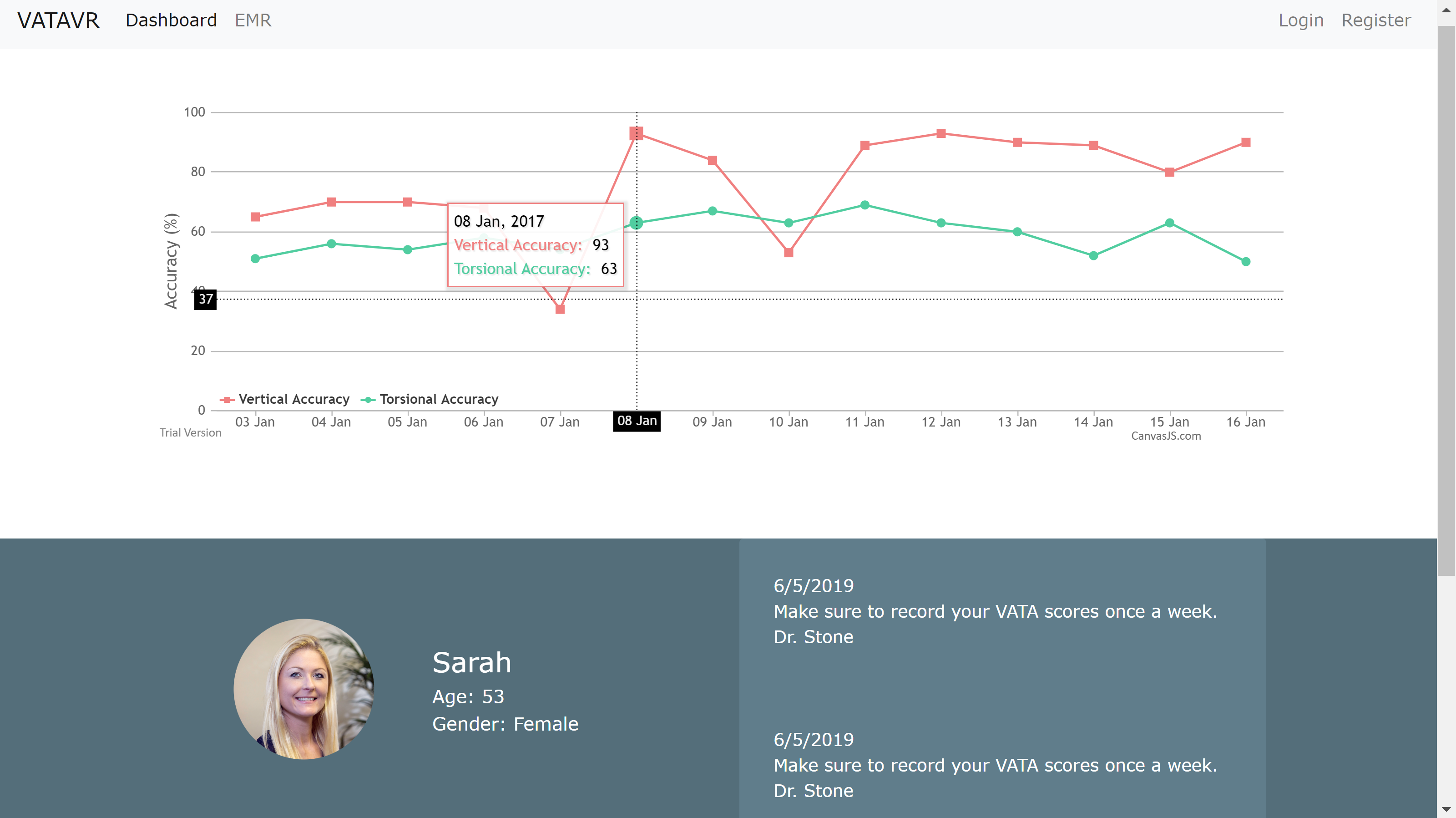
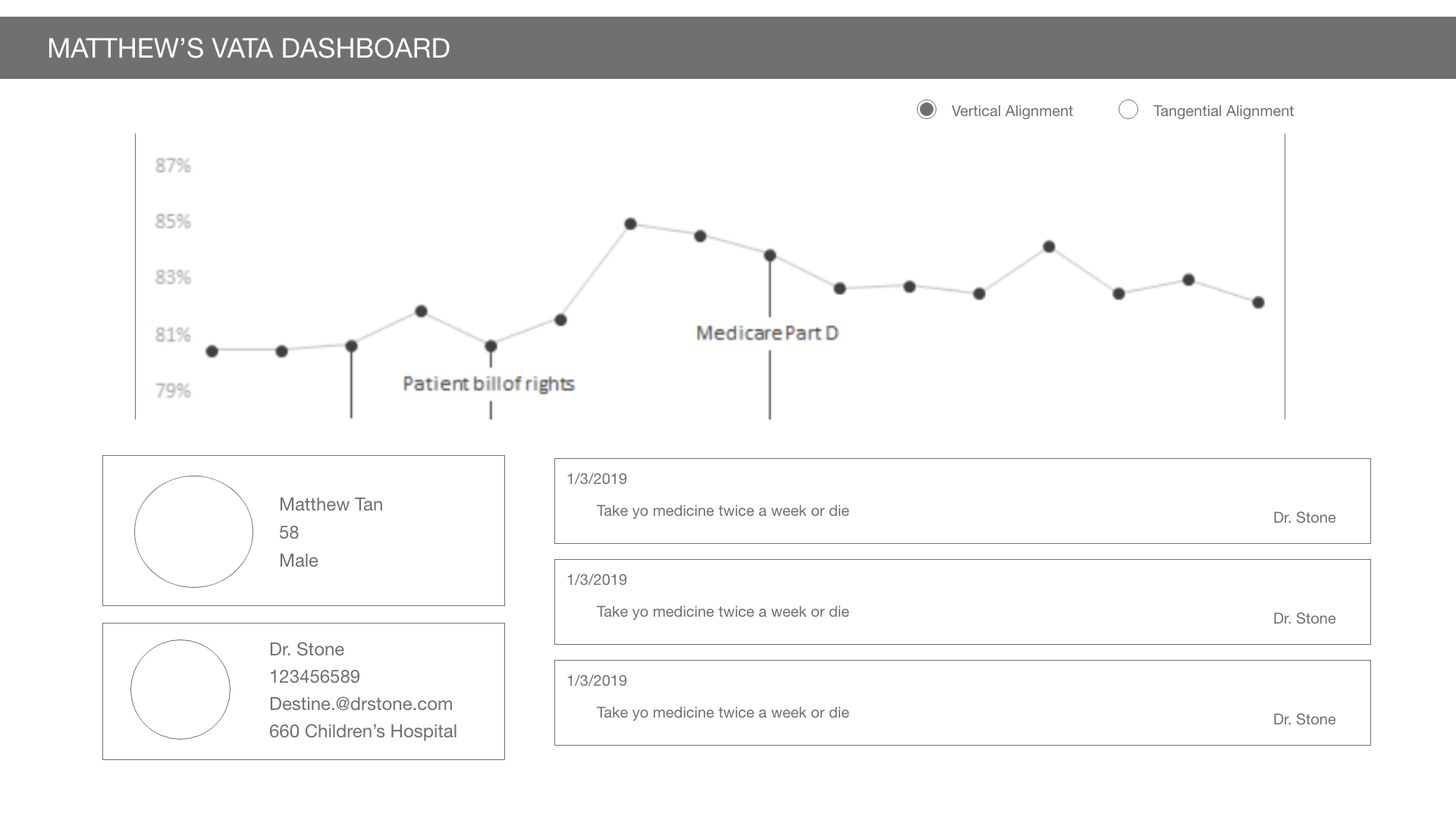
The app gives the user test trials for both vertical and torsional alignment of two lines in a VR space. The data is then transferred to firebase, where our website pulls data from and updates a progress tracker for score improvement. THe data is accessible both by the patient and the doctor, allowing doctors to stay updated on their patients as well. Doctors can submit notes to patients regarding their progress.
How we built it
We built the VR in Unity using the Google Daydream headset for our VR hardware. The headset is more affordable than other VR headsets. The website was built using HTML, CSS, and typescript, using Angular as our framework. The website pulls the data updated from the VR and plots it onto a dashboard, depending on whether the user logged in is a patient or a doctor. The doctor can see multiple patient summaries and send them follow up notes.
Challenges we ran into
We initially tried to use MongoDB Atlas as our database, but we sunk a good 6 hours into figuring out that we couldn't get it to work. Luckily, we were able to quickly switch gears to Firebase and get up and going. Unity proved a challenge since the software itself is rather buggy and many recent releases are incompatible with google daydream. (we had to guess and check and learn the hard way which unity version fit our needs). Finally, overall beginner level with connecting all these technologies with a med student teammate proved a hurdle of rapid fire research and debugging, but we managed to make a somewhat finished product.
Accomplishments that we're proud of
We were able to connect everything together! The connection and methods of retrieving data are not perfect, but with a little more time, we could definitely iron everything out and make this into a real working app. Furthermore, our VR has already been requested for actual use in the doctor's office by doctors at John's Hopkins!
What we learned
Two of us being from a non-medical background, we learned alot about different medical conditions and how to think in terms of the patient. We wanted to create an application that would be impactful but also truly useful in the real world. We didn't want to walk away from this hackathon having just made some other project that would be put on the backburner and forgotten about.
What's next for VATAVR
The VR will be handed off to a research lab at Hopkins. Further studies can include horizontal alignment along with vertical alignment, as well as children-friendly versions with fun simulations like pin the tail on the donkey.

Log in or sign up for Devpost to join the conversation.