-
-
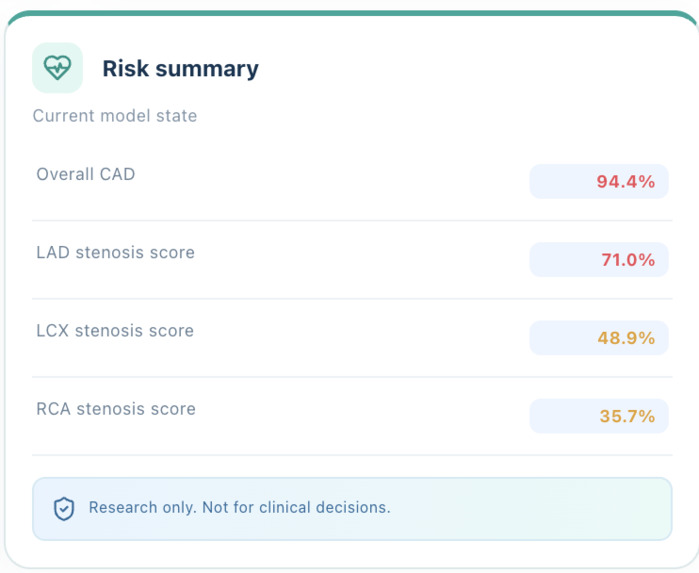
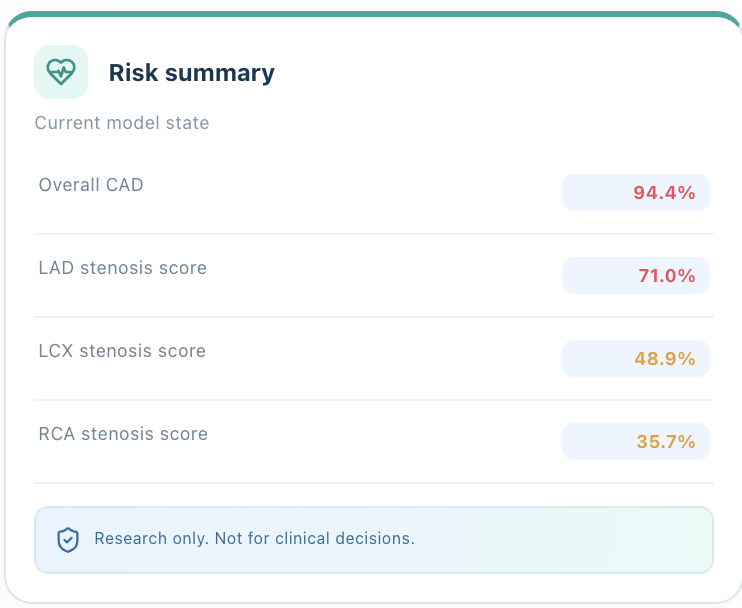
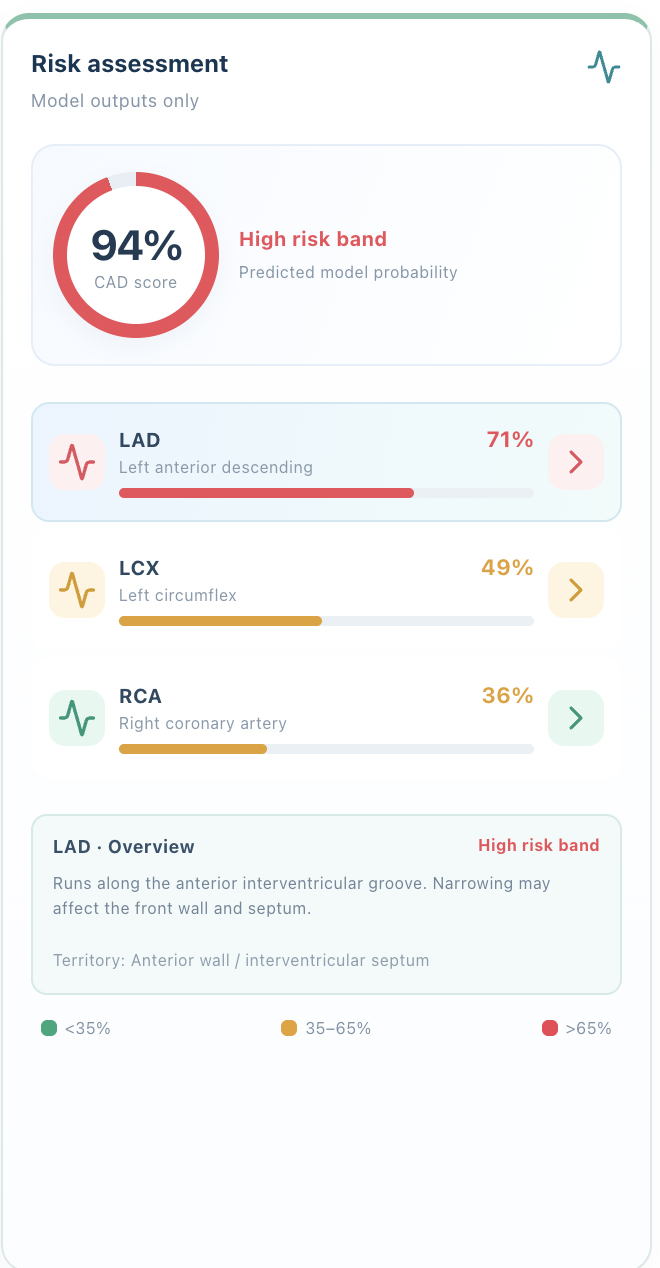
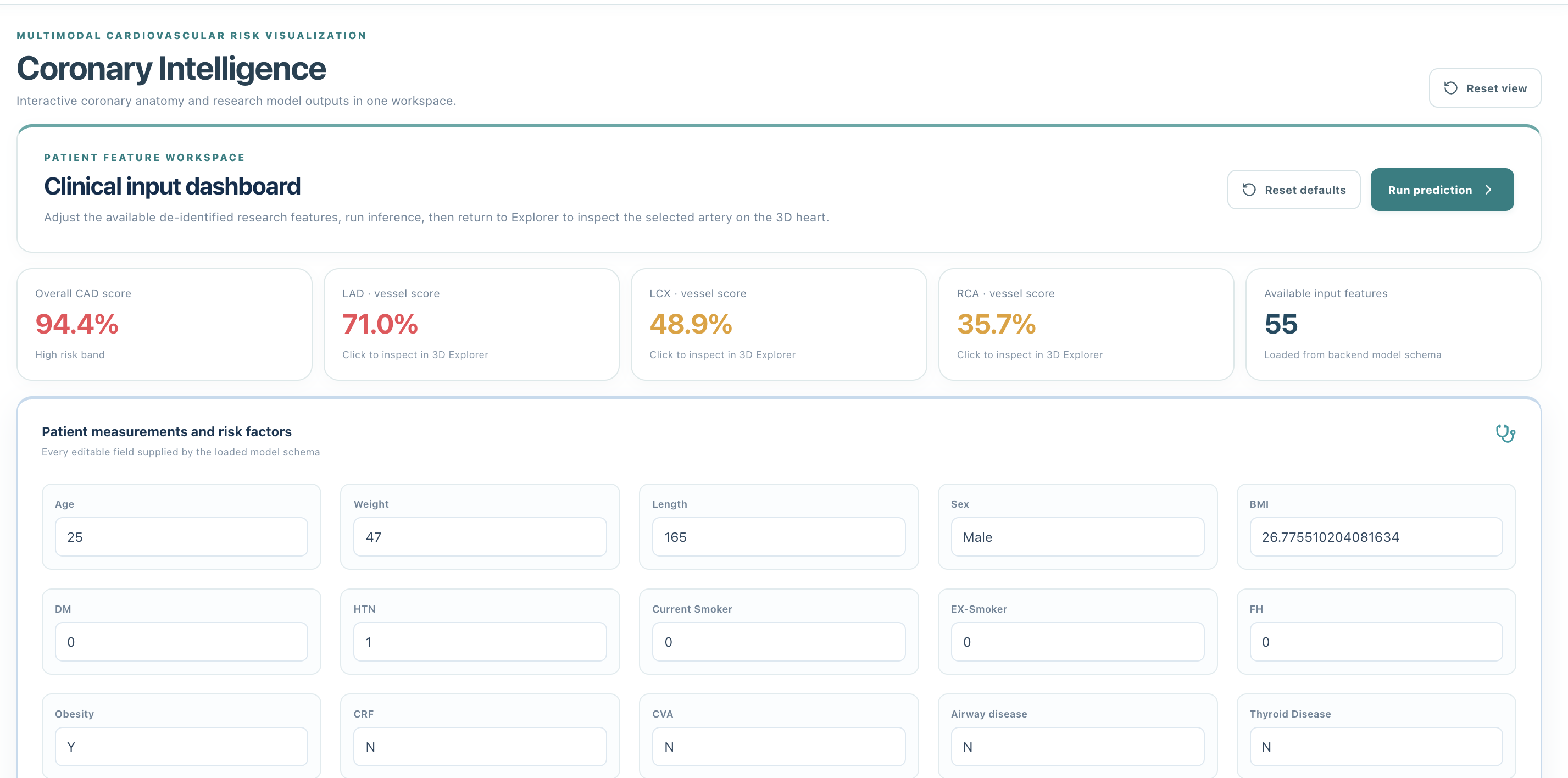
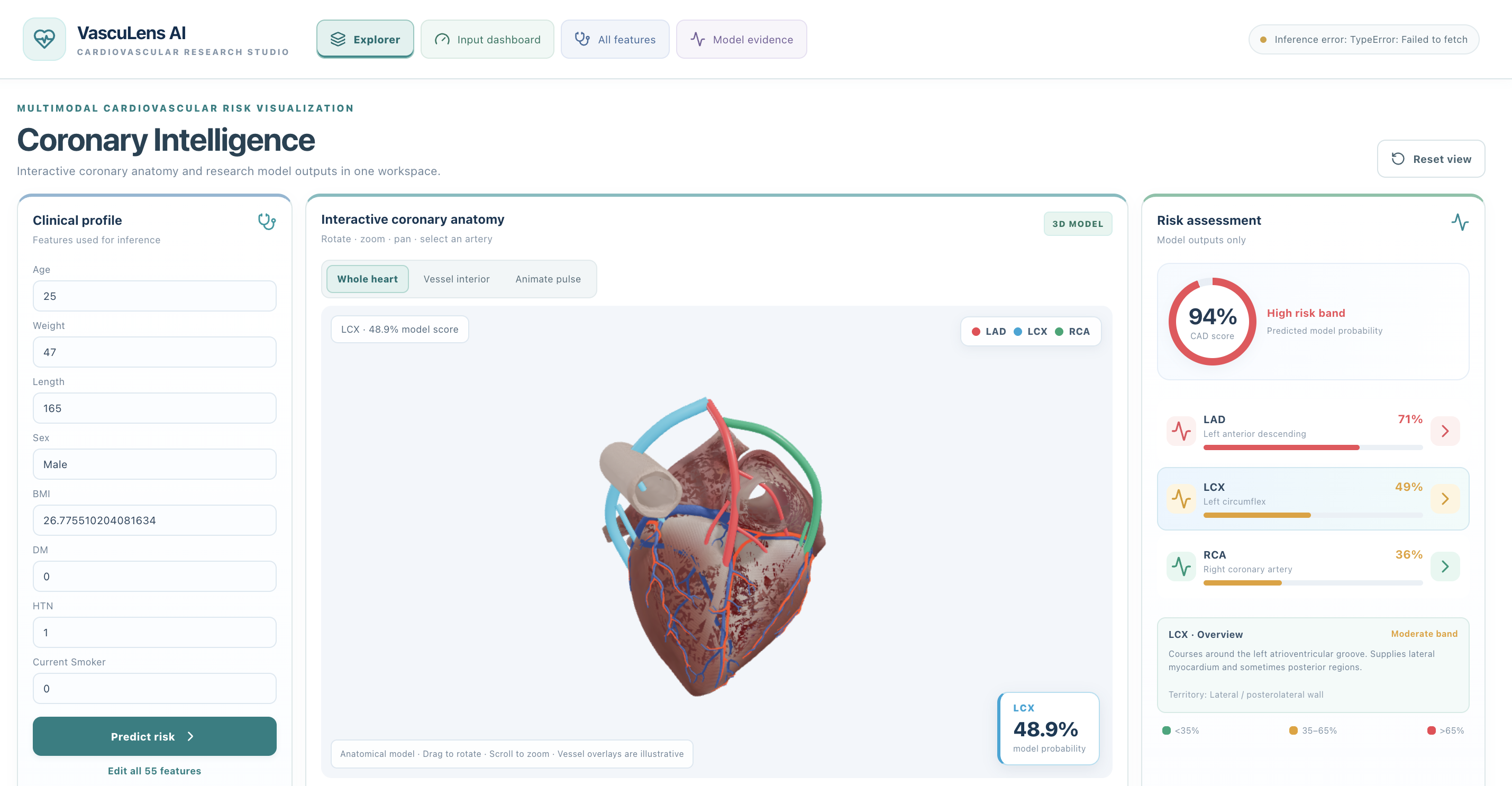
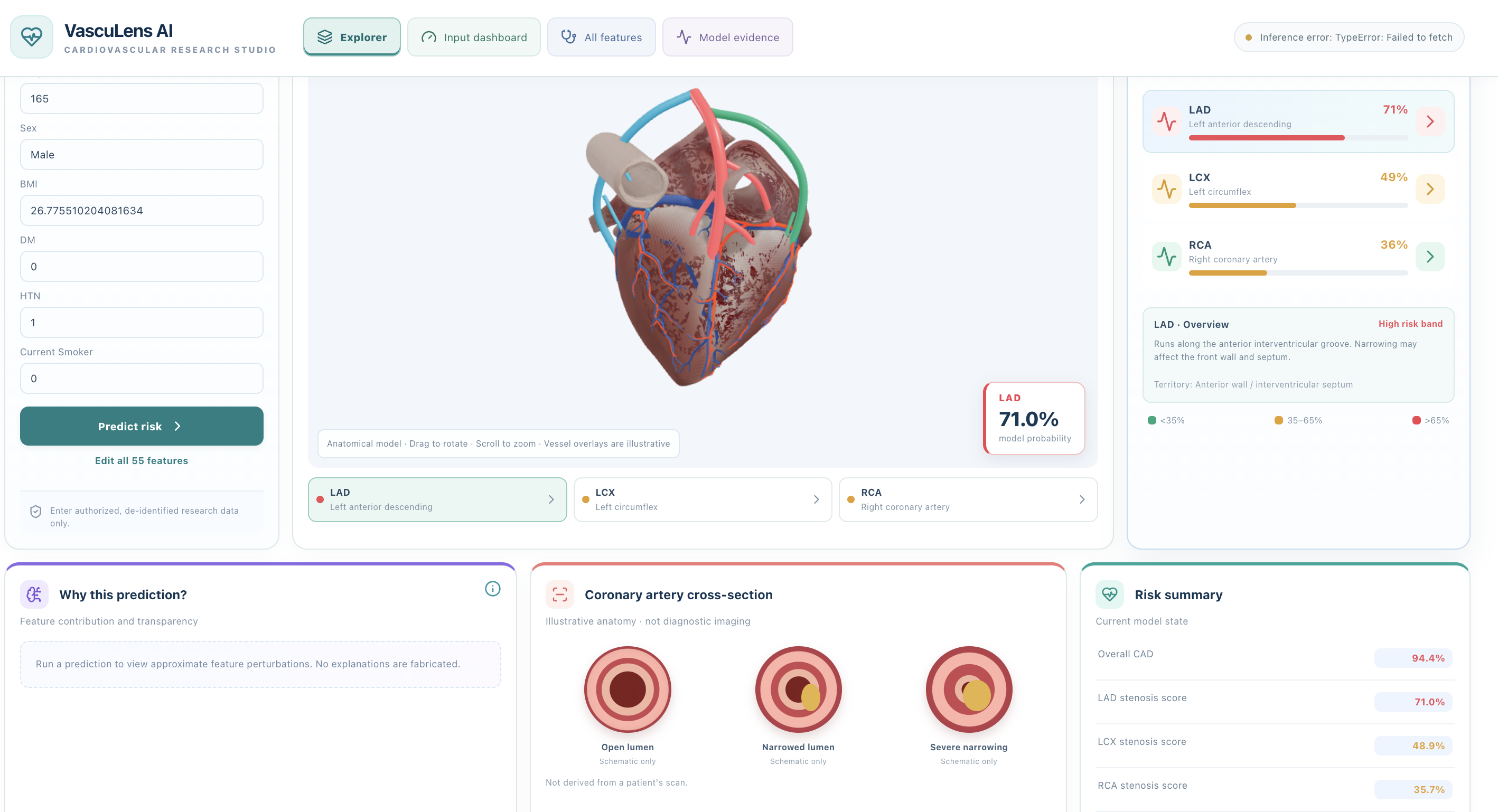
Summary of displayed CAD risk and LAD, LCX, and RCA vessel scores.
-
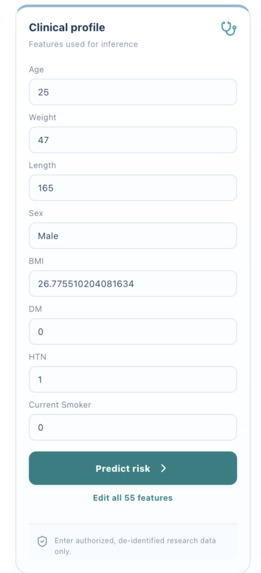
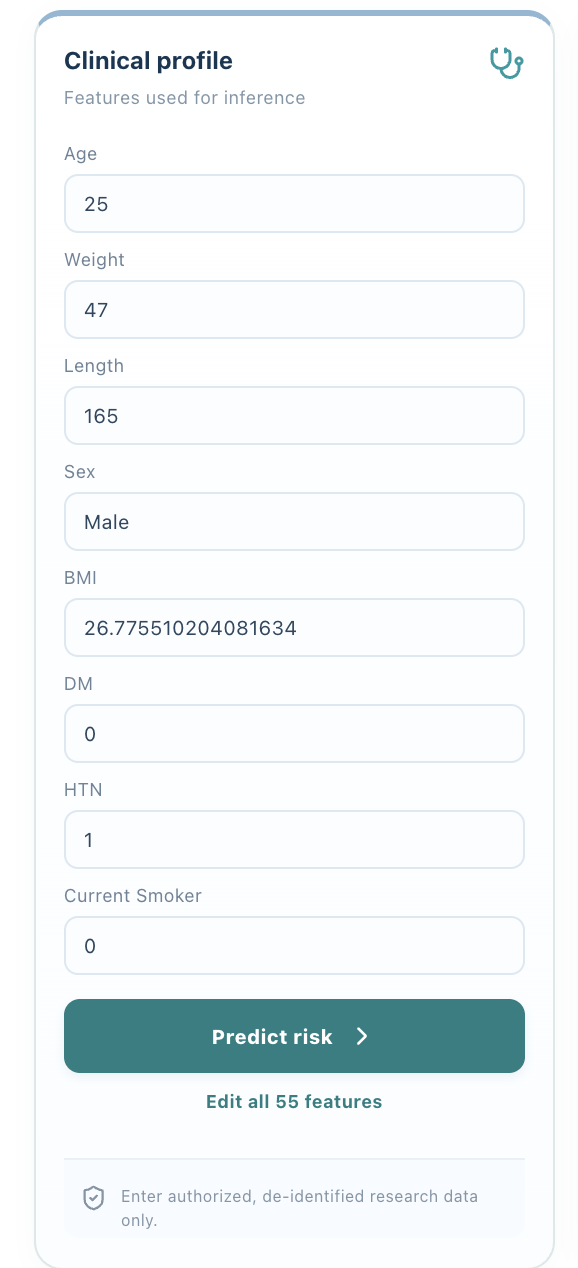
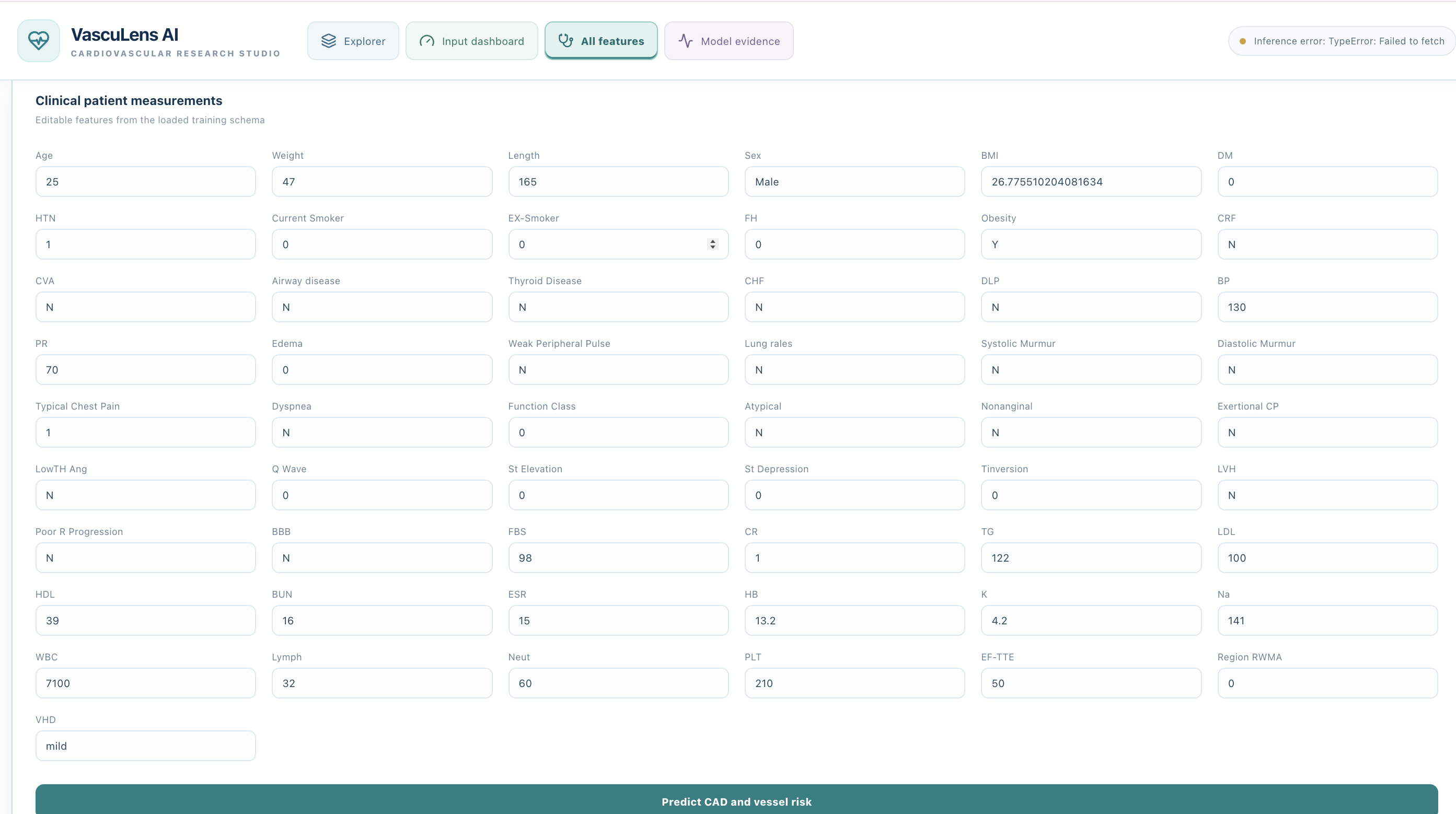
Clinical profile form for entering patient measurements and cardiovascular risk factors.
-
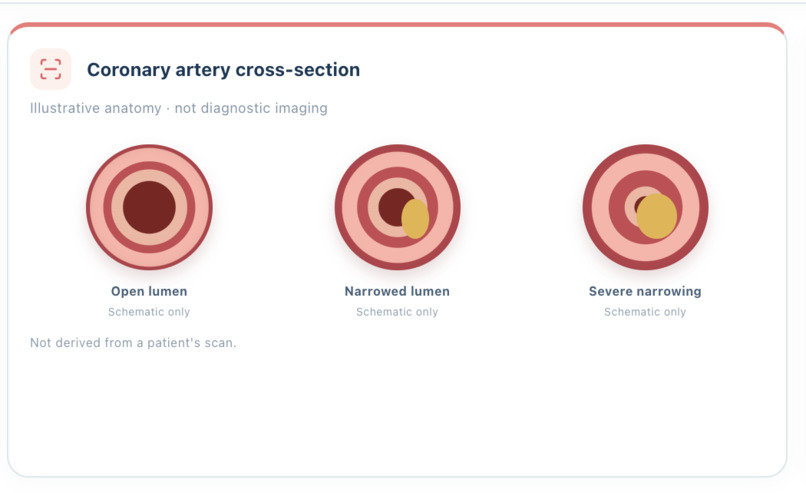
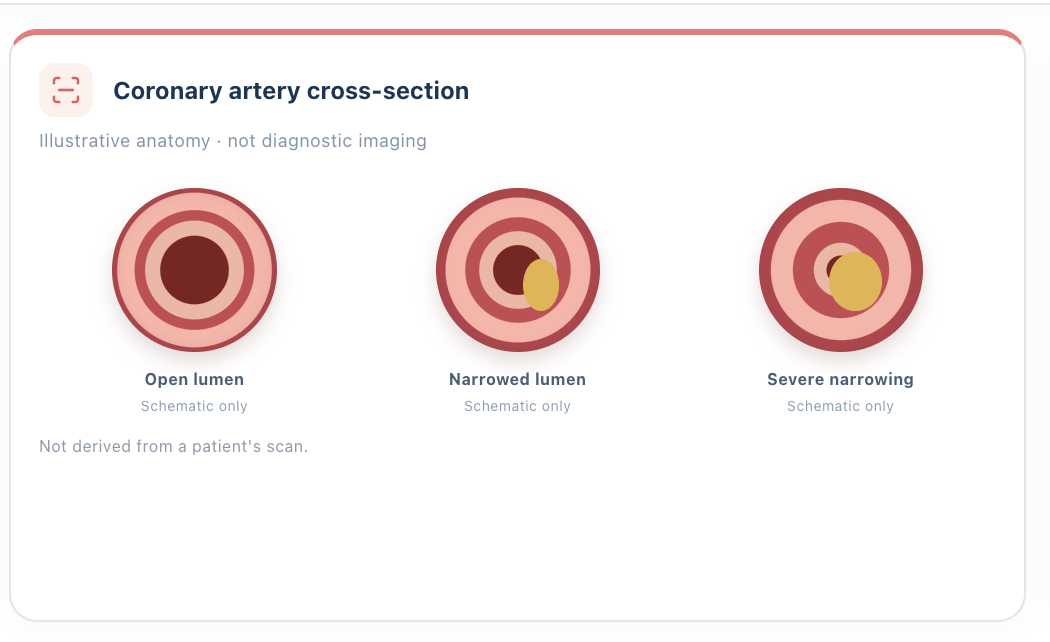
Illustrative comparison of open, narrowed, and severely narrowed coronary artery lumens
-
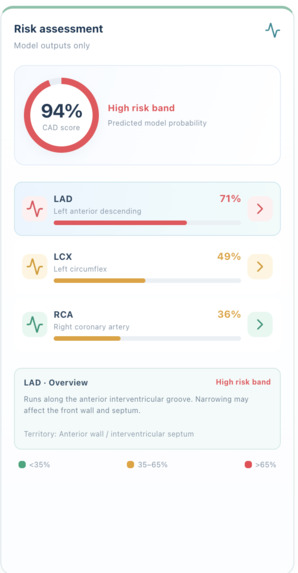
Cardiovascular risk assessment panel showing CAD and vessel-specific risk estimates.
-
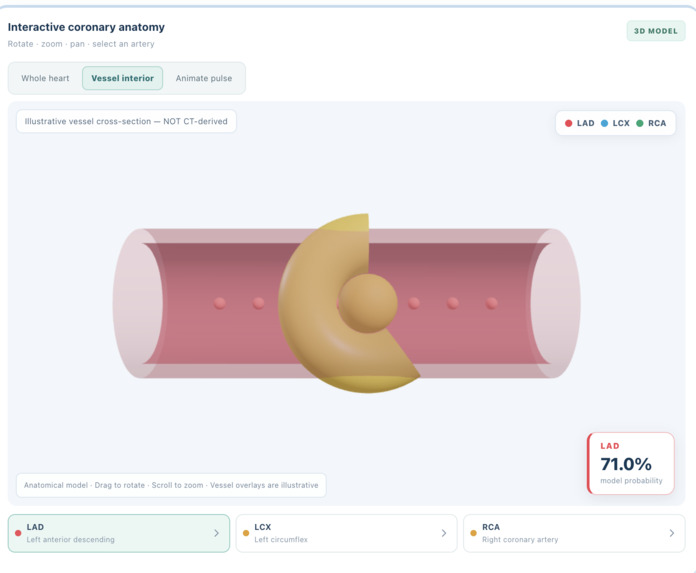
Illustrative coronary vessel cross-section demonstrating lumen narrowing concepts for educational use.
-
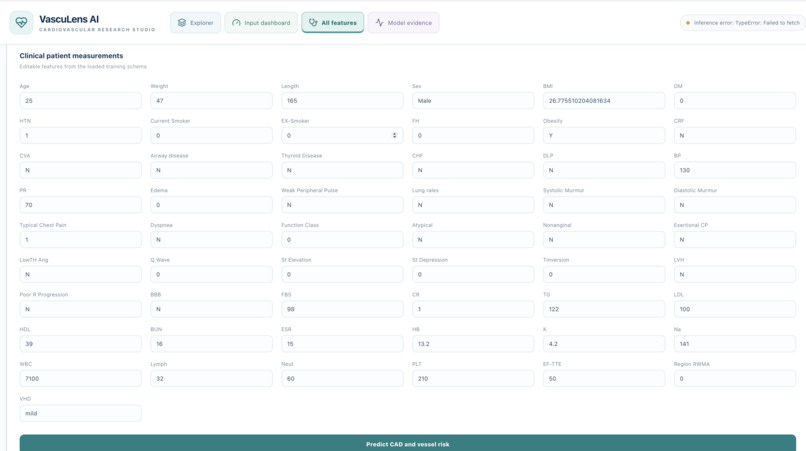
Comprehensive clinical feature dashboard covering patient measurements, ECG indicators, and laboratory values.
-
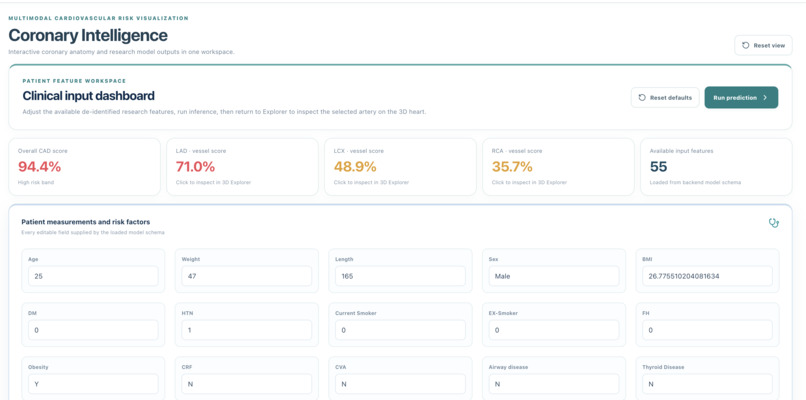
Clinical input dashboard for managing research features and reviewing prediction outputs.
-
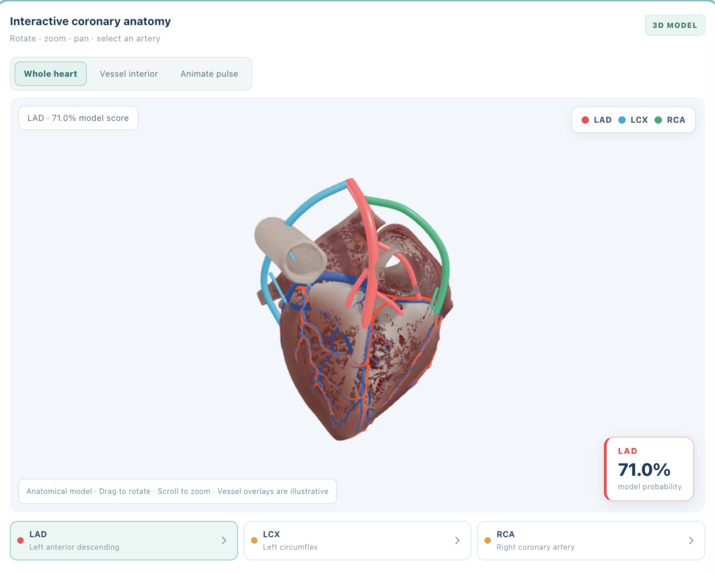
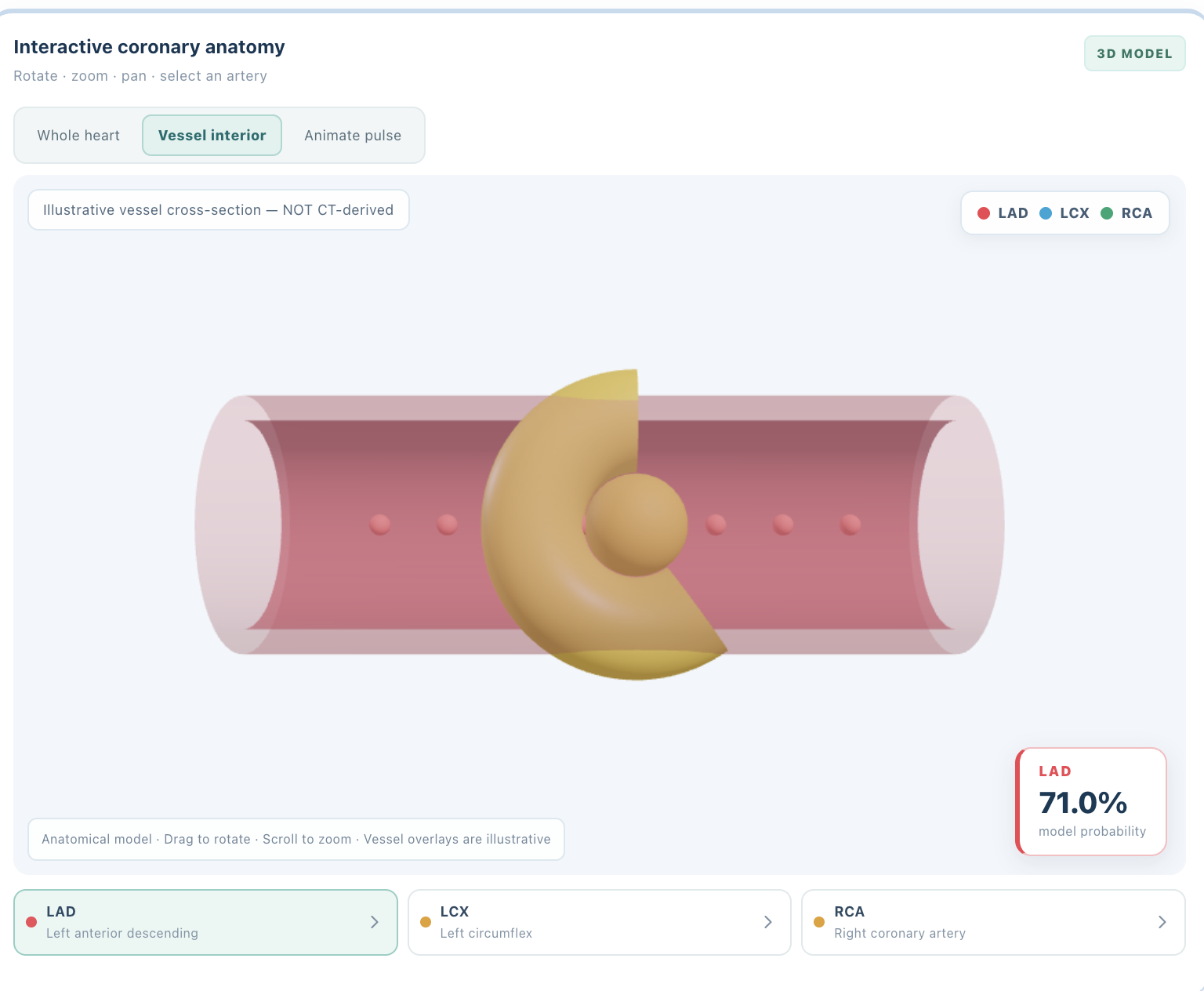
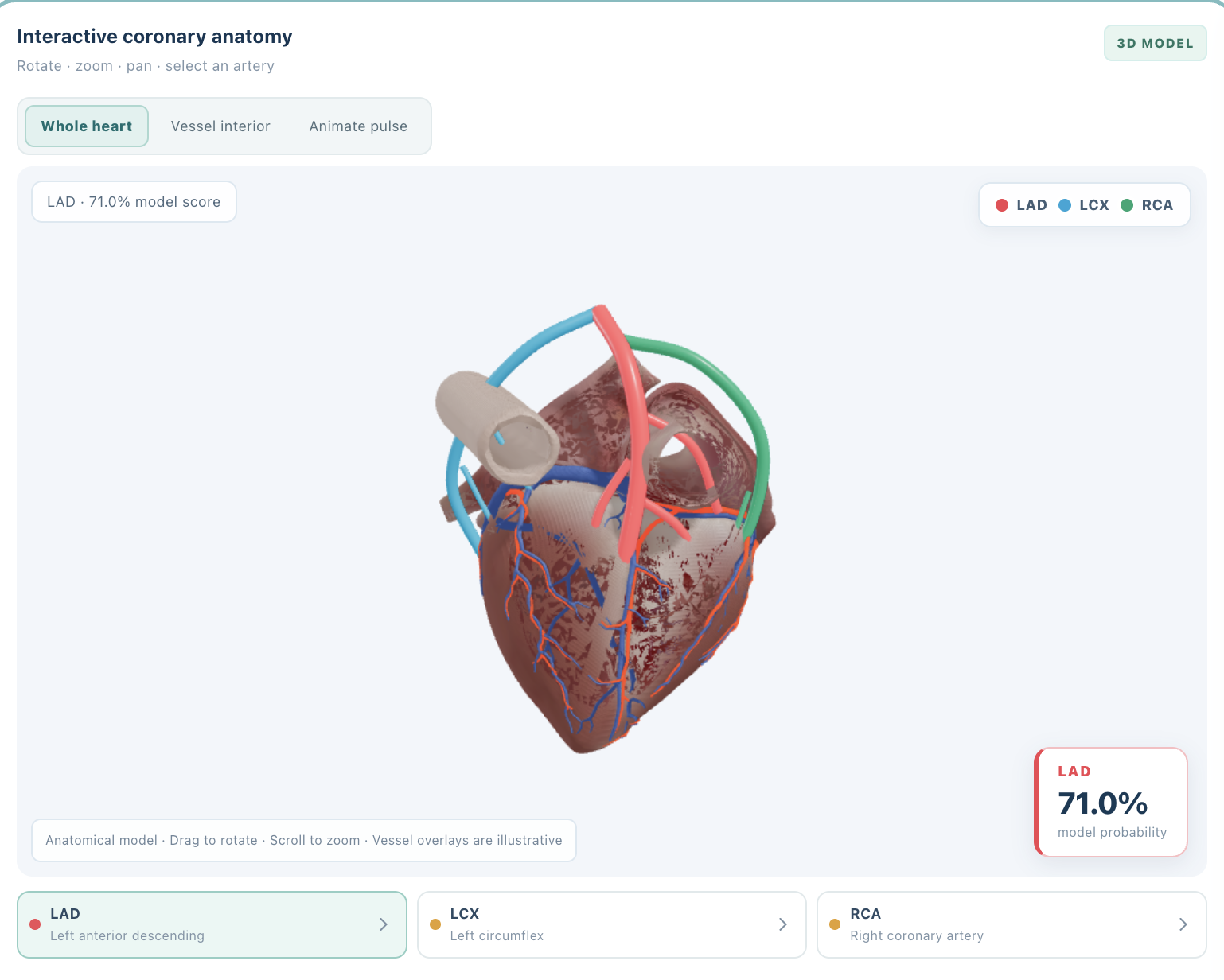
Explore 3D coronary anatomy with rotatable heart visualization and color-coded artery overlays.
-
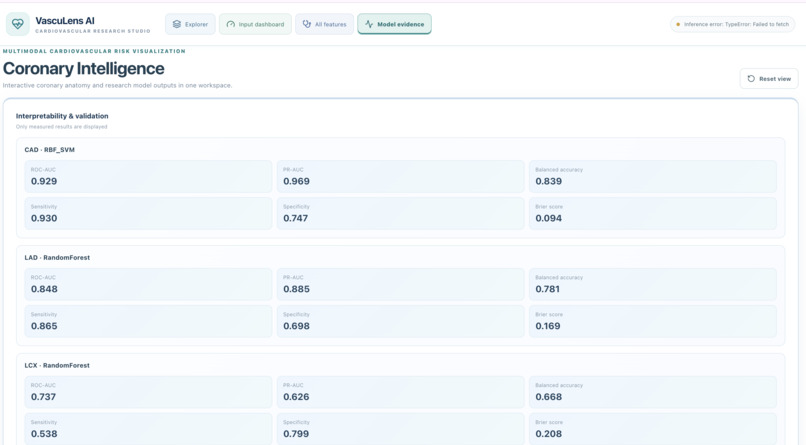
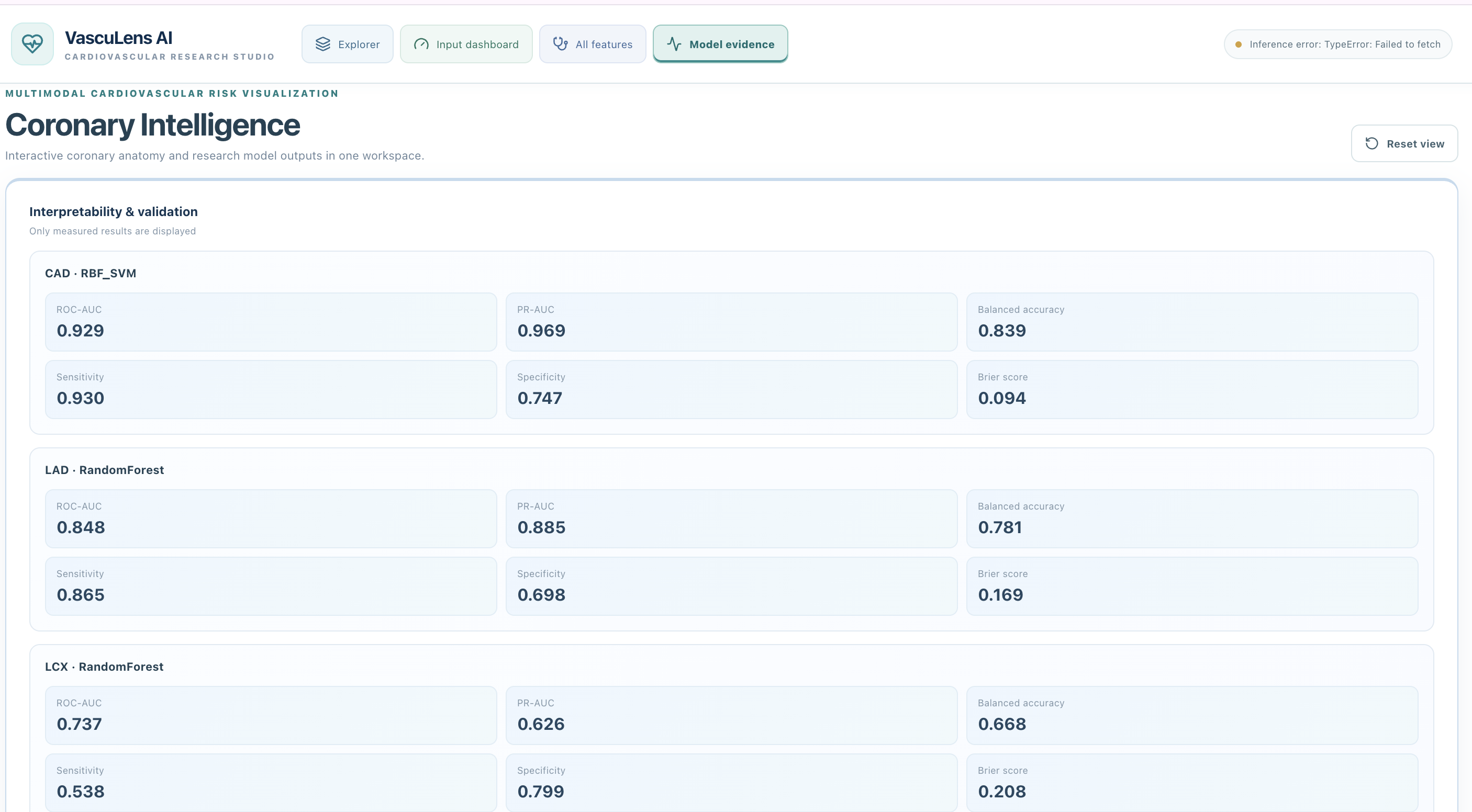
Model evaluation dashboard showing ROC-AUC, PR-AUC, sensitivity, specificity, and balanced accuracy.
-
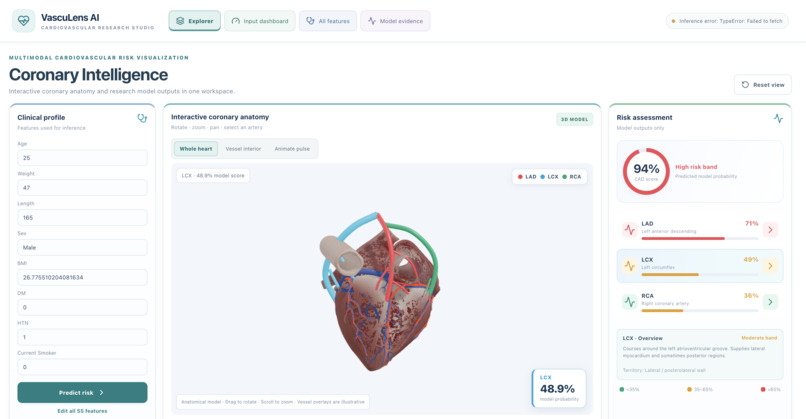
VascuLens-AI Main Dashboard
-
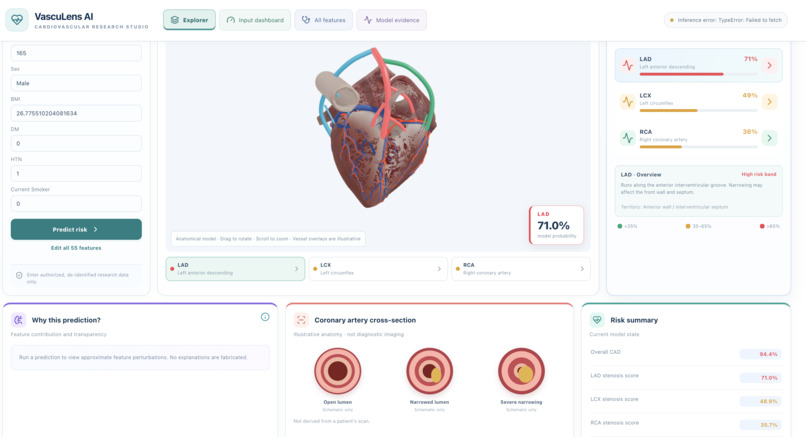
Interactive 3D heart explorer with coronary artery selection and displayed vessel-risk scores.
Inspiration
What it does
How we built it
Challenges we ran into
Accomplishments that we're proud of
What we learned
What's next for VascuLens AI
VascuLens-AI: AI-Powered Cardiovascular Risk Prediction with Interactive 3D Heart Visualization
Inspiration
Cardiovascular diseases are a major health concern worldwide, and understanding cardiovascular risk can be challenging when clinical information is spread across different measurements and reports. We wanted to explore how artificial intelligence and interactive visualization could make cardiovascular risk assessment more understandable and intuitive.
This inspired us to build VascuLens-AI, a medical AI prototype that combines clinical risk prediction with an interactive 3D representation of the human heart. Our goal is to bridge the gap between numerical predictions and visual understanding by presenting clinical information through an intuitive, modern interface.
What We Built
VascuLens-AI combines a clinical dashboard, an AI prediction backend, and a 3D heart visualization in one web application.
Key features include:
- Clinical Risk Assessment: A dashboard for entering relevant clinical parameters.
- AI-Powered Predictions: A backend designed to process clinical inputs and generate cardiovascular risk predictions using trained machine learning models.
- Interactive 3D Heart: A rotatable and zoomable anatomical heart model that helps users explore the heart visually.
- Coronary Artery Visualization: Separate visual indicators for the LAD, LCX, and RCA arteries.
- Model Insights: A framework for presenting prediction results, evaluation metrics, and model explanations where supported by the trained model.
- Modern Web Interface: A responsive, clinical-style interface designed to make complex information easier to navigate.
The 3D visualization is intended to support understanding of cardiac anatomy. It does not independently identify patient-specific lesions or replace medical imaging.
How We Built It
We developed VascuLens-AI using a frontend-and-backend architecture.
Frontend: React and TypeScript provide the user interface, while Three.js-based rendering supports the interactive 3D heart experience.
Backend: Python and FastAPI provide the API layer for receiving clinical inputs, validating requests, and connecting the interface to the prediction pipeline.
Machine Learning: The project includes a training workflow for evaluating candidate clinical classification models. The intended evaluation includes accuracy, precision, recall, F1-score, ROC-AUC, and confusion matrices. Final performance claims will be based on measured results from the trained models.
Visualization: The interface brings together clinical inputs, prediction outputs, and anatomical visualization to create a unified user experience.
Challenges We Faced
One of our main challenges was integrating the interactive 3D visualization with a functional machine learning backend. A visually complete interface is not enough for an AI project; the input form, API, trained model, and displayed prediction must all work together correctly.
We also faced challenges with backend configuration, dependency management, and ensuring that the frontend communicates with the API correctly. Another important challenge was distinguishing illustrative anatomical overlays from genuine patient-specific medical findings.
These challenges reinforced the importance of validating the complete workflow instead of evaluating a project only by its appearance.
What We Learned
Building VascuLens-AI helped us understand the practical challenges of developing an end-to-end AI application. We learned how frontend visualization, backend APIs, model training, and evaluation must work together to deliver a meaningful result.
We also learned that responsible medical AI requires more than a prediction score. Data quality, appropriate evaluation, clear limitations, interpretability, and careful communication are essential, particularly when working with health-related information.
Future Scope
Future improvements could include more rigorous external validation, better integration of clinically relevant data modalities, improved explainability, and more detailed coronary anatomy visualization. We also aim to strengthen the reproducibility of the training pipeline and ensure that predictions are supported by validated model artifacts.
Responsible Use
VascuLens-AI is a research and educational prototype, not a medical diagnostic device. Its outputs must not be used as a substitute for professional medical advice, clinical evaluation, or established diagnostic procedures. Any clinical deployment would require appropriate validation, regulatory review, and expert oversight.

Log in or sign up for Devpost to join the conversation.