-
-
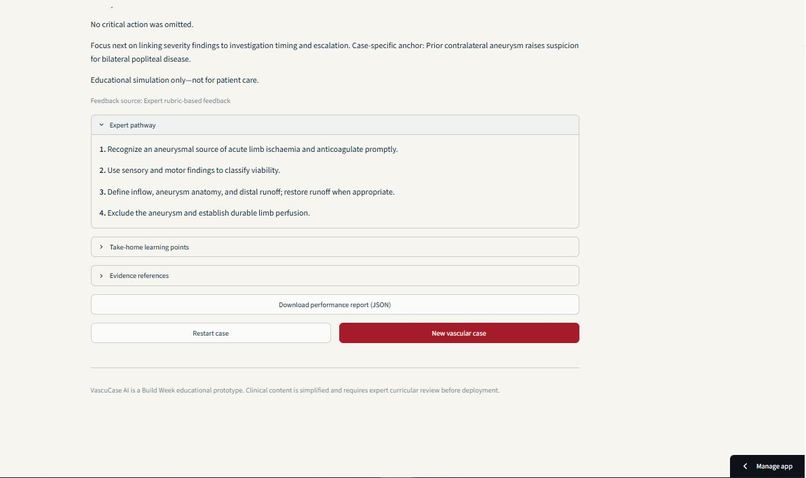
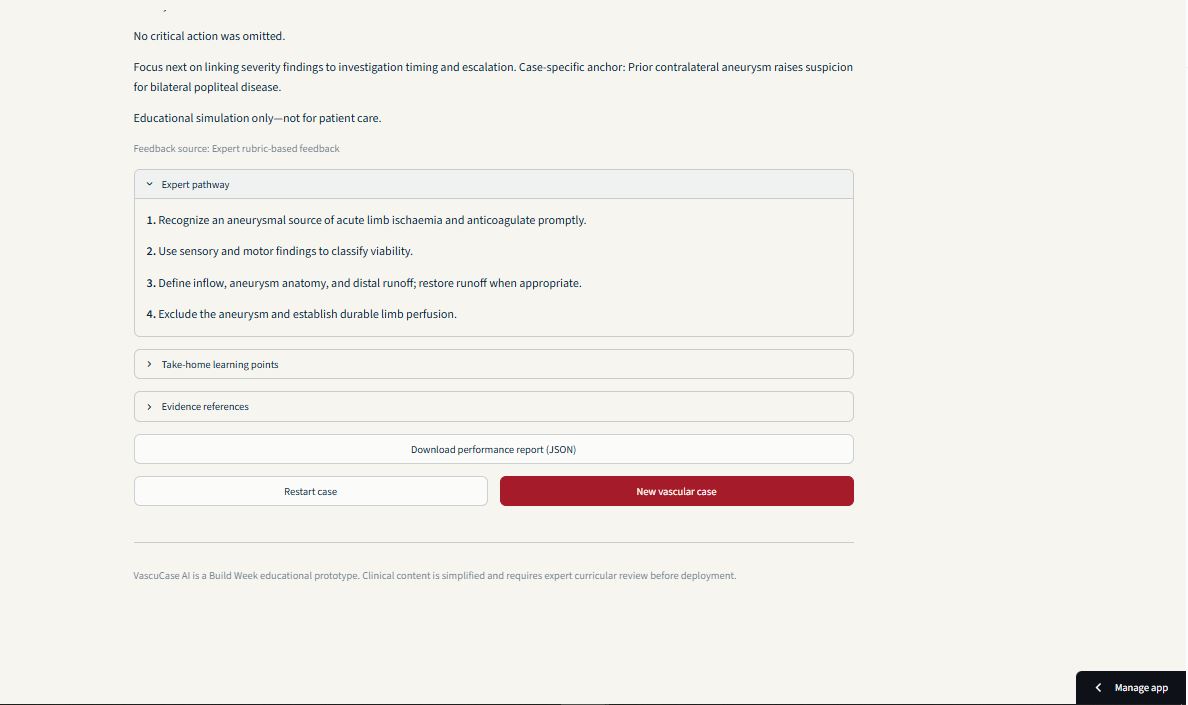
Finalization
-
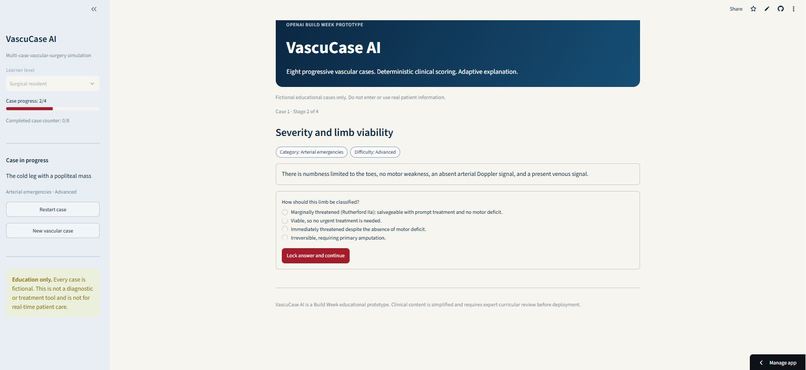
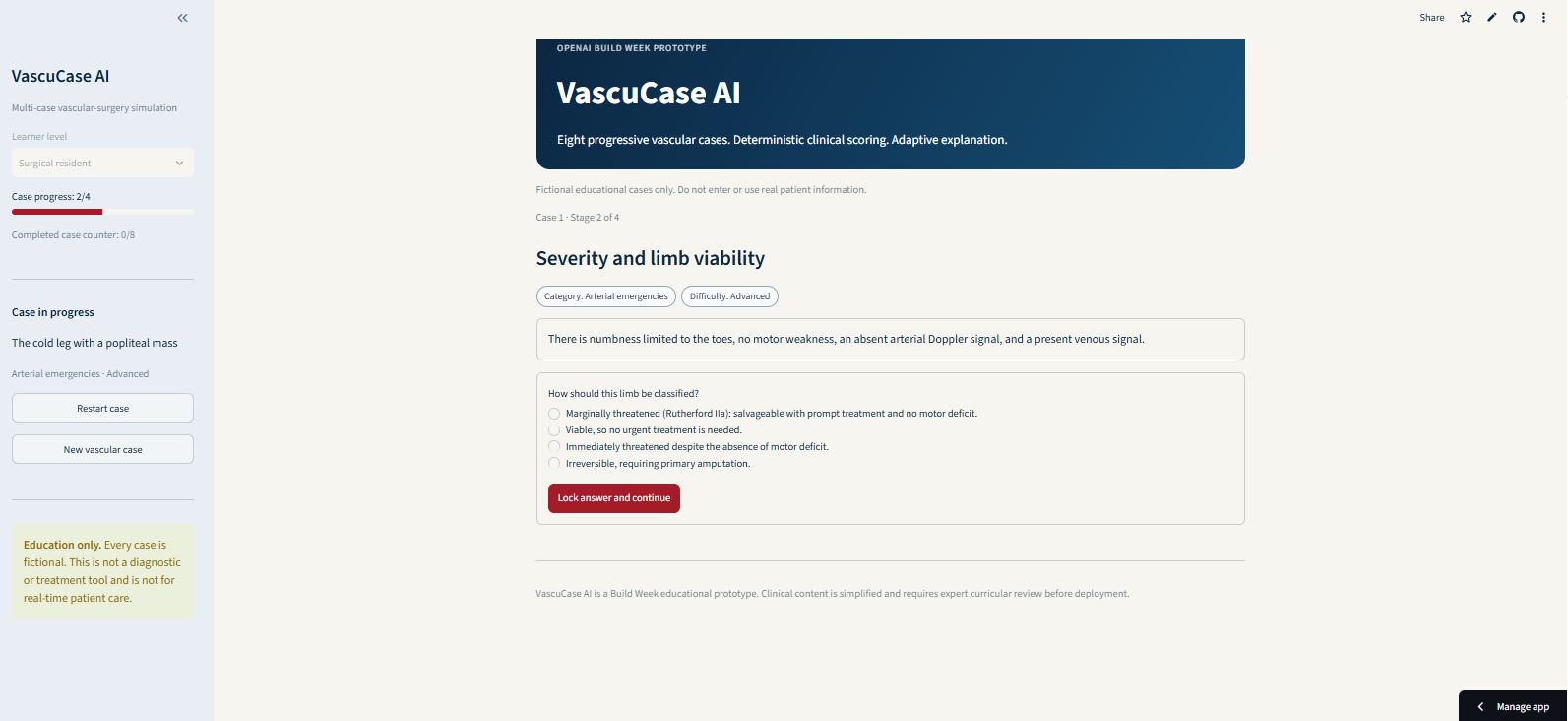
A case assessment stage 2
-
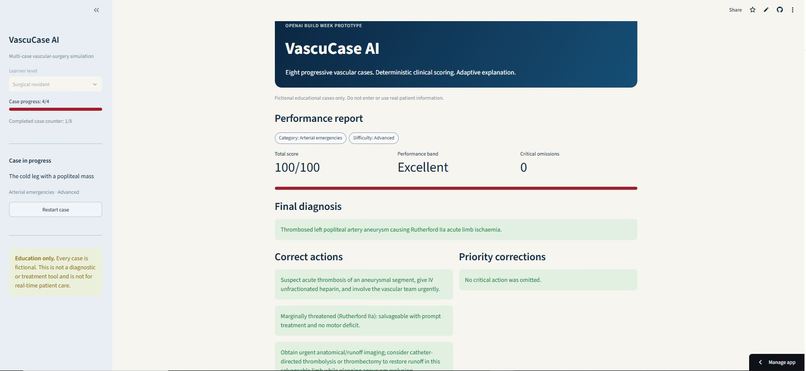
Diagnosis and scoring
-
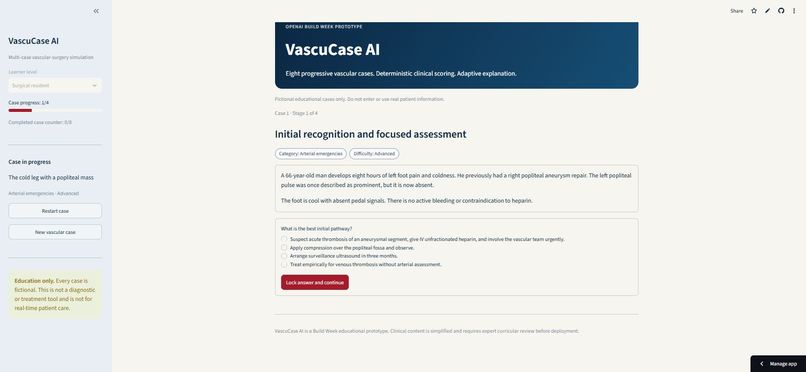
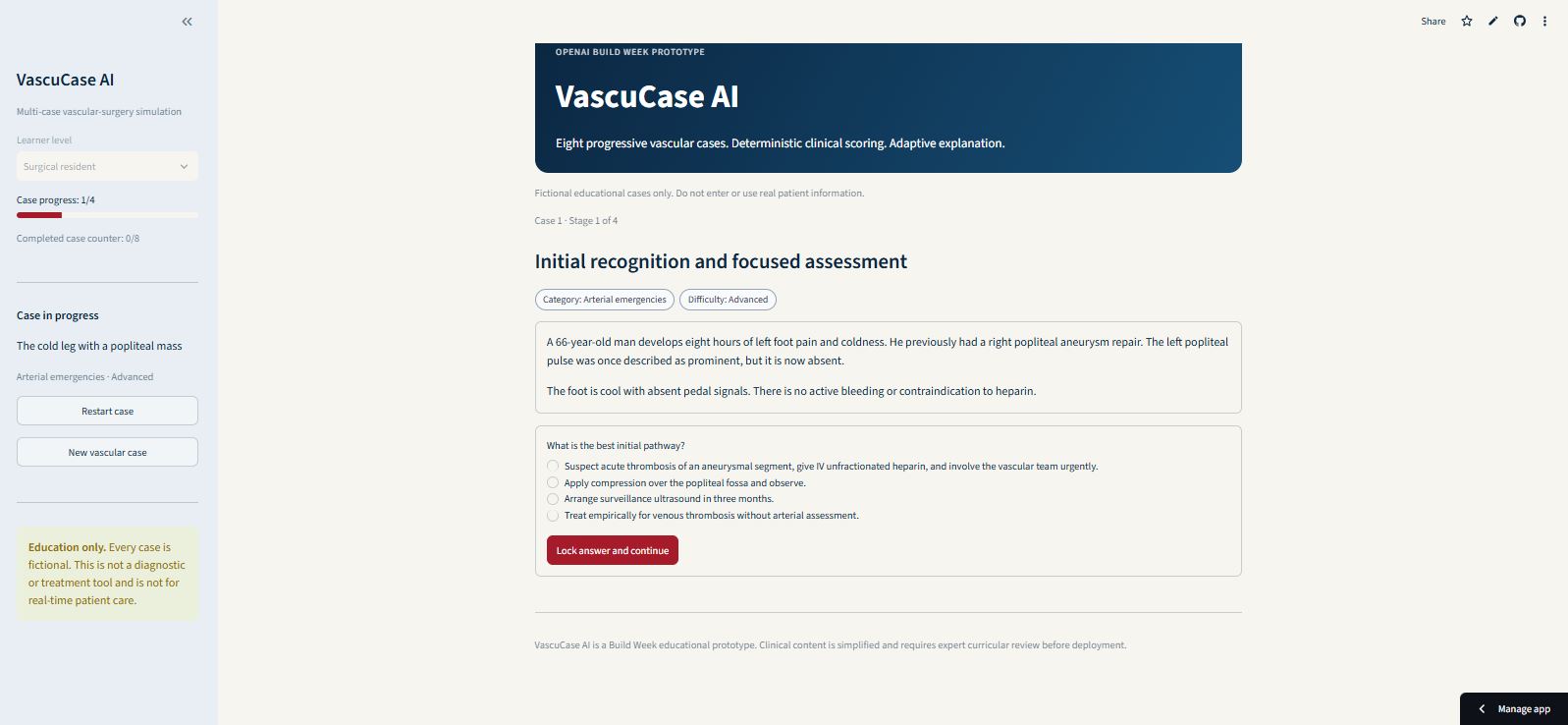
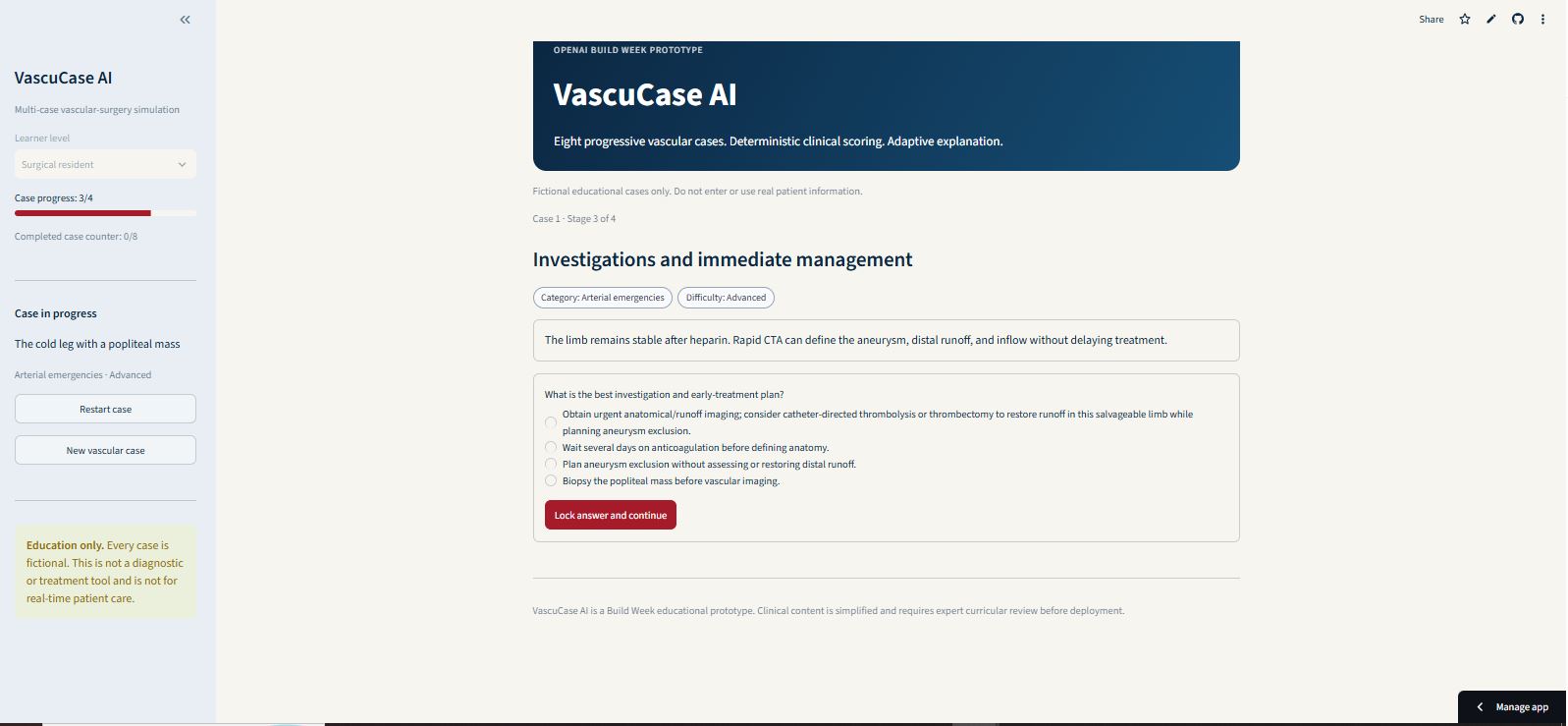
A case assessment stage
-
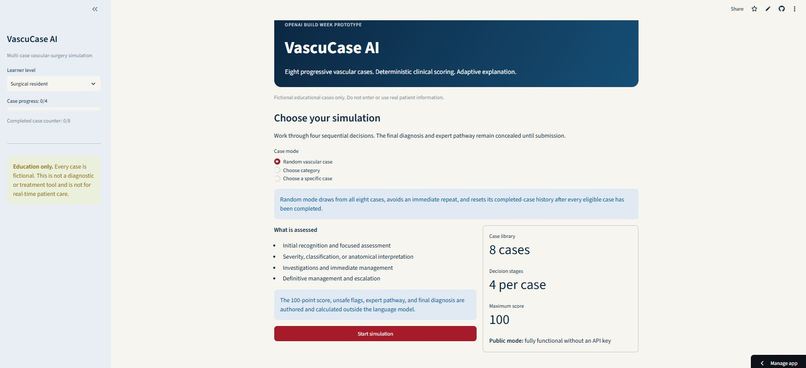
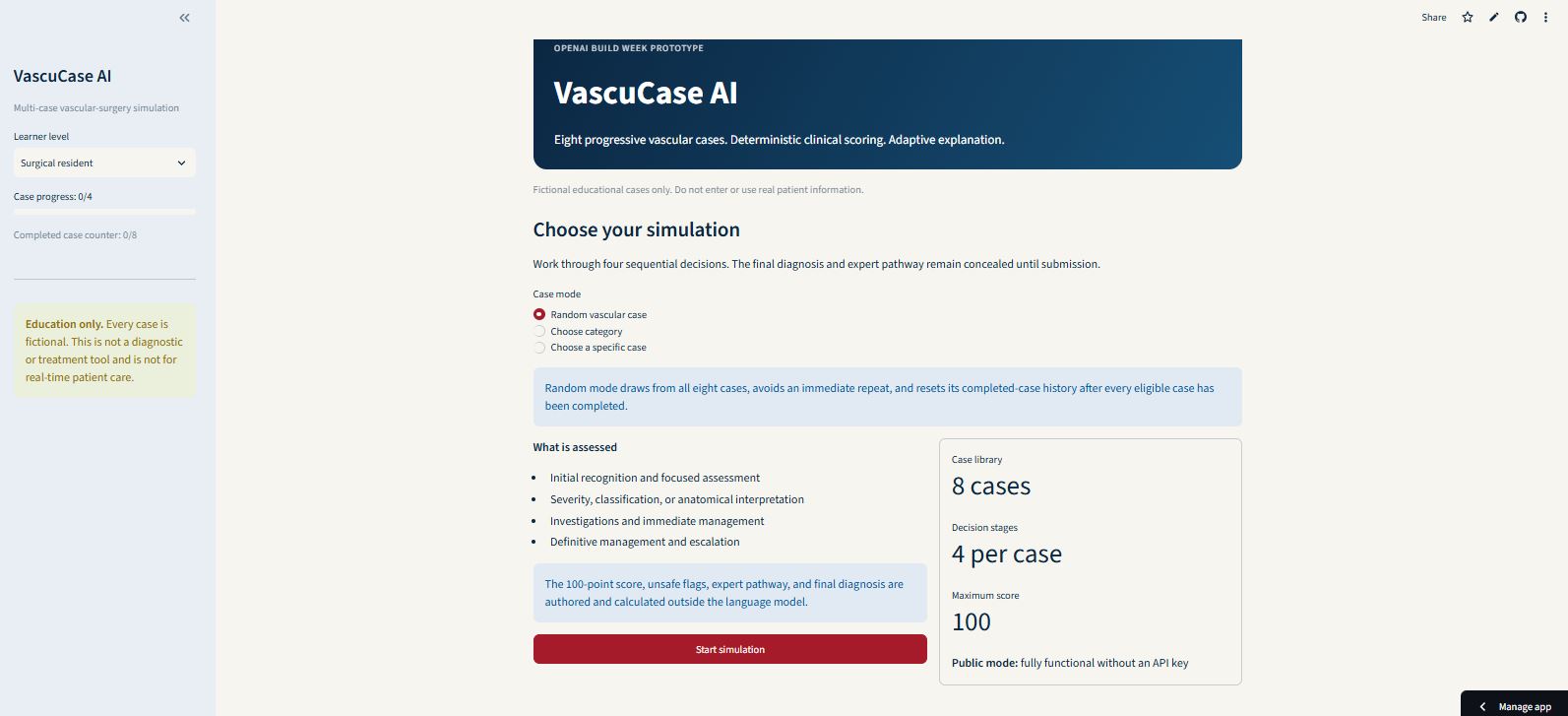
Landing page with learner-level selection
-
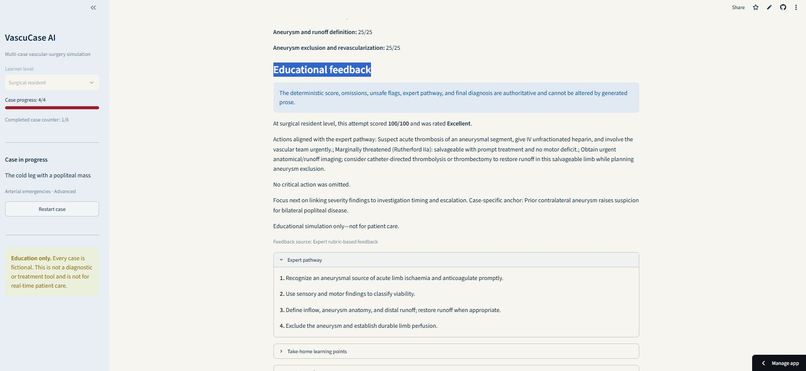
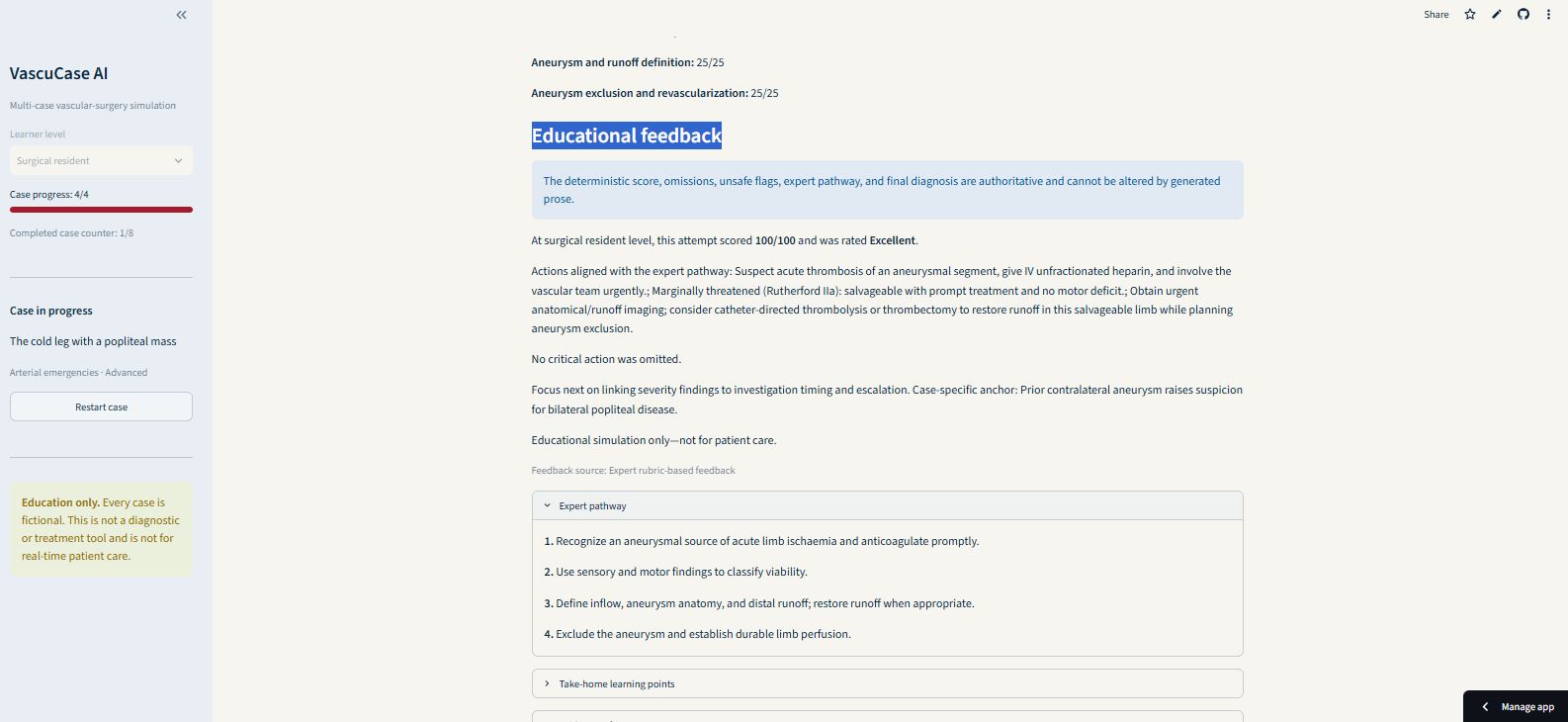
Educational feedback
-
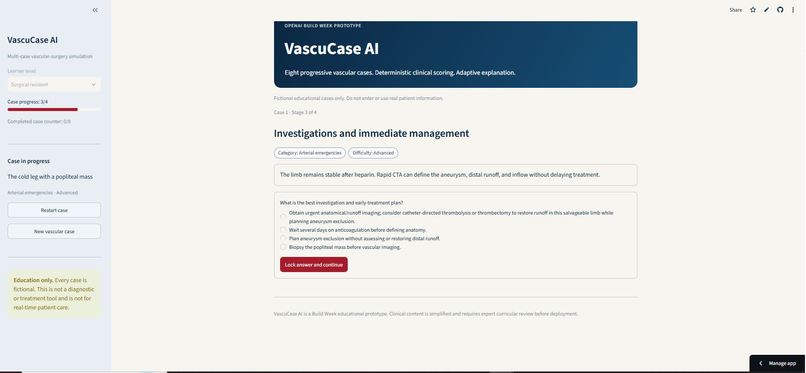
Management plan
-
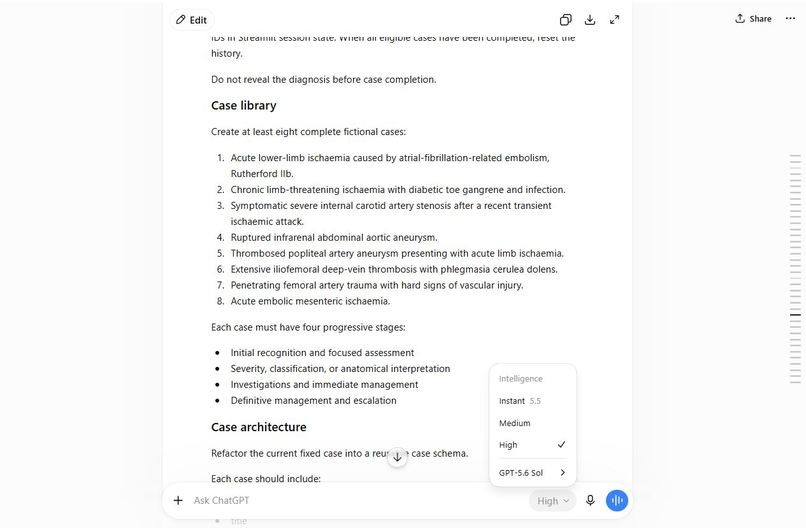
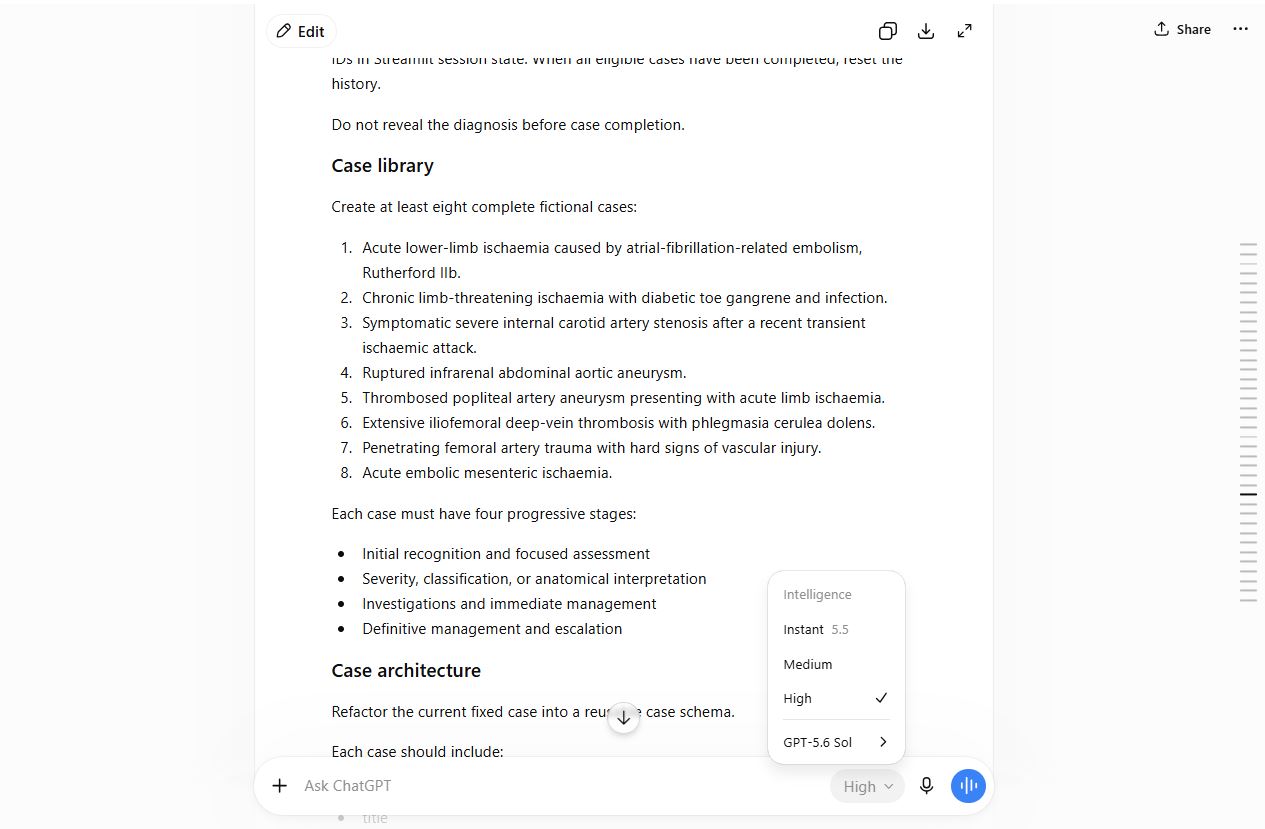
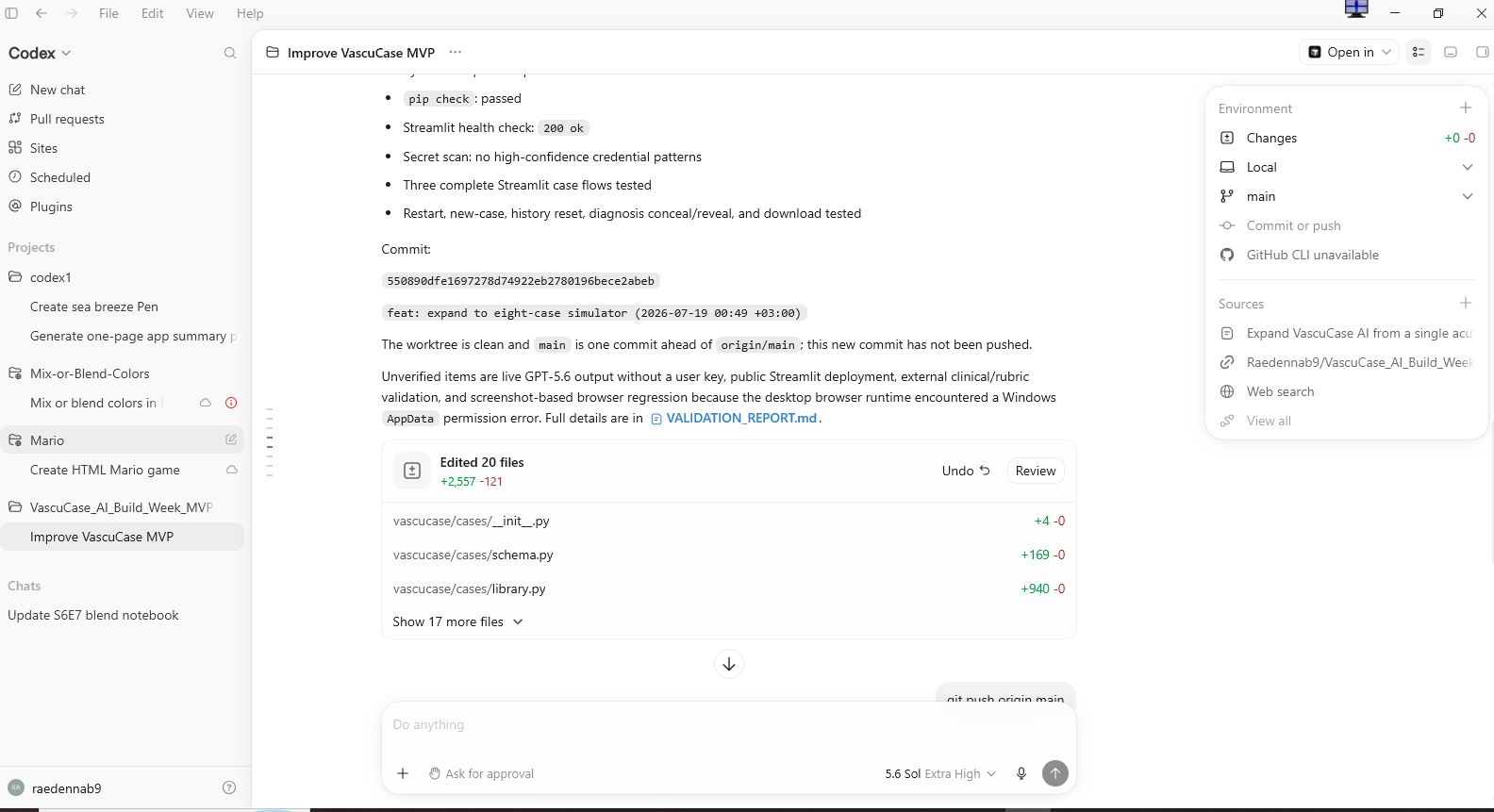
work of CHATGPT 5.6 sol
-
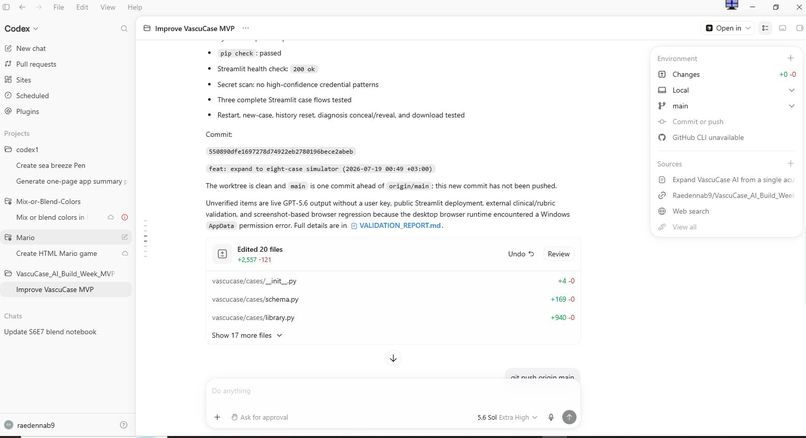
the CODEX project using chatgpt 5.6 ulta high

Inspiration
Vascular emergencies require rapid recognition, structured assessment, and timely escalation. However, medical students and surgical trainees may encounter relatively few complex vascular cases during training, and conventional multiple-choice questions do not reproduce the sequential clinical reasoning required in real practice.
As a vascular surgeon and medical educator, I wanted to create a safe, interactive environment in which learners could assess fictional vascular cases, make management decisions, identify urgent priorities, and receive immediate structured feedback.
This led to VascuCase AI, an offline-first vascular-surgery case simulator designed exclusively for education.
What it does
VascuCase AI presents eight expert-authored fictional vascular scenarios:
- Acute lower-limb ischaemia caused by atrial-fibrillation-related embolism
- Chronic limb-threatening ischaemia with diabetic toe gangrene and infection
- Symptomatic severe carotid stenosis after a transient ischaemic attack
- Ruptured infrarenal abdominal aortic aneurysm
- Thrombosed popliteal artery aneurysm with acute limb ischaemia
- Iliofemoral deep-vein thrombosis with phlegmasia cerulea dolens
- Penetrating common femoral artery trauma with hard signs of vascular injury
- Acute embolic mesenteric ischaemia
Learners can select:
- Medical student, surgical resident, or vascular trainee level
- A random vascular case
- A category-filtered case
- A specific case from the case library
Each simulation progresses through four stages:
- Initial recognition and focused assessment
- Severity, classification, or anatomical interpretation
- Investigations and immediate management
- Definitive treatment and escalation
The diagnosis remains hidden until the learner completes the case.
Safety-first scoring
Each case contains a schema-validated deterministic 100-point rubric.
The scoring engine identifies:
- Correct clinical actions
- Missed critical actions
- Unsafe selections
- Domain-level performance
- Overall performance band
- Case-specific learning points
The scoring system—not a language model—is the sole authority for the final score, expert pathway, critical omissions, unsafe-action flags, and diagnosis.
The public application uses expert rubric-based offline feedback and does not require an OpenAI API key. An optional GPT-5.6 explanation pathway is isolated in the codebase and can generate prose only; it cannot alter the score or clinical pathway.
How we built it
The application was built with Python and Streamlit.
Codex with GPT-5.6 was used throughout the development process to:
- Design the application architecture
- Refactor the original single-case prototype into a reusable multi-case system
- Implement the generic Streamlit workflow
- Create Pydantic case schemas and validation rules
- Develop deterministic scoring and reporting modules
- Improve accessibility and mobile responsiveness
- Add session recovery and no-repeat random selection
- Write automated tests
- Debug Git, deployment, and state-management issues
- Harden privacy and safety boundaries
- Prepare documentation and deployment files
The main architecture separates:
- User interface and session state
- Validated case definitions
- Deterministic scoring
- Feedback generation
- Identifier-free reporting
This separation makes the project easier to test, review, and expand.
Challenges
Designing reusable vascular cases
The first prototype contained only one acute limb ischaemia case. The main architectural challenge was converting it into a general case engine capable of supporting multiple vascular conditions without duplicating interface or scoring logic.
Preserving clinical safety
The simulator needed to provide meaningful feedback without behaving as a diagnostic or treatment tool. All cases are fictional, the public workflow is offline-first, and the language-model pathway cannot modify clinically authoritative results.
Evaluating complex decisions
Vascular cases often contain several reasonable actions, but some decisions are time-critical or context-dependent. Each case therefore uses stable option identifiers, explicit scoring weights, critical-action flags, unsafe-choice flags, and case-specific explanations.
Managing session state
Random selection had to avoid immediately repeating the previous case, retain completed-case history, and reset appropriately after all eligible cases had been completed.
What we learned
The project demonstrated that generative AI is most useful in medical education when it operates within a transparent expert framework.
Codex with GPT-5.6 substantially accelerated architecture design, refactoring, testing, debugging, documentation, and deployment preparation. However, high-stakes educational scoring remains more reproducible when it is based on deterministic, expert-authored rules.
We also learned that a medical education application should be designed so that it remains fully functional when external AI services are unavailable.
Accomplishments
- Eight complete four-stage vascular scenarios
- Three learner levels
- Random, category-based, and specific-case selection
- No immediate case repetition
- Diagnosis concealment until completion
- Deterministic 100-point scoring
- Critical-omission and unsafe-choice detection
- Case-specific expert feedback
- Identifier-free downloadable JSON reports
- Responsive mobile layout
- Keyboard focus and reduced-motion accessibility
- 107 automated tests passed
- Successful Python compilation and dependency validation
- Successful Streamlit health check
- No high-confidence secrets detected in the repository
What’s next
Future versions could include:
- Aortic dissection
- Dialysis-access thrombosis and steal syndrome
- Venous ulcers
- Vascular graft infection
- Endoleaks and other endograft complications
- Thoracic outlet syndrome
- Visceral artery aneurysms
- Educator-authored cases and rubrics
- OSCE and oral-examination modes
- Longitudinal learner performance tracking
- Formal external clinical and educational validation
Educational-use statement
VascuCase AI is intended exclusively for medical education using fictional scenarios. It is not a medical device, does not provide patient-specific advice, and must not be used for diagnosis or treatment.

Log in or sign up for Devpost to join the conversation.