-
-
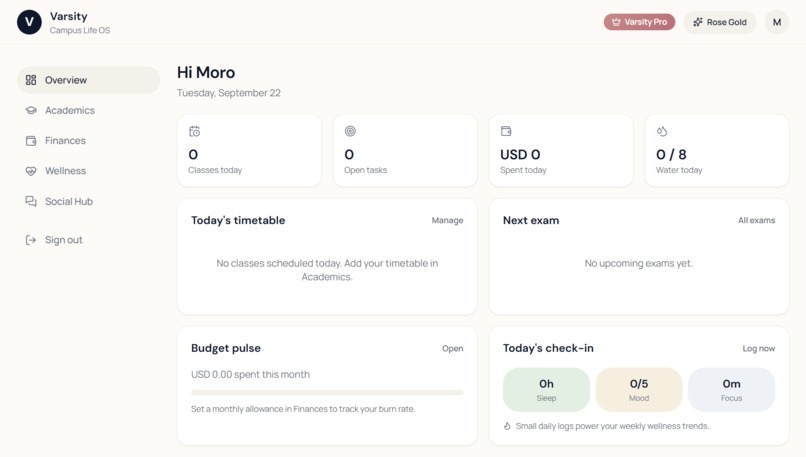
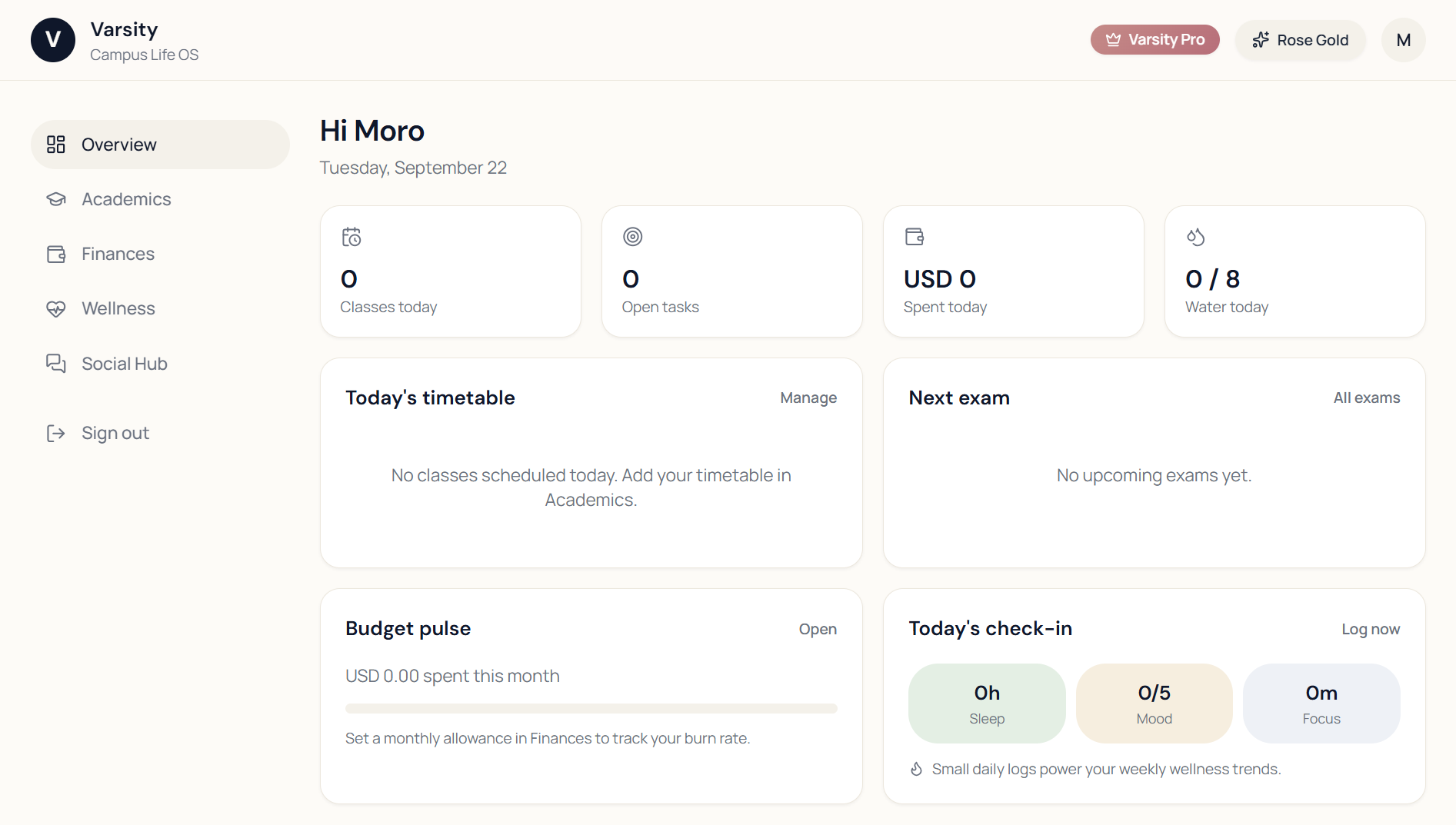
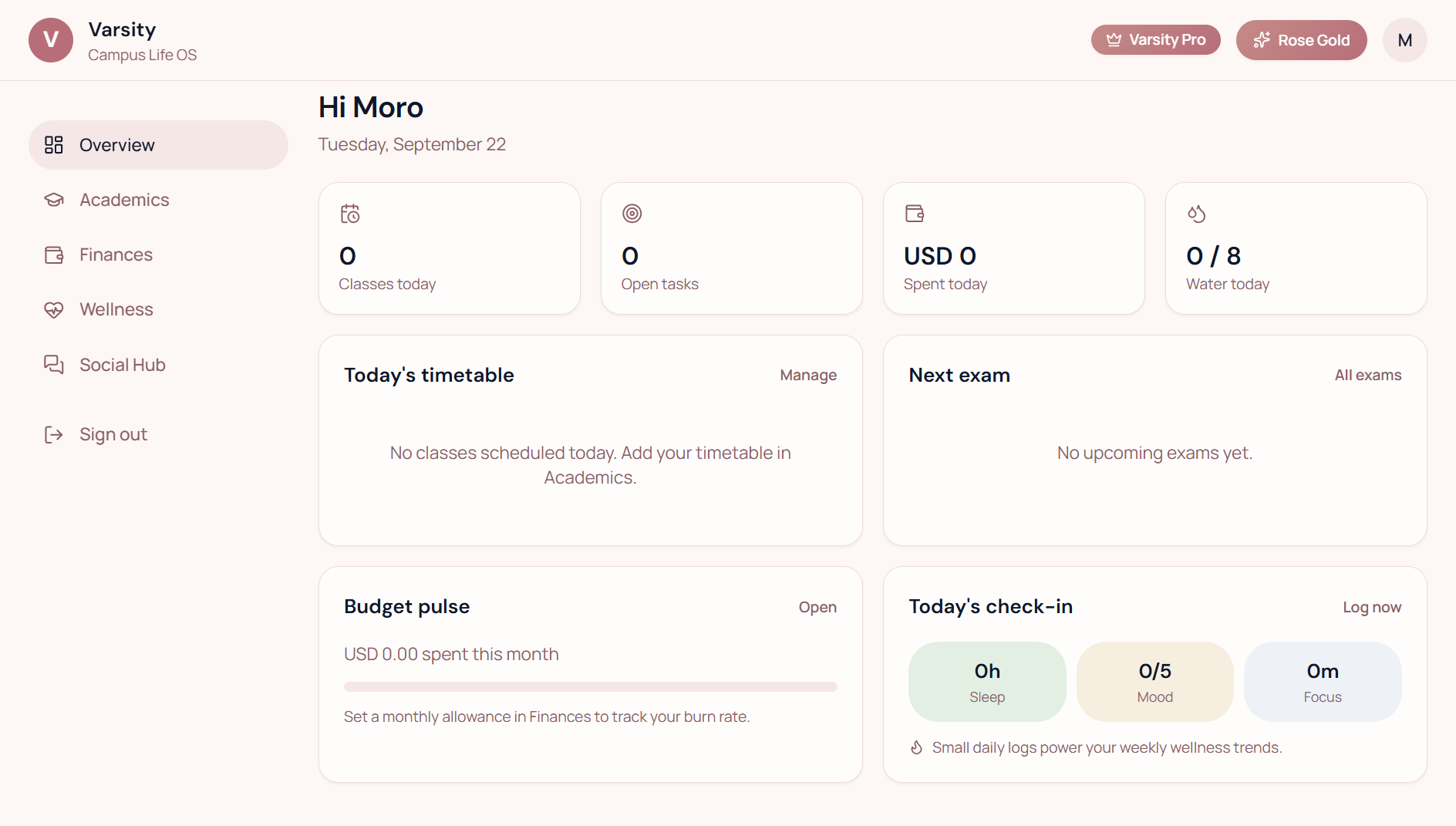
This is the homepage of the Varsity Campus app.
-
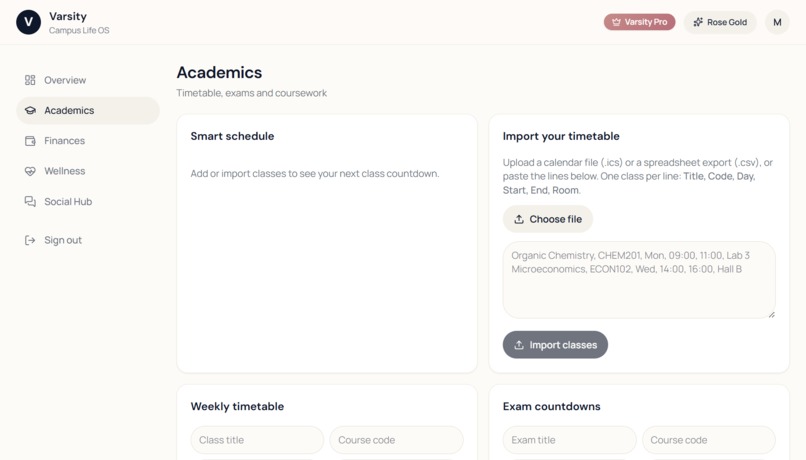
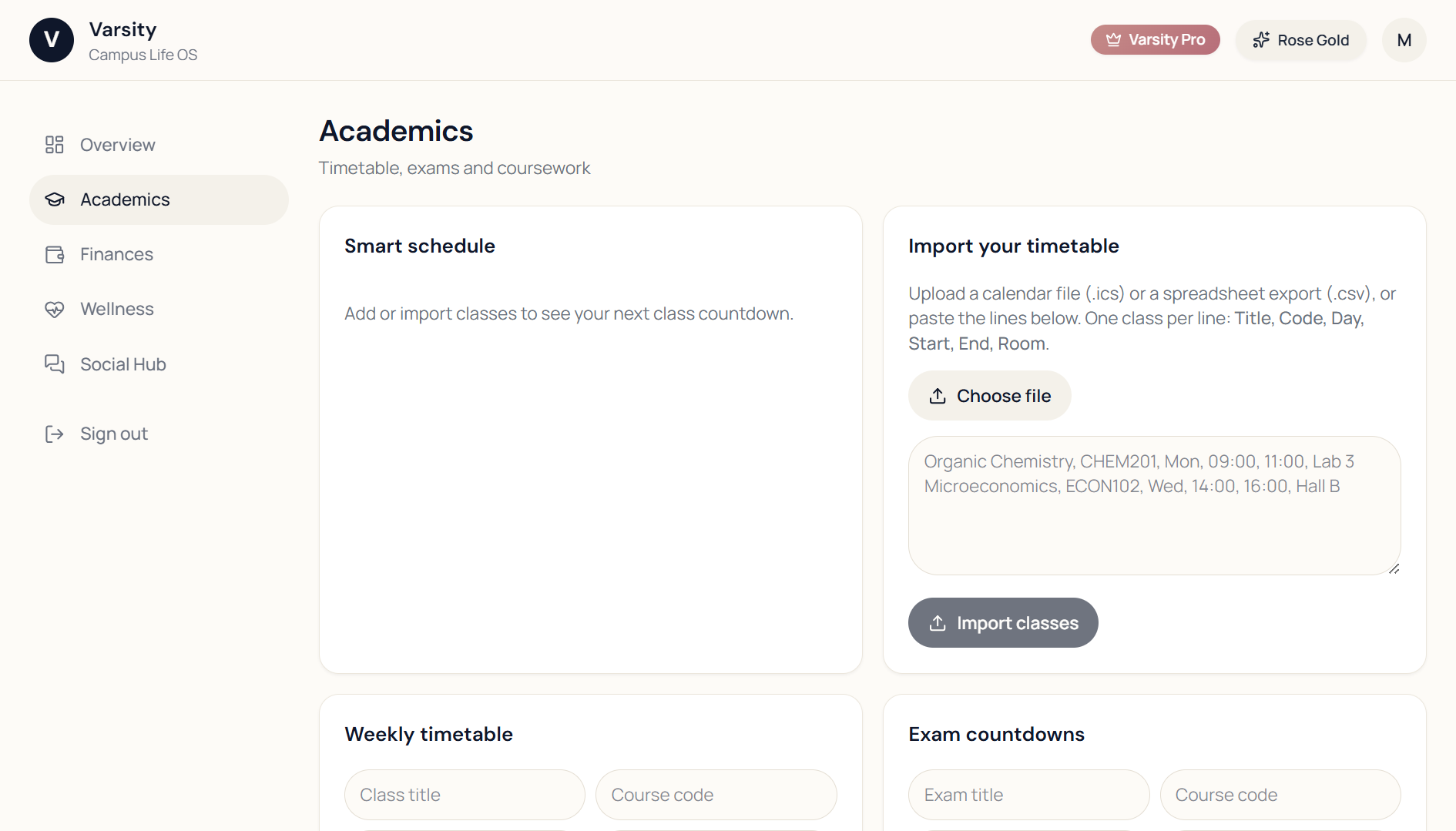
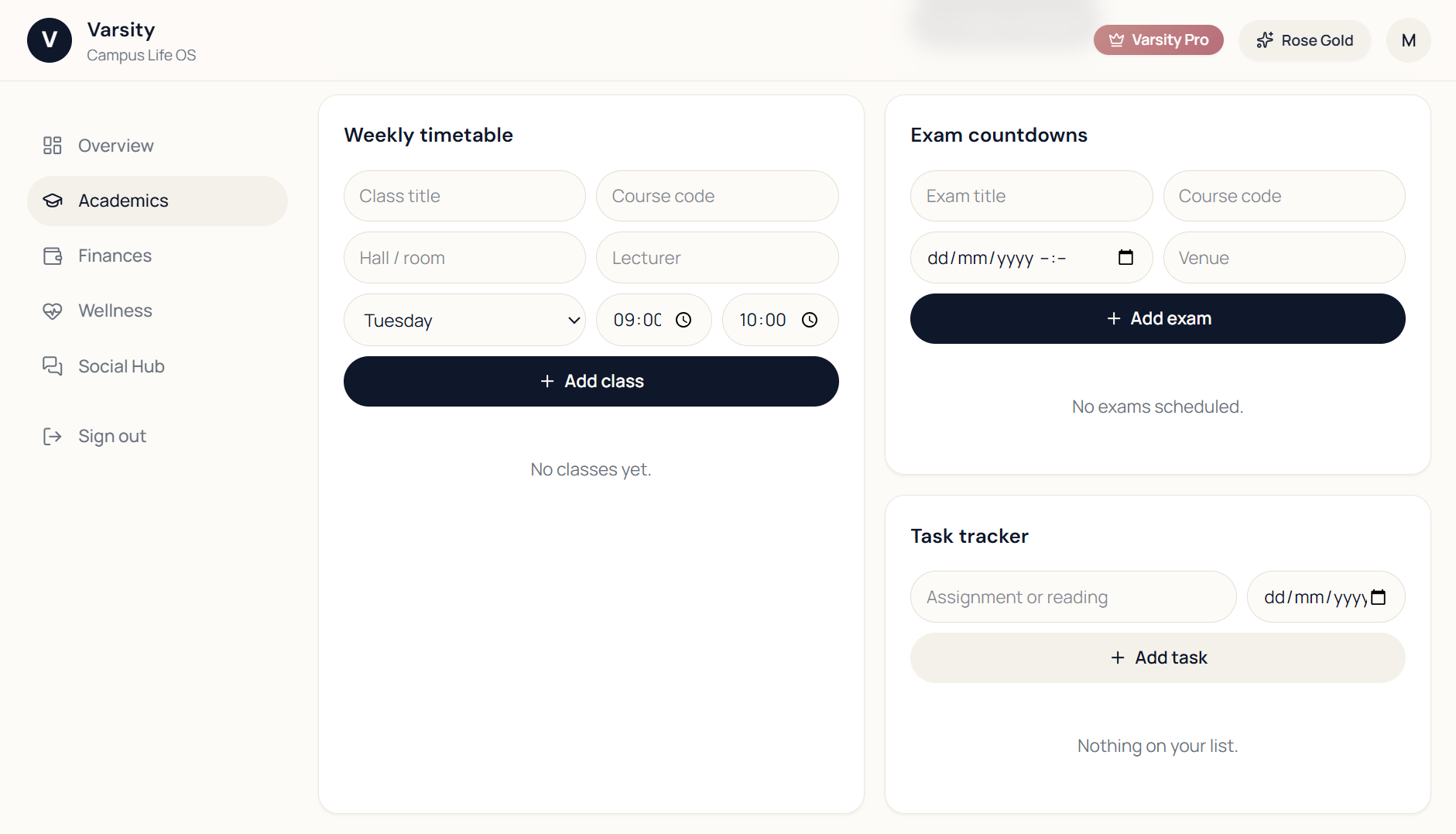
This is the Academics Hub on the Varsity Campus OS
-
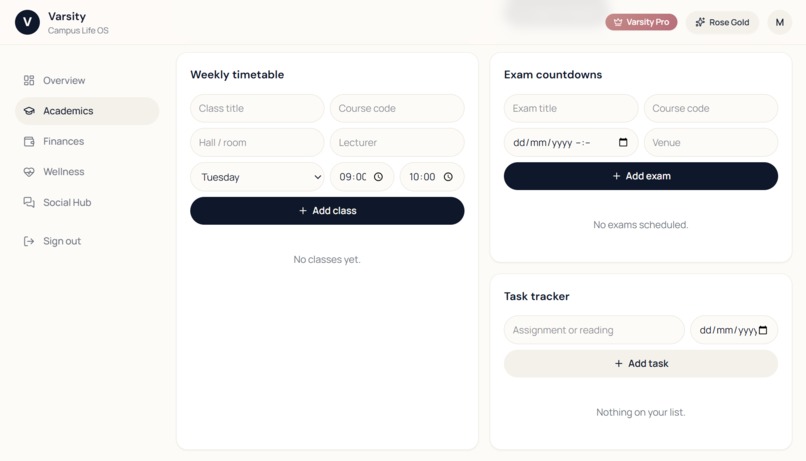
This screenshot is from the Academics Hub on Varsity.
-
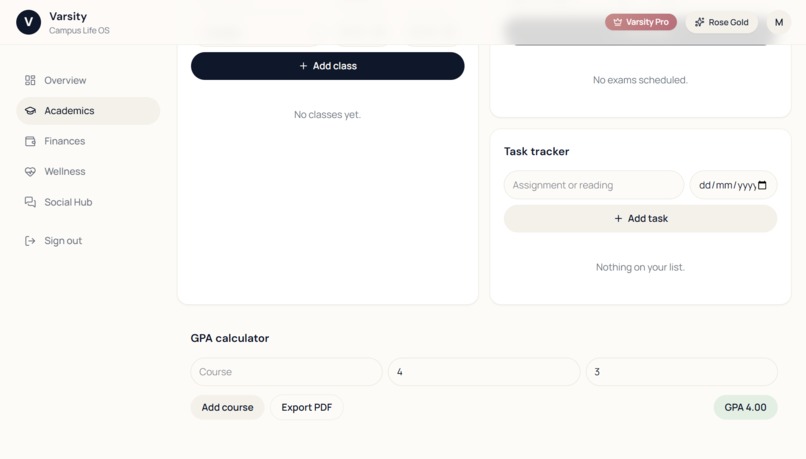
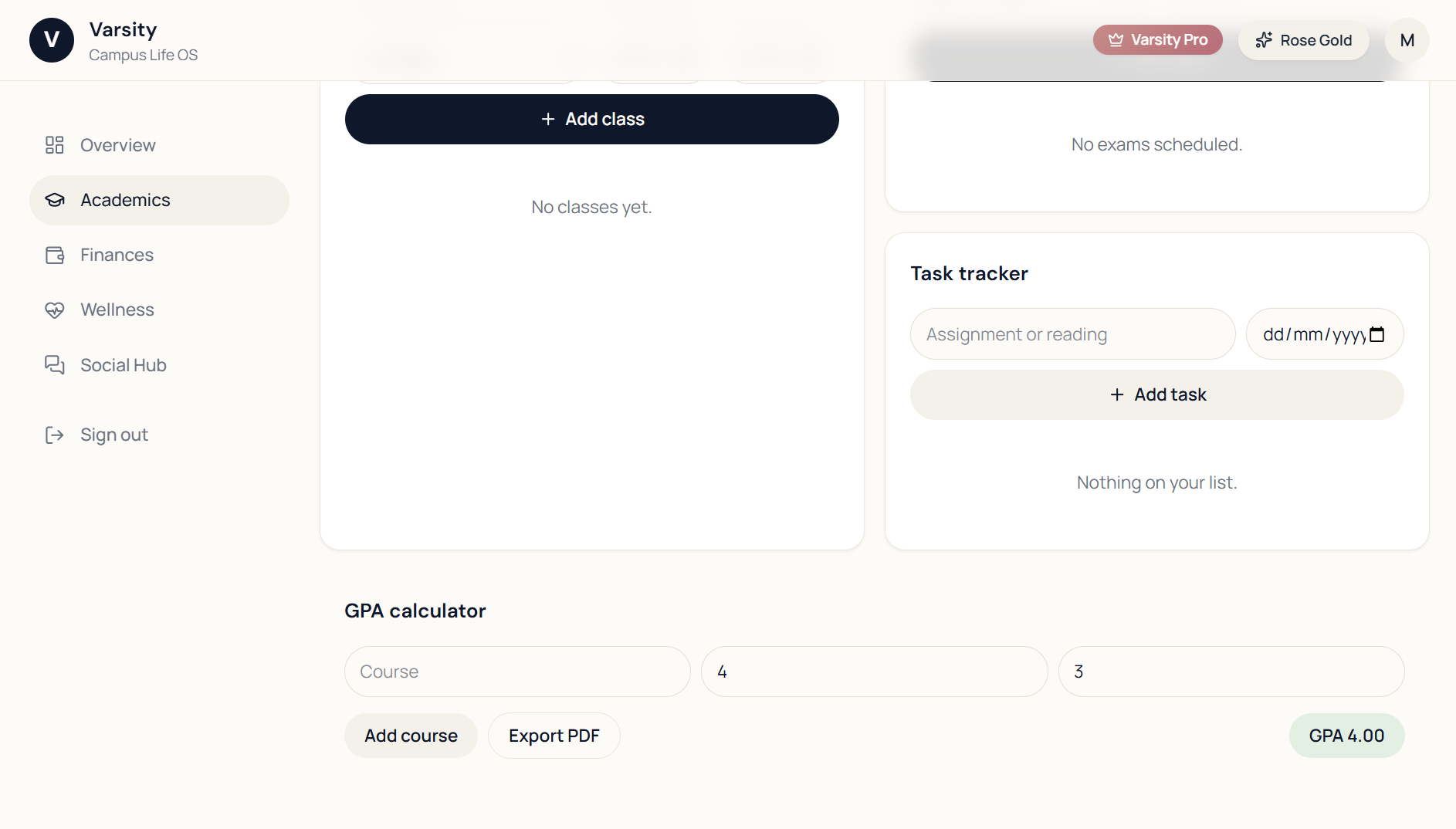
Additional unique features on Varsity including a task tracker and a GPA calculator
-
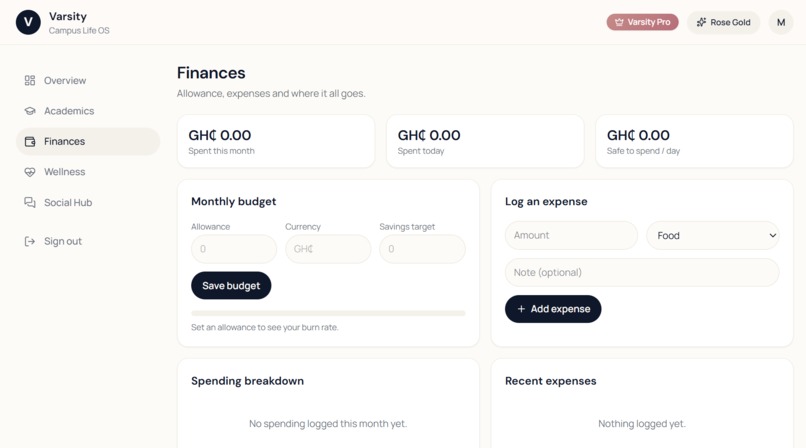
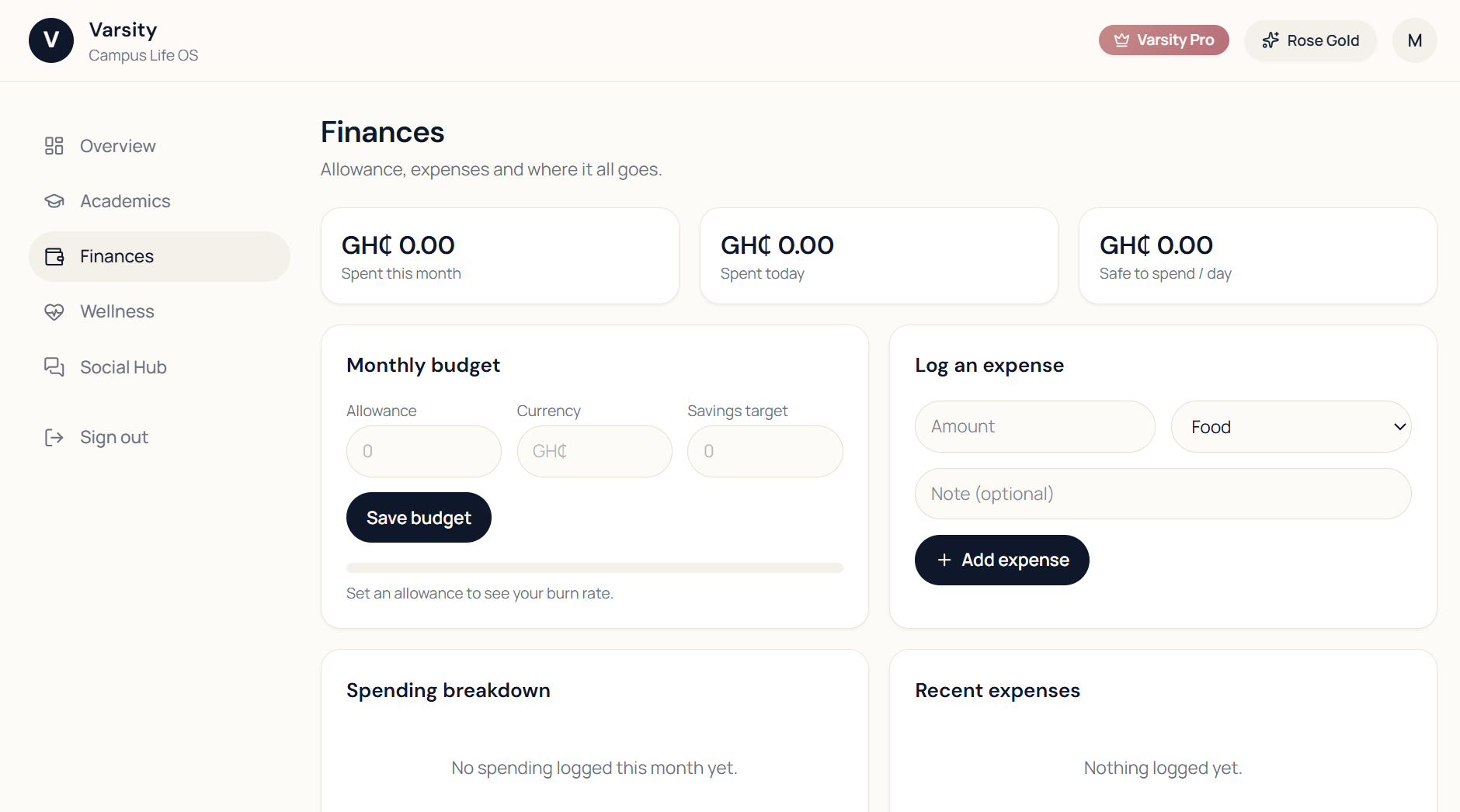
This is the Finances Hub exclusively for students on the Varsity app
-
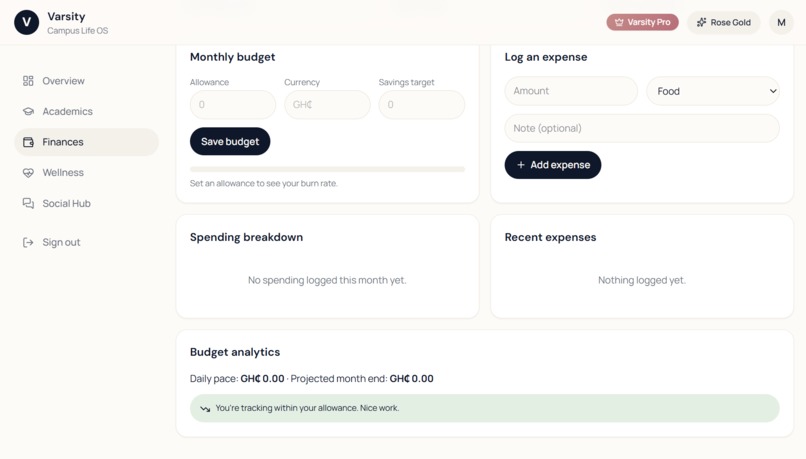
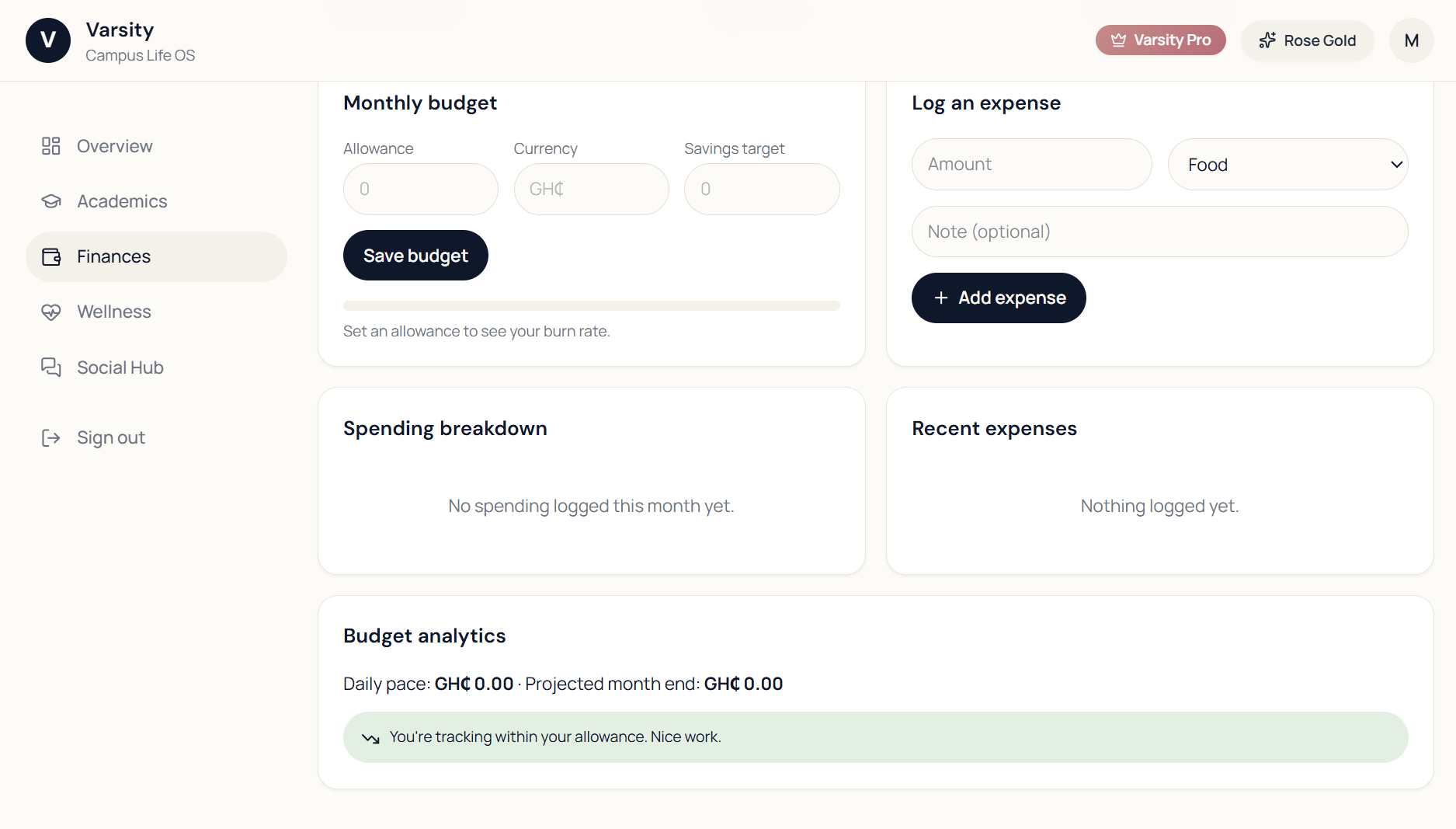
Here are other features in Finances Hub of the Varsity App
-
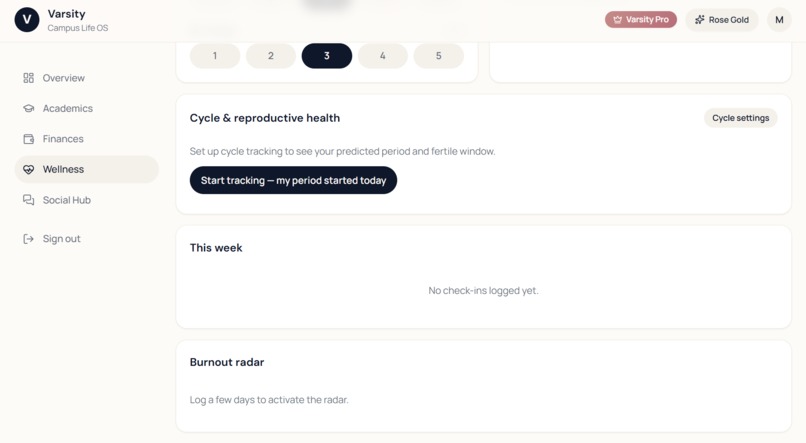
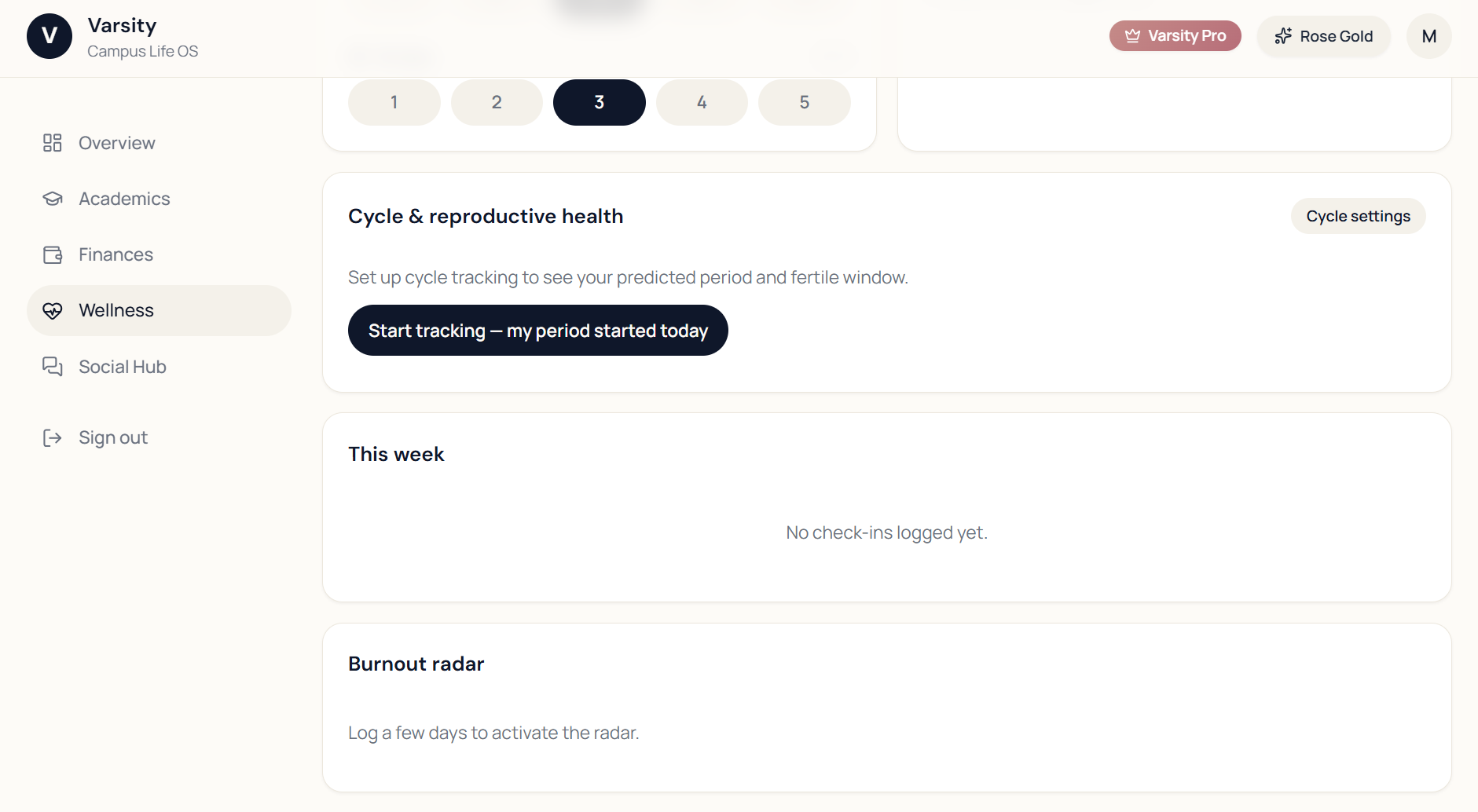
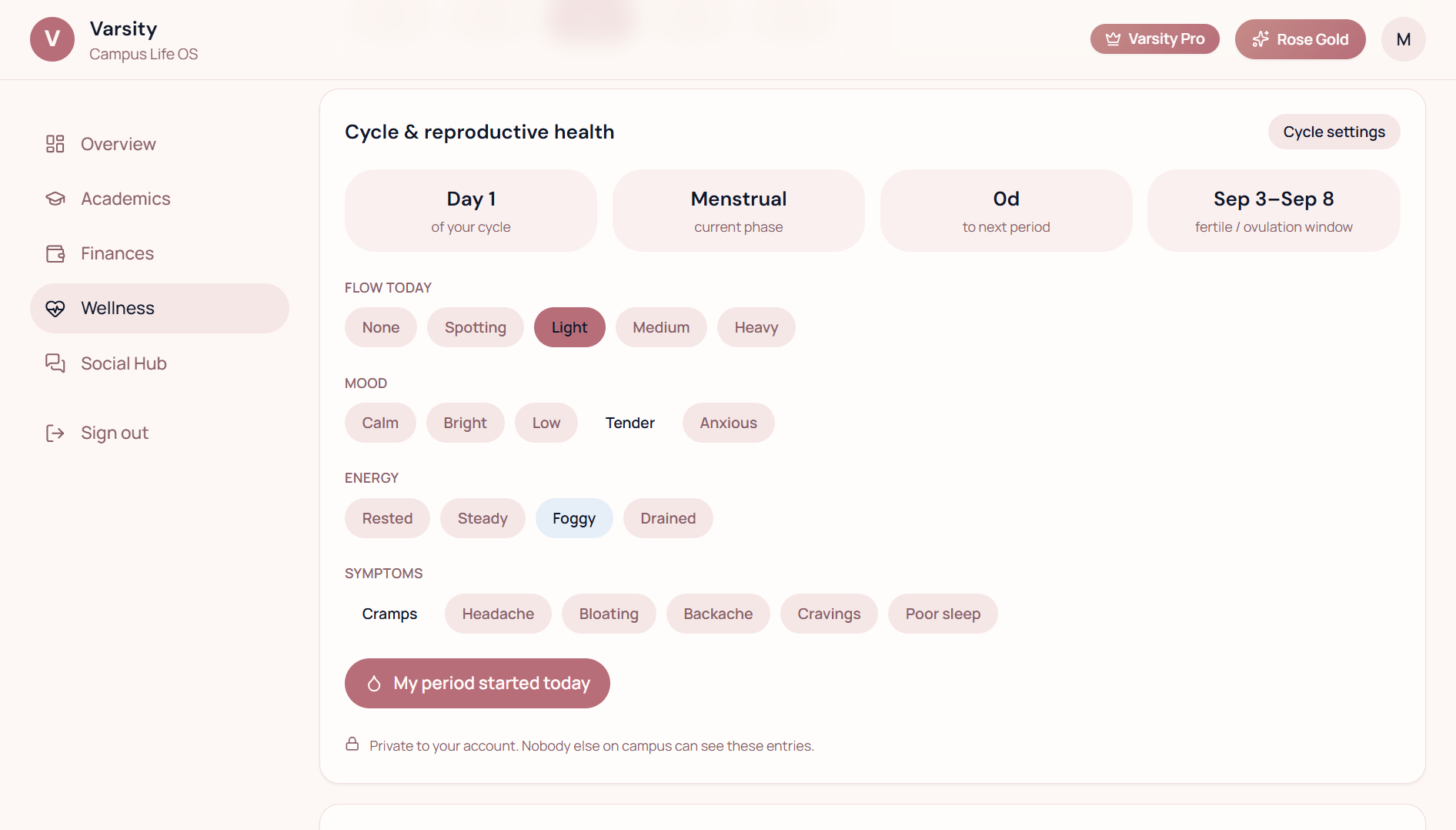
A reproductive health tracker on the Varsity app
-
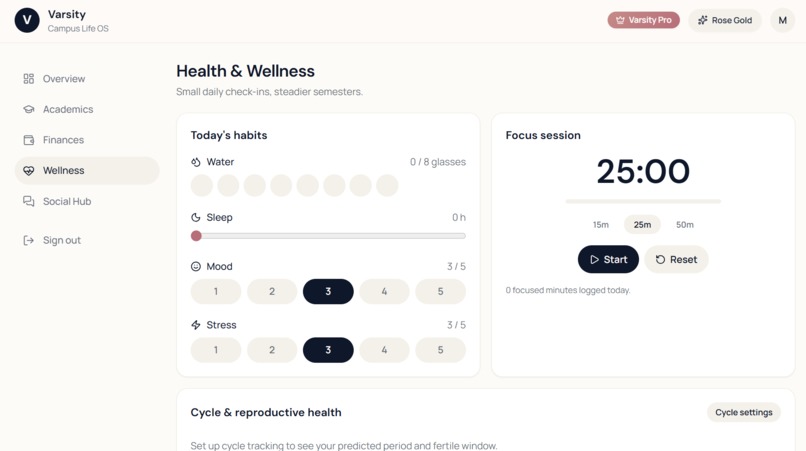
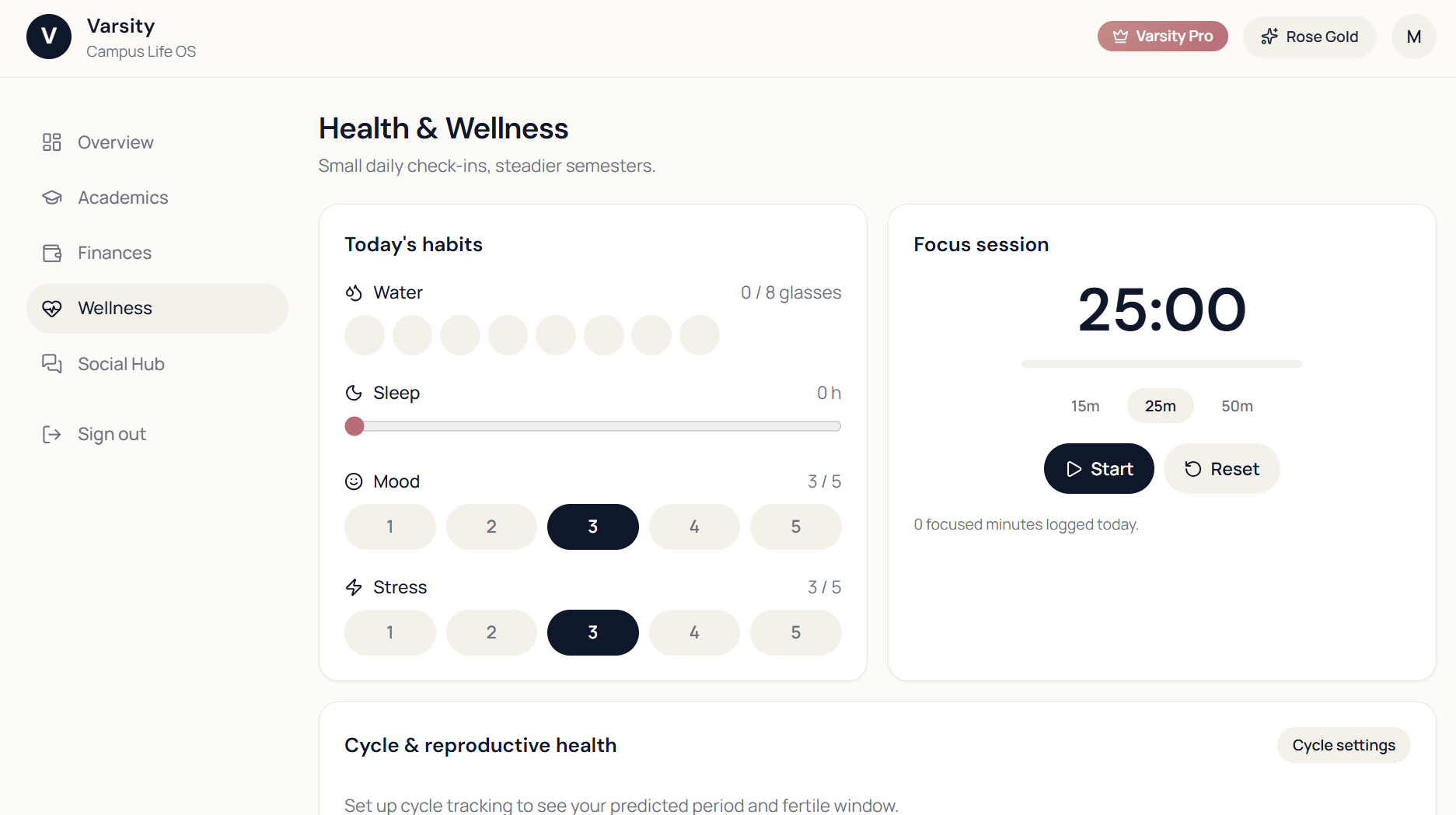
This is the Wellness Hub on the Varsity campus OS
-
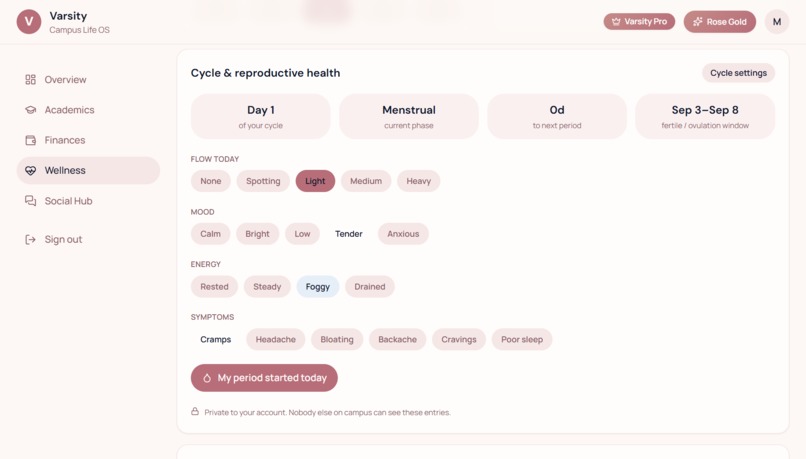
A rose gold feature exclusively on the Varsity Pro Subscription
-
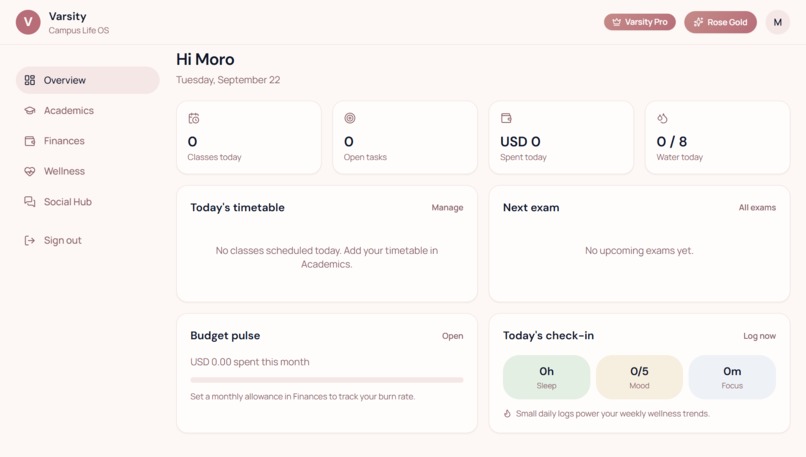
A screenshot of how rose gold palette looks on the Homepage of Varsity
-
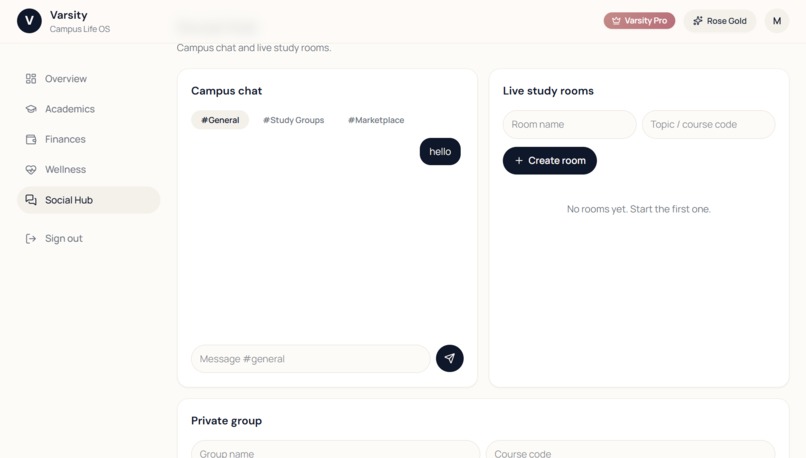
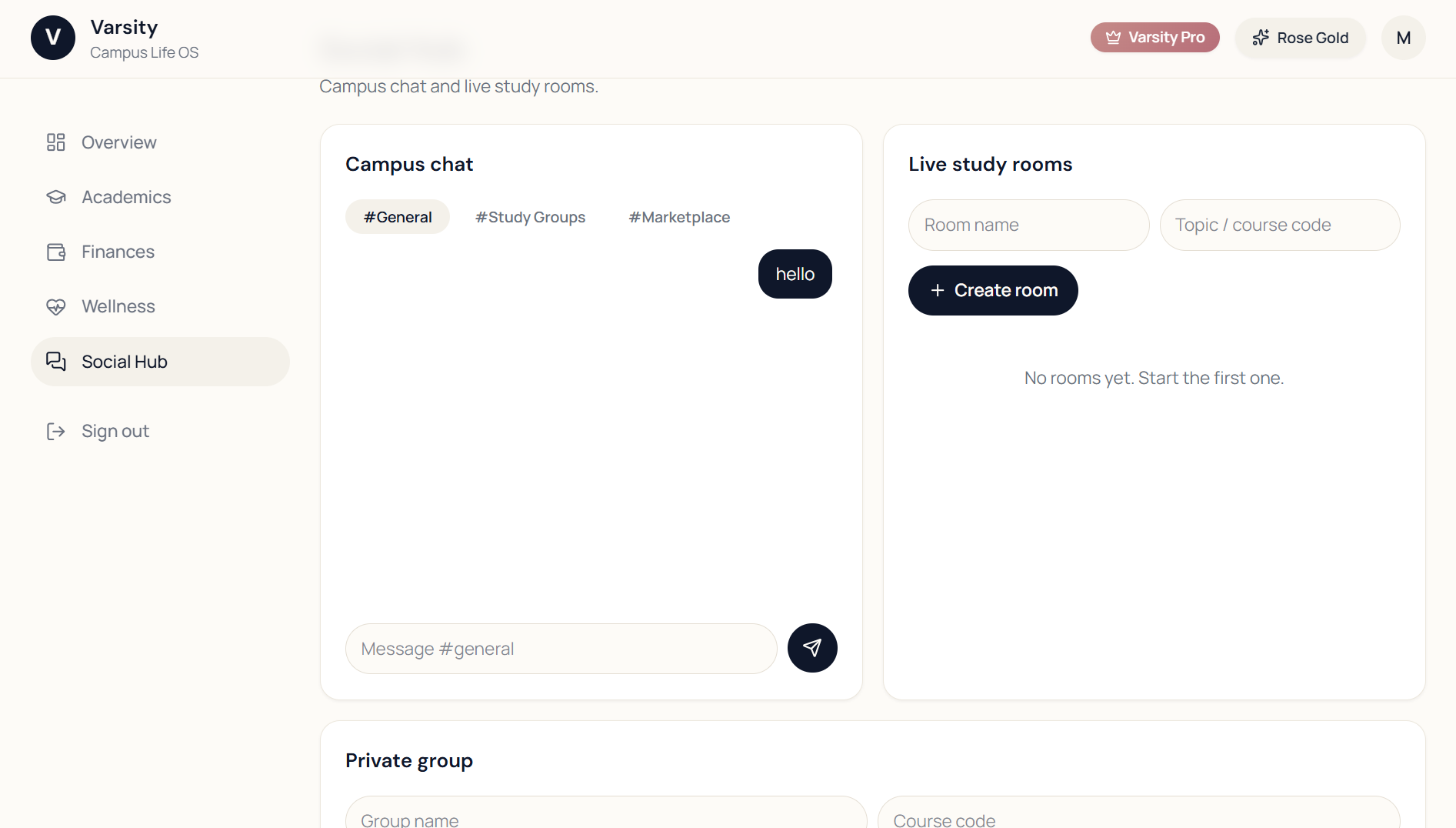
This is the Social Hub on the Varsity app.
-
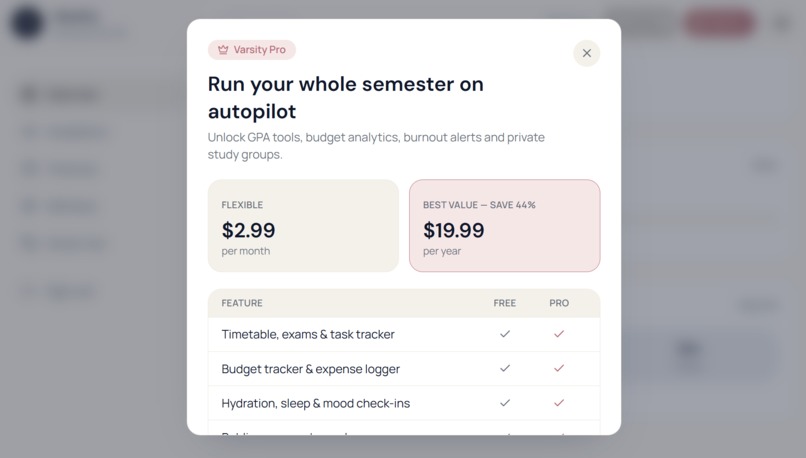
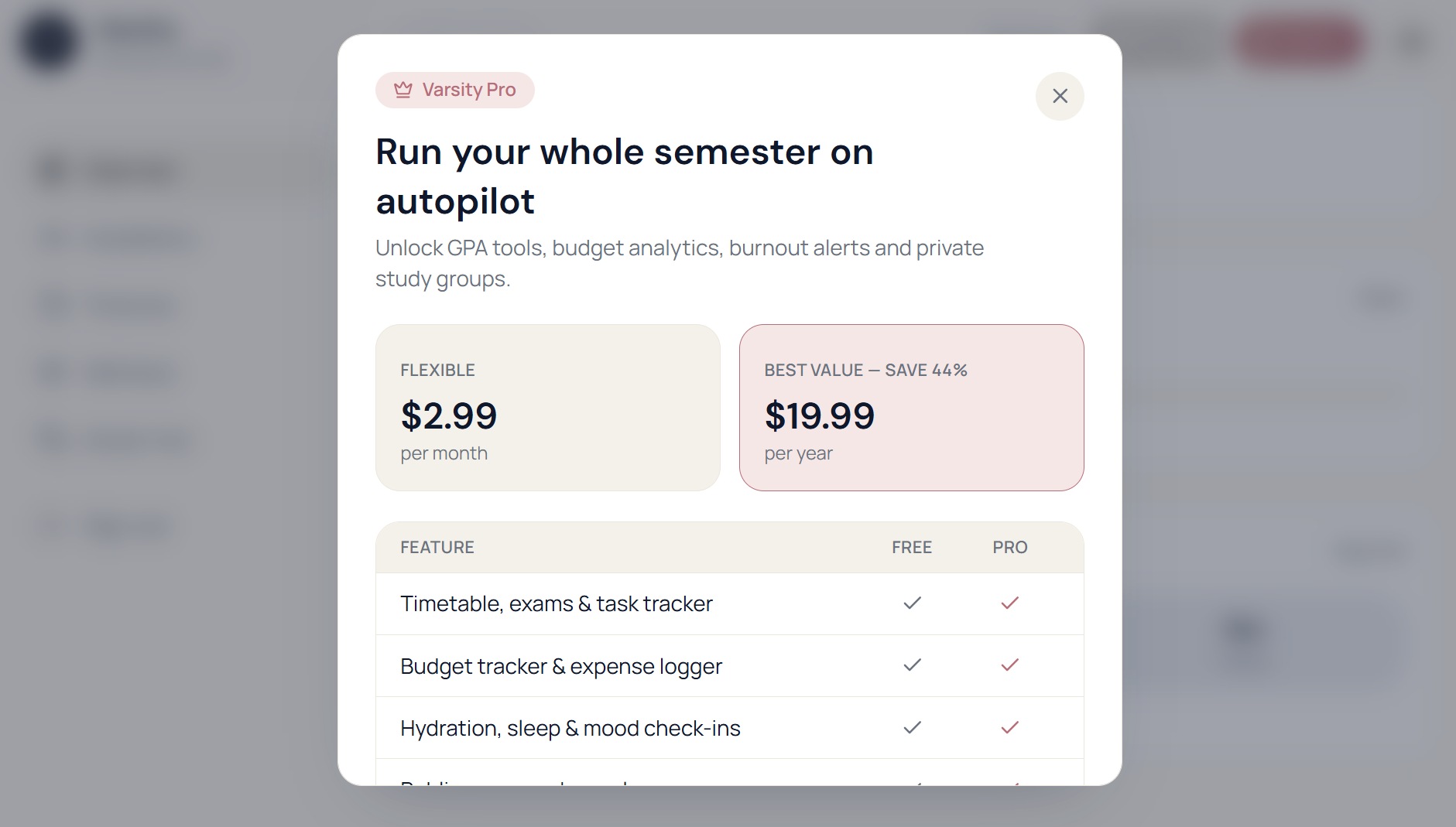
This is the Paywall powered by RevenueCat
-
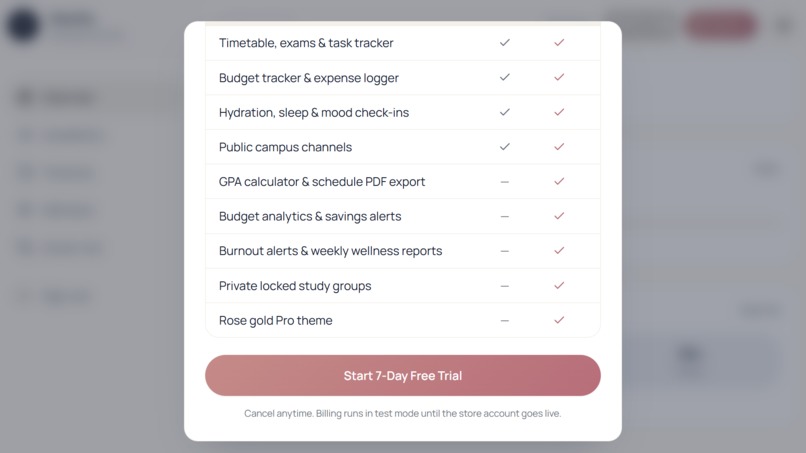
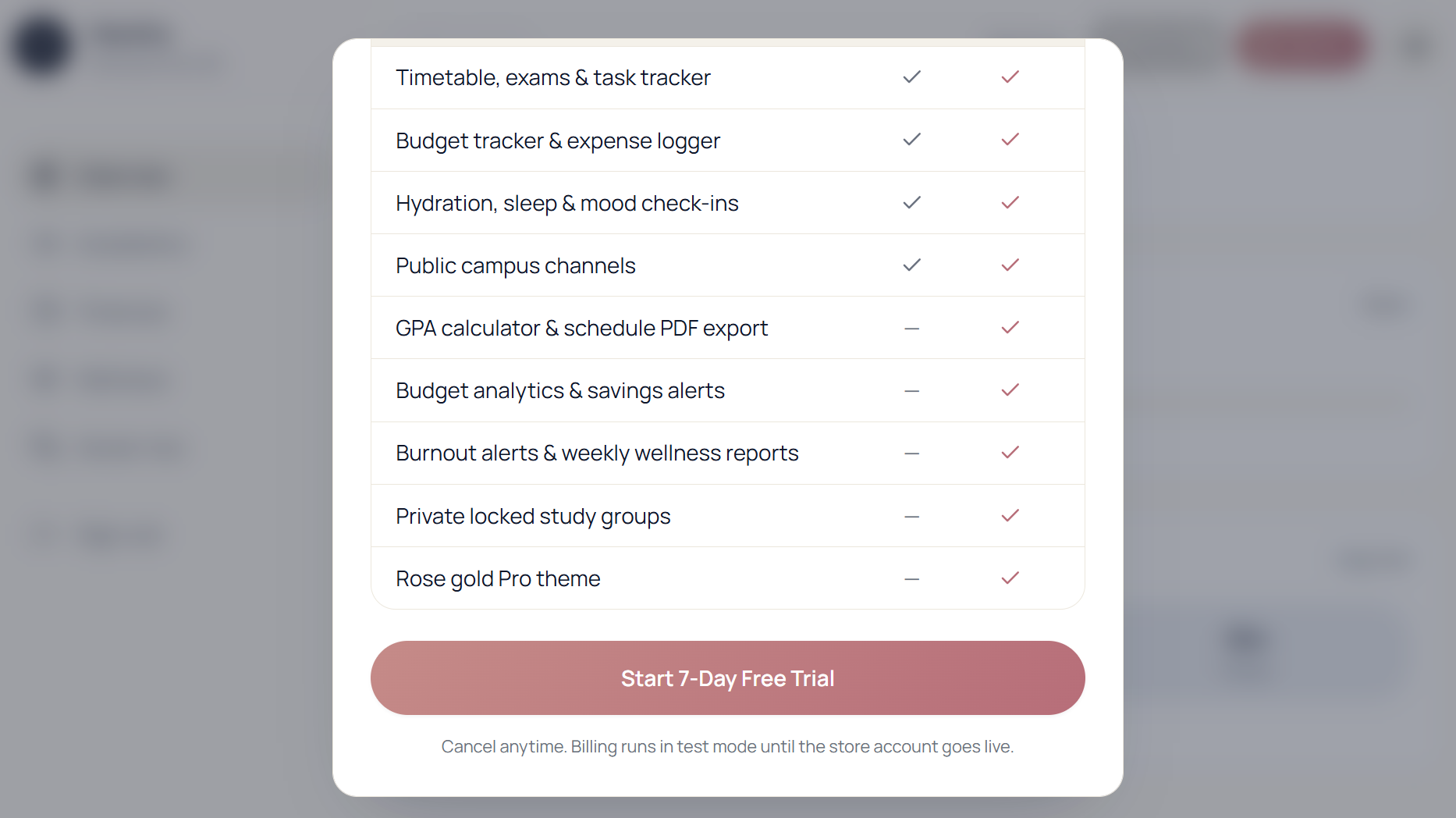
A screenshot of Varsity Pro features on the subscription wall powered by revenueCat
-
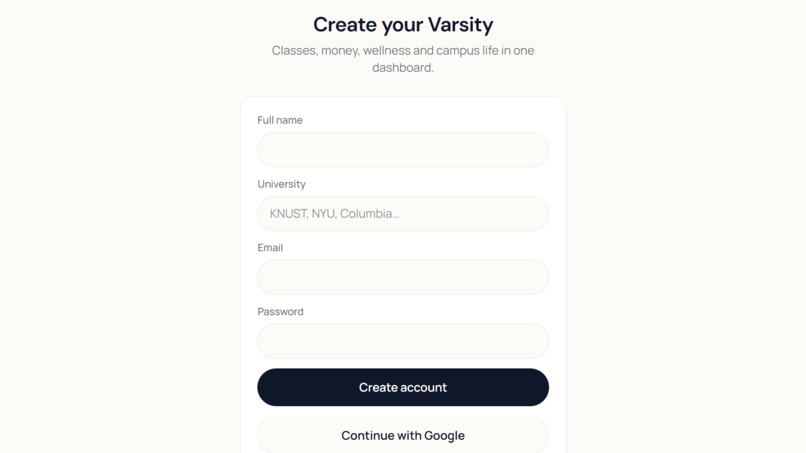
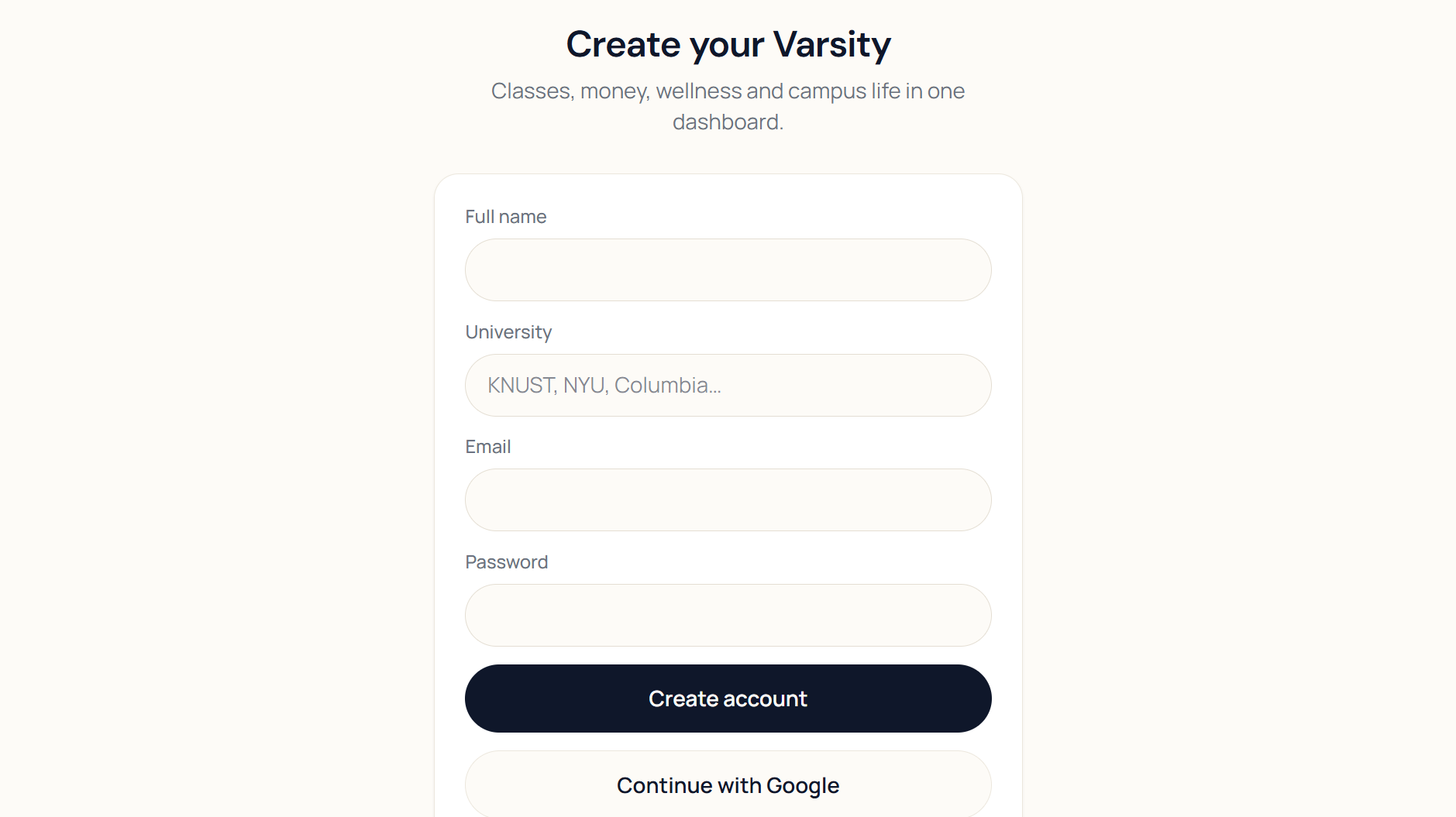
This is the login or create account page when visiting the Varsity campus OS
Inspiration
As a university student, my daily lives are scattered across half a dozen clunky apps: one for class timetables, another for tracking spending, a third for assignment deadlines, and isolated notes for health habits. Most campus tools are outdated, confusing, and stressful to navigate.
I built Varsity to solve this exact problem: creating a unified, elegant "Campus Life OS" that simplifies academic scheduling, daily financial budgeting, and health tracking into a single cohesive web experience.
What it does
Varsity acts as an all-in-one personal operating system for students, organized into three core pillars:
- Academics: Interactive class timetable builder, exam countdown trackers, and prioritized assignment management.
- Finance: Campus expense logger and allowance calculator designed specifically for student living expenses.
- Health & Wellness: Daily wellness check-ins, hydration/sleep logs, and focus timers to combat study burnout.
- Campus Social & Study Hub: Real-time peer chat channels and study rooms where students can collaborate on assignments, form study groups, have a date and connect across campus.
Monetization & RevenueCat Integration
Varsity operates on a freemium model powered by RevenueCat Web Billing:
- Free Tier: Core timetable builder, basic expense logging, and daily wellness logs.
- Varsity Pro ($2.99/mo or $19.99/yr): Unlocks budget analytics, custom UI themes, automated schedule export, and advanced health habit insights via a seamless RevenueCat paywall.
How I built it
Varsity was built using a web-first architecture designed for rapid iteration and $0 upfront infrastructure cost:
- Frontend: Built with React, TypeScript, and Tailwind CSS.
- UI/UX Design: Lovable AI assistant was used as a rapid component builder to craft an intuitive Navy-on-Cream aesthetic.
- Database & Auth: Supabase handles real-time data persistence for class schedules, financial records, and user authentication.
- Monetization Engine: RevenueCat Web SDK (
@revenuecat/purchases-js) manages subscription entitlements, paywall rendering, and Stripe payment processing.
Challenges I ran into
- Seamless Paywall Logic: Ensuring entitlement states (
varsity_pro) instantly updated across all device sessions without forcing full page refreshes required careful state management around the RevenueCat Web SDK initialization. - Multi-Pillar Data Sync: Designing a database schema in Supabase that gracefully handles real-time updates for academic tasks, budget transactions, and wellness logs under a single unified dashboard.
- Universal Aesthetic: Balancing UI warmth to create an approachable design for all students without leaning too heavily toward a single demographic.
Accomplishments that I am proud of
- End-to-End Monetization: Successfully implementing a working subscription paywall using RevenueCat Web Billing on a web app.
- Unified Student UX: Bringing academic, financial, and wellness tracking under one roof with zero clutter.
- Zero-Budget Execution: Delivering a fully functional, production-ready SaaS application with $0 spend.
What I learned
- Web Monetization Flexibility: Harnessing RevenueCat for web billing allows developers to implement cross-platform subscription logic effortlessly without being bound to app store review delays.
- AI-Assisted Workflows: Leveraging AI tools for component generation dramatically speeds up design-to-code pipelines for solo developers.
What's next for Varsity: An All-in-One Campus OS
- Native Mobile Apps: Packaging the web platform into native iOS and Android builds (including Samsung Galaxy Store) via Capacitor.
- Campus Community Hubs: Expanding into localized university news, peer study groups, and shared campus marketplace features.
- AI Study Assistant: Integrating smart exam preparation tools and automated timetable parsing from university PDFs.
Built With
- education
- fintech
- health
- lovable
- node.js
- onesignal
- postgresql
- productivity
- pwa
- react
- revenuecat
- stripe
- student-app
- supabase
- tailwind-css
- typescript
- vite
- web


Log in or sign up for Devpost to join the conversation.