-
-
VARA AI
-
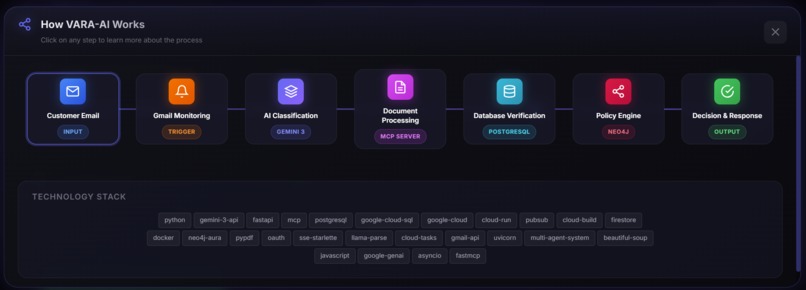
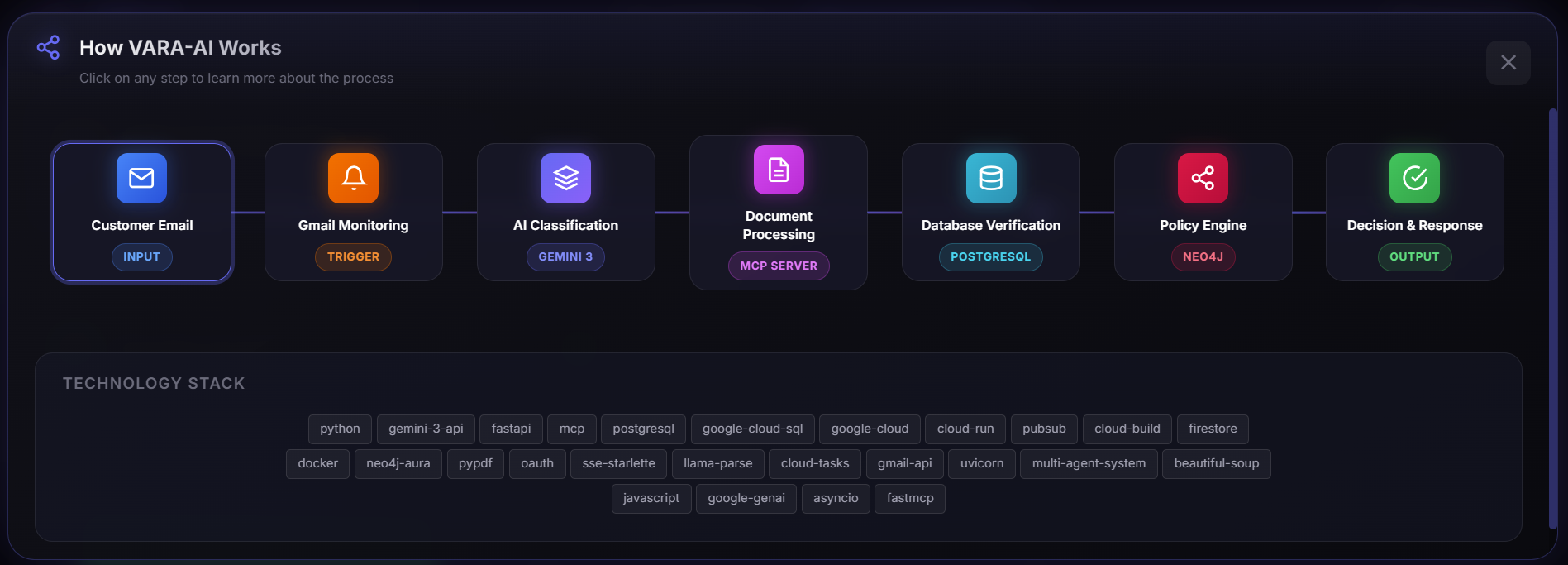
How VARA-ai works
-
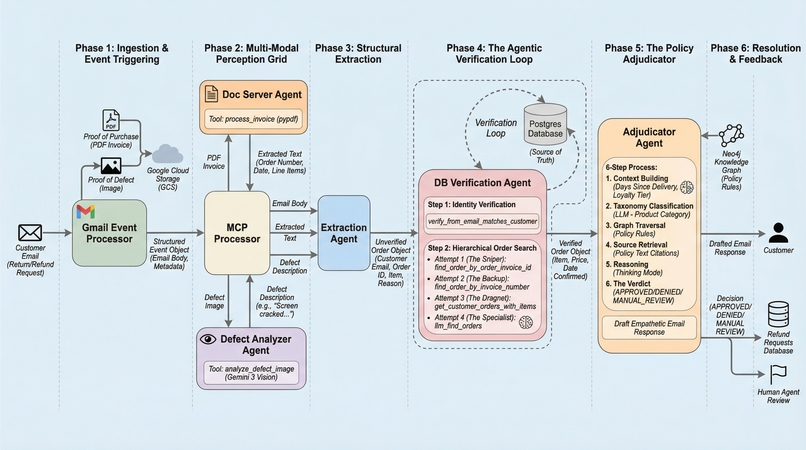
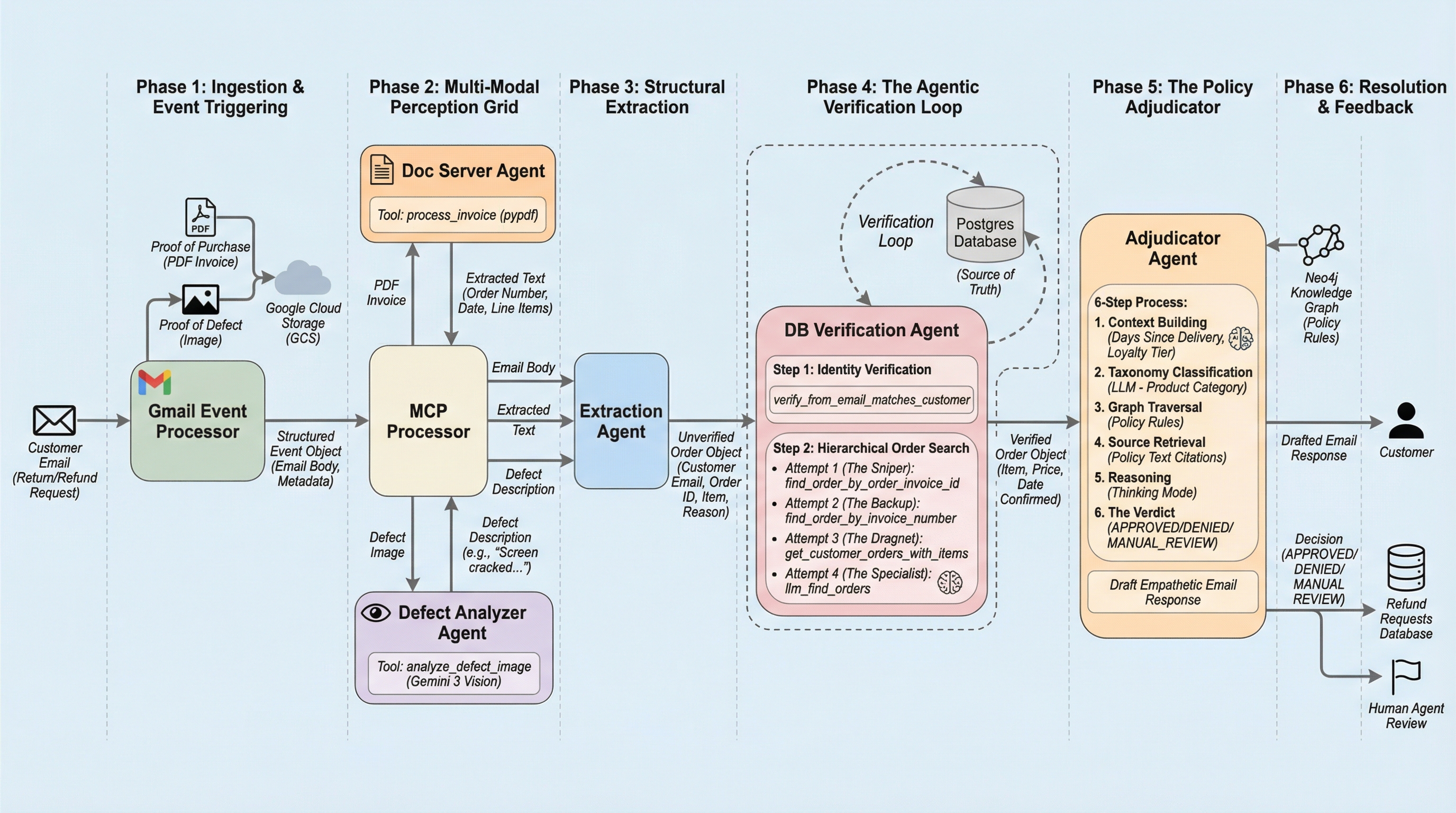
End-to-End Refund Workflow
-
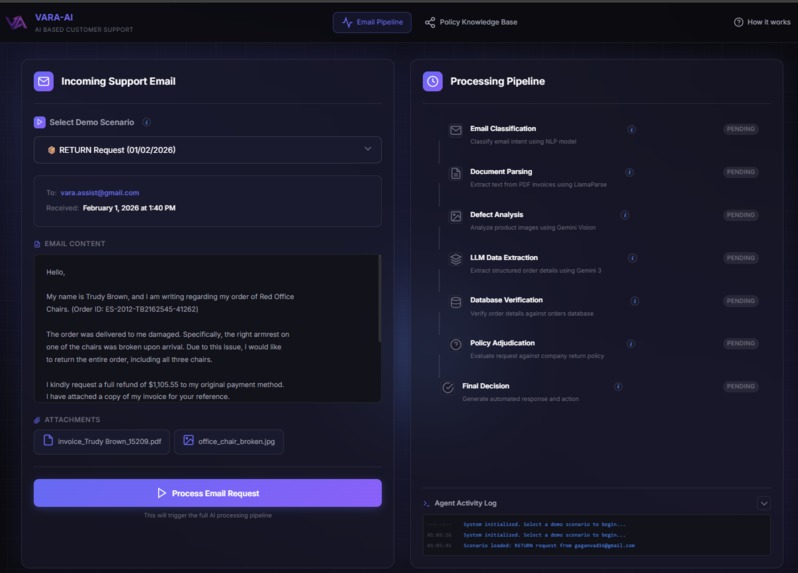
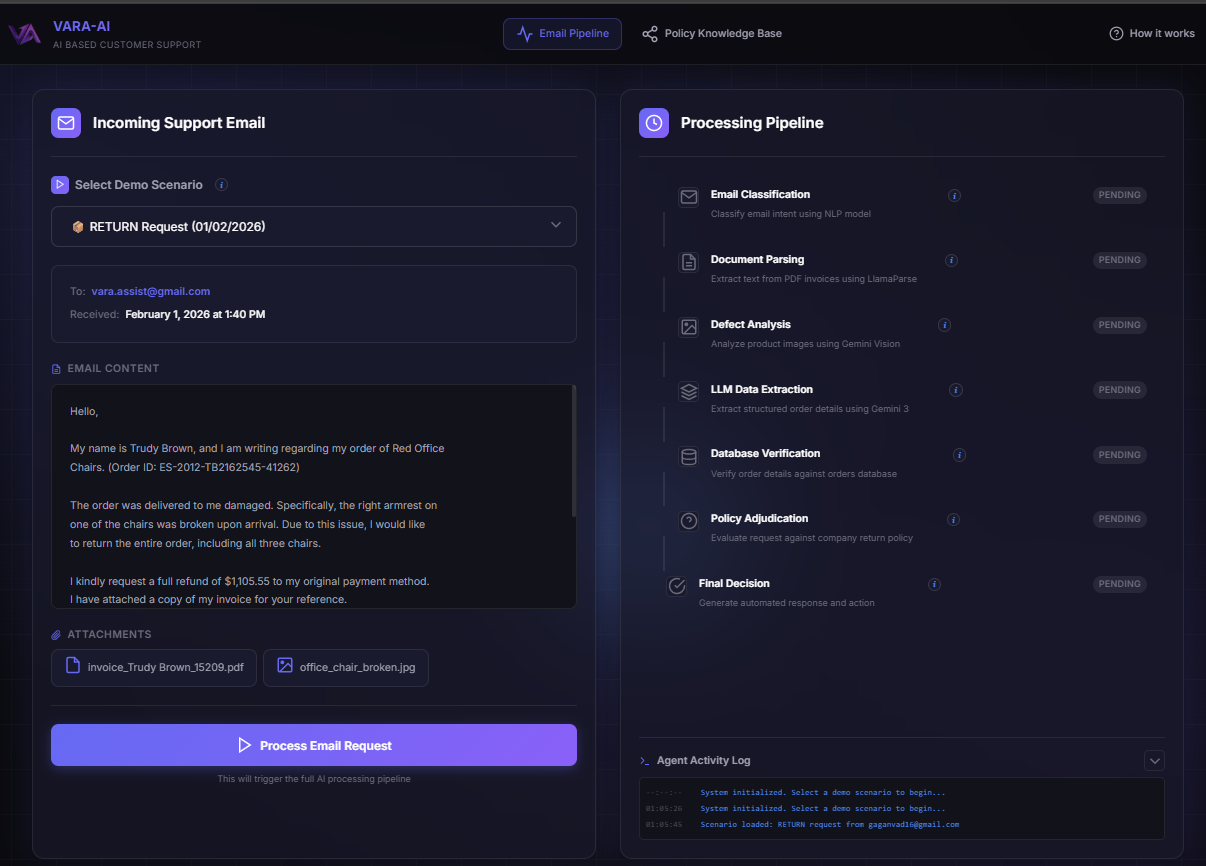
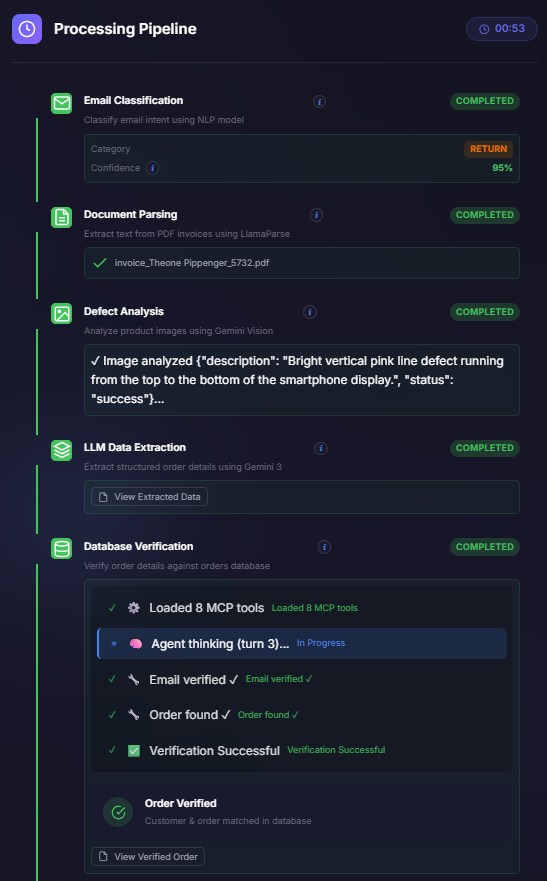
Email Pipeline Dashboard (Desktop View)
-
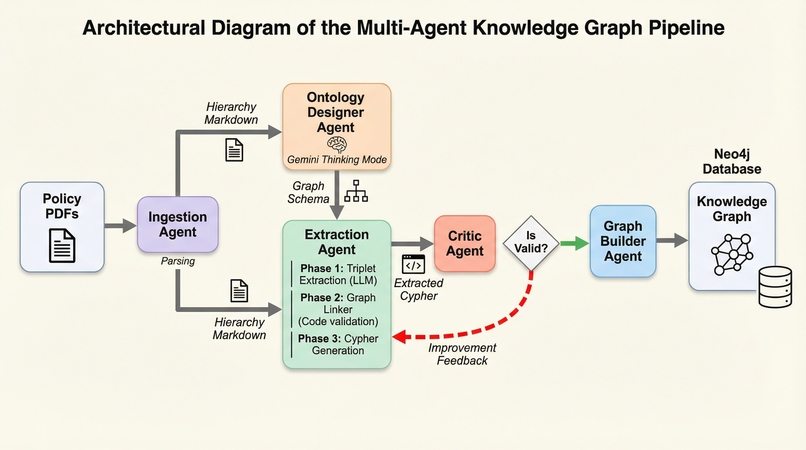
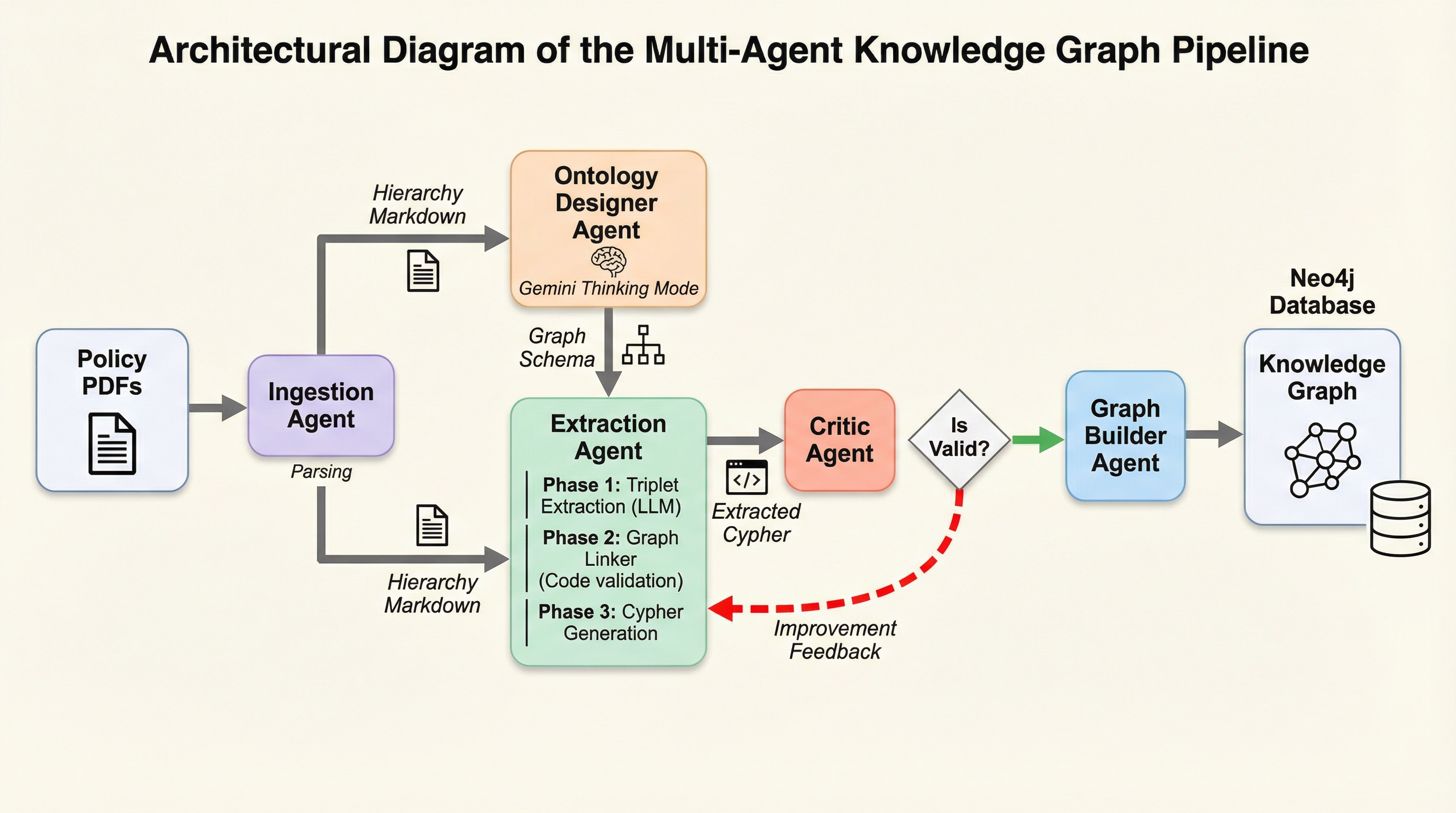
Multi Agent Knowledge Base Pipeline
-
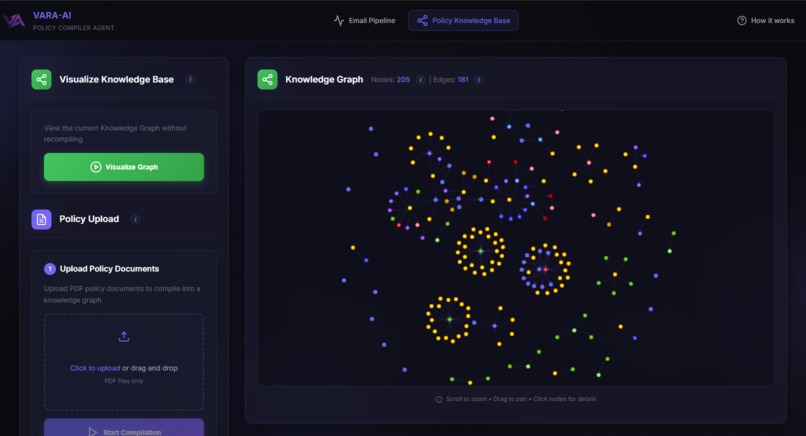
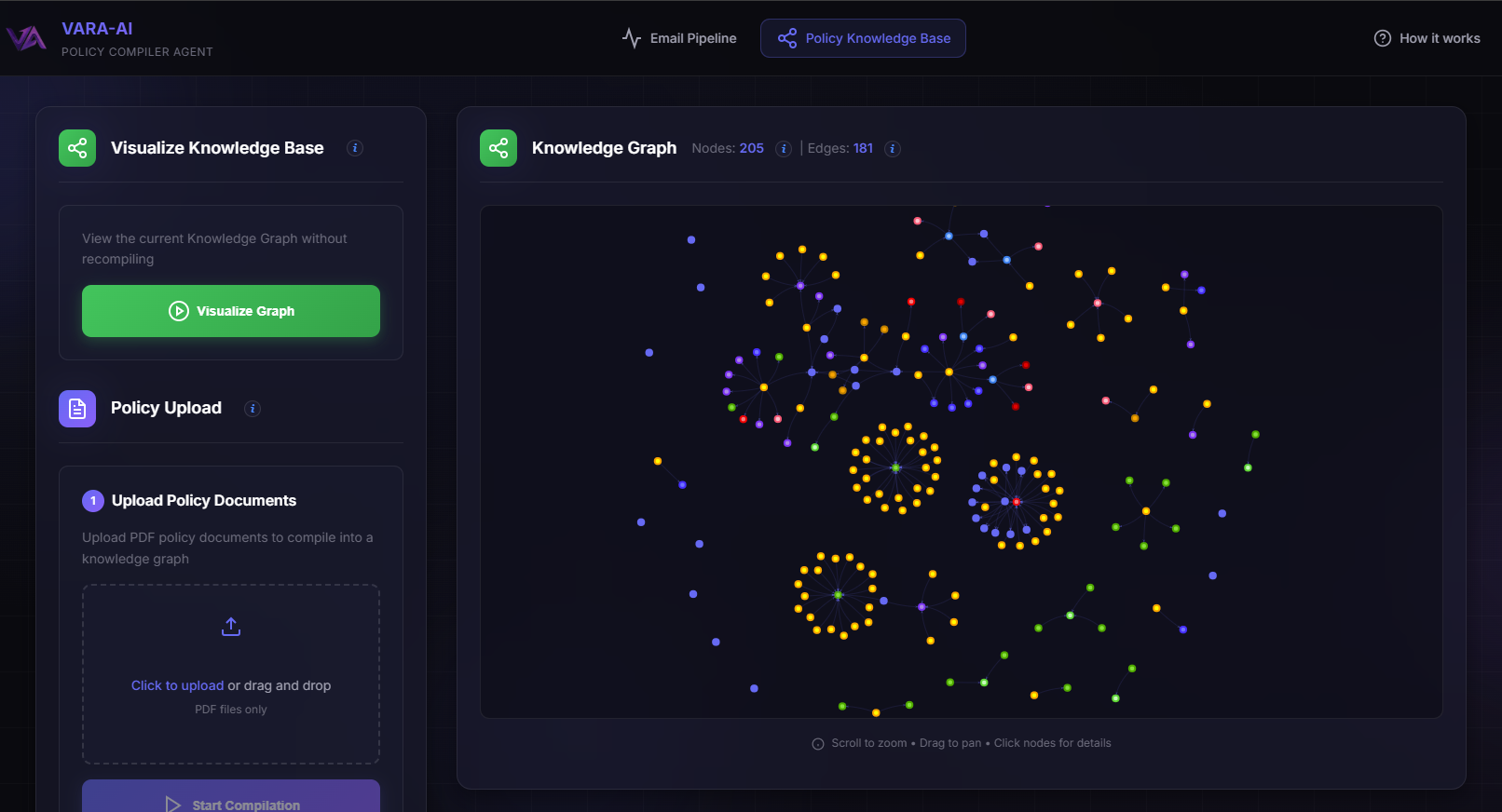
Policy Knowledge Base (Neo4J Graph Database)
-
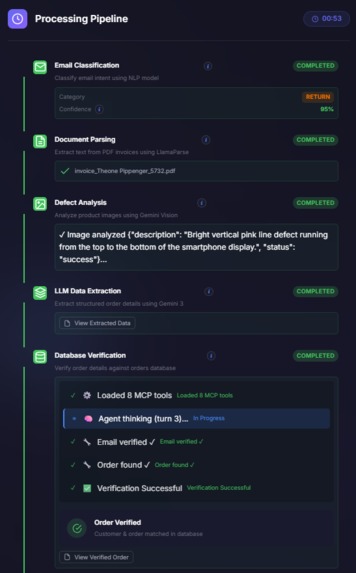
VARA AI working pipeline
-
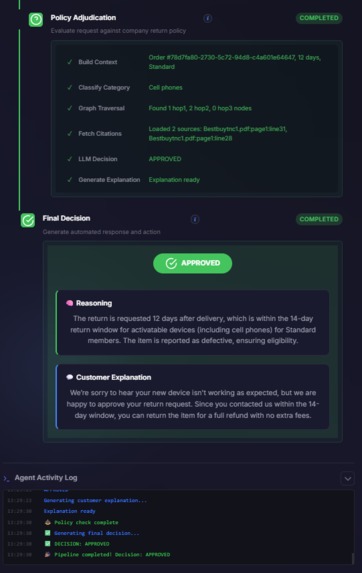
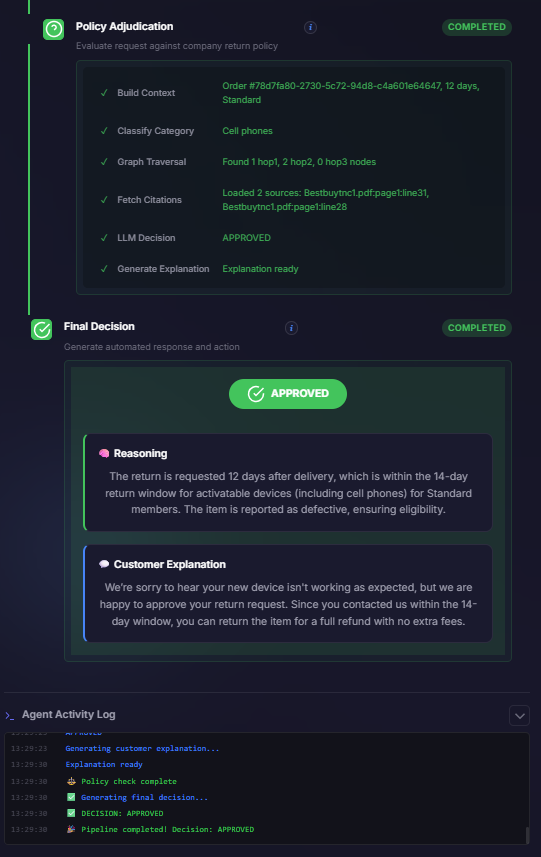
Final Decision
Inspiration
Refunds are one of those moments where trust either gets cemented—or quietly dies.
It usually starts small: a damaged item, a missing part, the wrong SKU. The customer doesn’t wake up wanting a fight; they just want it made right. But the second they hit “Contact Support,” time starts stretching. They attach the invoice, maybe a couple of photos, explain the issue… and then they wait. And wait. Somewhere on the other side, an agent is juggling dozens of tickets, trying to interpret blurry images, open PDFs that don’t parse cleanly, cross-check order records, and translate a policy document into a decision that won’t get them in trouble later.
The customer feels ignored. The company feels attacked. And the most frustrating part is that neither side is being unreasonable—the process is.
This isn’t a corner case either. Returns are massive and messy at scale: U.S. retailers estimate that 15.8% of annual sales will be returned in 2025 — roughly $849.9B (NRF). And the pressure isn’t only operational—return fraud is ~9% of all returns, costing about $76.5B annually (Reuters). When the system is slow or inconsistent, everyone loses: customers feel helpless, agents burn out, and brands quietly bleed loyalty. Industry reporting also cites that 71% of consumers are less likely to shop with a retailer again after a poor returns experience (Yahoo Finance).
We built VARA AI because the refund experience shouldn’t be a slow, opaque negotiation. It should feel like: “We received your request, we understand what happened, here’s the decision, here’s why, and here’s what happens next.” Fast enough that customers don’t have to chase—and accountable enough that companies can trust the outcome.
That’s the promise: speed without guesswork, automation without losing trust.
What it does
VARA AI automates the refund customer support workflow from intake to decision. It processes a refund request in approximately 90 seconds and produces an outcome that is grounded in evidence and explainable.
For each refund request, VARA AI:
- Ingests the case from the customer email and attachments (invoice PDFs and defect images).
- Extracts structured information from documents:
- Parses invoice PDFs to capture order and purchase details.
- Analyzes defect/damage images to identify the reported issue and summarize visual evidence.
- Verifies key fields against backend records via a database verification service, including:
- Customer Email
- Order Details
- Retrieves relevant policy context using GraphRAG over a structured policy knowledge graph to reduce hallucinations and ensure decisions are tied to the correct rules.
- Generates a decision: Approve / Deny / Manual Review, including the refund action or next step.
- Produces an explanation that references the evidence used (PDF fields, image findings, database verification) and the policy basis for the outcome.
The system reduces manual effort in refund handling while improving consistency, traceability, and turnaround time for customers.
Gemini 3 Features Implemented
Deep Reasoning & Thinking Mode
Enabled viathinking_level="high"ongemini-3-pro-preview. Used in the Ontology, Critic, and Adjudicator agents to support multi-step reasoning before generating schemas or refund decisions.Thought Signatures (Glass-box interpretability)
We retain Gemini’s returnedthoughtSignature/ thought trace metadata to preserve reasoning context across turns and to support auditability of how decisions were reached.High Media Resolution (Vision fidelity)
Configuredmedia_resolution="high"in the Defect Analyzer’s vision requests to capture fine-grained defects (e.g., small scratches, hairline cracks) from customer images.Structured Output & Type-Safety
We useresponse_schemaandresponse_mime_type="application/json"across agents to enforce strict, machine-validated outputs aligned with our Neo4j and PostgreSQL schemas.Low-Latency Tool Loops
We run the Database Verification Agent ongemini-3-flash-previewto power fast, multi-turn verification loops where the model selects and executes MCP tools (order lookups, email matching, candidate resolution).Multimodal Perception & Synthesis
We send defect images as binary parts (types.Part.from_bytes) and merge Gemini’s visual findings with invoice fields and email context into a single evidence bundle for grounded adjudication.Unified Temperature Optimization
We standardize ontemperature=1.0to maintain stable reasoning behavior and avoid degraded performance or looping seen with lower temperatures in complex tasks.
How we built it
We built VARA AI as two connected pipelines: an offline policy compiler that turns messy T&Cs into a traceable Neo4j knowledge graph, and an online adjudication workflow that processes each refund email end-to-end.
Illustration 1 — Policy Knowledge Graph Pipeline (Neo4j)

A multi-agent “policy compiler” converts unstructured T&C PDFs into a validated Neo4j policy graph.
Every extracted rule carries source citations (page/location), making downstream refund decisions traceable and defensible.
How it works
- Policy ingestion → Hierarchial markdown: Policy PDFs are parsed into hierarchical markdown with page markers so every extracted rule can be traced back to an exact source citations(page + location).
- Multi-agent compiler (Ontology → Extraction → Critic → Builder):
- Ontology Agent designs the graph schema (node/relationship types + required properties like
source_citation). - Extraction Agent (3 phases):
1) LLM triplet extraction
2) deterministic linking + dedup + type checks
3) Cypher generation - Critic Agent validates schema coverage + Cypher quality and can trigger a retry loop for self-correction.
- Builder Agent executes validated Cypher in Neo4j AuraDB and verifies graph integrity.
- Ontology Agent designs the graph schema (node/relationship types + required properties like
This gave us a policy store that’s structured, traceable, and defensible—ideal for grounded decisions.
Illustration 2 — End-to-end Refund Workflow (Email → Decision)

Once the policy graph exists, the runtime workflow processes each incoming customer email end-to-end:
- Gmail intake + trigger (Cloud Run + Pub/Sub): A Gmail Watch triggers Pub/Sub; the Gmail Event Processor fetches new emails, extracts body + attachments, classifies intent (RETURN/REFUND/REPLACEMENT), and stores a structured JSON artifact in GCS.
- Central orchestration (MCP Client): The MCP Client downloads the email JSON from GCS, spins up MCP servers over stdio, and coordinates the full pipeline as a single run.
- Evidence extraction via MCP tools:
- Invoice PDF parsing (doc_server): PDF attachments are base64-decoded, parsed with
pypdf, saved as text artifacts, and returned for downstream extraction. - Defect image analysis (defect_analyzer): Images are analyzed using Gemini Vision to produce a defect summary with safe fallbacks (“Manual review required”).
- Invoice PDF parsing (doc_server): PDF attachments are base64-decoded, parsed with
- Structured case extraction (LLM → JSON): Email + invoice text + defect summary are combined into a single context and extracted into a strict JSON schema (customer, identifiers, order items, condition, reason, etc.).
- Agentic DB verification loop (Postgres / Cloud SQL): A dedicated DB Verification MCP server orchestrates multiple tools to converge on a single source-of-truth order record (not a best-guess query).
- Verify sender email exists → fetch customer profile
- Resolve order deterministically:
order_invoice_id→invoice_number - If ambiguous, fetch order history → LLM selects only among returned candidates (never invents)
- Last resort: guarded read-only SQL with strict validation + allow-listed tables/clauses.
- Verify sender email exists → fetch customer profile
- Policy adjudication grounded in Neo4j: With a verified order object (source-of-truth), we query the policy graph and produce Approve / Deny / Manual Review with reasoning + citations grounded to the policy text.
- Audit trail: Every stage persists artifacts (parsed invoice text, extracted JSON, verified record, final decision) so results are reproducible and debuggable.
Illustration 3 — Google's Tech Stack Used

Challenges we ran into
🧠 Reliable decisions without one big prompt
A single LLM call that “reads everything and decides” would have been simpler, but not reliable or interpretable for refunds. We reduced risk by separating concerns and building a multi-agent policy grounding pipeline (Ontology Agent, Extraction Agent, Critic Agent, and Graph Creation Agent), so the decision step is driven by structured, verifiable context rather than a single free-form output.
⚡ Gemini 3 rate limits (429)
We hit frequent 429 (resource exhausted / too many requests) errors, and the impact was amplified because our workflow requires multiple model calls across stages. To keep the pipeline stable, we added retry logic with delays/backoff and ensured transient failures don’t derail the entire case.
📎 Unstructured Terms & Conditions
T&C documents are often clumsy and unstructured. If companies maintained clear, well-structured refund policy documentation, policy knowledge bases would become far more reliable and powerful—making grounded and explainable decisions much easier to produce.
🔎 Grounding + explainability (GraphRAG)
Refund decisions need to be defensible, not just plausible. We incorporated GraphRAG over our policy knowledge graph to anchor outcomes to the relevant rules and reduce hallucinations while keeping explanations traceable.
🎯 First hackathon expectations
This was our first hackathon, so we didn’t know what the “expected bar” looked like—concept, prototype, or working system. We decided to ship an end-to-end pipeline so the system could be judged on real execution.
Accomplishments that we're proud of
End-to-end automation
We built a complete pipeline where a single return email triggers the entire workflow automatically.Policy Knowledge Graph from raw T&C
Transforming unstructured Terms & Conditions into a policy knowledge graph is hard. We accomplished this using a multi-agent setup with clear roles and clean communication between agents.Great UX for non-technical users
We focused on a simple, guided experience with clear steps, easy navigation, and the right information at every stage, so even a new non-technical user can understand how VARA AI works.
What we learned
Technical learnings
- Learned how to design and run MCP servers and expose capabilities as tools
- Learned how to coordinate multi-agent orchestration and build agentic workflows that stay maintainable
- Learned how to model, store, and query a policy graph using Neo4j Aura
- Learned how to deploy and operate a multi-service system on GCP (Cloud Run, Cloud SQL/PostgreSQL, Gemini API, Cloud Build, Cloud Pub/Sub, Cloud Storage)
Explainability and reliability in real systems
Our biggest learning was that for customer-facing decisions like refunds, “working” isn’t enough—the system must be reliable, interpretable, and explainable. Building guardrails and grounding (instead of relying on one LLM response) taught us how critical trust and traceability are in real-world AI.
What's next for VARA AI
In the next phase, VARA becomes a two-way claims agent. If key details are missing (order ID, clearer images, additional proof), it sends a targeted follow-up email asking only what’s needed. With LangChain case memory, VARA keeps a per-claim summary and retrieves relevant history as replies arrive. Each response triggers re-extraction and re-verification, updating the case until VARA can decide confidently or escalate to manual review with a complete evidence packet.
Later on we plan to build the following in future:
Voice-based refund support (same backend)
Add a voice agent interface so customers can file and track refunds over a call. The voice layer will only handle conversation and intake; the same backend pipeline will run evidence extraction, DB verification, policy grounding, and adjudication.Fraud/risk scoring layer
Add a risk signal (return history, mismatch patterns, abnormal refund frequency) so VARA can adapt decisions and route high-risk cases to manual review without slowing down legitimate customers.
Third-party integrations & data sources
- Neo4j AuraDB — (GraphRAG).
- PostgreSQL / Cloud SQL (Postgres) — stores and verifies order records during adjudication.
- pypdf — invoice PDF text extraction
- LLamaParse - Parsing Policy Documents
Synthetic / research data
- Some synthetic invoice PDFs were sourced from
femstac/Sample-Pdf-invoicesand used to populate our Postgresordersdatabase for testing:https://github.com/femstac/Sample-Pdf-invoices/ - We used Best Buy’s returns/refund policy document strictly for research and prototyping to validate policy grounding and explainability in VARA AI (not affiliated with or endorsed by Best Buy).
Built With
- asyncio
- beautiful-soup
- cloud-build
- cloud-run
- cloud-tasks
- docker
- fastapi
- fastmcp
- firestore
- gemini-3-api
- gmail-api
- google-cloud
- google-cloud-sql
- google-genai
- javascript
- llama-parse
- mcp
- multi-agent-system
- neo4j-aura
- oauth
- postgresql
- pubsub
- pypdf
- python
- sse-starlette
- uvicorn



Log in or sign up for Devpost to join the conversation.