Inspiration
As a student and software developer working on multiple projects simultaneously, I was constantly context-switching between Figma for wireframes, Lucidchart for flowcharts, dbdiagram for schemas, and ChatGPT for code snippets. None of these tools connected with each other, and the spatial link between system components kept getting lost.
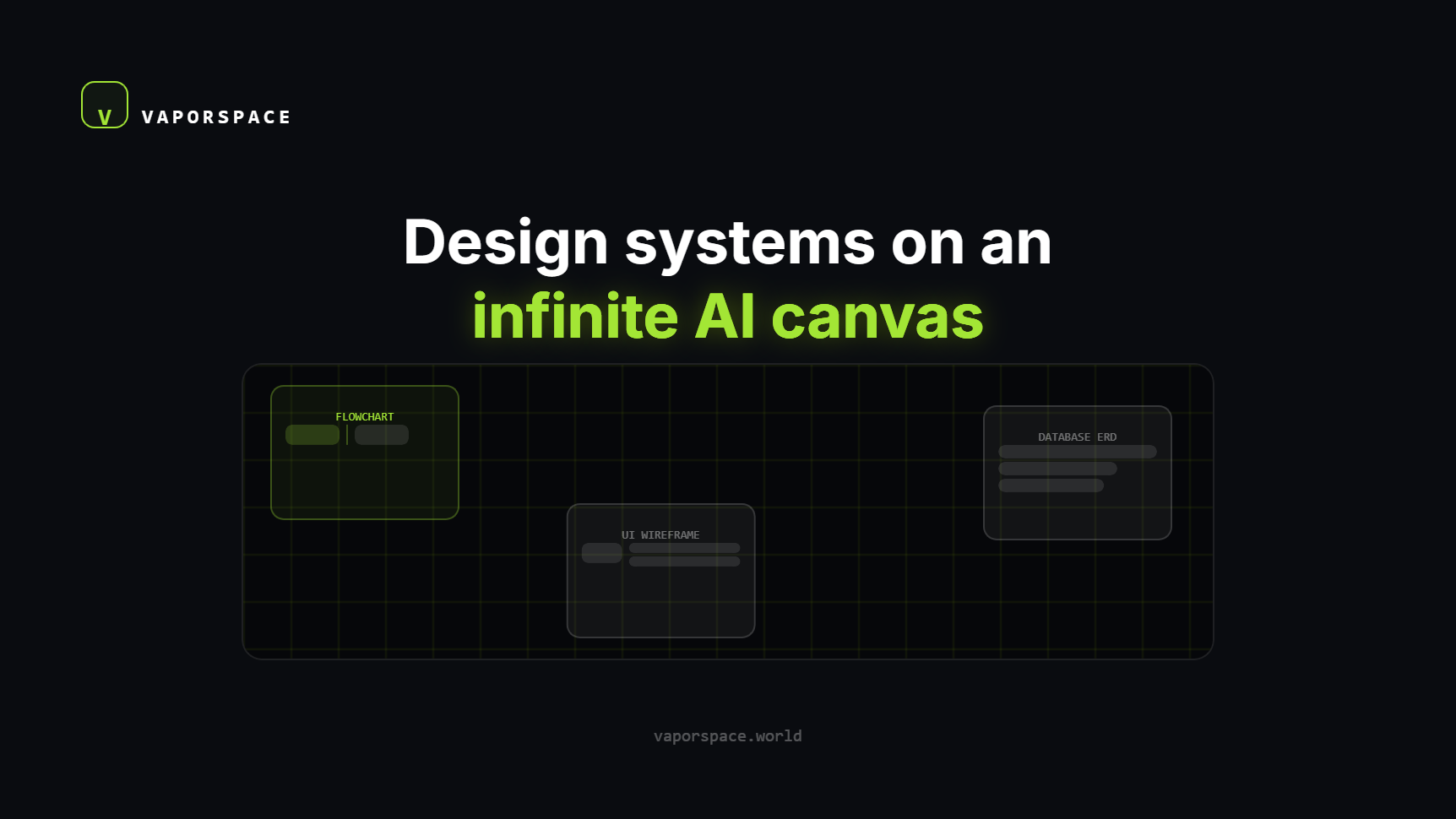
Whiteboards were too generic, specialized diagramming tools were too rigid, and AI chatbots only returned flat text. I built VaporSpace to create an infinite spatial workspace where software architecture, database schemas, and UI blueprints live side-by-side on one cohesive plane.
What it does
VaporSpace is an infinite spatial AI canvas designed for system architecture and instant UI blueprinting.
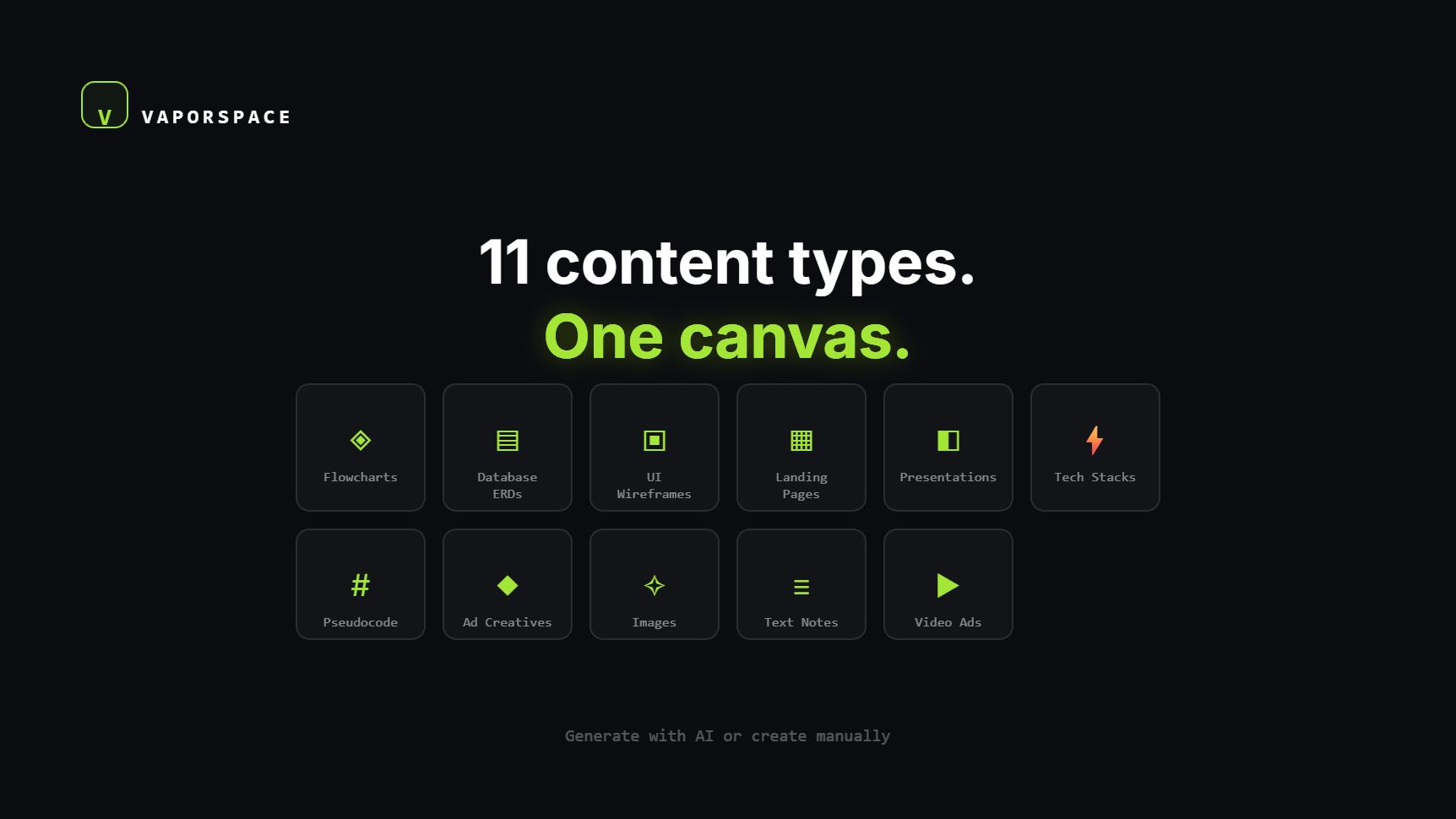
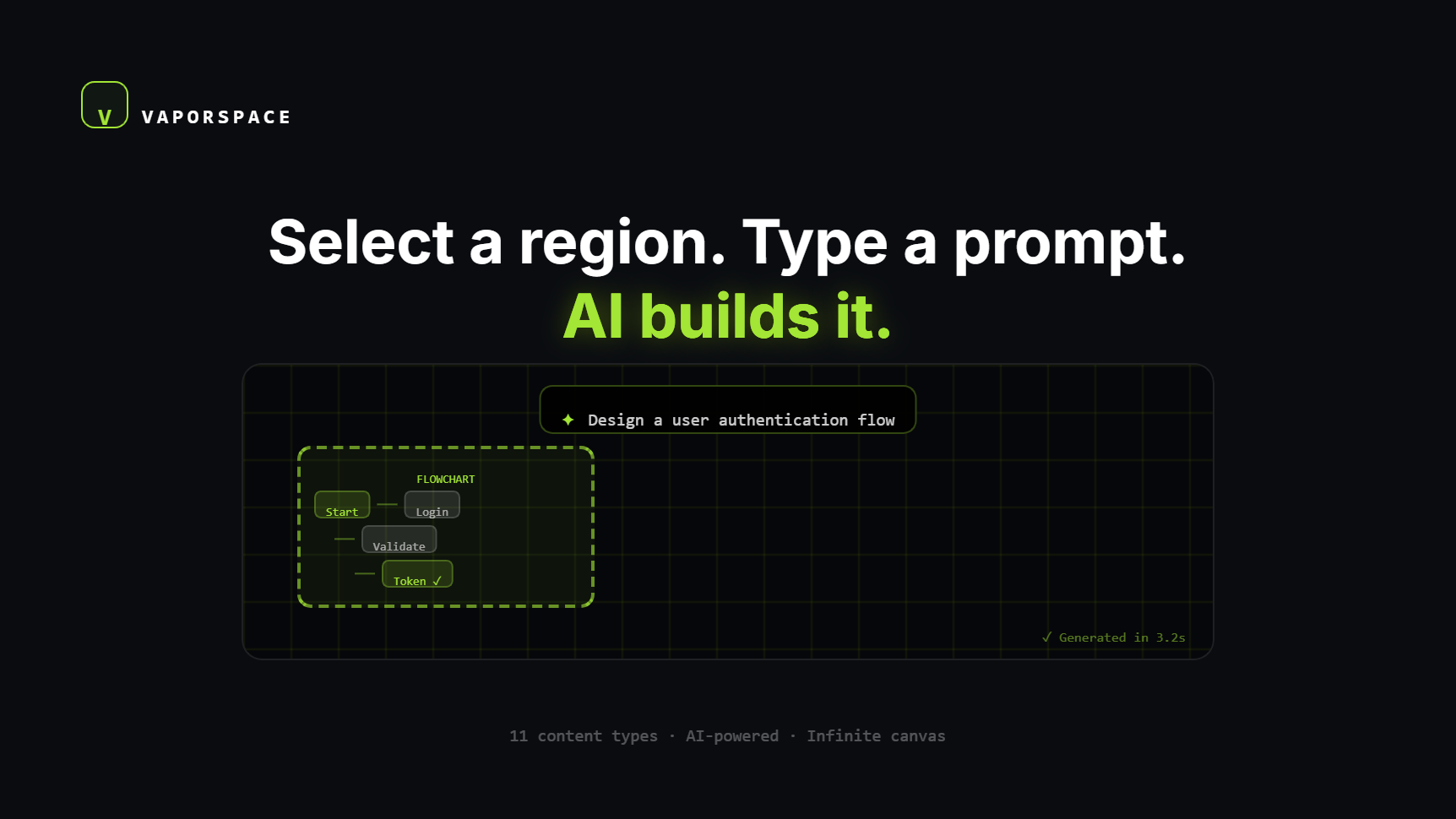
- Text-to-Canvas System Generation: Type a single high-level prompt, and VaporSpace streams 11 typed visual content nodes directly onto the canvas (UI wireframes, database ERDs, flowcharts, tech stacks, and system notes).
- Client-Side Architecture: Runs lightweight and fast directly in the browser, eliminating heavy server infrastructure overhead.
- Claude Code / AI Coding Assistant Export: Parses spatial canvas nodes into clean, structured Markdown prompts formatted specifically for tools like Claude Code, Cursor, and v0.
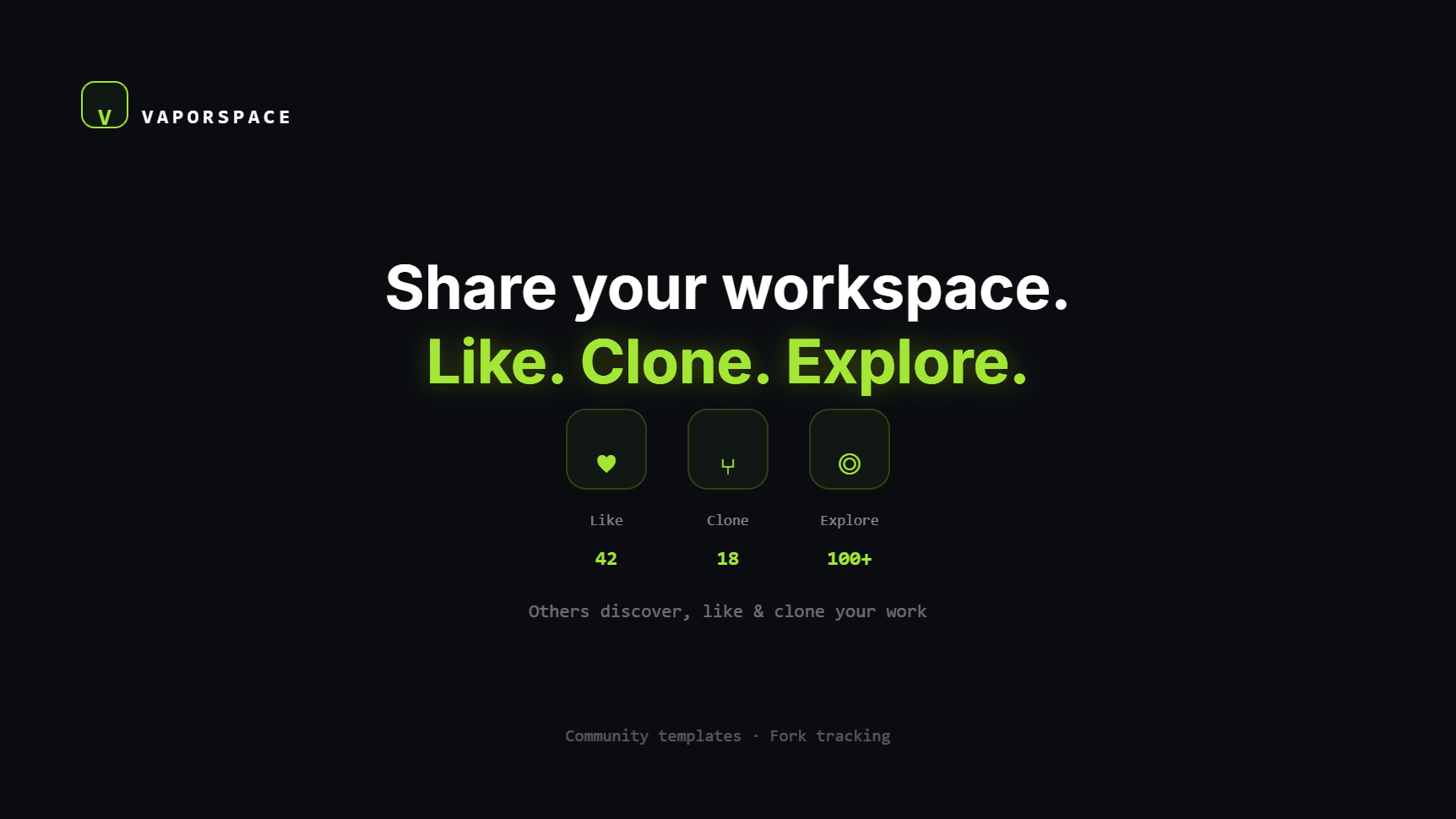
- Public Workspace Sharing & Community Discovery: Users can share, view, and clone architectures, turning system blueprints into open-source templates.
- Low-Friction Monetization: Features a credit-based system where users can test standard workflows or switch to real-time AI generation using credits earned via rewarded ads or crypto top-ups.
How we built it
- Frontend & UI Canvas: Built with React and Tailwind CSS, leveraging browser canvas APIs for smooth infinite panning and zooming.
- Inference Engine & AI Models: Powered by Nebius Token Factory, serving open-weights NVIDIA Llama 3.1 70B Instruct models to achieve low-latency structured JSON generation.
- Infrastructure & Domain: Deployed on Base44 with custom SSL configuration on
vaporspace.world. - Monetization & Ad Integration: Integrated an Adsterra CPM rewarded ad modal unit (300x250) and a Solana USDC micro-transaction credit mechanism.
Challenges we ran into
- Structured Output Parsing: Ensuring NVIDIA Llama 3.1 70B consistently returned clean, parseable JSON across 11 distinct component types required careful system prompt tuning and client-side regex fail-safes.
- Spatial State Management: Handling interactive element drag-and-drop, zoom coordinates, and z-indexes smoothly without causing re-render performance drops on large canvases.
- Client-Side Unit Economics: Designing an ad-rewarded modal with a 15-second countdown timer that reliably triggers credit allocation without disrupting the user's workflow.
Accomplishments that we're proud of
- Fast Inference Speed: Achieving near-instant spatial generation by routing prompts directly through Nebius Token Factory.
- One-Click AI Code Export: Successfully building a client-side parser that strips spatial metadata and exports actionable
CLAUDE.mdand PRD prompts for external AI coding tools. - Lean Architecture: Shipping a feature-rich infinite canvas application as a solo founder while maintaining minimal operational overhead.
What we learned
- Spatial Context Matters: Developers understand software systems much better when architecture diagrams, ERDs, and wireframes are visually arranged next to each other rather than kept in isolated files.
- Inference Efficiency: Leveraging Nebius Token Factory with NVIDIA models provided proprietary-level quality at a fraction of the latency needed for real-time canvas streaming.
- Product-Led Loops: Open-source style sharing and clonable templates create far more organic engagement in developer communities than traditional ads.
What's next for VaporSpace
- Real-Time Multiplayer Collaboration: Enabling teams to design, edit, and prompt spatial architecture nodes together in real time.
- Expanded Export Targets: Direct 1-click webhook sync to GitHub repositories, Figma files, and live sandbox environments like Bolt.new and v0.
- Advanced Engine Features: Introducing sub-canvases and nested microservice maps to handle enterprise-level software systems.
Built With
- base44
- gemini
- javascript
- nebius
- nvidia

Log in or sign up for Devpost to join the conversation.