-
-
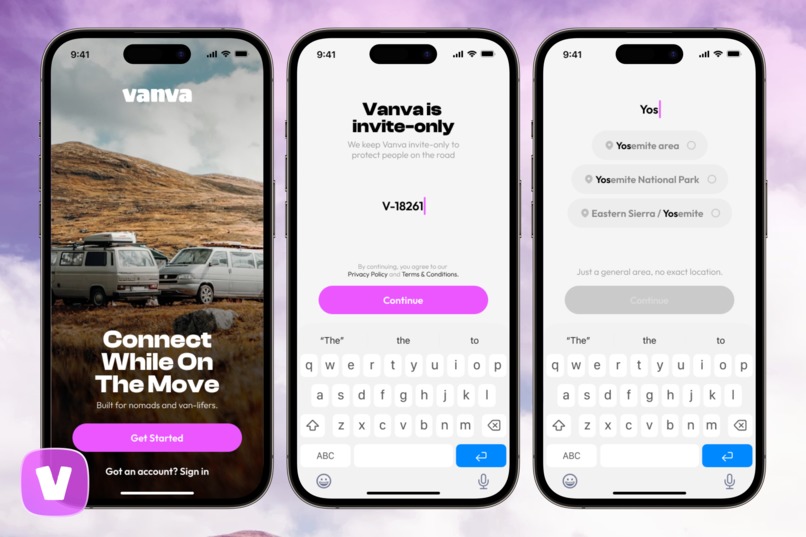
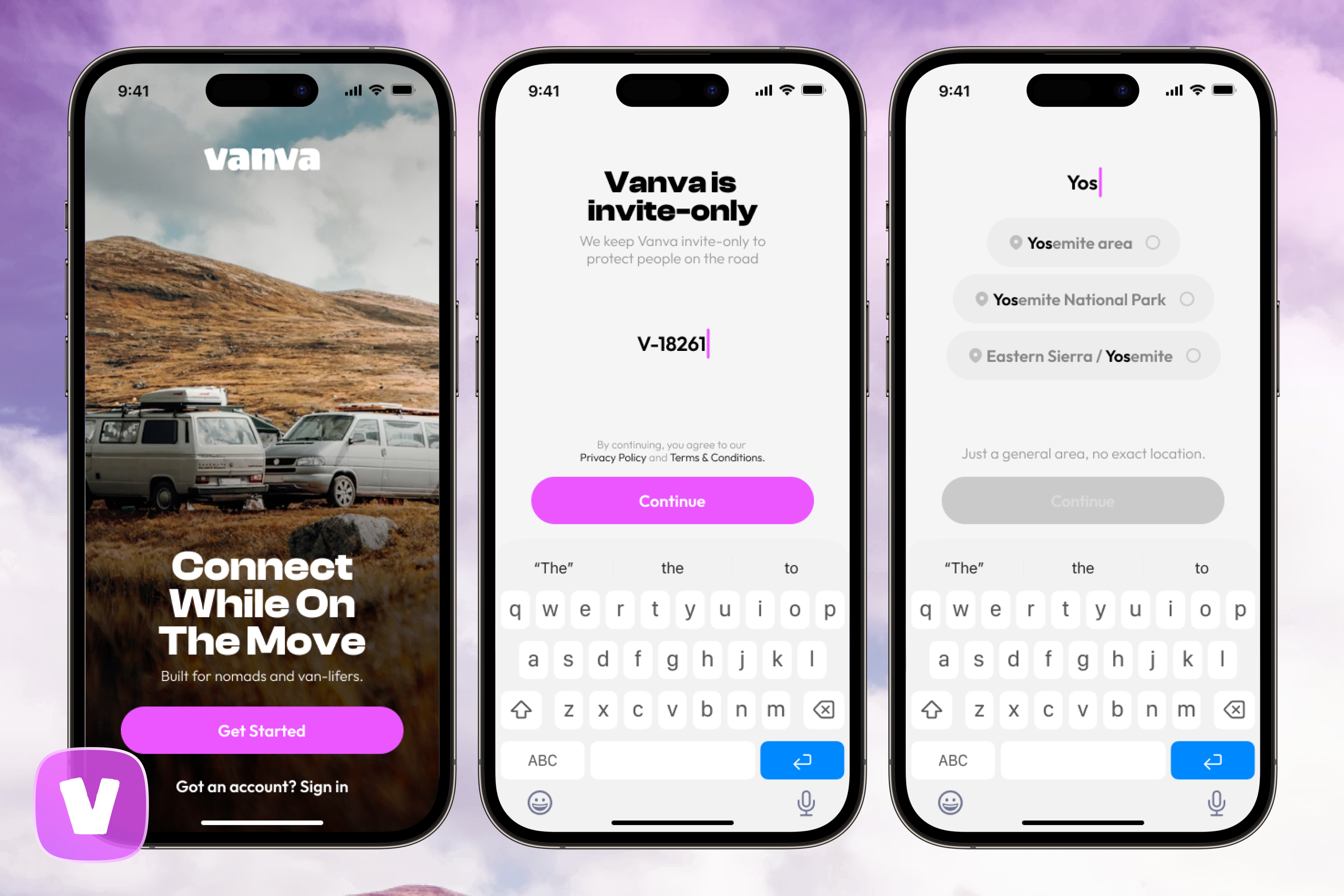
App onboarding requiring an invite, current general area and your next possible location
-
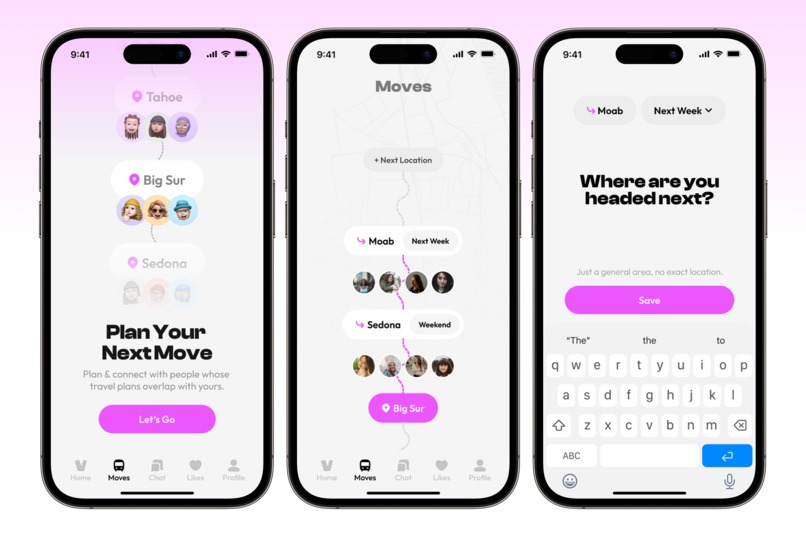
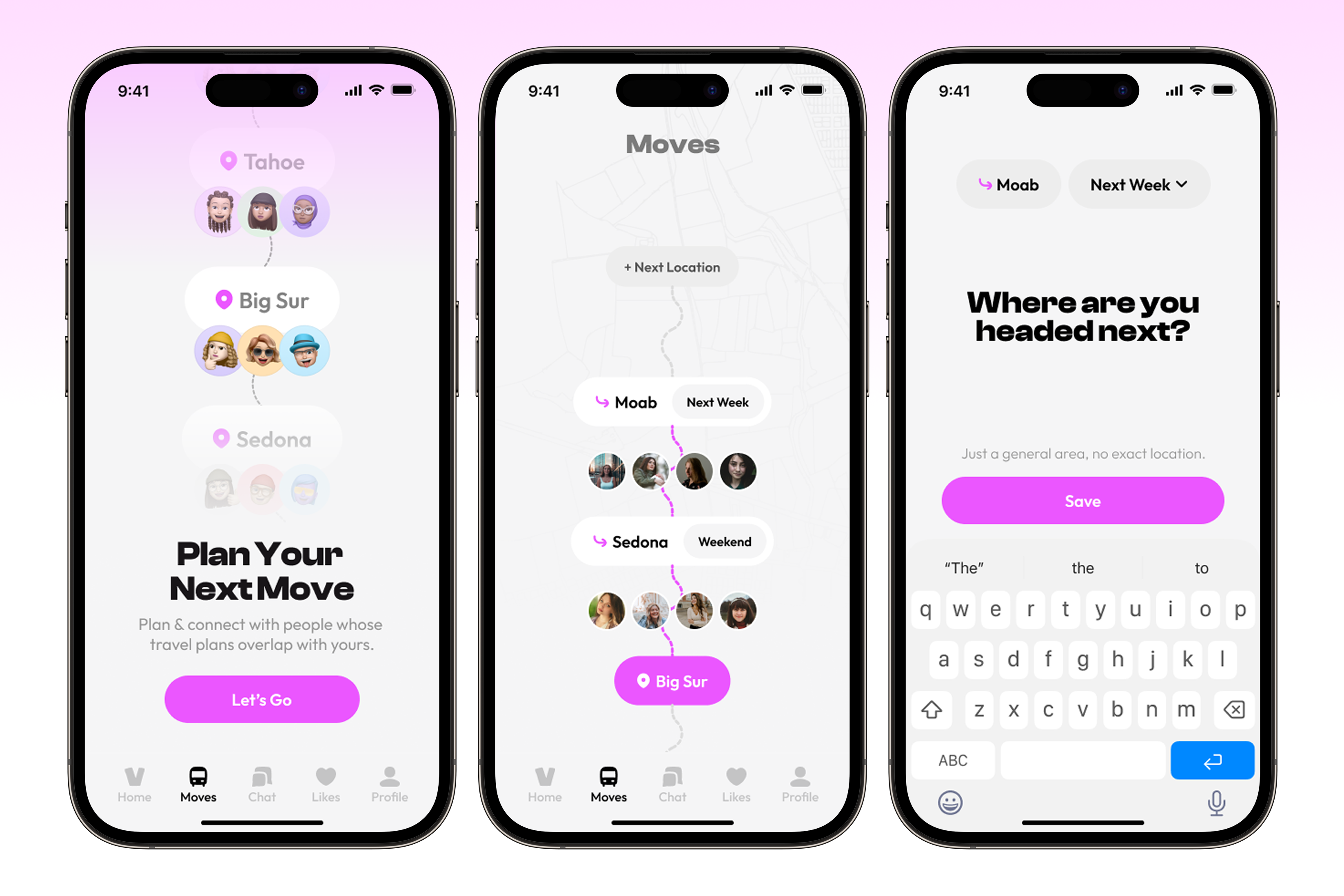
Plan your next movement and see possible people along the way
-
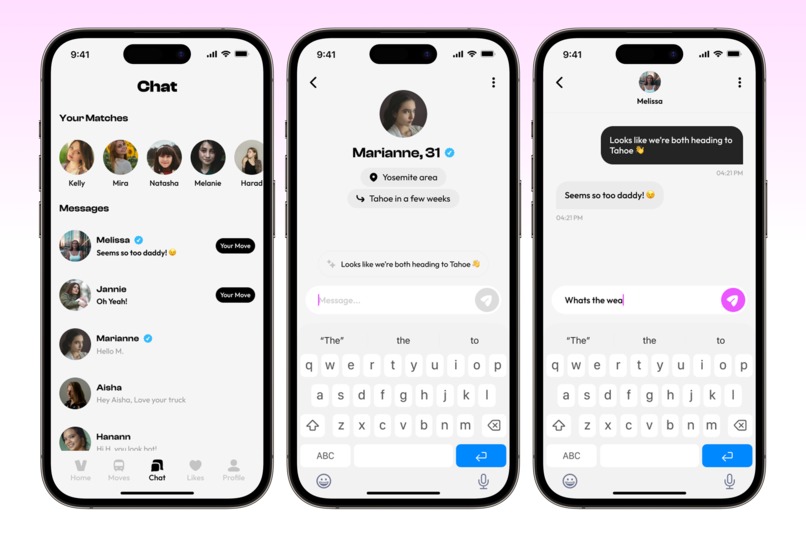
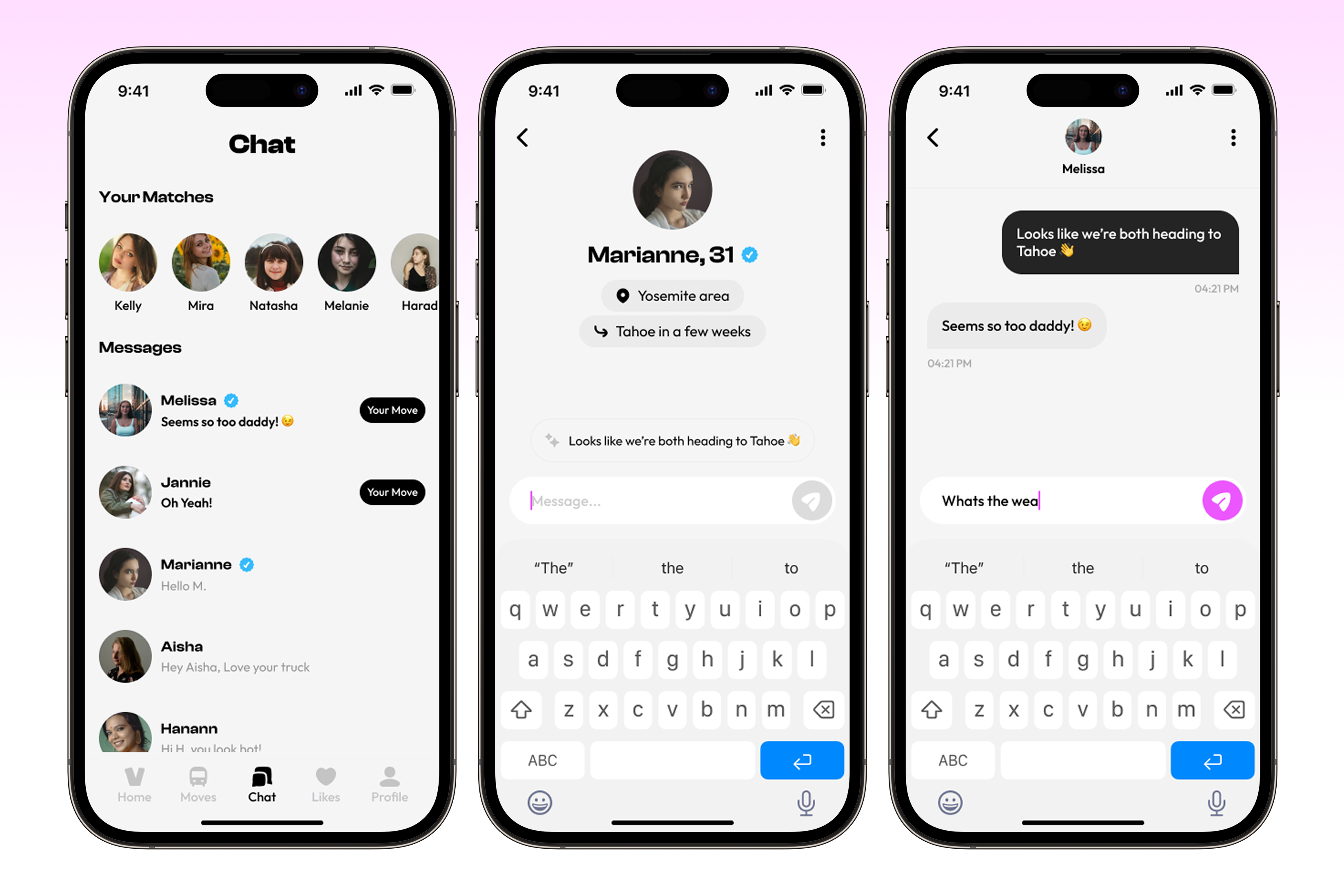
Chat experience with Ai helping with a first text
-
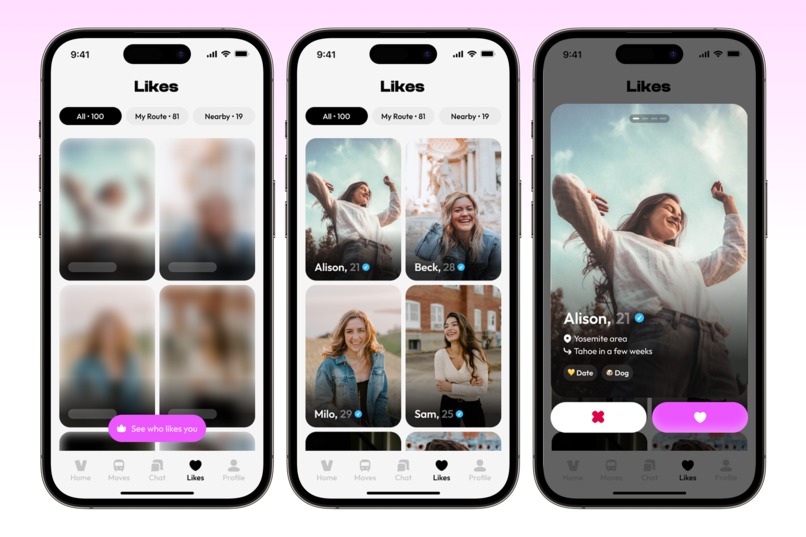
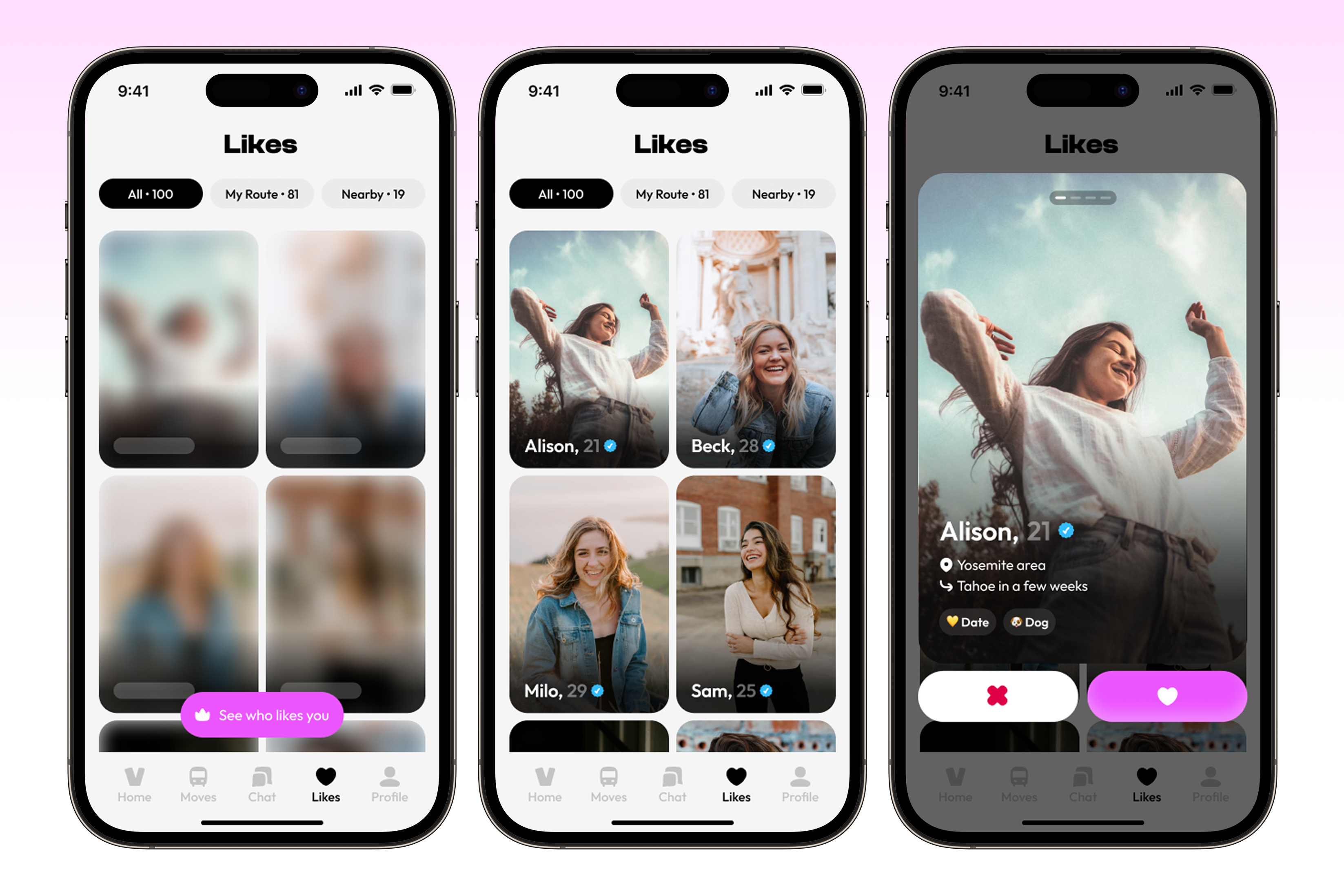
See who likes you but its a pro feature
-
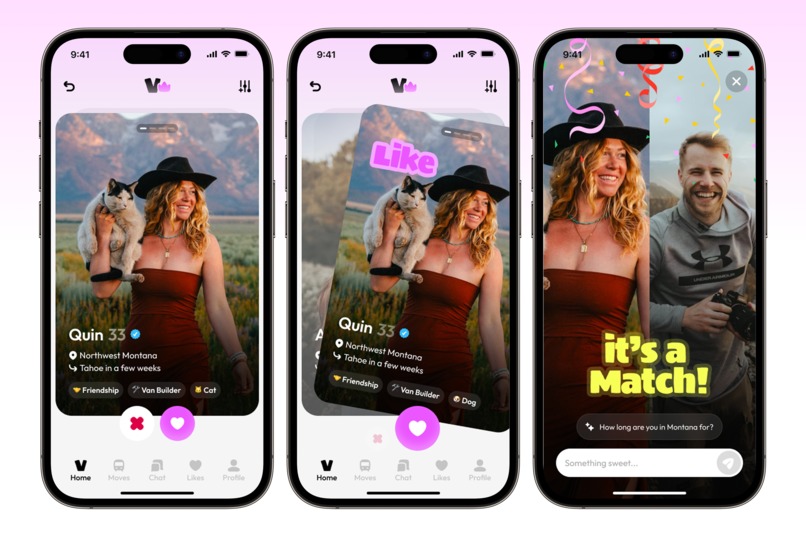
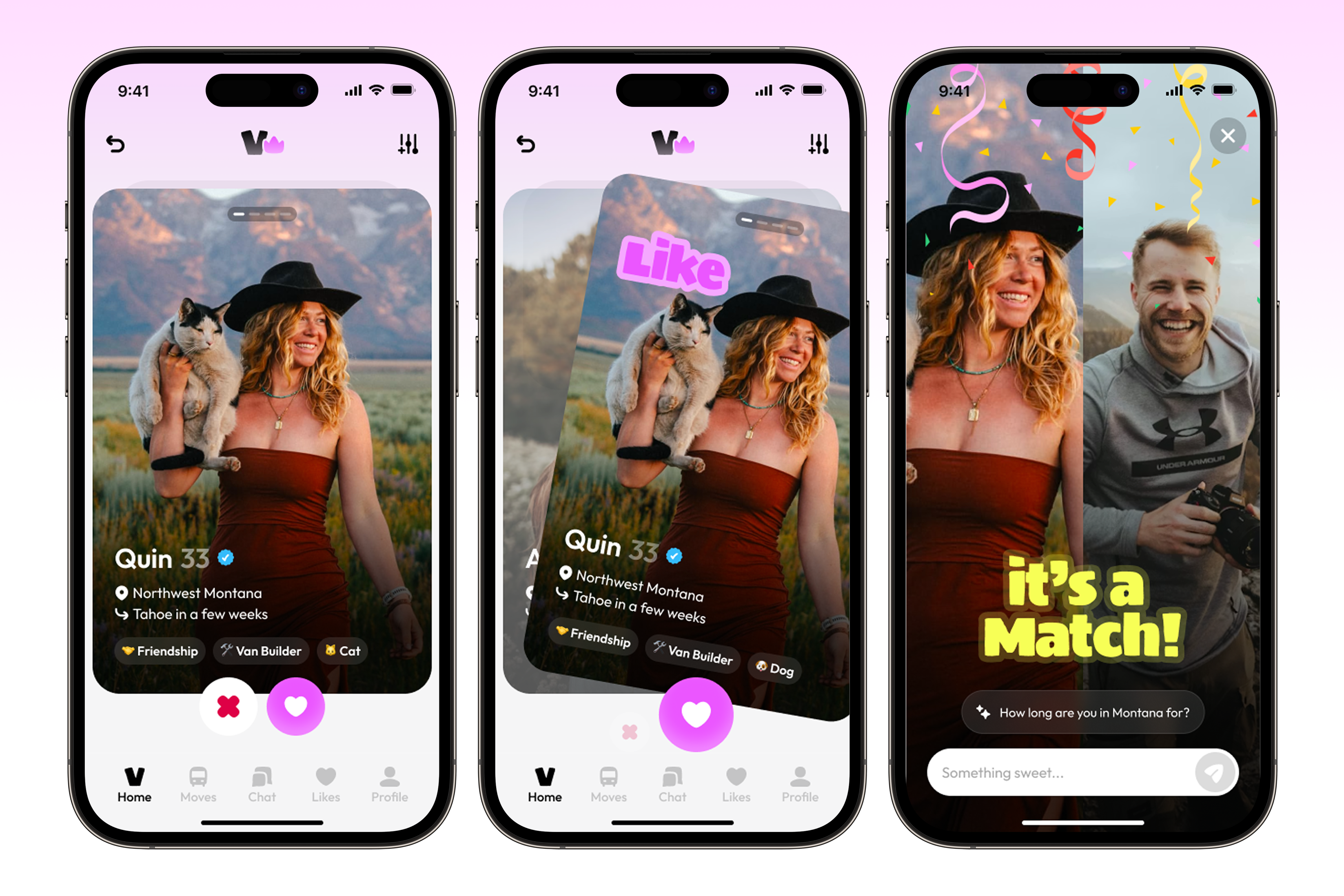
Home Page & Swiping (Match) Experience
-
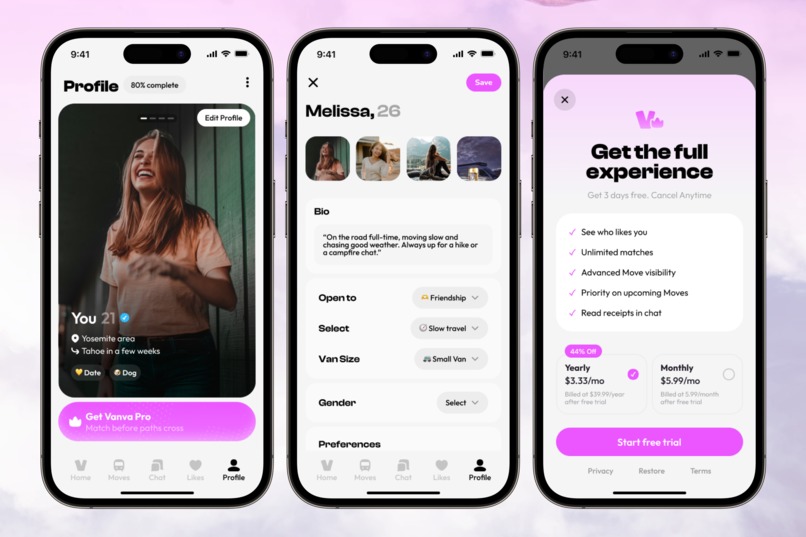
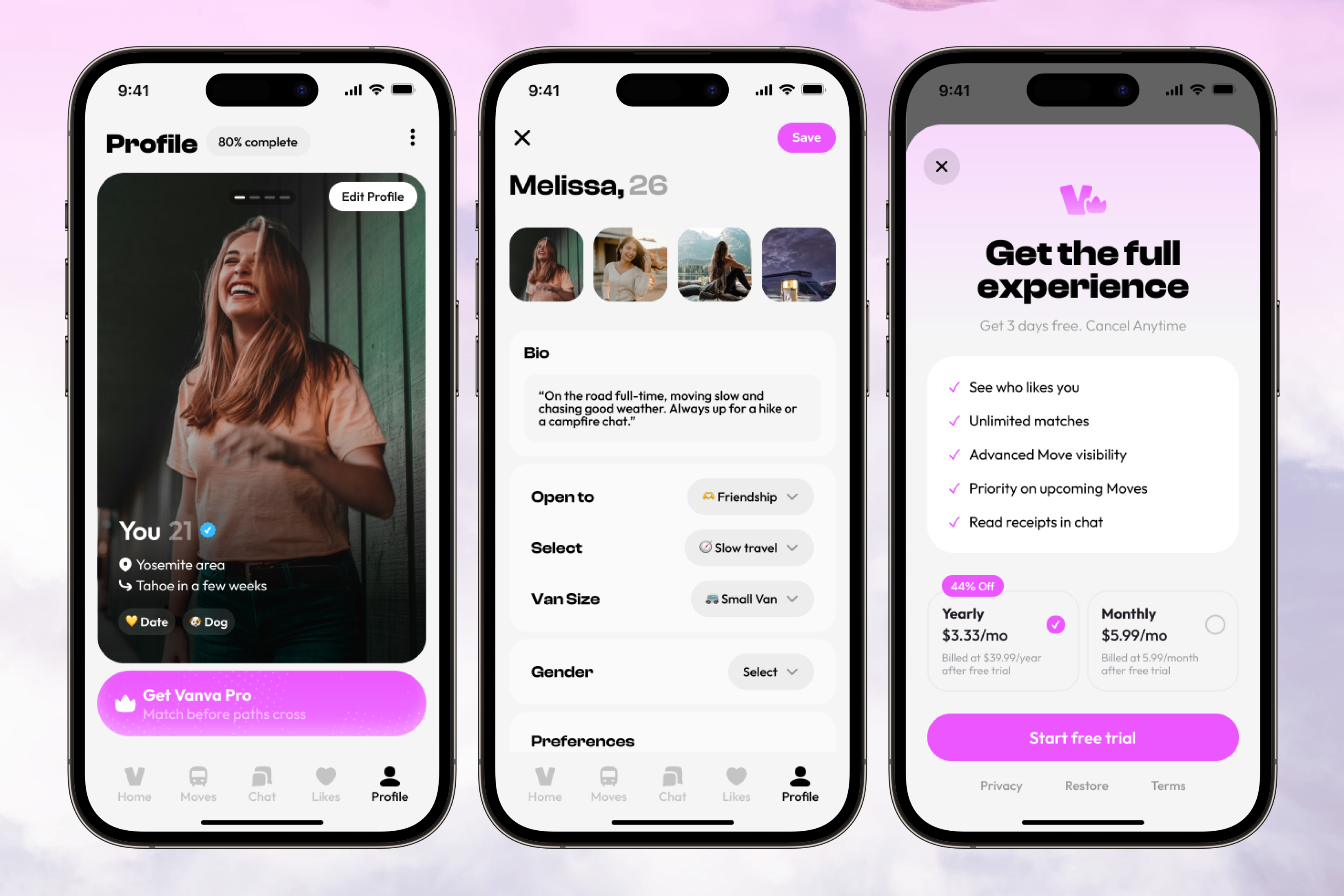
Your Profile, edit profile kept super short and minimal and pay wall
Inspiration
When we read the van-life dating brief, one idea stood out immediately: this isn’t really a dating problem, it’s a timing problem.
Most apps are built around proximity. But for people who live on the road, direction matters more than distance. That shift changed everything for us.
Instead of building another swipe app with a van-life theme, we focused on one core idea: connection should follow movement. That’s what led to “Moves,” path-based discovery, and a safety-first design built for people who don’t stay put.
What it does
Vanva is a dating and friendship app built specifically for people who live on the road.
Instead of showing who’s nearby, Vanva helps you meet people who are moving in the same direction. Users can plan their next “Move,” see who’s heading to similar regions, and connect before paths cross.
It combines swipe-based discovery with movement planning, safety-first preferences, and optional builder experience tags. All designed for nomads who don’t stay put.
Vanva isn’t just about proximity. It’s about timing.
How we built it
We built Vanva with React Native and shipped it on iOS for this competition. Our backend runs on Convex, which handles real-time matches, chats, and movement updates.
We studied patterns from Mobbin and leading dating apps, used OpenAI to refine flows, and referenced Quin’s lifestyle to ground the experience in real van-life behavior.
We kept the build intentionally focused, simple, movement-first, and safety-aware.
Challenges we ran into
One of our biggest challenges was avoiding feature overload. It was tempting to add maps, route planning, and complex builder systems, but we knew that would dilute the core idea.
We had to constantly choose restraint over expansion and focus on one insight: movement matters more than proximity.
Another challenge was balancing discovery with safety. We needed users to connect based on direction without exposing precise location data. Designing that balance carefully shaped many of our decisions.
In the end, the hardest part wasn’t building features — it was deciding what not to build.
Accomplishments that we're proud of
We are proud that we did not just build a themed dating app. We reframed connection around movement instead of proximity.
We designed a lightweight Moves system that replaces maps while keeping safety intact. We also created a focused onboarding flow that gets users to value quickly without overwhelming them.
Most importantly, we showed restraint. Instead of building everything, we built the right things and made them feel intentional.
What we learned
We learned that clarity and restraint lead to stronger products than feature overload. Designing around one clear insight made every decision simpler and more intentional.
What's next for Vanva
Next, we want to improve how users find people heading to the same places and add stronger trust features to keep the community safe. Our goal is to make Vanva the easiest way for people on the road to meet and connect.
Built With
- convex
- expo.io
- figma
- react-native
- revenuecart

Log in or sign up for Devpost to join the conversation.