
Inspiration
Scams are everywhere now, and they're getting harder to spot. Almost everyone we know has a parent, grandparent or friend who has been targeted, and some have lost real money. The scary part is how normal it looks in the moment. They have a calm voice, a believable story, and a reason to hurry. We wanted to give people a moment to stop and think before the money leaves.
What it does
Vantis is a second look at suspicious calls, messages and payments, built for credit union members and the staff who help them.
- Unknown callers get answered by Vantis first. A normal call goes straight through. A suspected scam caller is stopped before it rings: if it's high risk, Vantis calls the member right away to tell them, and if it's lower risk, it's logged in the app to review.
- Members can forward a message, email or WhatsApp and get a plain-language explanation of what looks off, with no panic.
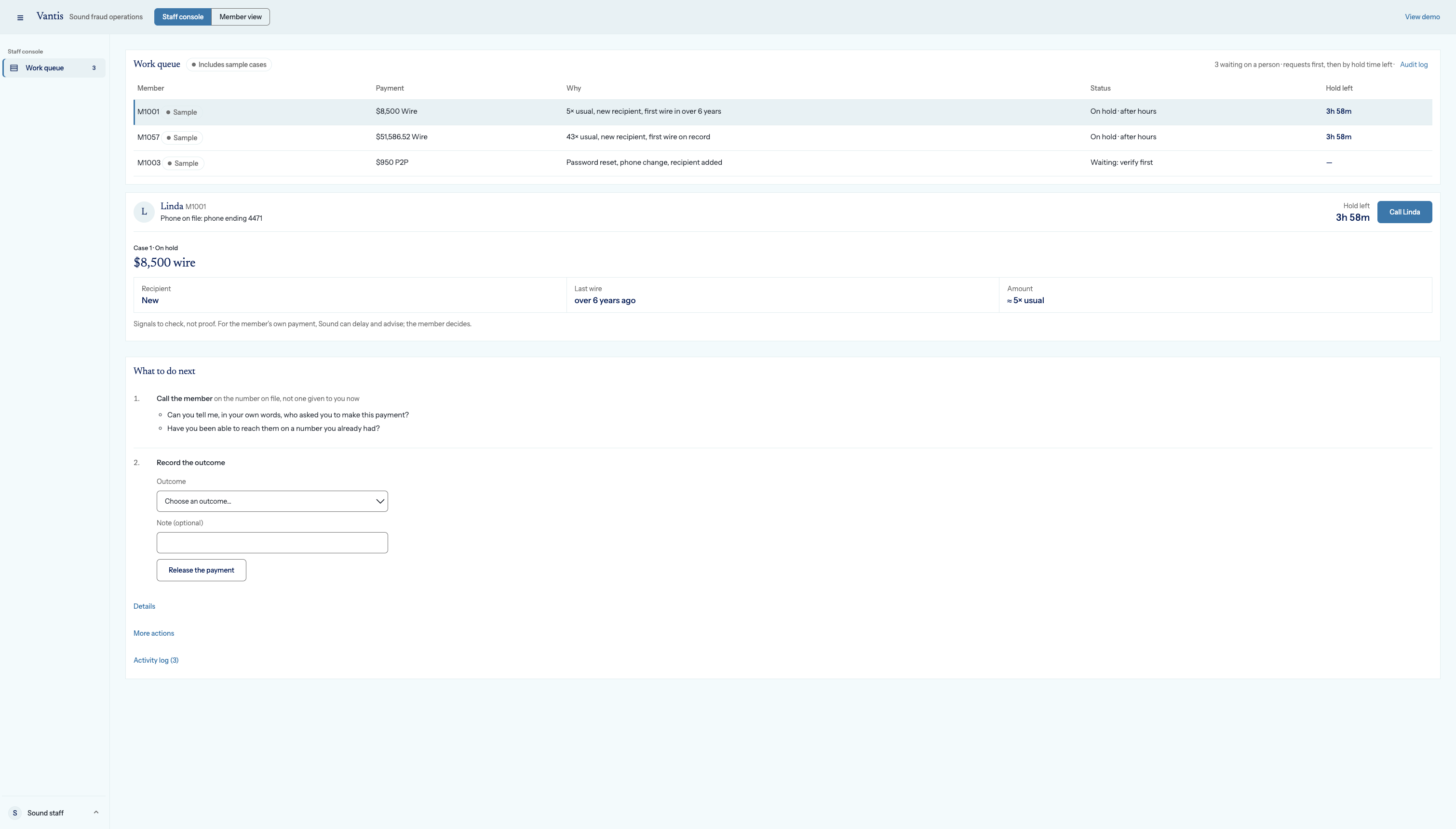
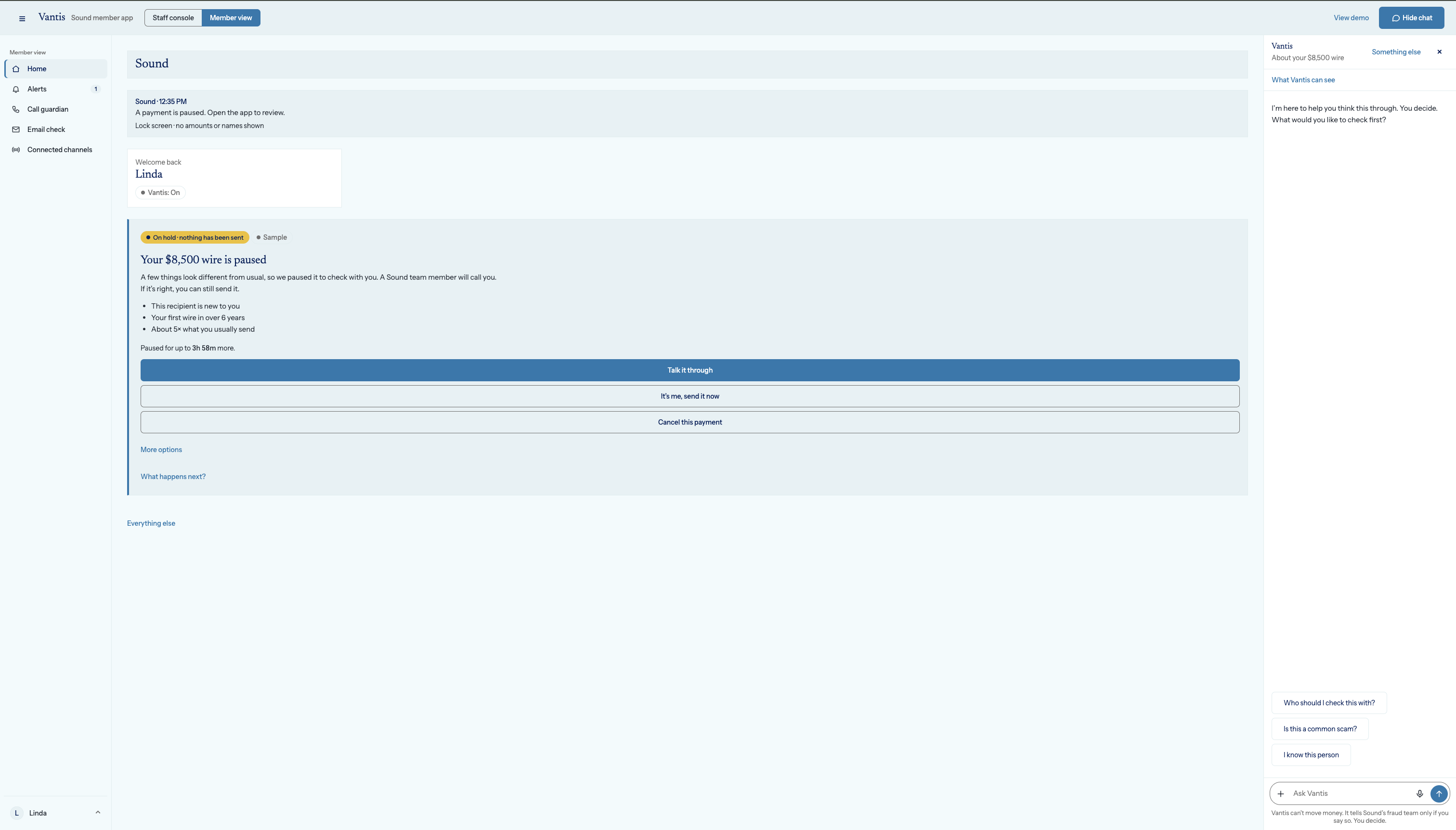
- A risky payment can be paused briefly so a person at the credit union can check in. The member always has the final say.
- Staff get a simple console showing who, how much, why it was flagged, and what to ask on the call.
- With the member's consent, Vantis can review their emails and WhatsApp messages to spot high-risk senders and warn them not to reply. Nothing is read without opt-in.
How we built it
Vantis runs on TypeScript, Hono and SQLite, with a plain HTML and JavaScript front end. Payment detection is four plain rules, so every hold shows its evidence, and a payment state machine enforces holds, releases and the 4-hour limit, with every action audited. Claude powers the member chat and reads suspicious messages, and it must quote the exact words behind every warning sign. Without Claude, the app falls back to rules and scripted replies. Names, numbers and codes are stripped before anything reaches Claude, and photos and PDFs are read on our own server. Members can bring Vantis in the way they already communicate: it screens unknown callers, joins or listens to calls, and checks forwarded emails, texts and WhatsApp messages.
Challenges we ran into
Catching scams without getting in the way of normal calls and payments was the hardest part. We kept a case where we miss a scam and a case where we flag a legitimate payment, and designed the response for both. We also had to keep it simple enough for staff to use under pressure.
Accomplishments that we're proud of
We turned a technical problem into something that feels human. A member isn't scolded or blocked, and staff can see exactly why something was flagged. Scam calls get stopped before they ever reach the person. We also made the console look like a product a credit union could run, not just a demo.
What we learned
Trust matters more than cleverness. People will only use a tool like this if it explains itself and respects their choices. We also learned to be honest about limits, so we don't claim performance numbers from synthetic data.
What's next for Vantis
iMessage support built into the Sound app, and Android. A test harness to measure how well we catch scams, redaction of personal data before anything reaches a model, and an employee assistant grounded in the credit union's policies. All cases shown in the console are synthetic sample data from the hackathon kit.
Built With
- agentmail
- agentphone
- anthropic-api
- better-sqlite3
- claude
- css
- gmail-api
- google-oauth
- hono
- html
- hugging-face-transformers.js
- javascript
- node.js
- sqlite
- tesseract.js
- typescript
- unpdf
- web-push
- whatsapp-cloud-api
- whisper

Log in or sign up for Devpost to join the conversation.