-
-
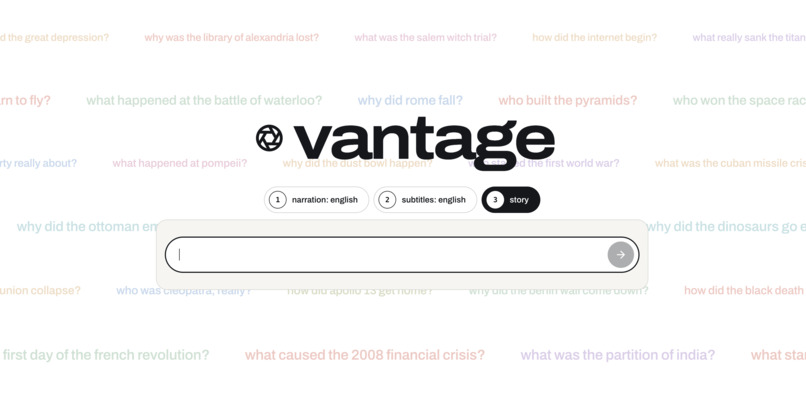
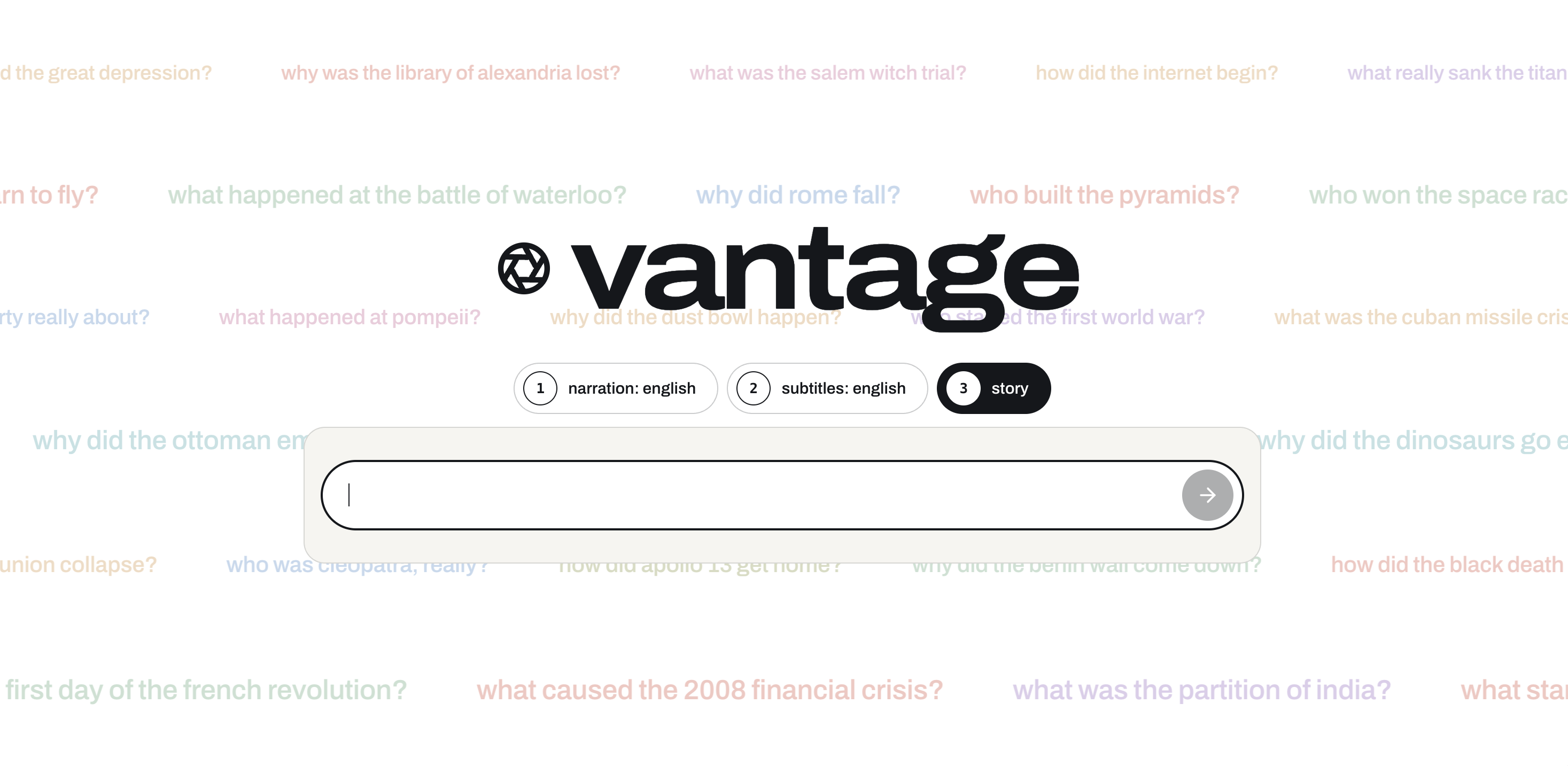
Type any event or question
-
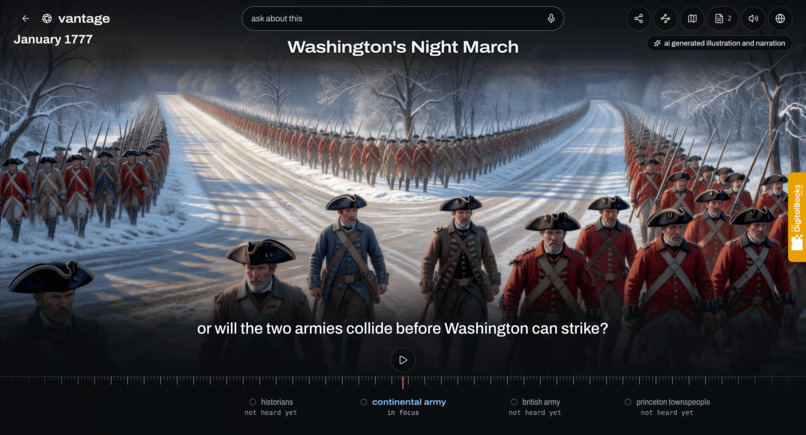
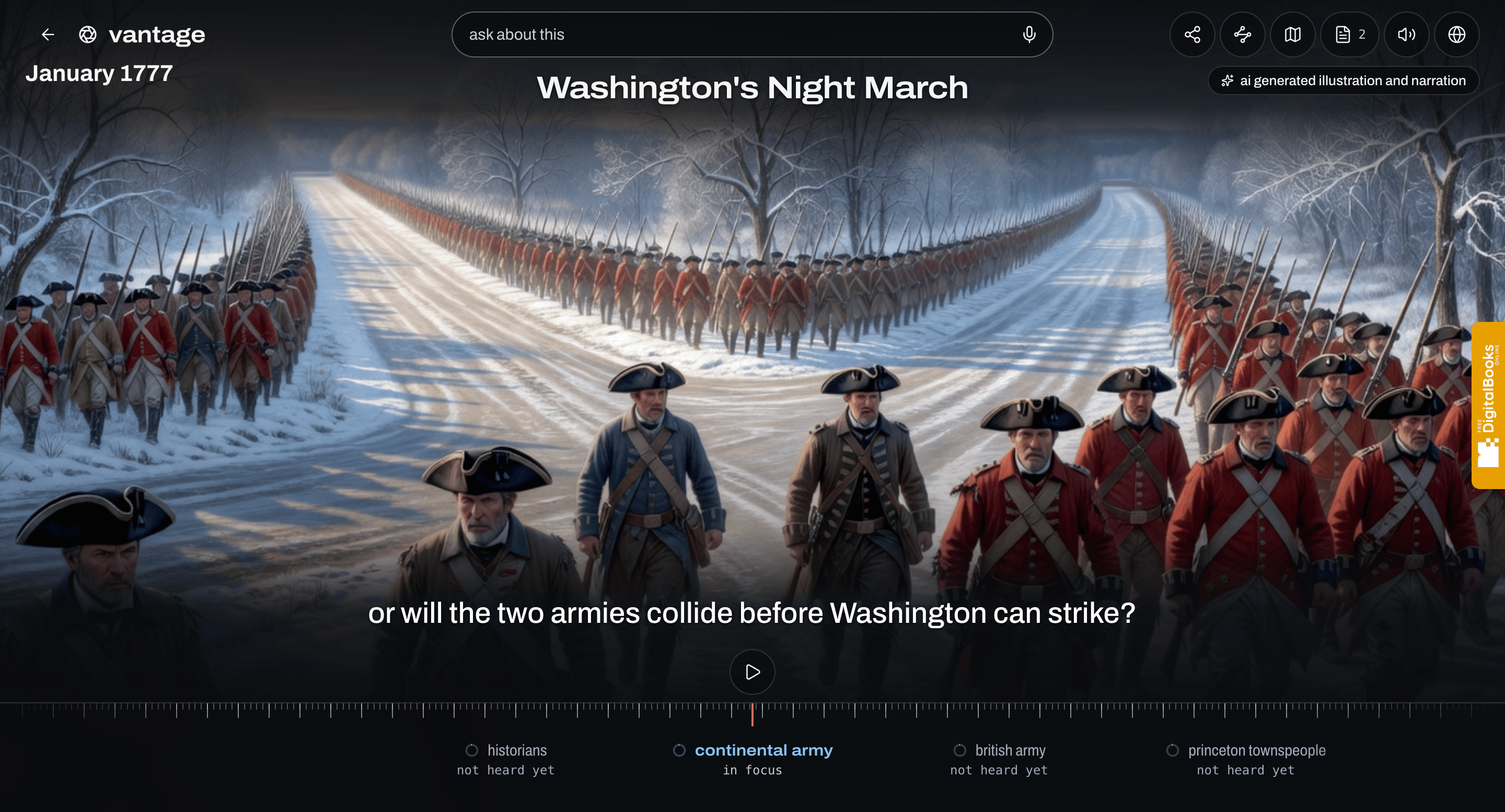
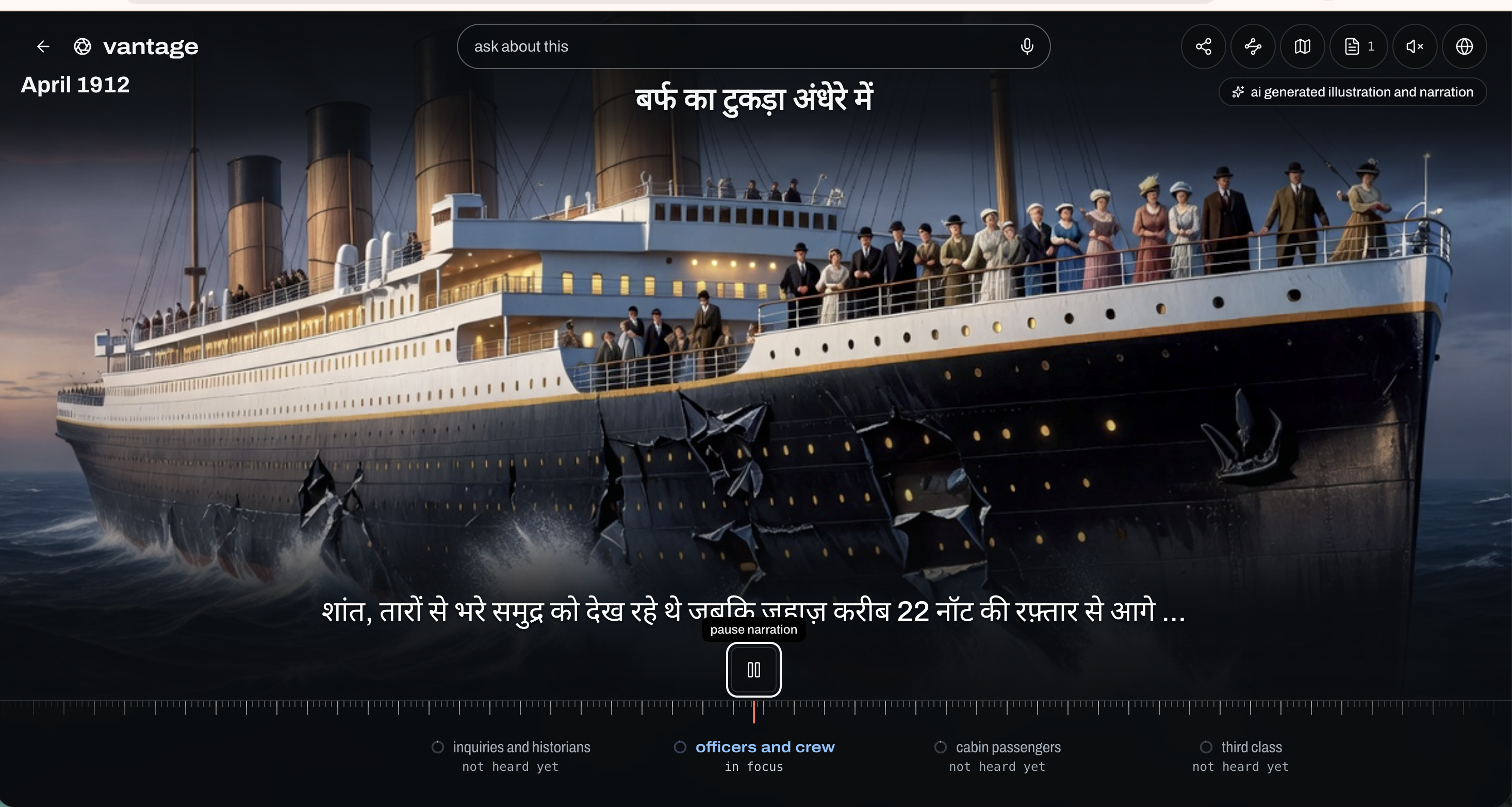
AI storyboard that follows the narration
-
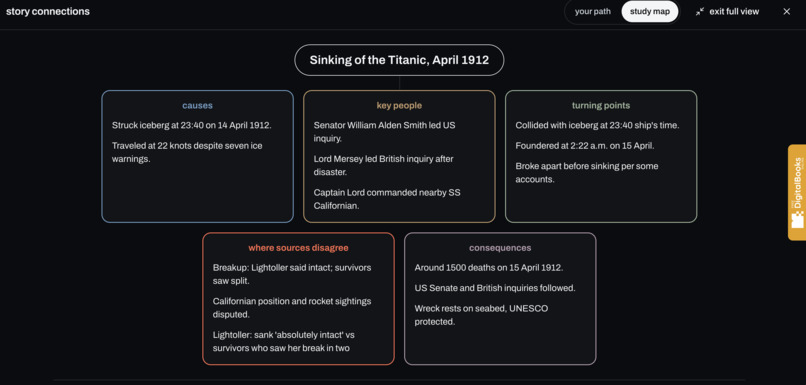
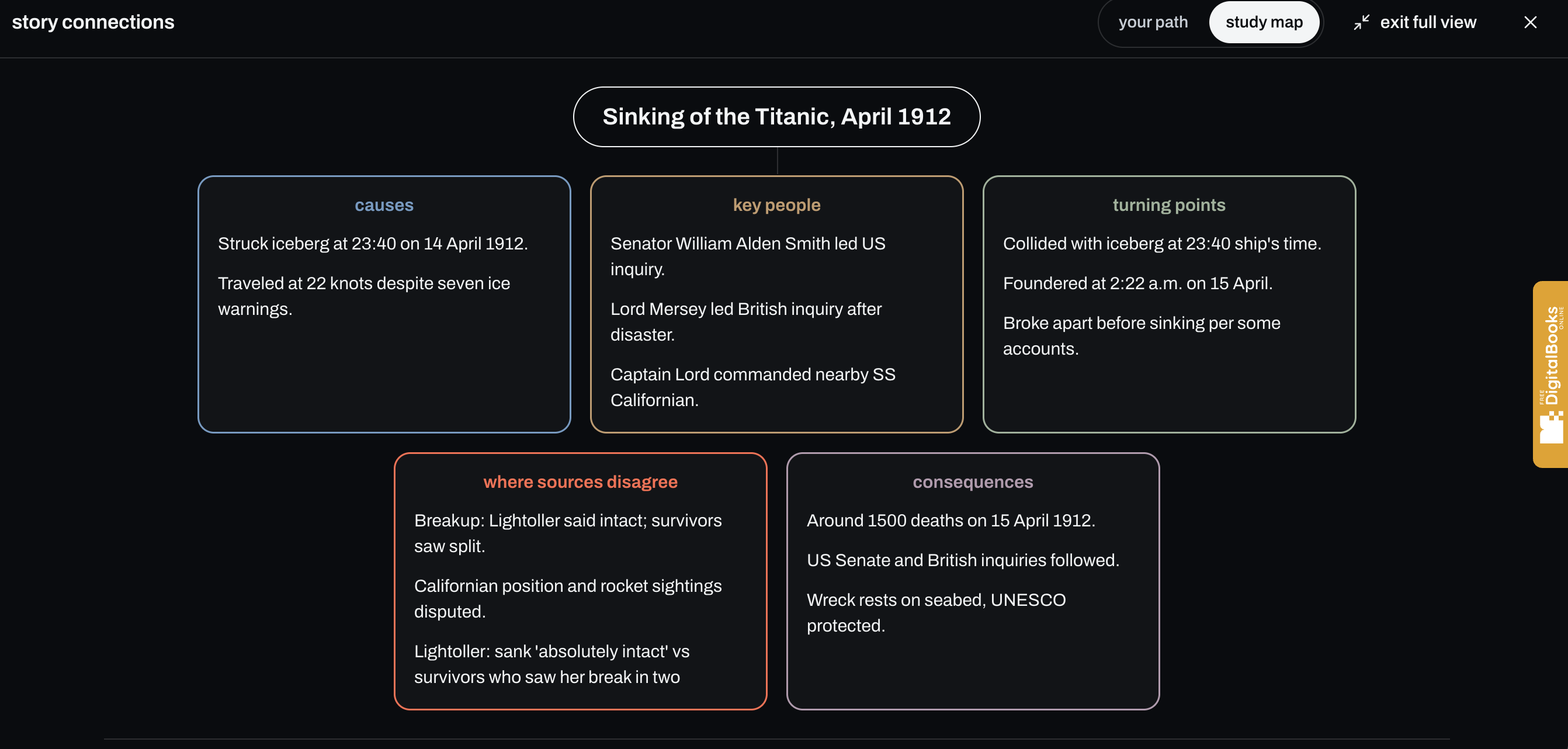
Study map with where sources disagree
-
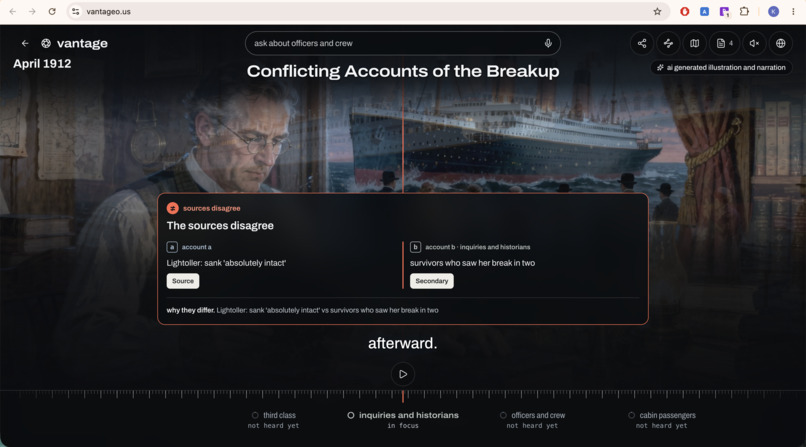
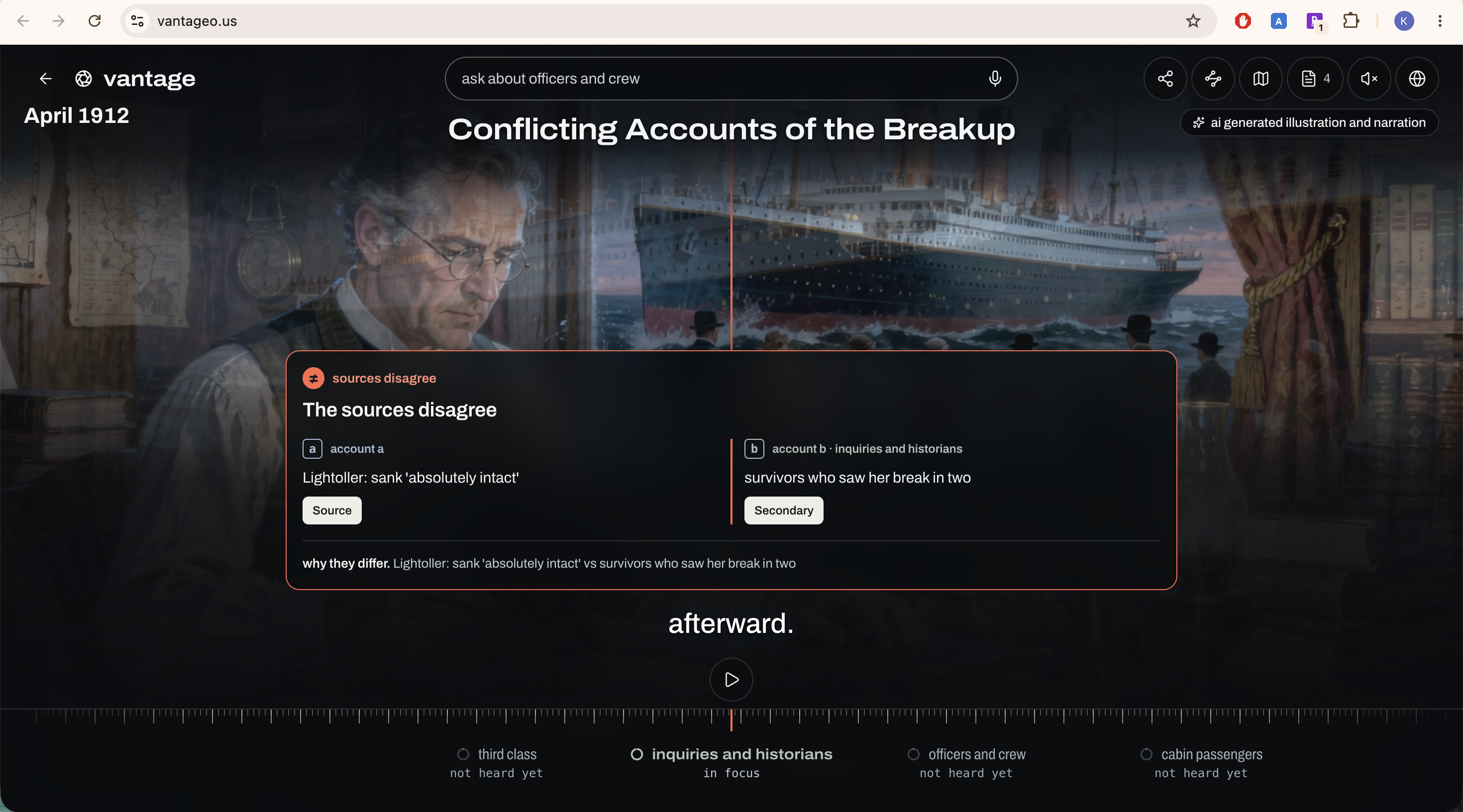
When sources disagree, Vantage shows both accounts side by side
-
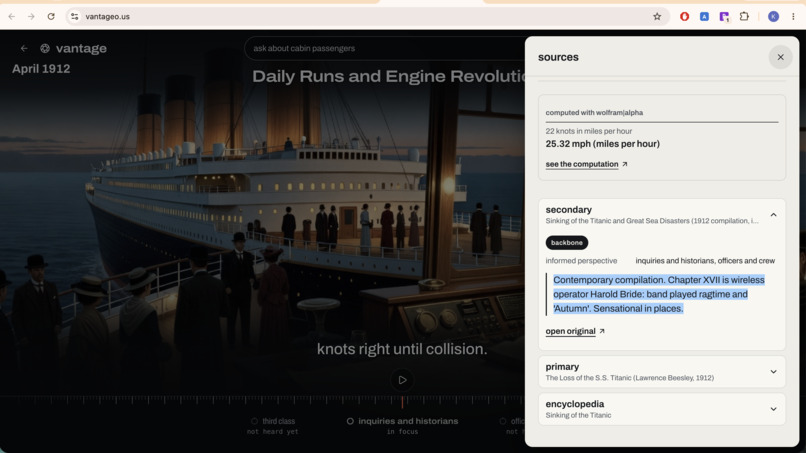
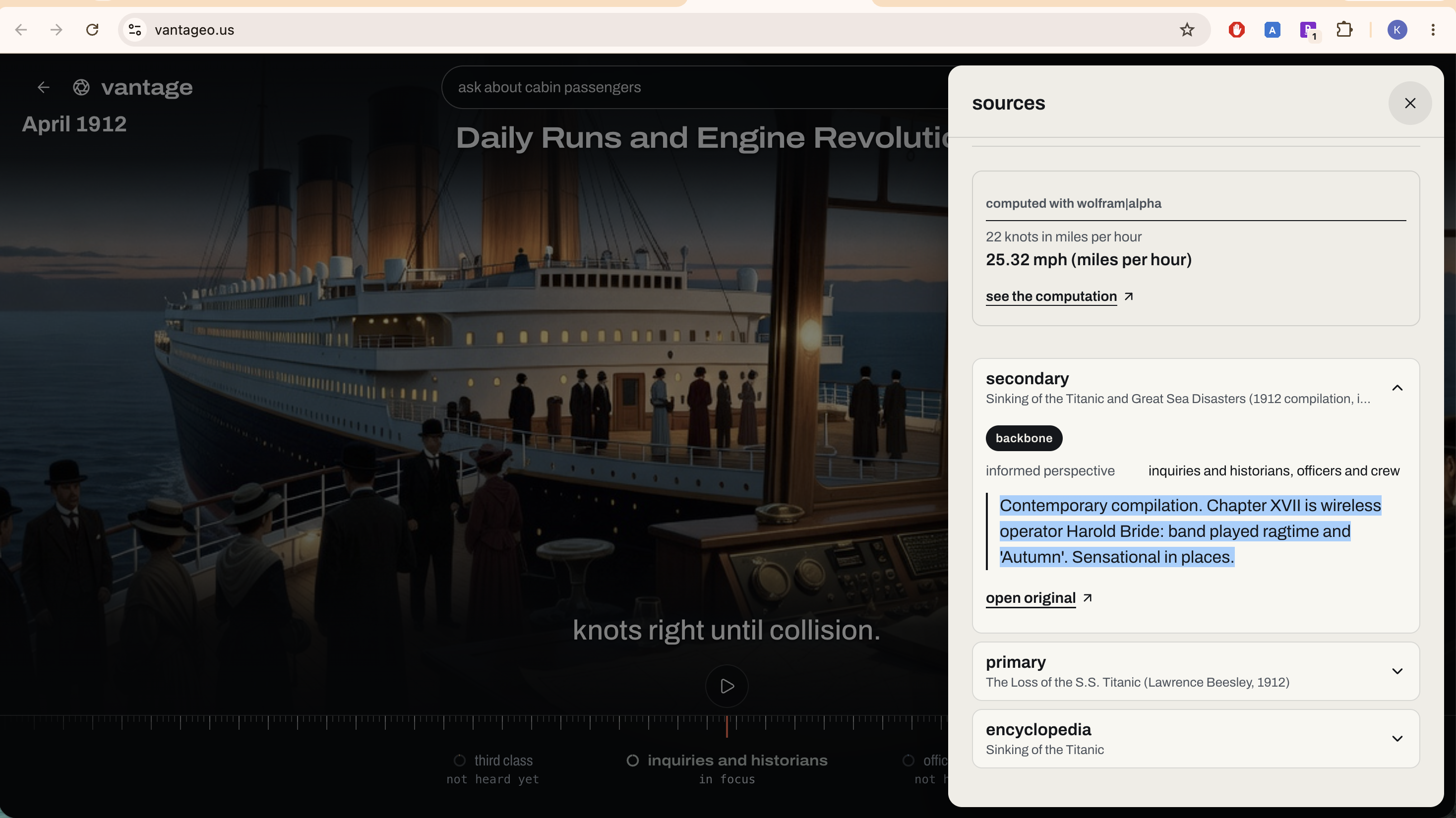
Numbers computed by Wolfram|Alpha, cited next to the primary sources
-
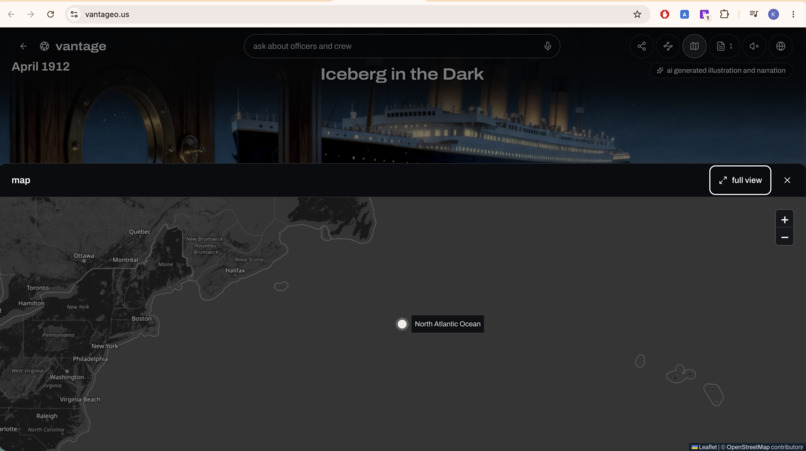
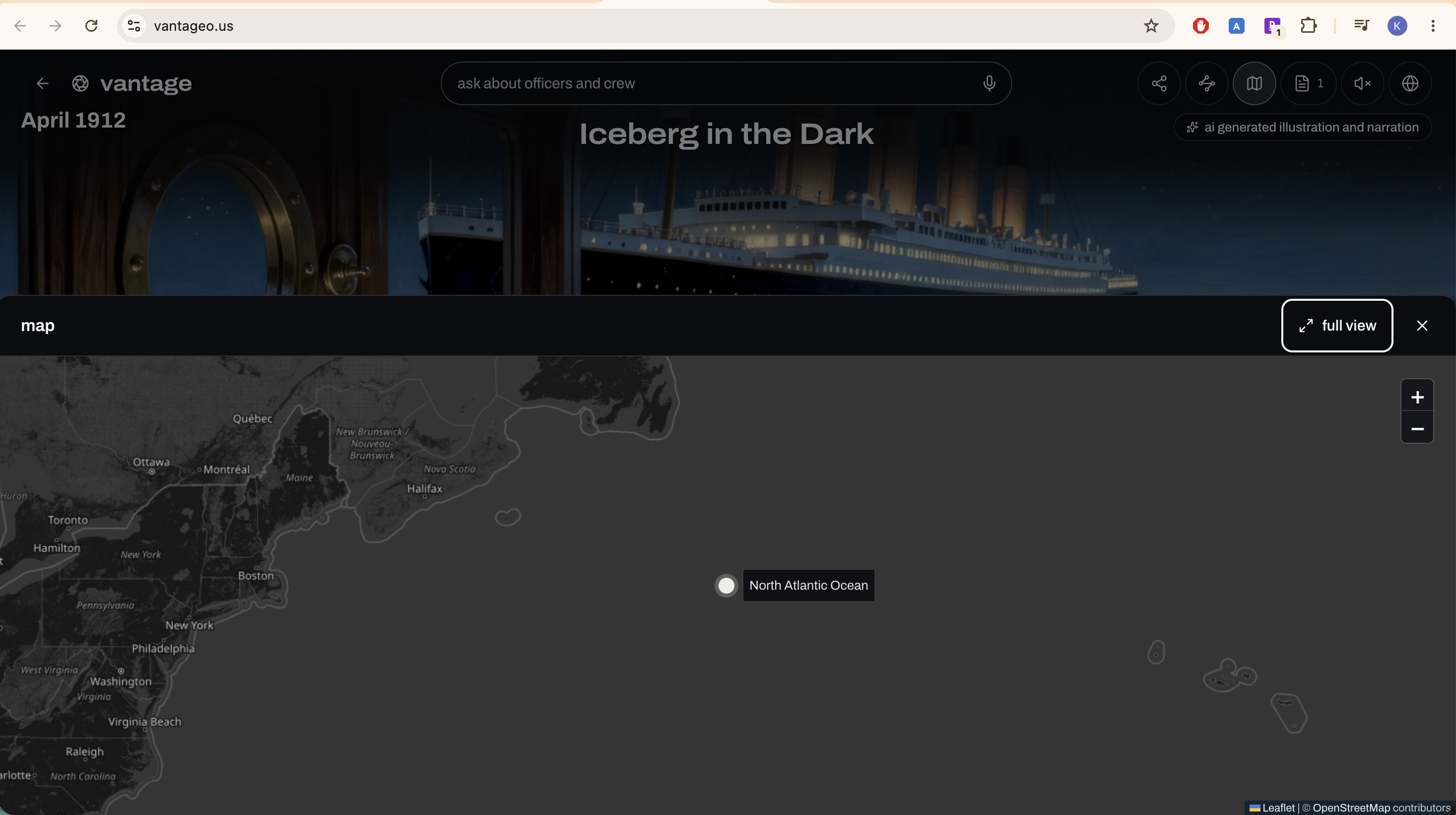
A map of where each scene happened
-
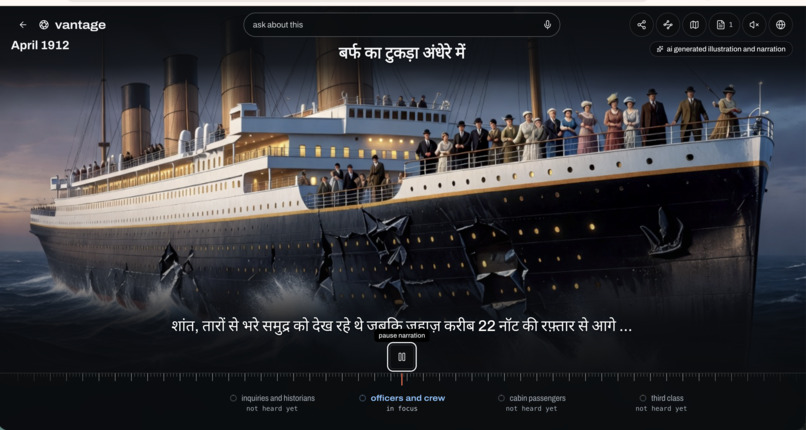
Narration and captions in Hindi, Spanish, French, or English.
-
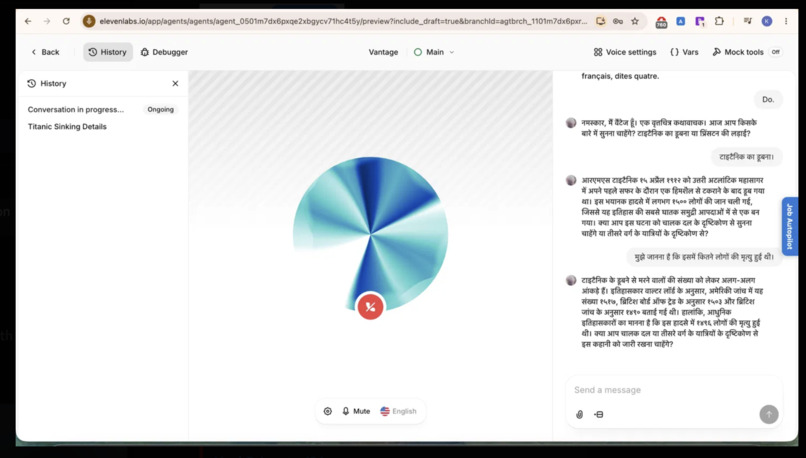
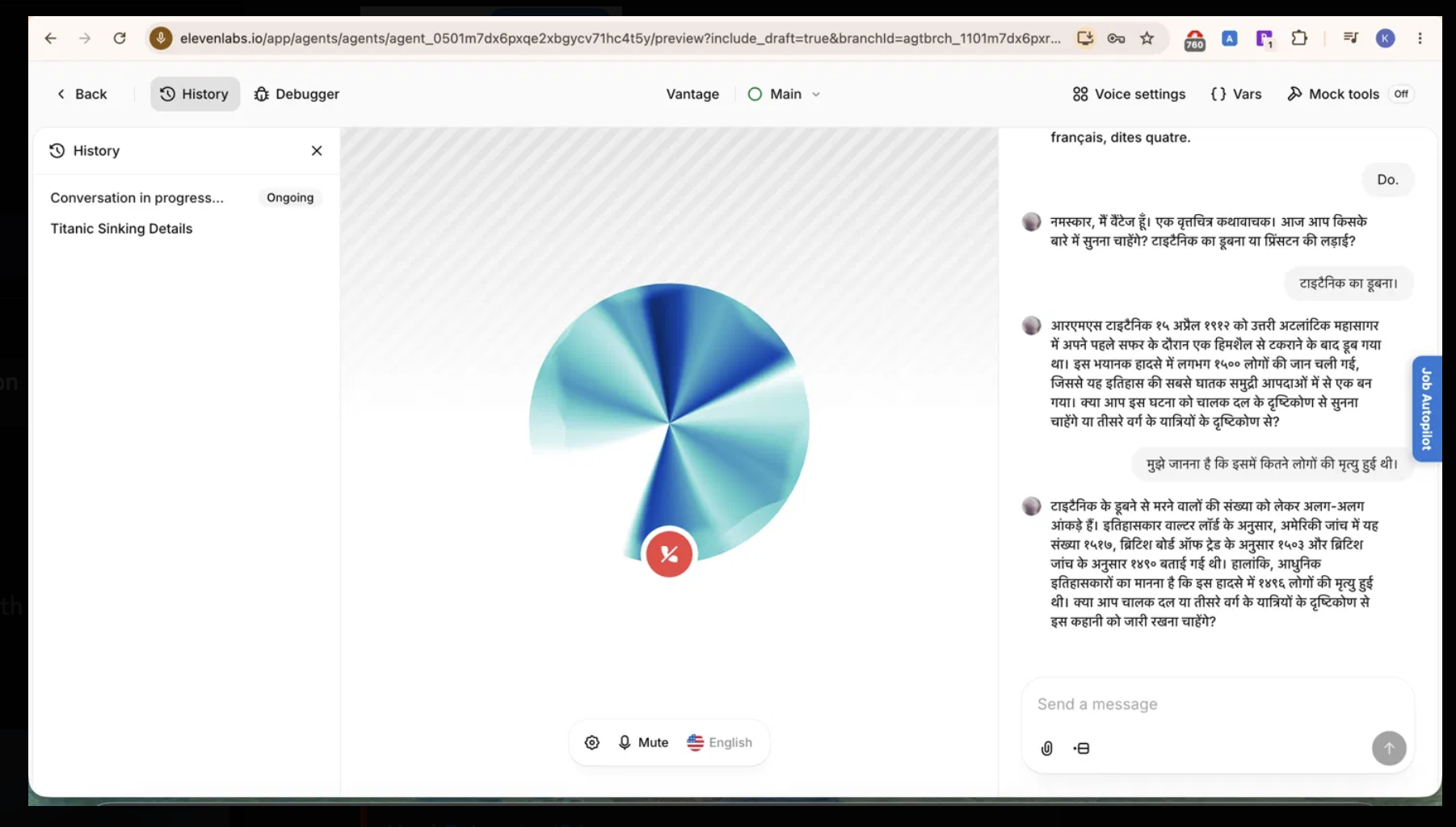
Voice agent: call and ask about any event
-
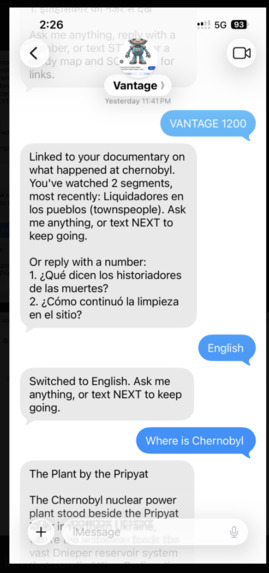
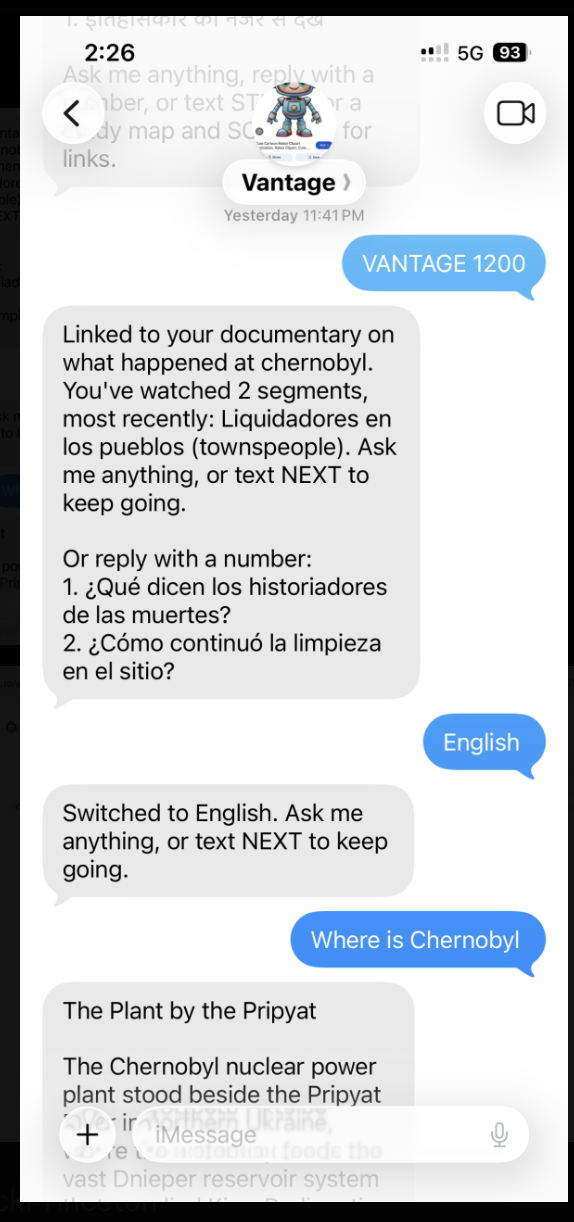
iMessage agent on Photon: continue the story by text
-
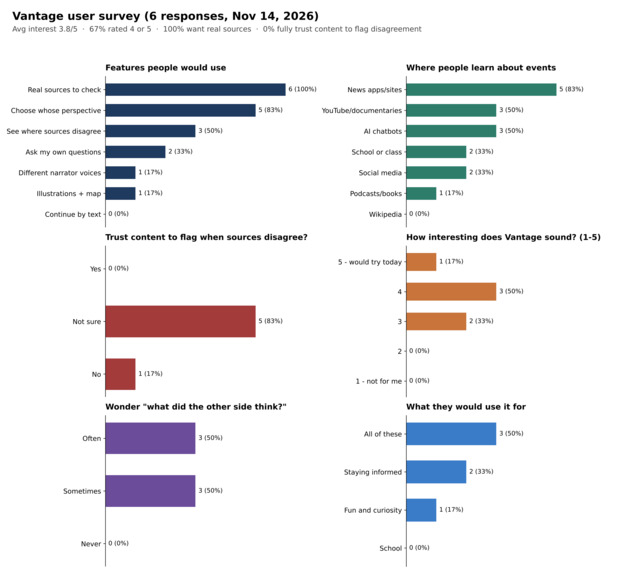
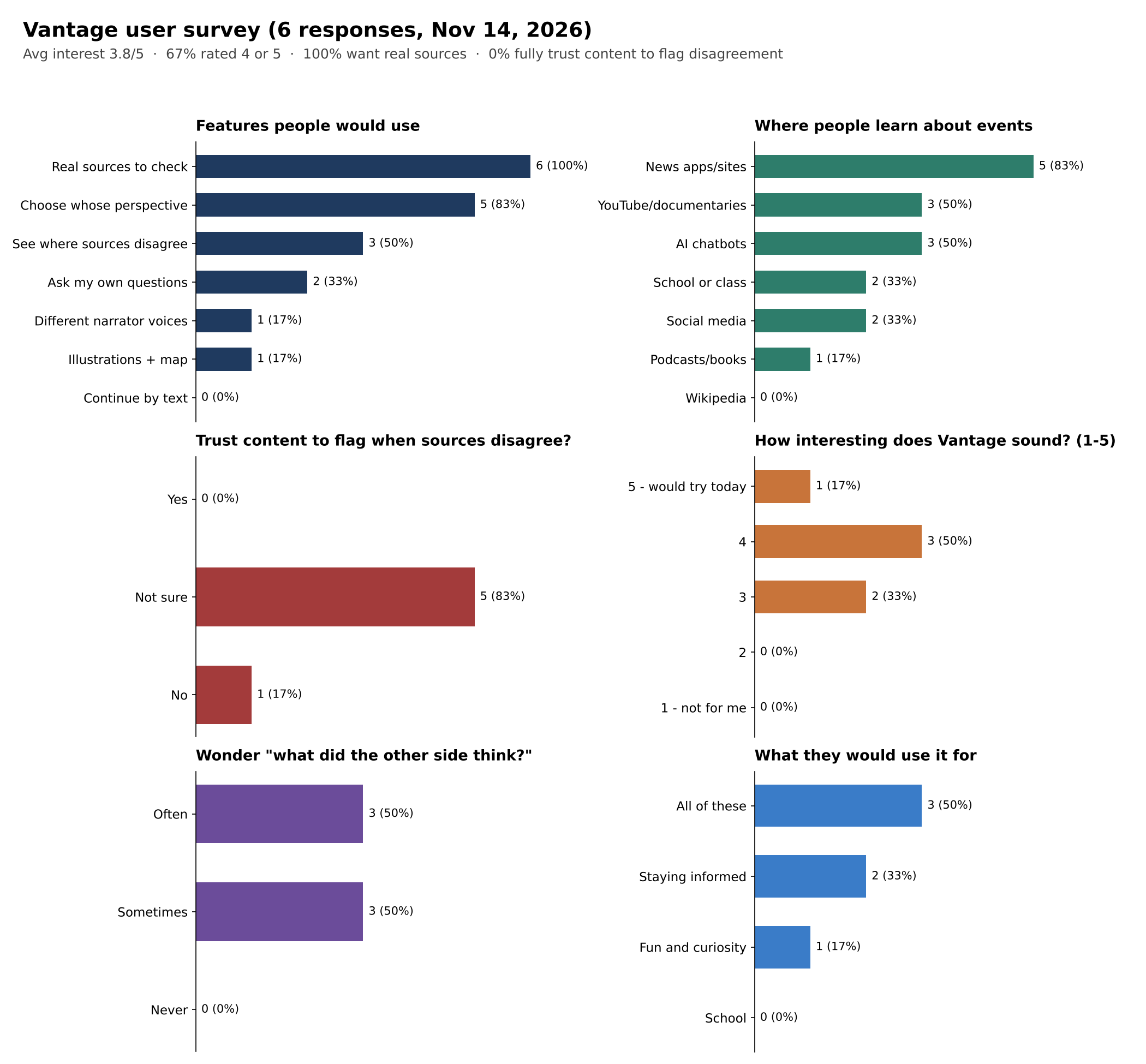
Survey: 6 of 6 wanted sources they can check
-
LangChain deepagents: the Researcher searches each perspective, the Fact-Checker verifies every claim and checks for contradictions
Inspiration
It is 1 AM, the essay is due at 9, and you have three tabs open: a YouTube documentary, a Wikipedia page, and a chatbot. All three tell you the same story, in the same confident voice. We have all been that person, and it is the same when something big happens in the news. We get one confident version of the story. Nobody tells you that the people who were actually there remembered it differently, or that two sources say completely opposite things.
We kept asking what it would be like to step inside an event and watch it from the side of someone who lived it. Then switch to someone else and watch the same moment again. And have every single thing backed by a real source you can open.
Before we got deep into building, we sent a quick survey around HackPrinceton. Only 6 people answered, so it is not a big study, but the answers still surprised us. Not one person said they trust what they watch or read to tell them when sources disagree. Everyone said they wonder what the other side thought, at least sometimes. And all 6 picked "real sources I can open and check" as something they would use. That pretty much decided what Vantage had to be. One history major wrote back: "I really like the idea of hearing different perspectives of history, especially perspectives that often get overlooked." That one stuck with us.
What it does
Vantage turns any event into an interactive documentary: history, current events, science, sports, anything that happened to real people.
What one session looks like
- You type in any event or question you are curious about.
- Vantage gathers real sources, reads them, and finds the groups of people who saw it differently. You pick whose eyes to see it through.
- A narrator in that side's voice starts the story, with a storyboard of illustrations that follows the narration and a map of where it happened.
- You ask a question, like how fast something was moving or what an old amount of money is worth today. Wolfram|Alpha calculates the answer, and it shows up in the sources panel with a link to check it.
- When the sources argue about something, Vantage shows both accounts side by side, each with its source.
- You switch sides and hear the same moment from someone else, in a different voice.
- When you are done, you get a study map of the whole event.
- You have to leave, so you text a code to our iMessage line and keep going on your phone. Or you just call our number and ask out loud.
Real sources, and real disagreements Every claim is tagged with where it came from, and you can open the original and read it yourself. When sources disagree, Vantage shows you both accounts instead of quietly picking one. If the sources do not cover something, it says the record is thin instead of making something up. When we asked about a passenger named "Rose," it told us there is no Rose in the passenger lists.
We also built two deep dives completely by hand, the sinking of the Titanic and the Battle of Princeton, with every source curated and every disagreement mapped by us. They show what Vantage looks like when the research goes as deep as possible.
Numbers you can check: Wolfram|Alpha This is the part we did not expect to love as much as we do. Ask a chatbot how fast a ship was going and it estimates. Vantage does not estimate. When a question can be computed (speed, distance, time, age, money, the moon on a certain night), Vantage rewrites it into one precise Wolfram|Alpha query using the date and place from the story. Wolfram answers from curated data and real computation, and the result becomes one more source, labeled "Wolfram|Alpha computation," with a link to the exact query so you can check it yourself. The AI only chooses the question. Wolfram always calculates the answer.
Vantage also does this on its own. When a scene mentions an old amount of money, a distance, someone's age, or a date, it picks up to two of those facts and has Wolfram add the context.
A study map after every story After watching, students get a study map: causes, key people, turning points, consequences, and a branch just for where the sources disagree. Every point links back to the sources it came from.
Watch it in your language Vantage works in English, Spanish, Hindi, and French, and you pick the narration language and the caption language separately. You can listen in Hindi while reading English captions, or hear English and read along in Spanish if you are learning it. Change the narration language in the middle of a scene and Vantage translates and re-voices that same scene right there. For a lot of people, the most important side of a story was never told in English in the first place.
Keep going on your phone: iMessage and voice, with Photon
- iMessage, (628) 502-3837. Text the code from the website and the same story continues on your phone, with numbered choices and questions. Text any event to start a new story by text, STUDY for the study map, SOURCES for links, or a language name to switch languages.
- Phone call, (620) 798-6062. Our voice agent lives on a Photon number, connected over SIP to an ElevenLabs agent. Pick a language by number and ask about any event out loud. The agent calls our backend through a webhook, so a phone call uses the same sources as the website.
Who it is for The high schooler with an essay due Friday who only has a YouTube video and a Wikipedia page to go on. The college student trying to figure out which parts of a story are actually confirmed. The teacher who spends her weekend pulling sources together so her class can see that every story gets argued about. And anyone who has ever read about something and wondered what the other side would say.
Why it is different Our survey asked people where they go to learn about events, and the top answers were news apps, YouTube, and AI chatbots. Each one gives you a single story. A documentary picks one narrative. A chatbot sounds confident even when it is guessing. Vantage gives you the story too, but also the other sides, the sources behind each one, the places where they do not line up, and numbers you can check. That also makes it a real research tool: you can cite it, check it, and see what each source actually says.
How we built it
There were three of us. Kashish built the agents, backend, Wolfram, iMessage, and voice agent. Ria built the frontend, design, and media. Bhawna built the knowledge base, the demo, and the docs.
Backend (FastAPI), two modes. Fast mode retrieves the most relevant source passages for your perspective and the narrator writes the next scene from them. Deep mode uses LangChain deepagents: a Director plans each scene and delegates to a Researcher that searches the sources from several perspectives, a Narrator that writes, and a Fact-Checker that verifies each claim against the sources and looks for contradictions. Deep mode takes 30 to 45 seconds a scene, so viewers get the fast path and deep mode is the verified path.
Any event. Gemini with Google Search researches the event when it is available. If it is not, Vantage builds a source library from Wikipedia (turning questions and typos into the right article), and Grok searches the web in the background for primary documents and eyewitness accounts. Narration runs on a chain of models (Grok and Gemini), so if one fails the next takes over.
The knowledge base. For the two deep dives, we curated 67 sources and loaded them into ChromaDB, with topic, perspective, source type, and map location on every chunk. We also mapped 60 connections between sources by hand, including 17 places where they directly contradict each other. Those documented contradictions also feed the study map.
Voices (ElevenLabs). Every perspective has its own voice, using the multilingual model so the same voices can narrate in all four languages. ElevenLabs Scribe turns spoken questions into text, and an ElevenLabs agent powers the phone line.
The Wolfram pipeline. We check whether a question is computable. If it is, a fast Grok model rewrites it into a precise Wolfram|Alpha query with the story's date and place, Wolfram's LLM API computes the answer, and we hand it to the narrator as a source with a link to the exact query. The model never produces the number itself.
Everything else. Grok makes the storyboard illustrations, Photon runs iMessage and the phone number, and the frontend is React and Vite with Leaflet for the map and React Flow for the story graph. The site is live at vantageo.us on Vercel, connected to our backend through a Cloudflare tunnel.
Challenges we ran into
- Keeping the AI honest. It really wants to fill gaps with something that sounds right. Getting every scene to come only from the sources we pulled, and every number from Wolfram, took a lot of prompt rewrites.
- Picking which disagreements to show. Sources disagree about tiny things constantly. We only show one when it connects to what the scene is actually saying.
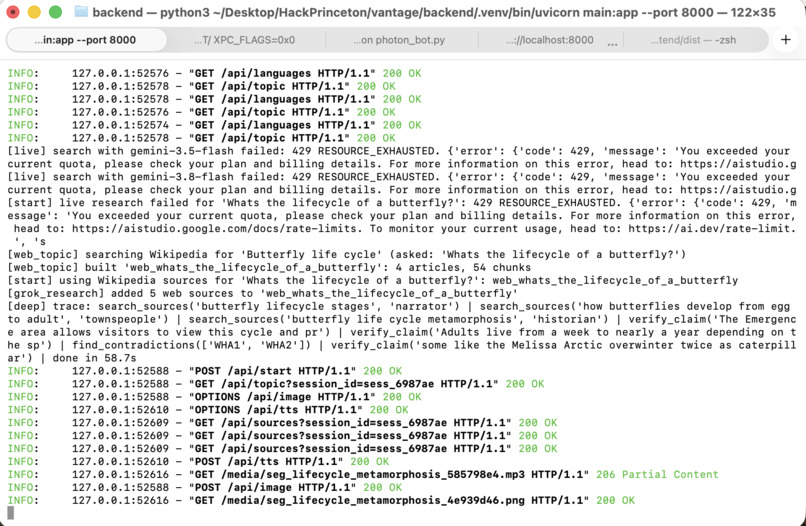
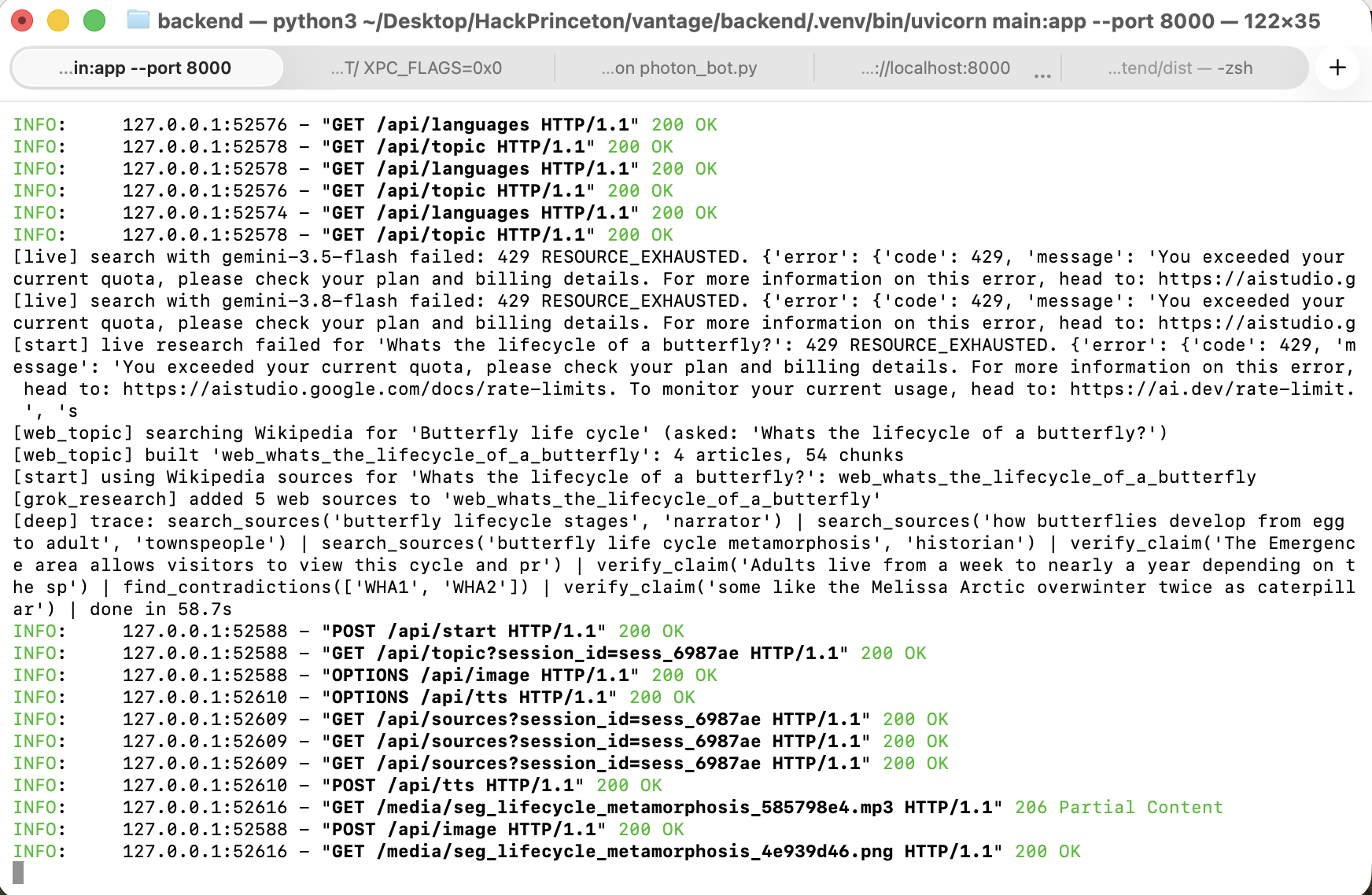
- APIs running out at the worst time. Our Gemini quota ran out overnight, which is exactly why the Wikipedia and Grok fallback exists. Every new topic we tested kept working.
- Speed. A brand new topic has to be researched, written, voiced, and illustrated. We cut duplicate image and voice requests in half and made translation fast enough to re-voice a scene on the spot.
- Collecting sources. Plenty of sites block scripts, so a good chunk of the library was found, copied, and cleaned by hand.
Accomplishments that we're proud of
- A documentary written live, scene by scene, that still points back to real primary sources, for any event.
- Showing disagreement between sources instead of hiding it.
- Numbers you can check yourself, with a link to the exact calculation.
- Four languages, with narration and captions set separately.
- One story across the web, iMessage, and a phone call.
What we learned
- The best use of AI for us was not having it answer everything. It was having it ask the right question and handing that question to a tool built for the job.
- Being specific is what makes something trustworthy. The more exact Vantage got (exact sources, exact numbers, exact disagreements), the more useful it became.
- Asking people before building saved us. The survey told us which features mattered before we spent hours on the wrong ones.
- Curating sources is slow, careful work, and it is the whole reason anyone should trust what Vantage says.
What's next for Vantage
- More hand-built deep dives, including current events
- Running the Fact-Checker on every scene in the background
- A research mode that exports every source and calculation as a citation list
- A classroom version for teachers, with discussion questions for each perspective
- A phone agent that remembers your call when you move back to text
- A much bigger survey with high schoolers, teachers, and working professionals
Built With
- chromadb
- cloudflare
- deepagents
- elevenlabs
- fastapi
- gemini
- google-gemini
- google-gemini-api
- grok
- imessage
- javascript
- langchain
- leaflet.js
- photon
- python
- react
- react-flow
- tailwindcss
- vercel
- vite
- wikipedia
- wolfram-technologies
- xai
- xai-grok
