Inspiration
What it does
How we built it
Challenges we ran into
Accomplishments that we're proud of
What we learned
What's next for Vansha
Vansha (वंश): Family Health Intelligence Platform for Preventive NCD Care
Inspiration
Healthcare systems are primarily designed around individual patients, yet many of the world's leading causes of death—such as diabetes, hypertension, cardiovascular disease, and chronic kidney disease—have strong familial and hereditary patterns.
During community health screening programs, family history is often collected on paper but is rarely transformed into actionable clinical insights. Health workers know that a patient's parents may have diabetes or hypertension, but they lack tools to identify which family members should be screened early or monitored more closely.
This inspired us to build Vansha (वंश)—a platform that treats the family as a connected health network instead of isolated individuals. Rather than waiting until disease develops, Vansha enables preventive healthcare by analyzing family relationships, health history, and risk factors to identify vulnerable individuals before symptoms appear.
What it does
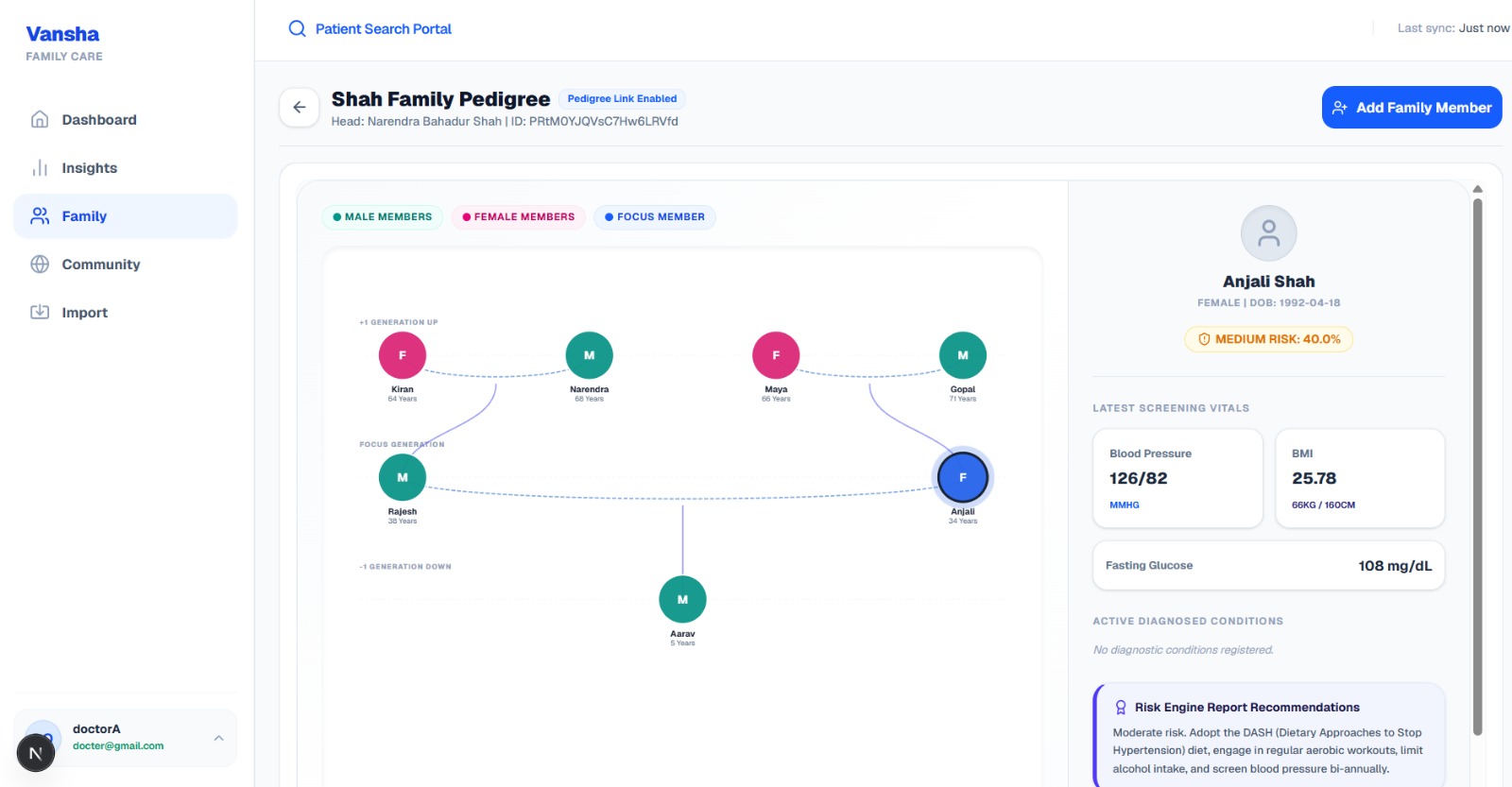
Vansha is a Family Health Intelligence Platform that creates a digital family health graph for preventive care.
The platform allows health workers to:
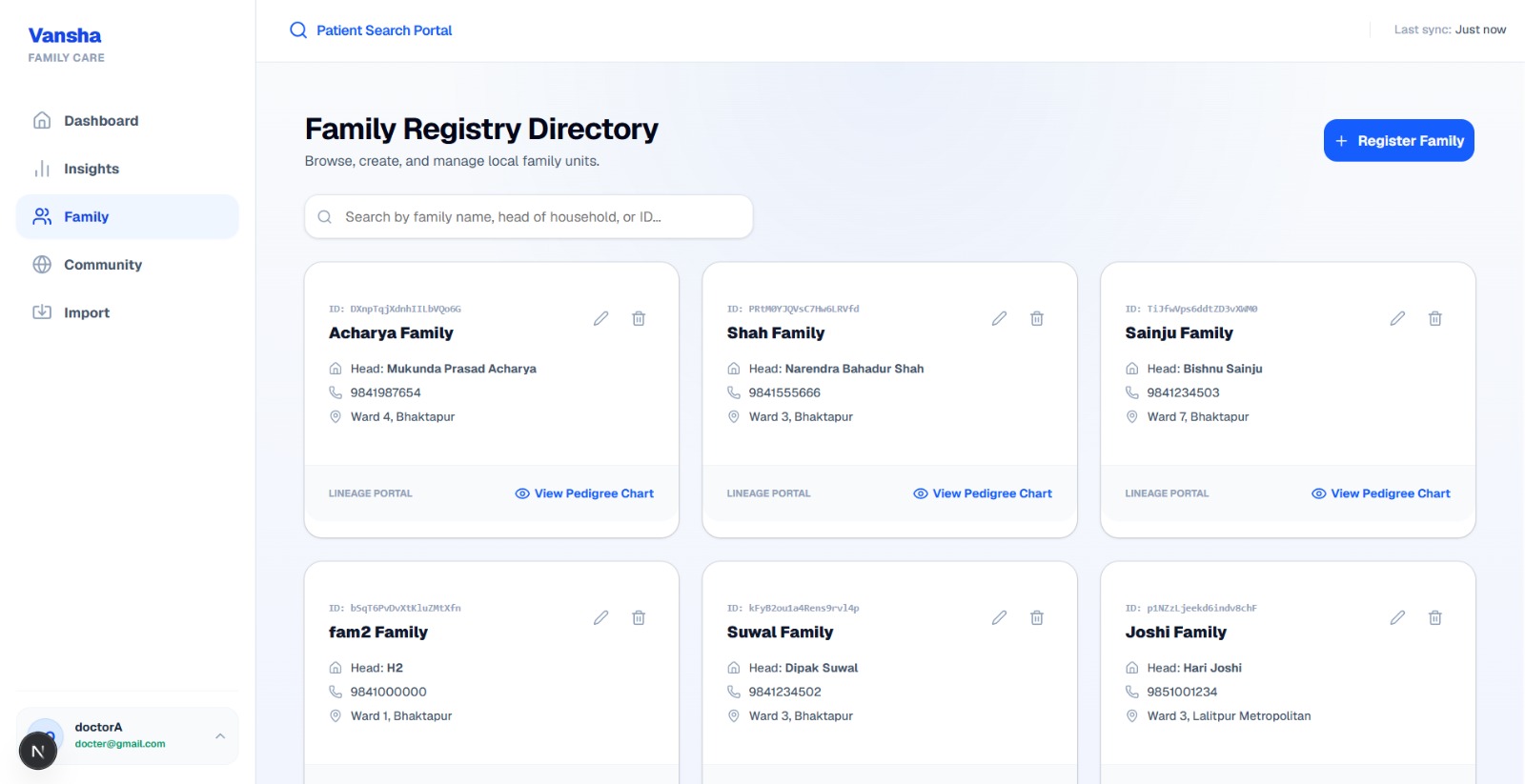
- Register families and household members
- Build parent-child and spouse relationships
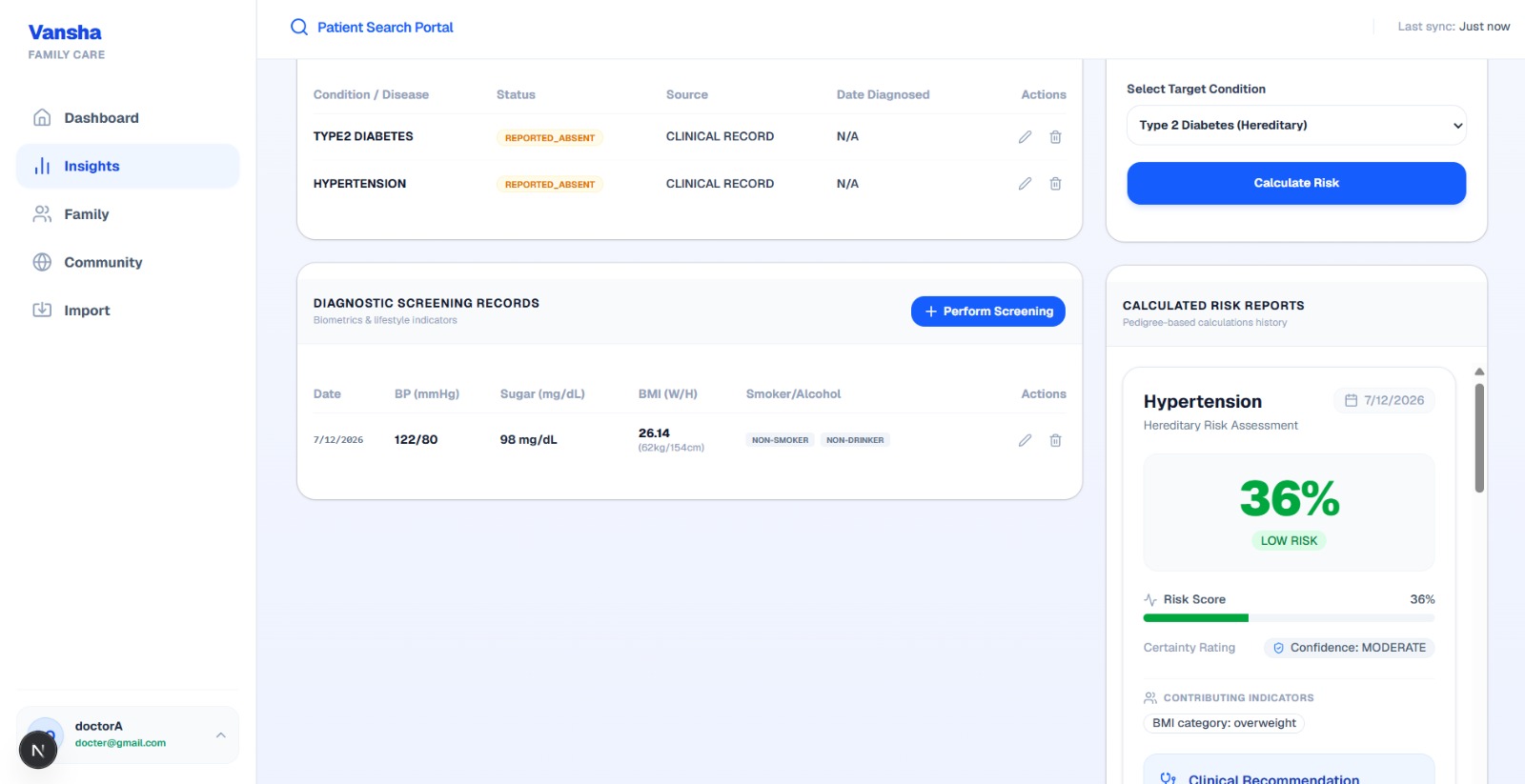
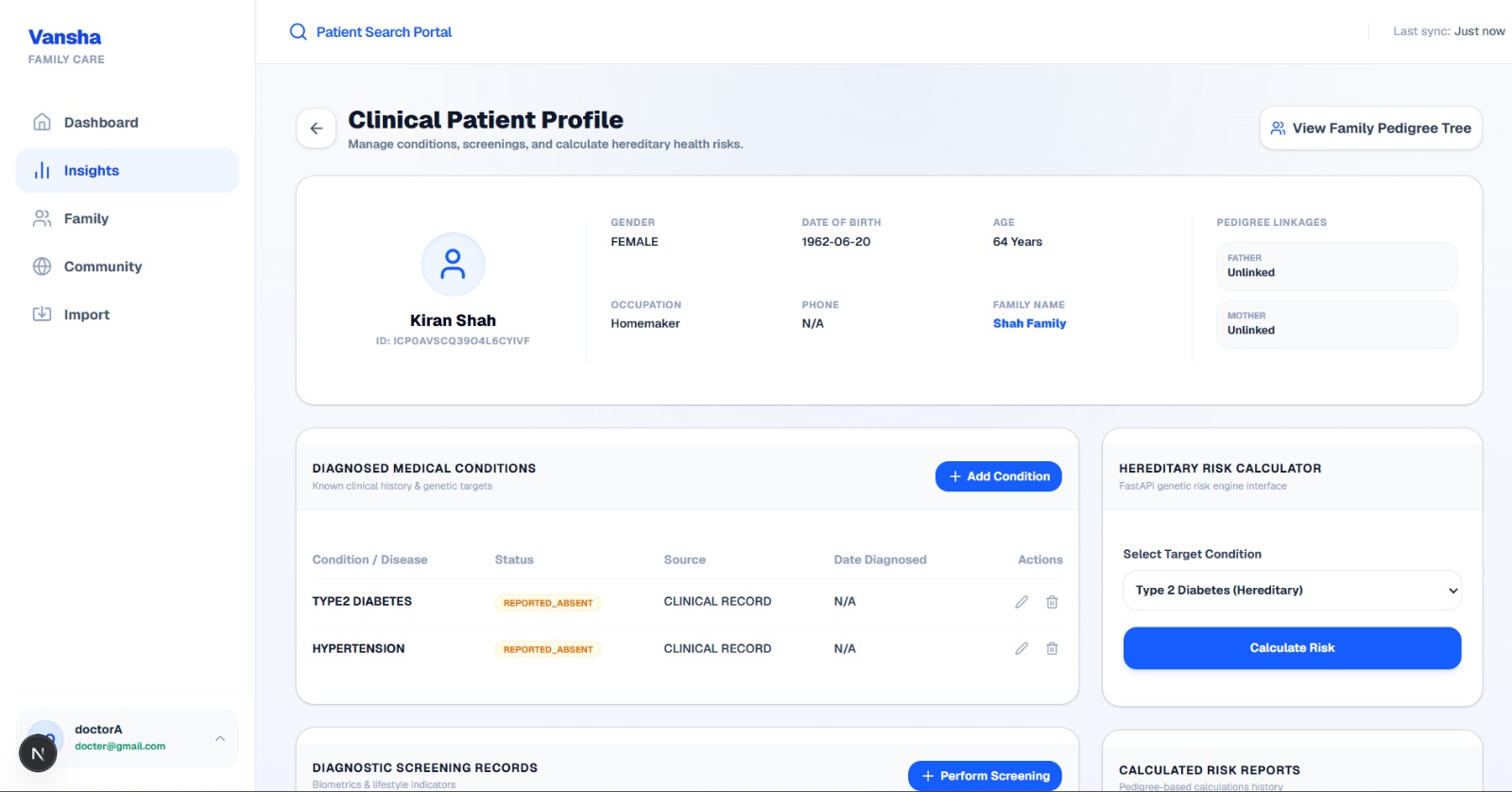
- Record screening information and diagnosed diseases
- Visualize complete family health history
- Identify individuals with elevated hereditary risk
- Prioritize preventive screening and follow-up
Instead of asking every patient the same questions repeatedly, the system provides clinicians with an instantly accessible family health profile.
For example:
If both parents have Type 2 Diabetes and one sibling is hypertensive, the system highlights children as high-risk individuals who should undergo earlier screening than the general population.
This shifts healthcare from reactive treatment toward proactive prevention.
How we built it
Backend
- Node.js
- Express.js
- TypeScript
- Prisma ORM
- PostgreSQL
The backend manages:
- Family registration
- Relationship mapping
- Patient records
- Screening data
- Risk calculations
- REST APIs
Database Design
The database is structured around relational healthcare entities:
- Families
- Individuals
- Relationships
- Health Screenings
- Diagnoses
- Risk Assessments
Using Prisma allowed us to rapidly iterate on the schema while maintaining strong type safety.
Frontend
The frontend was built with:
- Next.js
- React
- TypeScript
- Tailwind CSS
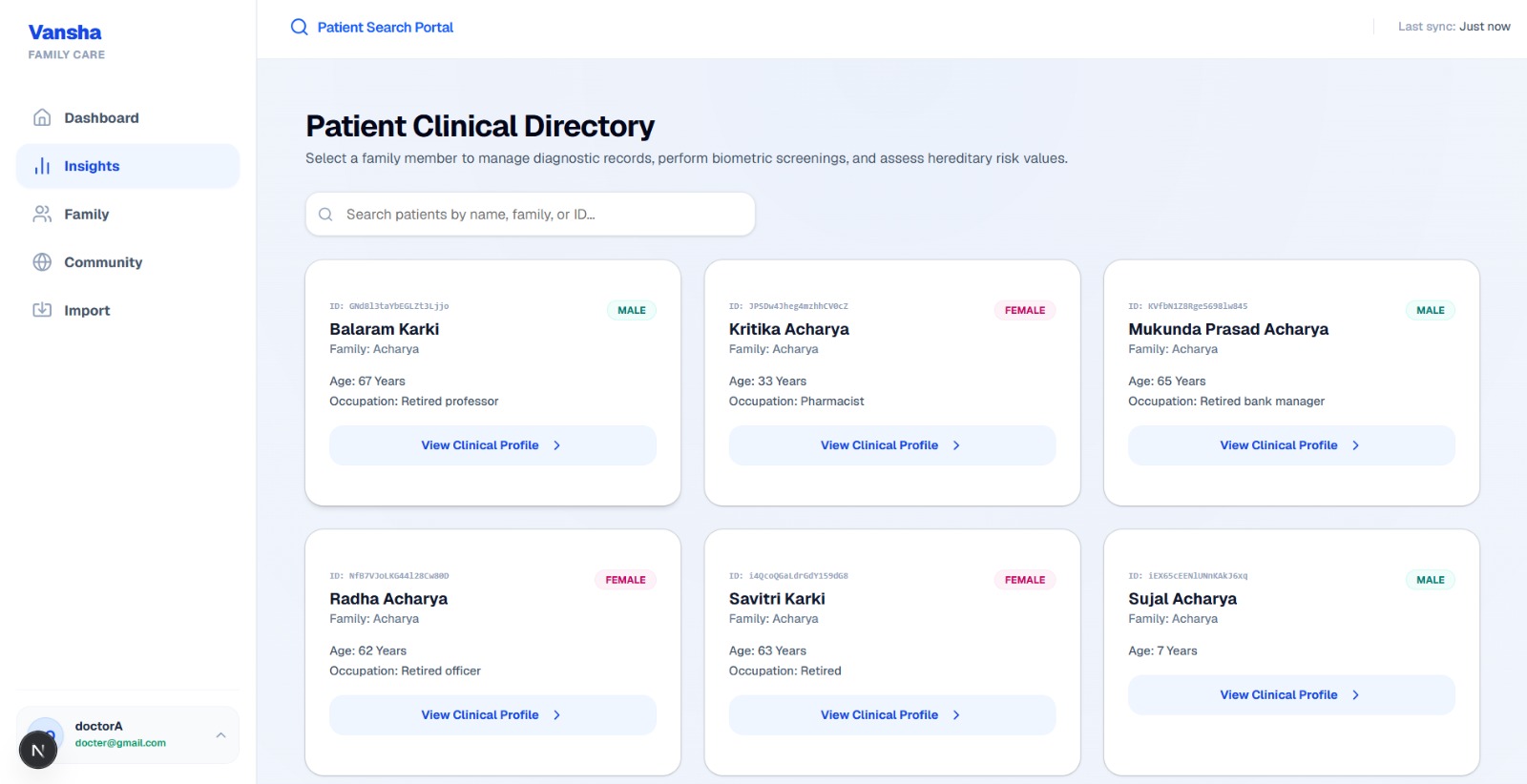
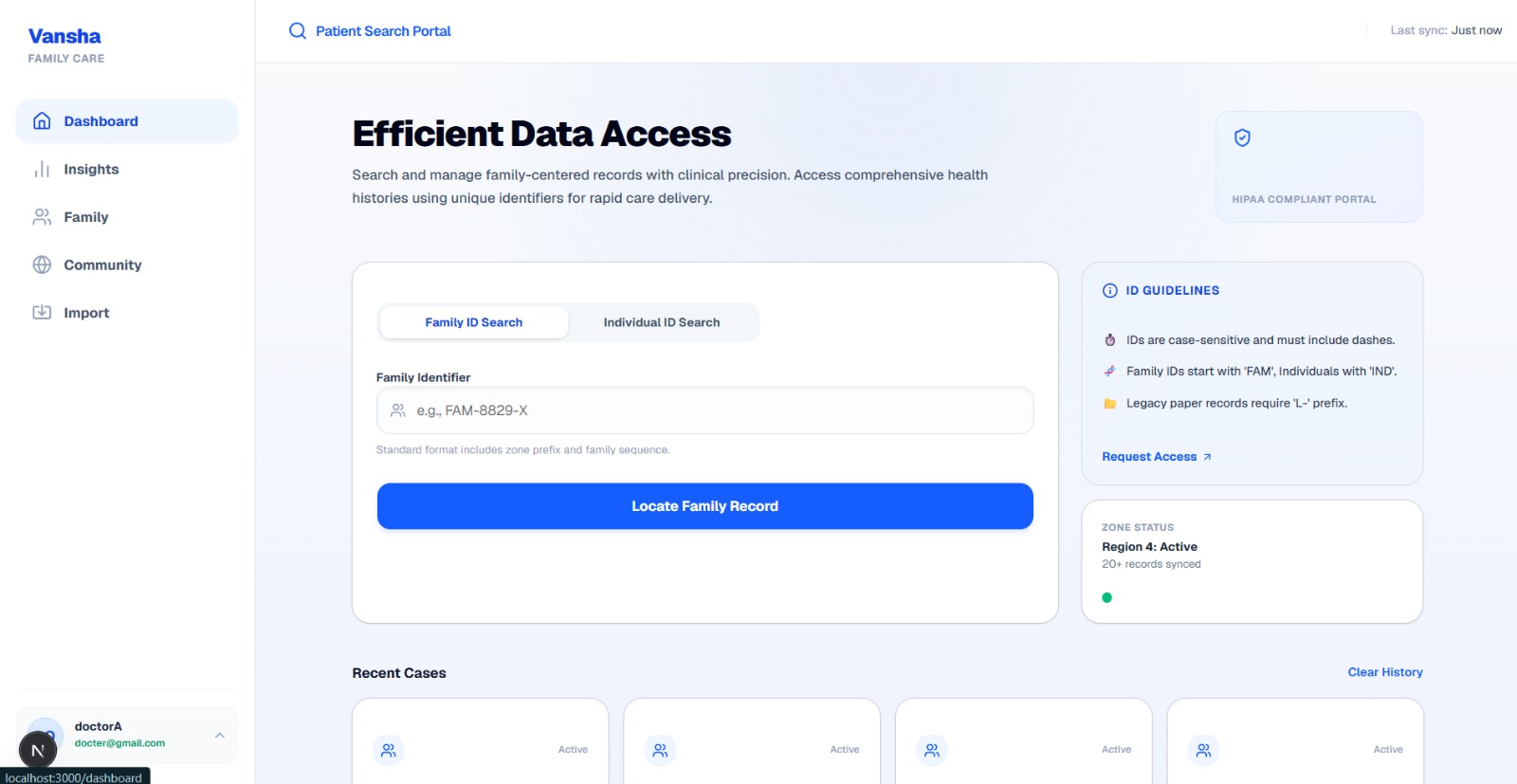
The dashboard enables health workers to:
- Search families
- Register new members
- View complete family trees
- Explore hereditary disease patterns
- Monitor screening status
The interface was intentionally designed to remain simple enough for use during community health outreach.
Risk Intelligence
Rather than relying solely on current symptoms, Vansha estimates hereditary risk using family health history.
Conceptually, an individual's hereditary risk can be represented as
[ Risk = f(FamilyHistory,\ Age,\ ExistingConditions,\ Lifestyle) ]
where family history contributes significantly to early identification of non-communicable diseases.
This enables healthcare workers to prioritize preventive interventions before disease progression.
Challenges we faced
Designing the Family Graph
Representing multi-generational family relationships was more difficult than expected.
We needed a flexible data model capable of representing:
- Parents
- Children
- Siblings
- Multiple generations
- Spousal relationships
while keeping database queries efficient.
Converting Health History into Actionable Insights
Collecting family history is relatively straightforward.
The real challenge was transforming that information into meaningful recommendations that healthcare workers could immediately understand and use.
Balancing Complexity and MVP Scope
Many ideas emerged during development, including:
- AI-based disease prediction
- National health integration
- Predictive analytics
- Population dashboards
Given the limited hackathon timeframe, we focused on building a functional MVP that demonstrates the core concept rather than attempting to solve every healthcare problem at once.
What we learned
This project taught us that impactful healthcare innovation is not always about creating new medical technologies.
Sometimes the greatest value comes from organizing existing information in smarter ways.
Throughout the hackathon we gained practical experience with:
- Healthcare data modeling
- Relational database design
- Full-stack application architecture
- Building scalable REST APIs
- Translating public health challenges into software solutions
- Designing technology with real community impact
More importantly, we learned how interdisciplinary collaboration—combining software engineering with public health thinking—can create solutions that are both technically sound and socially meaningful.
Future Vision
Our long-term vision is to evolve Vansha into a nationwide preventive health intelligence platform integrated with community healthcare systems.
Future enhancements include:
- AI-powered disease risk prediction
- Integration with Electronic Health Records (EHR)
- Community health worker mobile application
- National family health analytics
- Government health planning dashboards
- Secure interoperability with healthcare providers
By shifting healthcare from treatment-first to prevention-first, Vansha aims to help reduce the growing burden of non-communicable diseases through early identification, family-centered care, and data-driven public health decisions.
Built With
- d3.js
- firebase
- nextjs
- python
- shadcn
- typescript
- zod

Log in or sign up for Devpost to join the conversation.