-
-
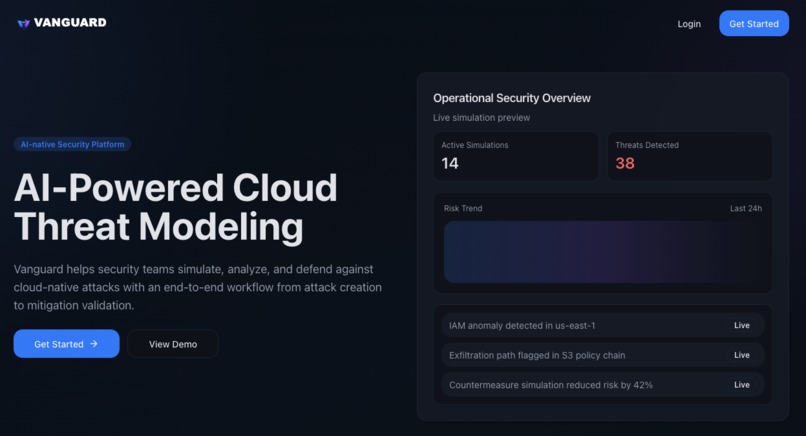
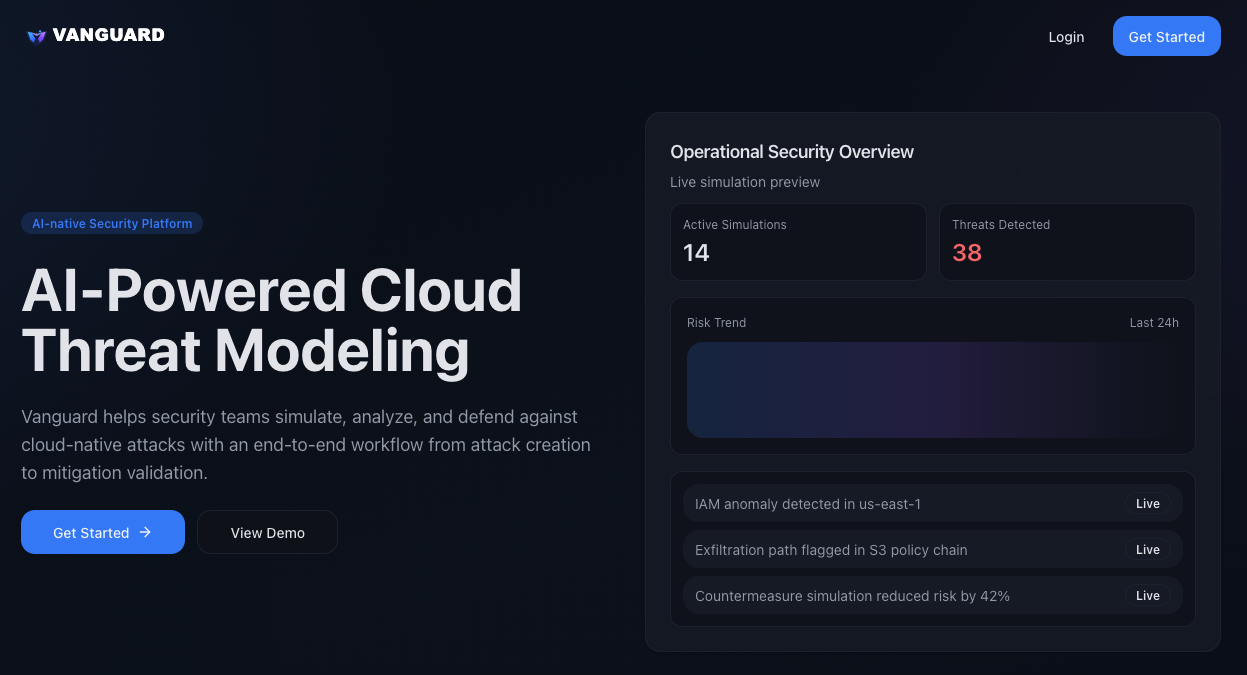
Homepage
-
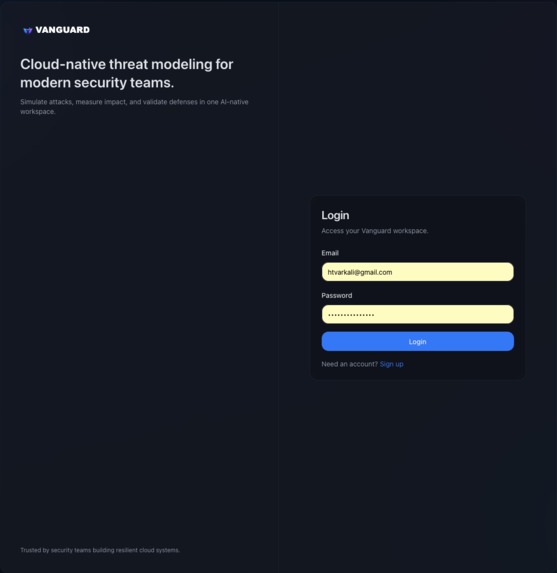
Signup
-
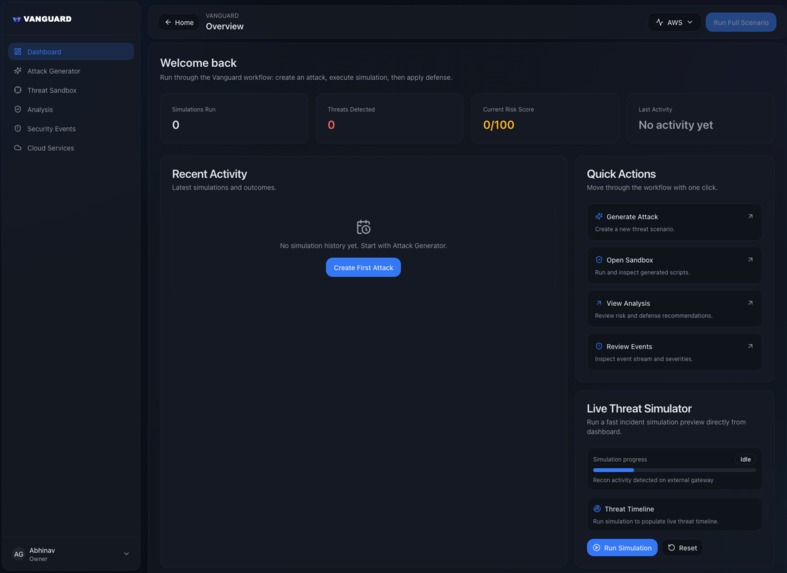
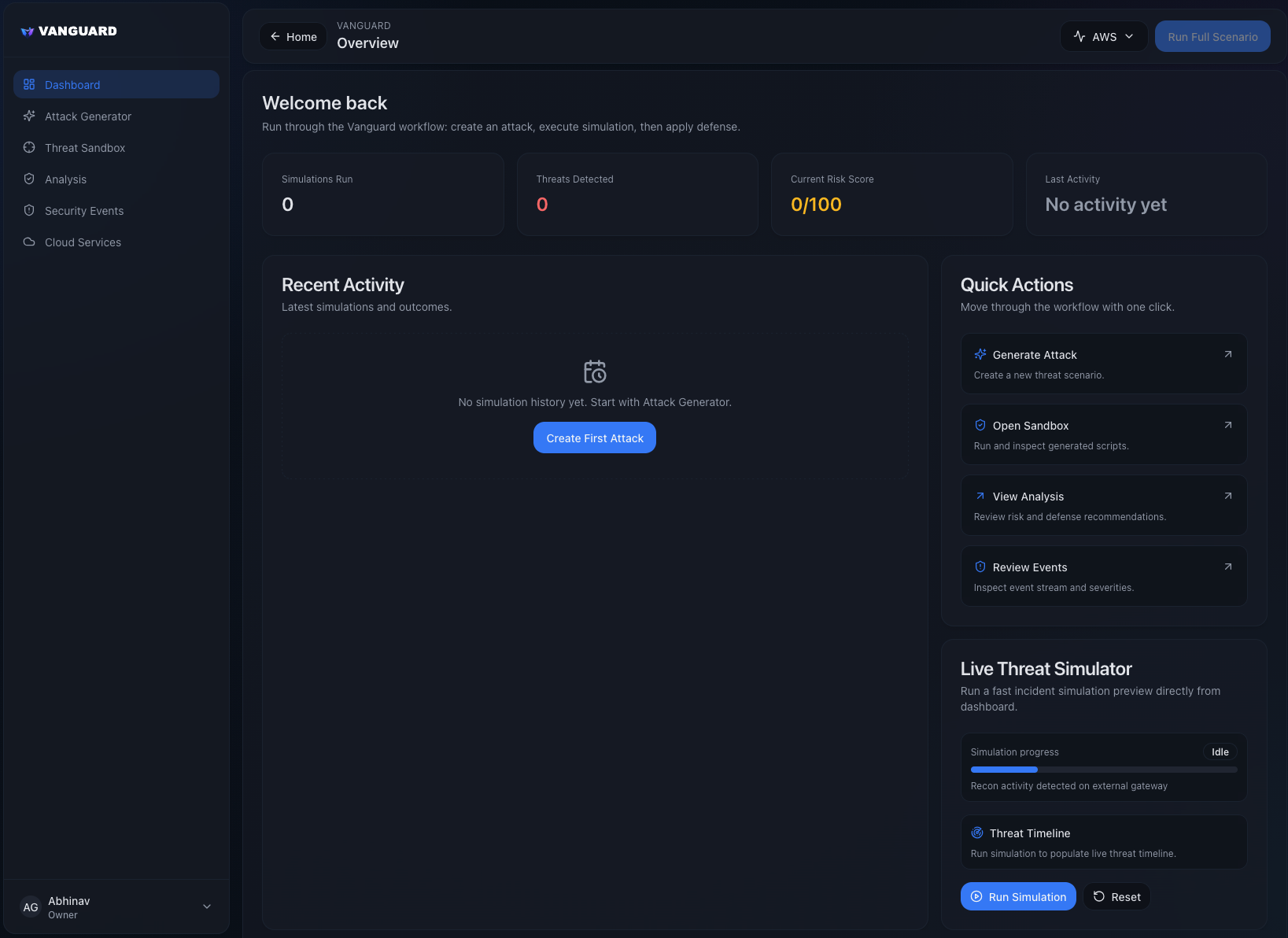
Dashboard
-
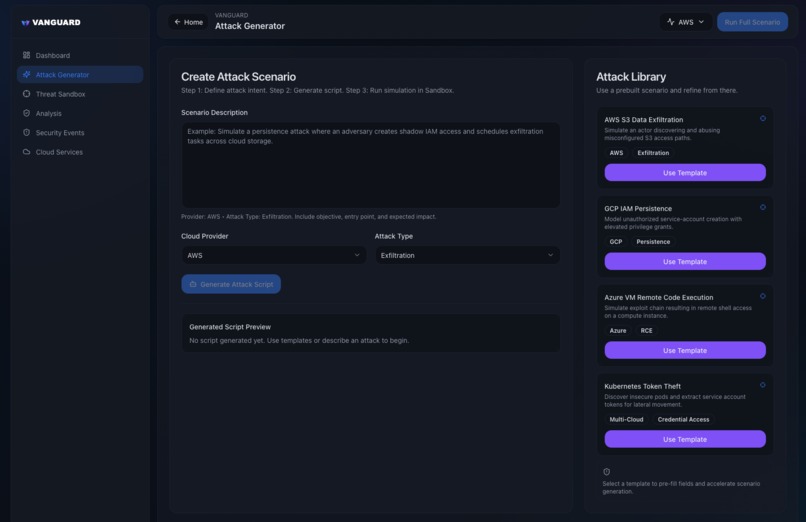
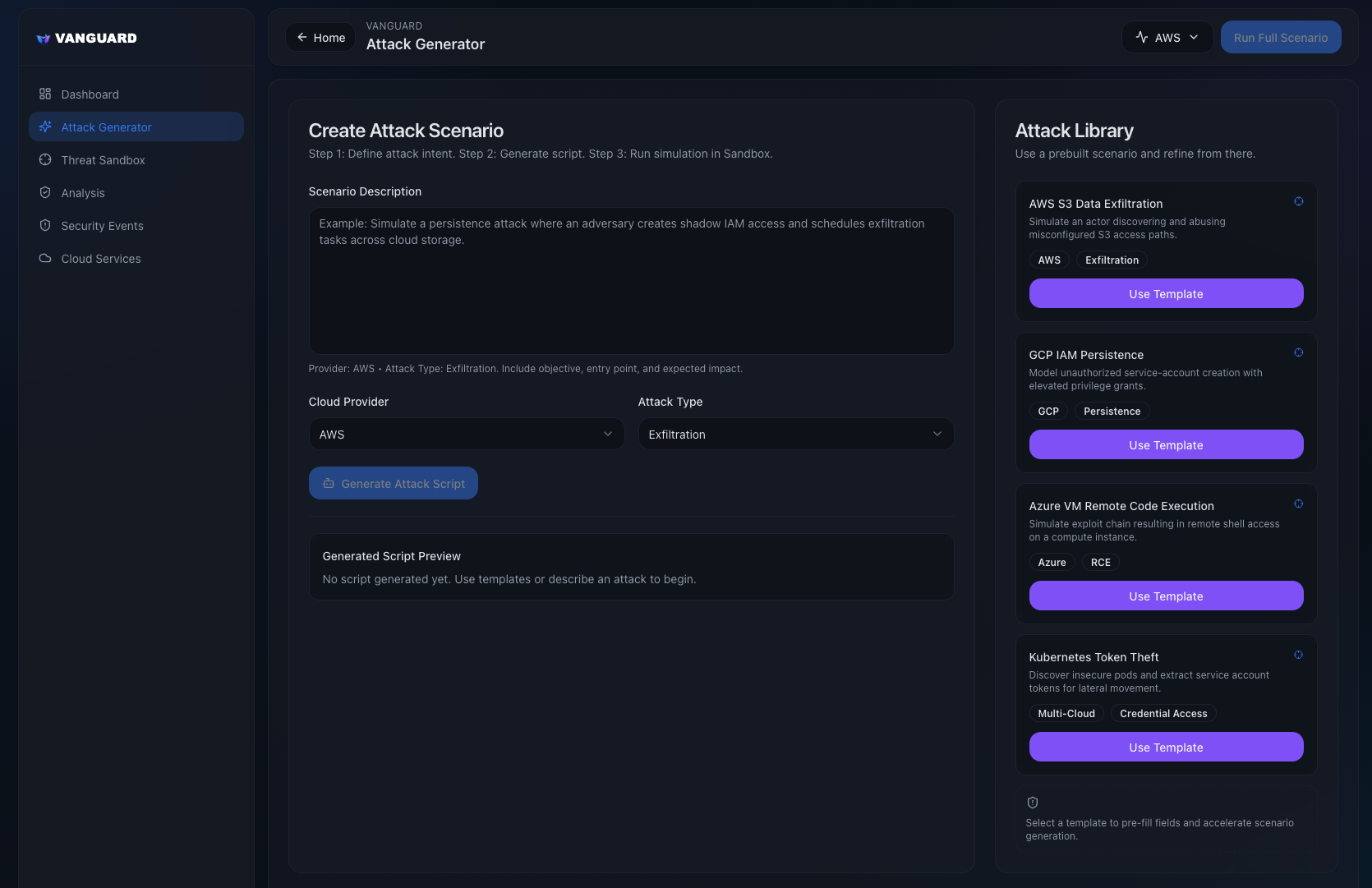
Vanguard Attack Generator
Inspiration
Cybersecurity today is still largely reactive. Teams rely on static threat intelligence, alerts, and post-incident analysis—often discovering vulnerabilities only after damage is done.
Modern cloud systems are becoming more complex and interconnected, making it harder to understand how attacks actually unfold across systems. Existing tools can’t fully simulate real-world attack behavior.
We asked ourselves: what if security teams could simulate attacks before they happen?
What if, instead of reacting to threats, you could generate realistic attack scenarios, observe their impact, and continuously improve your defenses in a safe environment?
That’s how Vanguard was born.
What it does
Vanguard is an AI-powered, multi-agent cybersecurity sandbox that simulates real-world cloud attacks and autonomously improves defenses.
- Generate attack scenarios from plain English prompts
- Simulate system-wide impact across cloud resources and events
- Identify vulnerabilities with structured threat analysis
- Test defenses through AI-driven attack vs defense simulations
- Score effectiveness and iteratively improve countermeasures
- Generate actionable incident response plans
- Visualize activity through interactive dashboards and logs
In seconds, users go from idea → simulation → insight → defense.
How we built it
We built Vanguard as a multi-agent AI system orchestrated through a unified simulation pipeline.
Frontend
- Next.js + React + TypeScript
- Tailwind CSS + ShadCN UI
- Recharts for visualization
Backend / AI
- Google Genkit for orchestration
- Multi-agent architecture:
- Attack generation (Red Team)
- Scenario modeling (Detection engine)
- Attack-defense simulation (Purple Team)
- Response planning (SOC agent)
- Attack generation (Red Team)
System Design
- Single input → full simulation pipeline
- Structured outputs chaining between agents
- Fully dynamic generation (no static data)
- Logical mapping between actions, events, and system impact
Challenges we ran into
AI consistency across agents
Multiple agents needed aligned outputs.
→ Solved with structured outputs and validation layers.
Safe but realistic simulations
Needed realism without executing harmful actions.
→ Solved using simulated scripts with placeholder commands.
System orchestration
Coordinating multiple agents into one pipeline was complex.
→ Solved with a central orchestrator and strict data flow.
Data coherence
Ensuring all outputs matched the same scenario.
→ Solved by chaining outputs logically across the system.
Accomplishments that we're proud of
- End-to-end multi-agent cybersecurity simulation system
- Full pipeline from attack generation → defense optimization
- Dynamic simulations with no static datasets
- Real-time attack vs defense feedback loop
- Interactive dashboards with system-wide insights
- Persistent session history for replay and comparison
What we learned
Technical
- Structured pipelines outperform complex prompting
- Validation is critical for reliable AI systems
- Orchestration matters more than individual models
Product
- Simulation is more powerful than static analysis
- Visualization makes insights easier to understand
- Real-time feedback improves user experience
System Design
- Chaining outputs creates realistic systems
- Context continuity is essential for coherence
- Modular agents make scaling easier
What's next for Vanguard
Short-term
- Expand support for more cloud services and attack types
- Improve simulation realism
- Add team collaboration features
Expansion
- Integrate with real cloud environments
- Continuous automated security testing
- Advanced reporting and workflows
Long-term
- Autonomous AI-driven cyber defense system
- Continuous safe attack simulation in live environments
- Self-improving defense loops
- Enterprise-grade security platform
Built With
- google-ai-platform
- google-genkit-(multi-agent-orchestration)
- next.js-(app-router)
- node.js
- react
- recharts
- rest
- shadcn-ui
- tailwind-css
- typescript

Log in or sign up for Devpost to join the conversation.