-
-
App store screens
-
App store screens
Inspiration
Vanfolk was inspired by a simple tension as highlighted by Quin: van life offers freedom, but it can also be isolating. Dating, making friends, and finding trusted help is difficult when you’re constantly moving, and there’s no dedicated platform built for this lifestyle.
I drew from products that each get one piece right: Airbnb’s trust and experience-led design, Hostelworld’s social energy, Strava’s route-based connections, and Reddit’s honest knowledge sharing. The goal was to bring those strengths into a single product tailored specifically to nomadic life.
What it does
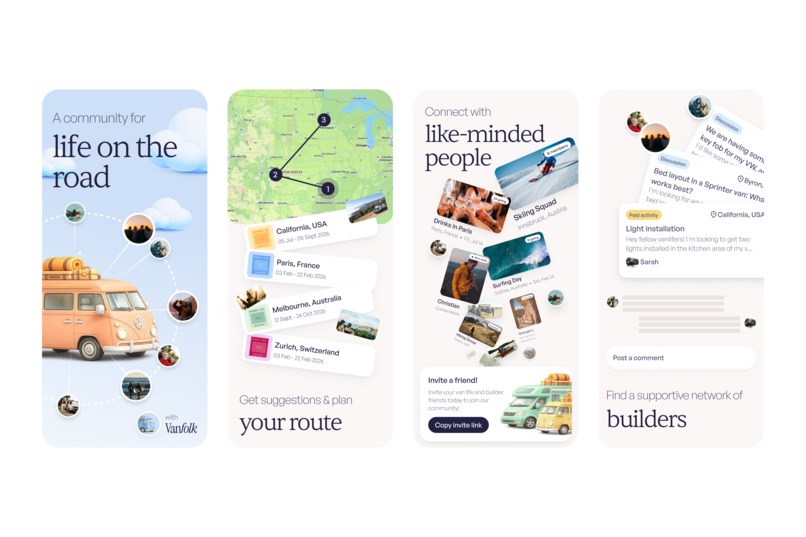
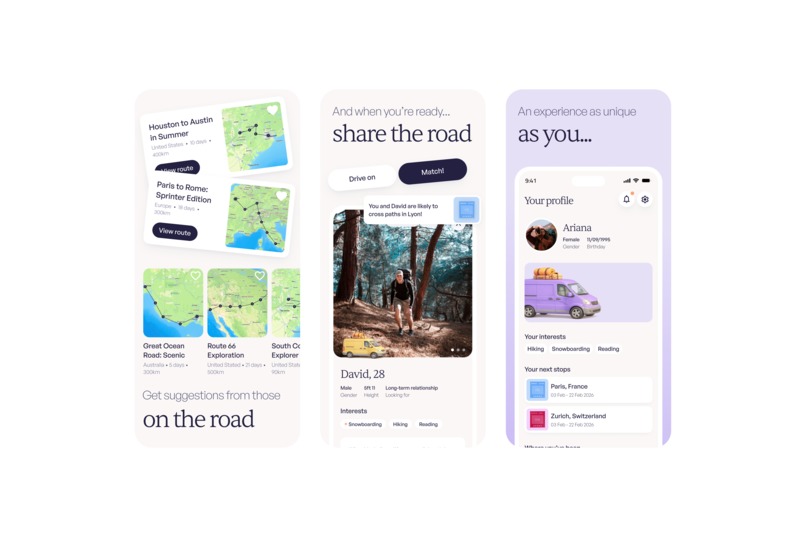
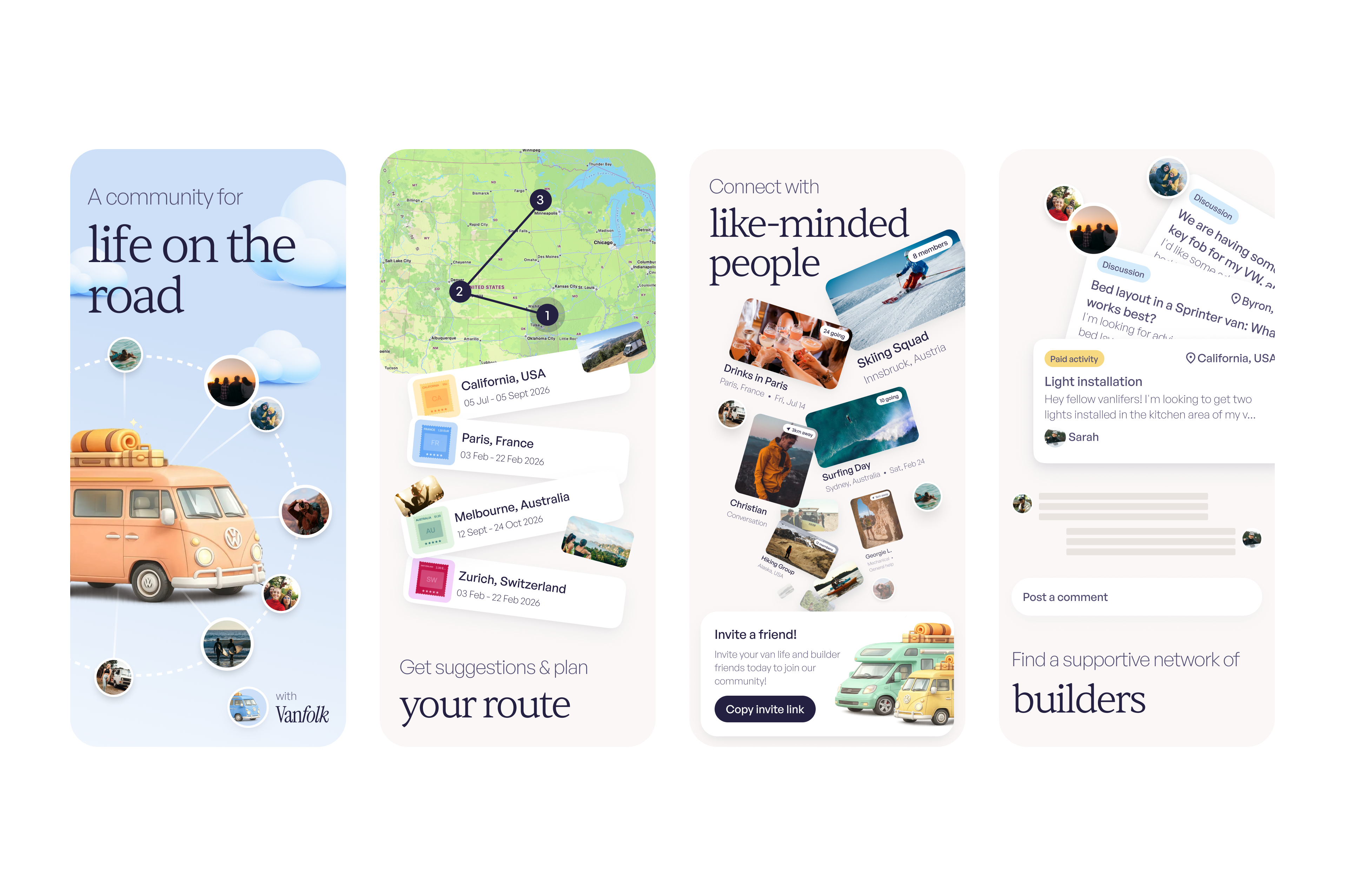
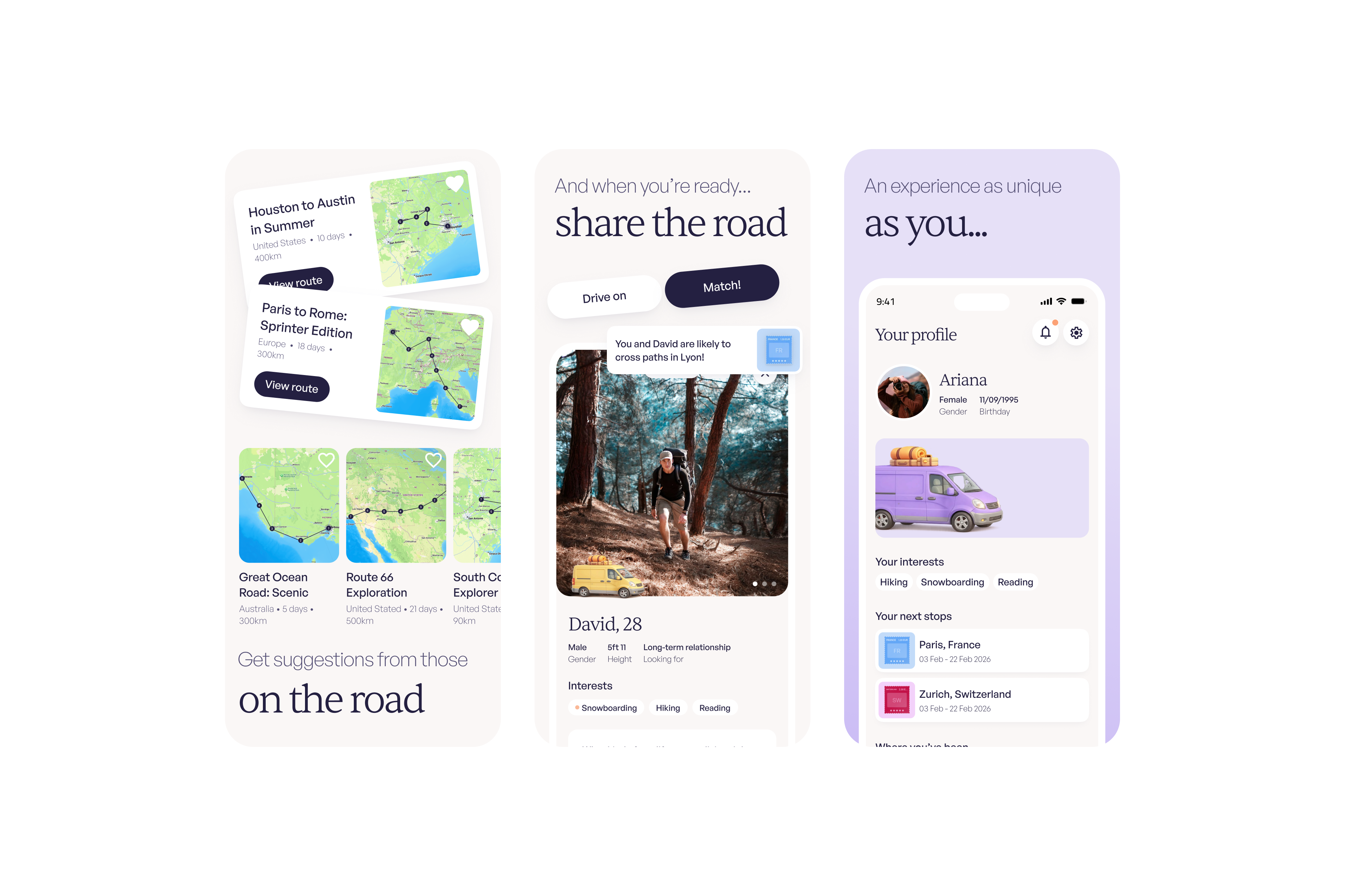
Vanfolk is a community app for van lifers and builders. It helps travellers meet others along shared routes, discover events and groups, find trusted build support, and optionally opt into dating or friendship matching.
Instead of static location matching, the app is built around movement. Users can share full or partial routes, join time-bound events or longer-running groups, and choose what they want from the community – whether that’s connection, practical help, or shared experiences on the road. Privacy and safety are central, with opt-in location sharing and clear intent behind every interaction.
How we built it
Vanfolk was designed and built as a hands-on product, combining product design with technical implementation. It uses Swift with a structured backend in Firebase to support routes, stops, messaging, and gated features.
The data model was carefully designed to handle route-based discovery, visibility controls, and expiring content. Security rules and access control were implemented early to ensure safe data handling, and entitlement logic was added for premium features. AI tools helped accelerate development, allowing faster iteration across design, architecture, and implementation while keeping core decisions human-led.
Challenges we ran into
One of the biggest challenges was designing a data model that balanced usefulness with privacy. Routes, stops, and location visibility needed to be flexible but secure, with careful decisions about what to store and for how long.
Messaging lifecycles, moderation tools like reporting and blocking, and expiry logic for chats and events also required deeper backend thinking than a typical design-only project. On top of that, navigating Apple Developer, App Store Connect and TestFlight (for the first time!) added a layer of complexity!
Another key challenge throughout was resisting the urge to overbuild – prioritising strong foundations over feature sprawl.
Accomplishments that we're proud of
I'm proud of building a fully working, end-to-end product, particularly given my background as a Product Designer who has only recently started merging the worlds of design and development. I feel that the app has a strong brand, useful features, and the potential to connect a niche but growing community in a meaningful way.
What we learned
Doing this project highlighted the benefit of understanding backend logic, security, and platform constraints as a designer, but also the benefits that building as a designer can bring. I also accelerated my learning around how to effectively use AI tools to expedite building (a mix of Claude and Codex, though mostly Codex by the end).
Building for this audience also taught me things about the van life community I hadn't considered before – I learned that building for nomadic communities requires different assumptions: location is temporary, intent must be explicit, and trust and safety must come before scale.
What's next for Vanfolk: A Community for Life on the Road
Next steps would be to test the current product with a small audience to gain feedback. I would then like to focus on refining core features, and strengthening moderation and safety tooling, before expanding testing to a wider audience. There’s also room to deepen the builder marketplace, and introduce smarter algorithms for matching.
Longer term, I would love for Vanfolk to grow into a trusted platform for connection and support on the road – helping nomadic travellers feel less alone while keeping control, privacy, and intentional community at the centre of the experience.
Built With
- apple-foundation-models
- claude
- codex
- core-location
- firebase
- firestore
- github
- mapkit
- openai
- revenuecat
- swift
- swiftui


Log in or sign up for Devpost to join the conversation.