-
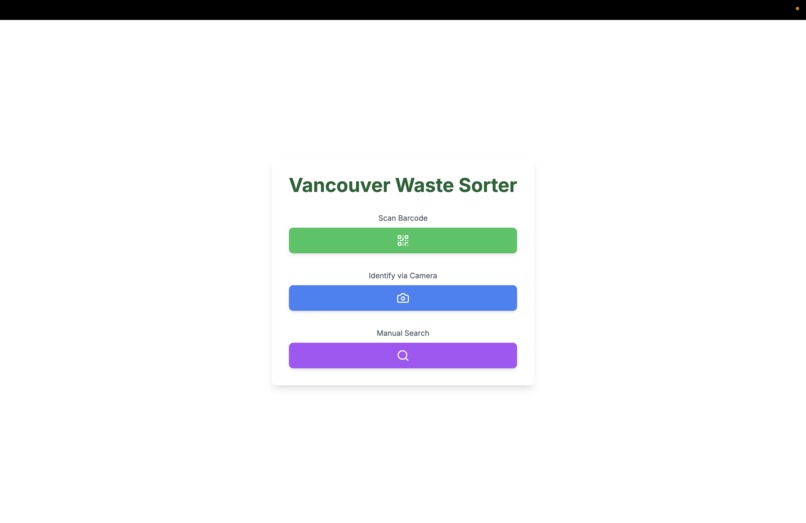
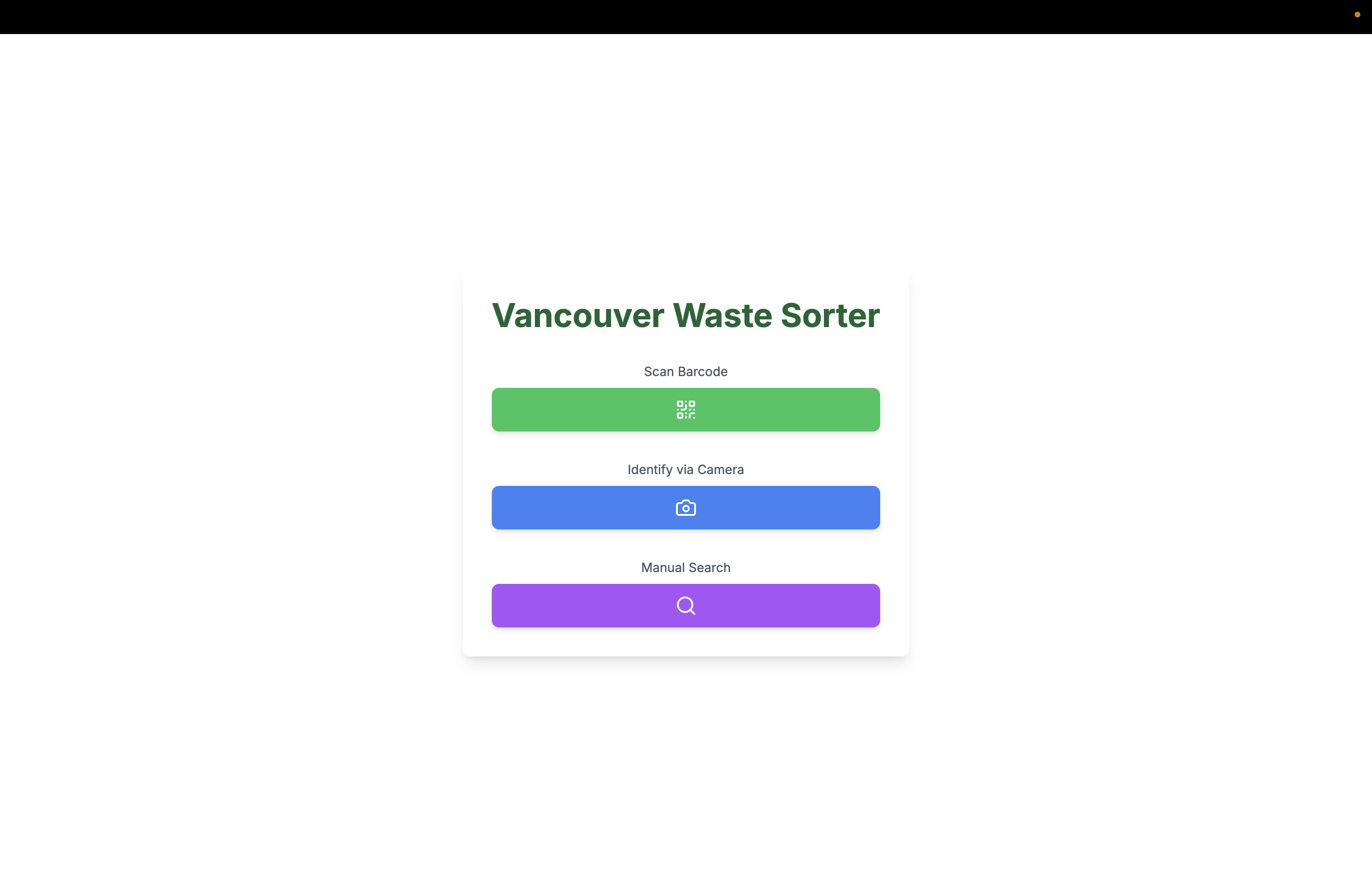
Home
-
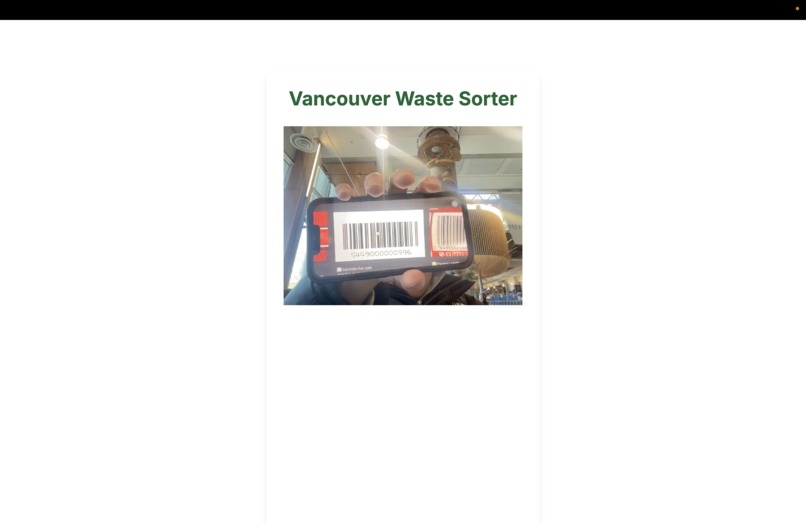
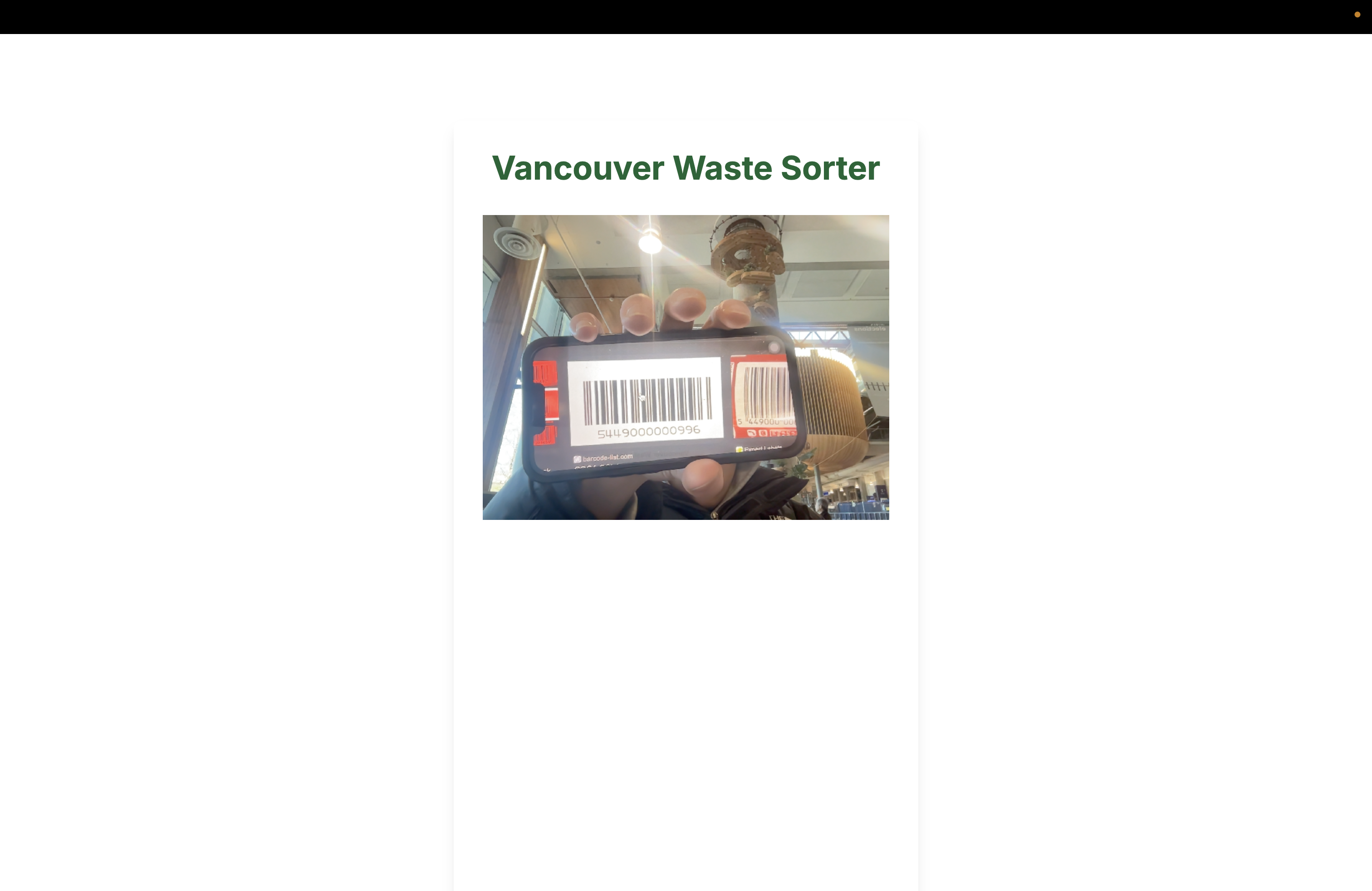
Barcode scan - input
-
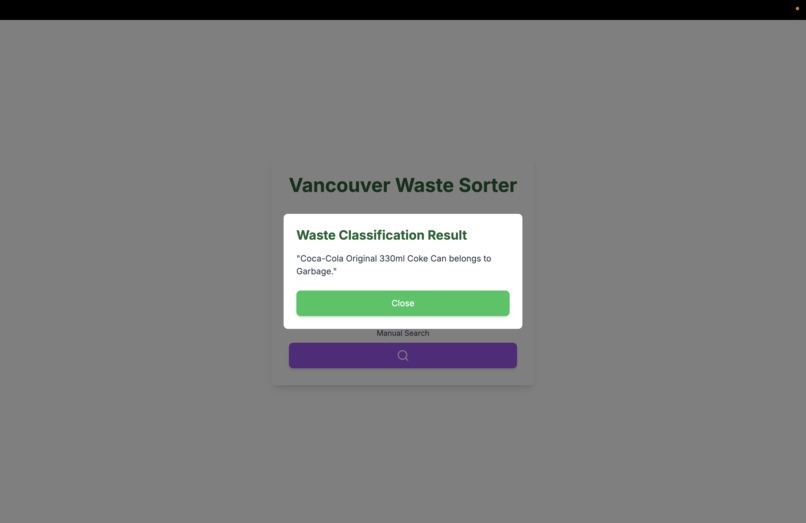
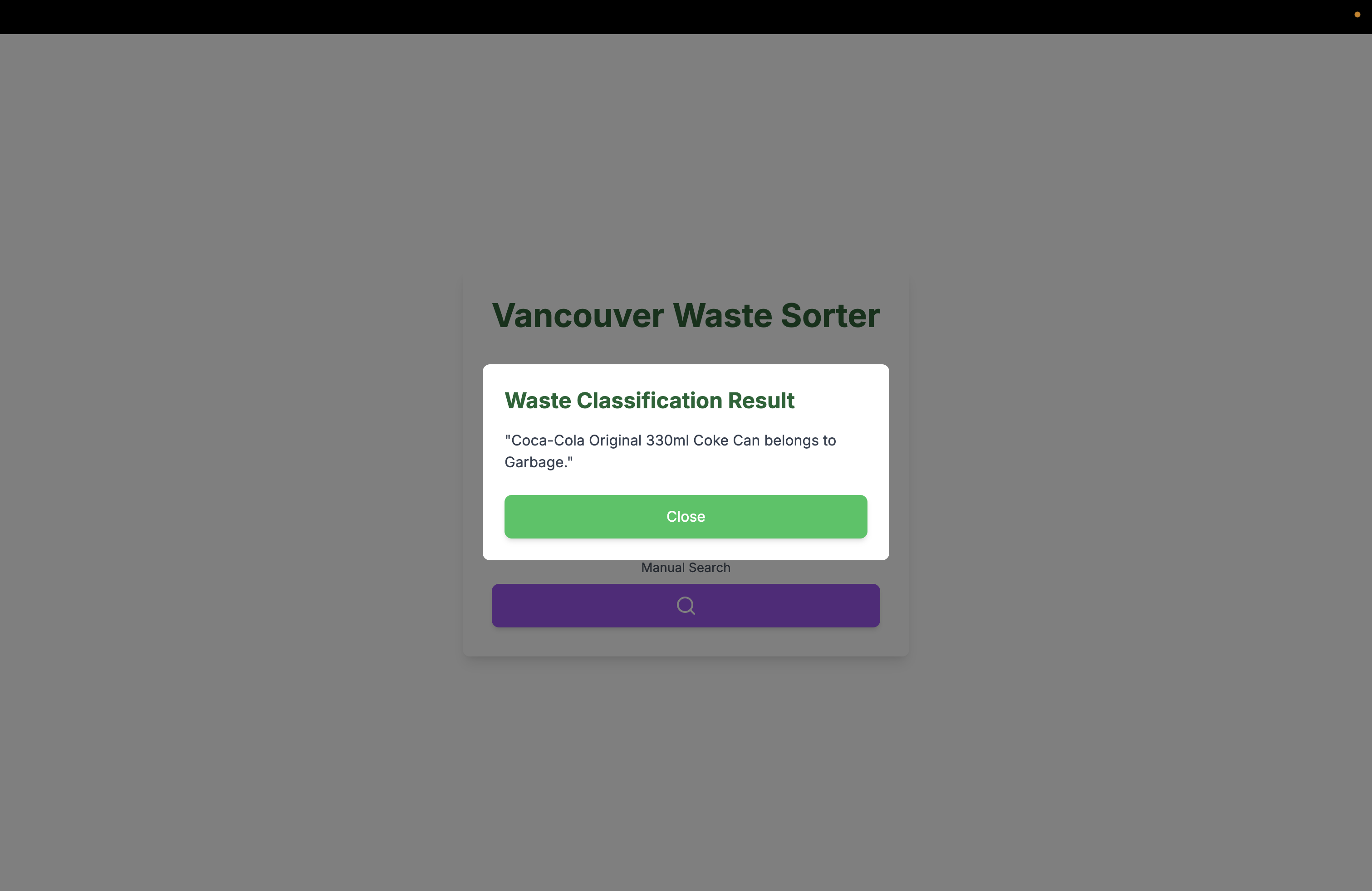
Barcode scan - output
-
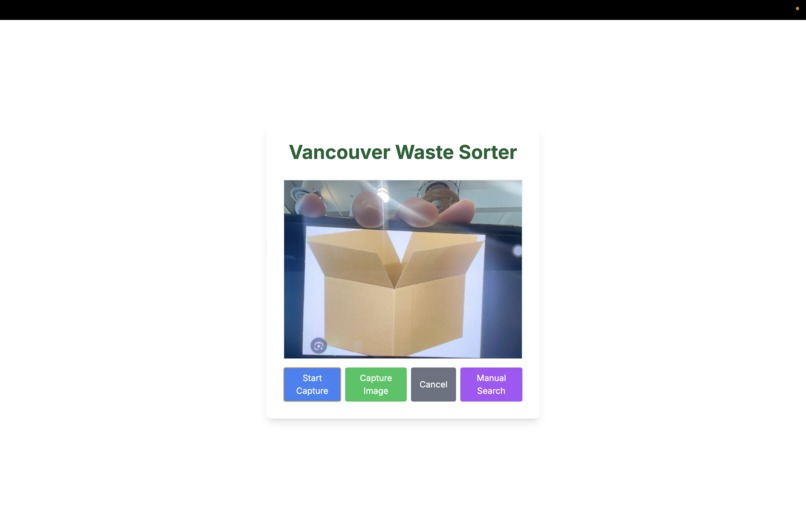
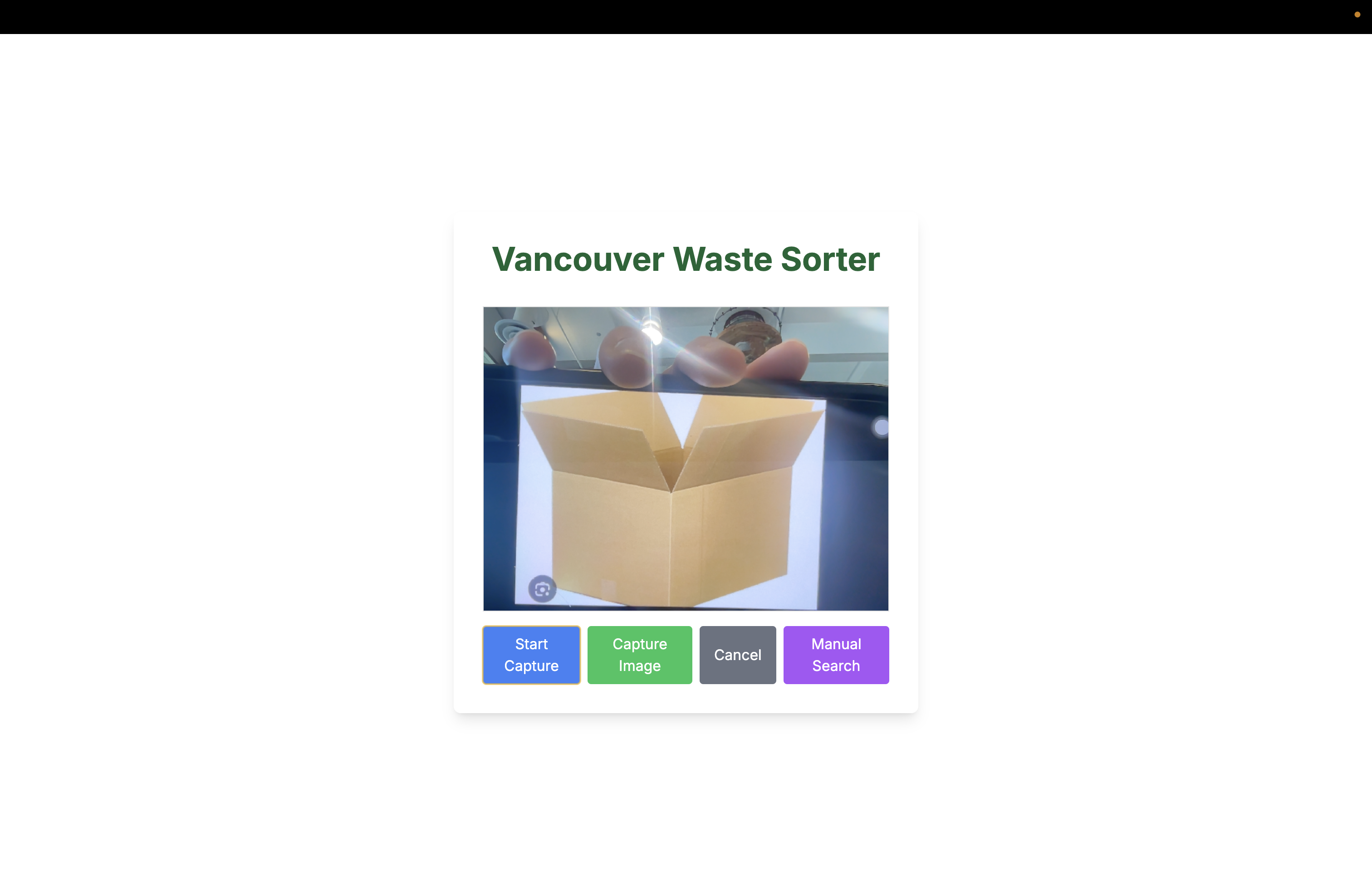
Image Recognition - input
-
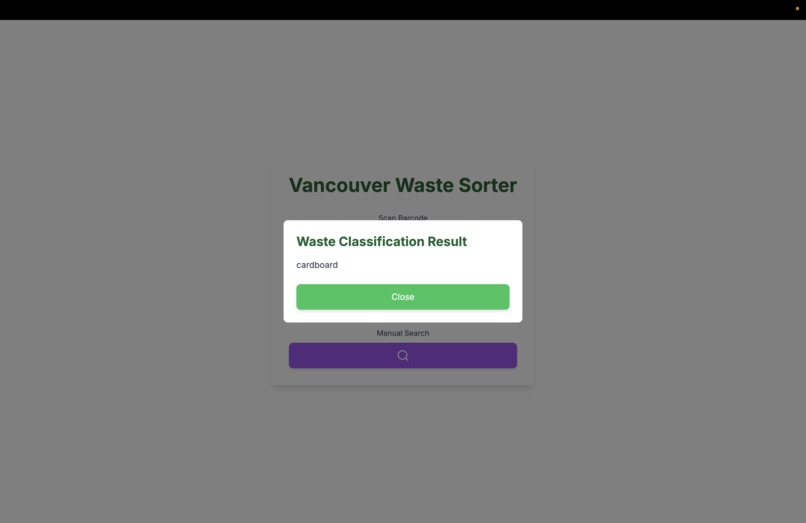
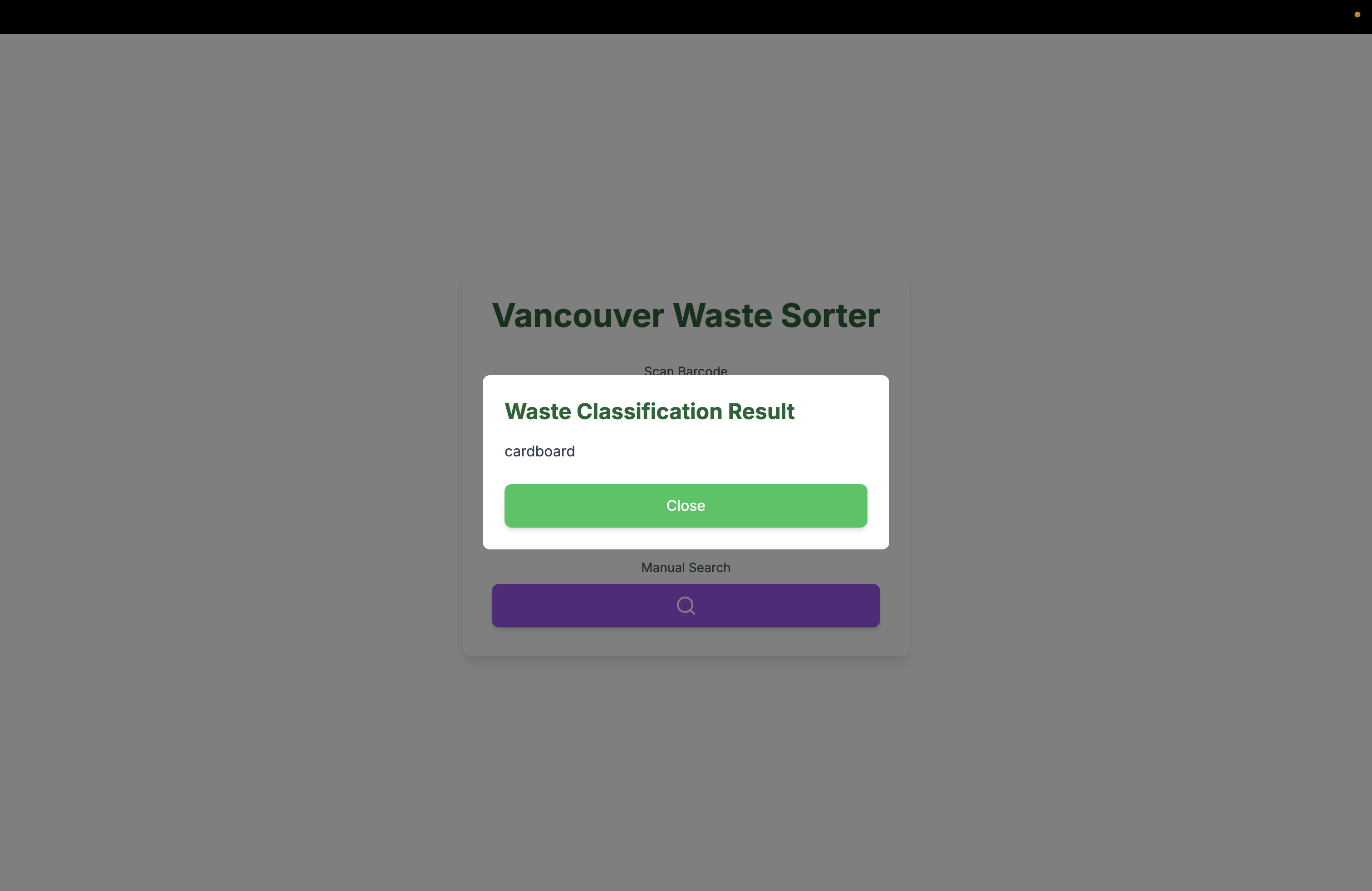
Image Recognition - output
-
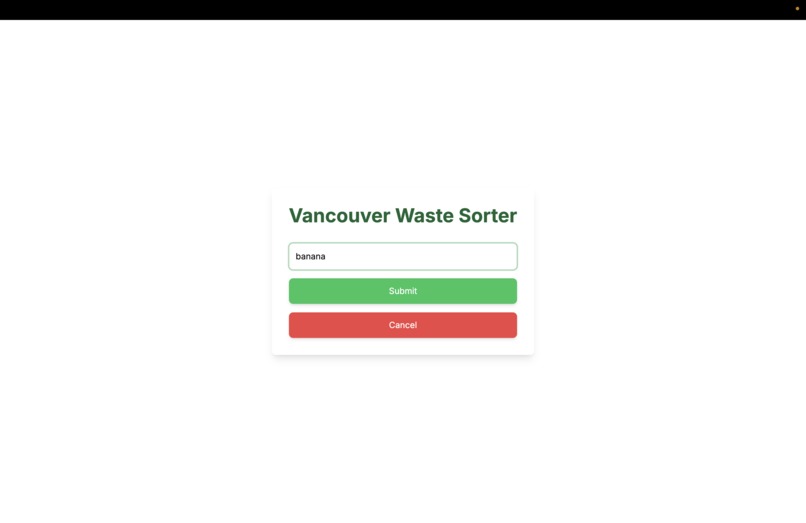
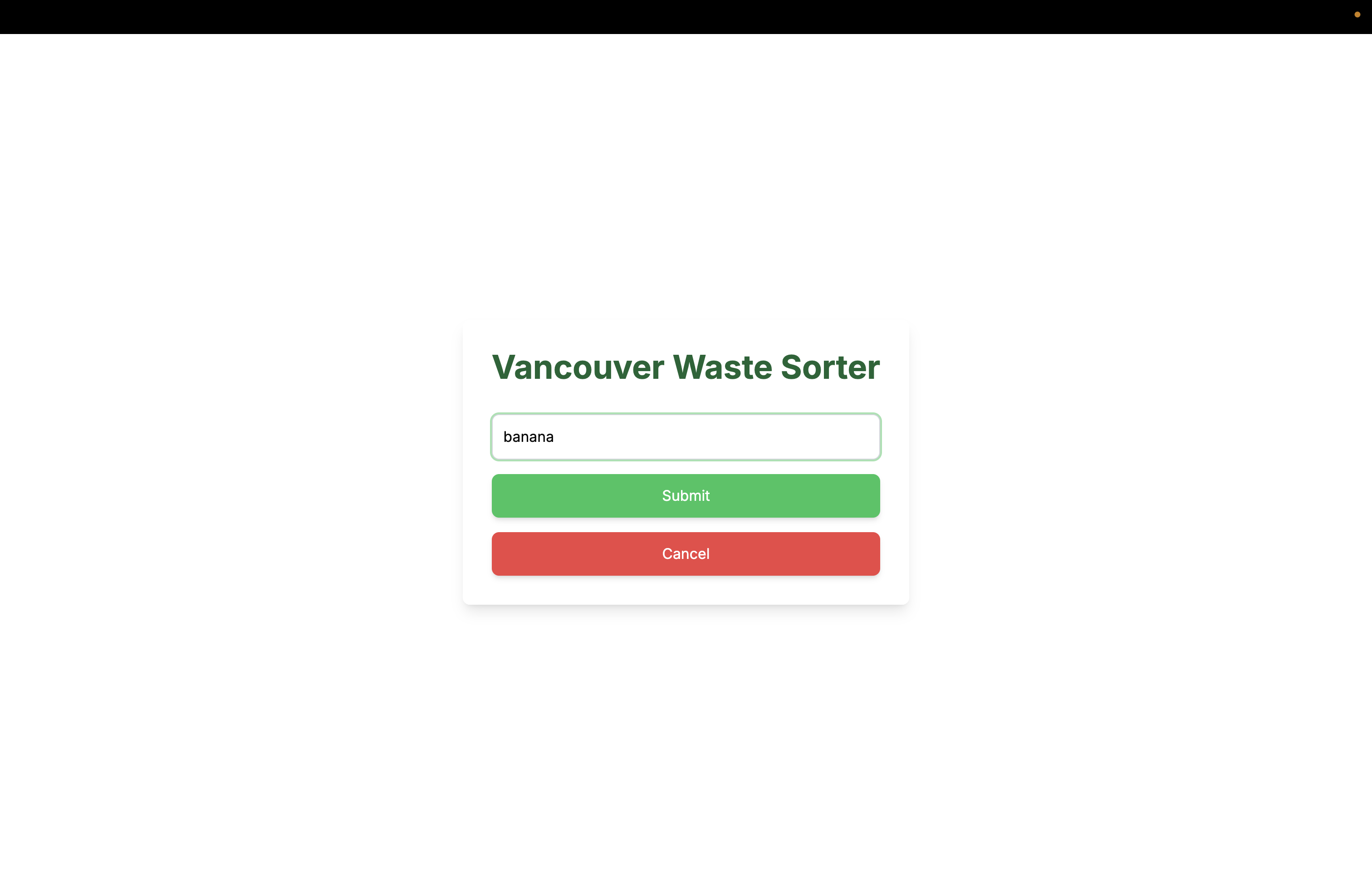
Manual - input
-
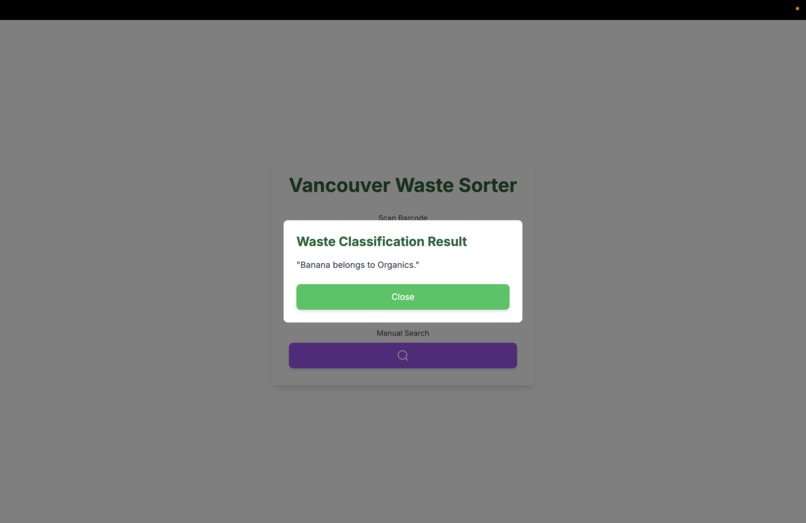
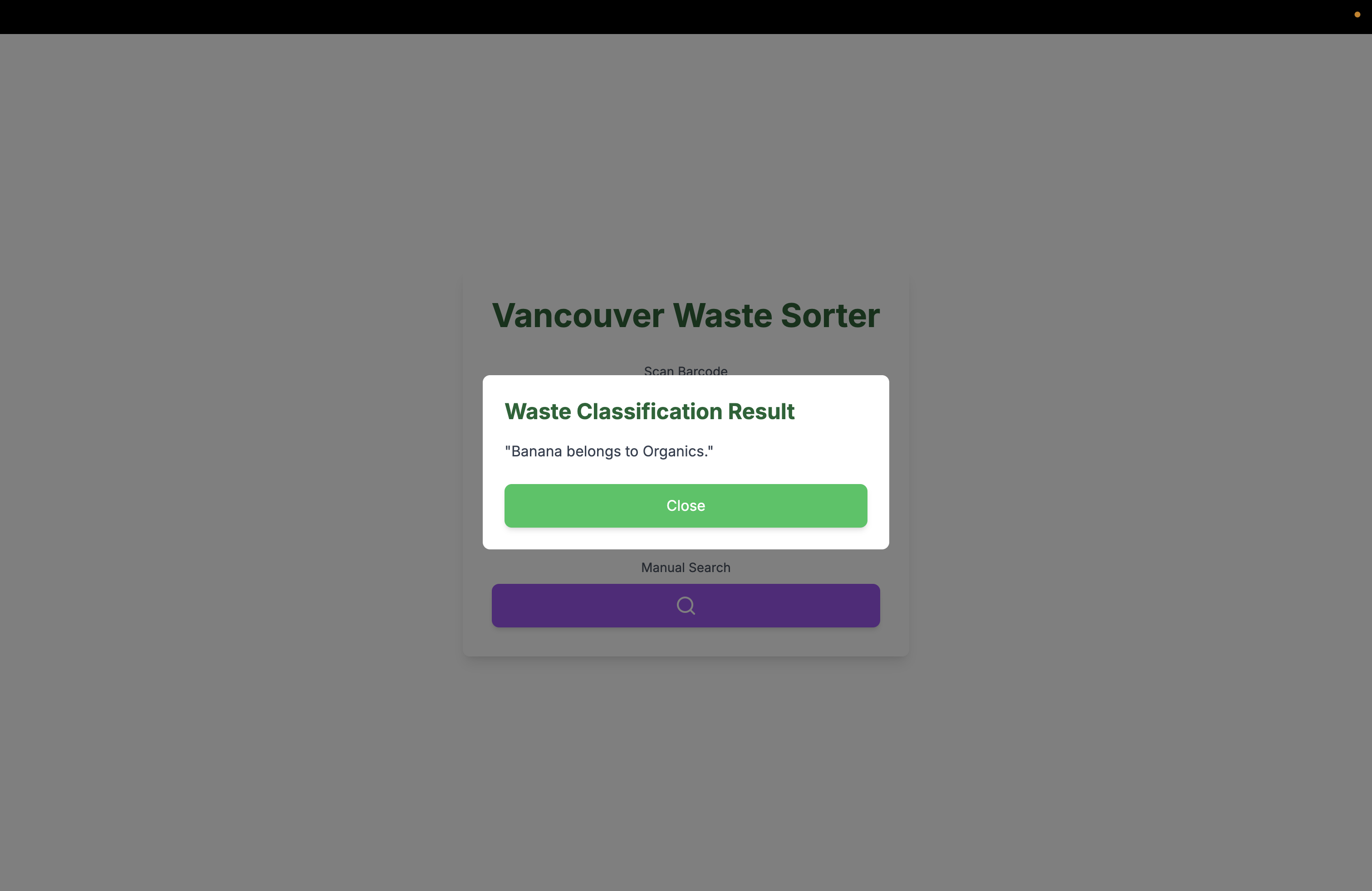
Manual - output
Inspiration
The inspiration for this project came from the pressing need for sustainable waste management in urban environments like Vancouver. I wanted to create an accessible and efficient tool to help individuals and businesses correctly sort waste, reduce environmental impact, and contribute to a cleaner city.
What it does
Vancouver Waste Sorter provides users with three methods to classify waste:
Barcode Scanning: Identifies products by scanning barcodes and fetching details from an API database. Image Recognition: Uses a TensorFlow-trained model to classify waste items from images. Manual Input: Allows users to input product names to determine the correct waste category. The app categorizes items into recycling, organics, or garbage based on local waste management rules.
How we built it
The project combines a Next.js frontend for an interactive user interface with a Django backend that handles API integrations and TensorFlow model predictions.
The barcode scanning feature translates scanned barcodes into product data by leveraging external API calls. TensorFlow was trained on a diverse garbage dataset to accurately classify waste based on captured images. Manual input functionality ensures accessibility for all users.
Challenges we ran into
Barcode Mapping: Translating barcode scans into product information required efficient API integration and error handling. TensorFlow Training: Building a reliable garbage classification model required extensive training and fine-tuning to achieve acceptable accuracy. Frontend-Backend Communication: Ensuring smooth data exchange between the Next.js frontend and Django backend presented technical challenges.
Accomplishments that we're proud of
Successfully integrating multiple waste classification methods into a single app. Training a TensorFlow model with a garbage dataset to achieve meaningful accuracy. Delivering a user-friendly interface that simplifies complex waste sorting tasks.
What we learned
API Integration: We learned how to efficiently fetch and process data from external APIs for barcode scanning. Machine Learning: Gained hands-on experience in training TensorFlow models and optimizing them for real-world scenarios. Full-Stack Development: Strengthened skills in combining frontend and backend technologies for a cohesive user experience.
What's next for Vancouver Waste Sorter
Enhanced Dataset: Expanding the garbage dataset to improve TensorFlow model accuracy. User Personalization: Introducing features like user profiles and localized sorting rules. Mobile App: Developing a mobile version for even greater accessibility and convenience. Gamification: Adding reward-based incentives to encourage users to sort waste correctly.
Built With
- django
- javascript
- lucide-react
- next.js
- openai
- python
- quagga
- react
- tensorflow
- typescript
- vercel


Log in or sign up for Devpost to join the conversation.