-
-
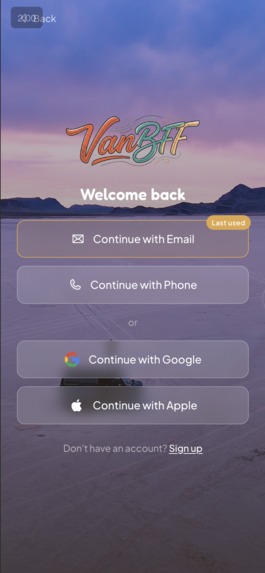
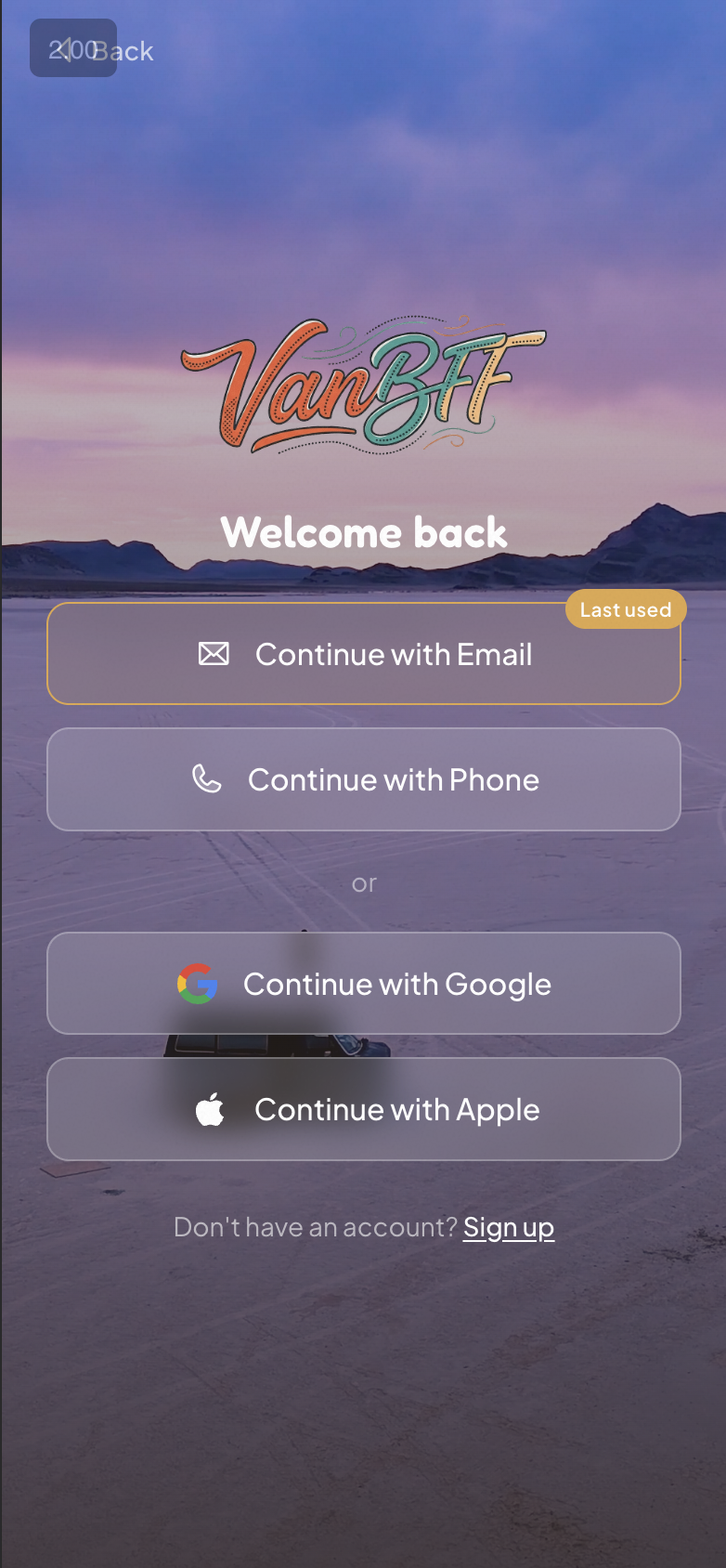
Login page
-
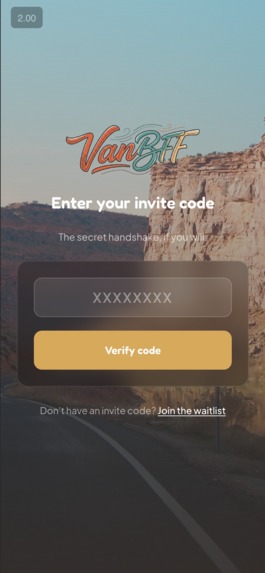
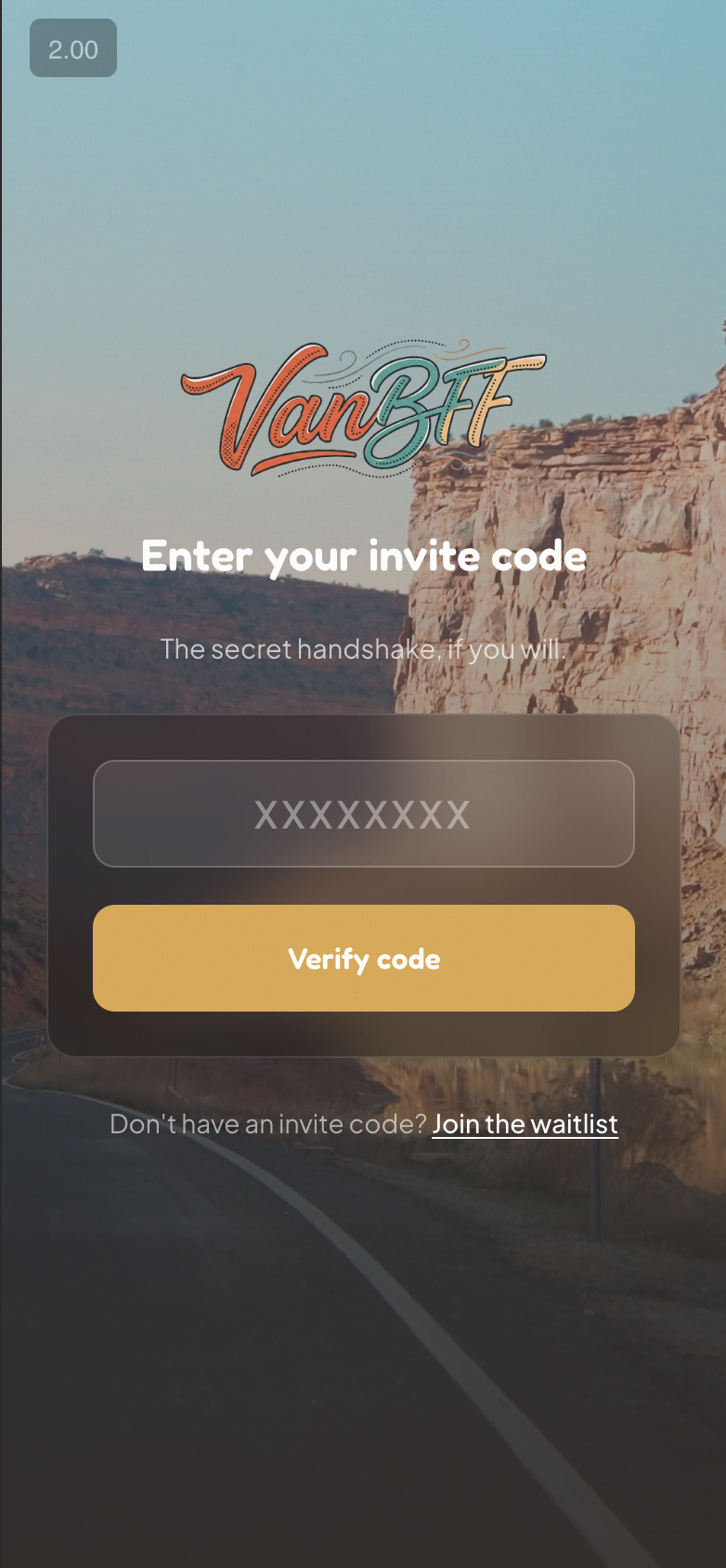
Invite code required to join
-
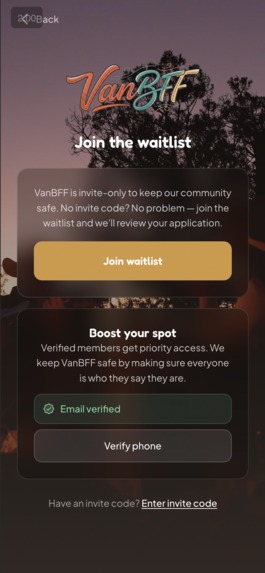
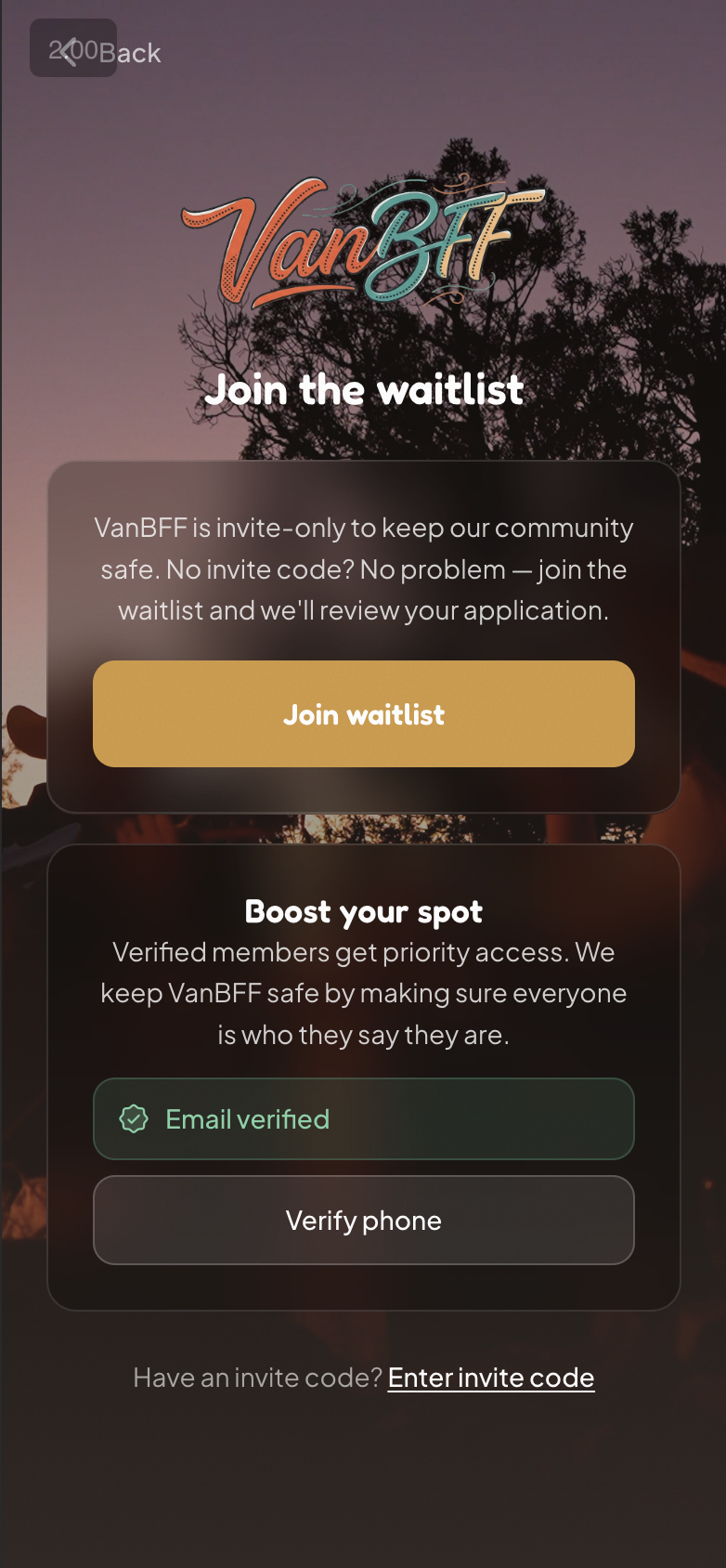
Or waitlist with verifications (identity verifications in future roadmap plans)
-
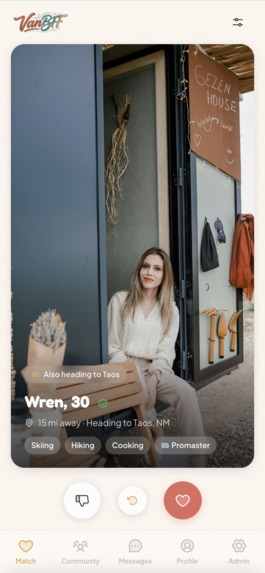
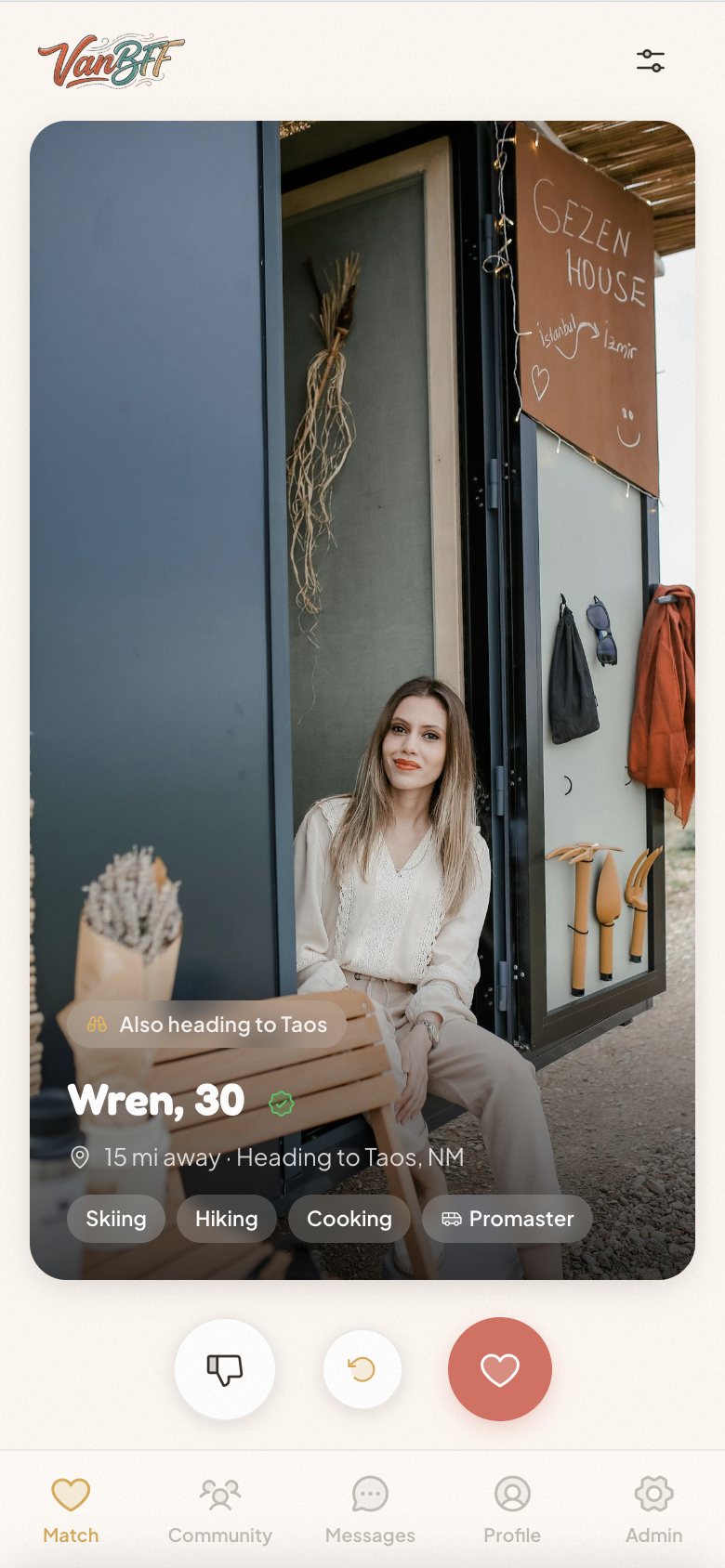
Match with other users along your same travel path
-
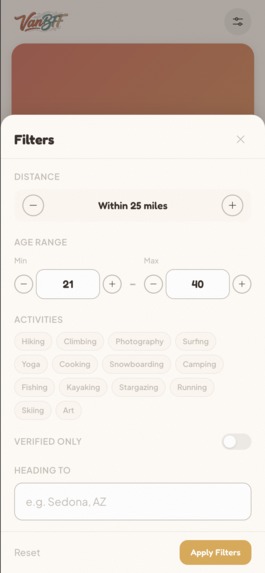
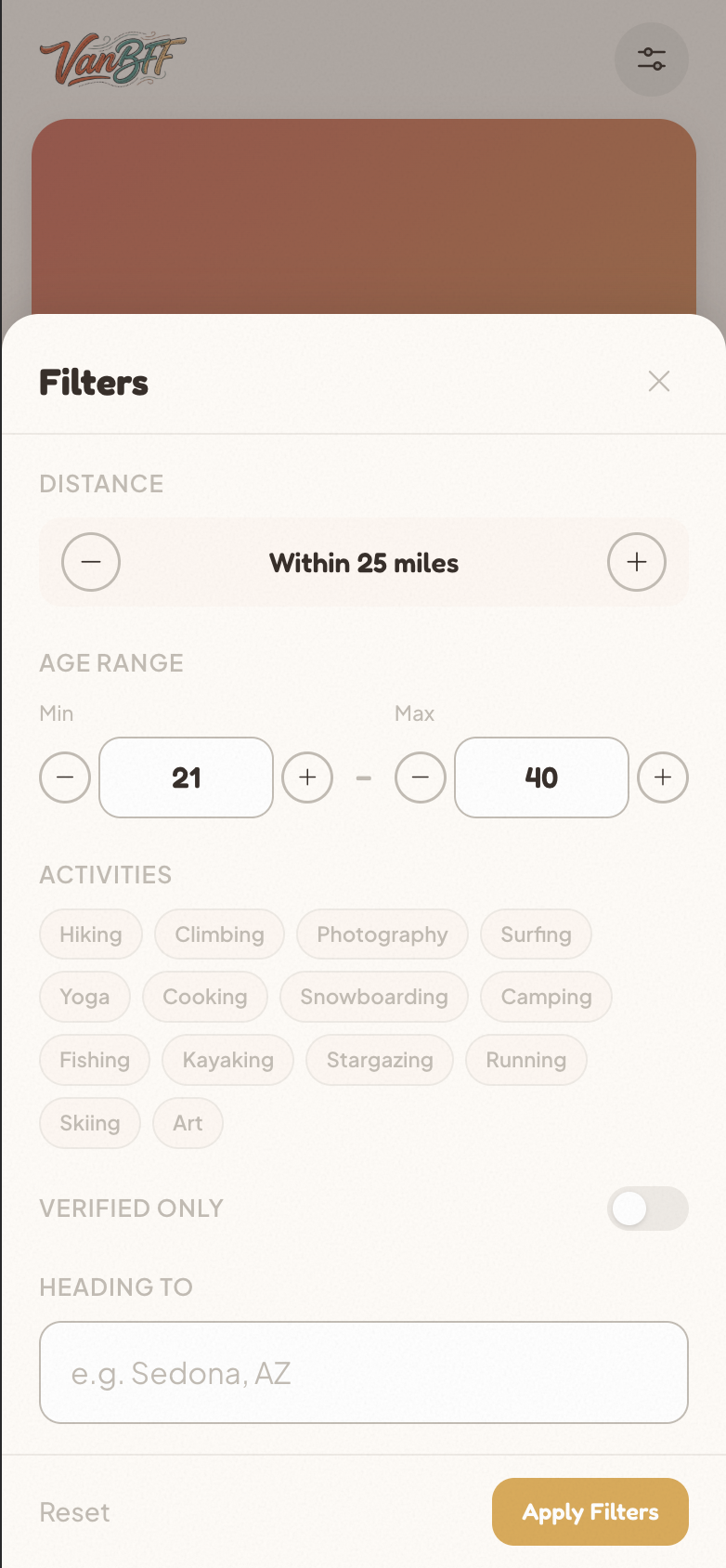
Filter your matches
-
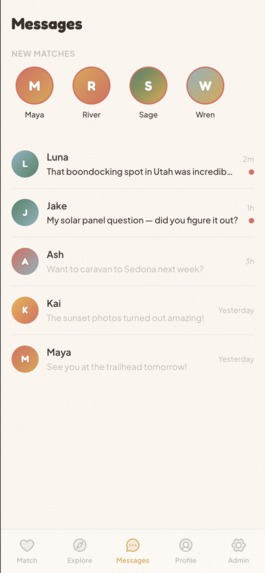
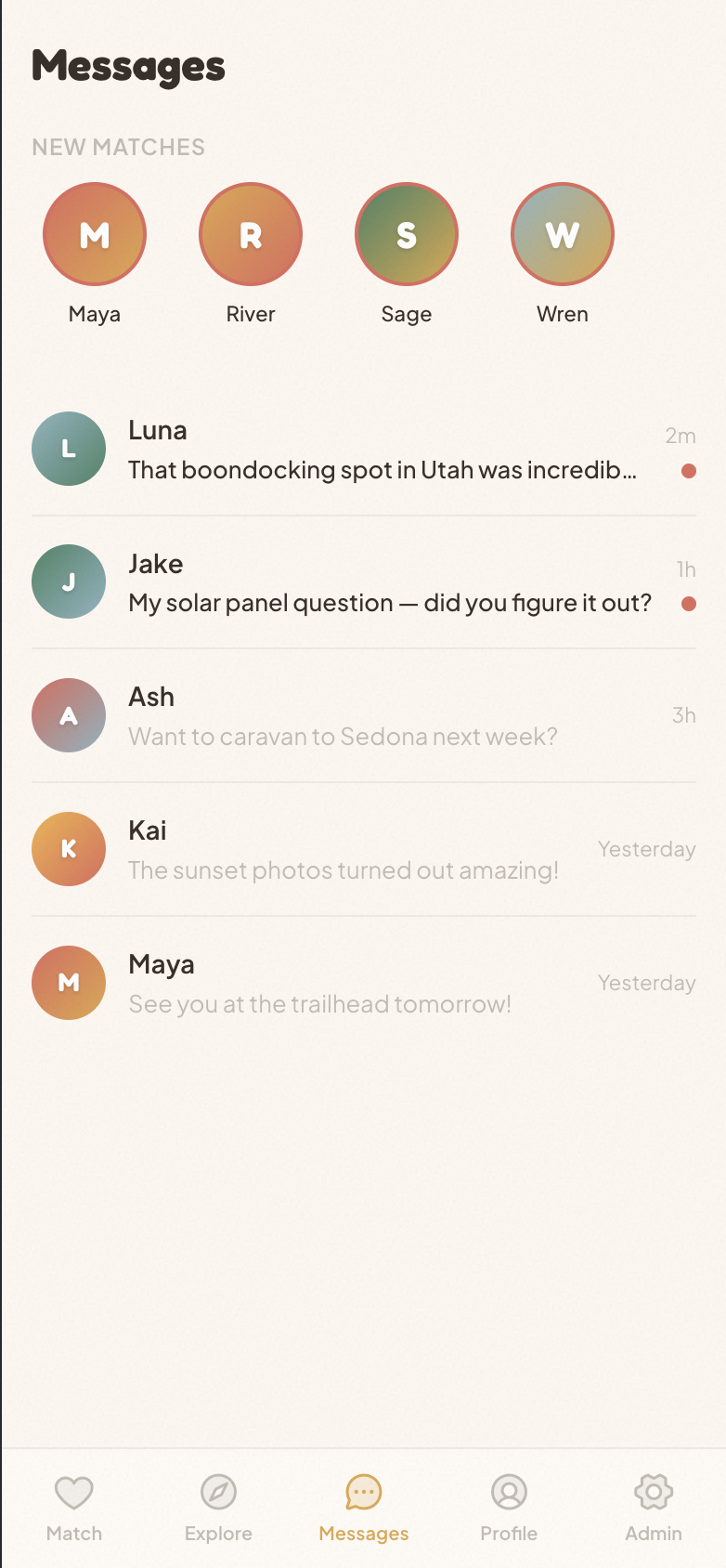
See your messages in one place
-
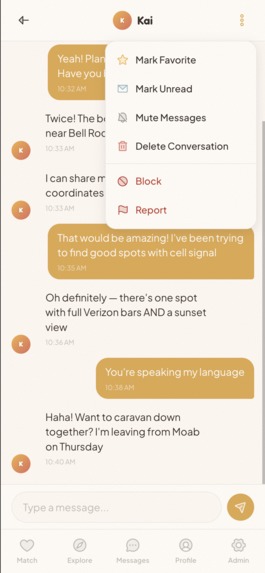
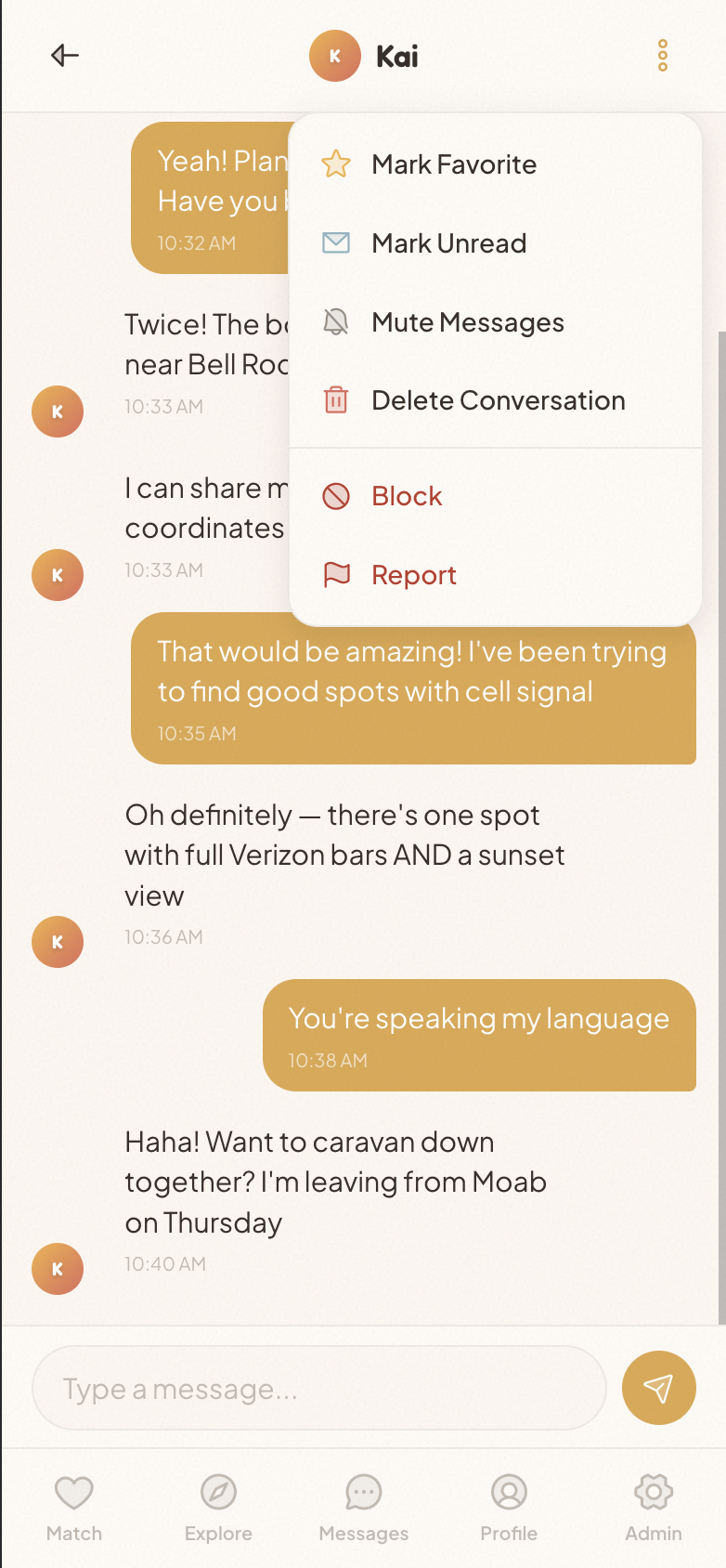
Full control of messaging
-
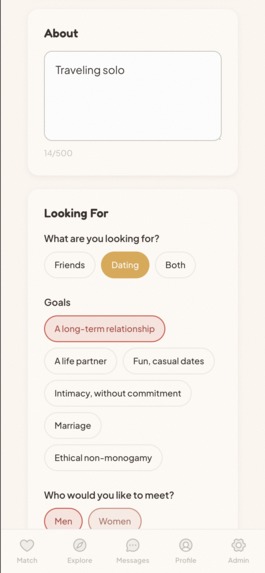
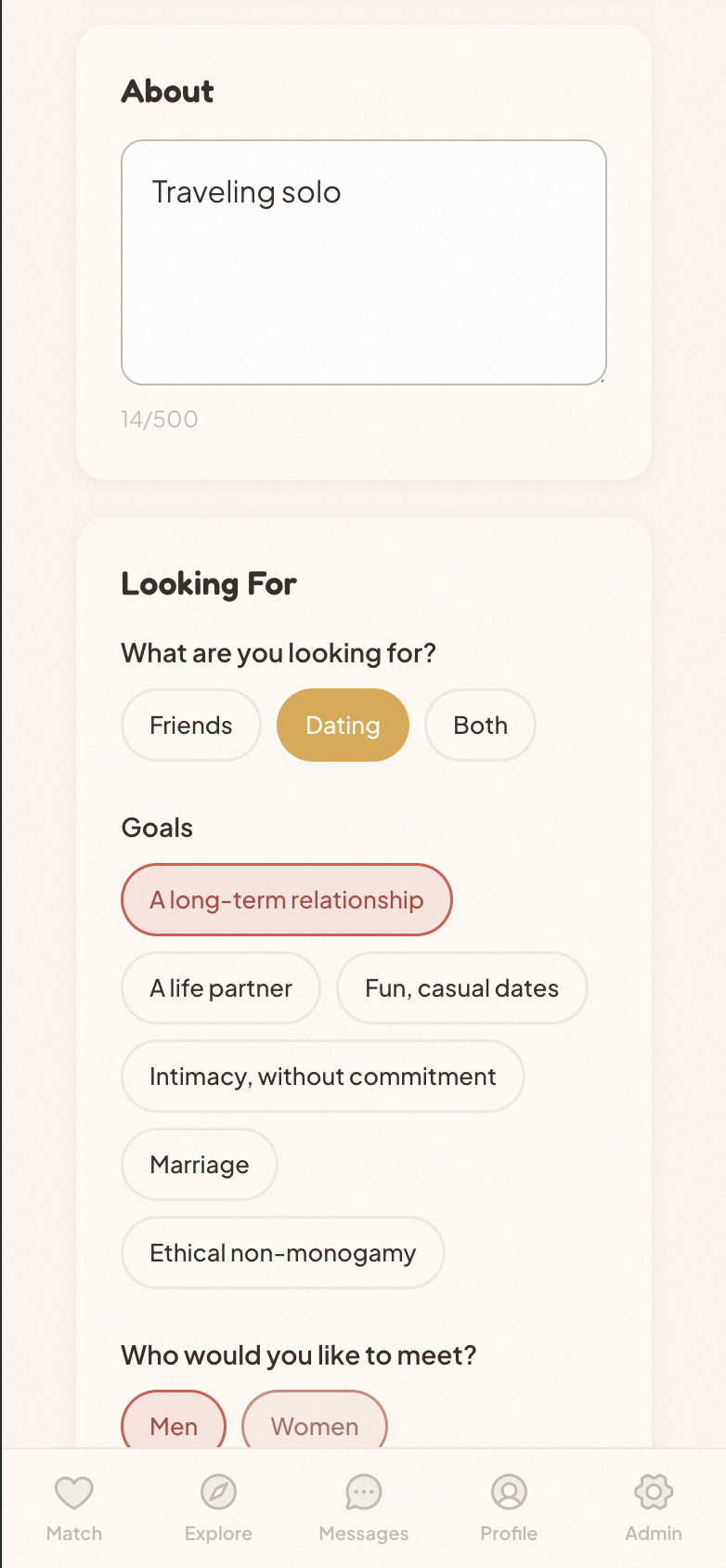
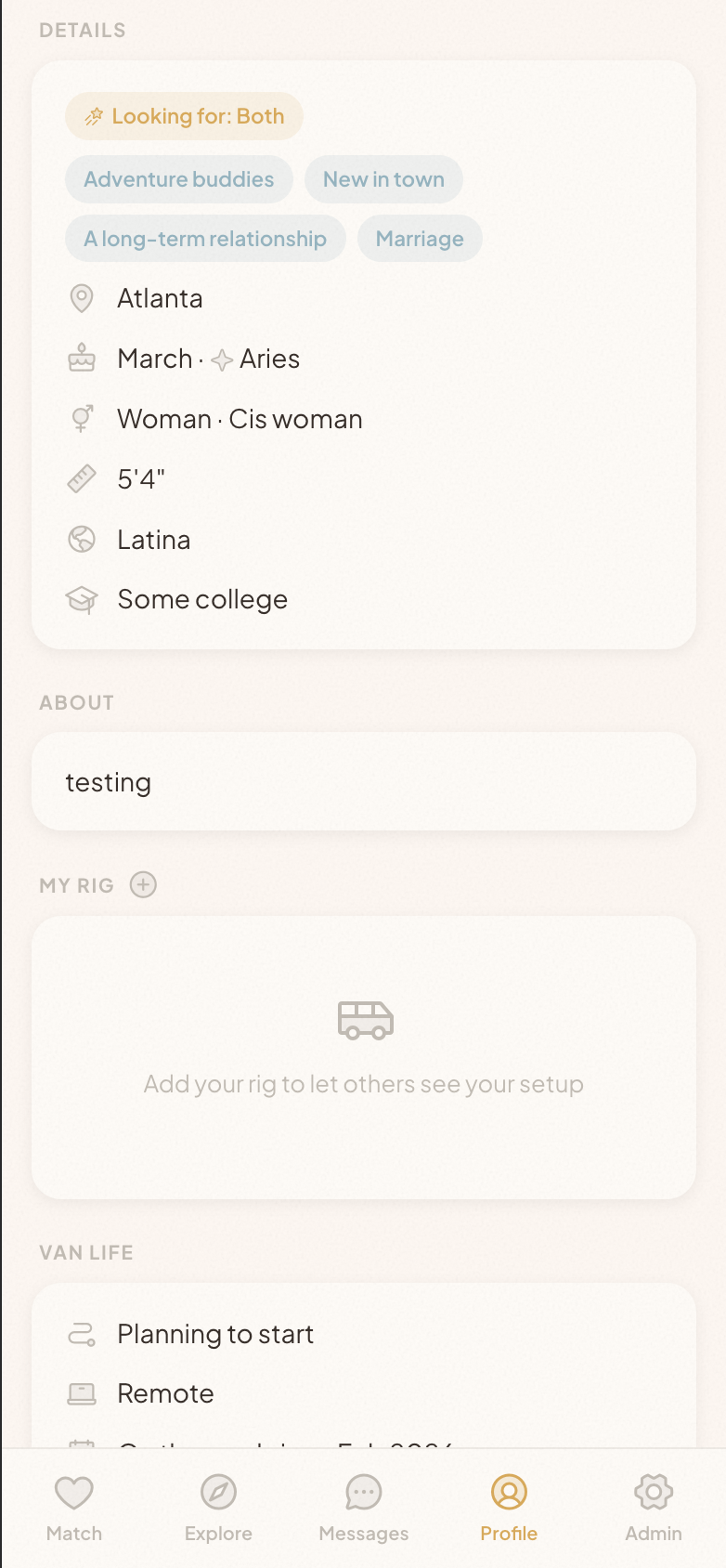
Edit your profile with as much or as little information as you want
-
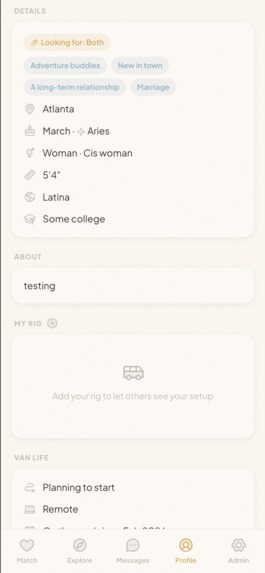
See and edit your profile, add your rig, and more.
-
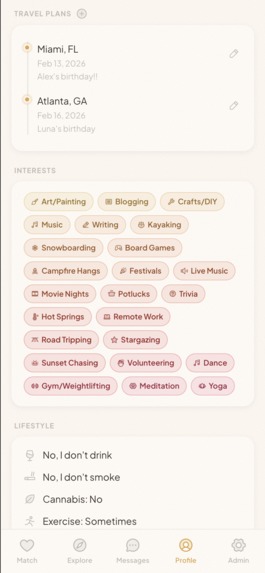
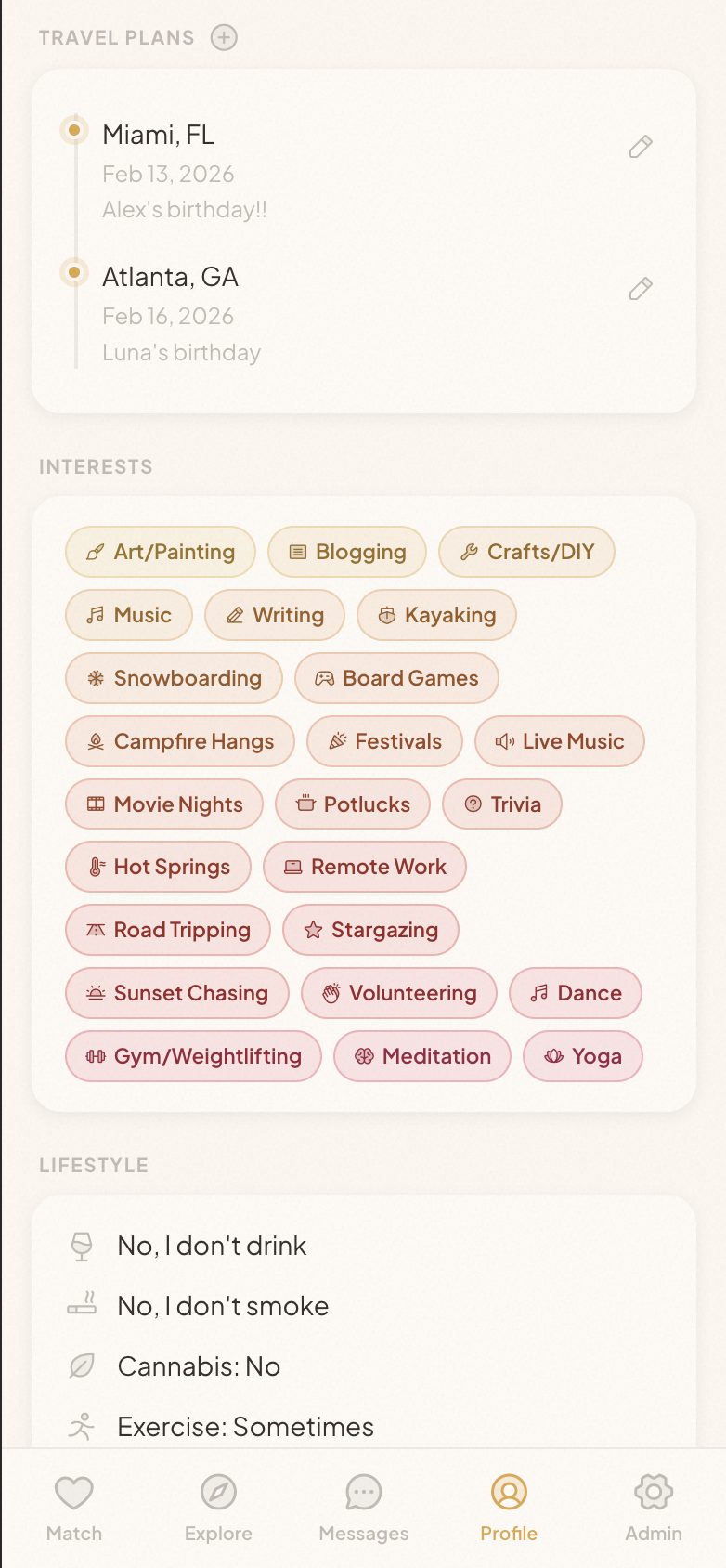
Add travel plans and interests.
-
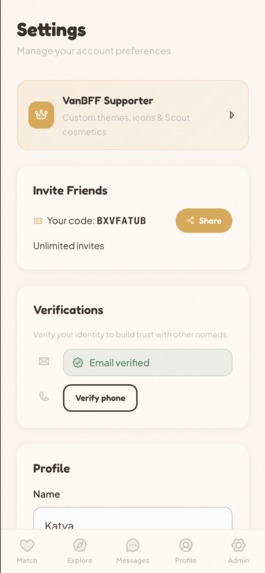
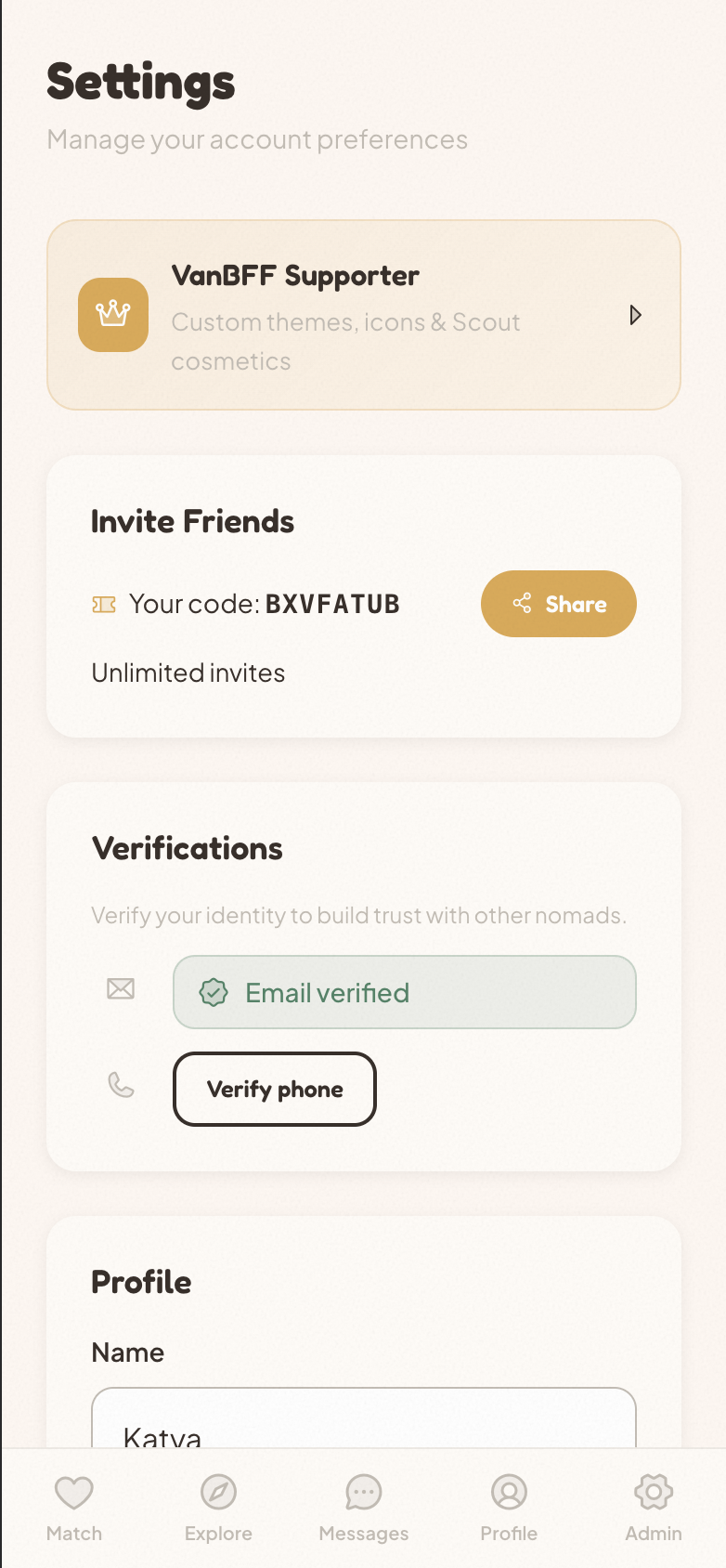
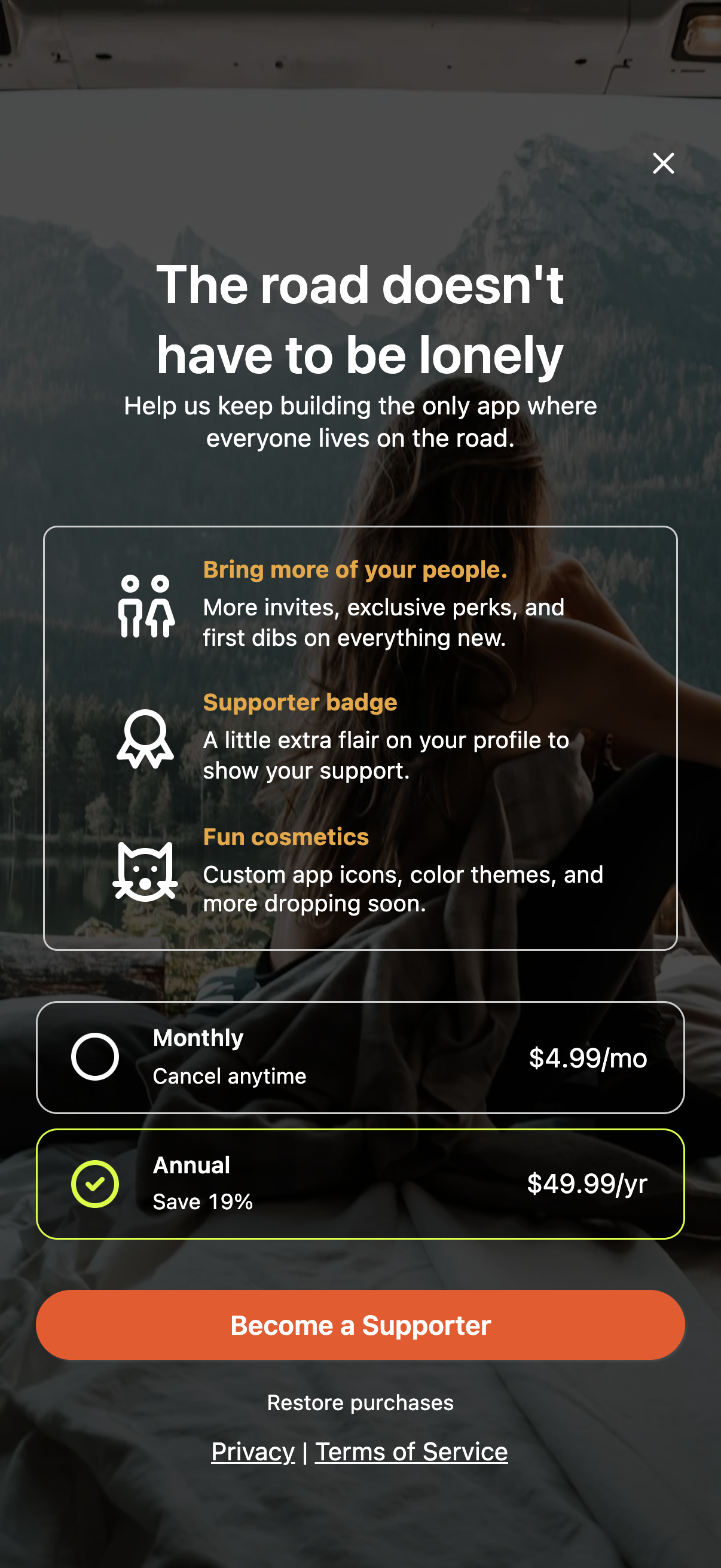
Become a paid VanBFF supporter and invite your friends.
-
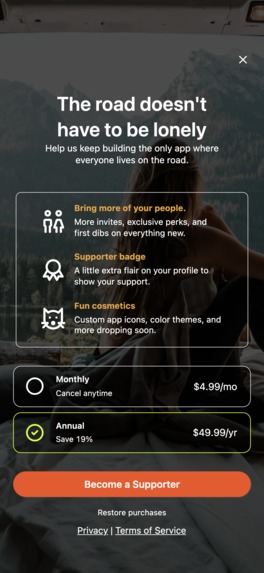
RevenueCat paywall
-
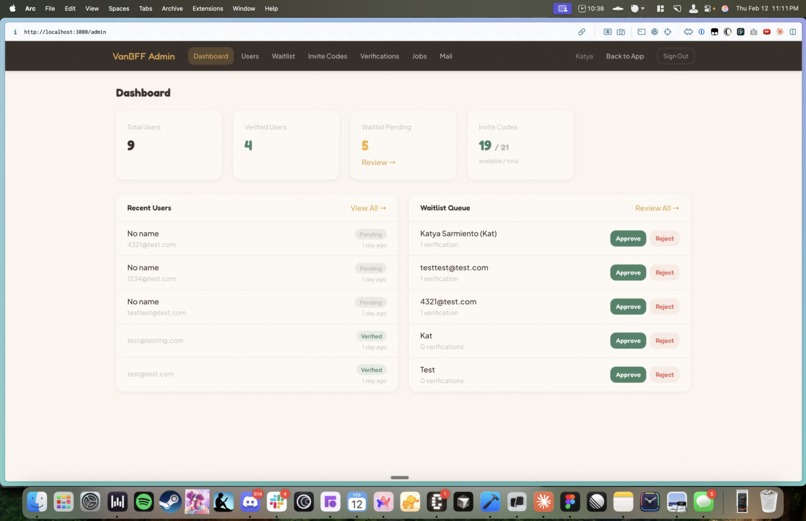
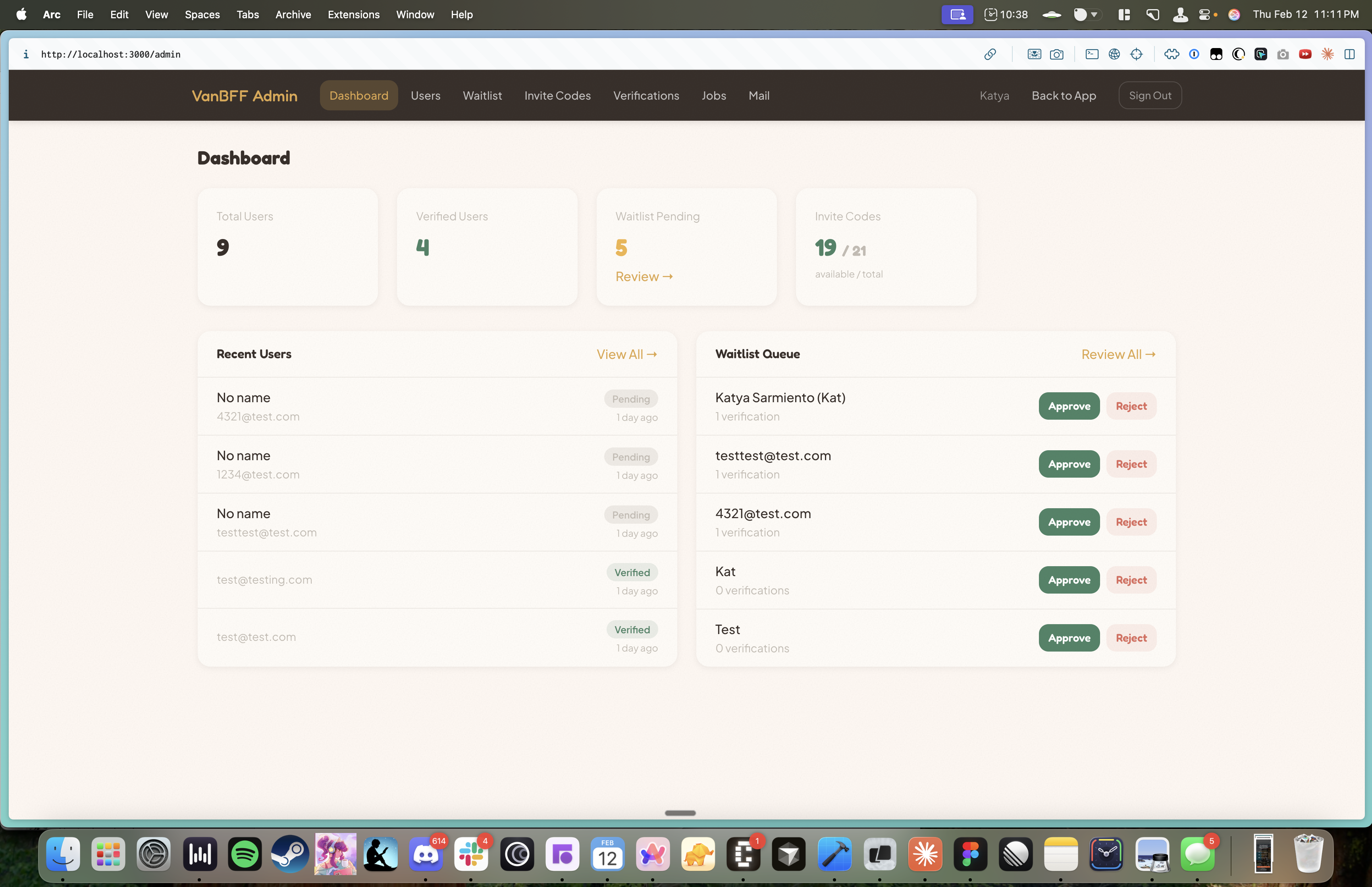
Admin dashboard web view, but also built for mobile.
Inspiration
"I really struggle making friends and dating while living in a van. It’s kind of like finding a needle in a haystack." - Quin Gable
That’s the problem. If you live in a van and try to use Bumble or Tinder, most of the people you see live in houses. They’re staying put. You’re not. You match with someone, things go well, and then you leave in three days and they’re still there.
It’s not just dating either. You want to go hiking tomorrow but don’t know if any other van lifers are nearby. Your water pump breaks in the middle of nowhere and you need a mechanic who actually knows van conversions. And as a woman traveling solo, you need to know the people you’re meeting are who they say they are.
There’s no app for any of this. "There really isn’t an app for us," as Quin put it. "I feel like this is a huge missed opportunity."
So I built one.
What it does
VanBFF is the first social app built just for the nomadic van life community. Three core features, all from Quin’s brief:
1. Swipe for Friends & Dates One swipe interface for both. Every profile shows what actually matters when you’re nomadic: where they’re heading next, activities they’re into, van type and build status, and whether they’re verified. BackTrack lets you undo an accidental pass.
2. Activity-Based Connections The Explore tab shows who’s nearby right now, group activities with RSVPs (hike Zion tomorrow, campfire tonight, group climb Saturday), and popular camping spots with cell signal notes and how many nomads are there.
3. Paid Builder Help Rated specialists for solar, electrical, plumbing, and full builds. This covers both pre-build DIY conversion questions and on-road repairs, connecting fellow builders for a fee.
Invite-Only & Verified "The nomadic community is really small and really protected, and I wanna make sure, especially with me as a woman, that everyone has been accounted for." Safety is the foundation. Every user needs an invite code. No code, you join the waitlist and an admin reviews it. Verification through email and phone, with plans for more identity verification in the future.
PLEASE NOTE: A lot of the app has fake data imported in already to show you what the user experience would look like. This data will be deleted for actual launch with real users.
How I built it
One Ruby on Rails 8.1 backend powers both the web app and the native iOS app through Hotwire Native.
- Backend: Rails 8.1, PostgreSQL, deployed with Kamal (Docker)
- Frontend: Server-rendered HTML with Hotwire (Turbo + Stimulus), Tailwind CSS, Phosphor icons
- Native iOS: Hotwire Native shell that loads the Rails app. The native layer handles two things: the RevenueCat paywall and alternate app icons. Everything else is server-rendered.
- Auth: Four methods. Phone OTP through Twilio Verify, email/password, Google OAuth, Apple Sign-In.
- Monetization: RevenueCat SDK on the native side. Tap “VanBFF Supporter” and the native paywall comes up.
- Monitoring: PostHog for analytics, Honeybadger for errors, Rack::Attack for rate limiting
Hotwire Native is what made this possible as a solo dev. One codebase, server-side updates without App Store review, and native features only where they actually need to be native.
Challenges I ran into
Getting the RevenueCat paywall to work through Hotwire Native’s path interception took real debugging. The paywall needs to present as a native view while the rest of the app stays server-rendered.
The invite system, waitlist, verification, and admin panel all had to work together from day one. Rate limiting phone OTP to prevent abuse (5 per minute via Rack::Attack) without making the real experience annoying was a balance.
And writing all the copy to match the way the van life community actually talks took way more research than I expected. I went through hundreds of Quin’s posts and videos. If it sounded like marketing instead of community, I rewrote it.
Accomplishments I’m proud of
- Native iOS app on TestFlight with real RevenueCat purchases. Not a simulator screenshot.
- Four auth methods that all actually work. Not placeholder buttons.
- Invite-only community system with admin panel for real community management
- 900+ lines of audience research before writing any code
- Database resilience for spotty connections, because that’s just life on the road
What I learned
Hotwire Native is seriously underrated for indie devs. One Rails codebase gives you a native iOS app that deploys server-side updates instantly. I only needed native Swift code for the RevenueCat paywall and app icons.
RevenueCat’s SDK and RevenueCatUI made the monetization side much faster than building payment infrastructure from scratch.
And the biggest thing: building for a specific community means actually understanding how they talk and what they care about. Not guessing.
What’s next for VanBFF
The MVP is US-only, but the architecture supports expanding internationally.
Real connections: Live matching algorithm, real-time messaging, social verification (Instagram, TikTok) for trust badges. Photo and video sharing so nomads can post stories from wherever they are.
Better discovery: Location-based matching with filters. A more secure, production-grade location API for real-time “who’s nearby” and travel route overlap.
Builder marketplace: Full booking, payments, and ratings. This is the paid section from Quin’s brief. I've already built out an admin-side of this app to help manage builders & vendors, as well as the fee / commission structure. I see this working a bit like TaskRabbit, but with an already-established community with the app.
Stronger verification: Right now it’s email and phone. Next step is ID verification and background checks. For solo female travelers especially, this matters.
Scout mascot: I have designs for an adventure cat mascot named Scout, inspired by Quin’s cats and my own cat, Shoyo, who passed away a few years ago. The idea is Scout guides you through the app with personality (empty match list says “Scout is going out to search for friends for you”). Lots of potential: personality quizzes that change how Scout acts, cosmetics collected by traveling to different spots, paid customization like Reddit avatars. Fun way to add personality, privacy, gamification, and monetize without being annoying.
Android + growth: Hotwire Native makes Android straightforward since it’s the same Rails codebase. I also want to add creator partnership tools so Quin & others can curate verified builders and host community events.
Built With
- css
- docker
- figma
- honeybadger
- hotwire
- hotwire-native
- html
- kamal
- phosphor
- postgresql
- posthog
- postmark
- revenuecat
- revenuecatui
- ruby-on-rails
- stimulus
- swift
- tailwind-css
- turbo
- twilio

Log in or sign up for Devpost to join the conversation.