-
-
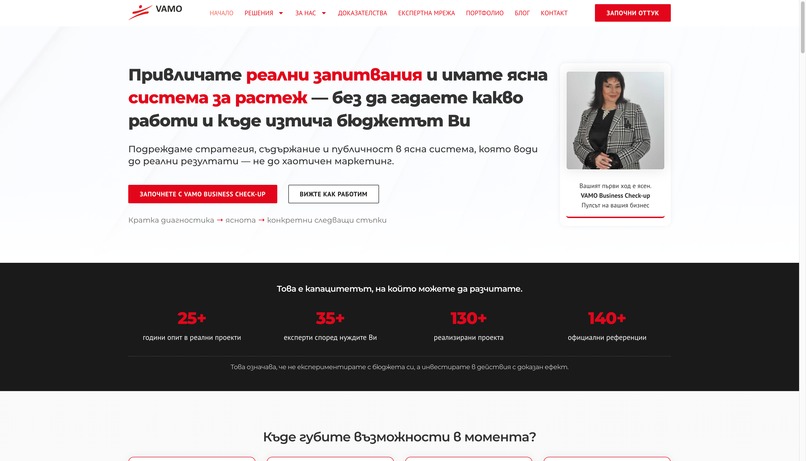
Vamo Home Page
-
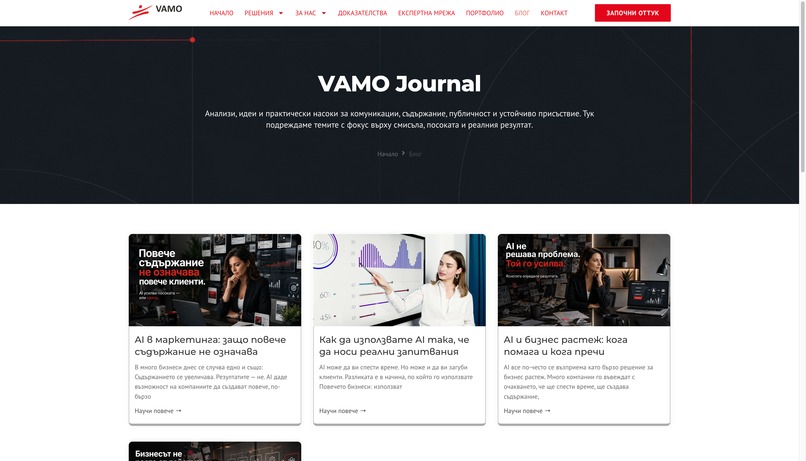
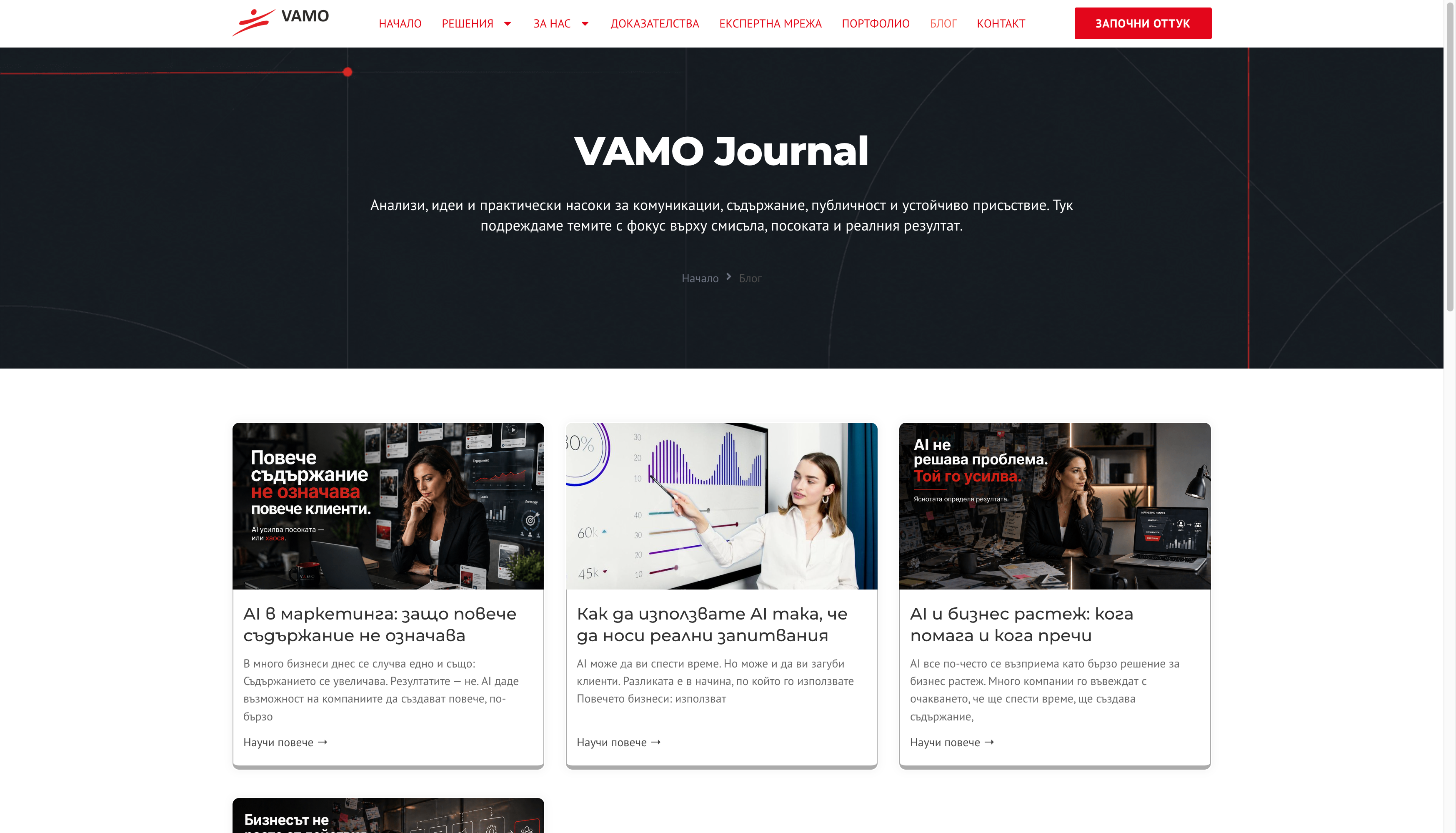
Vano Blog Archive Page
-
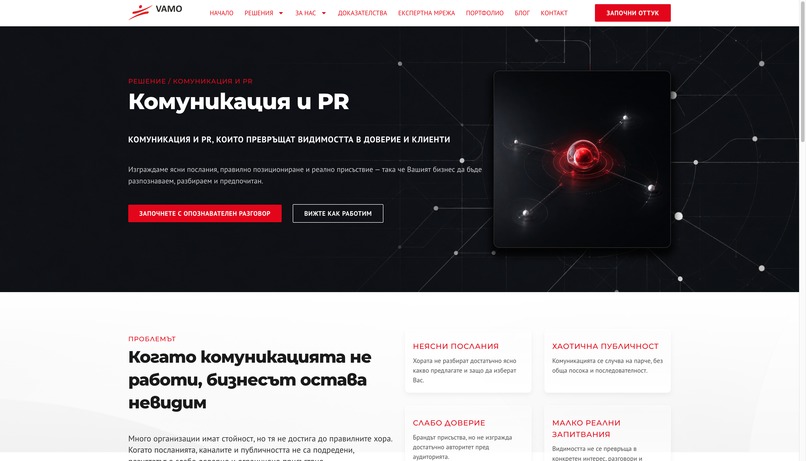
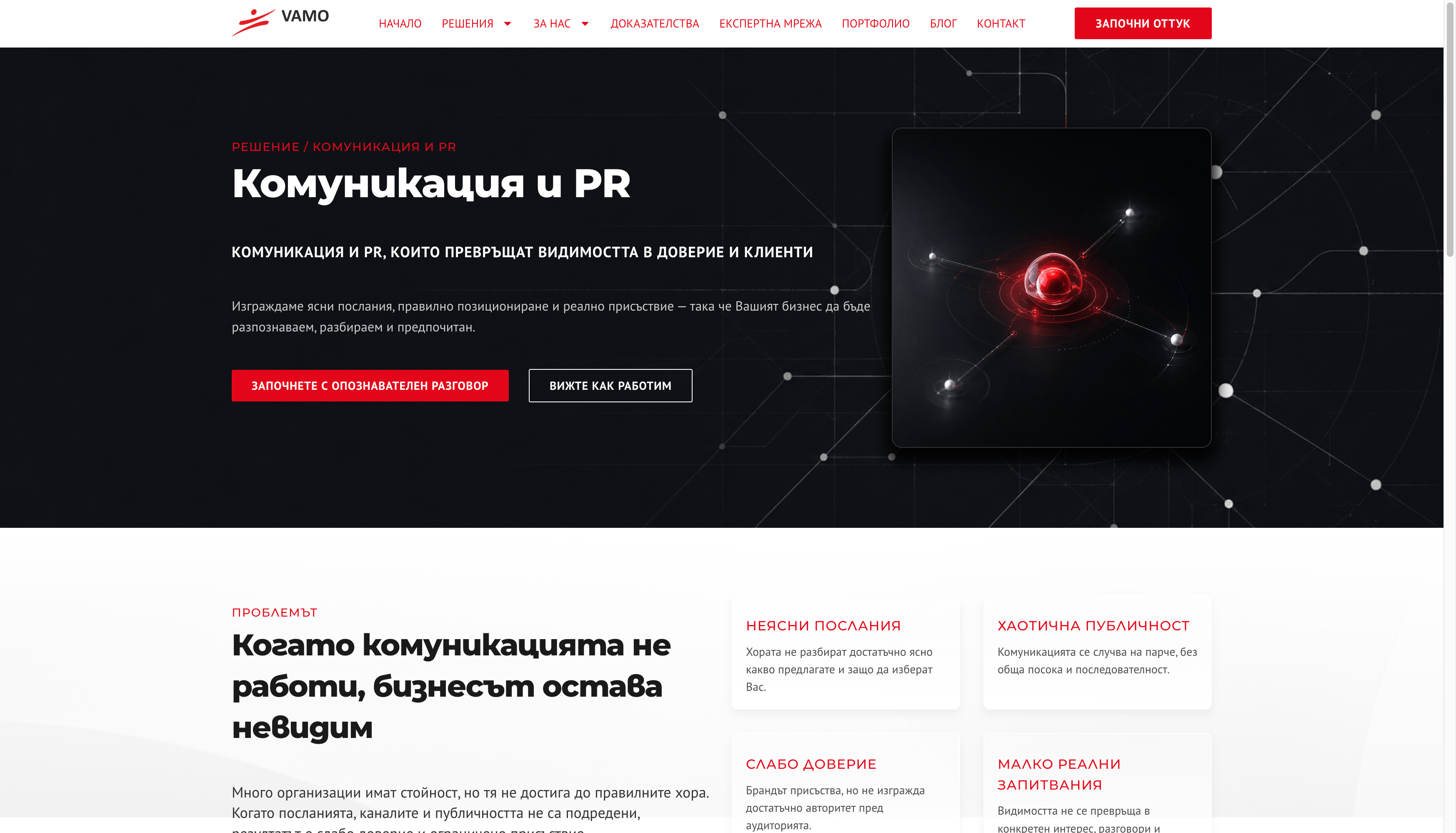
Vamo Services Single Page
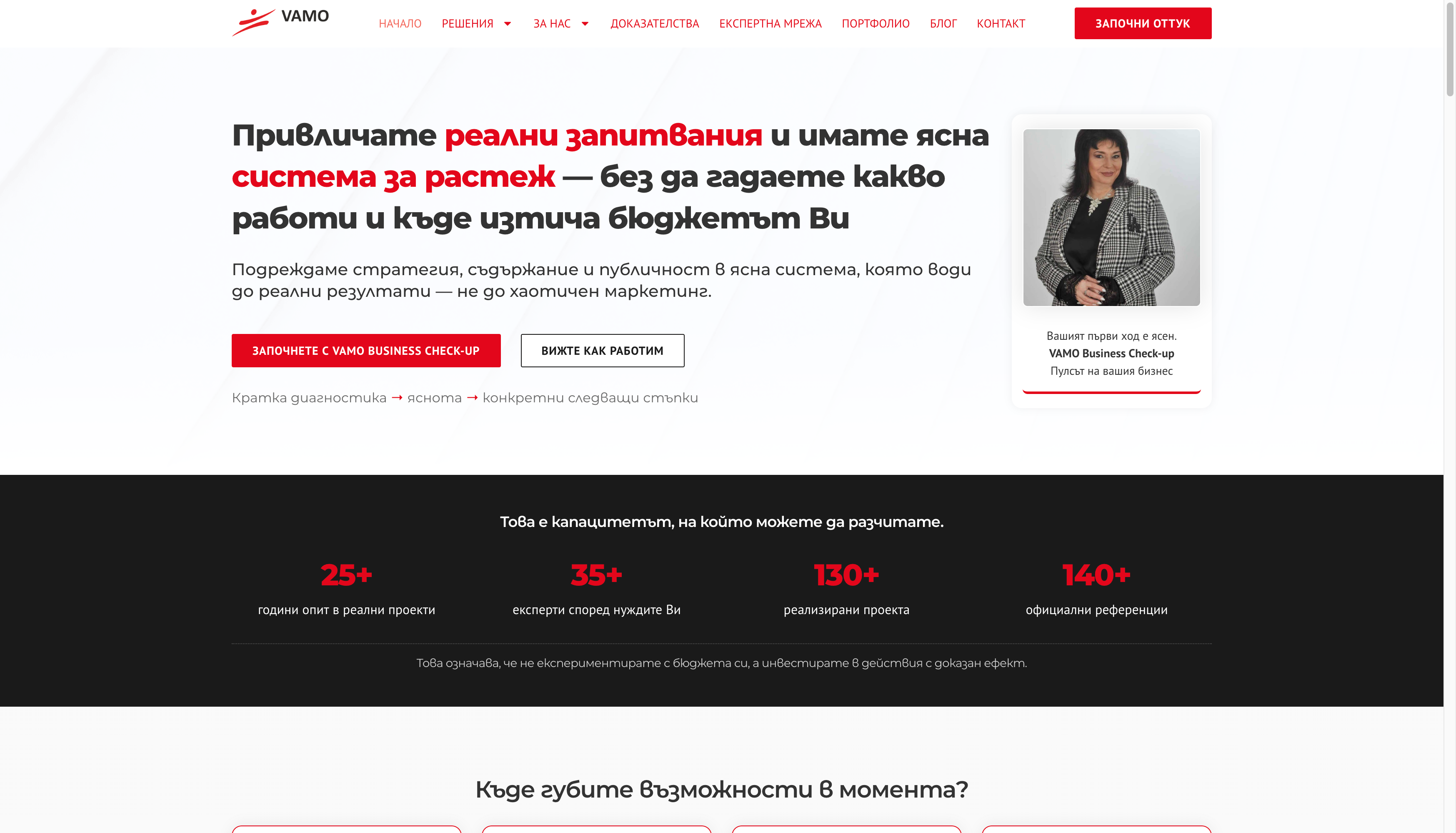
Inspiration
For more than 25 years, VAMO has worked at the intersection of media, culture, tourism, education, and regional development in Bulgaria. During that time, we have created more than 130 films, built a large audiovisual archive, supported public institutions and local communities, and collected hundreds of stories about people, places, and cultural heritage.
The challenge was that this experience, content, and network were spread across different websites, folders, platforms, and communication channels.
VAMO Digital Hub was inspired by the need to bring them together into one intelligent and scalable digital environment. Our goal is not simply to create another corporate website, but to build a living system that preserves valuable stories, presents completed projects, and supports the faster creation and distribution of new content.
Our guiding idea is:
Living memory. Intelligent flow.
What it does
VAMO Digital Hub creates a structured digital home for VAMO’s work, experience, services, projects, and audiovisual heritage.
The platform is designed to:
- present VAMO’s media, cultural, tourism, and communication solutions;
- organize completed projects in a searchable portfolio;
- transform a large archive into accessible digital stories;
- support reusable and consistently formatted content;
- make it easier to publish future projects, articles, videos, and campaigns;
- prepare the organization for AI-assisted content workflows and automation.
The project is especially valuable for work involving municipalities, cultural institutions, tourism organizations, NGOs, schools, and local communities.
How we built it
We built the project with Codex, using Astro Framework and TypeScript.
We started by creating a production-oriented technical and visual foundation:
- a scalable Astro project structure;
- a complete design system documented in
DESIGN.md; - reusable design tokens in
src/styles/tokens.css; - global styles and an accessible
BaseLayout; - reusable interface components;
- Bulgarian-language support and mobile-first rules;
- seven Astro Content Collections with validated Zod schemas;
- structured Markdown content for solutions, projects, and other key sections.
We also created AGENTS.md to give AI coding agents clear project context, design rules, accessibility requirements, and working conventions.
Codex supported us throughout the process: interpreting the requirements, helping structure the architecture, implementing components, checking consistency, and validating the project through successful build and code checks.
Challenges we ran into
Our biggest challenge was turning more than 25 years of diverse work into a clear digital architecture.
VAMO is not limited to one service or one audience. Its work includes video production, journalism, cultural heritage, tourism, events, public communication, education, and regional partnerships. The platform therefore had to remain understandable to visitors while also being flexible enough to grow.
Other challenges included:
- converting a broad vision into a realistic first version;
- building a consistent design system before creating individual pages;
- structuring Bulgarian content for future reuse and automation;
- balancing a strong visual identity with accessibility and performance;
- working within the limited Build Week timeframe;
- developing a solid foundation while the public-facing website was still evolving.
We addressed these challenges by dividing the work into clear milestones and treating the design system and content architecture as the project’s sources of truth.
Accomplishments that we're proud of
We are proud that the project evolved from the idea of a corporate website into the foundation of an AI-ready digital hub.
During the initial development, we:
- established a complete and documented design system;
- implemented reusable design tokens and core components;
- created seven validated Content Collections;
- prepared a scalable structure for solutions and portfolio projects;
- introduced clear operating instructions for continued AI-assisted development;
- successfully passed Astro checks and production builds;
- created a foundation that can grow without rebuilding the project from the beginning.
Most importantly, the platform is based on real work, real partnerships, and an authentic audiovisual archive created over more than two decades.
What we learned
We learned that working effectively with AI is not only about generating code quickly. The quality of the result depends on giving the AI clear context, reliable source documents, defined constraints, and structured feedback.
We also learned that content architecture must be considered as early as visual design. When information is properly structured, it becomes easier to publish, reuse, search, translate, and eventually support with AI.
Codex helped us move between strategic thinking and technical implementation. It allowed a media professional’s vision to be translated into a modern, maintainable web architecture.
What's next for VAMO Digital Hub
The next stage is to complete the public-facing pages and connect the content collections to the full user experience.
Planned development includes:
- complete Solutions and Portfolio sections;
- dynamic detail pages and improved navigation;
- integration of VAMO’s audiovisual archive;
- smarter search and content discovery;
- multilingual content;
- accessible forms and project inquiry workflows;
- AI-assisted drafting, classification, and formatting of new content;
- workflows that can turn one approved project entry into consistent website and social media materials;
- tools for presenting regional stories, cultural heritage, and community initiatives.
Our long-term goal is to transform VAMO Digital Hub into an intelligent media and project ecosystem—one that protects living memory while helping valuable stories reach new audiences.
Built With
- astro
- codex
- github
- markdown
- openai
- typescript

Log in or sign up for Devpost to join the conversation.