-
-
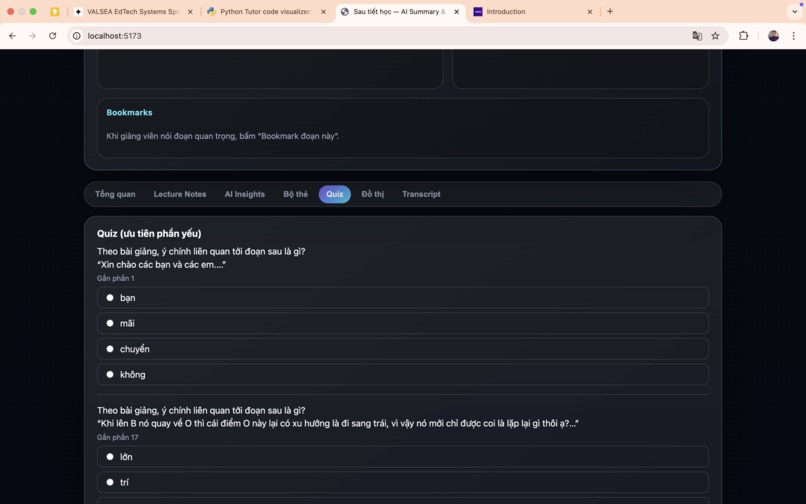
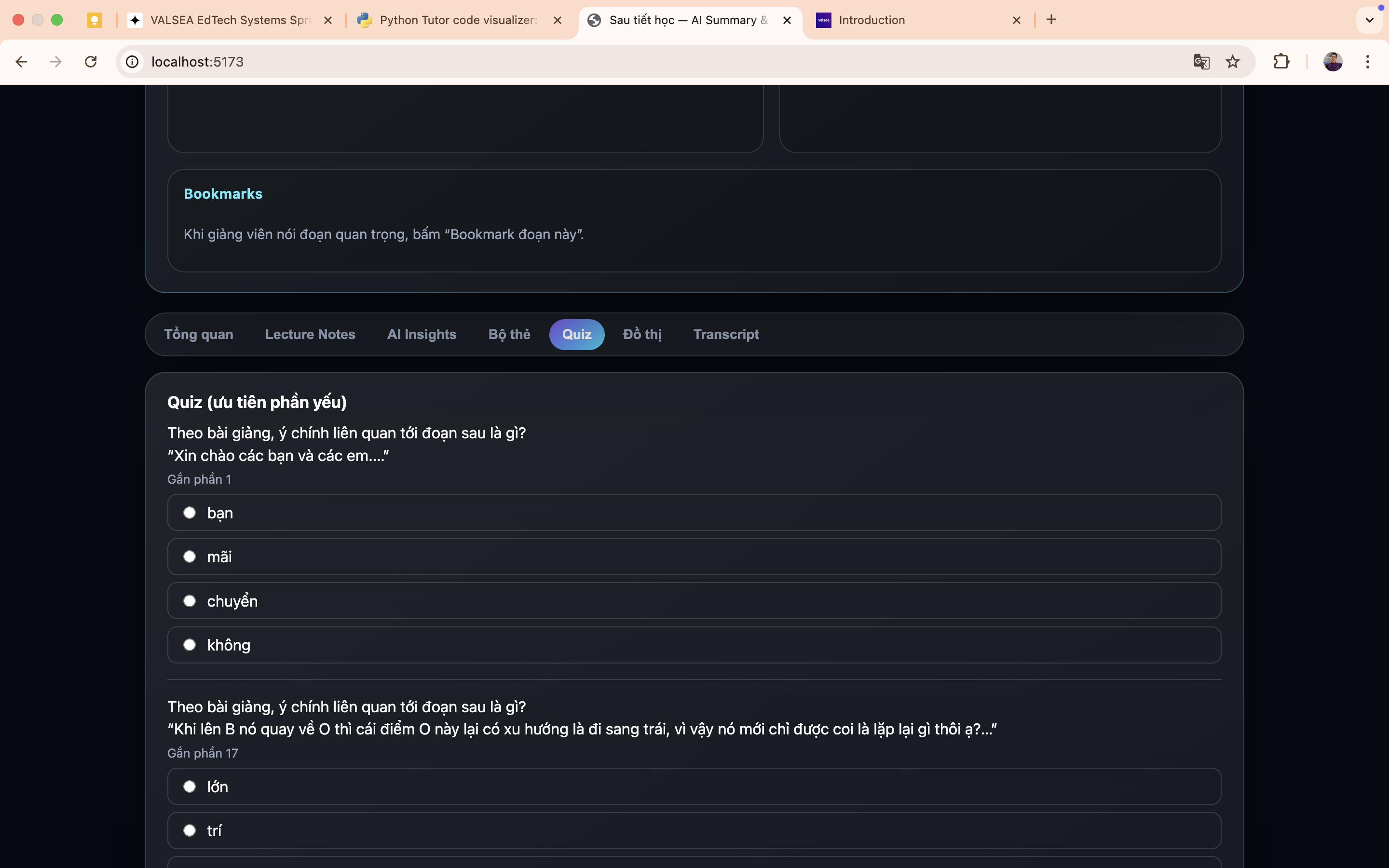
Quiz
-
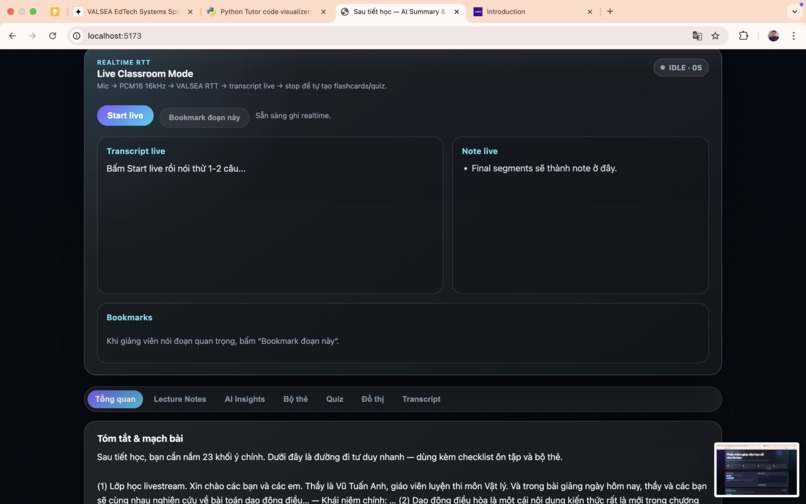
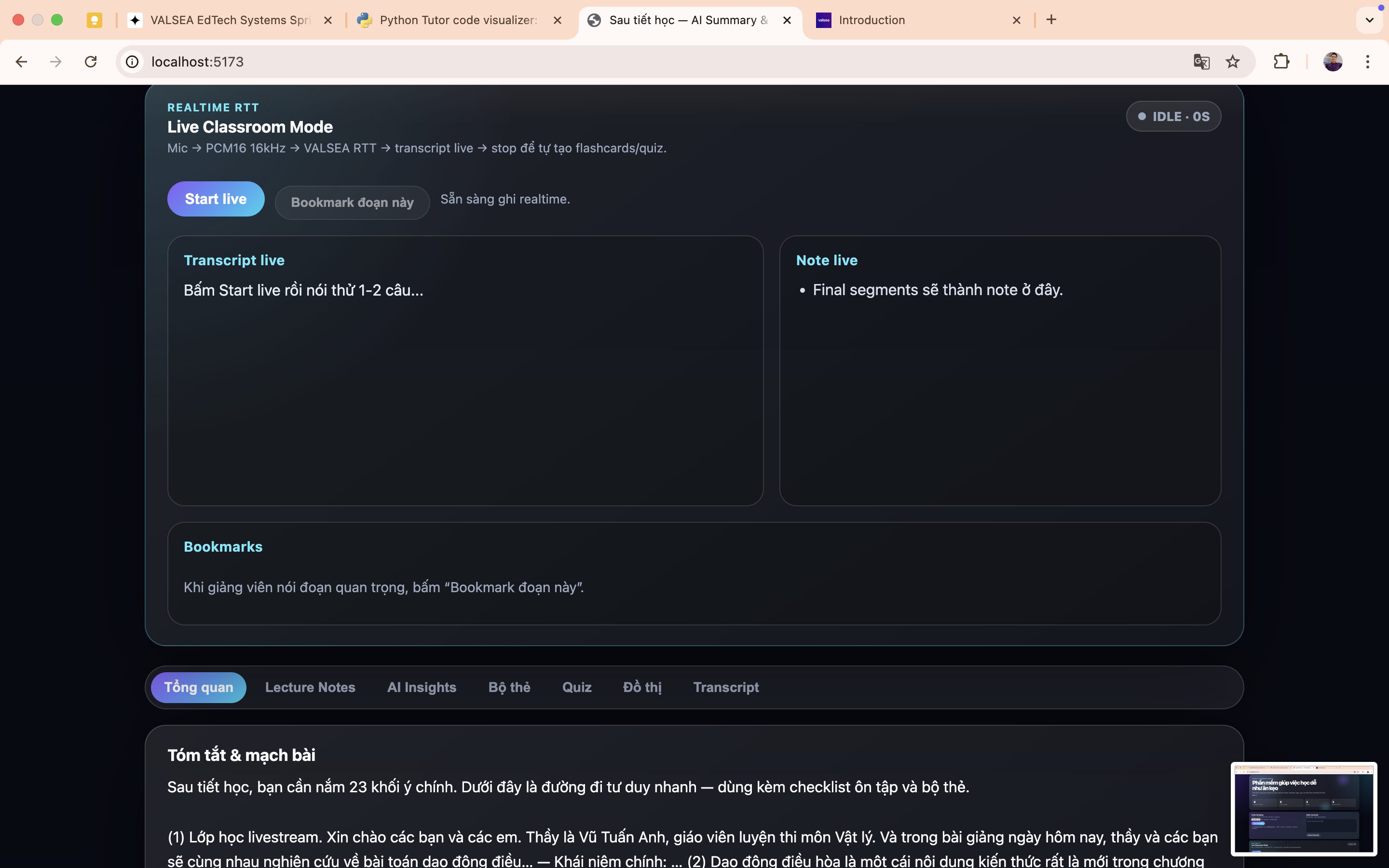
Realtime RTT feature
-
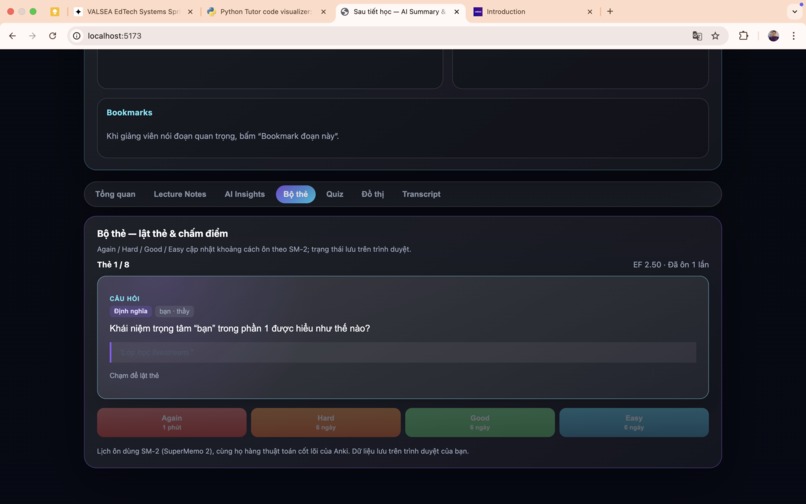
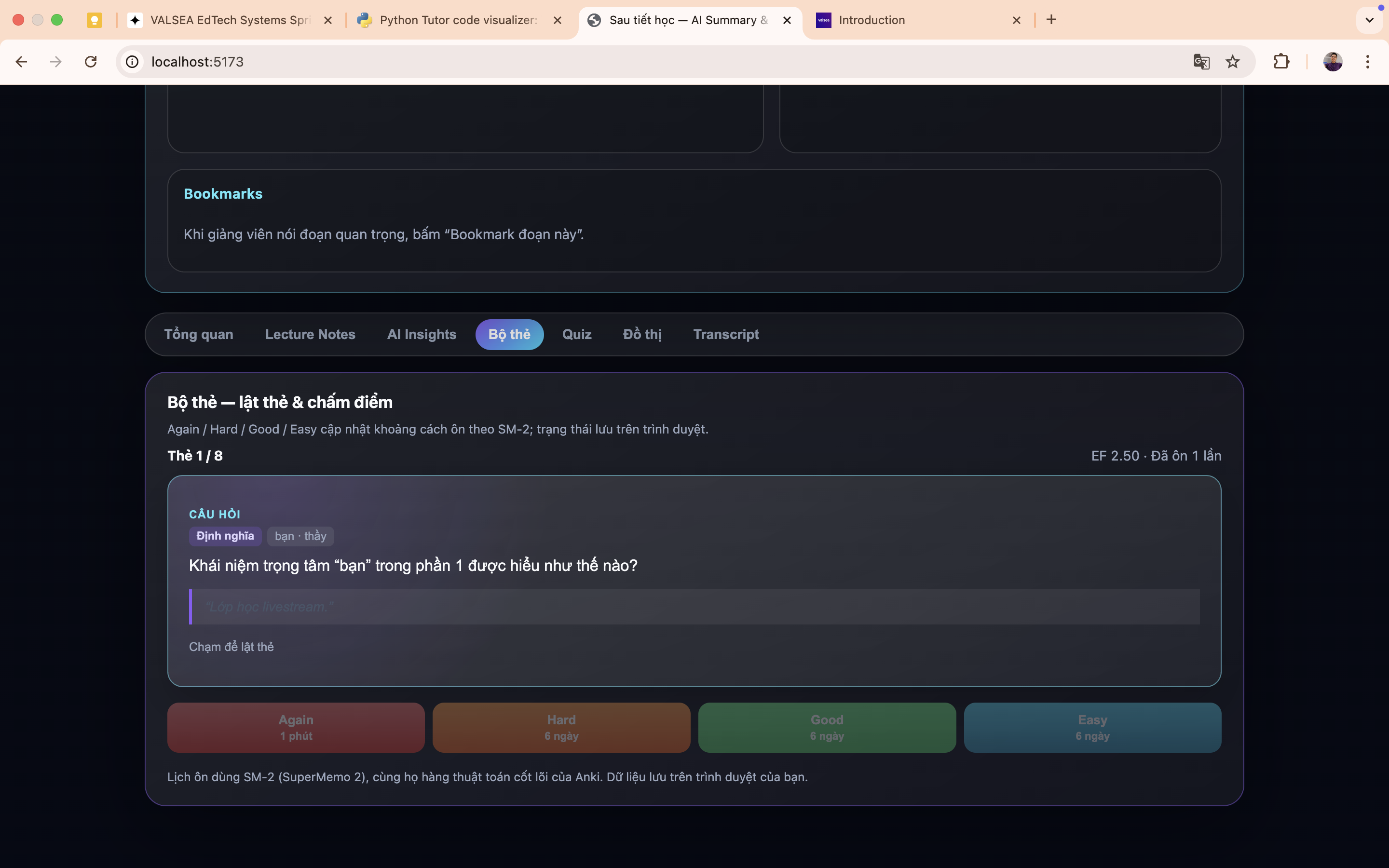
Flashcard
-
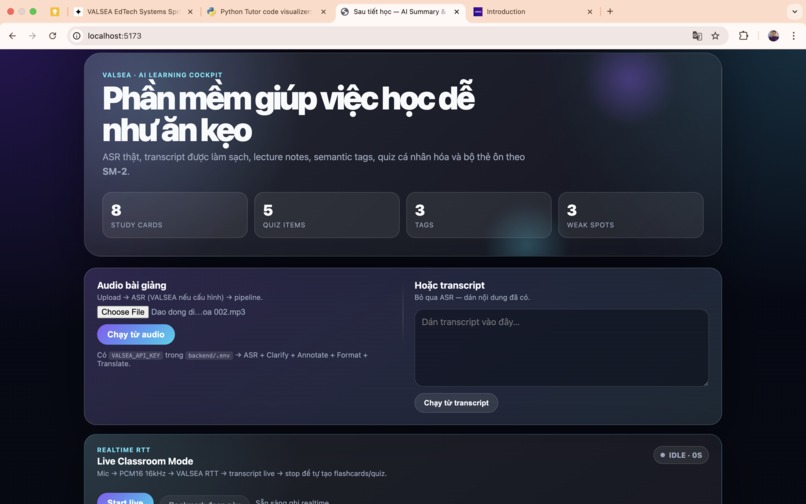
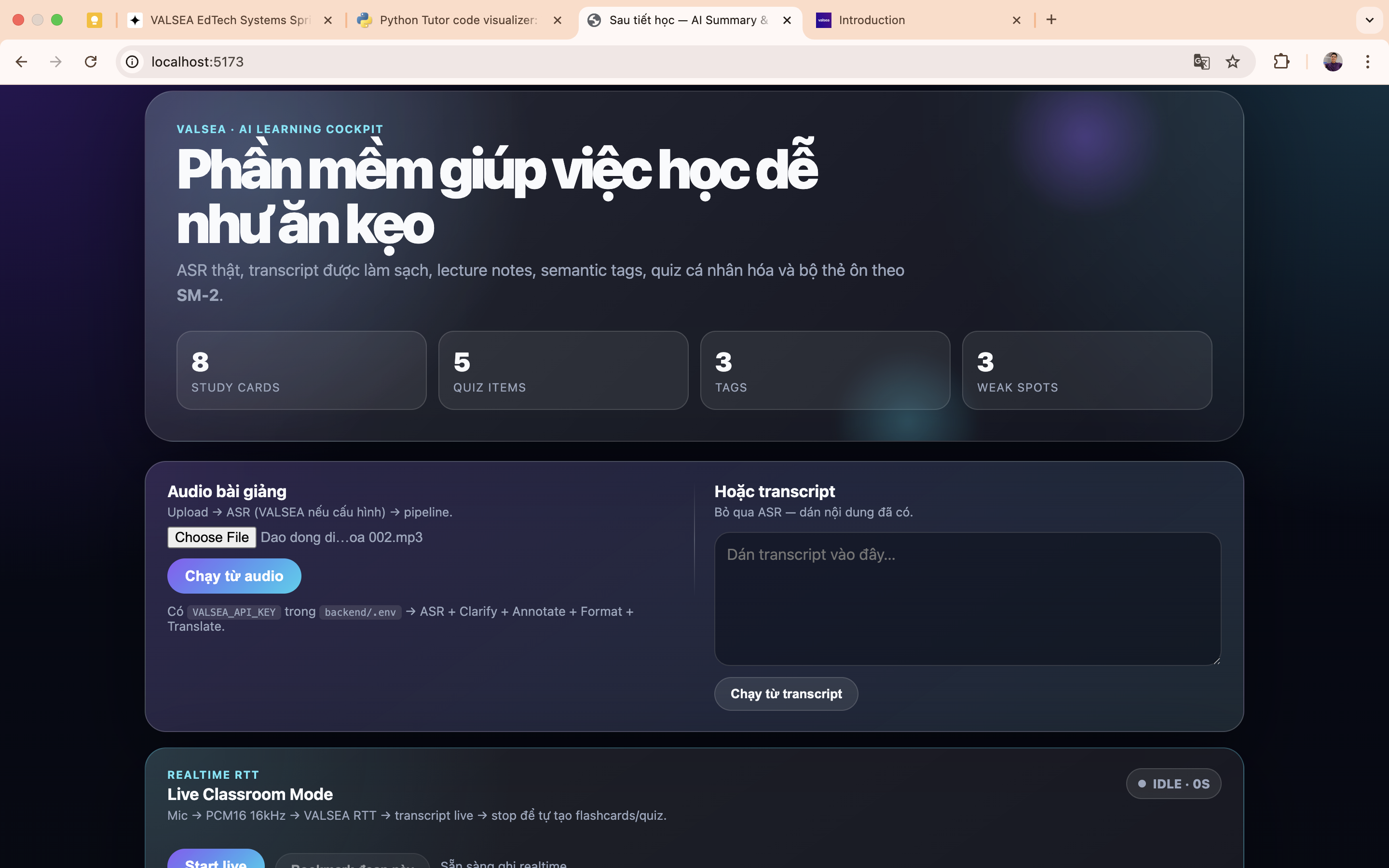
Main UI
Inspiration
In Southeast Asia, classrooms are often multilingual by default. A lecturer may explain a concept in Vietnamese, switch to English for technical terms, and use local examples that generic AI tools do not understand well. After class, students are left with messy recordings, incomplete notes, and no clear idea of what to review first.
VALSEA StudyOS was built to turn classroom audio into a real study system: live transcript, clean notes, bookmarks, flashcards, quizzes, and personalized review priorities.
What it does
VALSEA StudyOS helps students convert a lecture into an interactive study pack.
Core features:
- Live transcription using VALSEA RTT
- Audio upload transcription using VALSEA ASR
- Clarified transcript for cleaner reading
- Lecture notes, action items, and key quotes
- Semantic tags for concept understanding
- Personalized weak points based on the lesson structure
- Flashcards with SM-2 spaced repetition, inspired by Anki
- Auto-generated quiz after the lesson
- Bookmark important moments during live class
- End-of-session study pack generation from the live transcript
How we built it
The app has a FastAPI backend and a React frontend.
The backend handles:
- VALSEA audio transcription
- VALSEA realtime WebSocket proxy
- transcript clarification
- semantic annotation
- transcript formatting
- translation
- chunking and summarization
- knowledge graph generation
- quiz and flashcard generation
The frontend handles:
- audio upload
- transcript input
- realtime microphone streaming
- live notes
- bookmarks
- study tabs
- SM-2 flashcard review
- quiz interaction
Challenges we ran into
The main challenge was realtime audio. VALSEA RTT requires the session to be ready before audio chunks are sent, so we added readiness handling and buffering to avoid sending audio too early.
Another challenge was designing useful learning content without making the interface feel overwhelming. We split the output into focused tabs: overview, lecture notes, AI insights, flashcards, quiz, graph, and transcript.
What we learned
We learned that ASR alone is not enough for education. The real value comes after transcription: cleaning the transcript, extracting structure, identifying weak areas, and turning the lesson into active recall materials.
We also learned that Southeast Asian classrooms need AI systems that handle code-switching, accents, and local learning patterns.
What's next
Next, we want to improve personalization by tracking quiz history and flashcard performance across multiple lessons. We also want to add student-level dashboards, teacher analytics, and direct export to Anki, Notion, or LMS platforms.

Log in or sign up for Devpost to join the conversation.