-
-
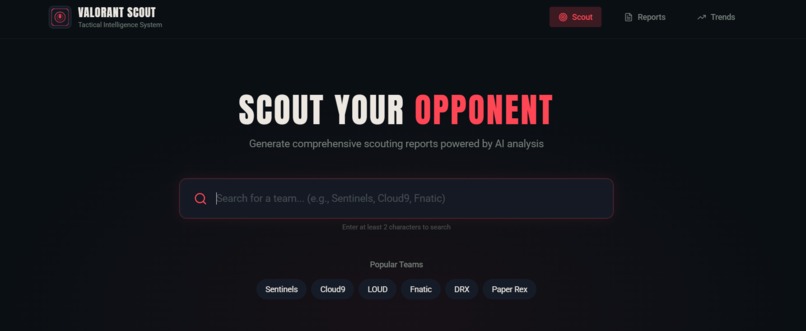
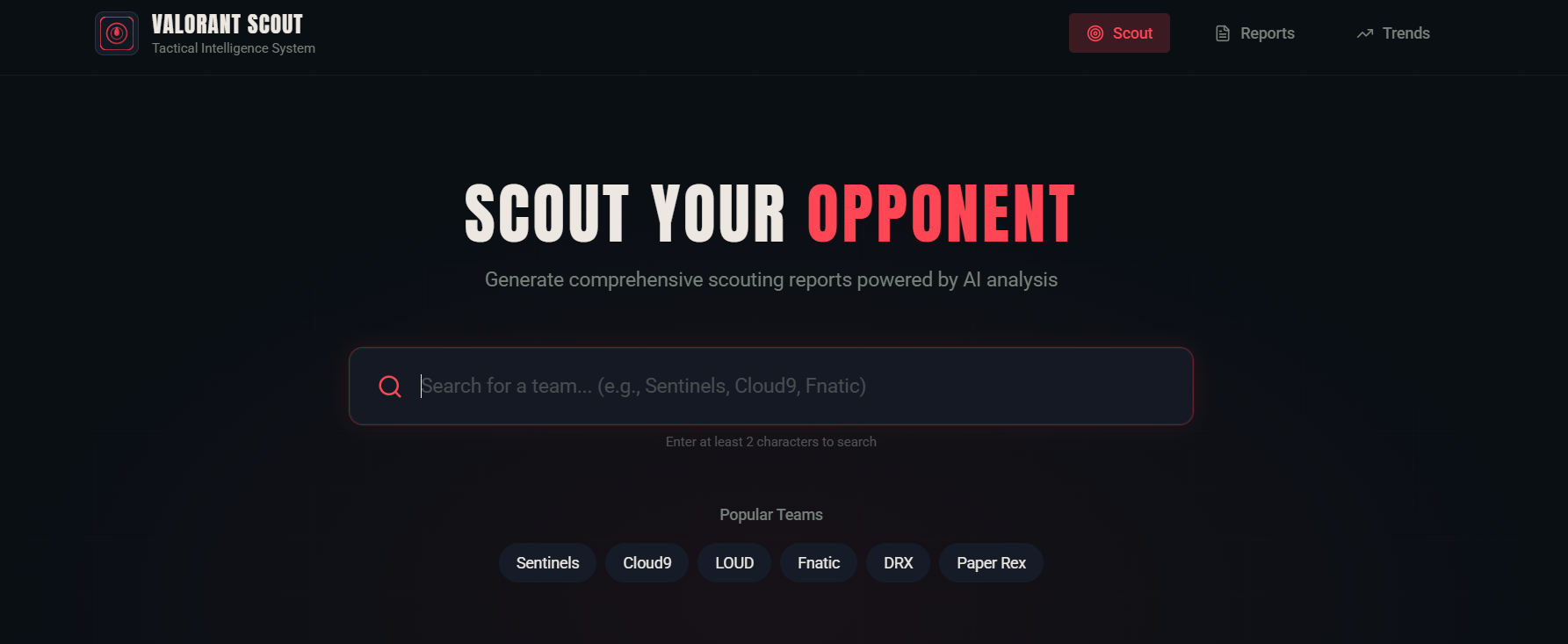
Team Search
-
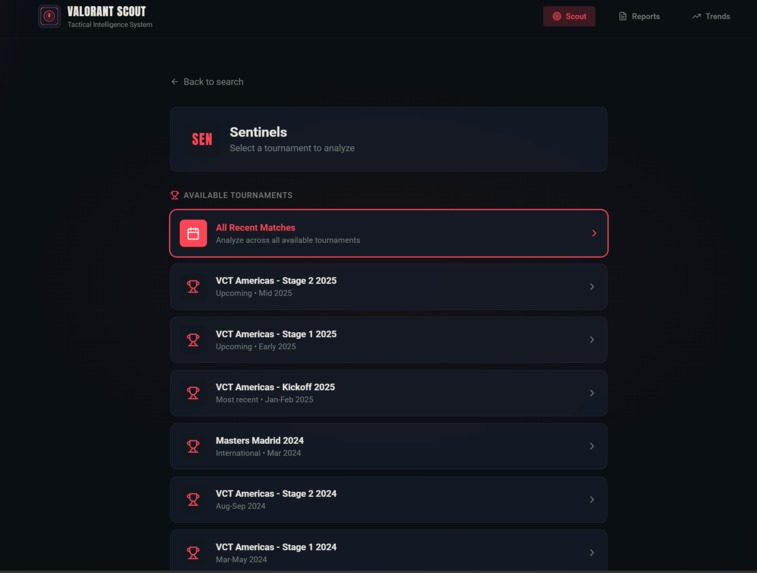
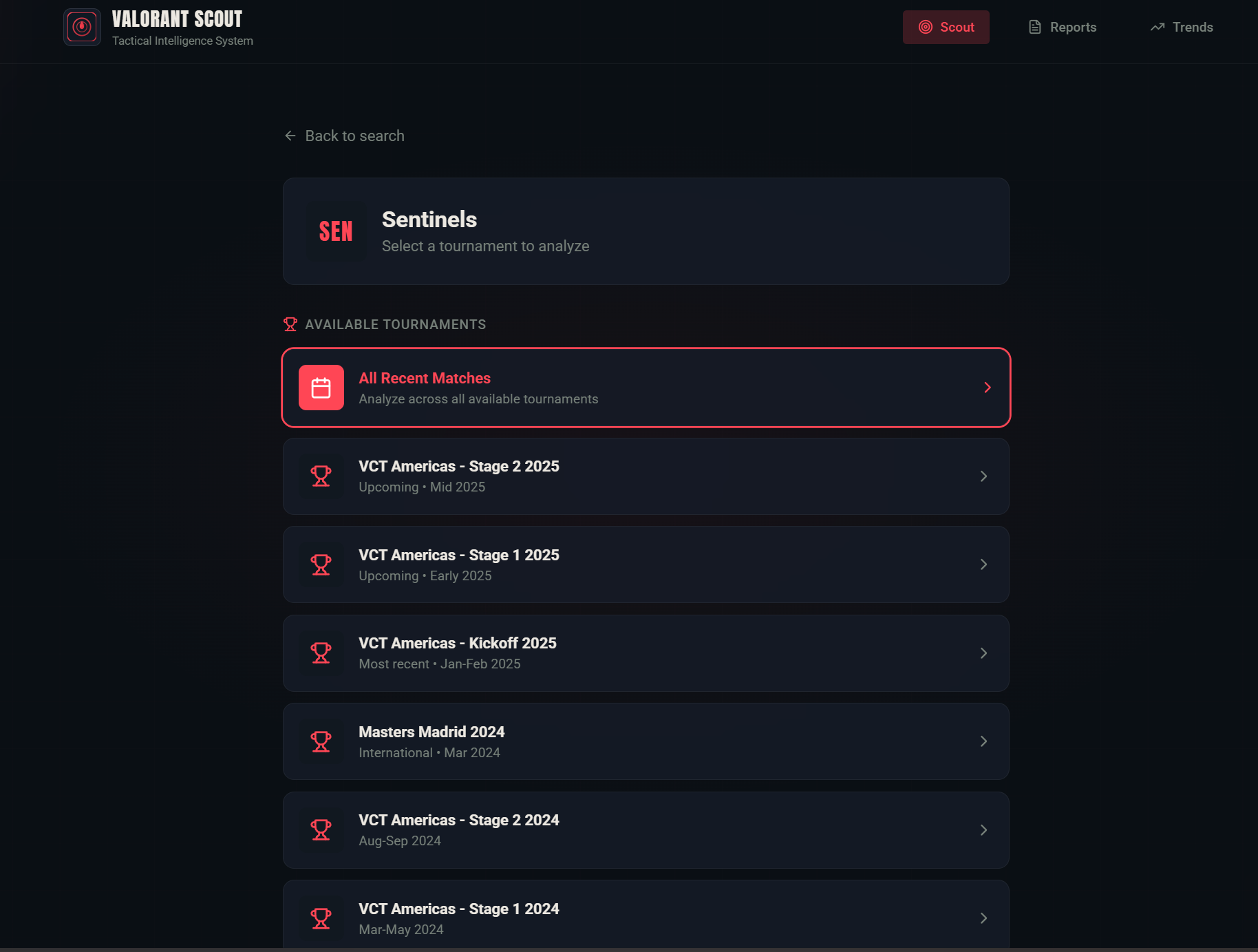
Scout Intel for a specific tournament (OR) All recent matches
-
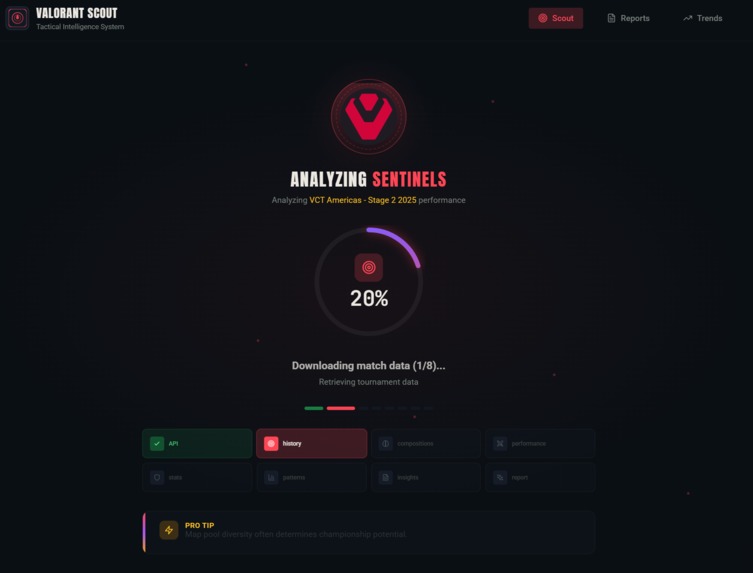
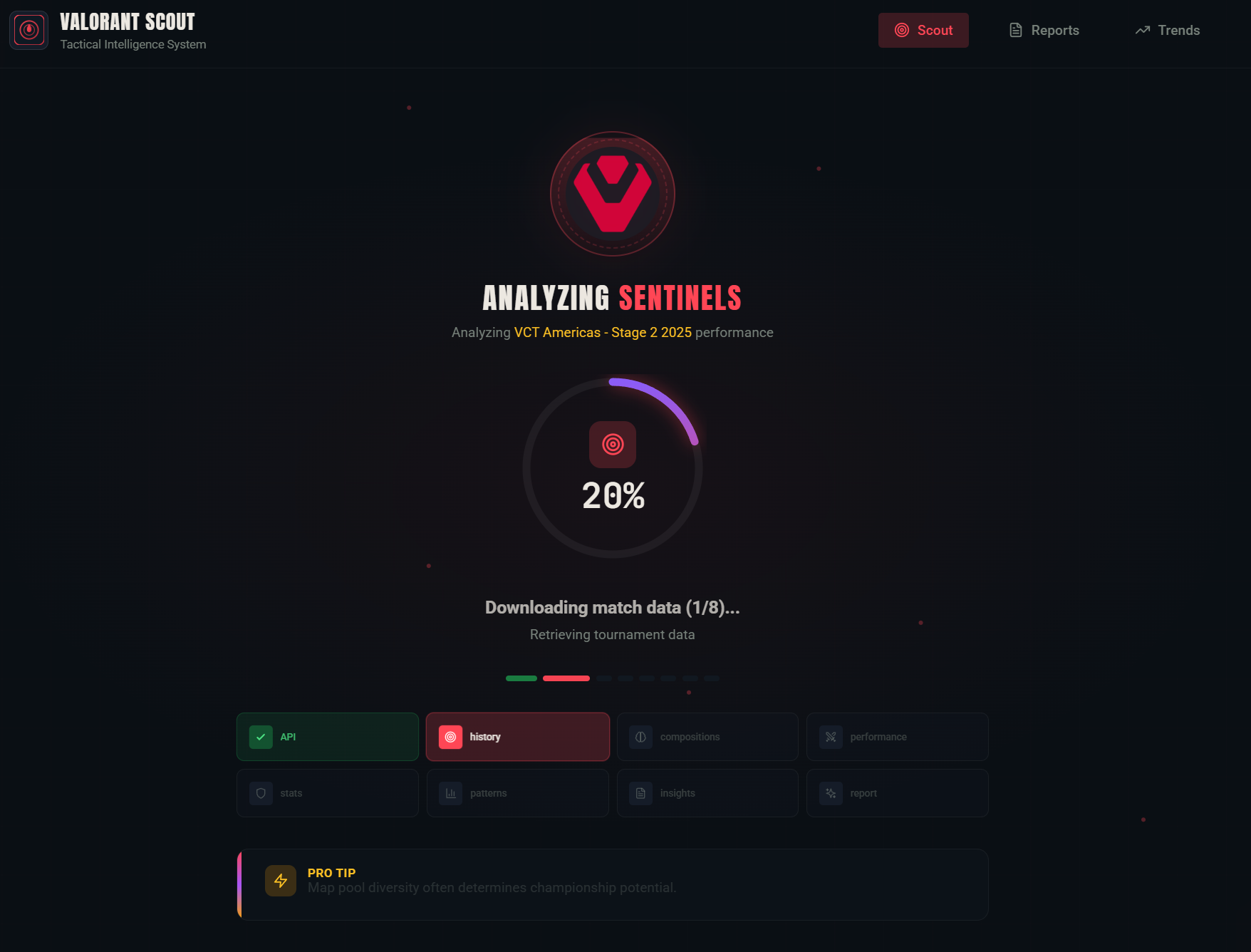
Intuitive Loading when waiting for analysis
-
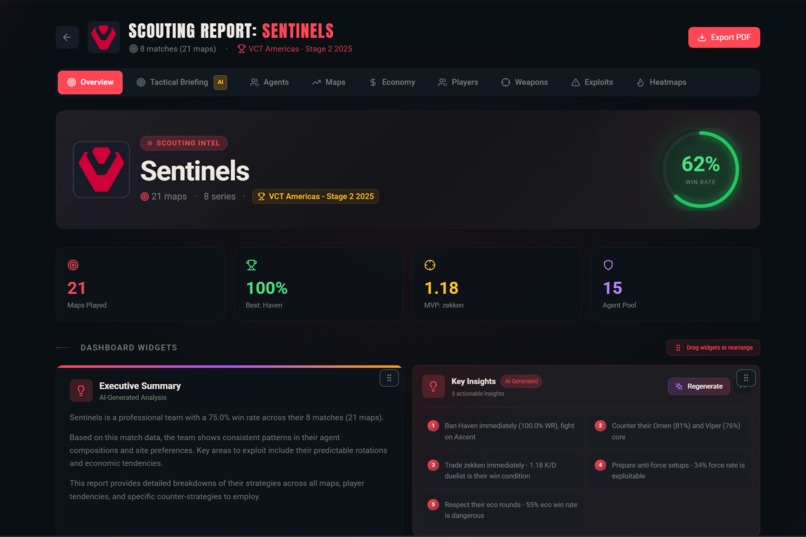
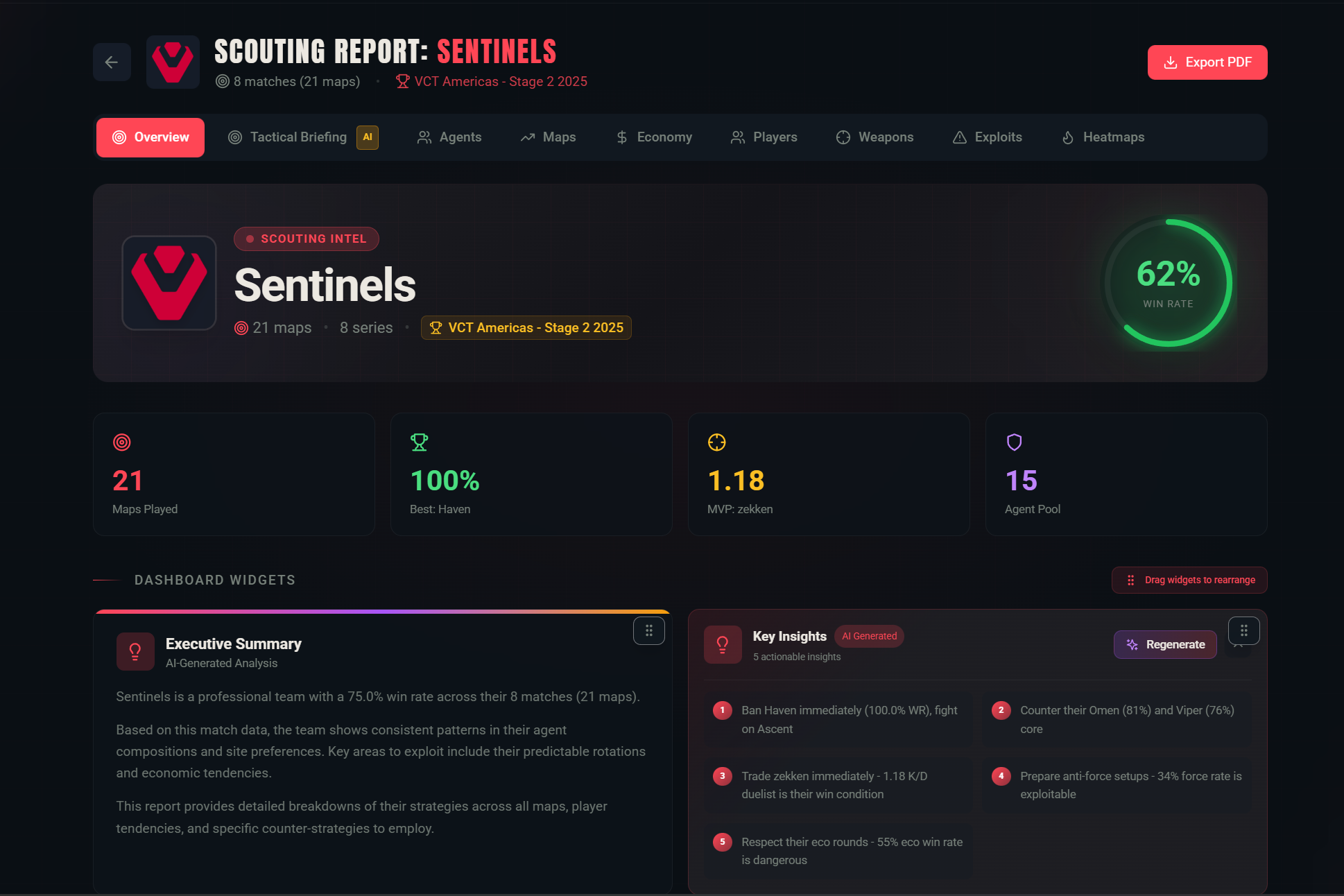
UI - 1
-
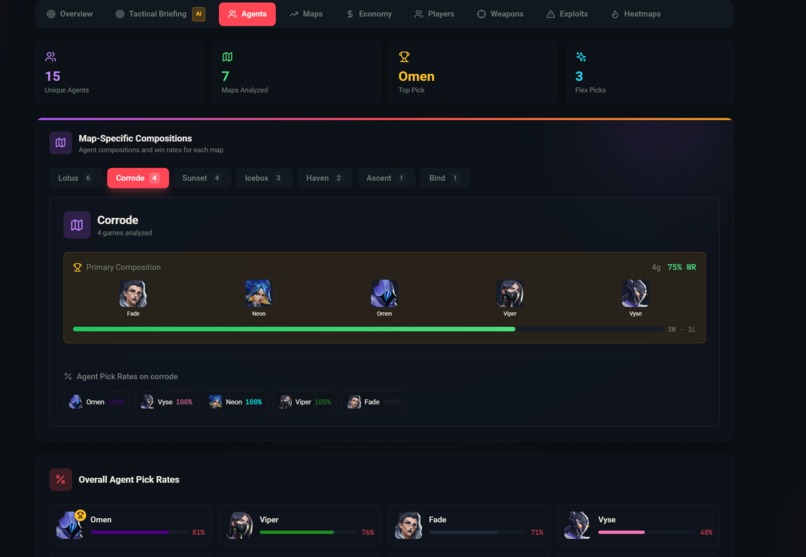
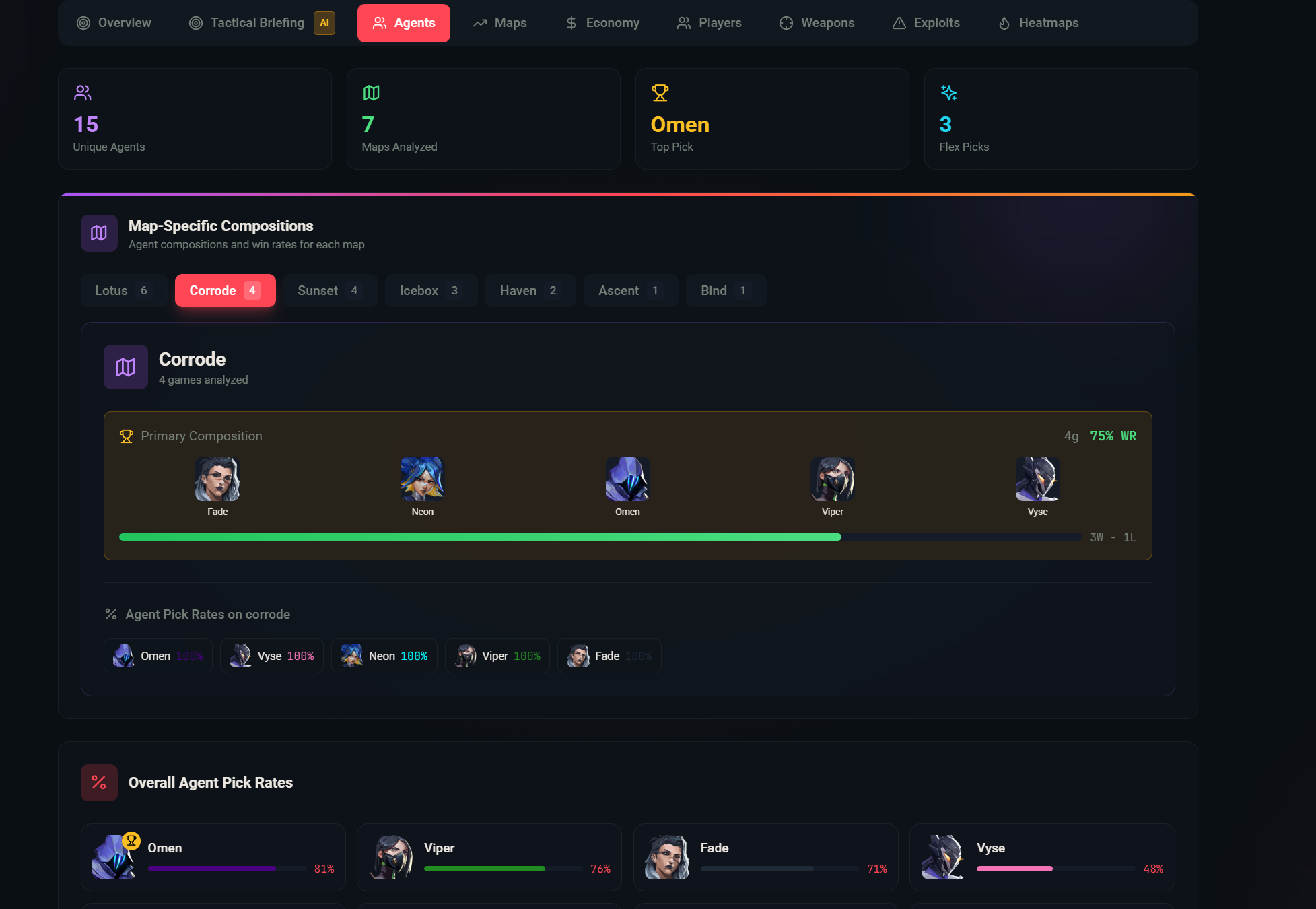
UI - 2
Inspiration
Competitive VALORANT is decided before the first round is played. Most teams don’t lose because they can’t aim — they lose because they walk into matches unprepared. Real scouting takes hours, lives in messy spreadsheets/notes, and is usually locked behind analyst time. We wanted to turn scouting into something instant, structured, and usable mid-scrim: not “interesting data,” but a ready-to-run gameplan.
What it does
VALORANT SCOUT is a scouting engine that turns match history into actionable prep for coaches and IGLs.
It generates a team report with:
- Map tendencies (comfort maps, win rates, repeat patterns)
- Agent comps + role structure (defaults, swaps by map, role distribution)
- Economy behavior (pistol impact, bonus conversions, force patterns, swing rounds)
- Player tendencies (first contact, lurks, support patterns, carry/enable signals)
- Exploitable habits (predictable hits, weak sides, repeat setups)
- A tactical briefing that summarizes win conditions + counter-strats you can run immediately
How we built it
- Data ingestion: Pulled team + match data from the GRID ecosystem
- Processing layer: Aggregated, normalized, and derived structured stats + patterns
- Analysis engine: Converted raw metrics into scouting signals (tendencies, roles, habits)
- Briefing generator: Produced a concise tactical summary from the analysis
- UI: Presented everything in a clean, fast interface designed for decision-making, not reading
Challenges we ran into
- Messy real-world data: Normalizing match info into consistent, comparable signals
- Signal vs. noise: Avoiding “stat spam” and prioritizing what actually changes a gameplan
- Context matters: Making insights map-specific, comp-aware, and round-type aware (eco/gun)
- Clarity under pressure: Keeping reports readable and useful mid-scrim, not just post-match
- Bridging data → tactics: Translating numbers into counter-strats, not just dashboards
Accomplishments that we're proud of
- Built a scouting workflow that goes from search → report → gameplan in minutes
- Delivered a report format that focuses on priorities, not walls of text
- Created tactical briefings that feel like a coach/IGL “prep sheet,” not a data dump
- Designed the UI around speed: what to ban/pick, what to punish, who to target, what to expect
What we learned
- The hardest part isn’t collecting stats it’s producing trustworthy, actionable insight
- Good scouting is about patterns + punish windows, not raw win rates
- Constraints make products better: optimizing for “usable mid-scrim” forced ruthless clarity
- Turning analysis into a briefing is a product problem as much as an engineering problem
What's next for VALORANT SCOUT
- Deeper tactic breakdowns: default exec timings, site hit distributions, mid-round pivots
- Opponent-specific anti-strats: “If they show X, punish with Y” playbook recommendations
- Better filtering: by patch, roster changes, recent form, and match tier
- Shareable outputs: exportable reports for coaches (PDF/links) + quick “IGL brief” mode
- Scrim workflow upgrades: prep packets per opponent + map veto helper + priority checklist
Built With
- fastapi
- framer
- github
- loguru
- pydantic
- python
- react
- tenacity
- typescript
- vite

Log in or sign up for Devpost to join the conversation.