Inspiration
As a passionate Valorant player and AI enthusiast, I was inspired to merge gaming and computer vision. I wanted to create a tool that could help players analyze gameplay footage and improve tactical decision-making by automatically detecting enemy positions.
What it does
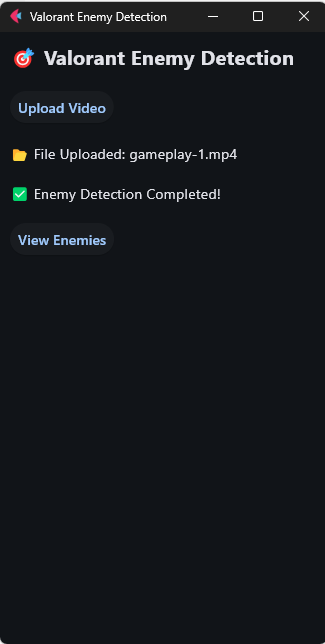
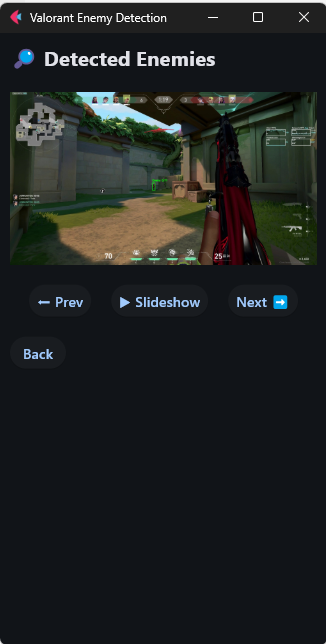
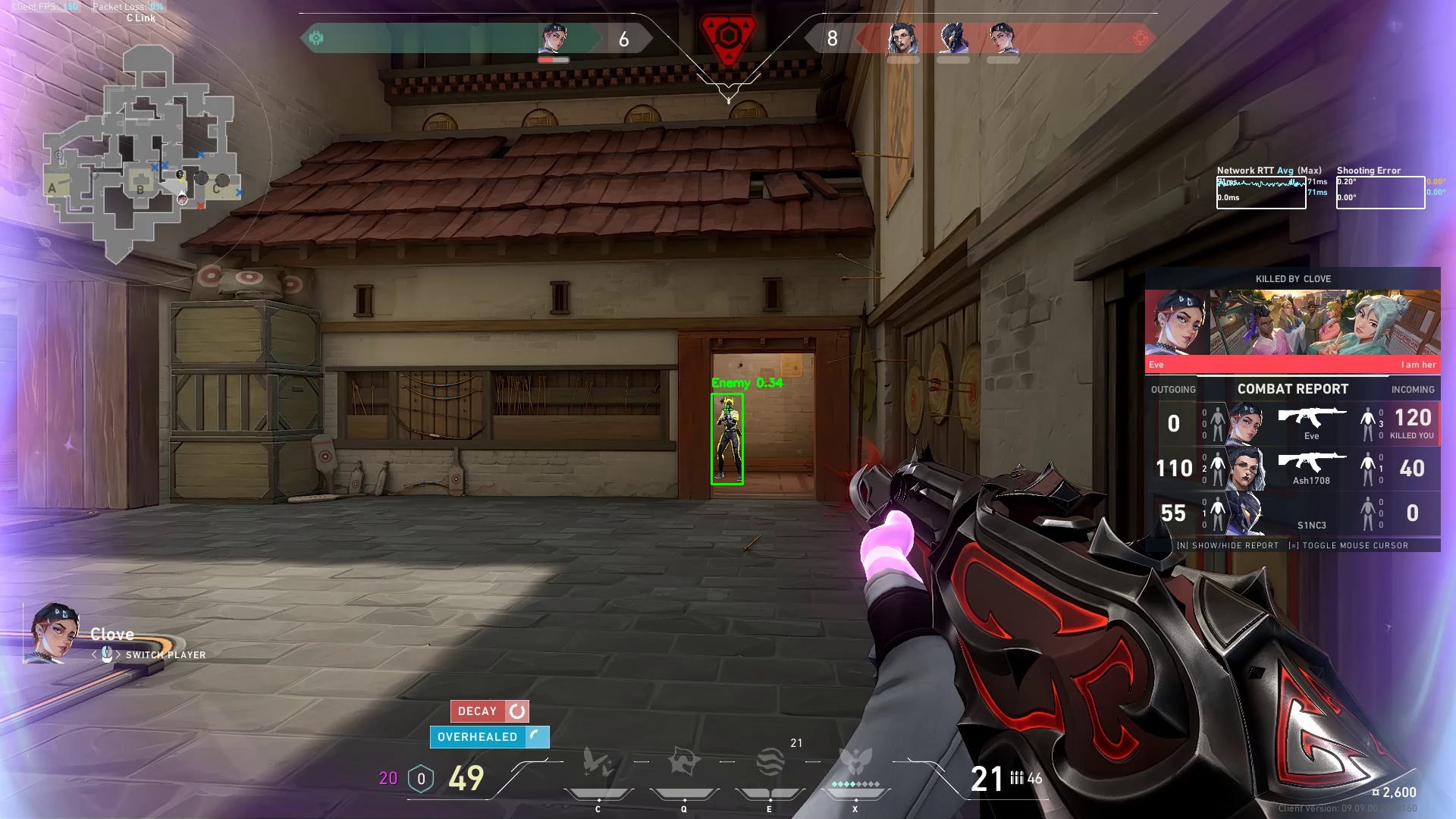
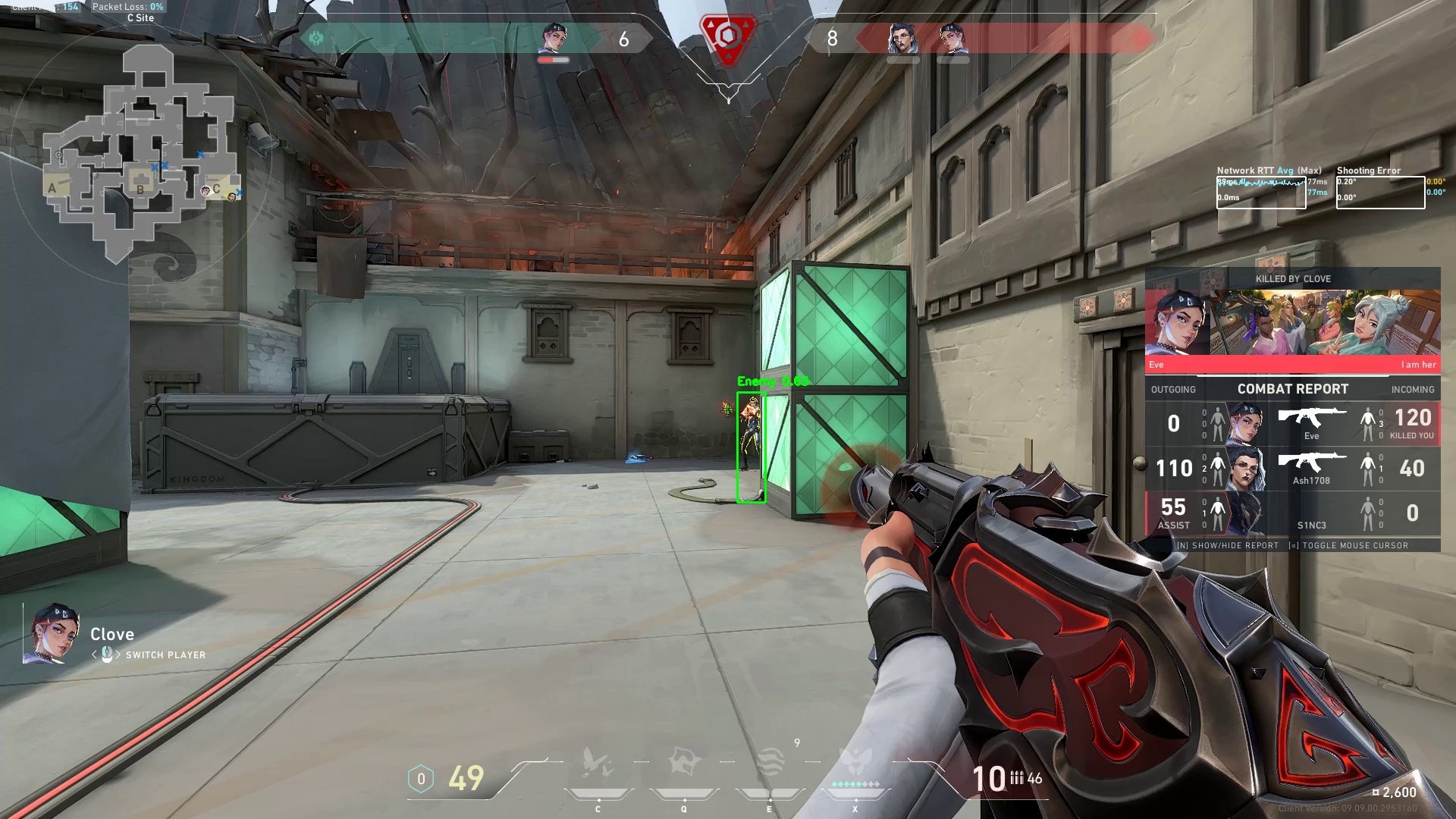
The Valorant Enemy Detection Model extracts frames from uploaded gameplay videos, applies YOLOv8 object detection to identify enemy figures, and displays the detected frames in an interactive UI. It logs detection events and cleans up temporary files automatically after use.
How we built it
- Frame Extraction: We built a script to extract frames from a video and store them temporarily.
- Enemy Detection: Using YOLOv8, the model processes each frame to detect enemies.
- Interactive UI: A Flet-based GUI allows users to upload videos and view detected enemy frames with navigation and slideshow features.
- Cleanup: Temporary files (uploaded video, extracted frames, detection outputs) are automatically deleted when the app is closed.
Challenges we ran into
- Large File Handling: Managing large video files and ensuring efficient frame extraction.
- Detection Accuracy: Reducing false positives (e.g., detecting teammates or irrelevant objects) and tuning confidence thresholds.
- Temporary File Management: Ensuring all temporary files are properly deleted after processing.
- Integration: Combining computer vision scripts with a responsive GUI framework.
Accomplishments that we're proud of
- Successfully integrating YOLOv8 for real-time enemy detection in gameplay footage.
- Building an interactive, minimalistic UI using Flet.
- Implementing an effective auto-cleanup mechanism to manage temporary files.
- Creating a tool that bridges AI and gaming, providing valuable insights to Valorant players.
What we learned
- The power of combining AI with real-world applications, particularly in gaming analytics.
- How to efficiently manage and process large amounts of visual data.
- The importance of fine-tuning detection thresholds to balance between accuracy and false positives.
- Integrating various technologies (computer vision, GUI frameworks, file management) into a cohesive application.
What's next for Valorant Enemy Detection Model
- Real-time Detection: Evolve the model to process live gameplay streams.
- Enhanced Classification: Improve accuracy by distinguishing between enemies, allies, and other objects.
- Advanced Analytics: Incorporate reaction time analysis and performance metrics.
- Web Deployment: Develop a web-based dashboard for broader accessibility and real-time data visualization.
- Community Feedback: Engage with the gaming community to gather insights and iterate on the tool for further improvements.


Log in or sign up for Devpost to join the conversation.