-
-
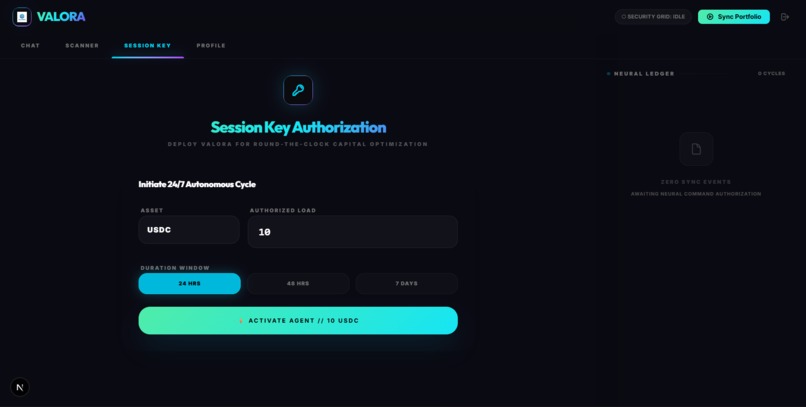
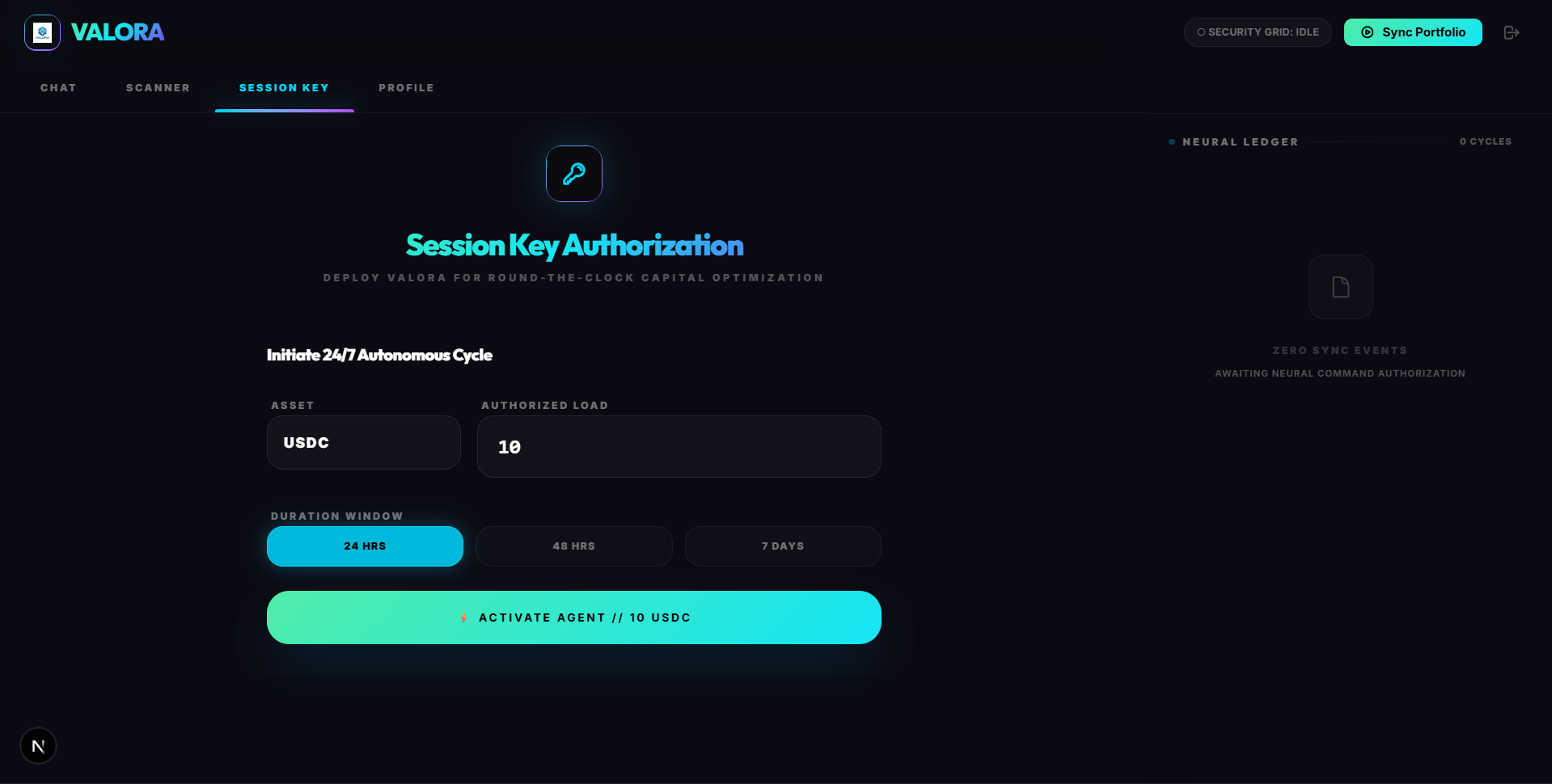
give the session key and boom valora is ready to invest..!!
-
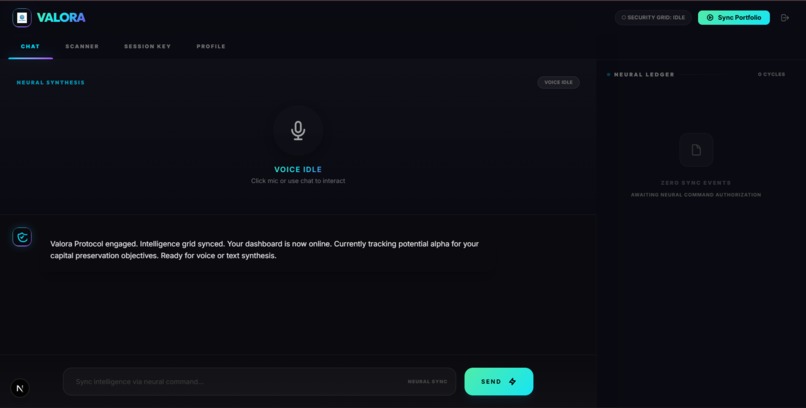
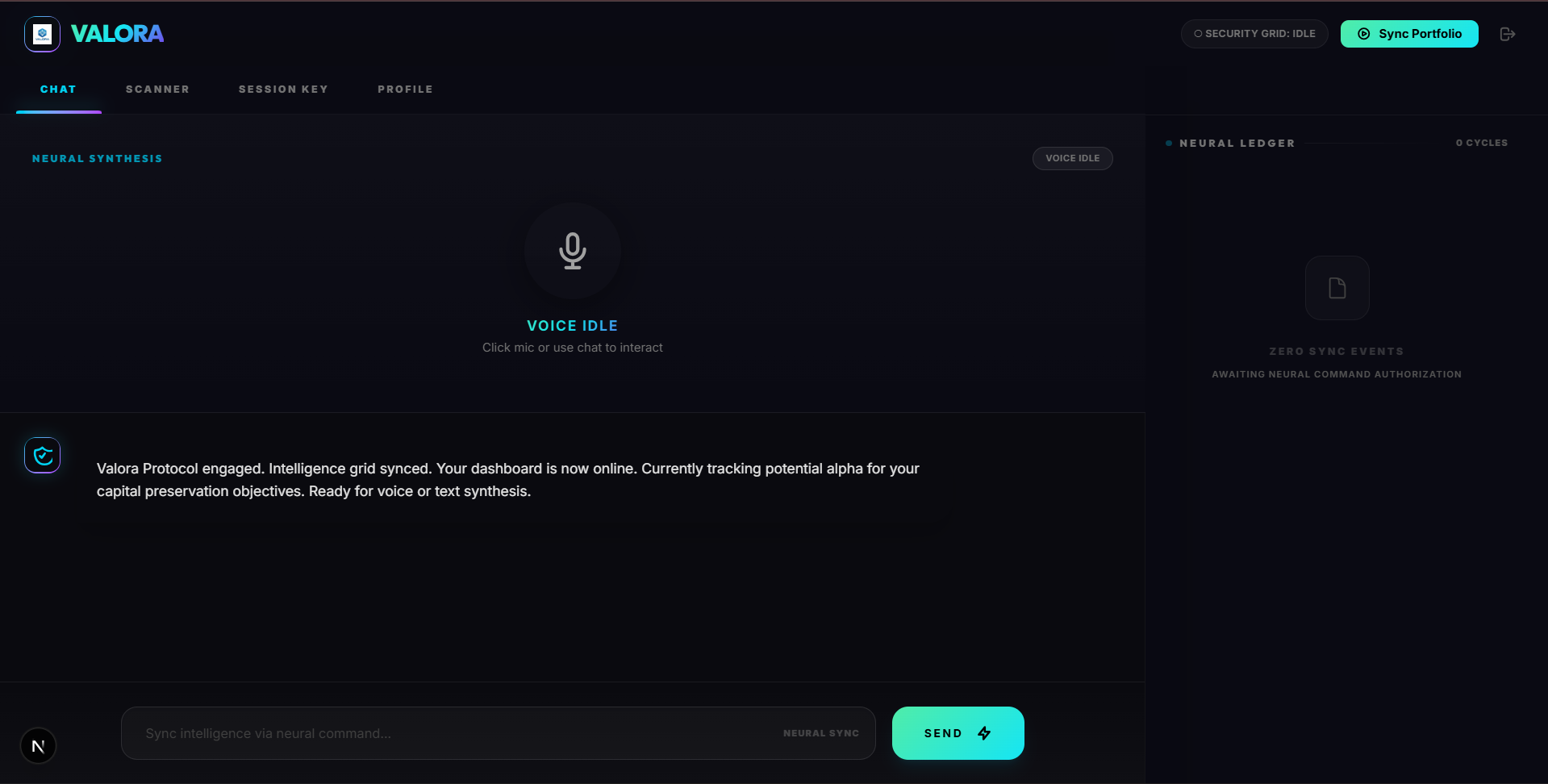
this is how the valora's interface looks
-
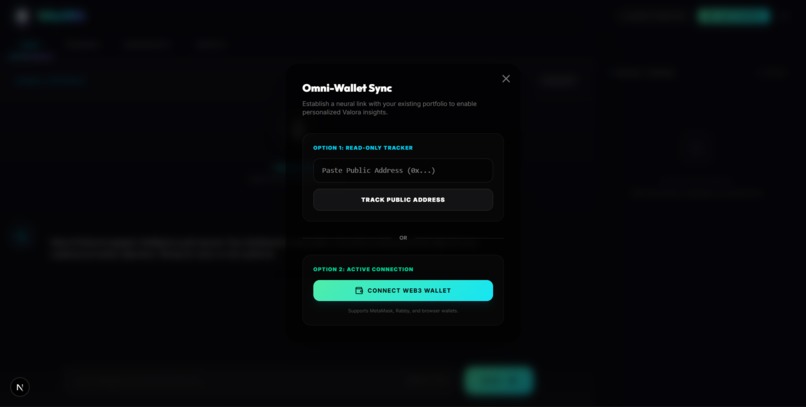
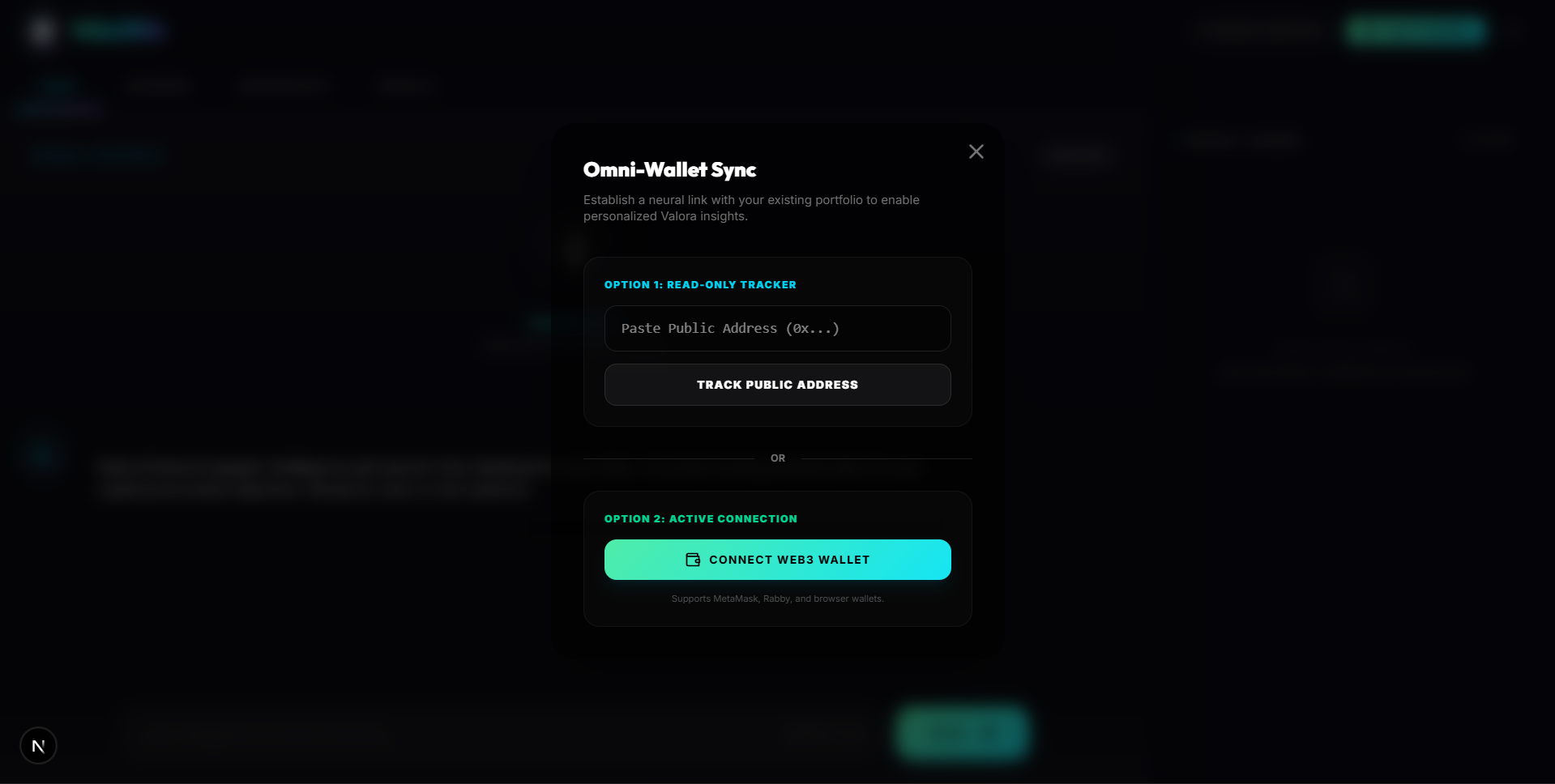
the omni wallet sync, connect to any wallet/platform and it is ready, just plug and play
Inspiration
I’ve spent a lot of time digging into the mechanics of Decentralized Finance, and honestly, the tech is incredible—but the user experience is fundamentally broken. Watching a new user try to navigate yield farming, gas fees, and extreme market volatility is painful. It’s a heavily manual process that completely lacks the intelligent automation we expect from modern software. I wanted to build a bridge. I kept asking myself: What if we could combine the conversational ease of an LLM with the autonomous execution of Web3 smart contracts? That was the birth of Valora AI.
What it does
I didn't want to build just another chatbot that spits out generic financial advice; I wanted to build a true, round-the-clock DeFAI (Decentralized Finance AI) fiduciary for the Base ecosystem. The first step was giving the AI context. I built an "Omni-Wallet Sync" feature that allows users to connect their wallet or just paste a public EVM address. Instantly, the backend scrapes their on-chain history, cross-references it with their stated goals, and generates a "Neural Risk Passport"—a psychological profile of their risk tolerance. But an AI needs to understand the macro environment too. So, I wired the intelligence engine directly into the live Crypto Fear & Greed Index. If the market is bleeding and fear is high, Valora automatically flees to stablecoins. If greed takes over, it chases higher yields.
How we built it
We built the stack using Next.js on the frontend (deployed on Vercel) and a Node.js/Express backend with Prisma and Supabase (deployed on Render). The brain running the logic is gpt-4o-mini, which uses strict RAG pipelines to process the user's portfolio data.
Challenges we ran into
Of course, no hackathon is complete without hitting a massive wall. Our biggest roadblock was the classic Web3 onboarding problem: testnet gas fees. Forcing new users to fund a wallet just to authorize the AI was ruining the seamless experience I envisioned. To fix this, I completely pivoted the architecture mid-hackathon to use Gasless Signature Requests. This allows the user to sign a temporary "permission slip" giving the AI authority to route funds to safe protocols like Aave, without ever giving the AI custody of the assets or charging the user ETH for gas. And just to keep things interesting, right as the deadline approached, my final GitHub push crashed. A massive, forgotten 342MB backend.zip file had snuck into my commit history and broke the entire Vercel and Render deployment pipeline. After some frantic terminal surgery to rewrite the Git history and update the .gitignore, I managed to clear the cache, push the clean code, and get the live URLs green across the board.
Accomplishments that we're proud of
Getting Valora to execute a simulated yield strategy entirely on its own reasoning was one of the most rewarding coding moments I've had.
What we learned
It proved that we can constrain a generic LLM into a highly specific, secure financial agent.
What's next for Valora AI
Looking ahead, I want to push the Valora Vault contracts to the Base mainnet. I’m also exploring "Social Sentiment RAG"—giving the AI the ability to scrape a user's X timeline so it can dynamically adjust their risk passport based on their real-time emotional state. This weekend was just the foundation.
Built With
- ether.js
- express.js
- next.js
- node.js
- postgresql
- prisma
- react
- tailwind


Log in or sign up for Devpost to join the conversation.