
Inspiration
People rehearse presentations, but they walk into the hardest conversations of their careers cold: asking for a raise, telling someone their work isn't good enough, saying no to a boss. Books tell you what to say. Almost nothing lets you practice saying it, out loud, to someone who pushes back. Valor grew out of voice roleplay simulators we had built for coaching work. We rebuilt them as a standalone app for new managers and people about to become one.
What it does
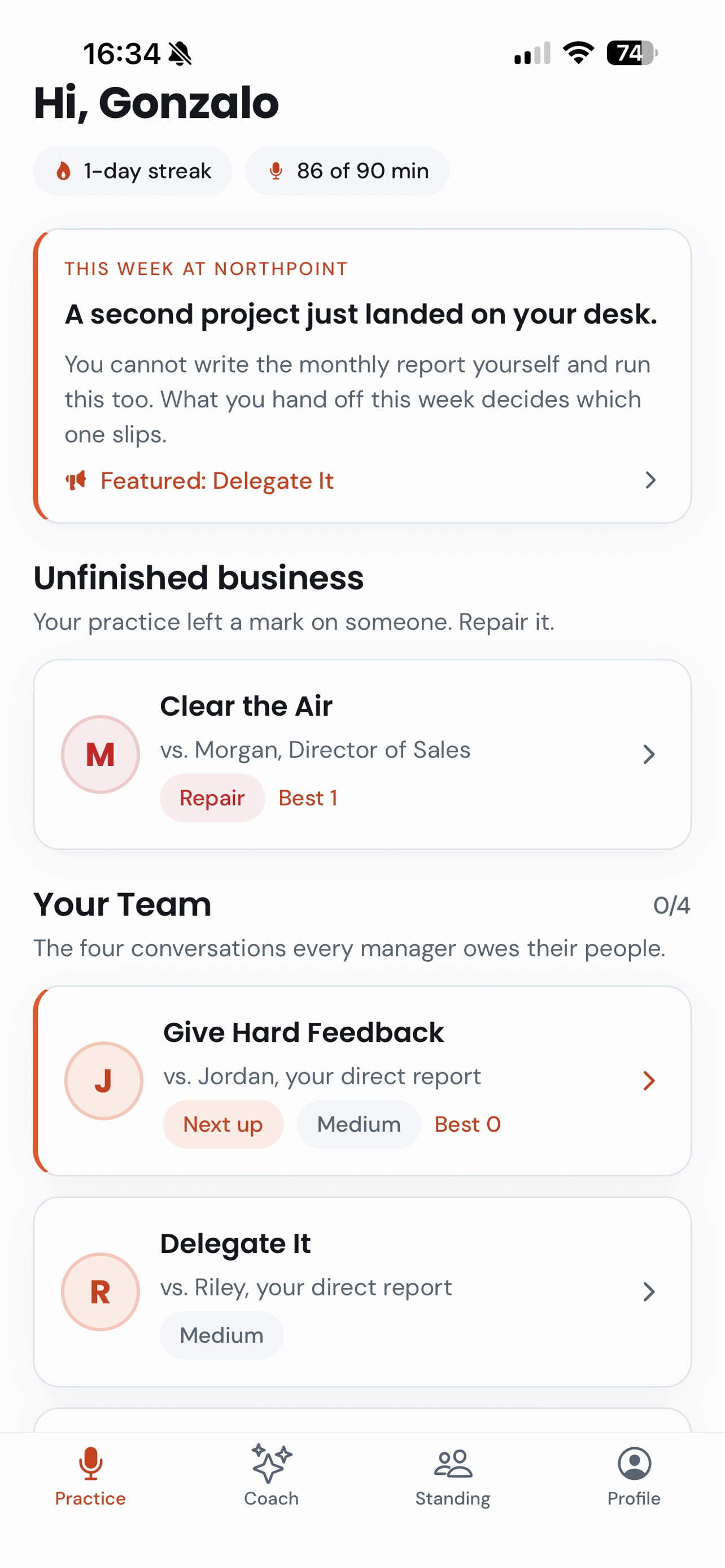
- Nine voice scenarios in three arcs (Your Team, Up and Across, Clear the Air): hard feedback, the underperformer, delegation, the tough 1:1, saying no, pushing back, the raise, peer conflict and managing a former peer. Each one has three levels.
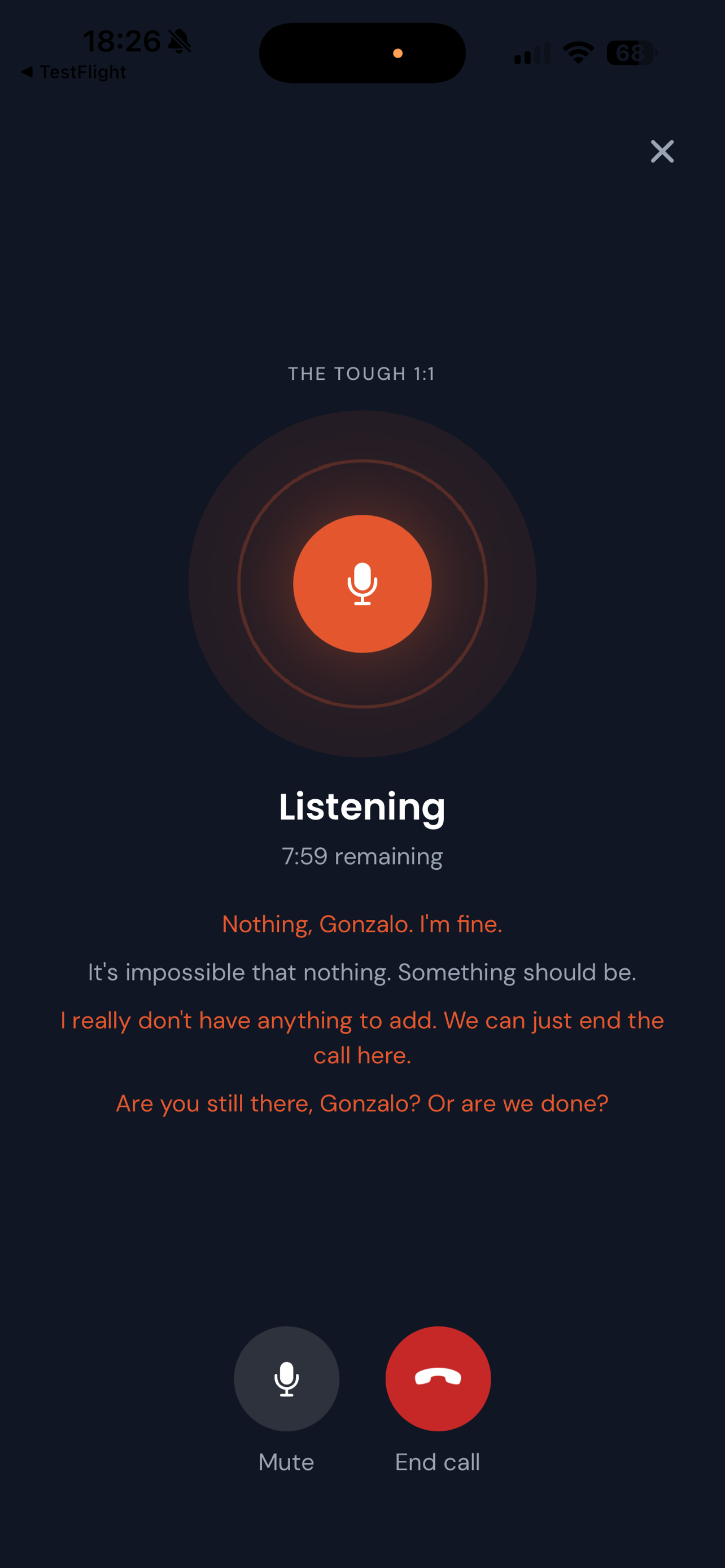
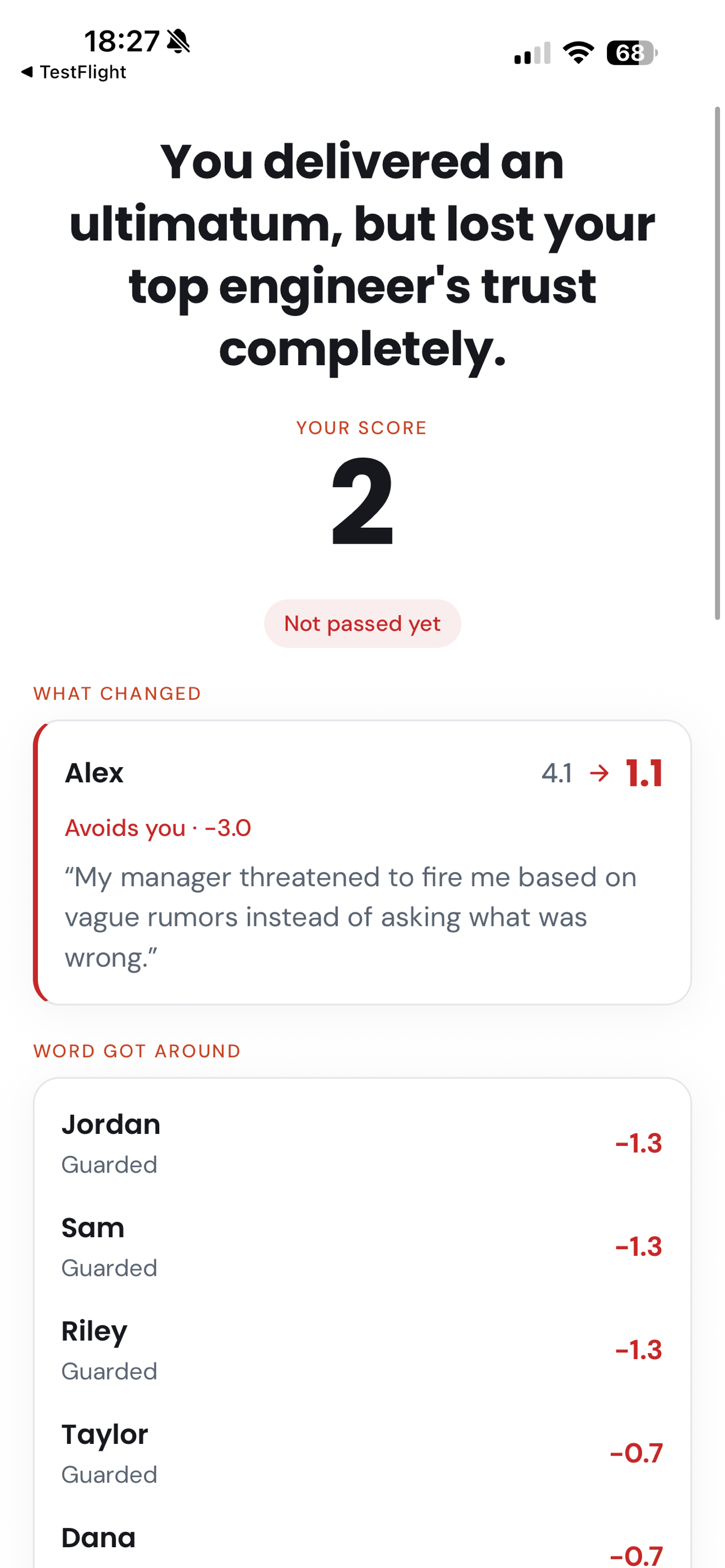
- You talk, out loud, with an AI colleague who gets defensive, deflects and changes the subject. After the call you get a score on five metrics, three things that worked, three to fix and a verdict.
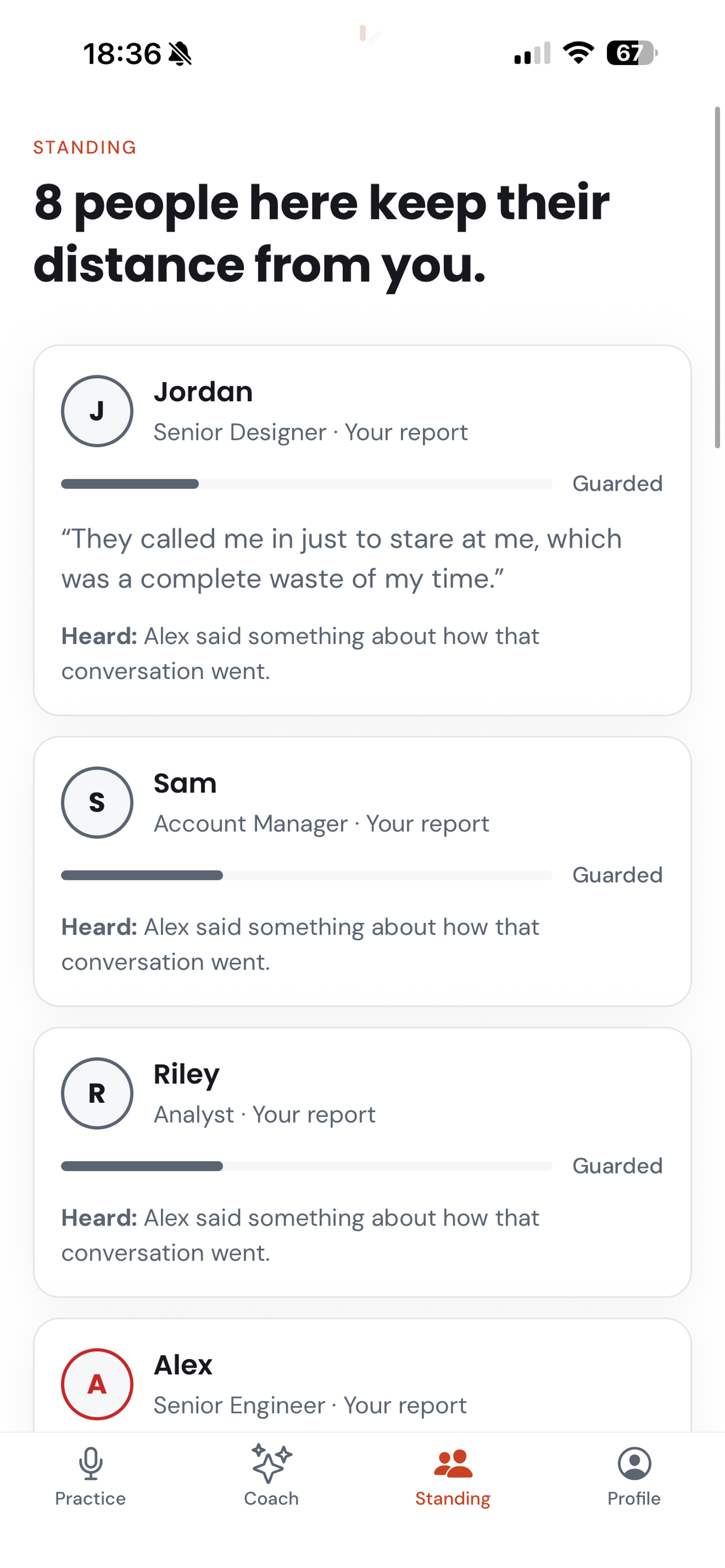
- The cast remembers. All nine counterparts work at the same fictional company, Northpoint. Handle someone badly and they trust you less. Word gets around, and repair scenarios appear when a relationship needs mending.
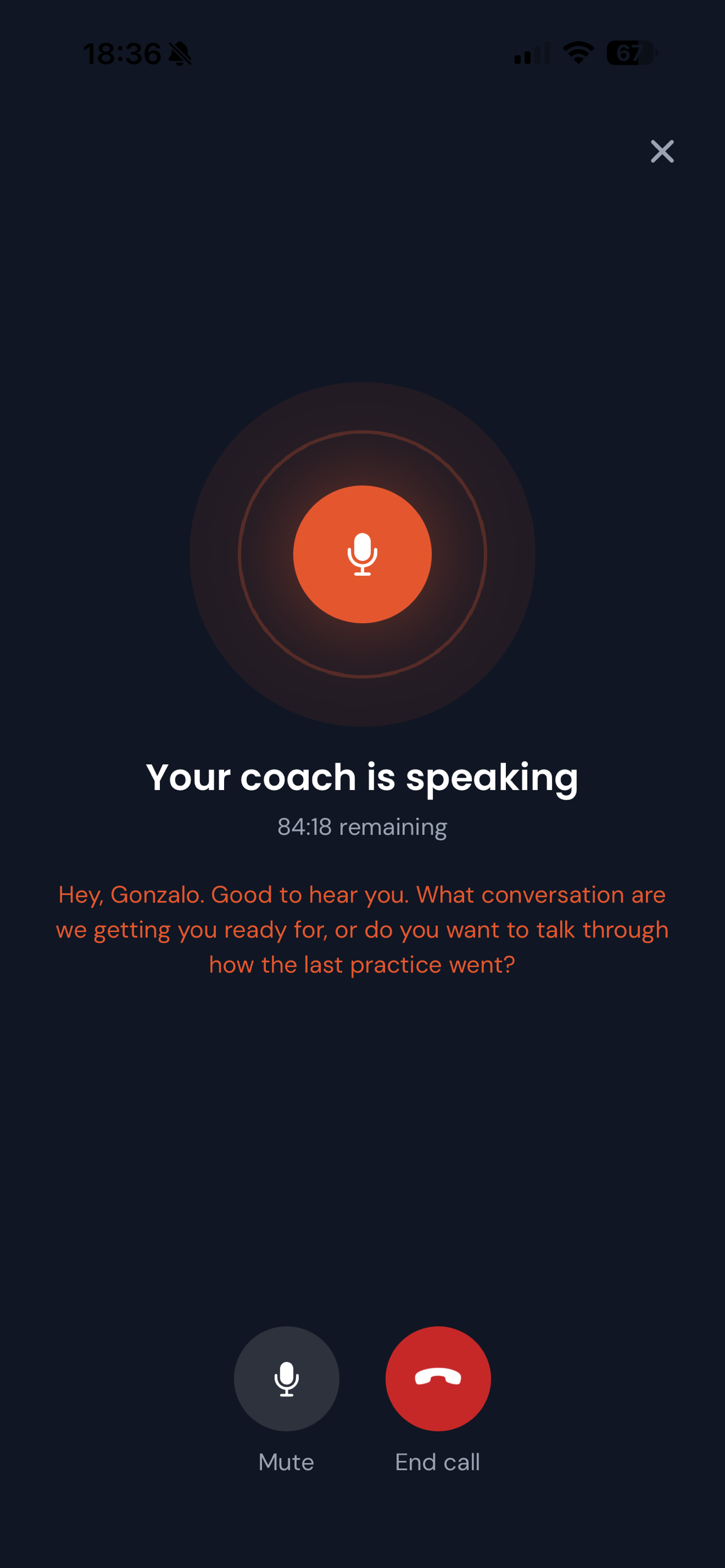
- An AI career coach by voice or chat. It knows your recent attempts, helps you prepare for the real conversation and debriefs you afterwards.
- English and Spanish, with native voices in both.
- Free to start with one scenario and 10 voice minutes a month. Valor Pro costs $6.99/month or $39.99/year, with a 7-day trial.
How we built it
- Client: Expo / React Native, one codebase for iOS and Android, with OTA updates through EAS.
- Backend: Next.js route handlers on Vercel, plain SQL on Neon Postgres, and Clerk auth with Sign in with Apple and Google.
- Voice: ElevenLabs Conversational Agents with a voice override per character.
- Scoring and coach: Gemini Flash on Vertex AI.
- Subscriptions: the RevenueCat SDK plus webhooks that write entitlements to our database, with a reconciliation cron as a safety net.
- Voice metering: voice is about 70% of our cost per user. Minutes are reserved before each call and released if they go unused, and a burst limit guards against abuse.
Relationships run on a warmth score $w \in [0, 10]$ that starts at 5. A repair scenario opens when $w \le 3.5$ and closes only once $w \ge 4.5$. That gap stops it from flickering on and off while you recover. Gossip travels only when a change is notable, $|\Delta w| \ge 2$, and the echo is never stronger than the direct hit. Your history sets how warm a character is when the call starts, but never the outcome, so you can always win back ground.
Challenges we ran into
- App Review. Apple rejected our first submission because the reviewer couldn't log in. The demo account had been created in Clerk's development instance, and Clerk's Device Trust (on by default) asked the reviewer for an email code they could never read.
- The silent coach. On some calls the voice agent received only "..." from the microphone. We added a mic check that repairs itself every 4 seconds.
- Latency vs. expressiveness. ElevenLabs' expressive v3 model sounded clearly better in Spanish, but it added a noticeable delay in English. We ship v3 for Spanish and Flash for English.
- Voice stack. We started on Vapi and moved to ElevenLabs Agents only, which simplified billing, voices and the Spanish launch.
Accomplishments that we're proud of
- It feels like a real conversation, not a chatbot with a microphone.
- A consequence system that makes practice matter: people at Northpoint remember how you treated them.
- A complete, bilingual subscription app built in five weeks, with sign-in, paywall, trial, account deletion and 99 backend tests.
What we learned
- In voice, latency beats fidelity. A slightly better voice that answers late feels worse.
- App Review is a user journey too. Design the reviewer's path the same way you design the user's.
- Meter expensive resources from day one. Adding the reservation system later would have been painful.
What's next for Valor: Practice hard conversations
- Scenarios beyond management: job interviews, salary negotiation and difficult clients.
- Custom scenarios built from the real situation you're about to face.
- Team plans for companies training new managers.
Built With
- android
- clerk
- eas
- elevenlabs
- expo-router
- expo.io
- gemini
- google-cloud
- ios
- livekit
- mdx
- neon
- next.js
- onesignal
- postgresql
- react-native
- revenuecat
- tailwindcss
- typescript
- vercel
- vertex-ai
- zod


Log in or sign up for Devpost to join the conversation.