ValeurHaus — Project Story
Inspiration
ValeurHaus was born from my experience as an artist in music and the broader creative world. Over time, I’ve seen art devalued not because of its quality, but because of everything surrounding it: names, trends, algorithms, and social positioning.
Too often, meaningful work is overlooked or underfunded until after an artist’s death or acceptance into specific institutional circles. I wanted to build a space where the art is experienced before the name, free from algorithmic pressure and external bias.
ValeurHaus exists to refocus attention on the work itself and to help artists be seen, supported, and valued while they are alive and creating.
📘 What I Learned
Building ValeurHaus reinforced a core belief: art doesn’t need more noise; it needs more space.
- Presentation shapes perception
- Structure drives attention
- Removing distractions increases engagement
I also learned that platforms shape culture. Systems optimized for speed and metrics produce disposable art; systems designed for context and intention create lasting work.
🚧 Challenges I Faced
- Resisting metrics-driven mechanics like likes, rankings, and virality
- Designing against bias, so discovery isn’t driven by status or familiarity
- Balancing accessibility and depth without becoming shallow or performative
🔮 Closing Reflection
ValeurHaus is not just a platform it’s a correction.
I didn’t want to build another tool to chase attention.
I wanted to build a house where art could finally live.
When the noise fades, the work remains.
What It Does
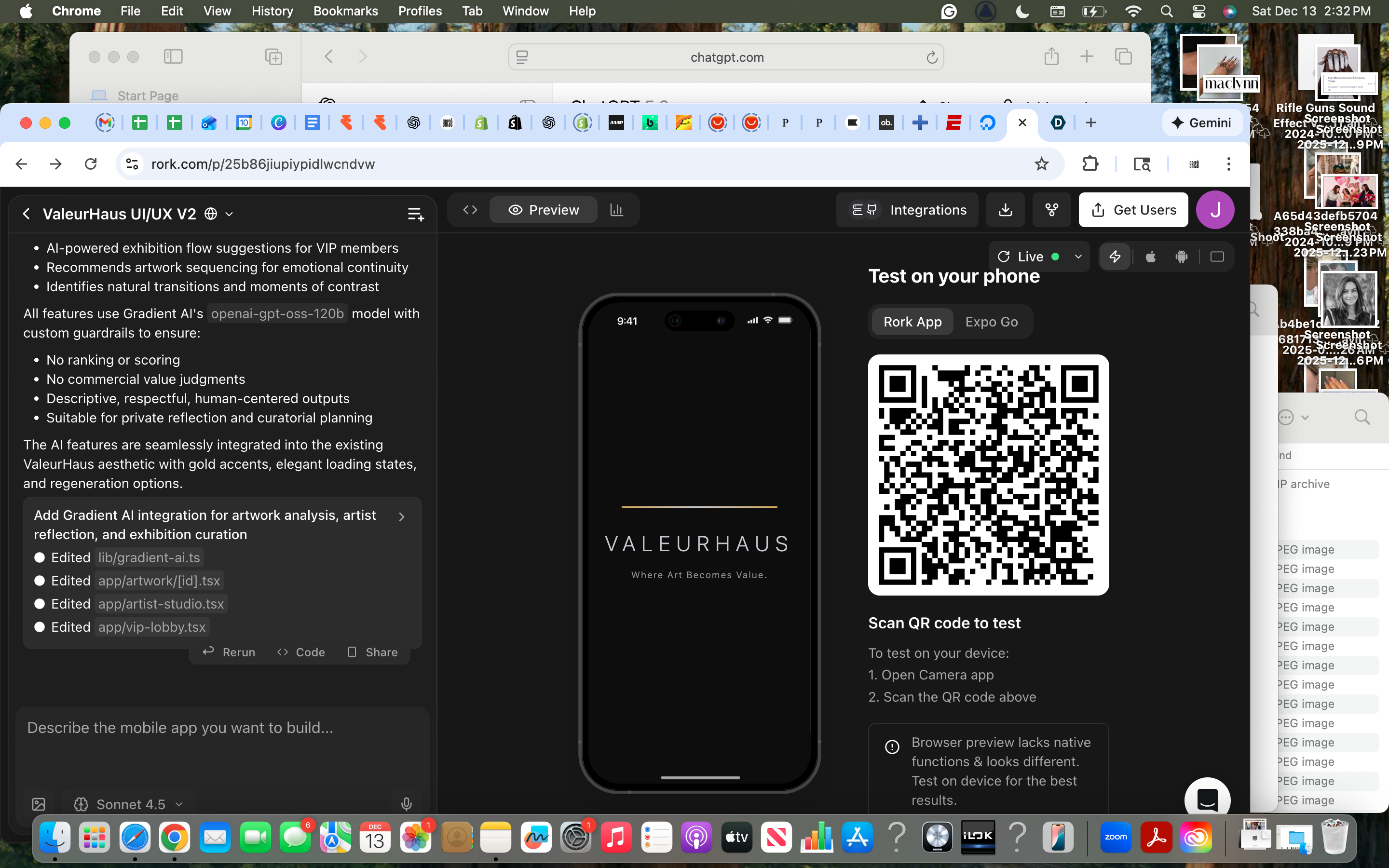
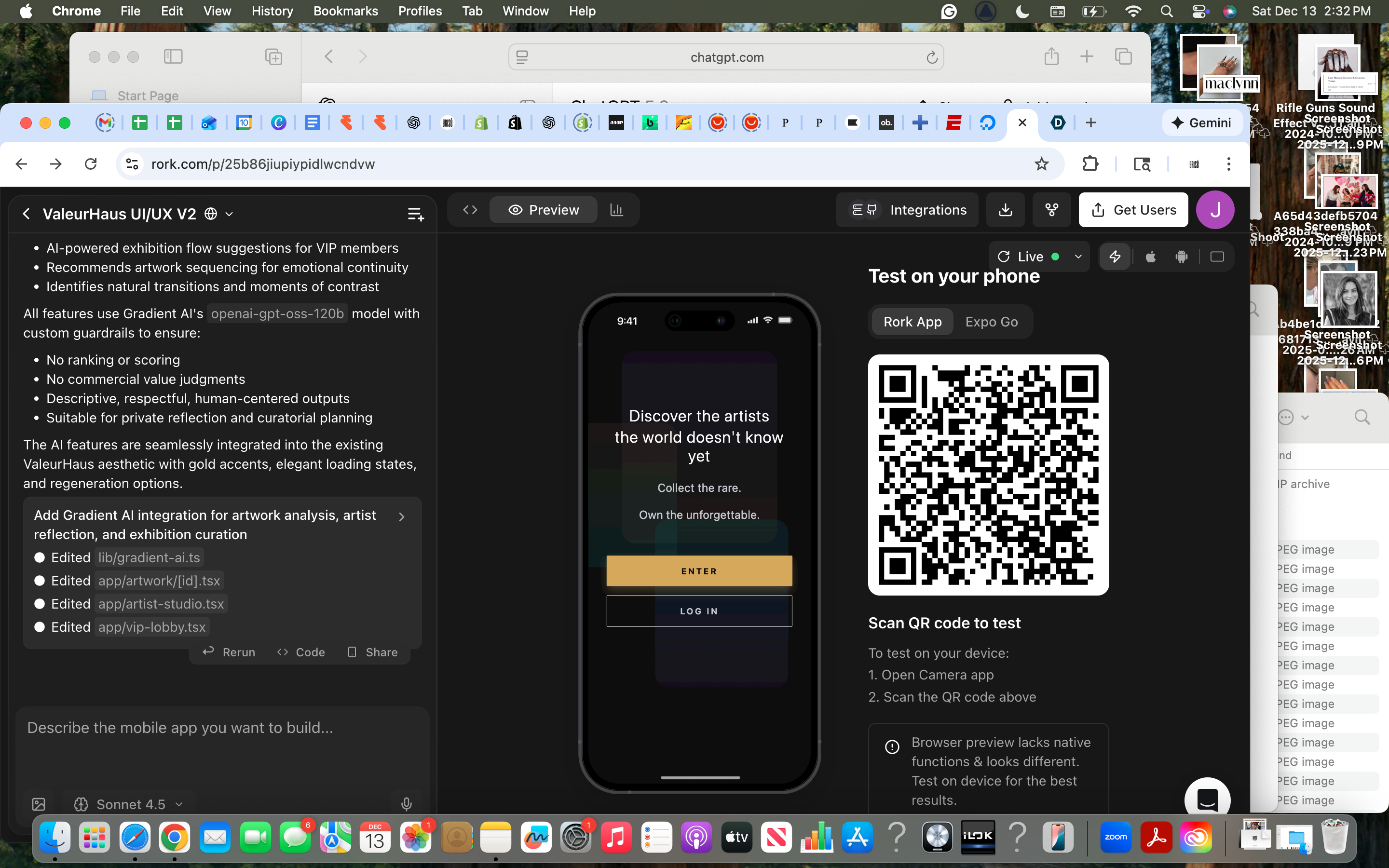
ValeurHaus is a digital exhibition space that restores focus and intention to creative work.
It allows artists to present work in a gallery-like environment where the art comes before names, metrics, or popularity. Instead of feeds and algorithms, it emphasizes narrative, permanence, and thoughtful discovery.
At its core, ValeurHaus:
- Centers the artwork
- Reduces external bias
- Preserves work as a living archive
- Gives creators full control over presentation
The goal is simple: shift attention back to the work itself.
How I Built It
ValeurHaus was built using Rork as the core development environment, enabling rapid iteration while maintaining full architectural control in a mobile-first system.
Tech Stack (Condensed)
- React Native + Expo SDK 54
_ Gradient AI - TypeScript (strict mode)
- Expo Router
- Custom context-based state management
- AsyncStorage for persistent user data
- tRPC + Hono backend with SurrealDB
Architecture Highlights
- Modular context providers for clean state separation
- Real-time auction logic with bid simulation
- Six-tier membership system (Member → Diamond)
- Financial verification and paddle registration inspired by major auction houses
Design
- Dual aesthetic: classic auction clarity + futuristic gallery immersion
- Dark obsidian palette with gold and cyan accents
- Subtle, purposeful animations using the Animated API
Built fully mobile-native—no web-first layouts.
🏆 Accomplishments I’m Proud Of
- Centered art over metrics and social validation
- Digitally translated gallery and auction systems
- Built a scalable platform as a solo creator
- Maintained restraint by excluding feeds and popularity mechanics
🔮 What’s Next for ValeurHaus
- Live, verified auctions
- Creator monetization beyond sales (patronage, limited releases)
- Curatorial and institutional partnerships
- Ethical, non-popularity-based AI curation
ValeurHaus aims to scale meaning, not attention.
Built With
- rork

Log in or sign up for Devpost to join the conversation.