-
-
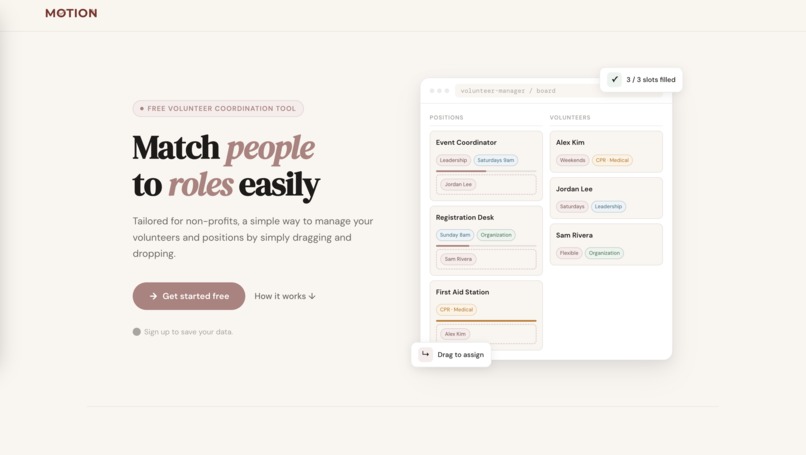
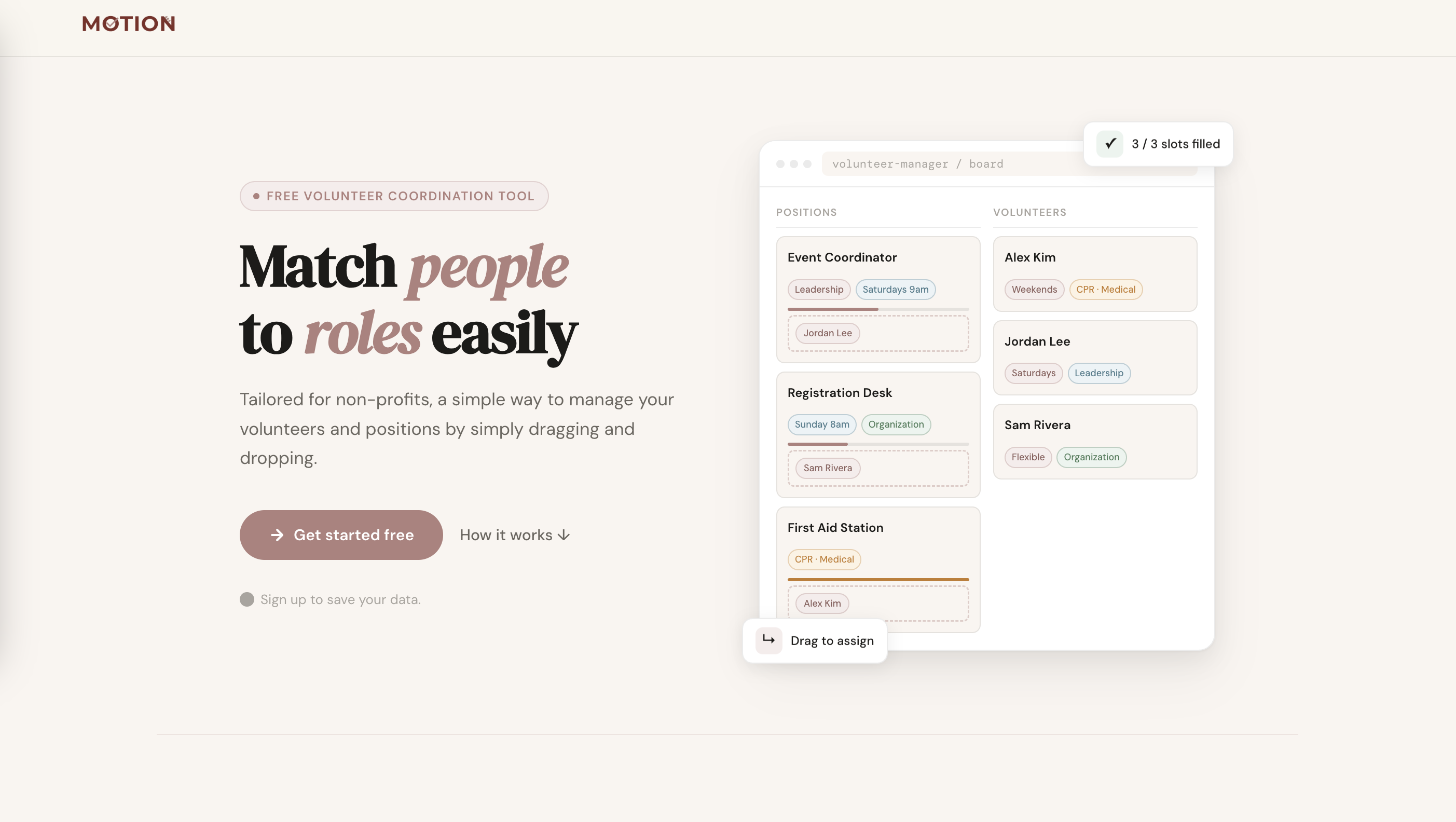
landing page
-
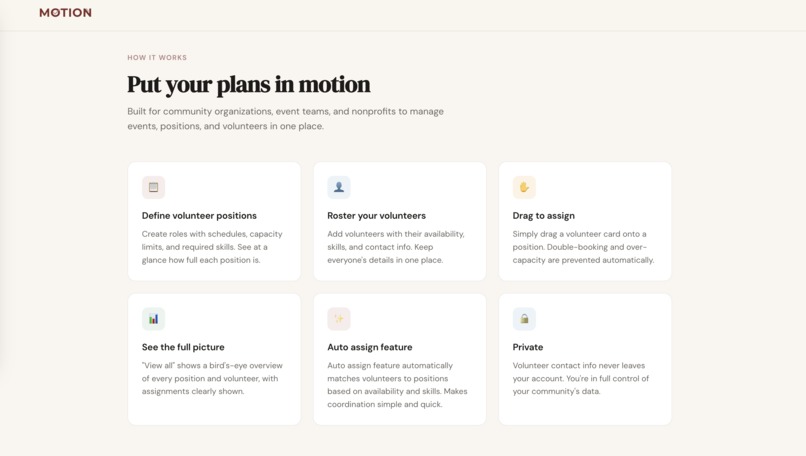
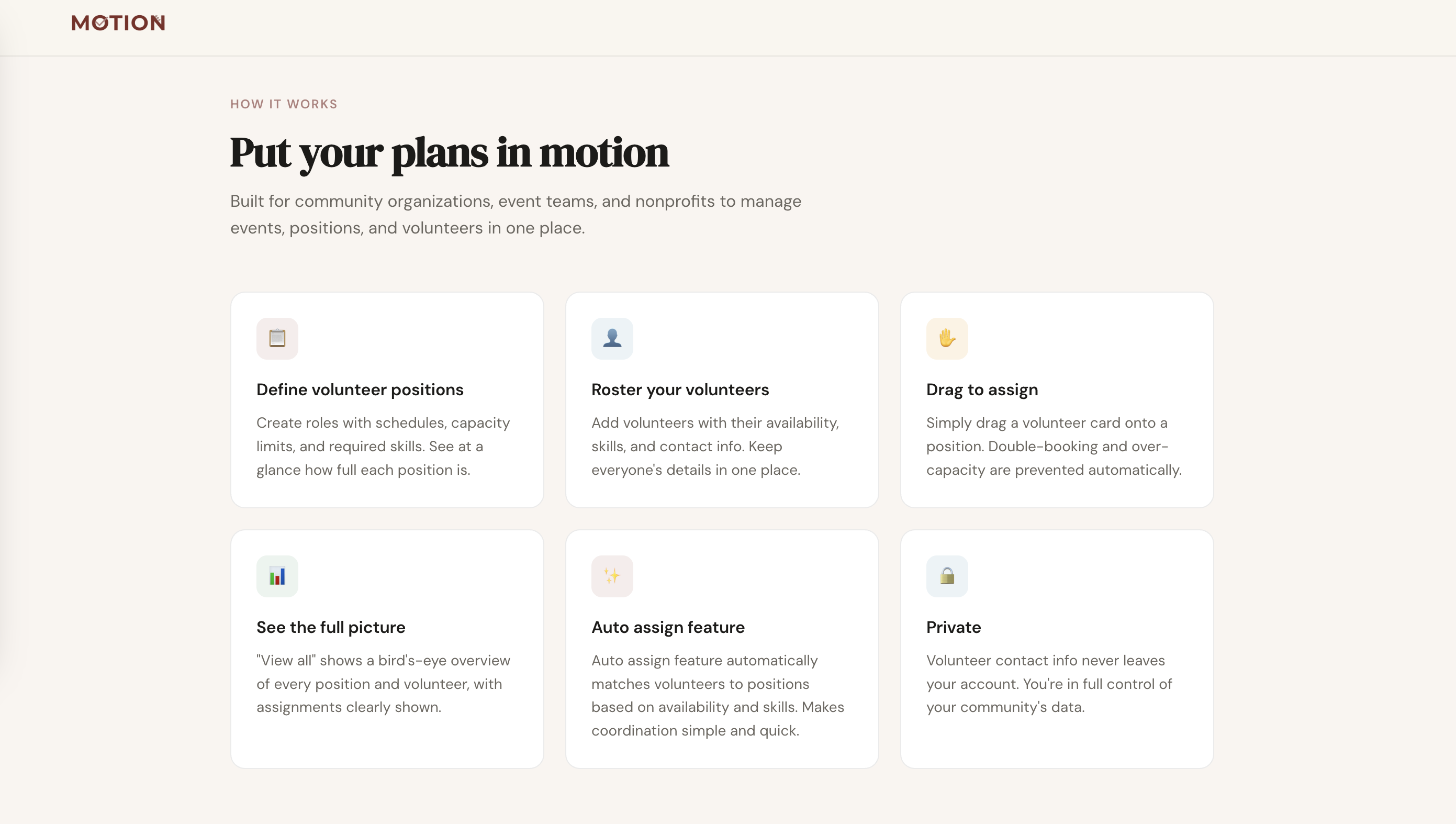
about the project
-
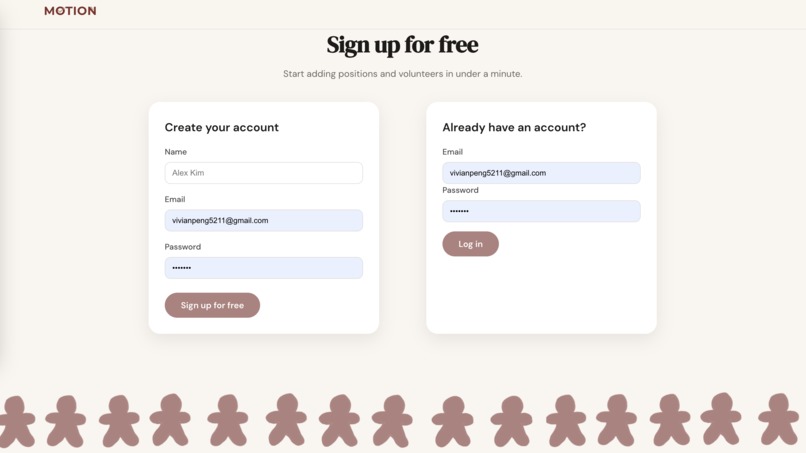
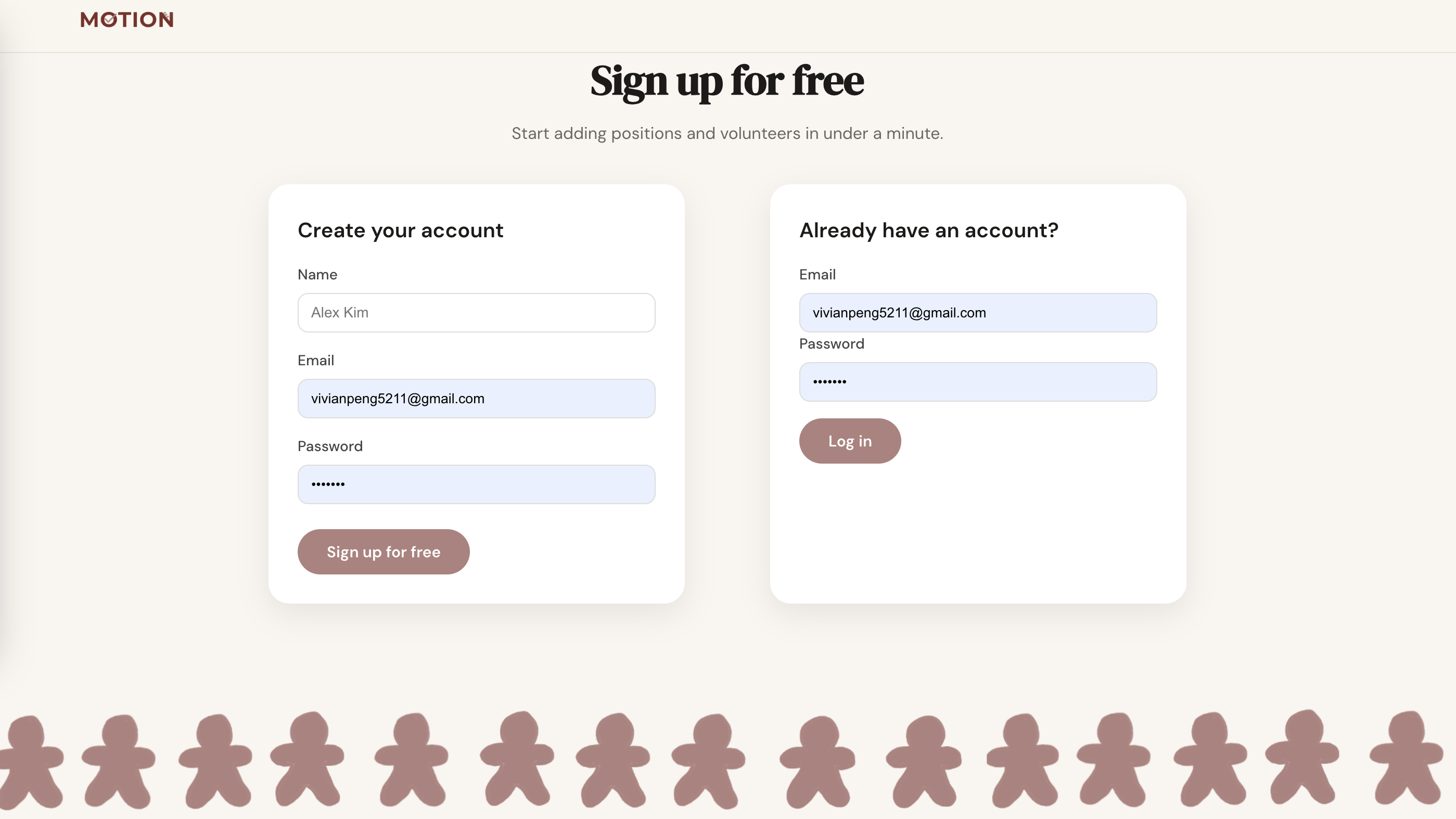
sign up / log in
-
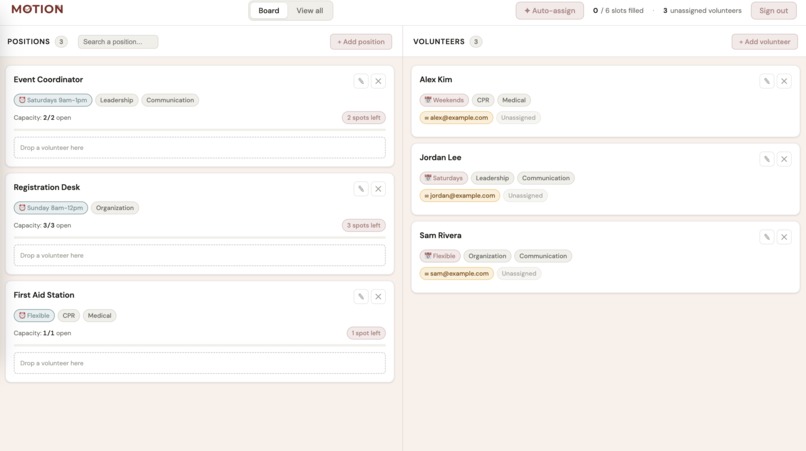
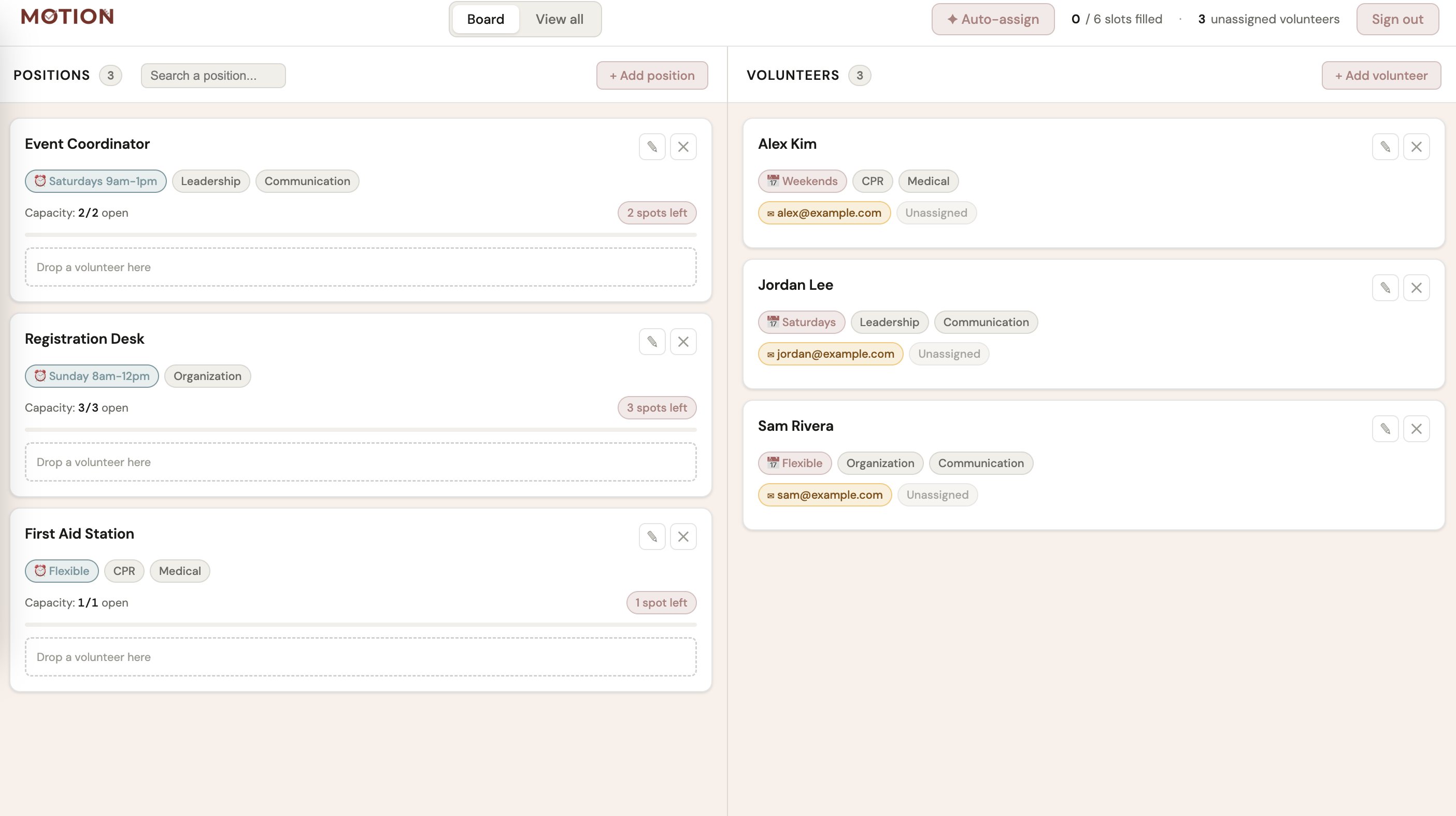
organization page
-
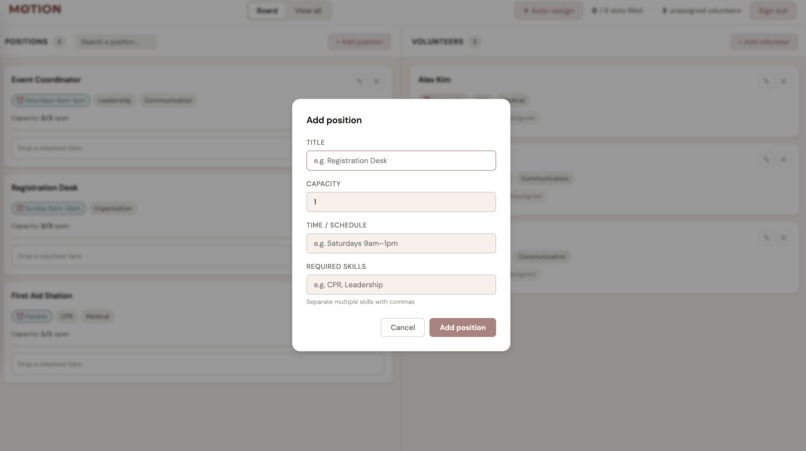
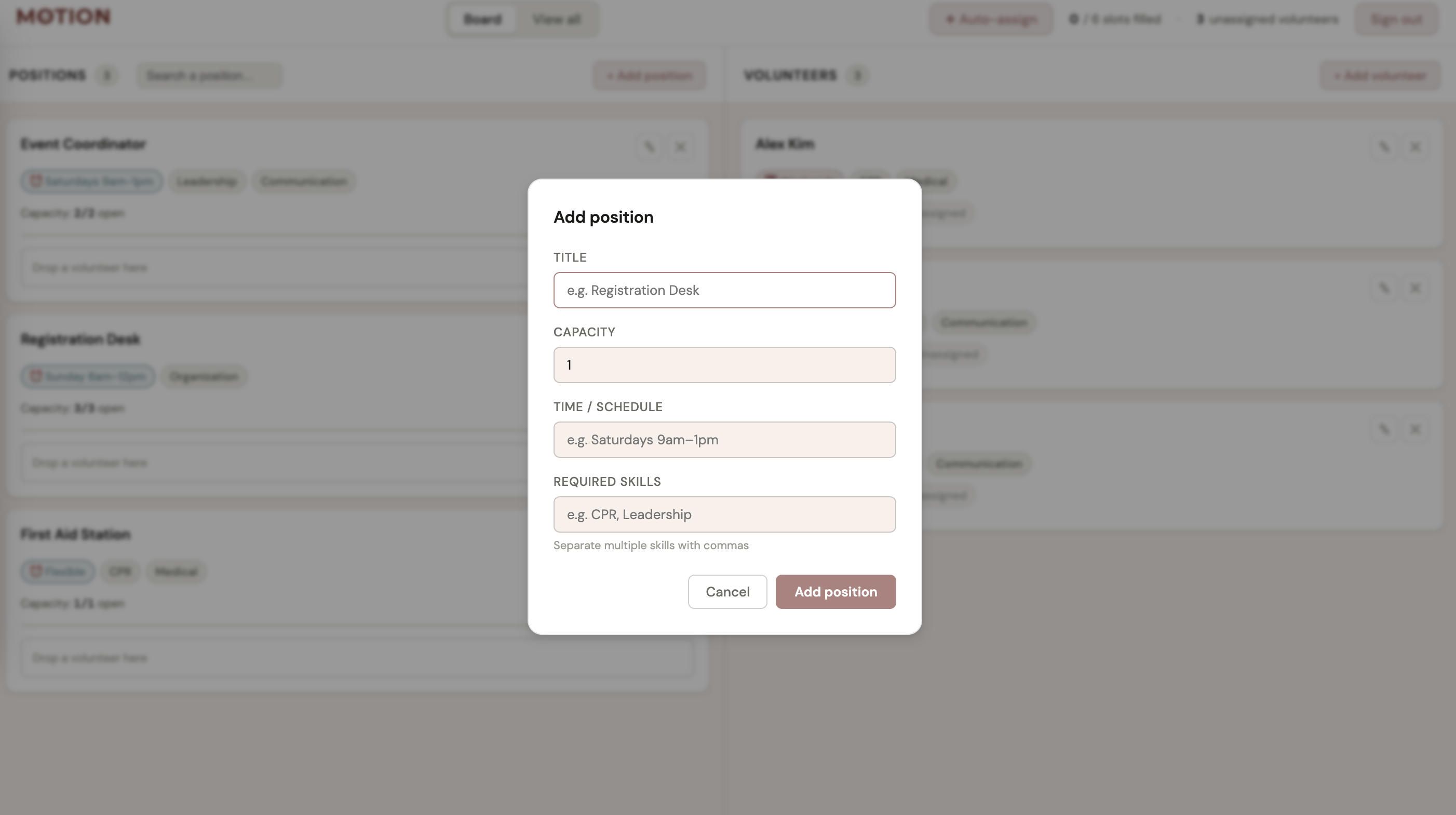
add position
-
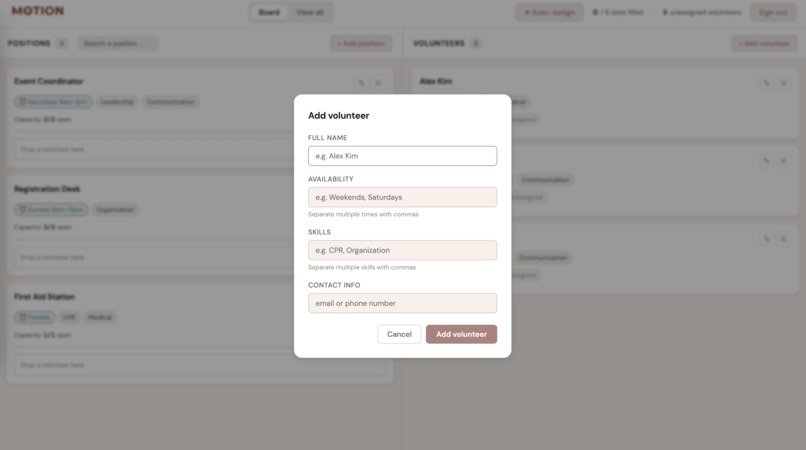
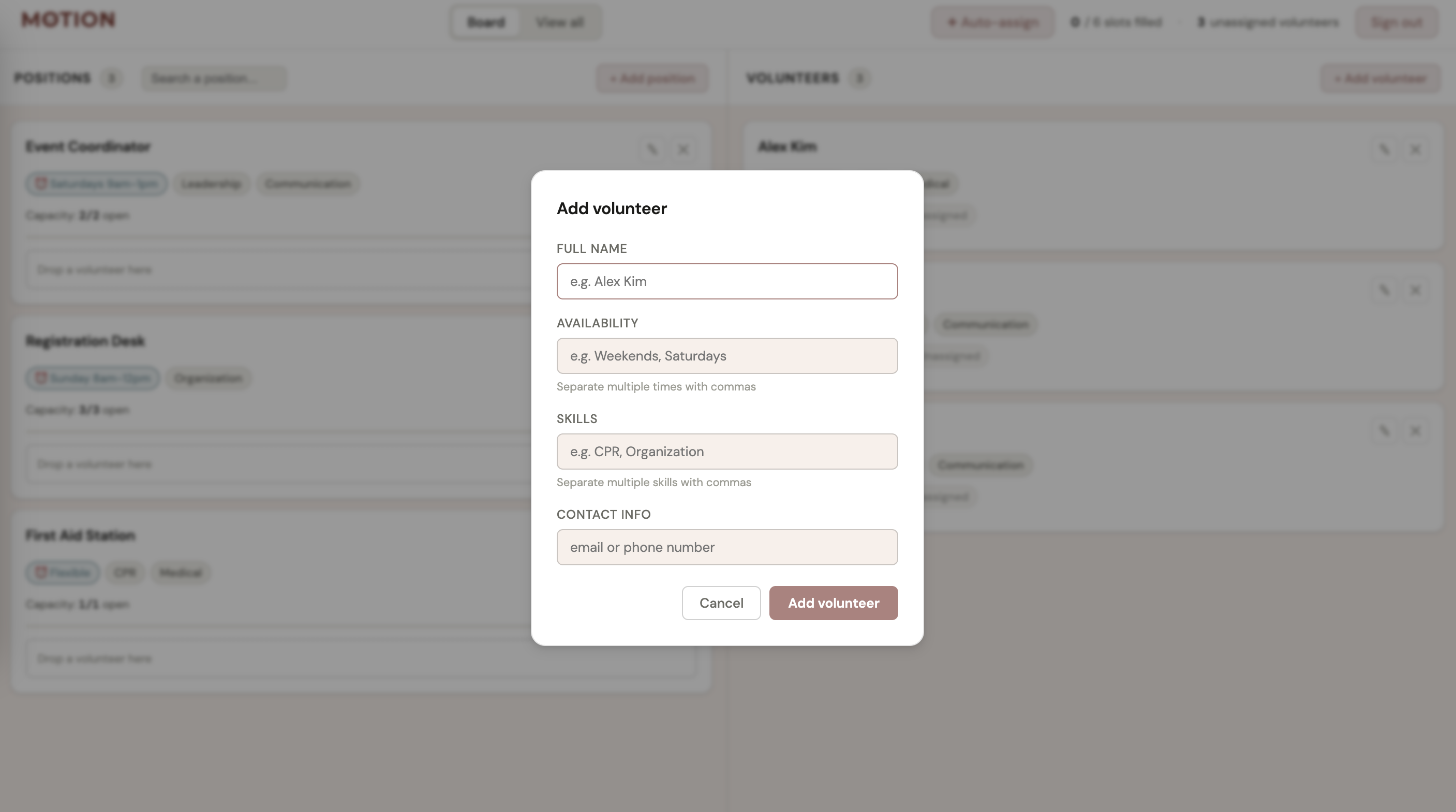
add volunteer
-
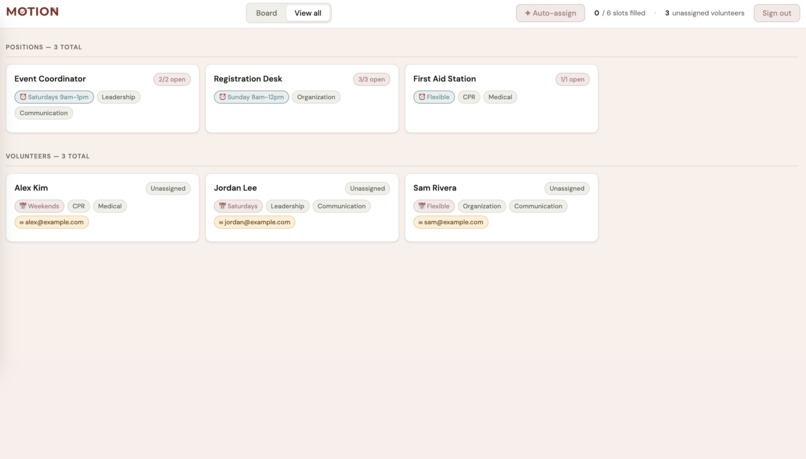
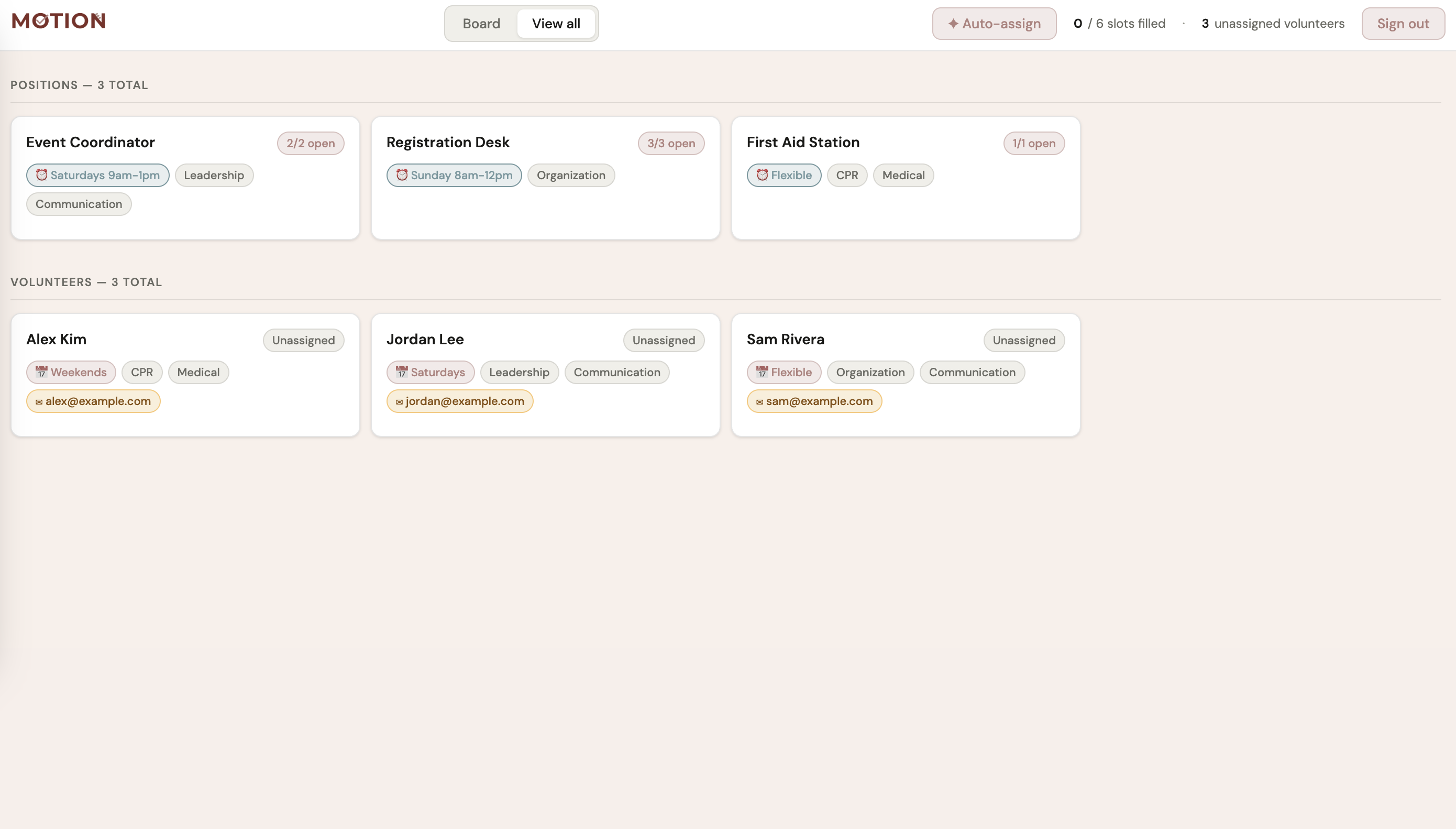
view all
-
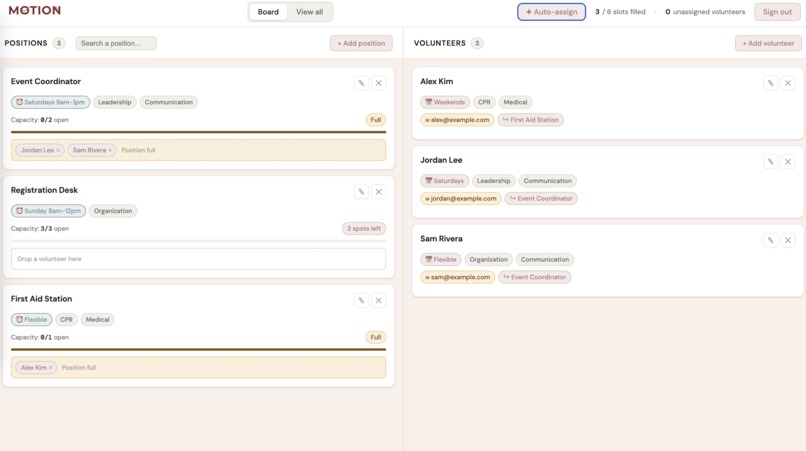
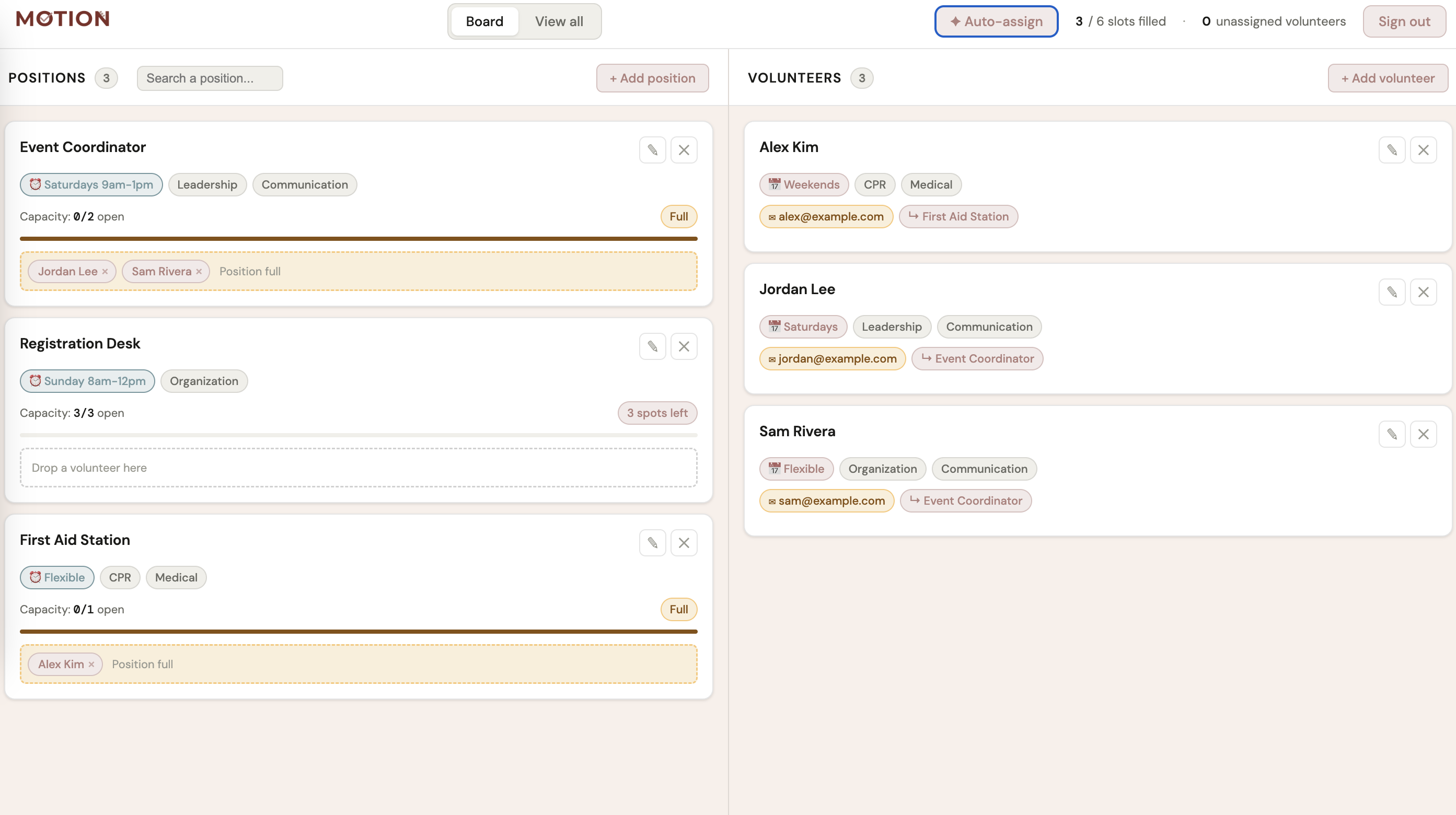
organization page: assigned
Inspiration
Drawing from a past internship experience with a non-profit, one teammate recalled that coordinating volunteers who make non-profits possible is a mess of spreadsheets, outdated and unspecialized software, and expensive tools locked behind paywalls. Upon further research, we found that existing volunteer management tools often additionally require reaching out to a sales professional for software access.
What it does
Motion is an accessible, user-friendly website designed for nonprofit organizations to manage volunteers and positions for events and community initiatives, with a simple drag-and-drop interface. It includes functionality to add volunteers based on availability, skills, and contact info, as well as define volunteer positions based on schedules, volunteer capacity, and required skills. Other features include a "view all" functionality that provides an overview of all positions and volunteers, an auto-assign feature that automatically assigns volunteers to positions based on skills and availability, and a search bar that allows users to search volunteer positions. Additionally, it has a sign-in which saves user accounts using their email.
How we built it
This project uses HTML, CSS, and JavaScript. Accounts are saved on Supabase (PostgreSQL database).
Challenges we ran into
Sometimes when we made changes, the feature would work on one computer and not on the other, even if both versions were fully pulled and up-to-date. These errors seemed almost random, and we struggled with figuring out why the website would work for one device or account and not for another. This emphasized the importance of careful debugging to make sure the app was functional across all devices.
Accomplishments that we're proud of
We’re proud to have created a useful tool which nonprofits can use to easily manage their volunteers, and the learning we did over the course of building this project! One teammate implemented a backend for the first time to realize the sign-in feature.
What we learned
Through this project, we learned how to design and structure a web application using HTML, CSS, and JavaScript alongside a backend service like Supabase. Additionally, we improved our ability to collaborate and debug.
What's next for Motion
In the future, Motion can be expanded by having more advanced filtering and matching algorithms to improve the auto-assign feature. Other potential next steps include adding notifications for volunteers or introducing collaboration so multiple organizers can manage volunteers. Upon deploying Motion publicly, we may gather feedback from real nonprofits and continue to refine and improve the platform.

Log in or sign up for Devpost to join the conversation.