-
-
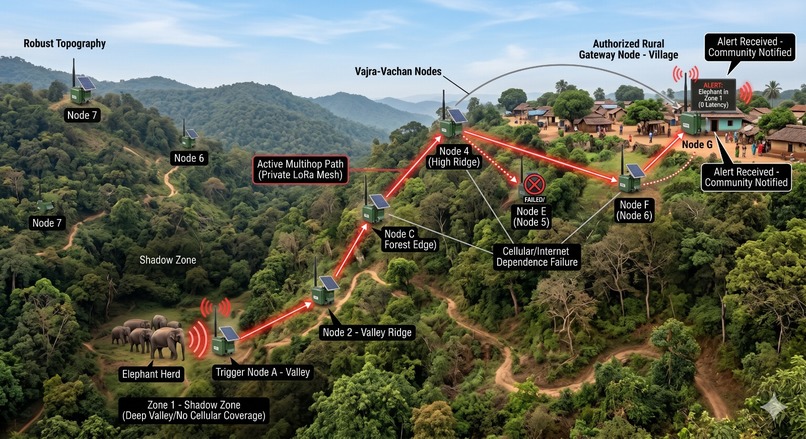
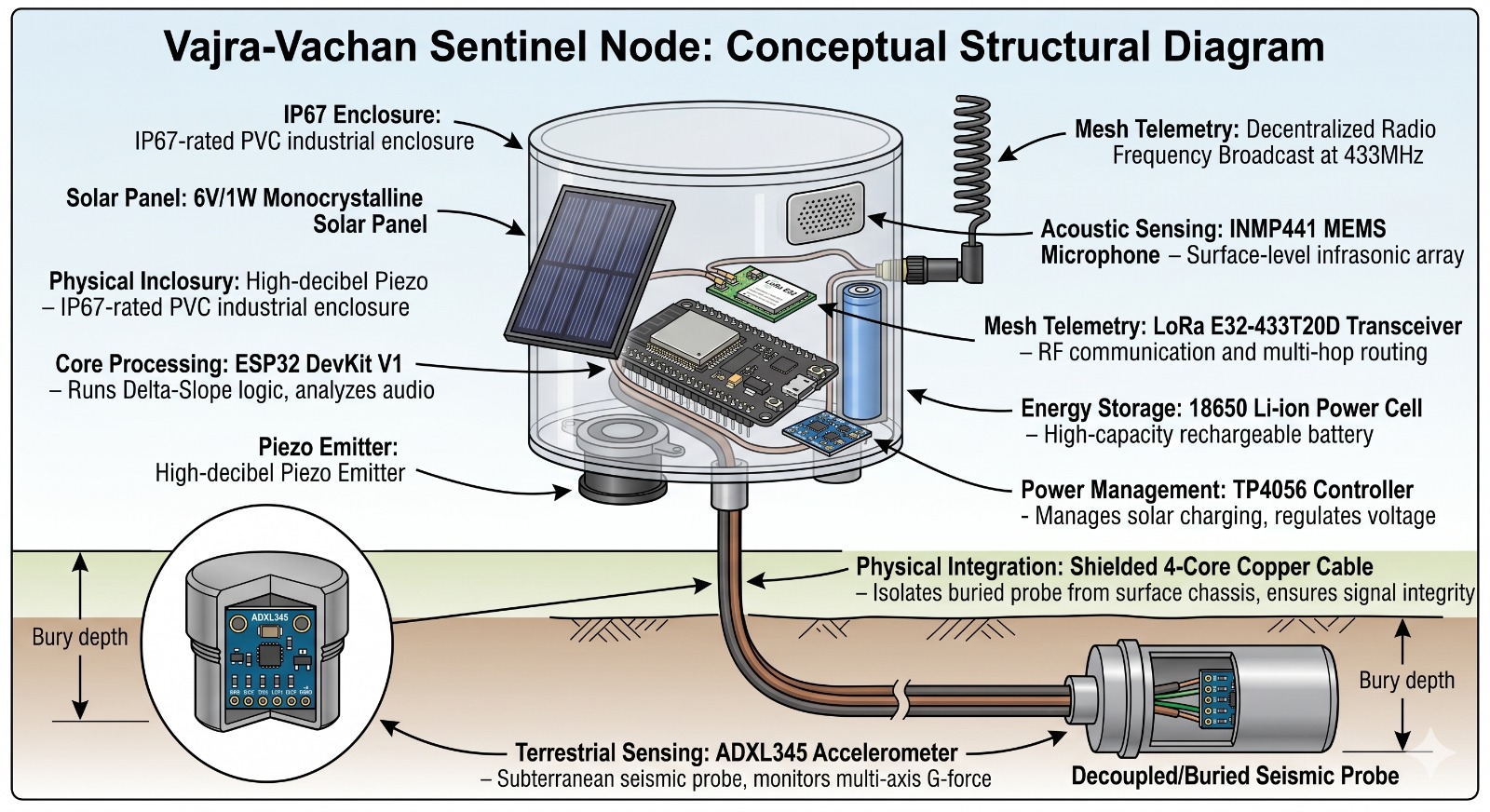
Topography Deployment: Decentralized LoRa mesh routing seismic alerts across forest-edge villages without cellular coverage.
-
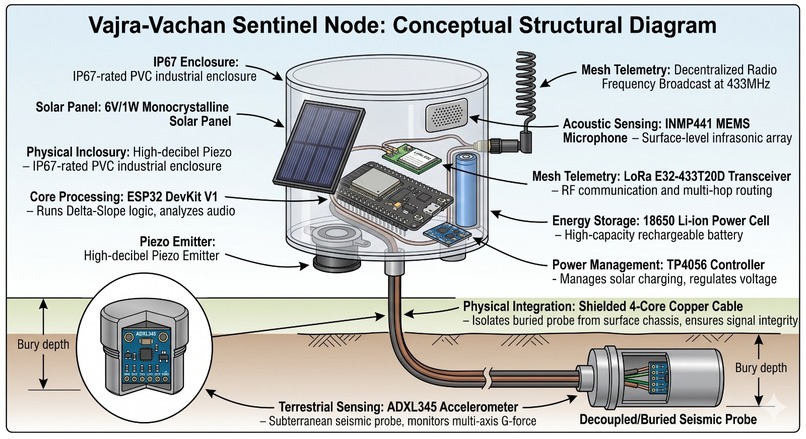
Node Architecture: ESP32 core, ADXL345 seismic probe, INMP441 microphone, and LoRa transceiver powered by solar energy.
-
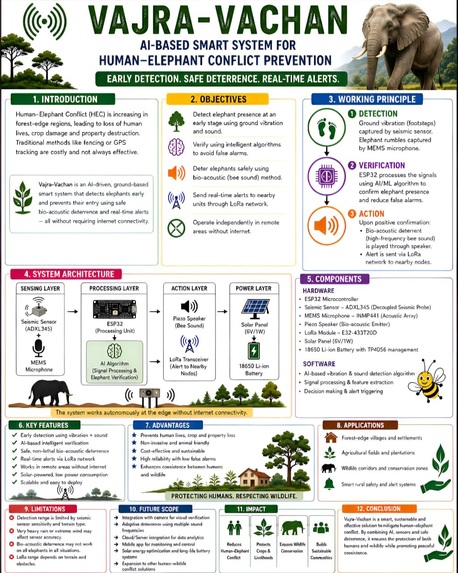
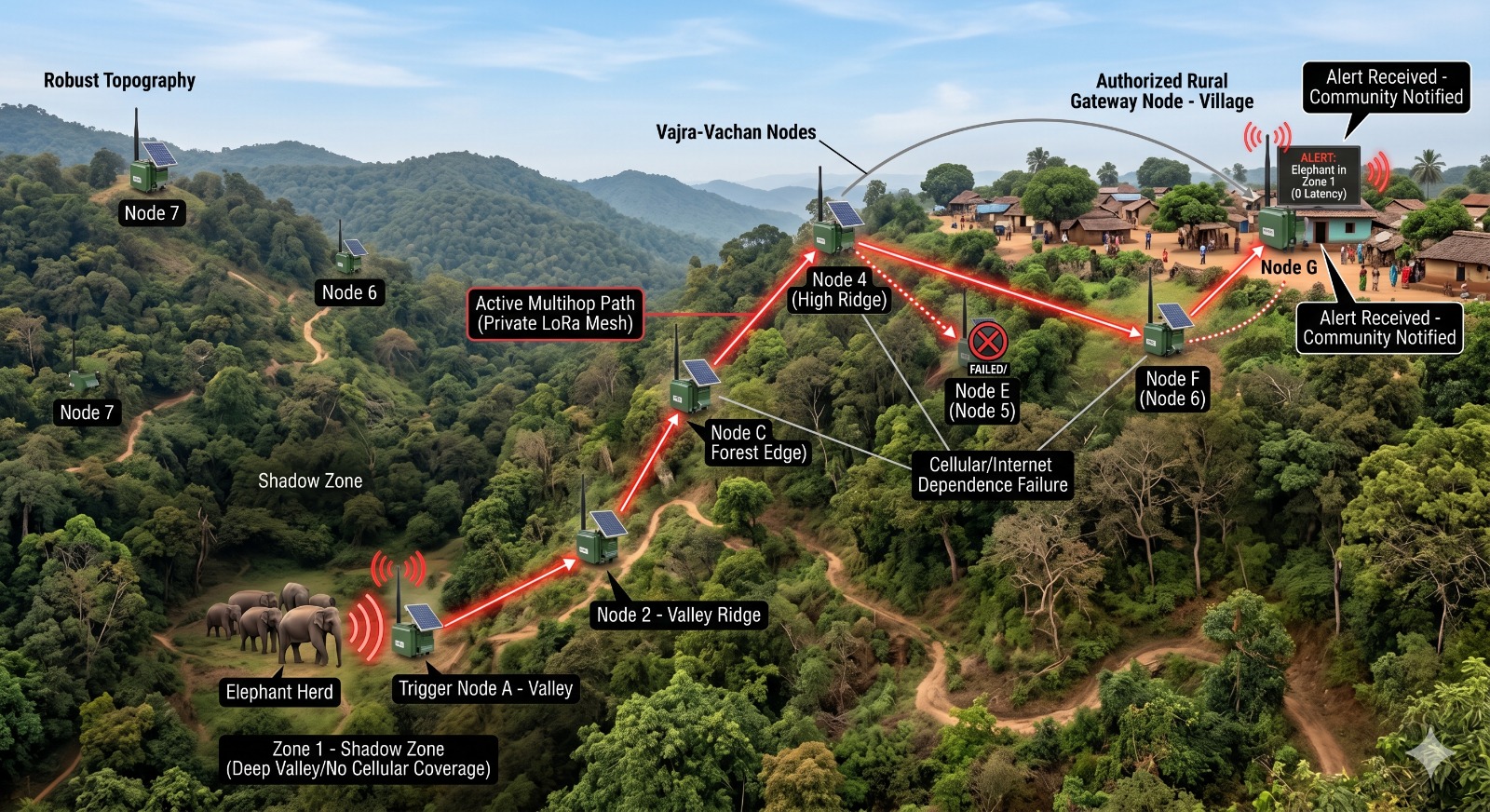
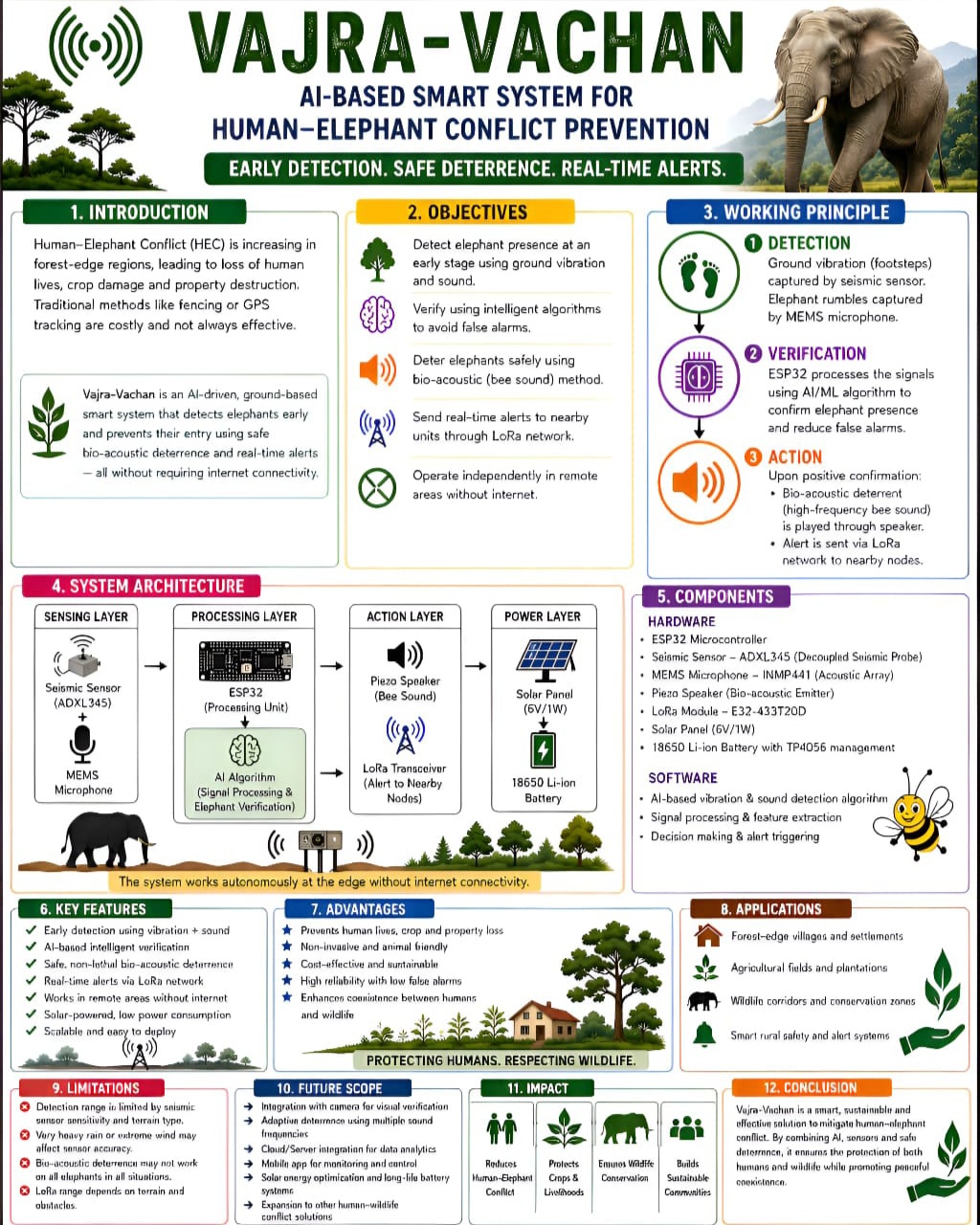
System Overview: AI-based smart system combining seismic sensing and Gemini AI for human-elephant conflict prevention.
Inspiration
Human-elephant conflict is a critical, life-threatening challenge in rural forested regions, particularly across eastern India. Traditional monitoring methods are reactive, leaving communities vulnerable to sudden wildlife movements. We were inspired to build a decentralized, proactive intelligence network that bridges the gap between animal conservation and human safety using advanced multimodal AI.
What it does
Vajra-Vachan: Gemini Network is a decentralized seismic intelligence system. It deploys low-cost edge sensor nodes to capture subtle seismic vibrations caused by elephant herds moving through migration corridors. This raw telemetry is processed and interpreted by Gemini 1.5 Pro, which acts as the core reasoning engine. Gemini analyzes the seismic waveforms and environmental context to predict movement paths in real time, automatically triggering early-warning alerts for local villages and forest officials before conflict occurs.
How we built it
- Edge Sensors: We used C++ and microcontroller networks to capture ground seismic data.
- Data Pipeline: Streamed sensor telemetry through cloud functions into a centralized processing bucket.
- Gemini AI Core: We integrated Gemini 1.5 Pro via its API to analyze complex time-series seismic data, leveraging its massive context window and advanced reasoning capabilities to distinguish elephant locomotion signatures from background noise and output human-readable risk assessments.
Challenges we ran into
Filtering out high-amplitude environmental background noise—such as heavy vehicle traffic, monsoon weather, and local machinery—from the faint seismic footsteps of elephants was a major hurdle. We had to fine-tune our data preprocessing pipelines and prompt structures so Gemini could accurately isolate true wildlife signatures.
Accomplishments that we're proud of
We successfully created a working bridge between low-level hardware telemetry and advanced generative AI reasoning. Seeing Gemini accurately interpret simulated seismic logs and generate precise spatial-temporal warnings was a massive milestone.
What we learned
We gained profound insights into multimodal data processing and how large language/multimodal models like Gemini can be repurposed for complex physical world telemetry and environmental conservation challenges.
What's next for Vajra-Vachan
We plan to scale the edge deployment across real-world pilot corridors in Odisha, integrate solar-powered mesh communication for remote forest zones without cellular coverage, and build a localized mobile app interface for forest rangers.
Built With
- arduino
- c++
- gemini-1.5-pro
- google-gemini
- iot
- machine-learning
- python


Log in or sign up for Devpost to join the conversation.