-
-
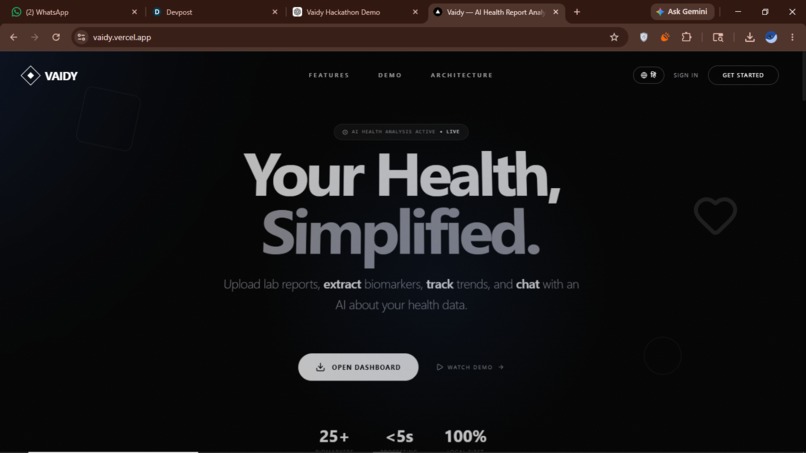
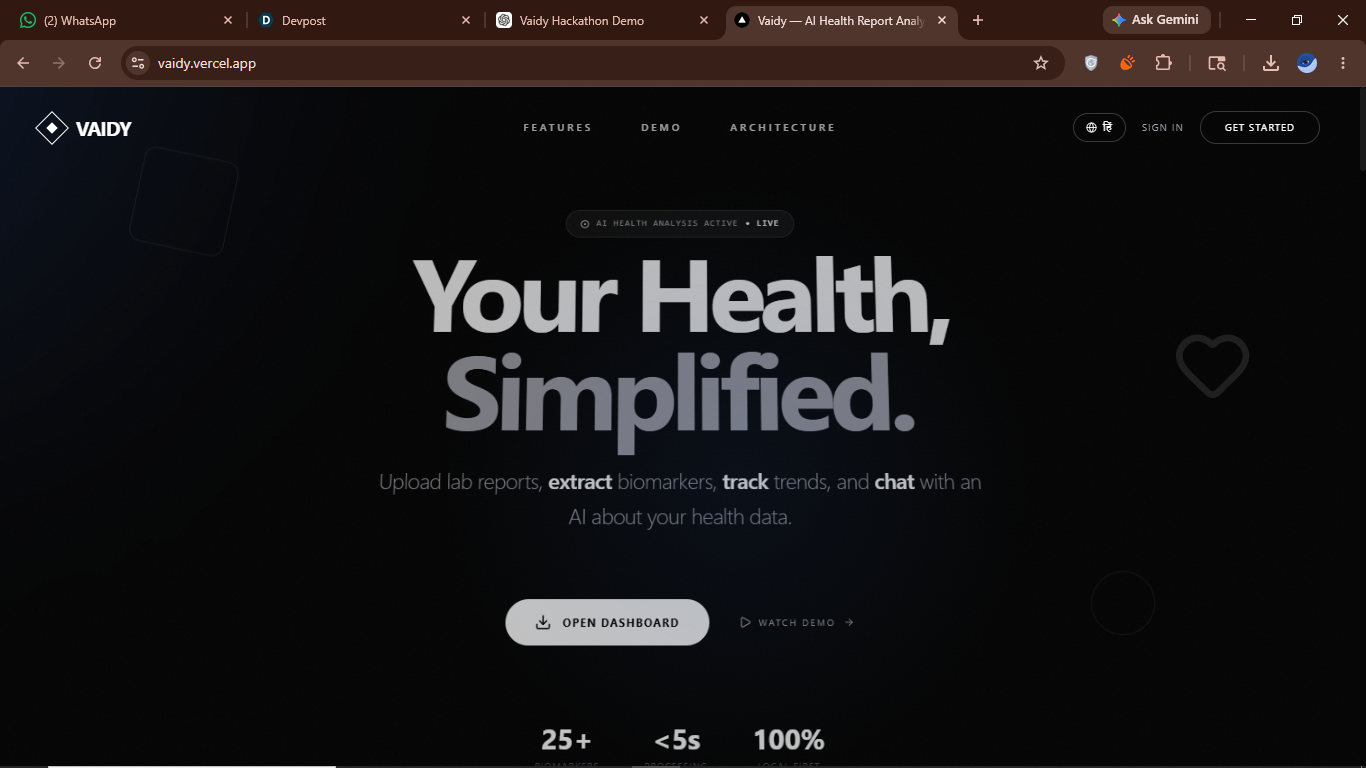
Landing Page
-
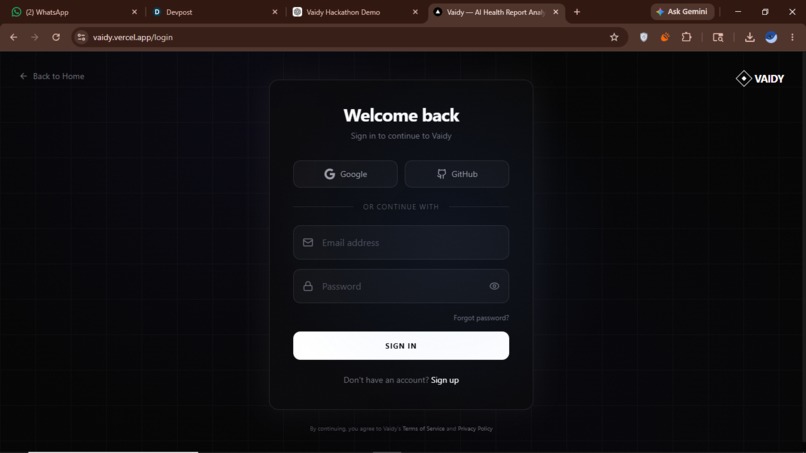
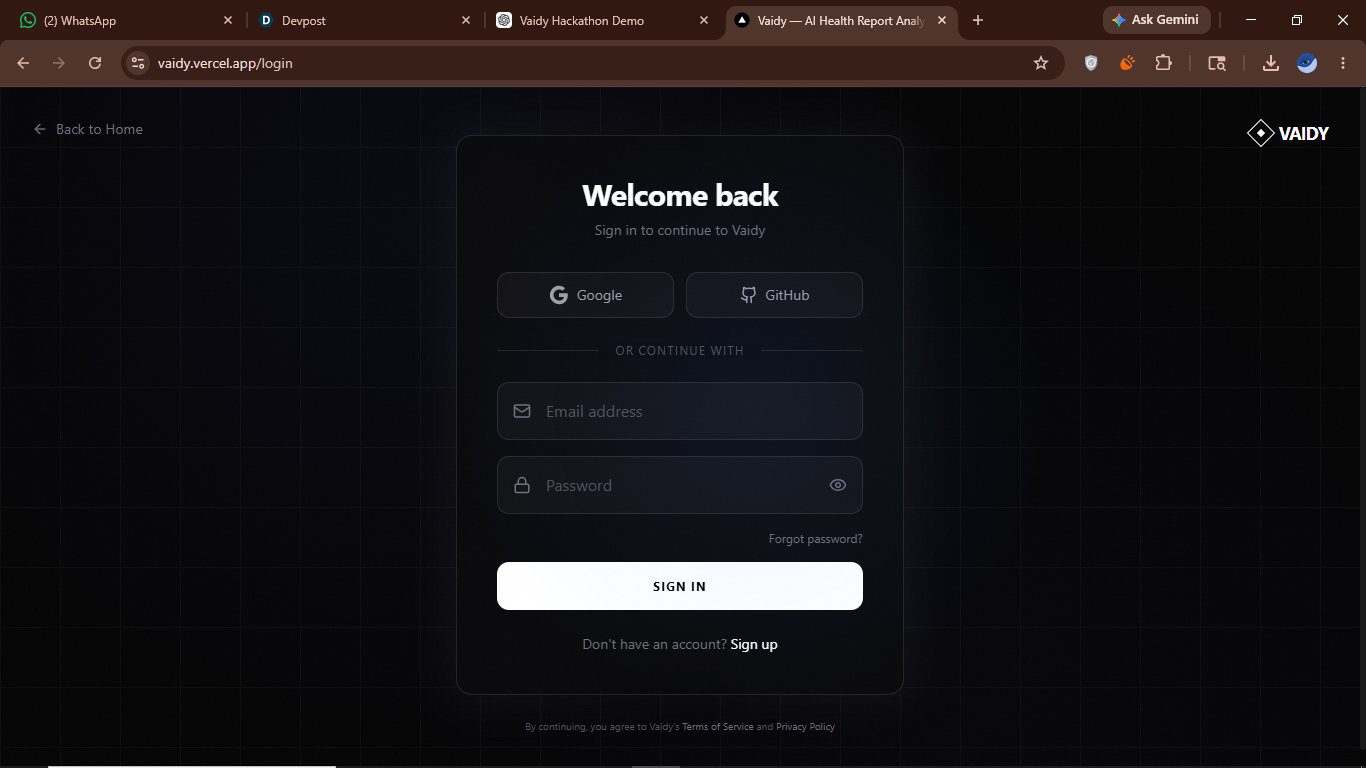
Login/Sign Up
-
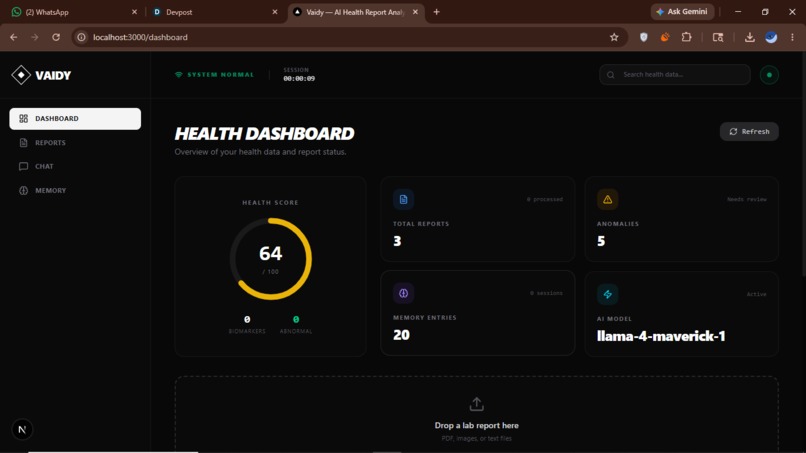
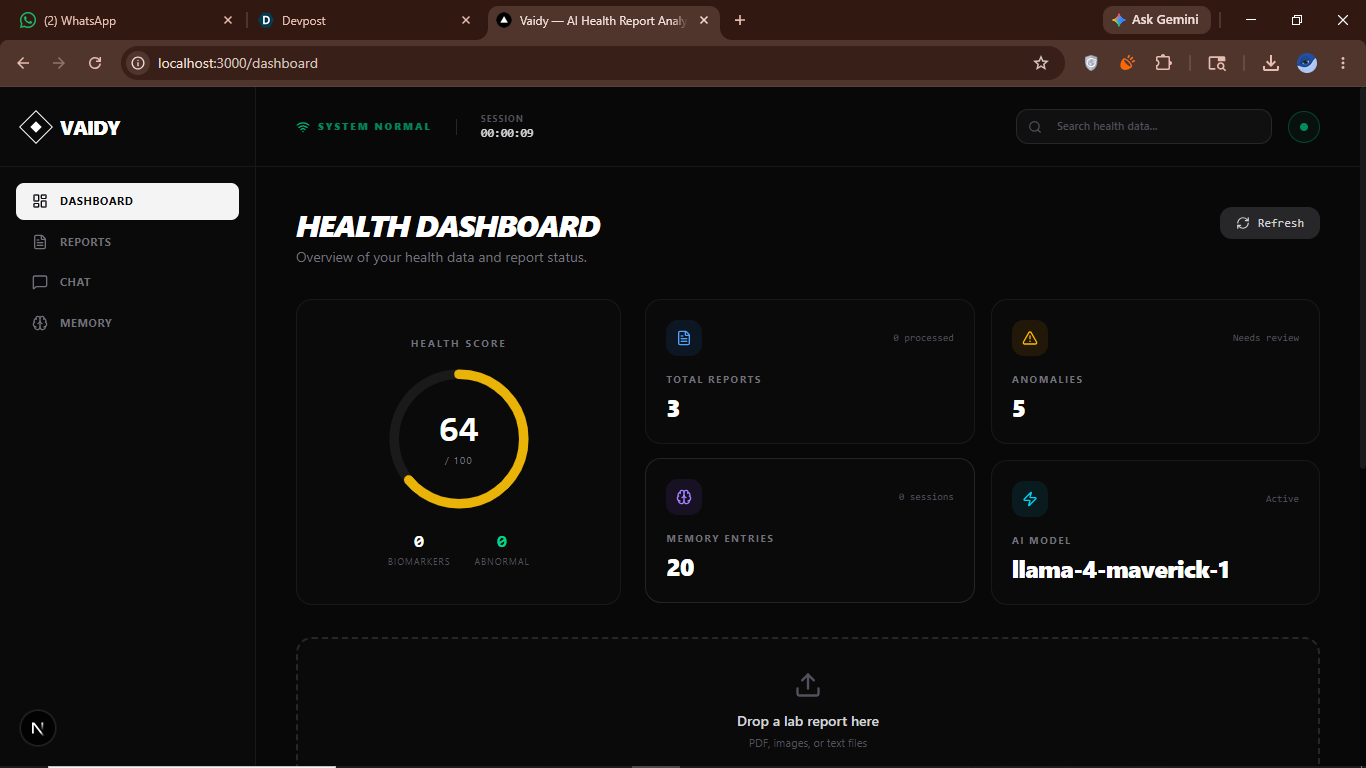
Health Dashboard
-
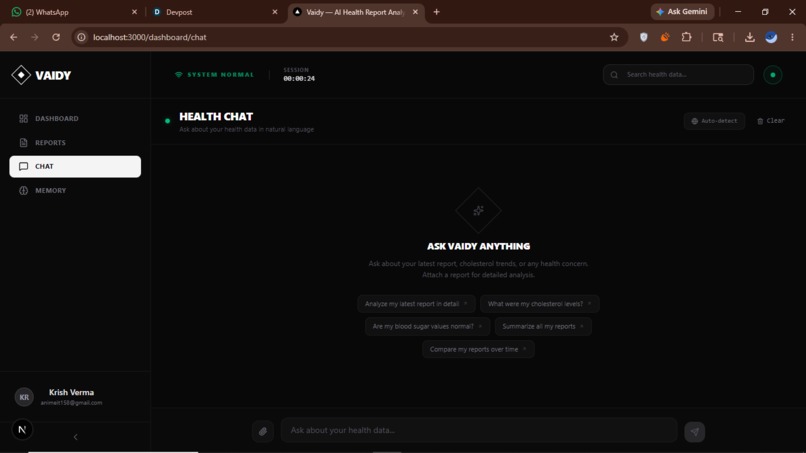
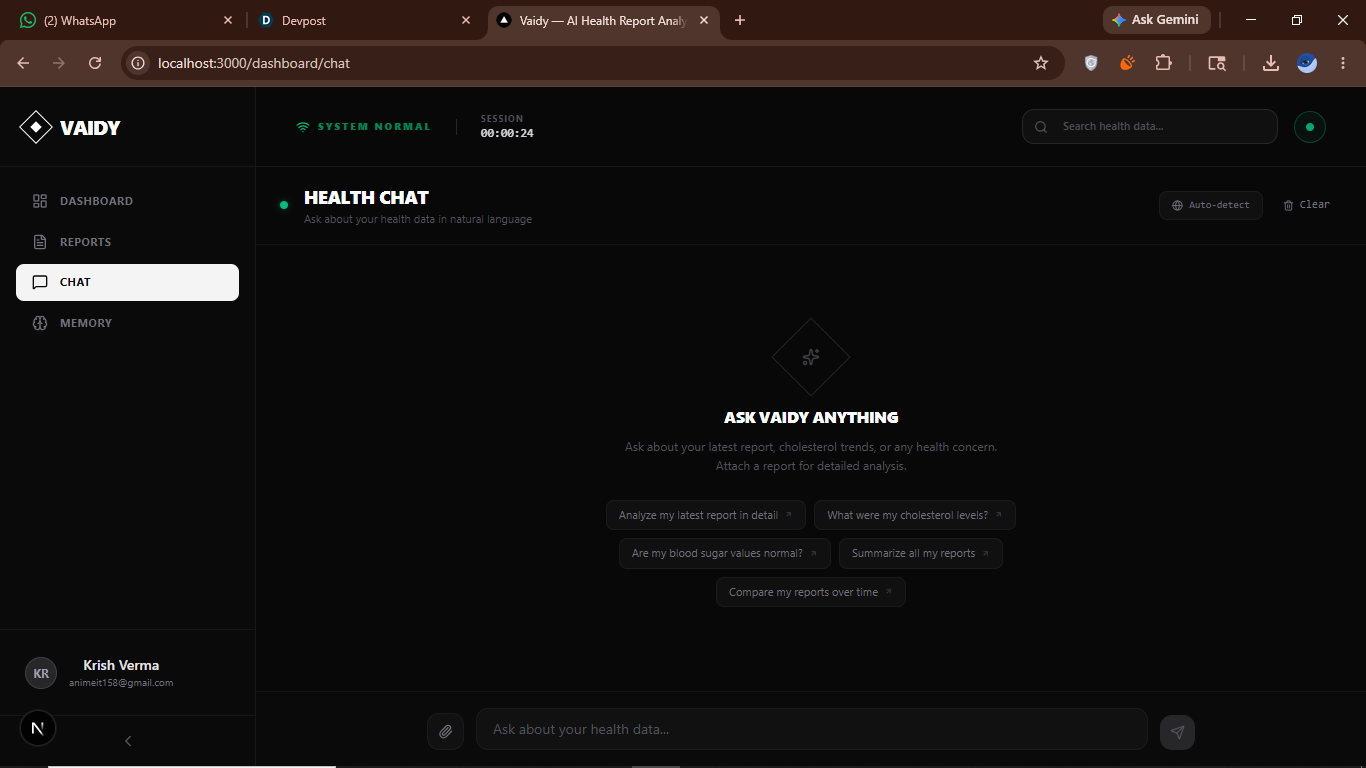
Chat Section
-
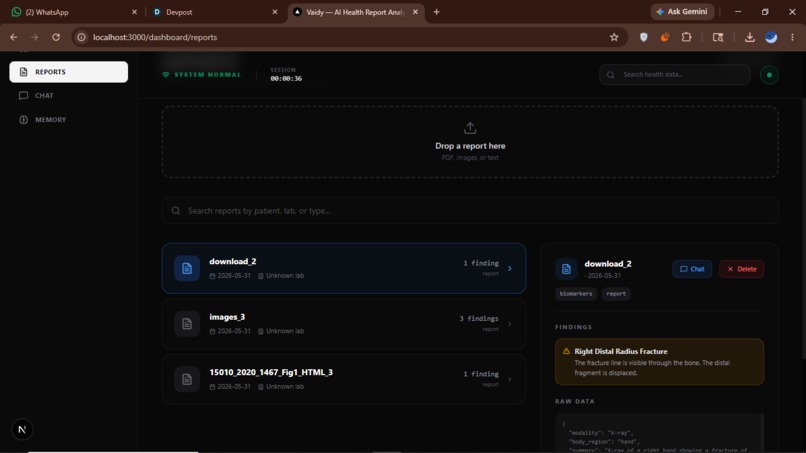
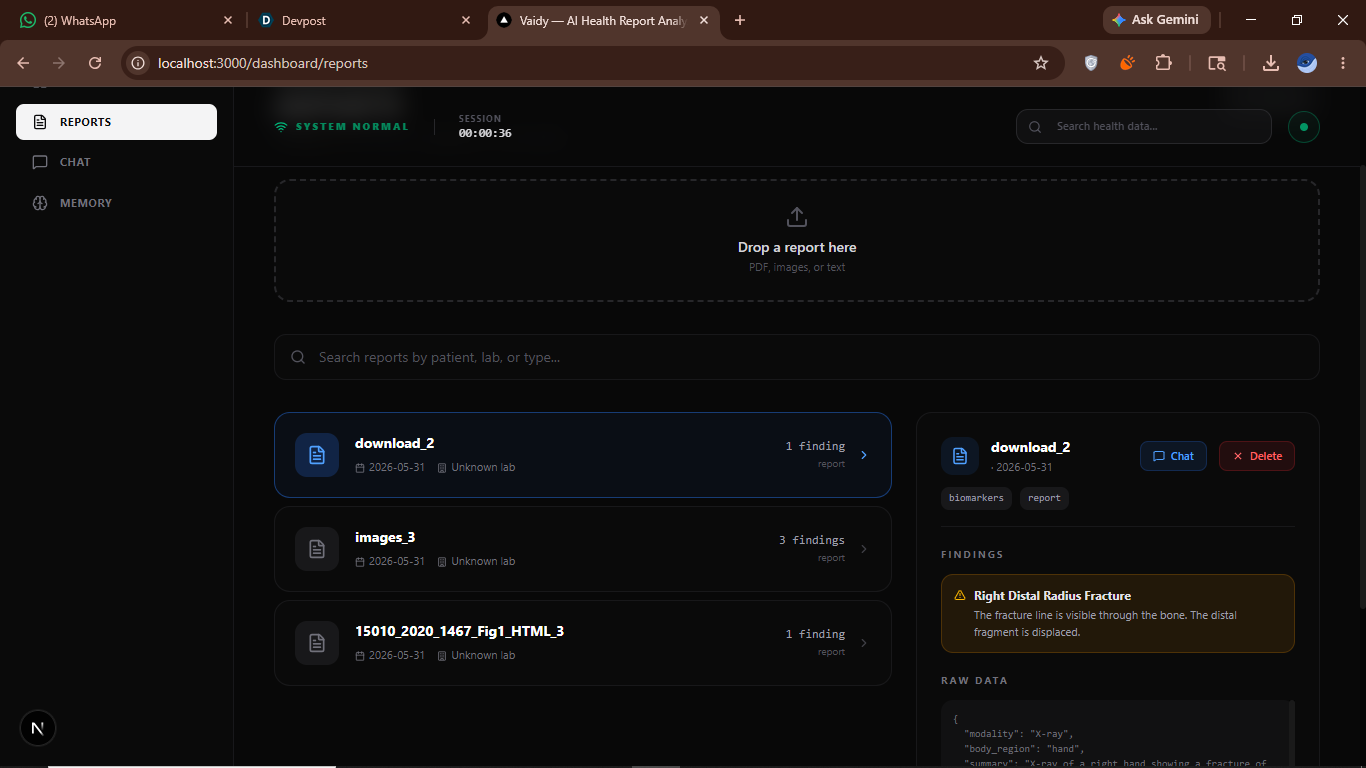
Reports Section
-
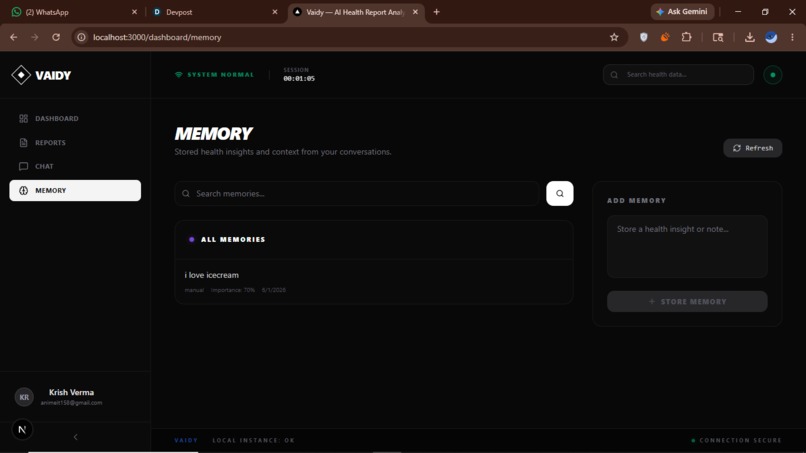
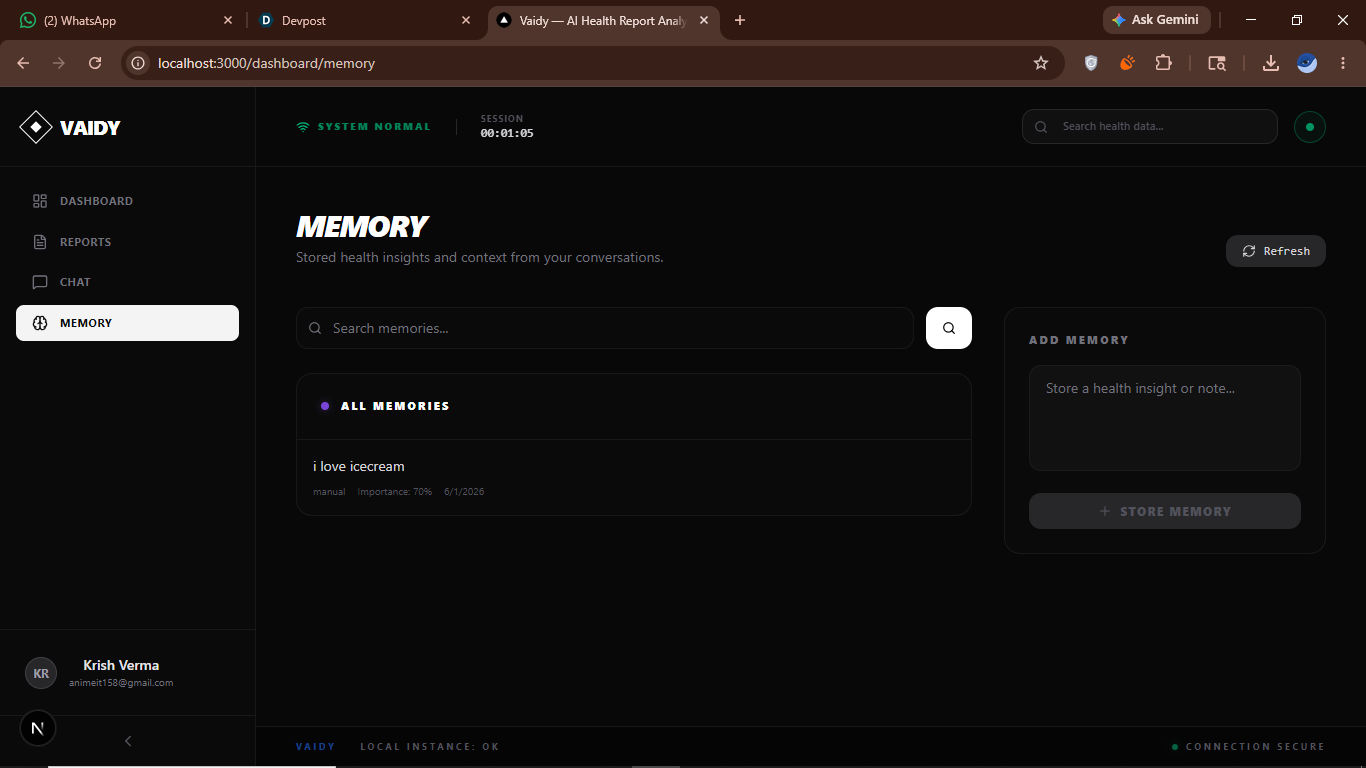
Memory Section
Inspiration
Healthcare information is often fragmented, difficult to understand, and scattered across multiple hospitals, laboratories, and physical documents. Patients frequently receive reports filled with medical jargon, technical biomarkers, and reference ranges that can be challenging for non-medical individuals to interpret.
In India, this challenge is even more significant due to language barriers, varying healthcare providers, and the lack of a unified patient-centric health record system. We wanted to build a solution that empowers patients to truly understand their health instead of simply collecting reports.
This inspired us to create Vaidy, an AI-powered Health Copilot that transforms medical documents into meaningful insights and a longitudinal health history.
What it does
Vaidy acts as a personal health intelligence platform.
Users can upload medical reports, blood test results, prescriptions, and diagnostic documents in PDF or image formats. The system automatically extracts relevant medical information, including biomarkers, test values, reference ranges, and report dates.
Instead of treating every report as a standalone document, Vaidy builds a persistent health timeline that grows with every upload.
Users can then interact with their health data using natural language questions such as:
- Are my sugar levels improving?
- How has my cholesterol changed over time?
- What changed since my last report?
- Which biomarkers are outside the normal range?
- Explain this report in simple language.
Using AI-powered retrieval and reasoning, Vaidy provides context-aware answers based on the user's historical health records rather than generic responses.
The platform also focuses on accessibility through multilingual support and a privacy-first architecture.
How we built it
We developed Vaidy as a full-stack AI healthcare platform.
Frontend
- Next.js
- React
- Tailwind CSS
- Modern responsive dashboard UI
The frontend provides:
- Report upload functionality
- Health timeline visualization
- Interactive chat interface
- Health trend monitoring
Backend
- Python
- FastAPI
- SQLite Database
!! Render not set up, locally available !!
The backend manages:
- Document processing
- Data storage
- User health memory
- AI orchestration
- REST API endpoints
AI Pipeline
The intelligence layer consists of multiple stages:
- Document Ingestion
- PDF reports
- Medical images
- Prescriptions
- Diagnostic records
- OCR and Extraction
- Docling
- NVIDIA NIM Models
- Data Normalization
- Standardization of biomarkers
- Unified medical data structure
- Cross-lab compatibility
- Longitudinal Health Memory
- Persistent SQLite storage
- Historical report tracking
- Health timeline generation
- Retrieval-Augmented Generation (RAG)
- Retrieval of relevant medical history
- Context-aware reasoning
- Personalized health responses
Challenges we ran into
Building Vaidy came with several challenges.
One major challenge was handling medical reports from different laboratories. Every healthcare provider follows different report formats, naming conventions, and layouts. Extracting accurate information consistently required extensive normalization logic.
Another challenge was ensuring that AI responses remained grounded in actual patient data. We wanted to avoid generic responses and instead provide answers based on historical medical evidence. This required implementing a retrieval-based architecture that could accurately fetch and reason over past reports.
We also faced challenges in maintaining a smooth user experience while processing complex documents and integrating multiple AI components into a single workflow.
Accomplishments that we're proud of
We are proud that we successfully built an end-to-end healthcare intelligence platform rather than just a document parser.
Key accomplishments include:
- Successfully extracting structured medical information from unstructured reports.
- Building a longitudinal health memory system.
- Creating an AI assistant that reasons over historical health data.
- Developing a clean and intuitive dashboard.
- Implementing multilingual and accessibility-focused design principles.
- Delivering both web and API interfaces.
- Creating a privacy-conscious architecture suitable for healthcare applications.
Most importantly, we transformed static medical reports into an interactive and intelligent healthcare experience.
What we learned
Throughout this project, we gained valuable experience in:
- Medical document processing
- OCR pipelines
- Retrieval-Augmented Generation (RAG)
- Healthcare data normalization
- AI-powered reasoning systems
- Full-stack application development
- Building reliable user-facing AI products
We also learned the importance of designing AI systems that are explainable, trustworthy, and grounded in real user data.
What's next for Vaidy
Our vision for Vaidy extends far beyond the hackathon.
Future plans include:
- Support for additional Indian languages.
- Advanced health trend visualizations.
- Integration with wearable devices and fitness trackers.
- Predictive health analytics.
- Doctor collaboration features.
- Secure cloud synchronization.
- Mobile applications for Android and iOS.
- Personalized preventive healthcare recommendations.
- Integration with hospitals, laboratories, and healthcare providers.
Ultimately, we aim to make Vaidy a trusted AI Health Copilot that helps millions of people understand, manage, and improve their health through intelligent, accessible, and patient-centric healthcare technology.
(No deployment on cloud yet)
Built With
- jsx
- next
- python


Log in or sign up for Devpost to join the conversation.