-
-
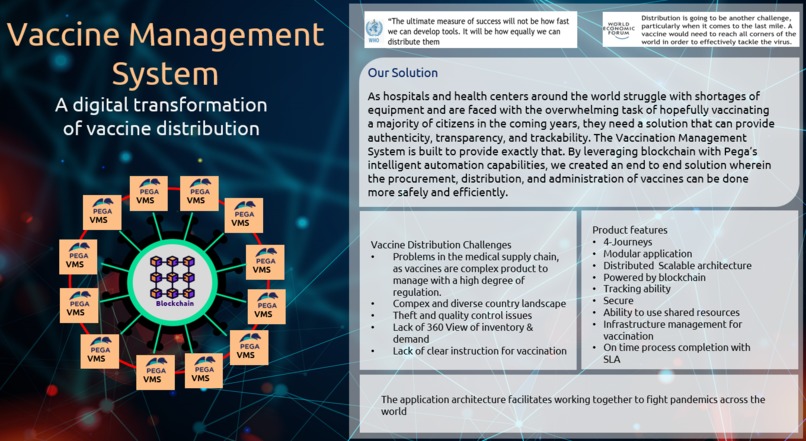
Cover page: An overview of our solution
-
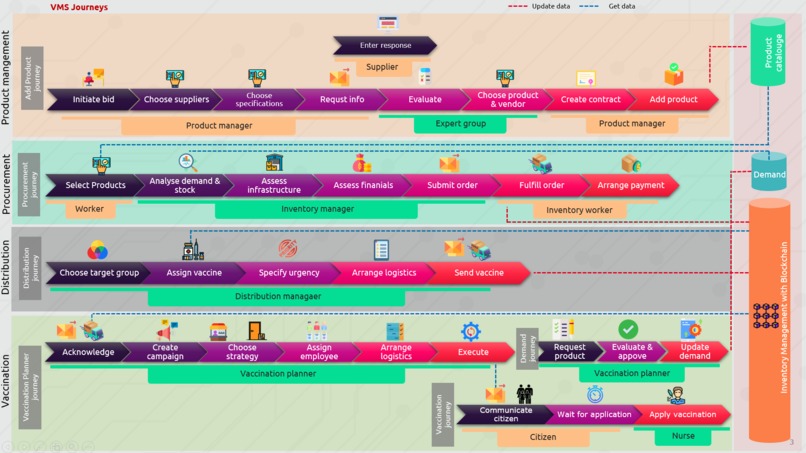
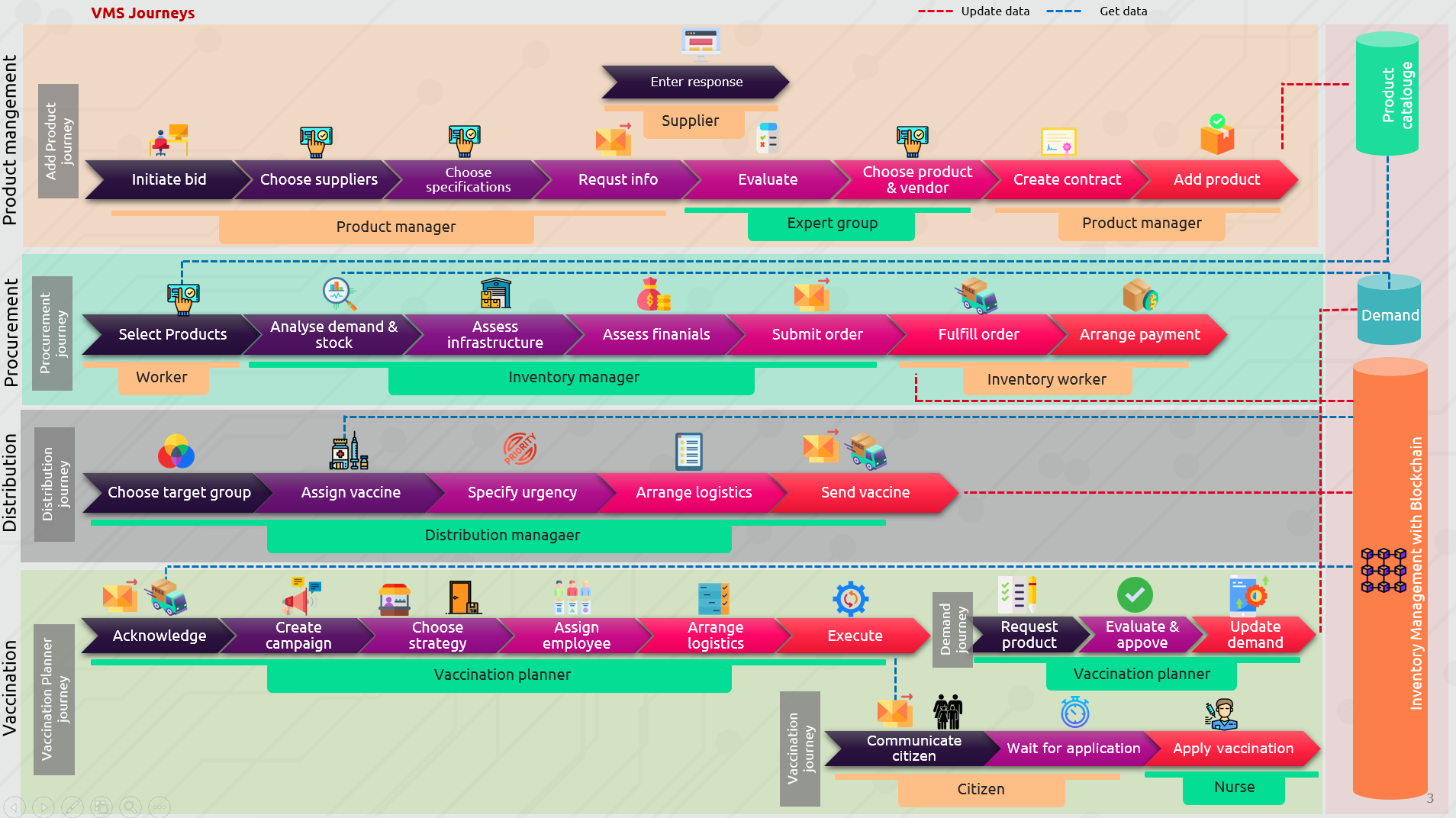
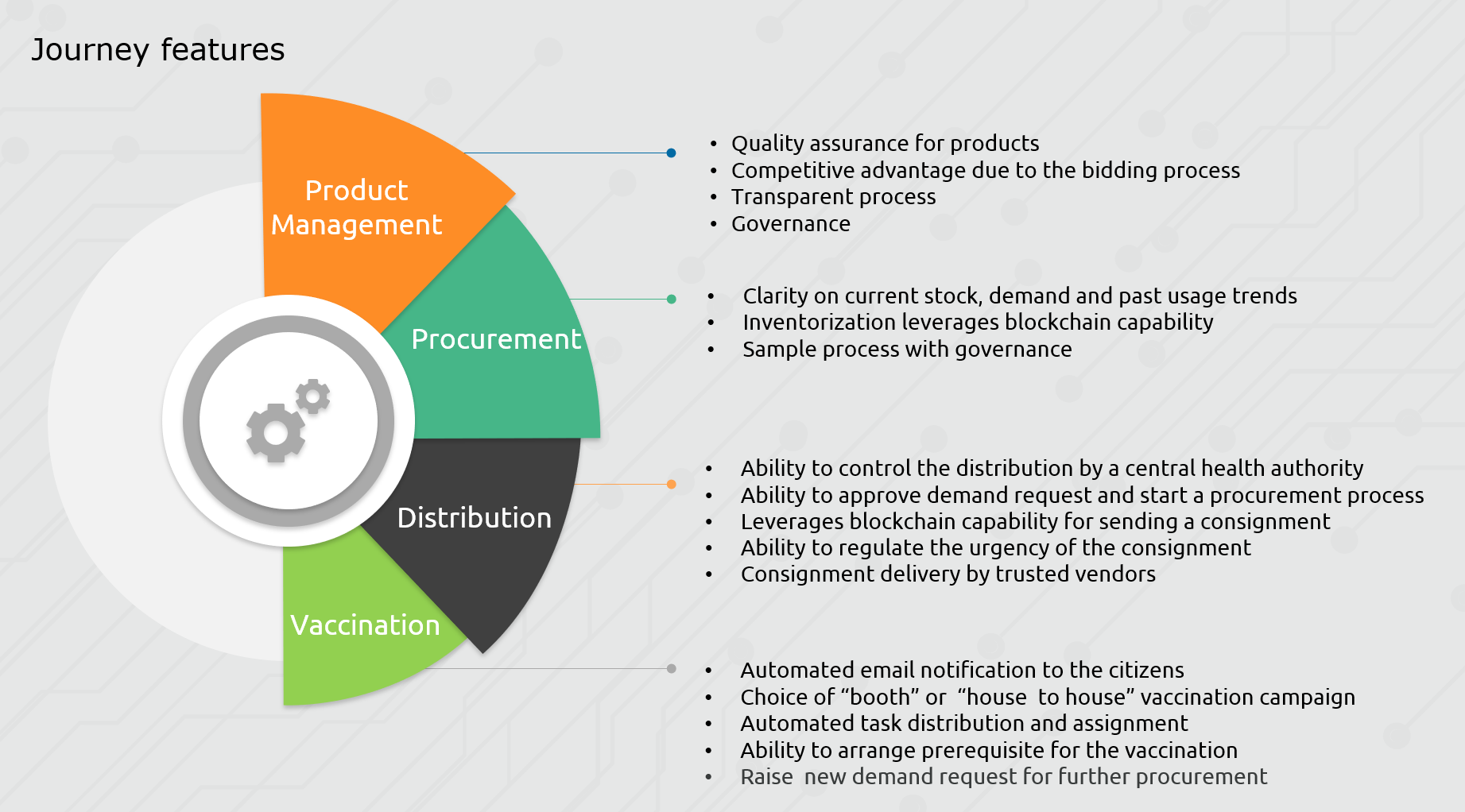
An overview of the journeys covered in our solution.
-
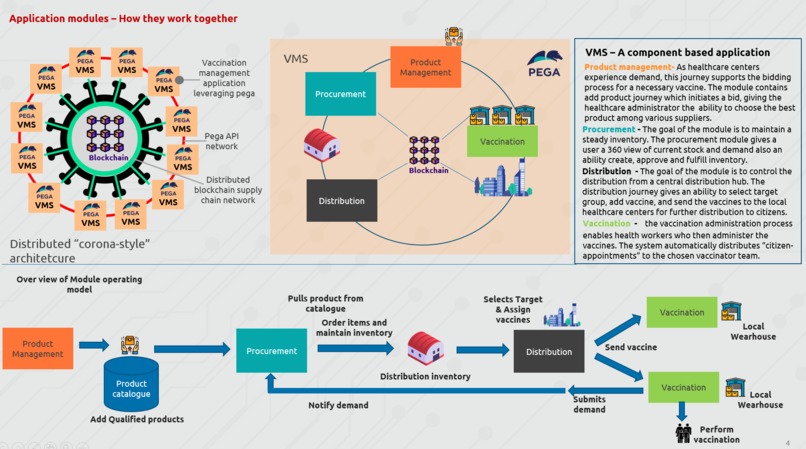
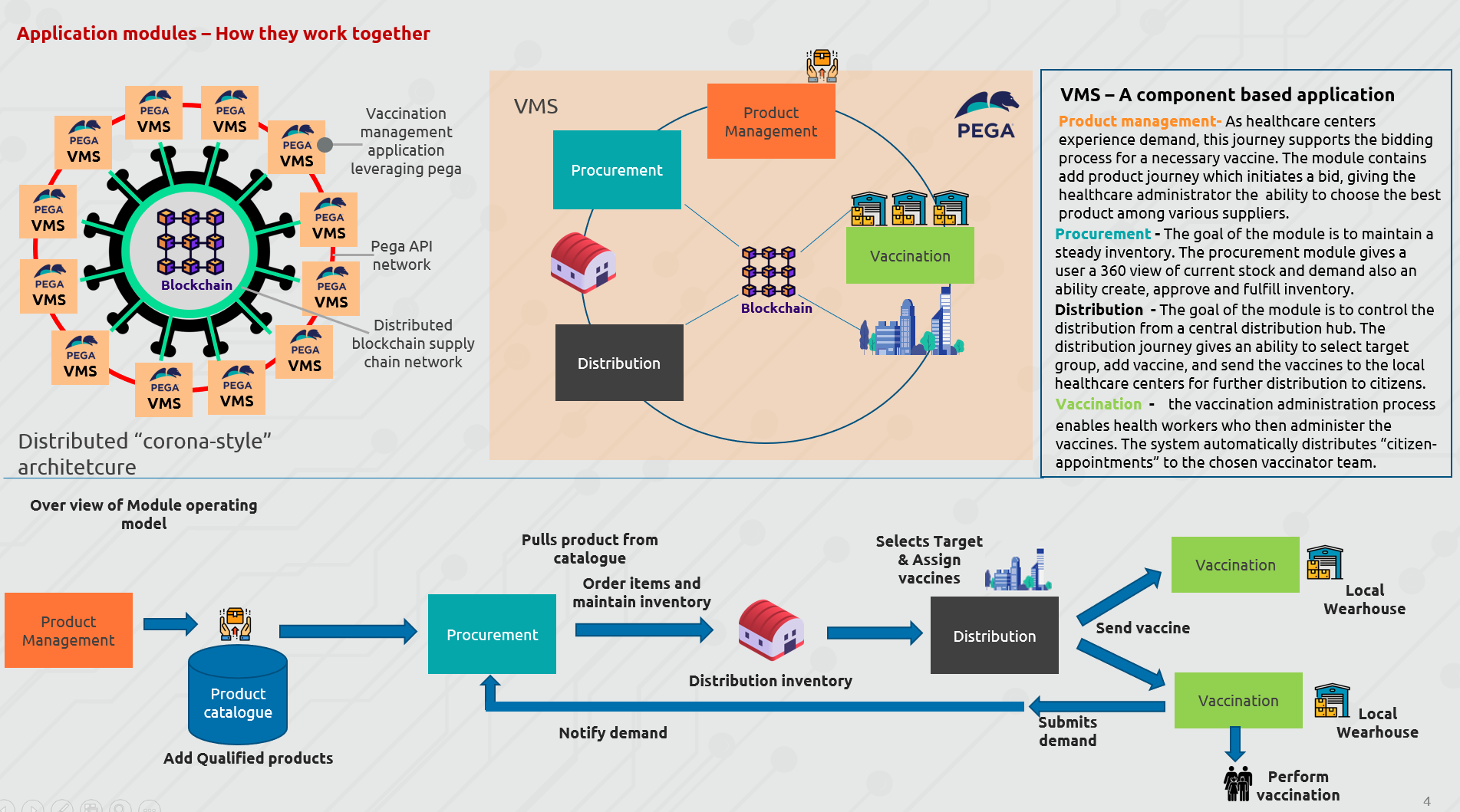
A high-level description of how the various modules work together.
-
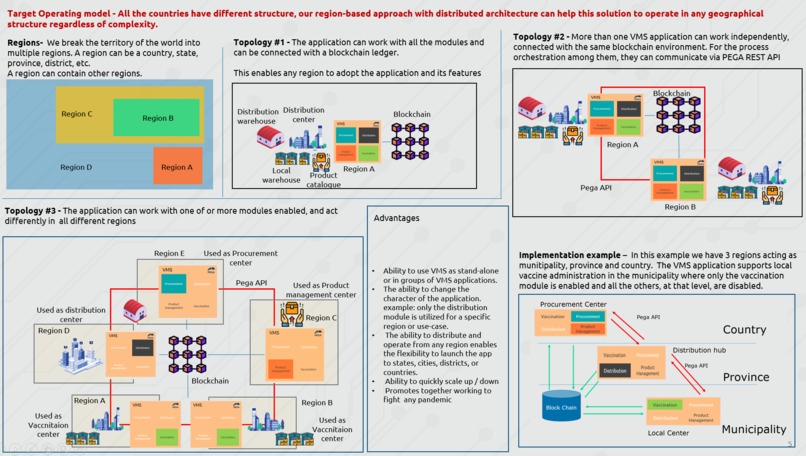
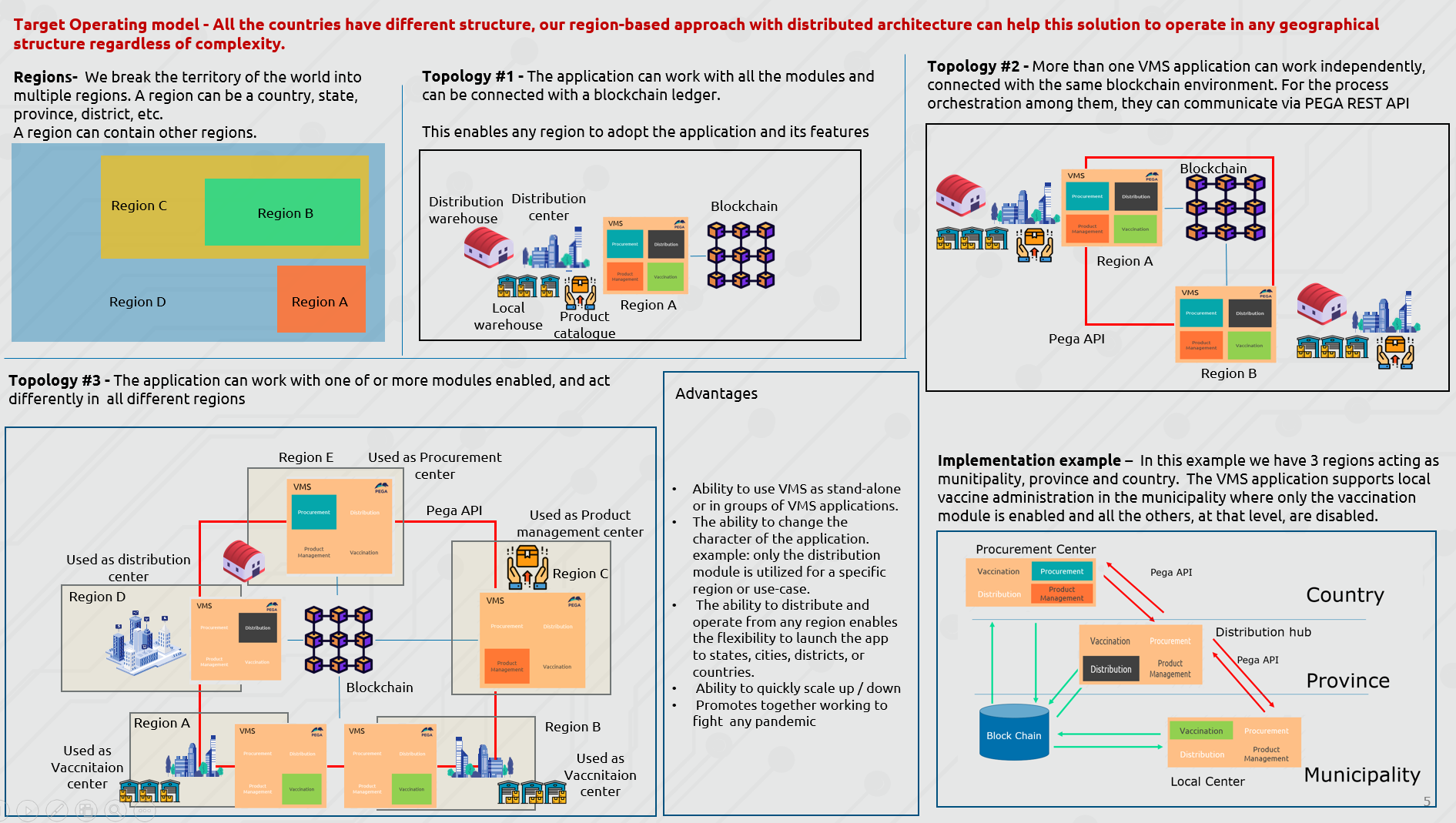
An overview of the target operating model
-
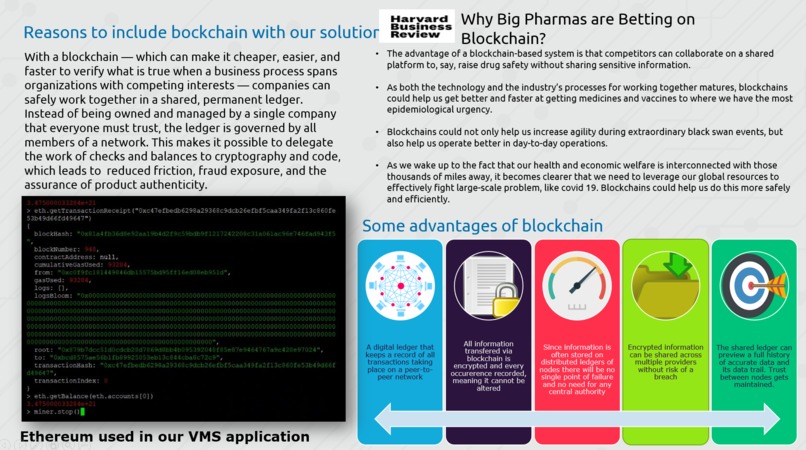
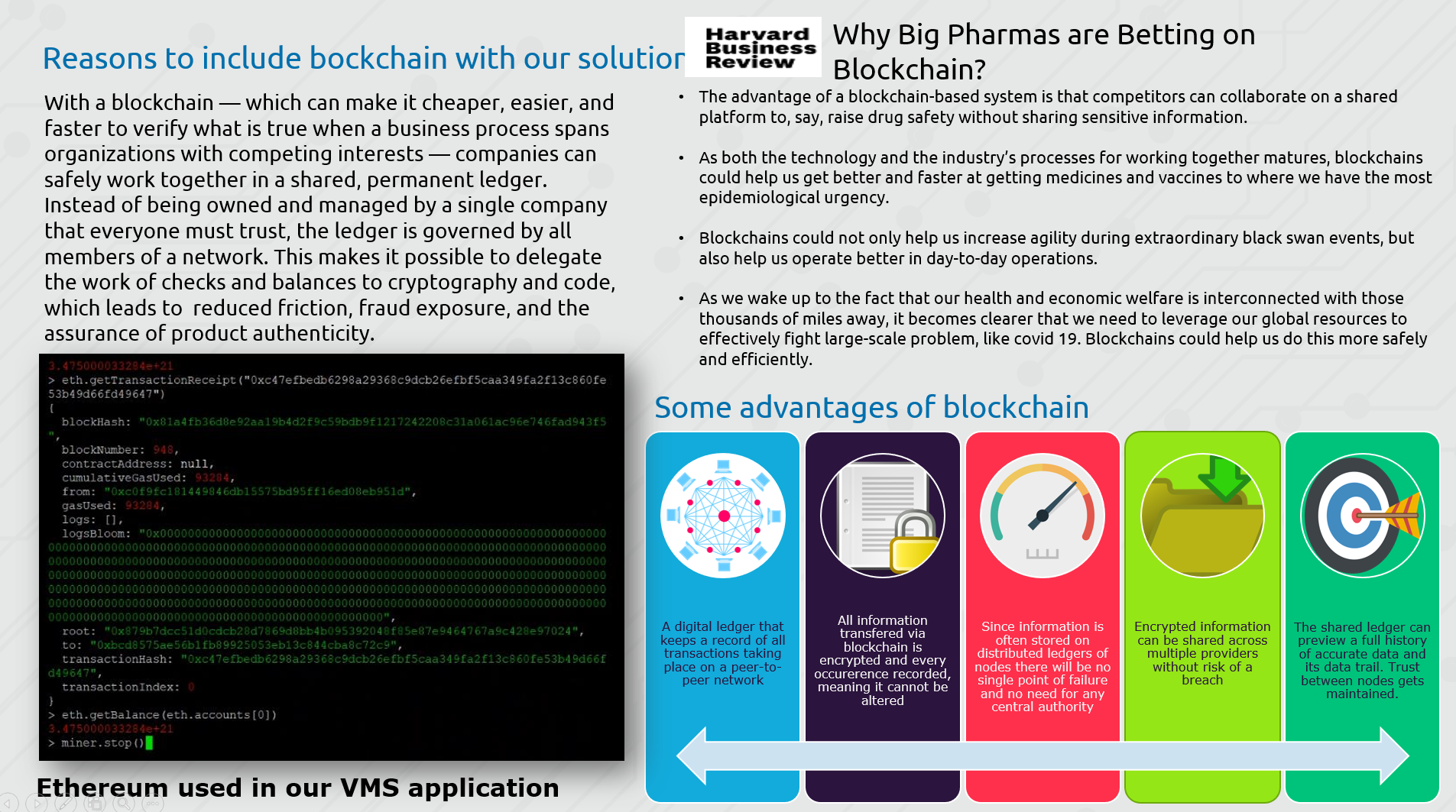
A description of why we chose to use blockchain with an example from the ethereum console.
-
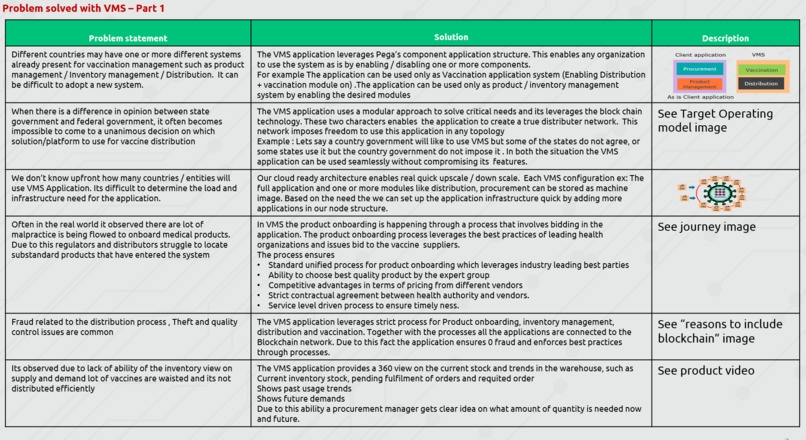
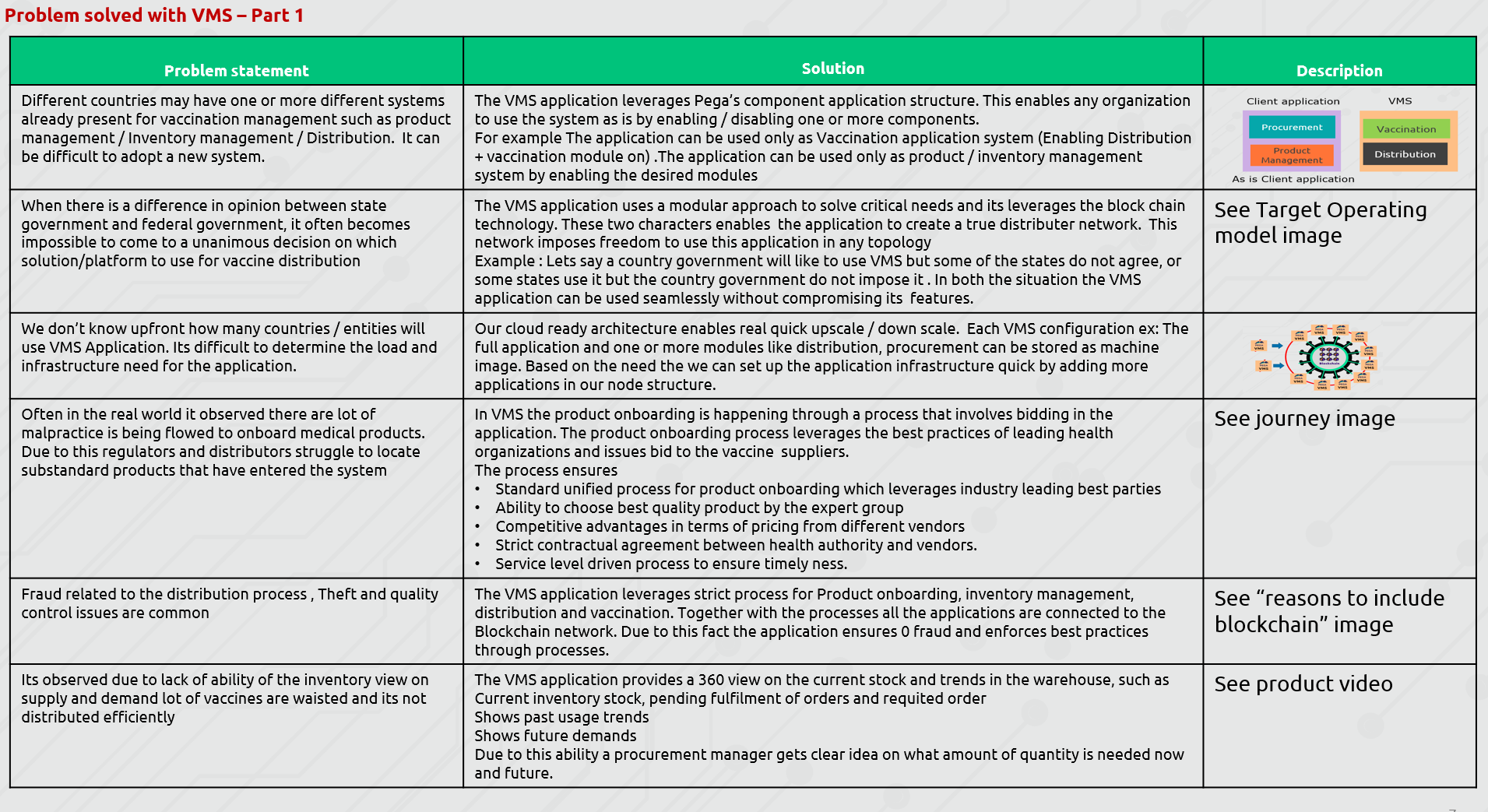
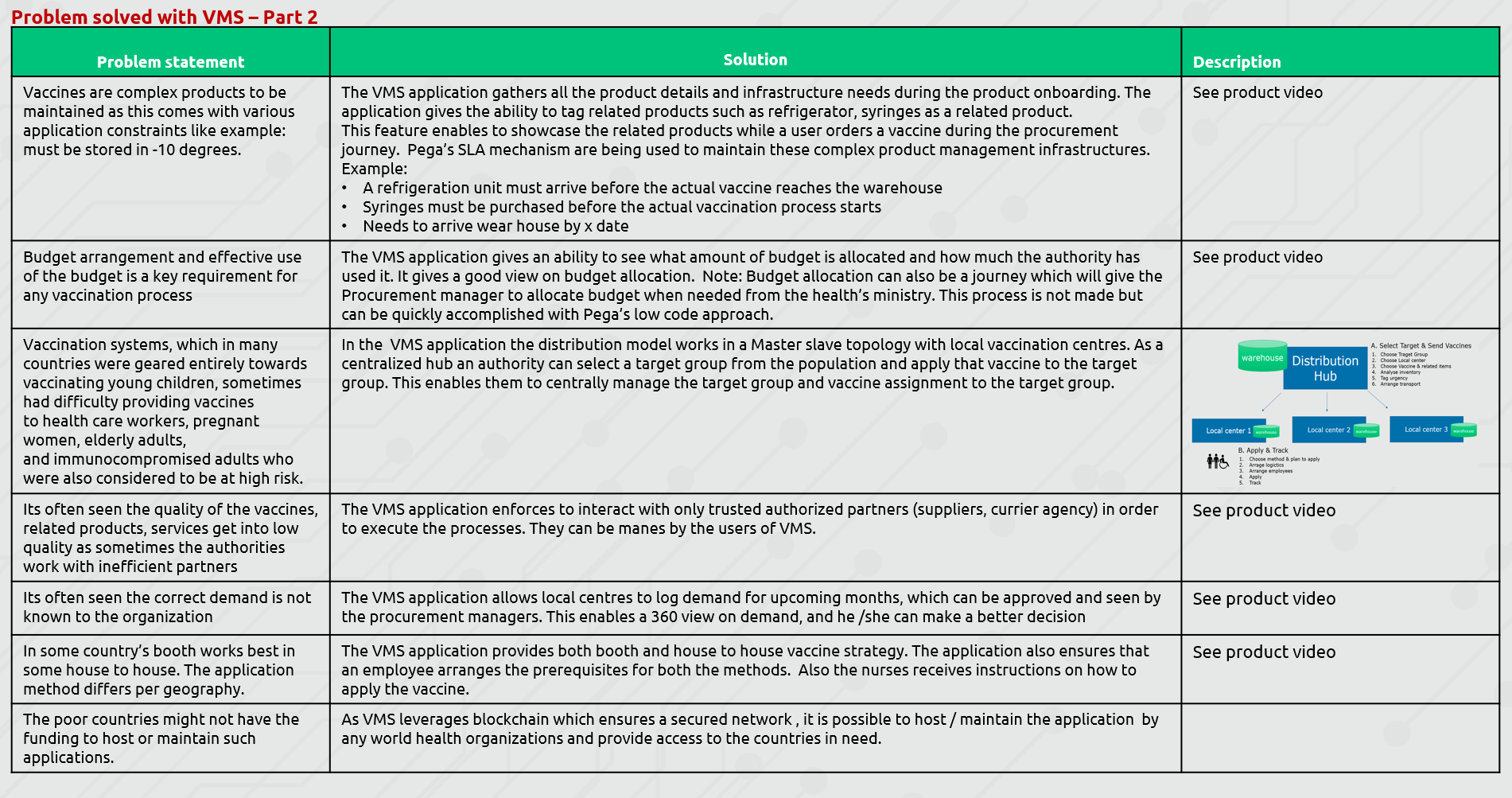
Problems solved part-1
-
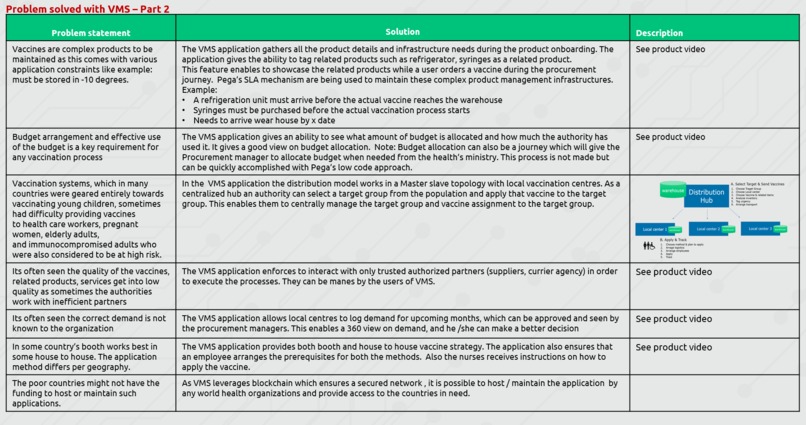
Problems solved part-2
-
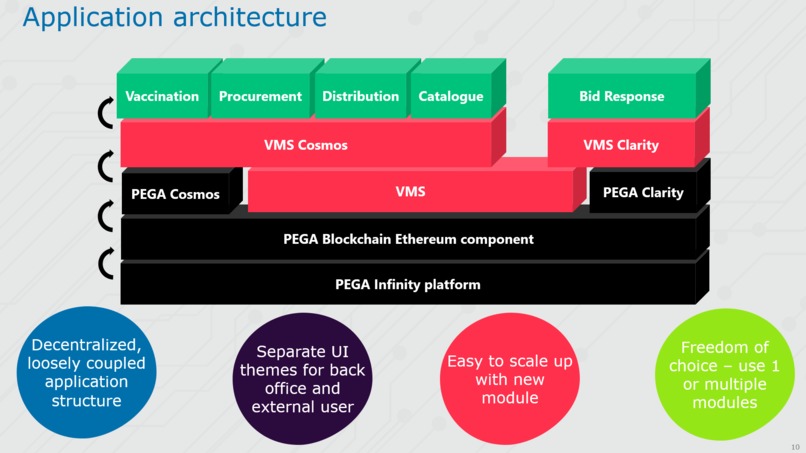
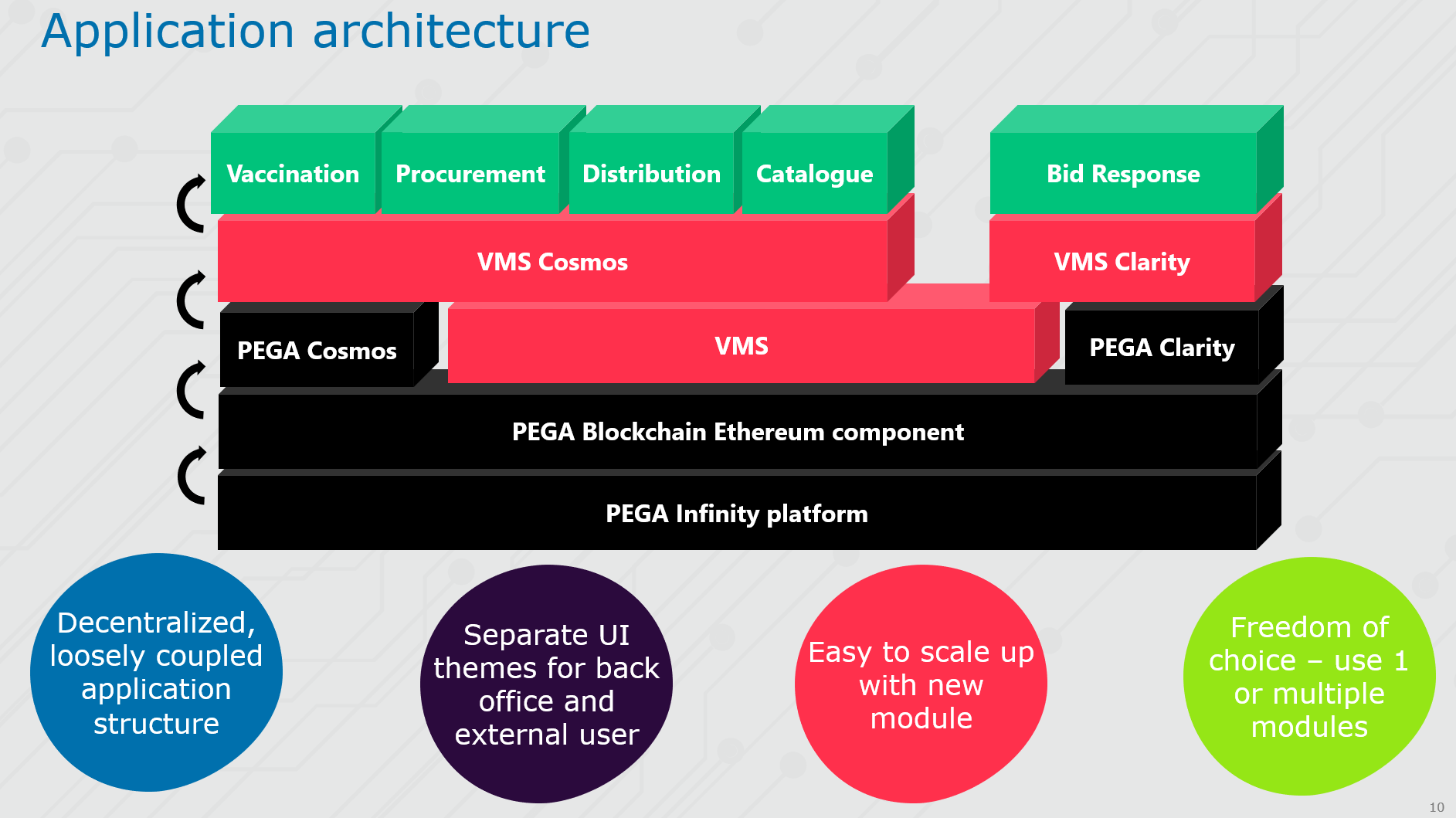
Application Architecture
-
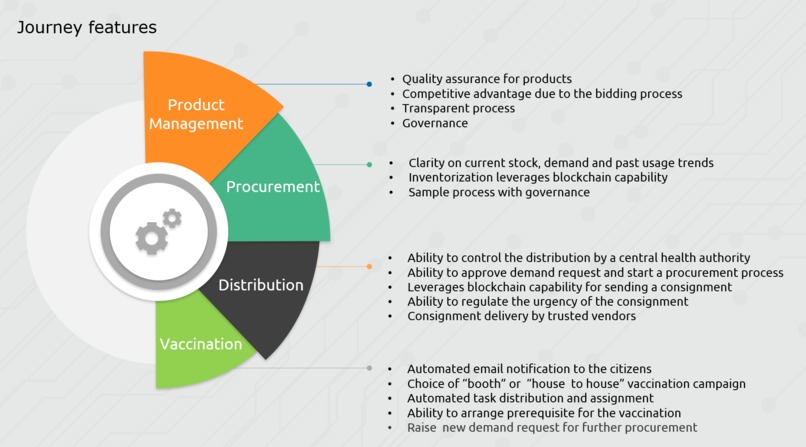
Features from the four modules
-
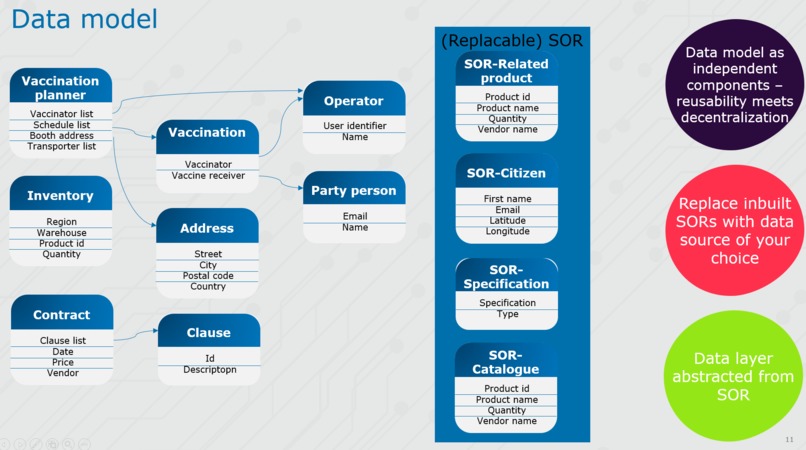
An overview of the data model
-
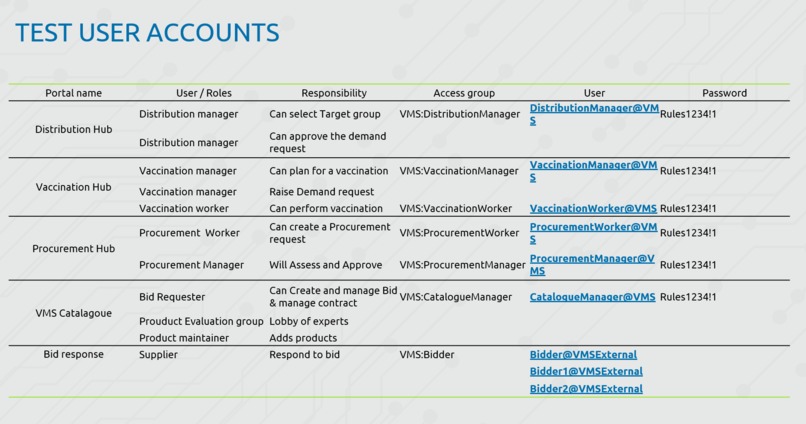
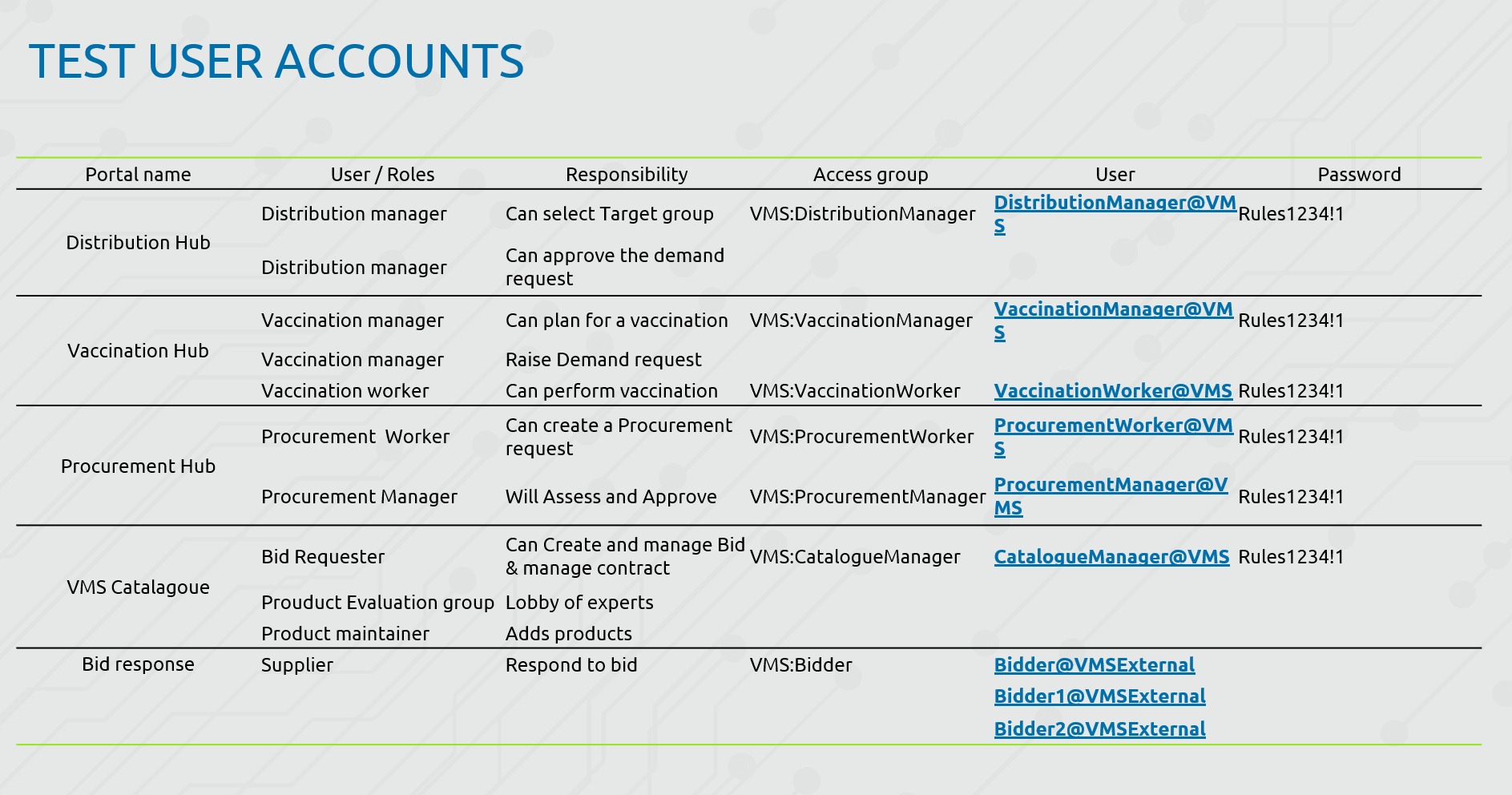
README: TEST USER LOGIN


Inspiration
In the wake of the current Covid-19 pandemic, Harvard Business recently published an article titled, “Why Big Pharma is betting on Blockchain”. As hospitals and health centers around the world struggle with shortages of equipment and are faced with the overwhelming task of hopefully vaccinating a majority of the citizens in the coming years, they need a solution that can provide authenticity, transparency, and traceability. The Vaccination Management System is built to provide exactly that. We decided to combine blockchain with Pega’s intelligent automation capabilities and layer cake architecture, to build an end to end solution wherein the procurement, distribution, and administration of vaccines can be done more safely and efficiently.
What it does
The Vaccination Management System, is a scalable solution allowing for the supply administration, procurement, and ultimately administering of, vaccines to citizens. Our solution focuses on four micro-journeys. Product catalogue management, procurement, distribution, and vaccination administration. These journeys work together to create reliable and transparent end-to-end vaccination management.
The product management journey focuses on the relationship between supplier and healthcare center. As healthcare centers experience demand, this journey supports the bidding process for a necessary vaccine. Herein, a healthcare worker can request information regarding a specific vaccine. The healthcare worker is intelligently supported by the system which pulls up related products when needed to ensure the safe transport of those vaccines. The suppliers can respond to the specific questions and submit them back to the healthcare centers who then arrange a contract with the supplier. This process leads to transparency in the relationship between supplier and healthcare center.
The procurement journey is responsible for then procuring the vaccines from the supplier and ensuring they are distributed to the correct warehouse. This journey provides insight into the current stock, demand, and past usage trends of the vaccine. This is where blockchain comes in. By integrating Pega with Ethereum Blockchain with Pega’s blockchain starter kit, we ensured that the usage data of the vaccine was stored and retrieved from a distributed ledger. By utilizing blockchain, we can ensure the suppliers and healthcare centers all work from a shared, permanent ledger which leads to product authenticity, a reduction in friction, and the ability to expose fraud in the supply chain process. Any suspicious activity around the data is flagged, and permanently recorded on the ledger.
The distribution journey gives the control to the central health authority to assess demand for a certain vaccine in a particular area based on epidemiological urgency. The central health authority is able to assess demographic data and determine how, when, and where vaccines should be administered. Again here, by leveraging blockchain, we enable more granular visibility into the current inventory of necessary vaccines.
Finally, the vaccination administration process enables health workers who then administer the vaccines. The system automatically distributes “citizen-appointments” to the chosen vaccinator team. Per citizen appointment, the citizen receives an email with their appointment, and confirms their appointment afterwards with the health worker.
How we built it
The process of building this solution was truly a team effort. By following the scrum framework, we were able to stay aligned through daily stand-ups, planning sessions, refinements, and reviews at the end of our weekly sprints. We started by preparing a complete backlog and prioritizing the backlog stories. To create the customer journeys, we did a lot of research. Many online medical journals and articles published on WHO’s official website helped us to brainstorm an advanced yet realistic solution.
One of our aim was to build the solution in a completely componentized, modular architecture. We started off by creating separate small applications for different functional modules. We chose to use the Cosmos and Clarity UI design themes as applicable in different portals.
During our research for a viable solution, we were convinced of the importance of blockchain in this use case. So we leveraged Pega’s blockchain starter kit to integrate Pega with Ethereum. Currently we have used blockchain for two functionalities: tracking vaccine supply to assess demand and confirming vaccine delivery to ensure transparency. In future this can be extended to other modules as well.
Another important design choice was to use a separate data layer for system of records. Wherever we used Pega as a system of records, we did it in a subclass of .. -Data-SOR. And then another data layer which is referred in UI and business logic. So for a business function XXX, we have class ABC-VMS-Data-XXX and data type ABC-VMS-Data-SOR-XXX. All UIs and business use the former. And data pages abstract the later from the former. So, in future any SOR can be replaced by a different data source simply by modifying these data pages without having to modify application UI or business logic.
Lastly, we built a heatmap to have an overview into which geographical area has most people vaccinated and which area needs more attention. We used Google map in our Pega application to achieve this.
Challenges we ran into
There were certainly challenges we ran into throughout the last few weeks. Integrating with Ethereum was something nobody in our team had any experience with and it was certainly a challenge to finally get it to work. Additionally, our team varied widely in terms of experience. While we had 4 LSA’s on our team, they were all very busy with other projects and therefore a large responsibility fell to our two CSSA’s and two new CSA’s for whom this was their first project.
Additionally, one of the challenges we foresee of utilizing blockchain is the necessity of broader implementation across manufacturers and suppliers. The ability to use blockchain is quite simple once a barcode is provided, however the technology to support the supply chain must be configured to also update the distributed ledger throughout the process so that the data stays reliable.
Accomplishments that we're proud of
We are very proud of the solution we built in how we hope it can contribute to society. We tried to build our solution as flexible and scalable as possible, allowing for implementation for an individual health care center or a wider implementation through a governmental agency. We are proud that we could use our experience to build a solution that could benefit humanity and contribute to a better tomorrow.
We are also proud of how we worked together as a team to utilize everyone’s strengths in building the solution. It was a team effort and a great learning experience for all of us.
What we learned
What we learned is the enormous complexity surrounding the vaccine distribution processes. There are very strict regulations in some countries, whereas others have very few regulations. Creating a platform that supports across countries, cultures and regions is quite challenging.
What's next for Vaccination Management System
There is quite some complexity not accounted for in our journeys. However, we believe this is only a starting point. By providing this solution, or aspects of this solution, as a framework, we took the first step to make the vaccination management system more intelligent and efficient. In future we can plugin reusable components into the solution to replace few of the Pega SORs and instead integrate with a different data source.
We would also like to eventually implement a track and trace system, enabled through a barcode to better leverage the benefits of blockchain. Additionally, a contact center would give additional support for citizens who want to report a problem or schedule their own appointment.
Friendly regards, Pritam, Samya, Gökhan, Johny, Jowie, Osas, Christiaan, and Emily (The Pegavengers) For any questions: please contact [email protected]
Built With
- blockchain
- clarity
- cosmos
- ethereum
- google-maps
- pega
- pegainfinity
- solidity







Log in or sign up for Devpost to join the conversation.