



Inspiration
The outbreak of the coronavirus has caused an unprecedented global response over the past year. However, the effectiveness of government interventions is limited due to anti-lockdown and anti-vaccination protests all around the world. The lack of awareness about the virus results in the public being reluctant to follow the government guidelines in social distancing and vaccination. Therefore, our project aims to enhance public awareness about infectious viruses through fun and interactive simulation and highlight the importance of social distancing, self-isolation and vaccination in the combat against the spread of the virus.
What it does
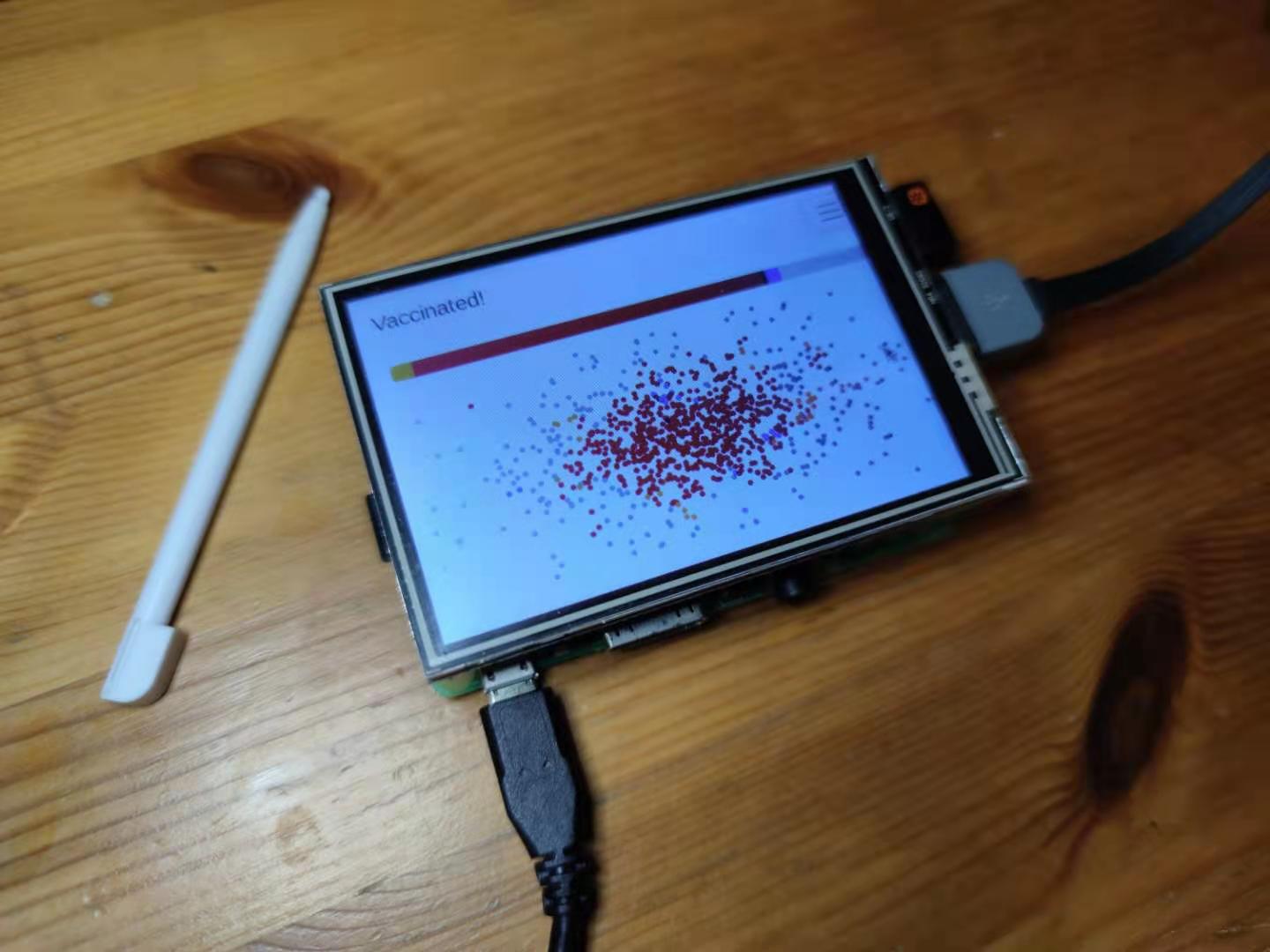
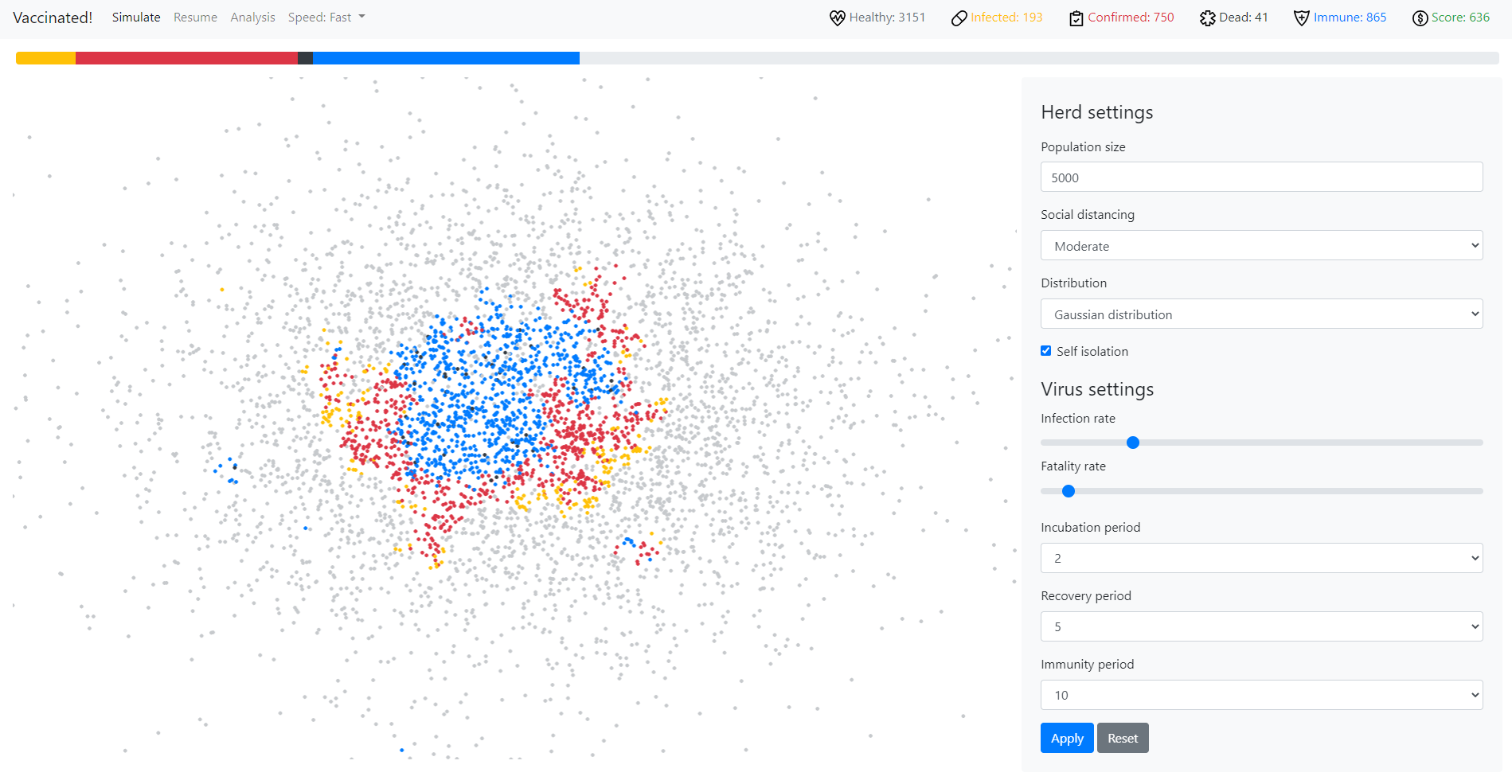
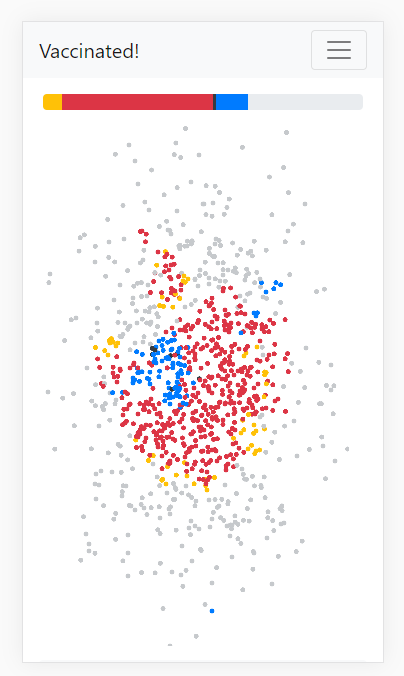
The interactive simulation is based on Javascript and can be run on any modern browser with decent performance. The aim of this project is to install the app on advertisement boards with touch screen at bus stops or train stations. There is also a prototype built with Raspberry Pi to showcase the simulation with touch screen functionality.
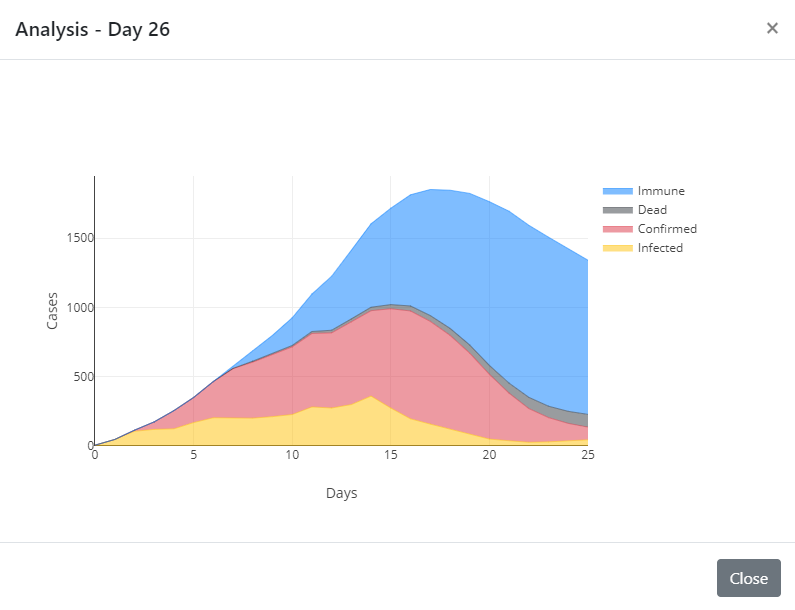
In this interactive simulation, participants play as the government or policymakers and are required to choose a set of guidelines for the community to follow during a pandemic. After the simulation starts, players can introduce vaccination to different parts of the community by clicking specific areas on the screen. The simulation terminates when the player score drops to 0 or when the players successfully survive for 100 days. A summary and detailed analysis are then presented to the players regarding their performance during the simulation.
How we built it
The spread of a virus can be affected by several factors such as the extent of social distancing and incubation periods of the virus. This project attempts to model the spread of such a virus with the implementation of a quadtree data structure to efficiently store data of points on a two-dimensional space.
Challenges we ran into
One challenge that we ran into was the sheer complexity involved in a comprehensive and realistic simulation of the spread of viruses. Simple data structures for storing two-dimensional data such as arrays and lists can result in the runtime exceeding the acceptable range for real-time simulations. Therefore, we explored different options and decided to implement a quadtree which significantly enhanced the performance of the simulation.
Accomplishments that we're proud of
We managed to create an engaging and interactive game that can help the public understand the difficulty of containing the spread of the virus so that people can appreciate the government policies and follow the guidelines accordingly.
What we learned
Throughout the project, we have gained valuable experience in Javascript coding and web development. We also learnt to use Raspberry Pi for easy prototyping in IoT applications.
What's next for Vaccinated!
We aim to deploy the game on web servers so people can access it freely using any browser on their personal devices. Moreover, with the approval of authorities and the support from local communities, it is possible to deploy the app with relevant hardware at bus stops and train stations so that people can experience it during the waiting time and learn more about the viruses. We would also like to add incentives for people to interact with the simulation such as the option to share achievement on social media.


Log in or sign up for Devpost to join the conversation.