What it does
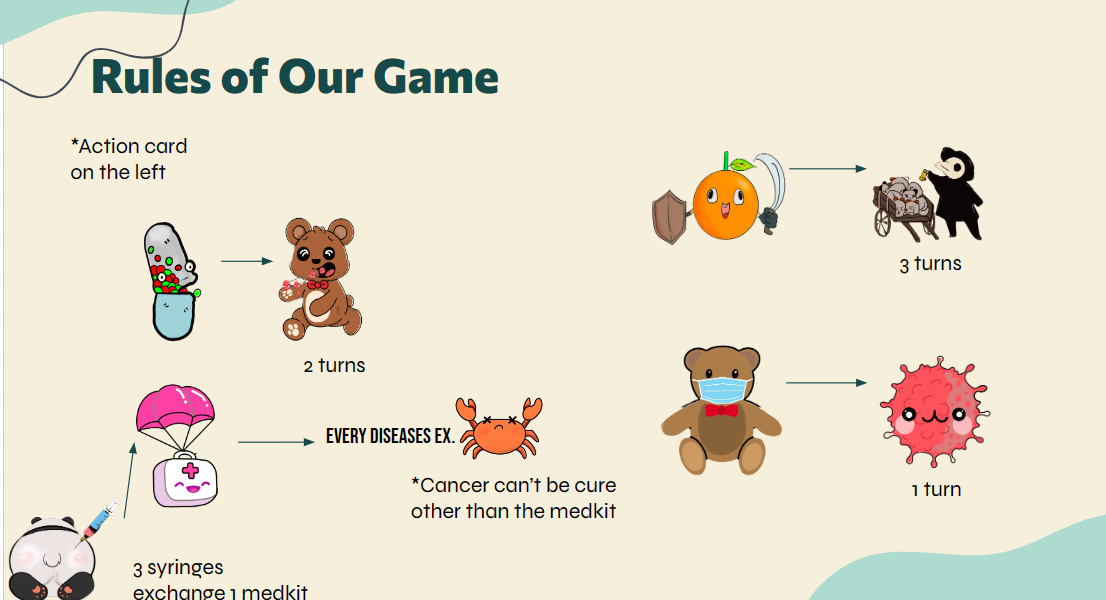
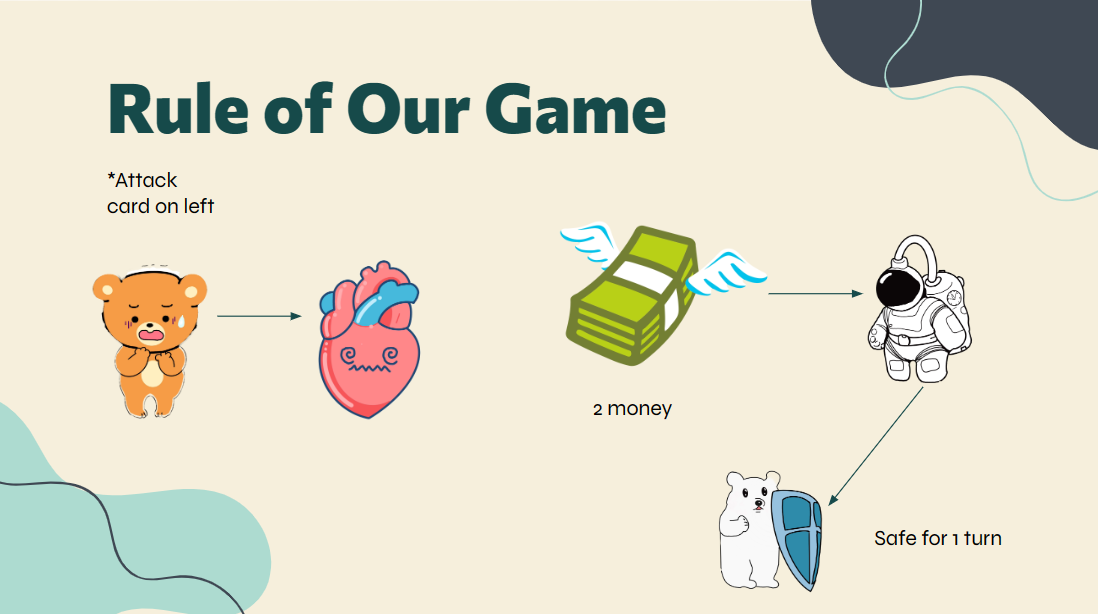
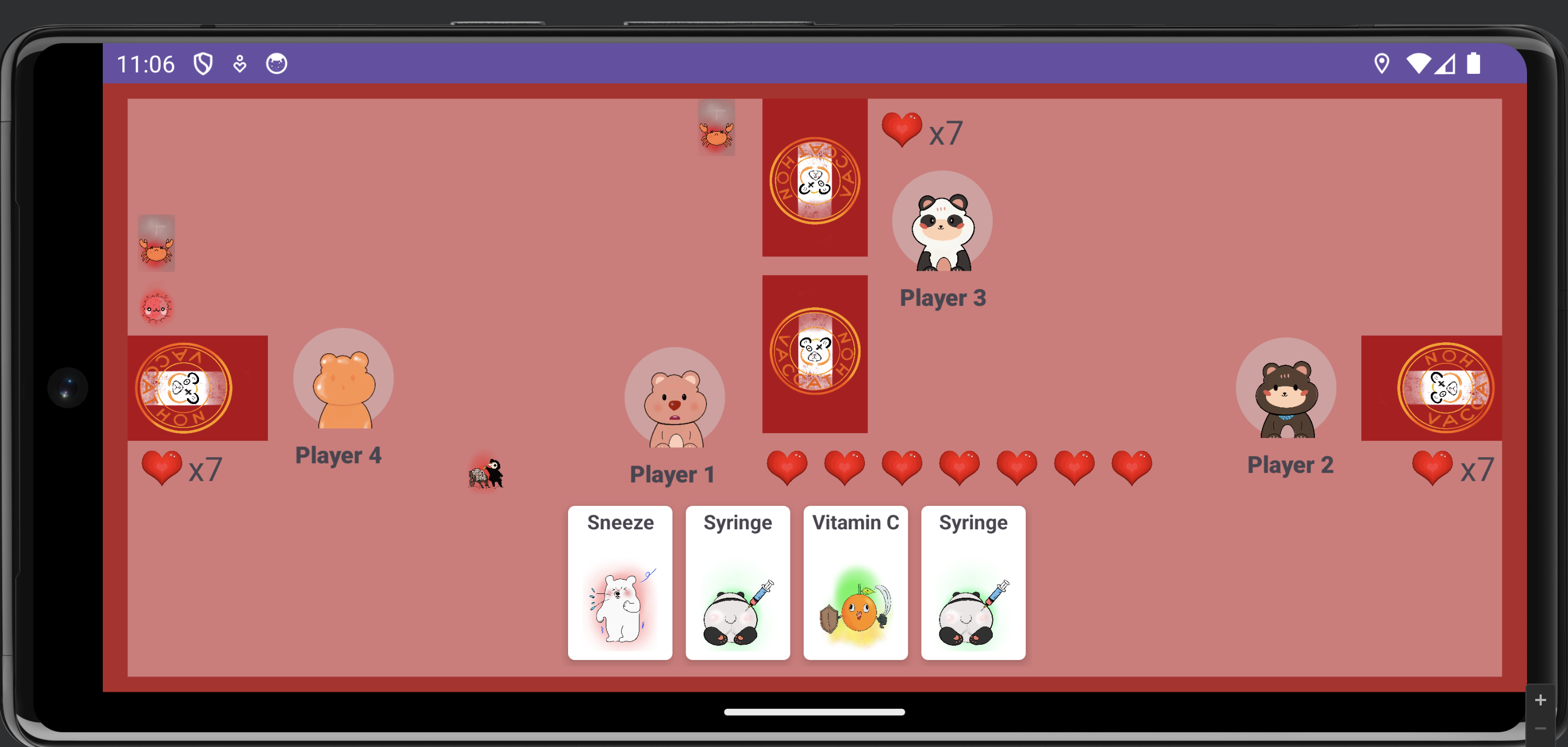
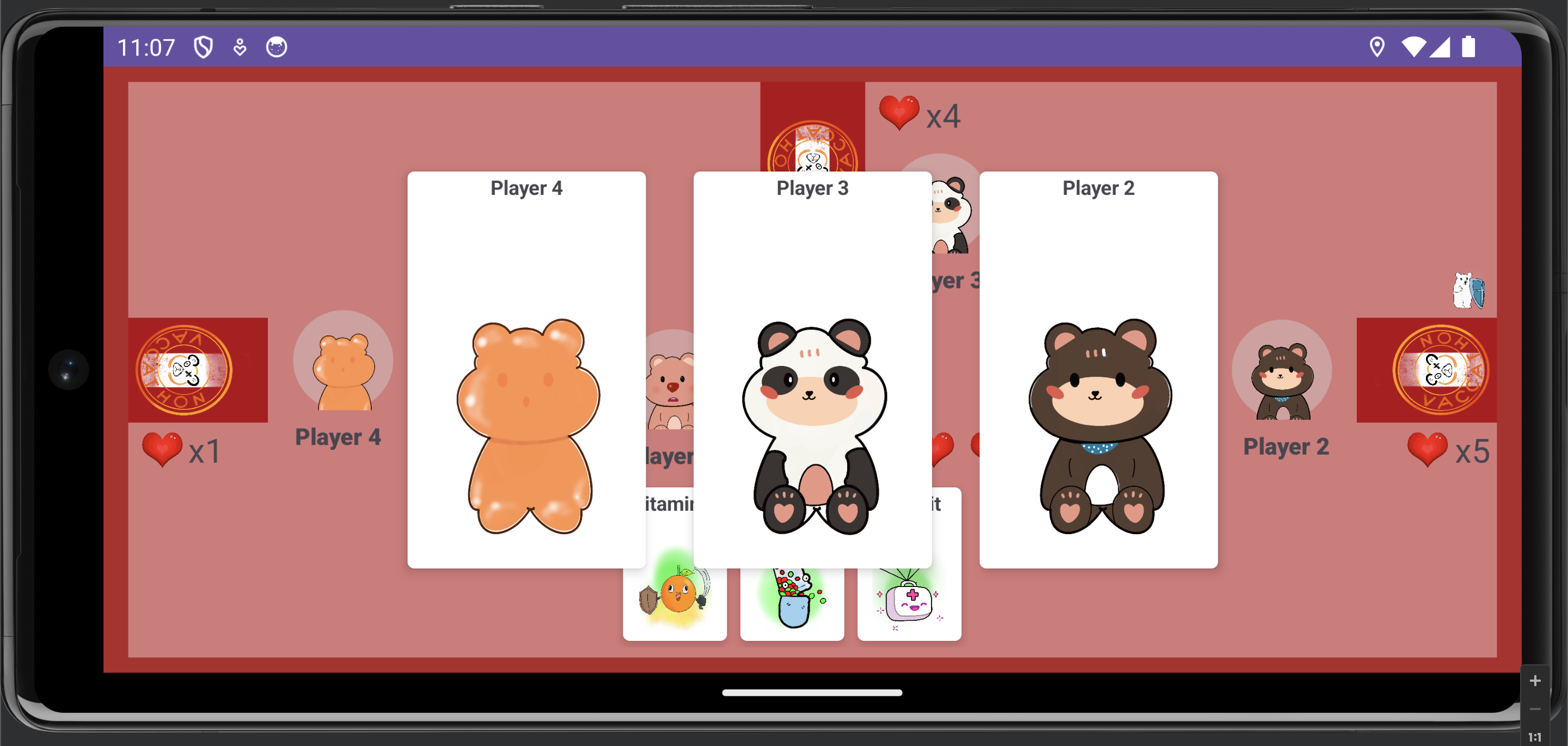
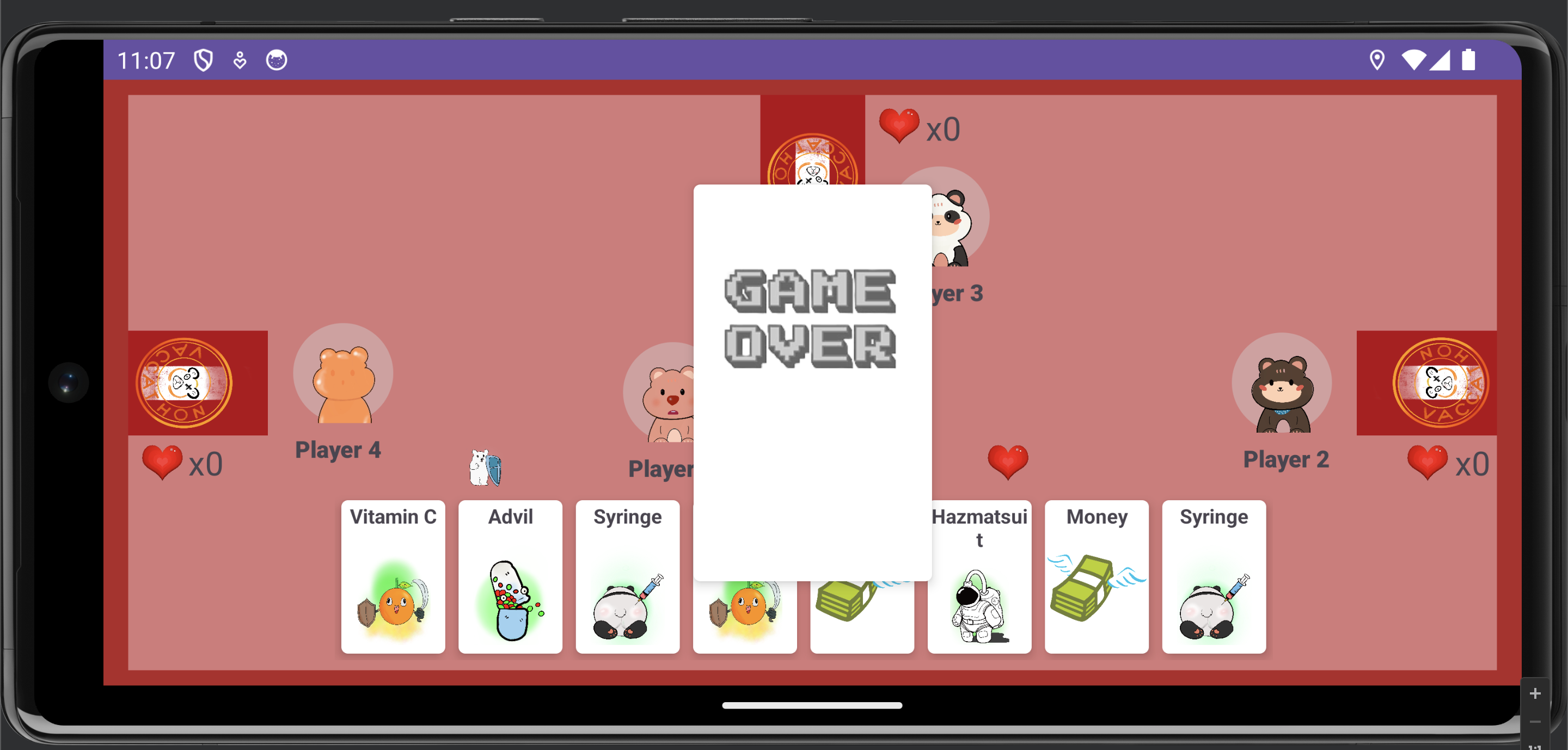
Vaccathon is a medical-themed, turn-based card game. Each person starts the game with 7 lives and five cards. There are three different types of cards: Illnesses, cures, and attack cards. Illness cards inflict a status on a person for a certain duration, which usually causes the player to lose lives when they have the status. Cure cards as used to cure illnesses, and attack cards can inflict illnesses or other statuses on other players. During each turn, a player can perform up to one action and draw a card to end their turn. The game ends when all players except for one run out of lives.
How we build it
First, we white-boarded the multiple aspects and layouts of our game. The most important parts were the main playing field of the game, as well as the core rules of the game (turns, lives, illnesses, and cures). After that, we moved our layout over to Android Studio, where we spent the majority of our time developing the app. The UI was written in XML, using a variety of widgets, while the backend was written in Kotlin. Almost all the pictures we used in the game were hand-drawn by one of our team members!
Challenges we ran into
The hardest part of this project was definitely learning our way around our tools. Even though we decided to use Android Studio, none of us had ever written an Android app before or even developed a UI. Despite that, we managed to get the hang of things later on, and the project went much smoother. Another issue we had later on was trying to integrate our backend and UI. The interaction became complicated incredibly quickly since it involved multithreading and coroutines.
Accomplishments that we're proud of
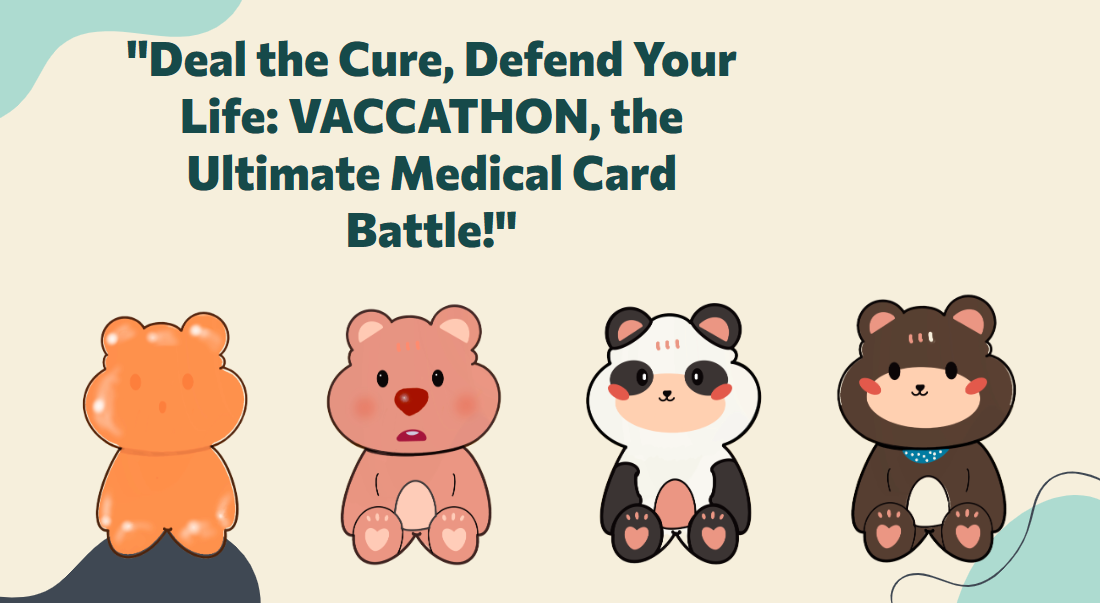
This is the first complete project we have ever done in our life. After almost 2 months of learning coding, we interpreted what we learned in class, language Kotlin, with Andriod Studio in order to create something meaningful. Learning to code is not easy. We have all struggled in various ways. However, this successful project we made is proof that we have been putting effort into learning. We are also directly seeing our improvements from "Hello, World!" to a complete, original game! We know that visuals are the key to attracting audiences to play our game, so we've also demonstrated the relevance of studio art's conceptual creativity to game development by drawing all of our avatars and game cards by hand.
What we learned
We learned how to code! We as 4 total beginners have watched online tutorials for hours and hours before Cal Hack, and we have incorporated those concepts into our project. We have also learned to work in a group. Teamwork is not as simple as it seems. After 3 days, we had solved all the conflicts we had and we communicated wisely to boost our efficiency.
What's next for Vaccathon
We want to integrate AI and machine learning into our game design. Right now the "bots" in the game are just playing whatever random card that is in their hand, and so we would have scenarios where the bots only attack the human player, or that they are making moves that make no sense at all. AI and machine learning can analyze both the human player and the other bot player's pattern, so it will become more intelligent when it comes to which card to play, how to react to an unexpected attack, and what card to preserve so you can survive in the long run, etc. It is a fairly simple card game so it would be pretty easy to implement AI into our game. We can polish this game more and make it more like a well-built game, and maybe eventually release it on PlayStore.
Built With
- android-studio
- java
- kotlin
- xml

Log in or sign up for Devpost to join the conversation.