-
-
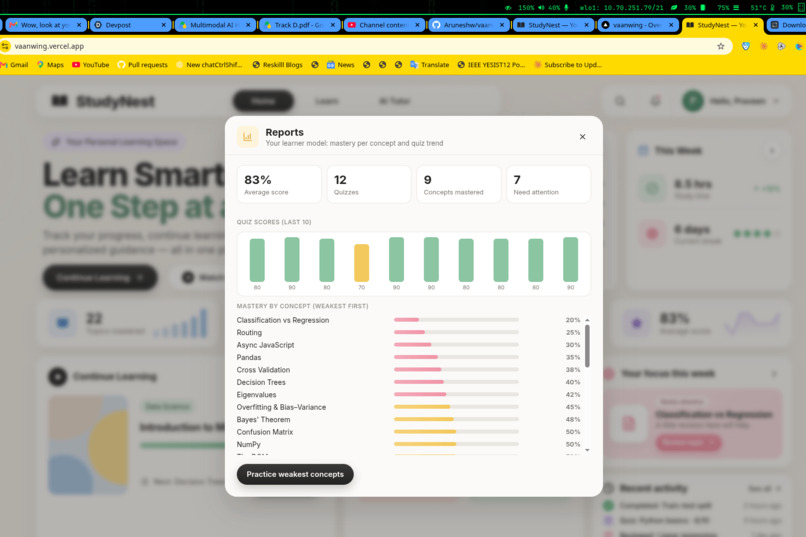
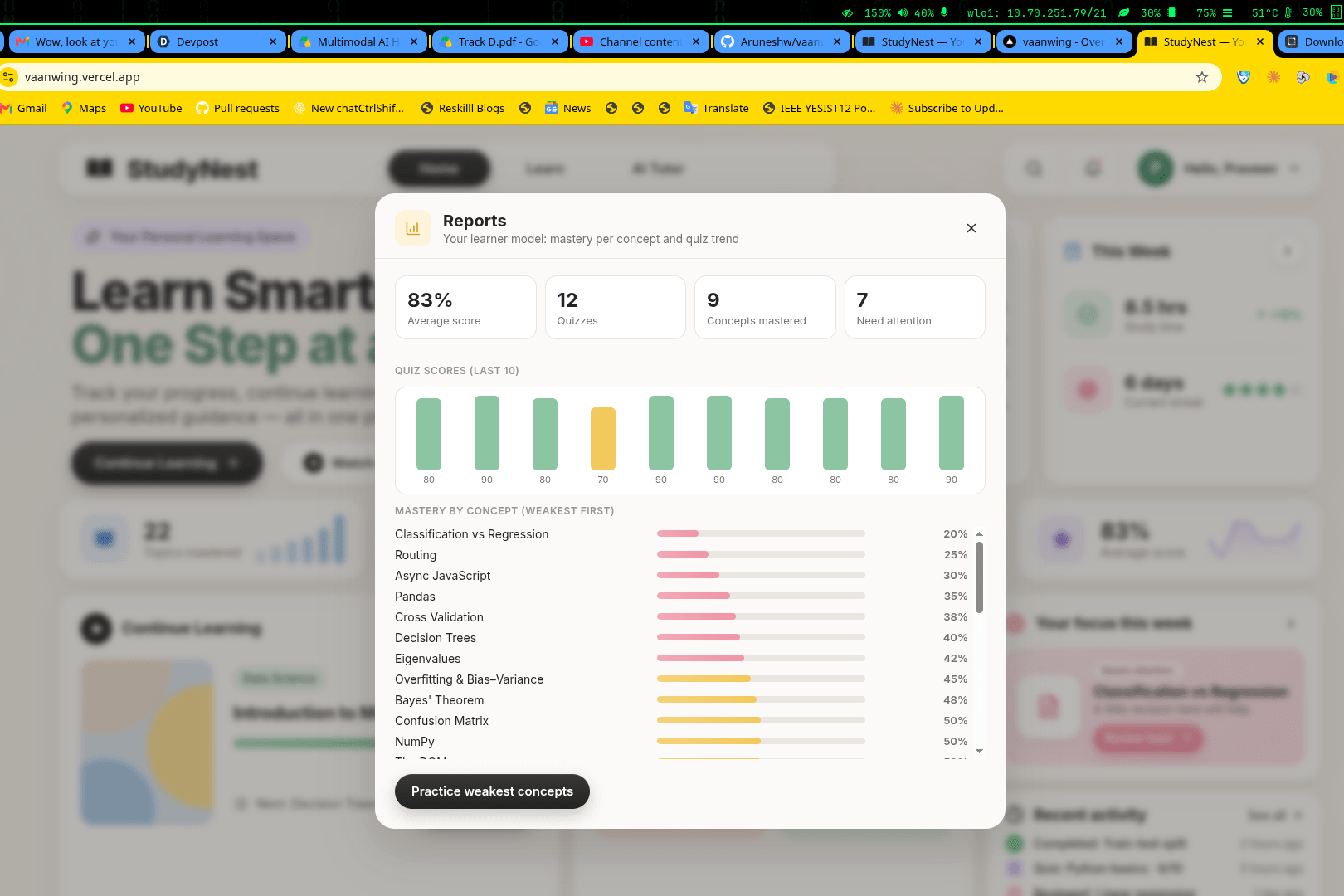
report
-
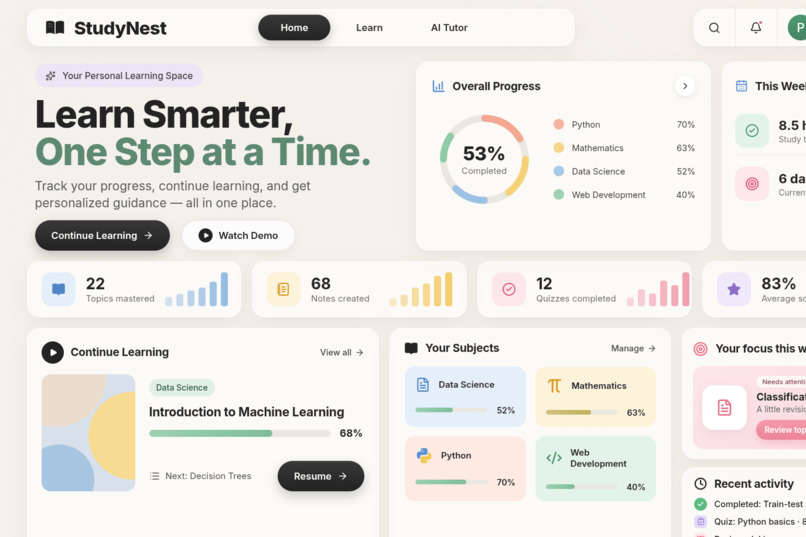
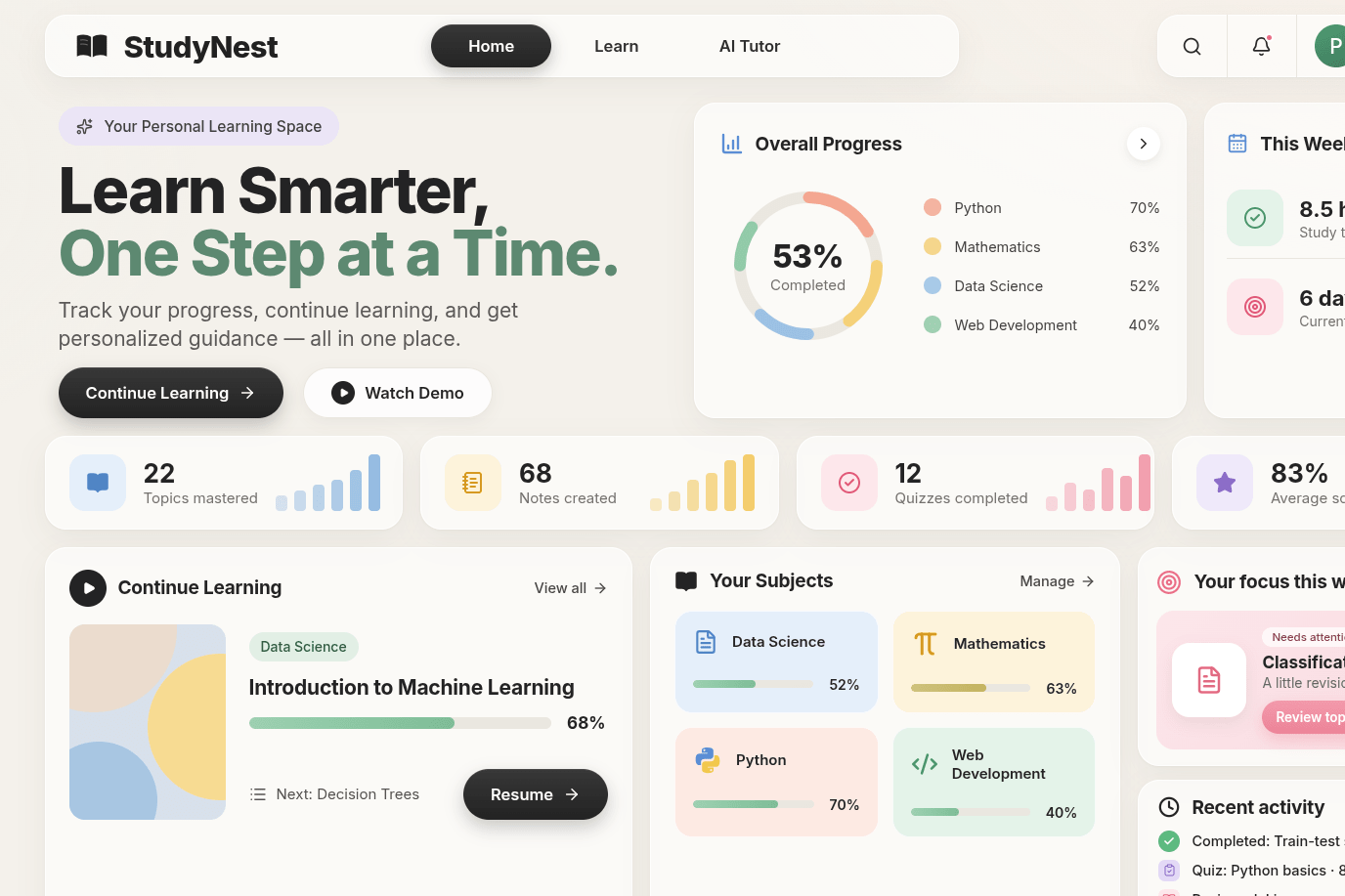
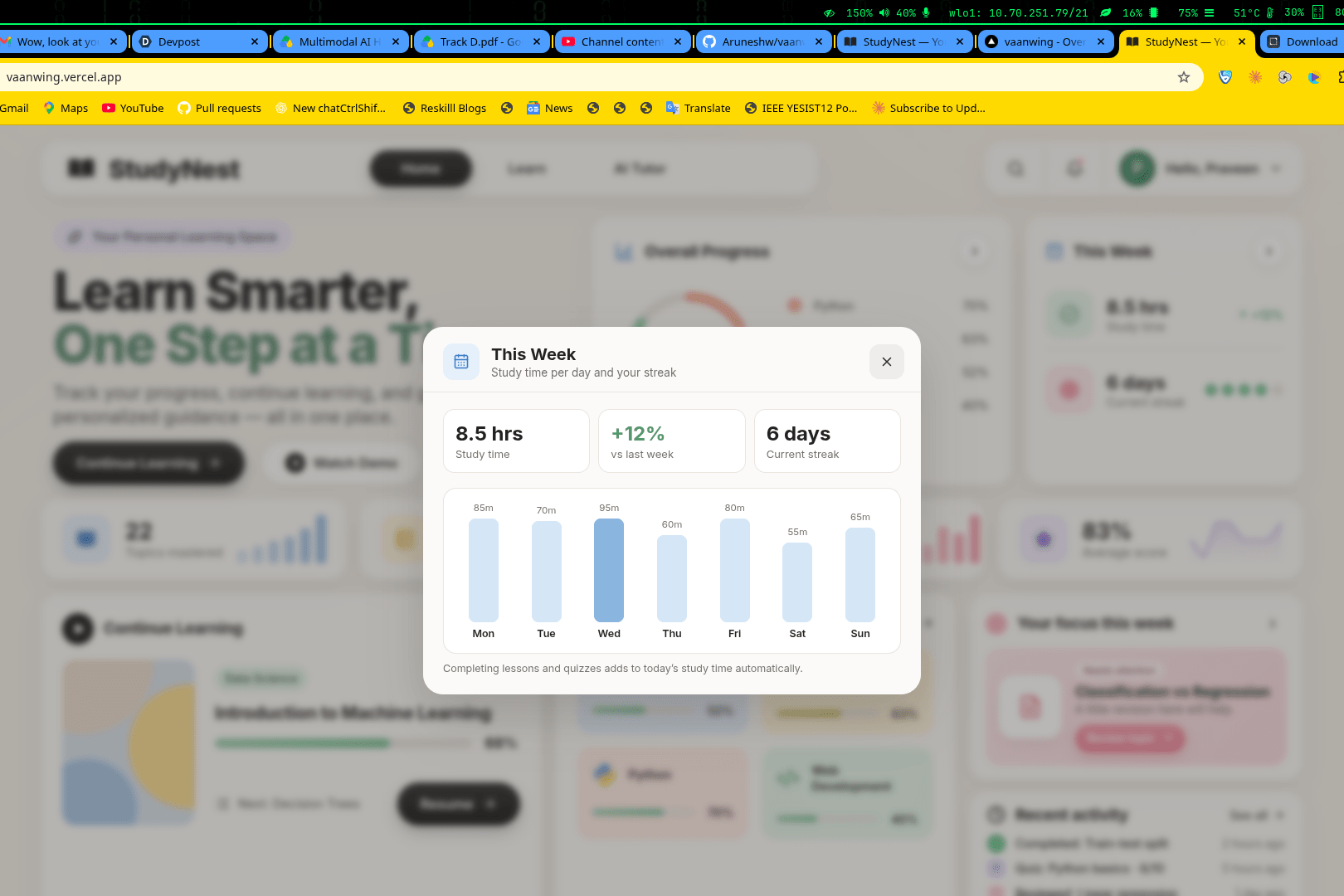
home page
-
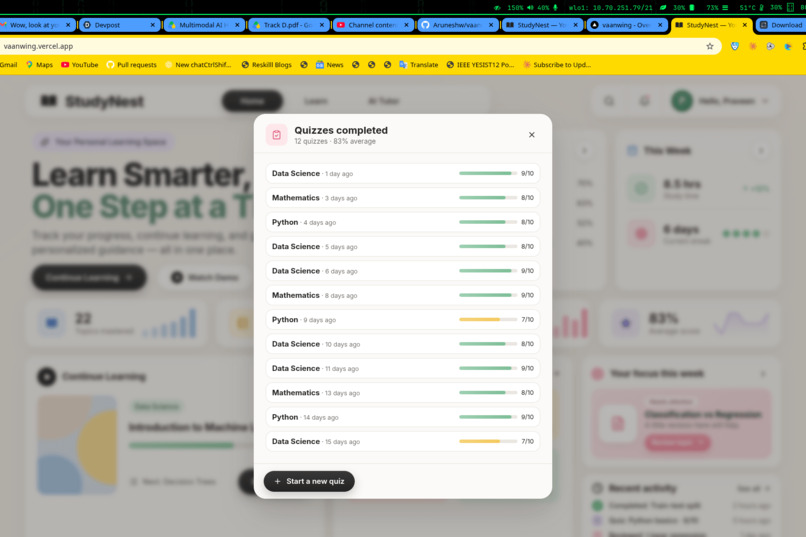
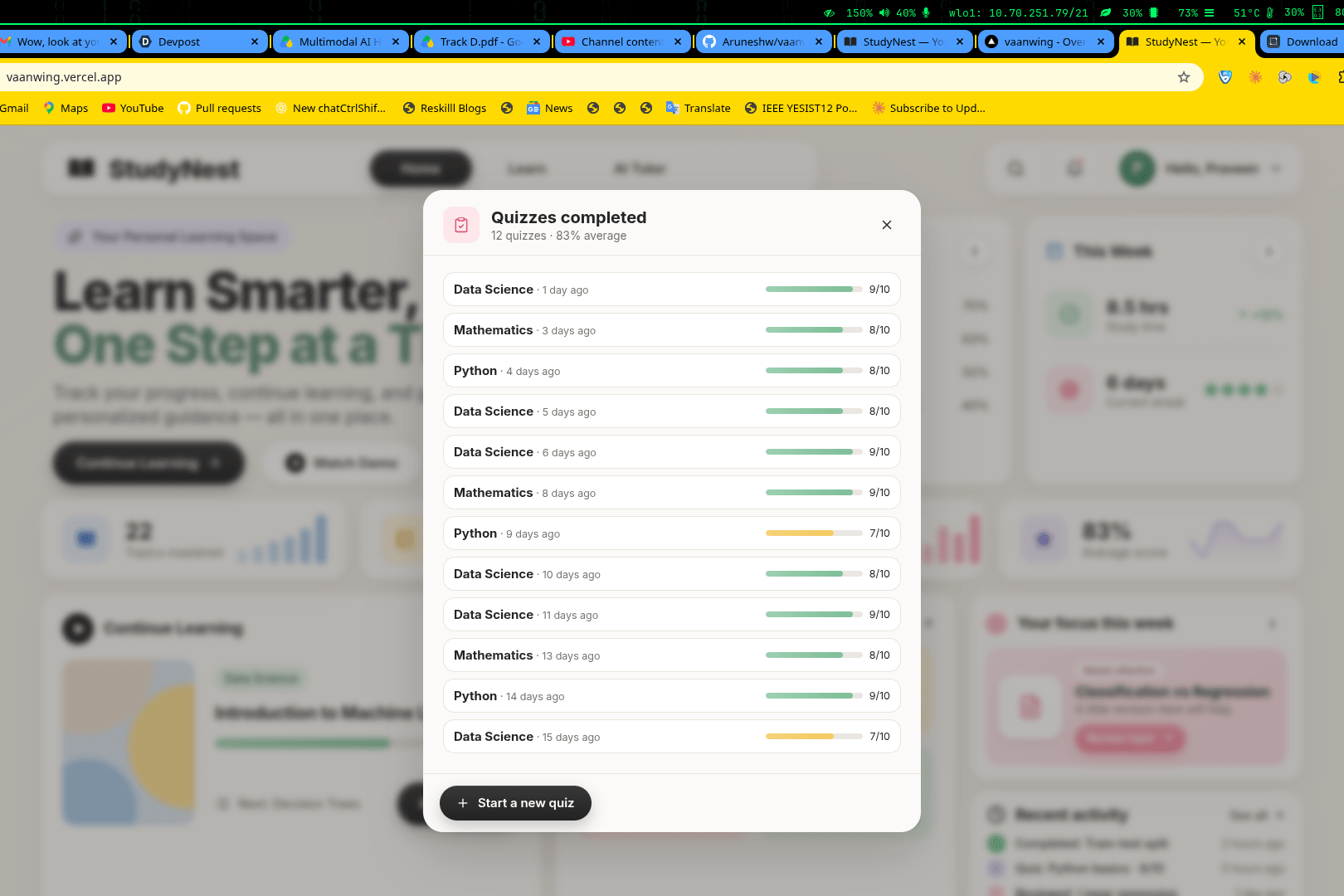
quizes completed
-
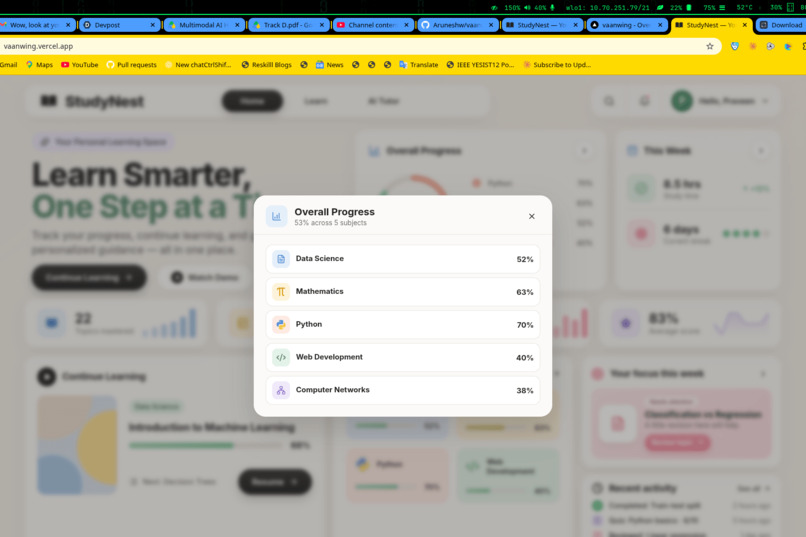
subject list
-
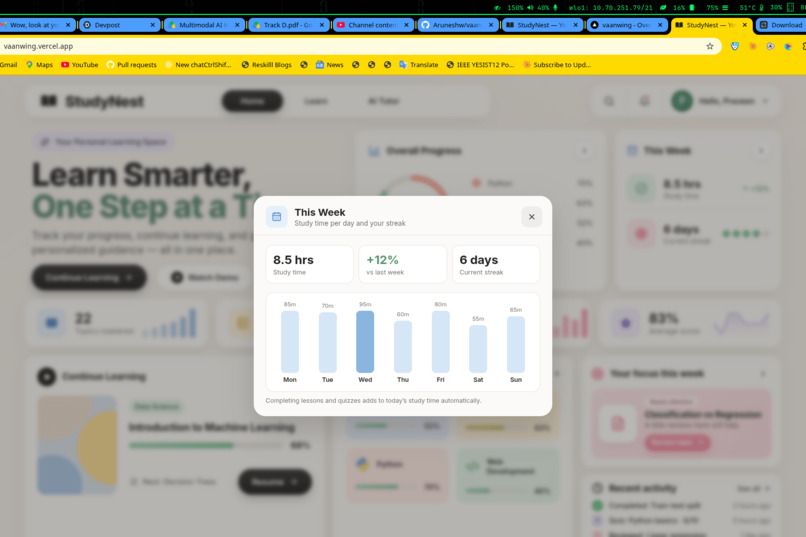
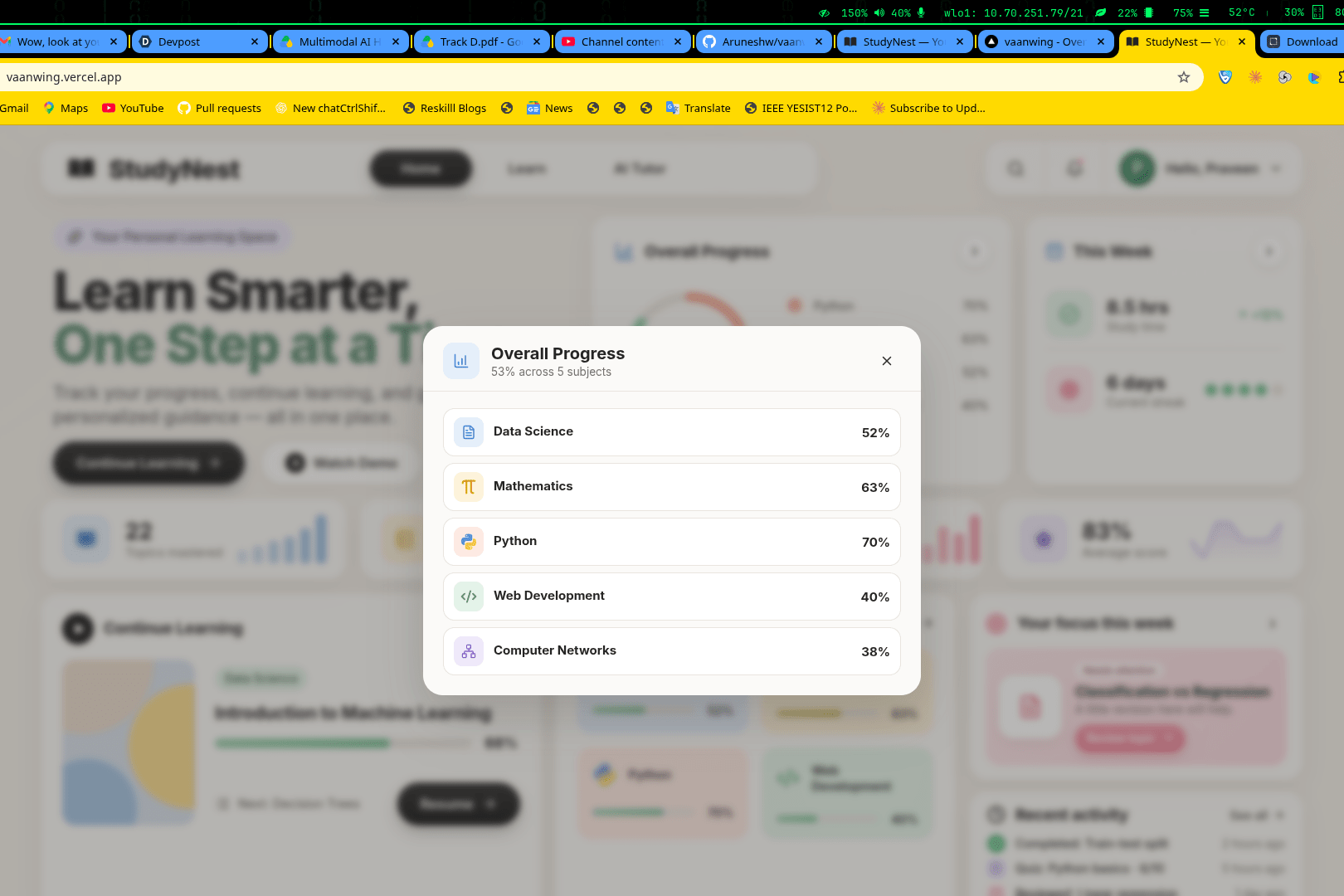
progress
-
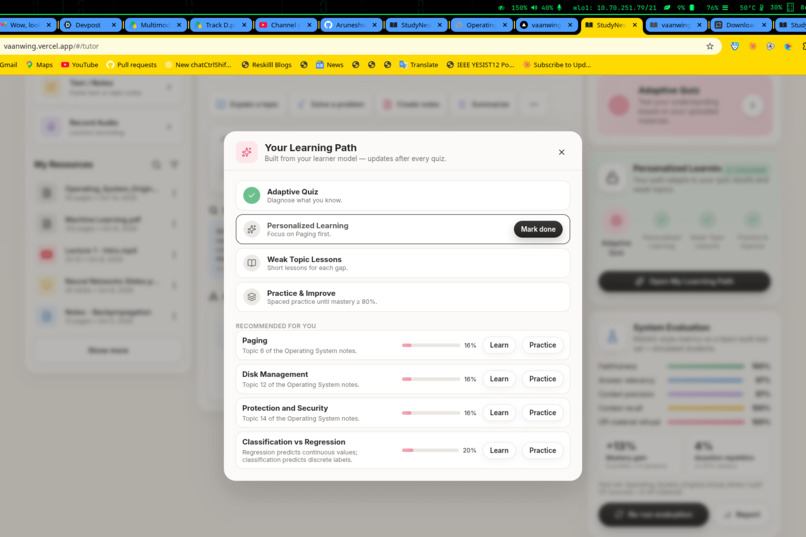
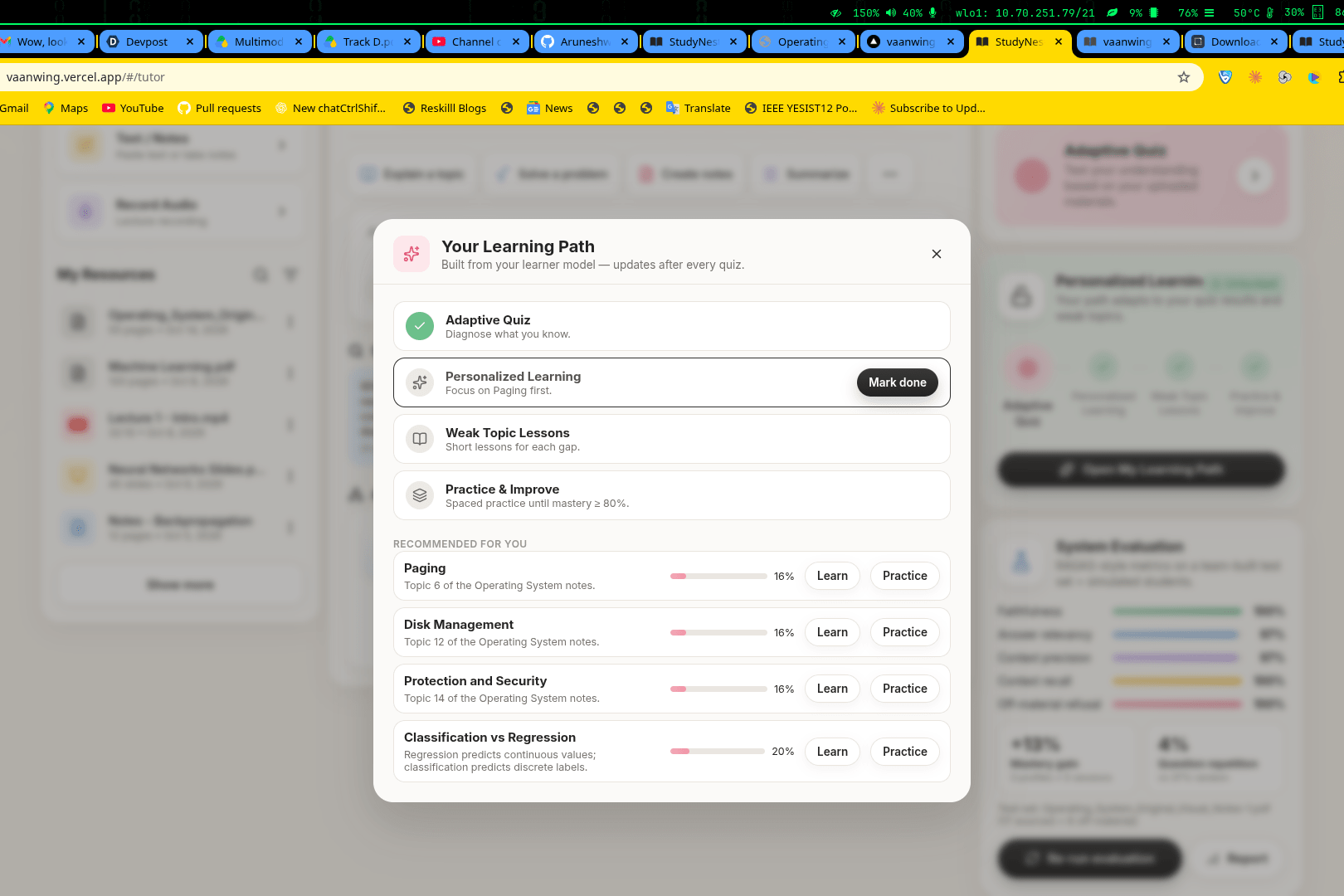
learning plan
-
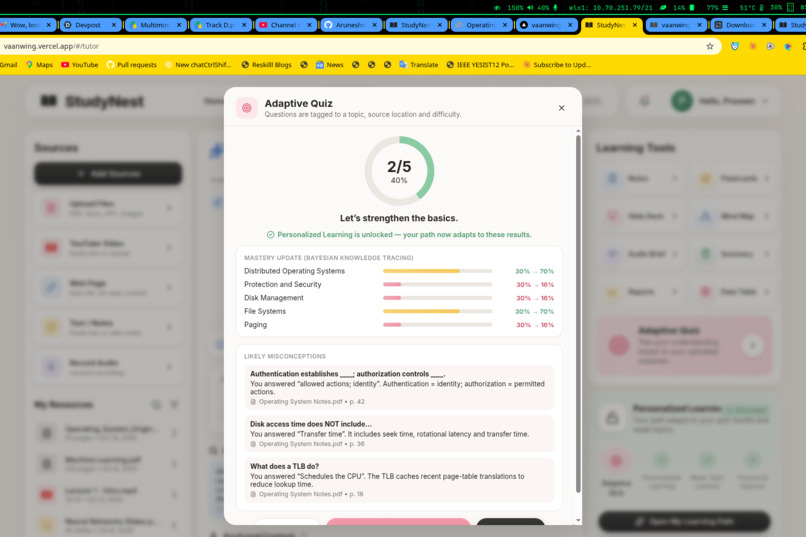
quiz analytics
-
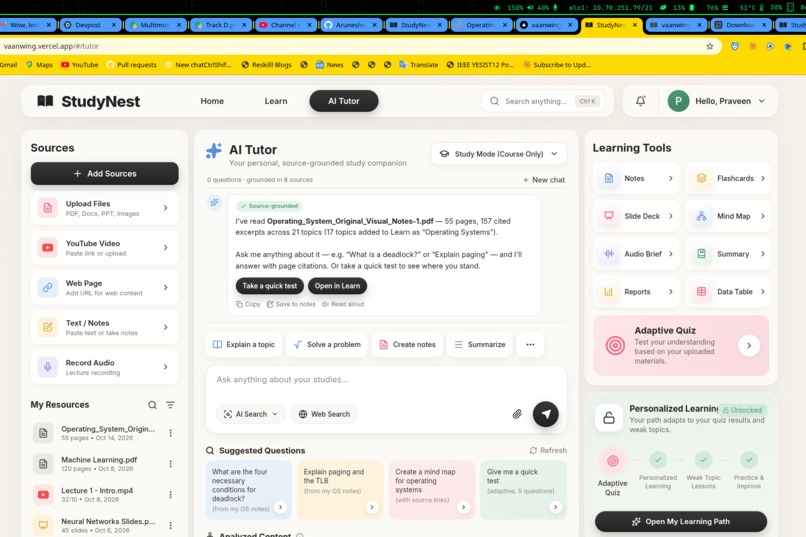
ai tutor page
-
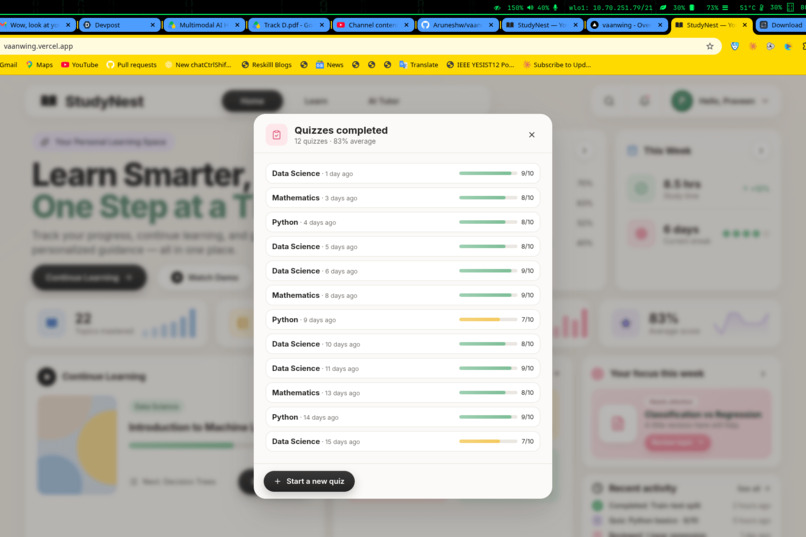
topics completed
-
report
Inspiration
Students often rely on multiple resources, including lecture videos, PDFs, textbooks, slides, and personal notes, to understand a subject. Switching between these resources makes learning less organized and revision more difficult. Generic AI tutors can help explain concepts, but their answers may not match the course material or provide reliable source references.
We built StudyNest to bring these resources together in one place. Our goal is to create a personalized AI study companion that helps students understand their course material, verify answers using original sources, identify knowledge gaps, and improve through adaptive learning.
What it does
StudyNest combines course organization, AI-powered tutoring, and personalized assessments in a single learning platform.
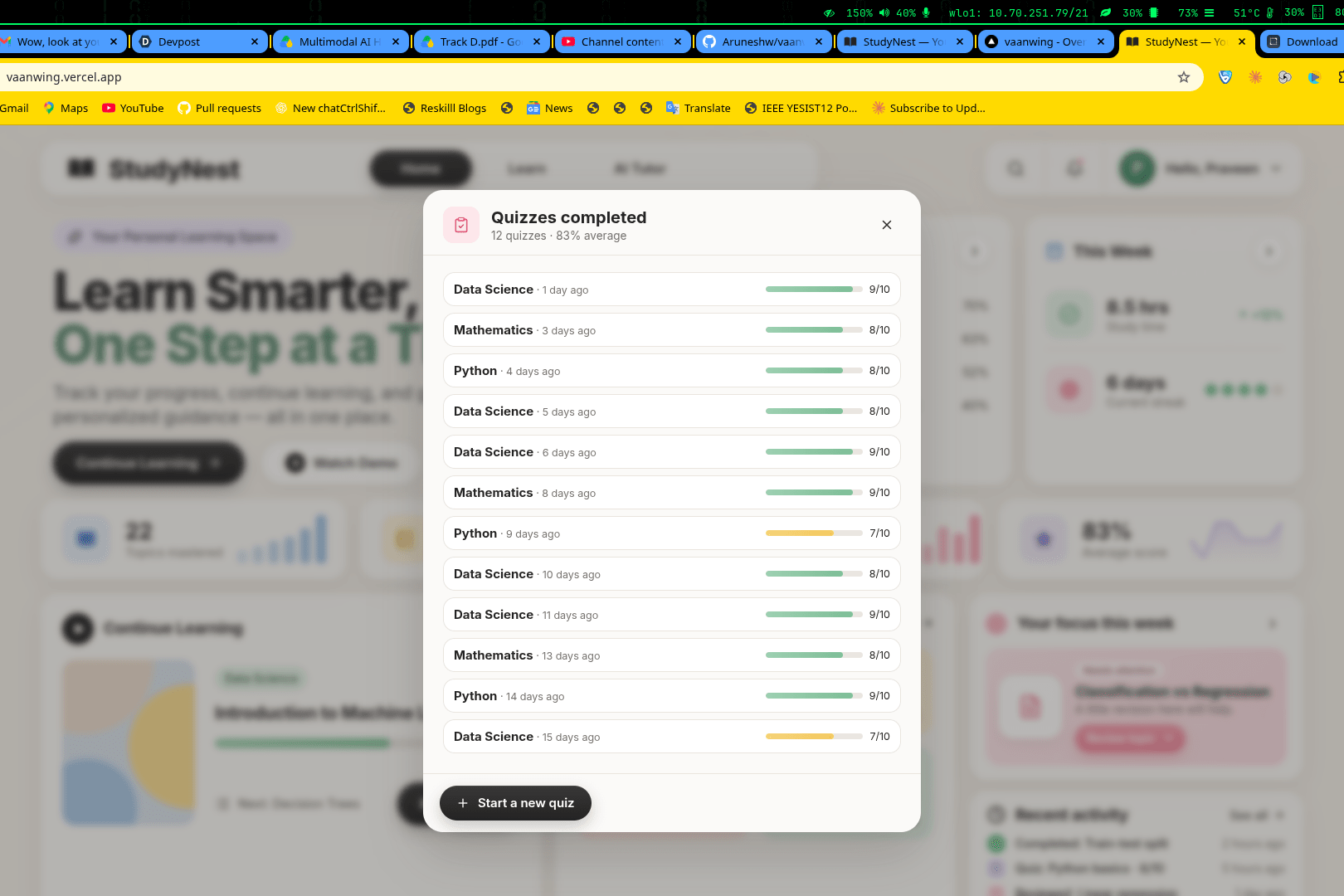
- Personalized Dashboard: Displays learning progress, recent activity, quiz performance, and topic-wise mastery. It highlights weak concepts and recommends what to study next.
- Structured Learning: Organizes course materials into subjects, modules, lessons, and concepts. A visual concept map helps students understand the relationships and prerequisites between topics.
- Multimodal Learning Resources: Provides a unified interface for lecture videos, PDFs, slides, and notes, with support for bringing different learning resources into one workspace.
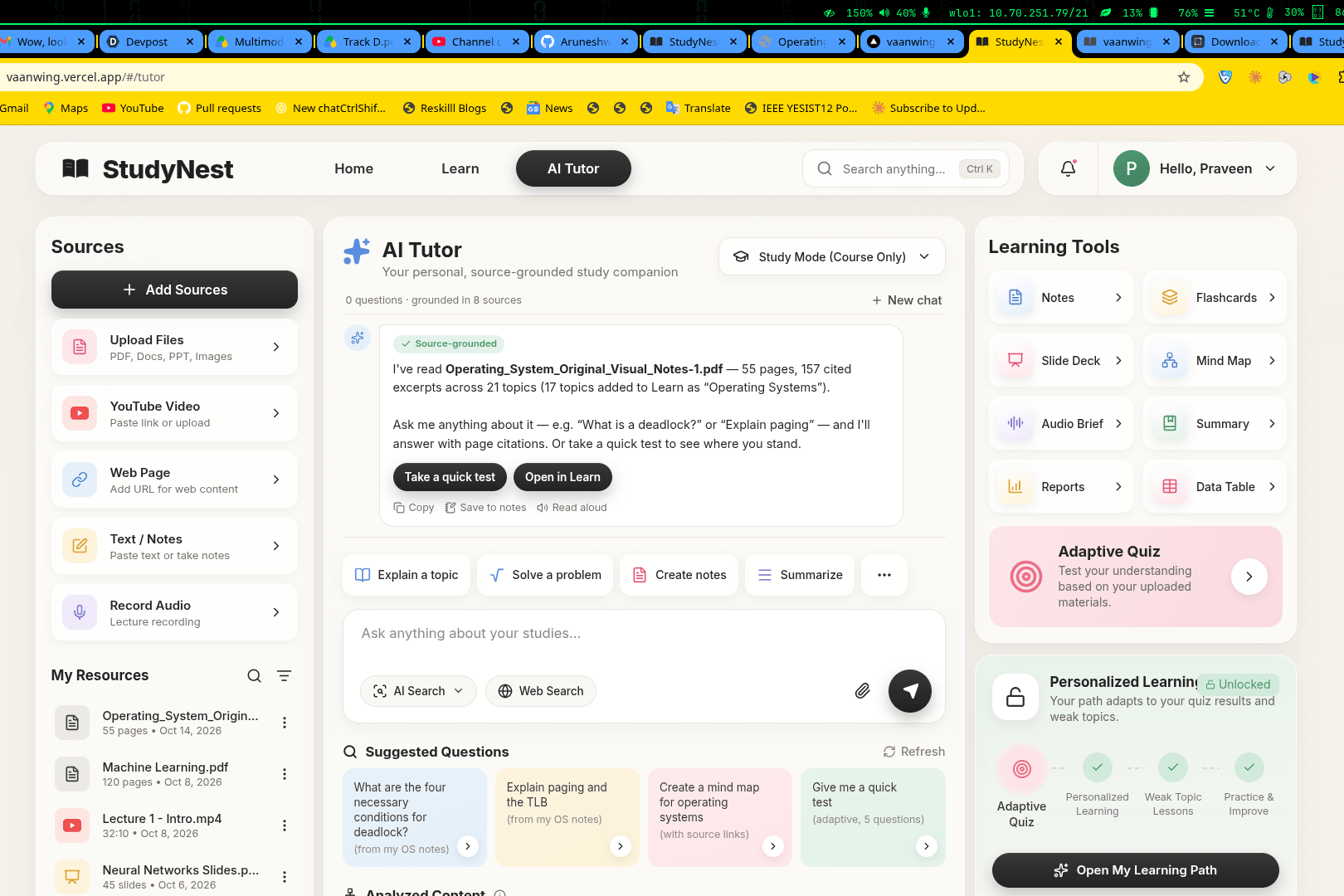
- Source-Grounded AI Tutor: Answers questions using relevant course material and connects explanations to their original sources, such as PDF pages, slides, and video timestamps. When the material does not support an answer, the tutor identifies the limitation instead of presenting unsupported information as fact.
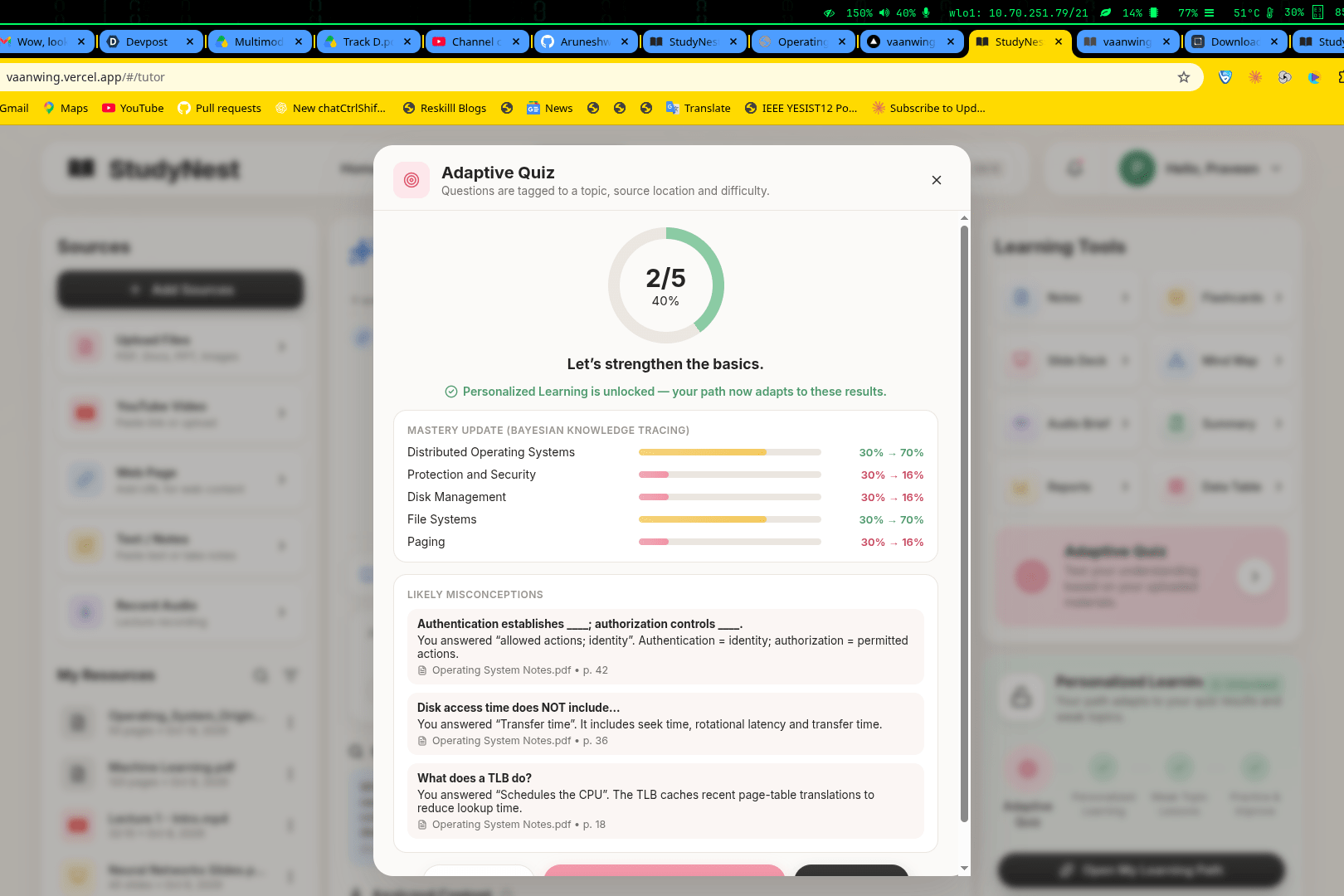
- Adaptive Assessments: Generates multiple-choice, short-answer, and numerical questions based on selected topics and difficulty levels. Feedback helps students understand their mistakes and identify concepts that need revision.
- Learner Modeling: Tracks topic-wise mastery using an approach inspired by Bayesian Knowledge Tracing and uses assessment results to guide future learning recommendations.
- Smart Study Materials: Supports the generation of summaries, flashcards, revision slides, mind maps, and other study resources from course content.
- Easy Navigation: Includes keyboard shortcuts, a command palette, and browser-based state persistence for a smoother learning experience.
How we built it
We built the frontend using React 19, TypeScript, and Vite, focusing on a responsive interface and a modular application structure.
- Frontend: React 19 and TypeScript for reusable components and type-safe development.
- Build Tool: Vite for fast development and hot module replacement.
- Routing: React Router with hash-based navigation to support static hosting environments.
- Styling: Custom CSS with responsive layouts, light and dark themes, glassmorphism, and subtle animations.
- Icons: Lucide React for a consistent visual design.
- Learner Model: A client-side mastery-tracking mechanism inspired by Bayesian Knowledge Tracing, designed to update concept-level estimates based on assessment results.
- AI and Retrieval Architecture: Modular source-processing and tutoring components designed to support content chunking, retrieval, source metadata, and integration with language models and embedding services.
- State Management: Browser local storage for retaining supported interface state and learning progress between visits.
The architecture is designed to support a dedicated AI backend, semantic retrieval, multimodal content processing, and persistent learner profiles as development progresses.
Challenges we ran into
One of our main challenges was managing the different elements of a learning session without making the interface complicated. Video playback, document navigation, source references, quiz feedback, and progress tracking all need to work together smoothly.
Another challenge was designing source-grounded tutoring in a way that students can trust. The system needs to distinguish answers supported by uploaded material from questions that cannot be answered using the available sources.
We also worked through React component lifecycle and state synchronization issues, particularly when handling interactive components and frequent updates. Balancing a feature-rich learning experience with responsive performance and maintainable code was another important consideration.
Accomplishments that we're proud of
- Created a unified learning interface that brings course materials, AI tutoring, assessments, and progress tracking together.
- Designed an interactive workflow connecting learning resources, practice questions, feedback, and topic-level mastery.
- Developed a learner-modeling approach that uses assessment results to inform future learning recommendations.
- Built a responsive interface using custom CSS rather than relying on a large UI component framework.
- Designed modular source-processing and tutoring components to support future multimodal AI integration.
- Established a foundation for a more personalized and source-aware learning experience.
What we learned
Building StudyNest helped us understand that educational AI needs more than the ability to generate explanations. Students also need reliable references, relevant practice questions, and feedback that reflects their actual understanding.
We explored how source metadata can connect retrieved content to its original location, how assessment results can inform mastery estimates, and how learning recommendations can adapt to student performance.
We also gained practical experience in frontend architecture, complex state synchronization, reusable components, and designing interfaces for AI-assisted learning workflows.
What's next for StudyNest
Our next goal is to connect the existing interface to a production-ready AI backend and make the complete learning workflow work with real course materials.
- Multimodal AI Integration: Integrate suitable models to process lecture videos, audio recordings, documents, slides, and diagrams.
- Semantic Retrieval: Connect embedding models and a vector database to retrieve relevant course content and preserve source references.
- Reliable Source Grounding: Improve citation accuracy and test the system's ability to identify unsupported questions rather than generate unverified answers.
- Persistent Learner Profiles: Store topic-level mastery, assessment history, and learning progress across sessions.
- Better Personalization: Refine diagnostic quizzes, spaced repetition, and revision recommendations based on individual performance.
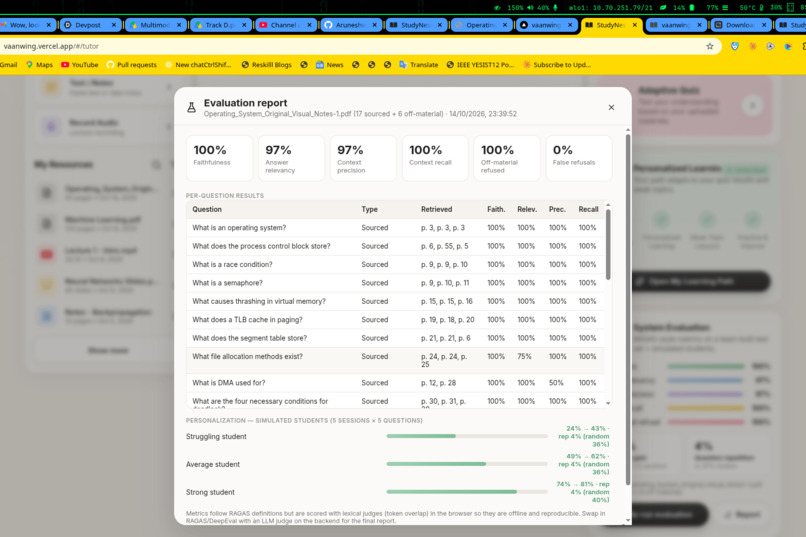
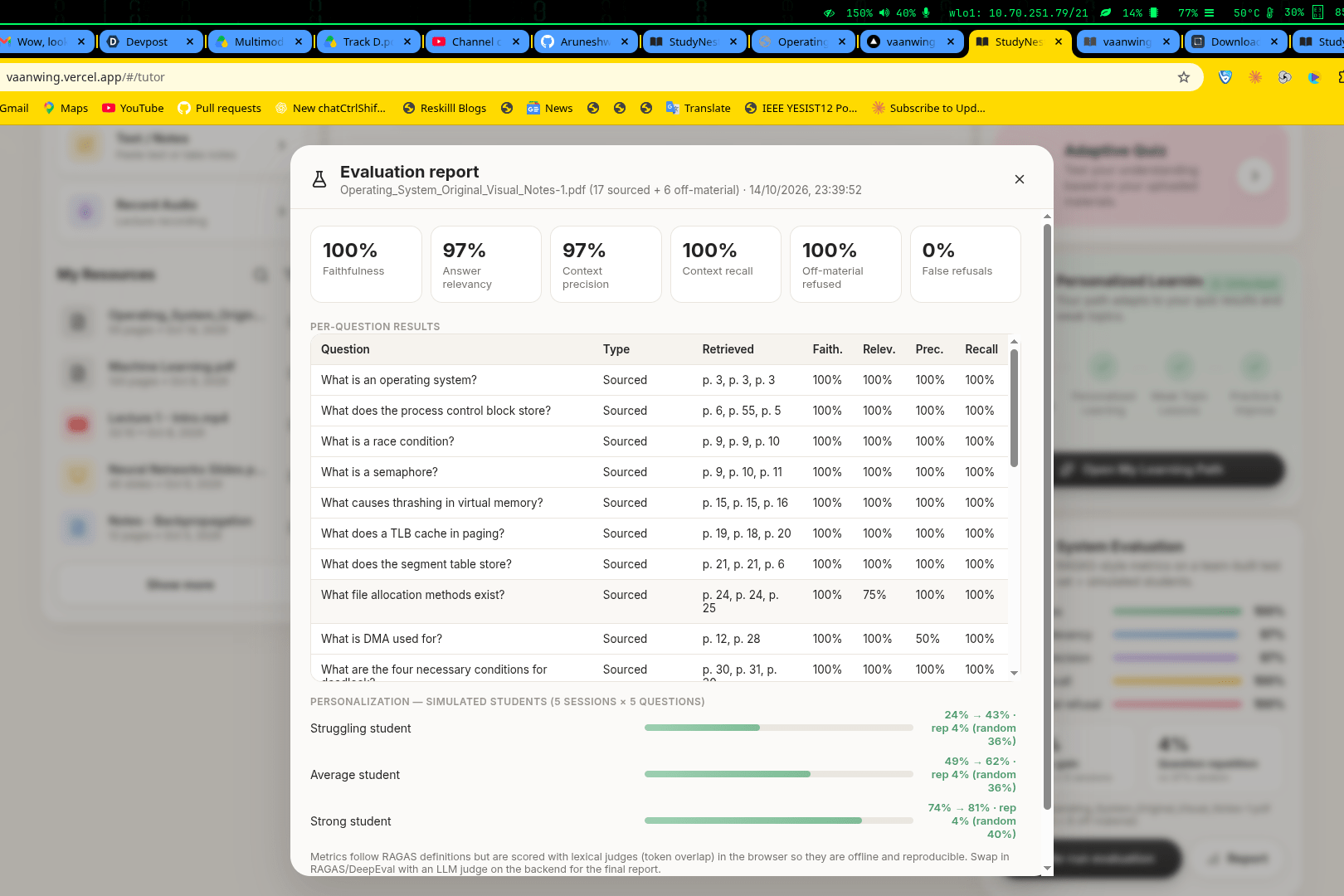
- System Evaluation: Measure retrieval quality, answer faithfulness, context precision and recall, question correctness, and personalization effectiveness.
- Collaborative Learning: Explore shared study spaces where students can exchange notes, discuss concepts, and practice together.
Our long-term vision is to make StudyNest a dependable learning companion that helps students move beyond simply consuming study materials toward understanding concepts, addressing their weaknesses, and learning at their own pace.
Built With
- adaptive-learning
- artificial-intelligence
- css3
- educational-technology
- html5
- javascript
- localstorage
- lucide-react
- multimodal-ai
- rag
- react
- react-router
- typescript
- vite

Log in or sign up for Devpost to join the conversation.