-
-
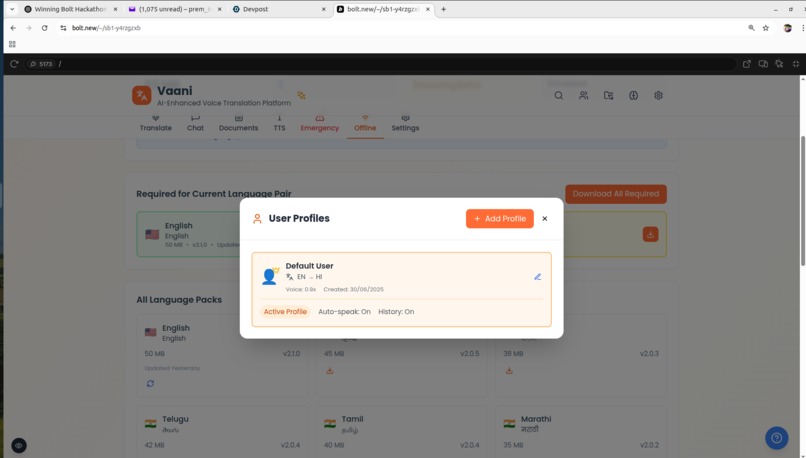
Vaani: Information safety
-
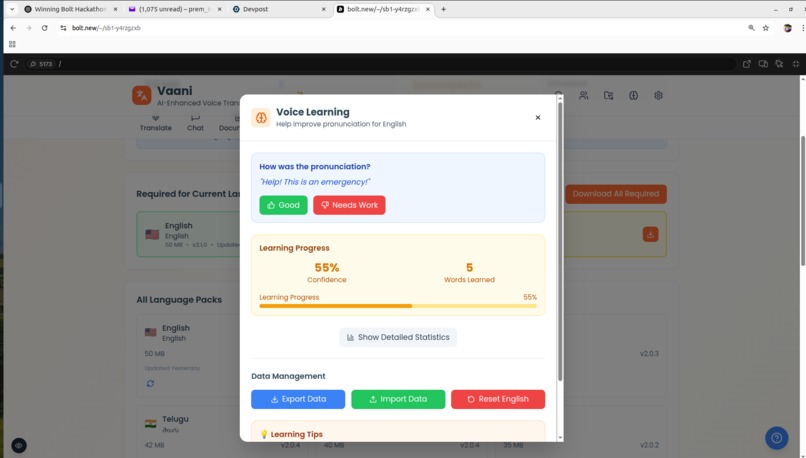
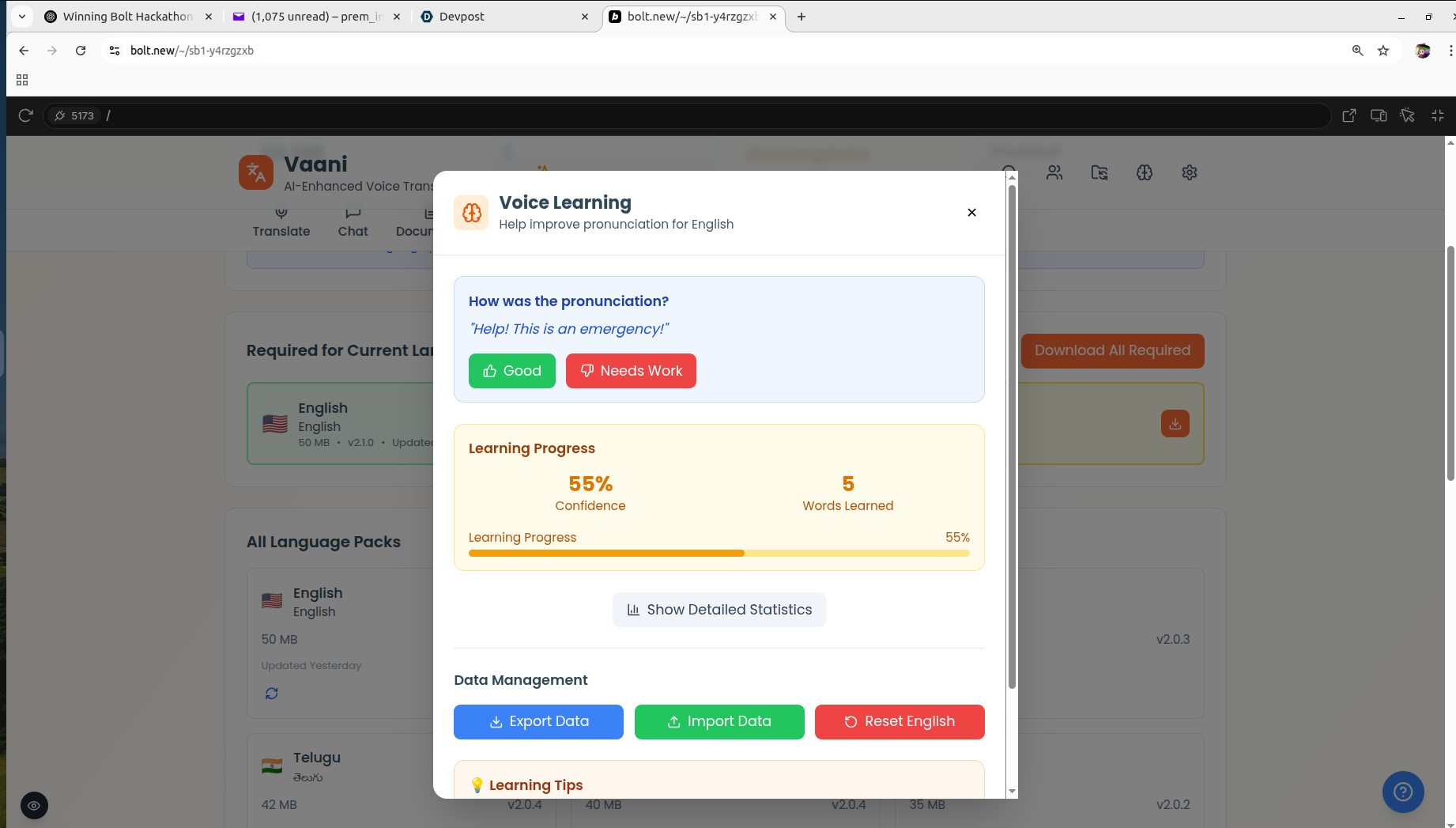
Vaani: It learns with time and usage
-
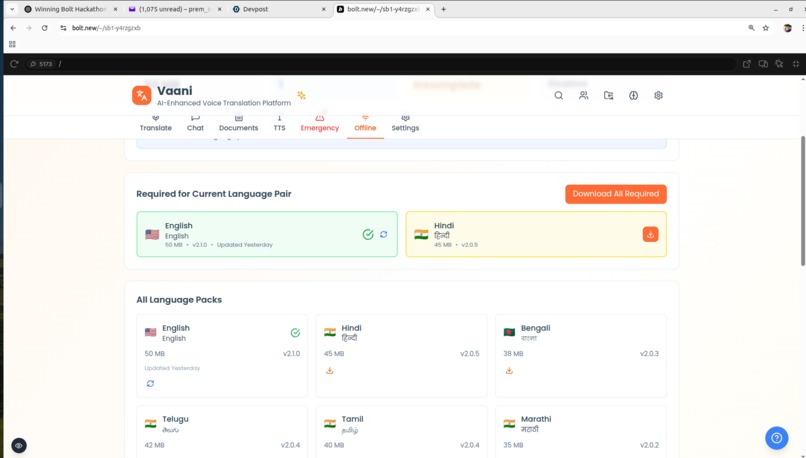
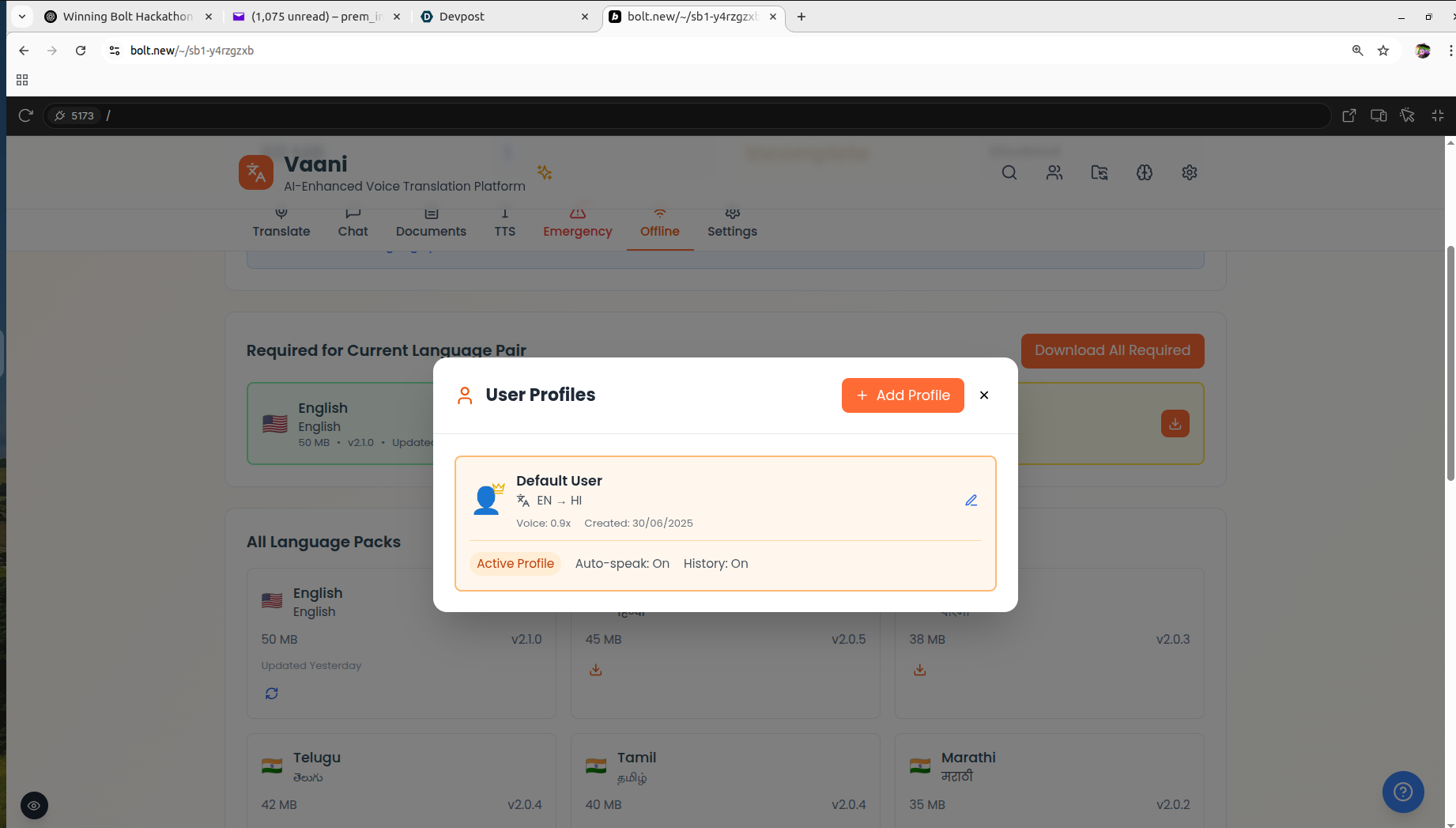
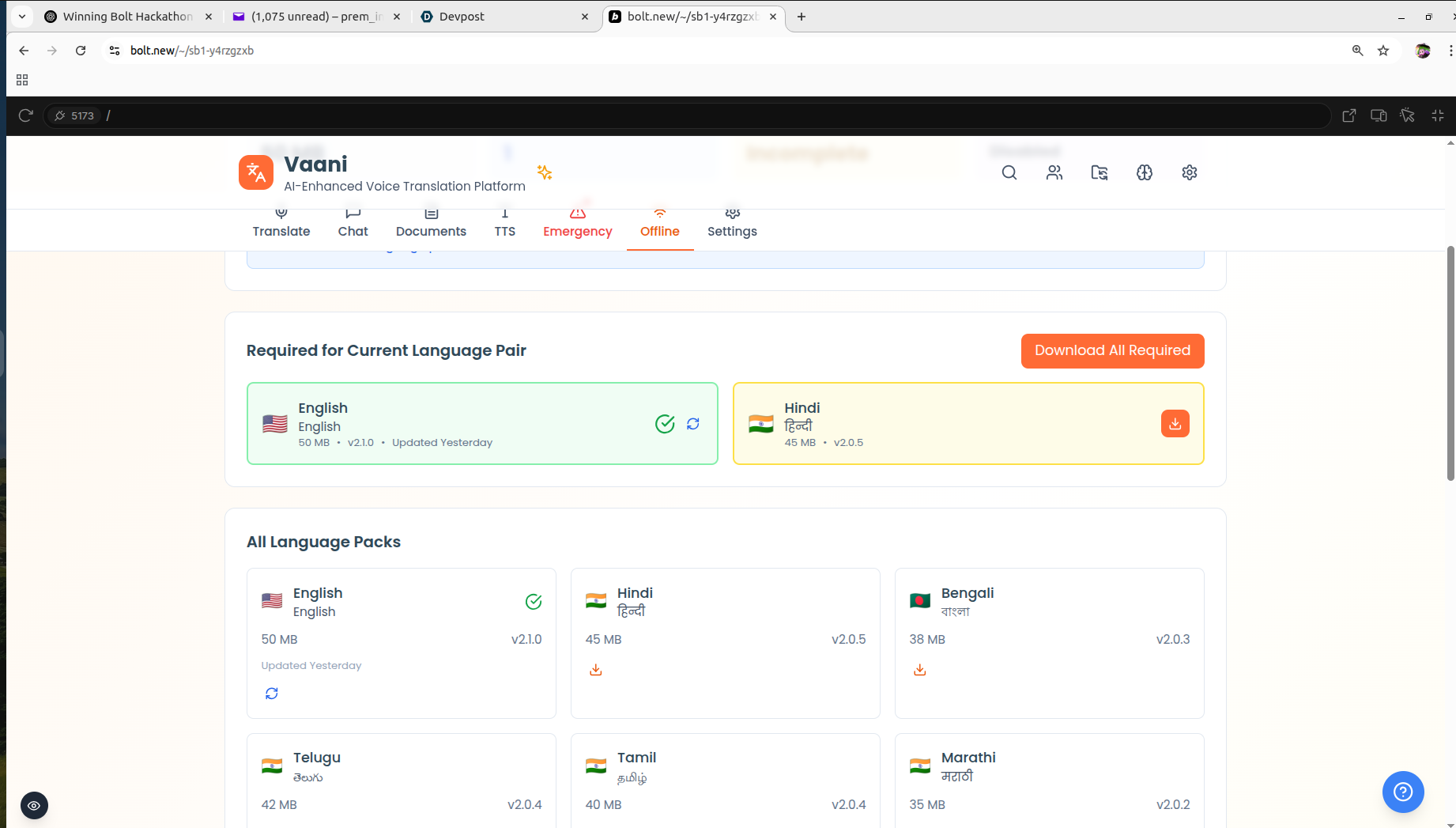
Offline mode for low connectivity areas
-
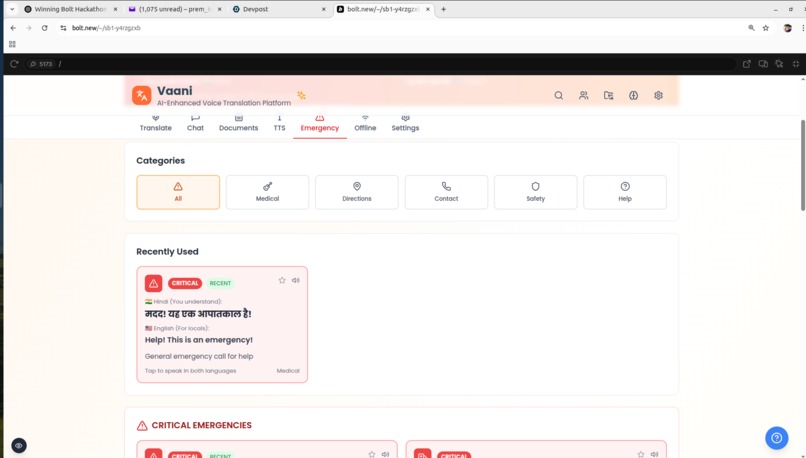
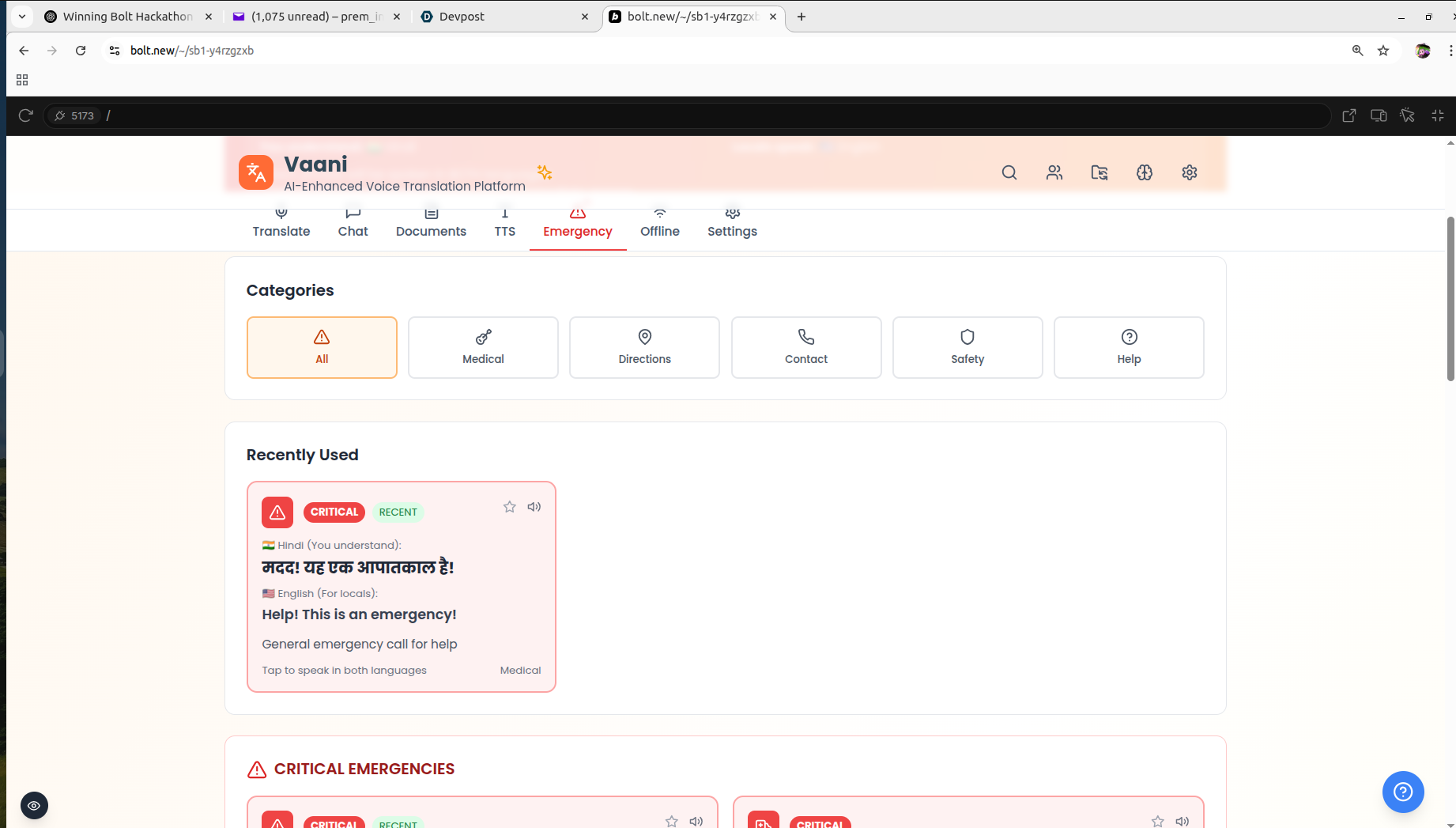
"Emergency Mode: Offline access to critical phrases for urgent situations and low-connectivity areas."
-
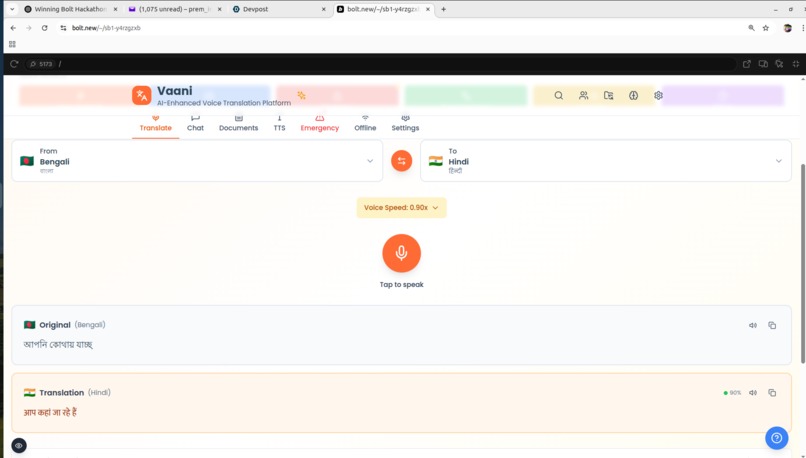
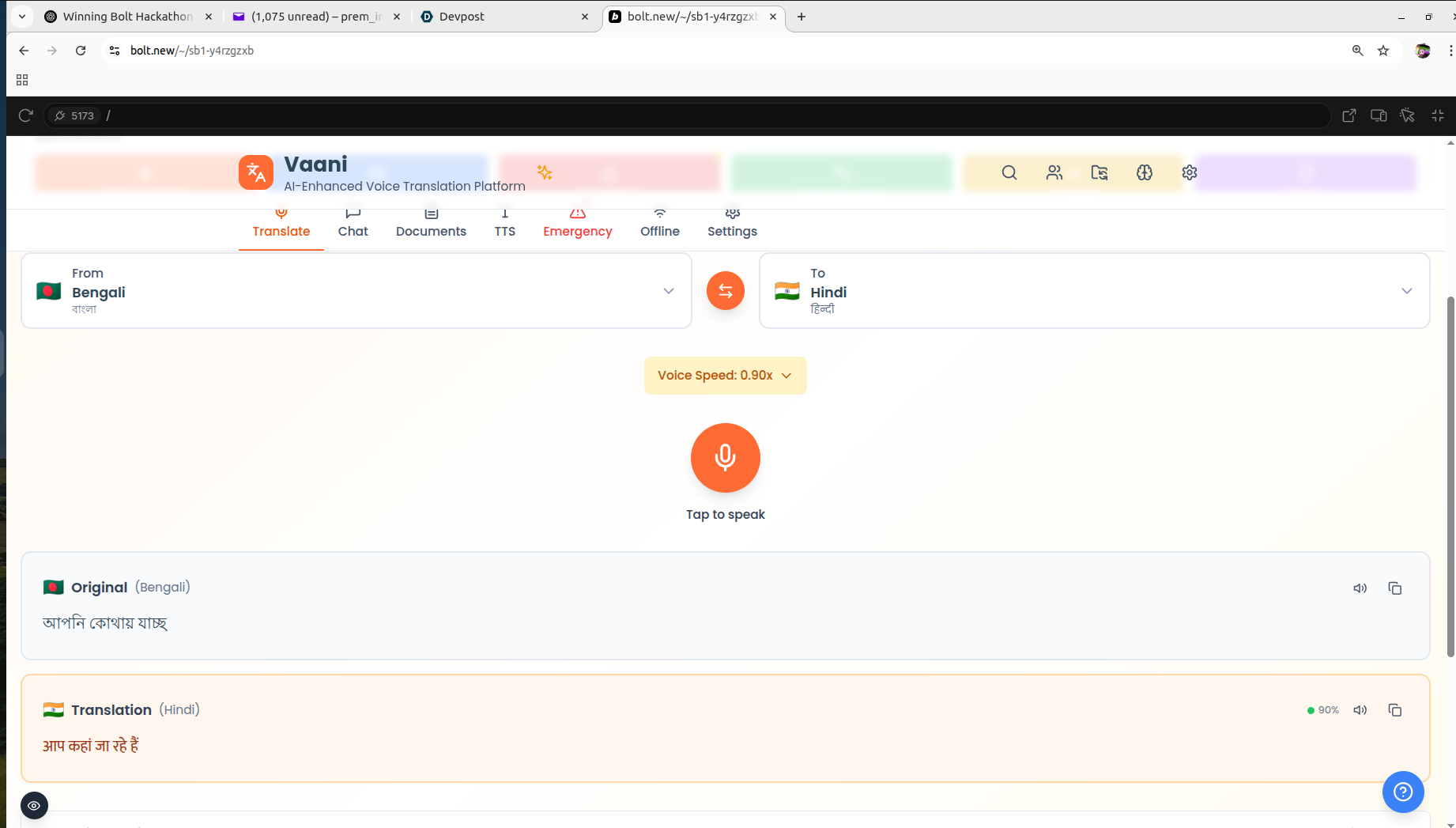
"Vaani Home Screen: Quick access to translation modes, language selection, and emergency features."
-
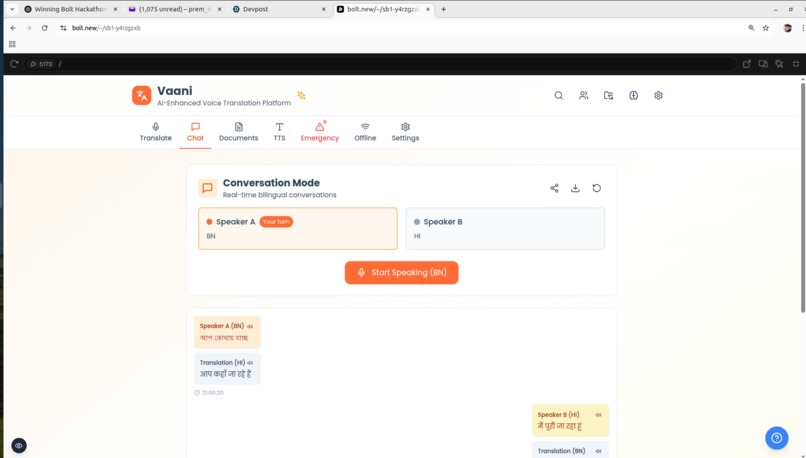
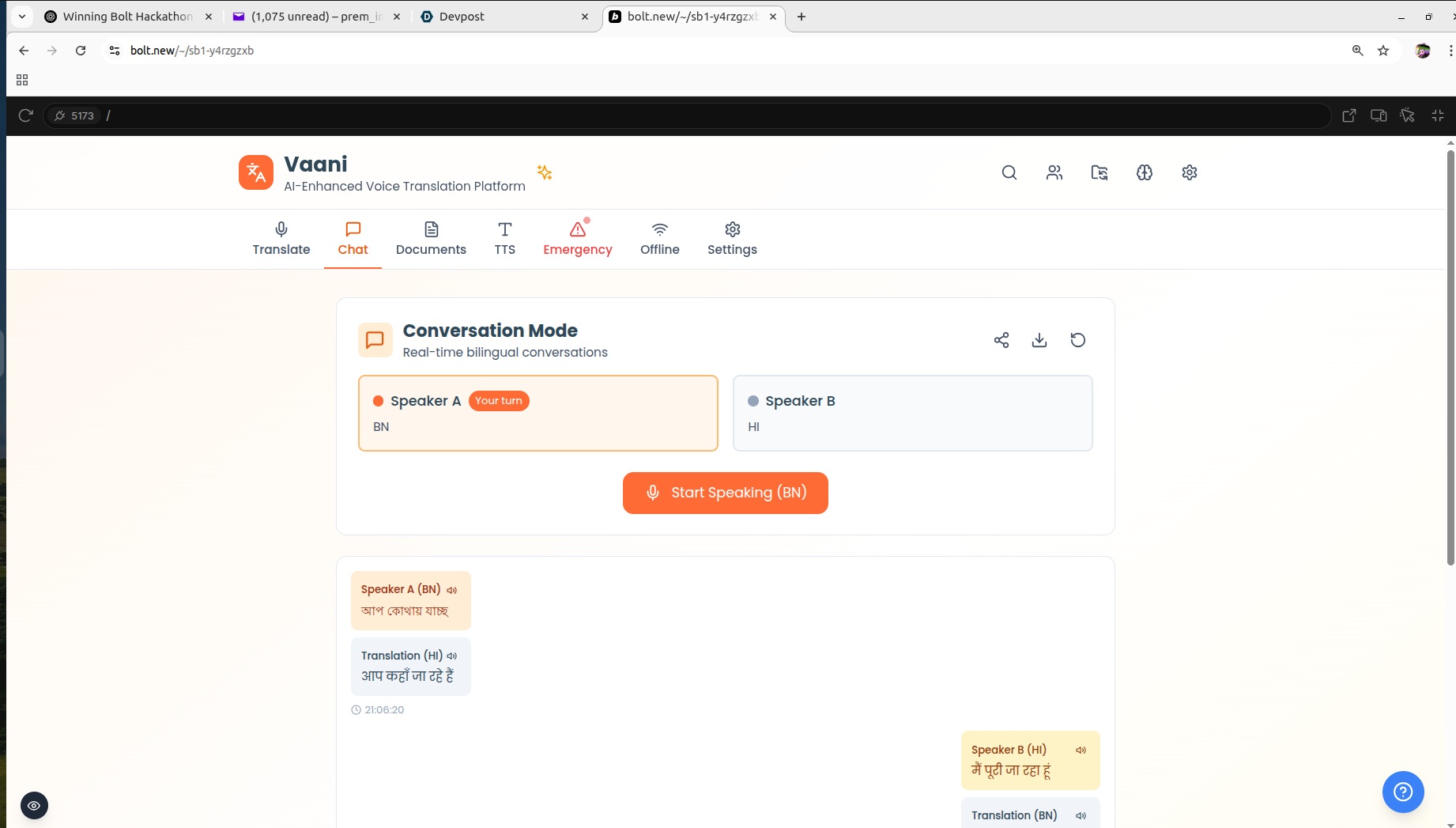
"Conversation Mode: Seamless two-way communication between speakers of different languages."
-
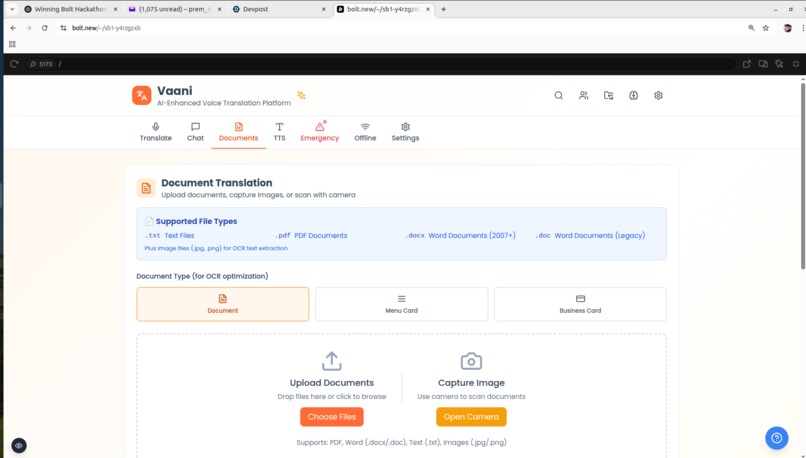
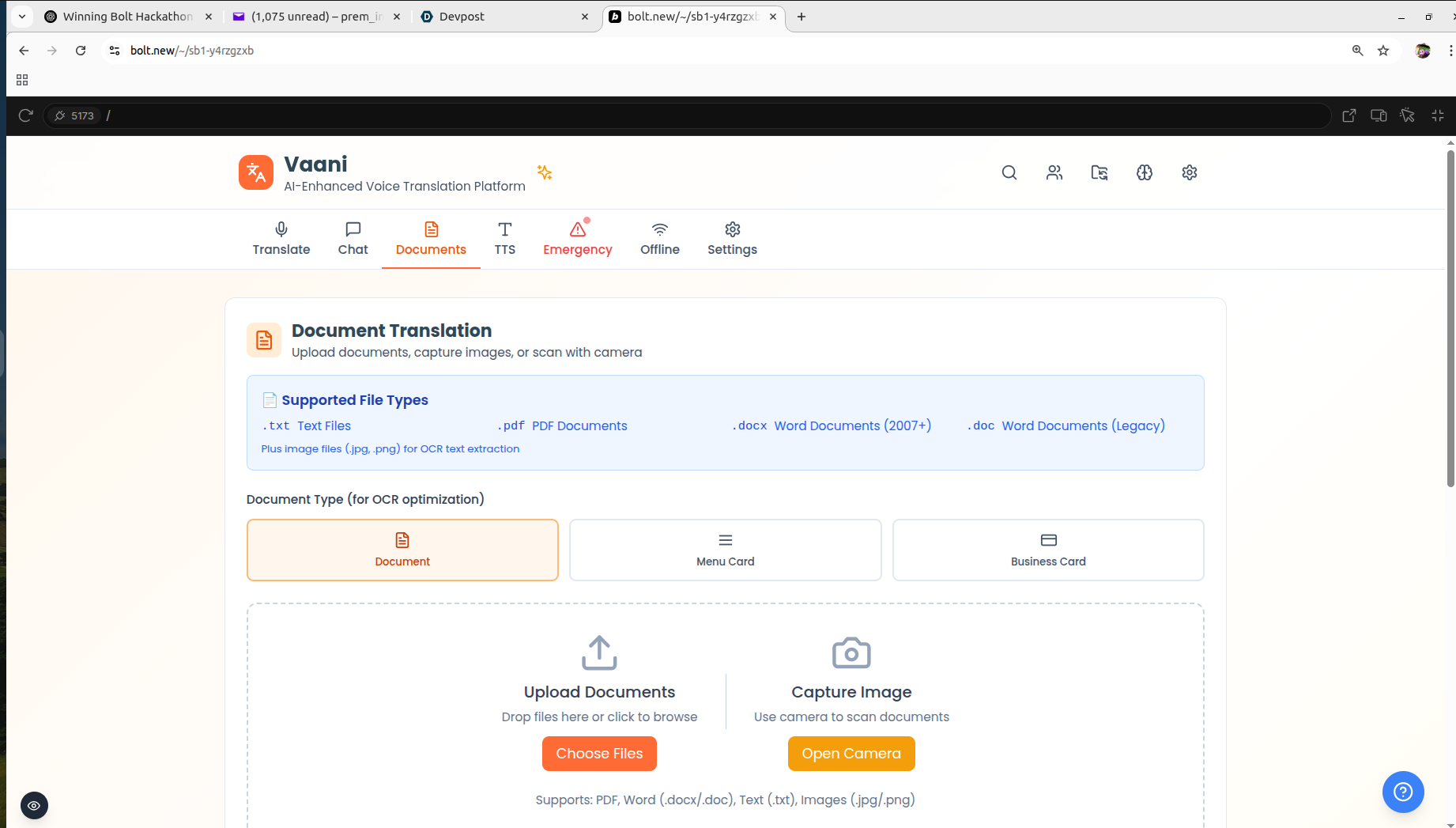
Real-time Voice Translation: Document translation
-
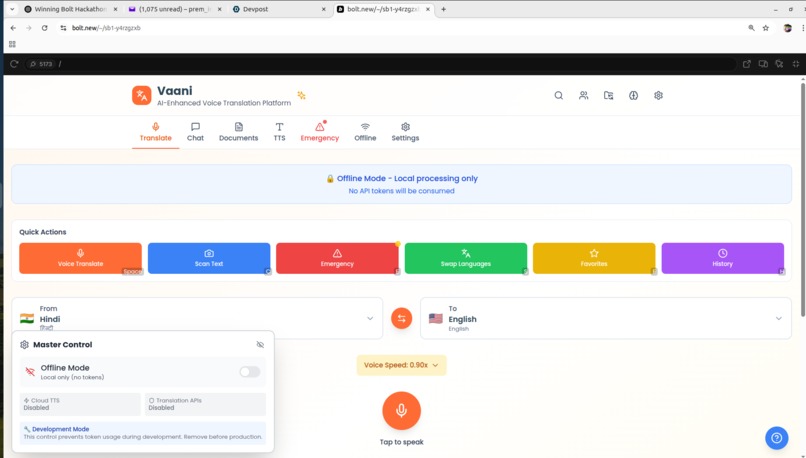
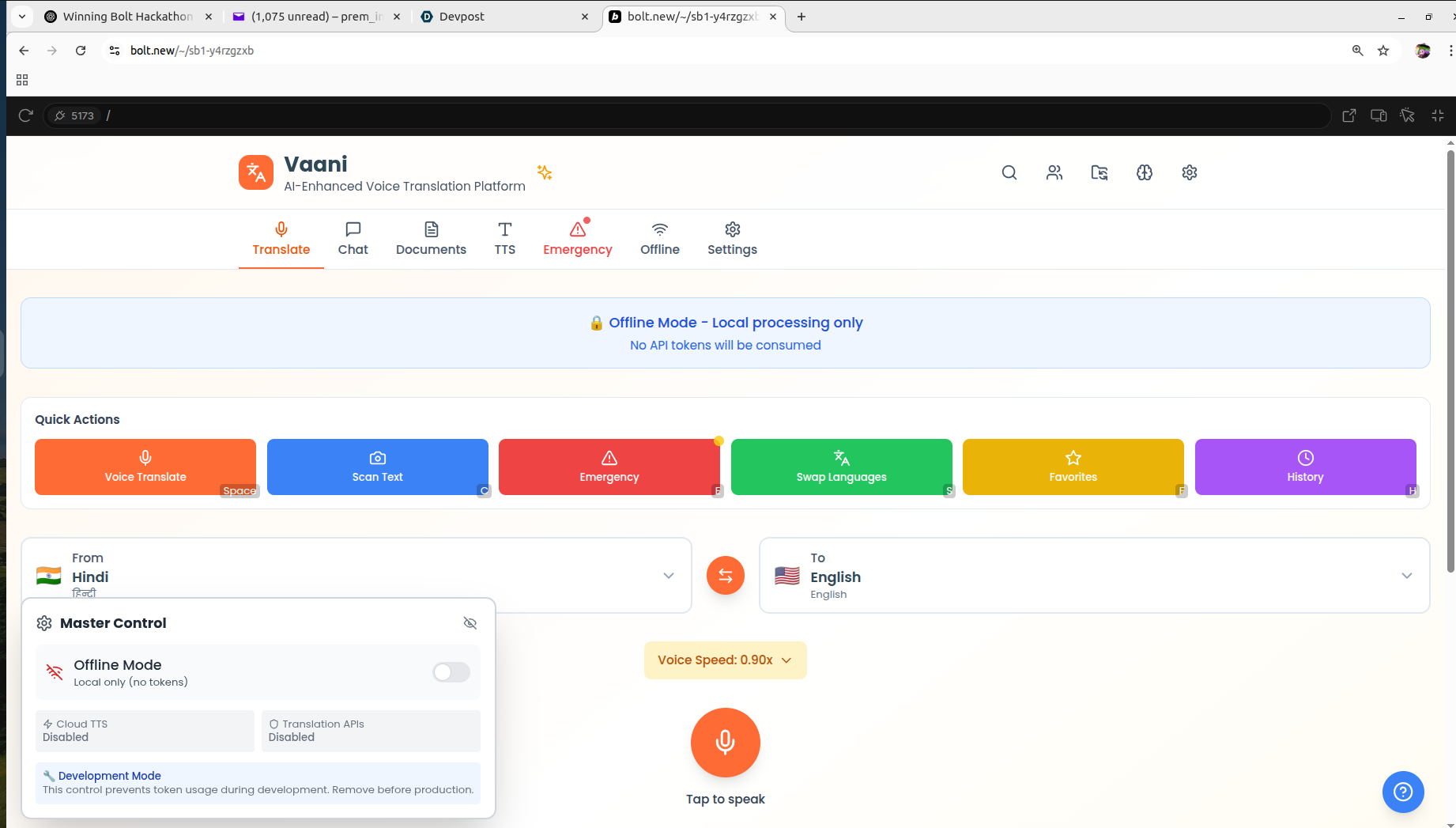
"Vaani Home screen with toggle for online and offline"
-
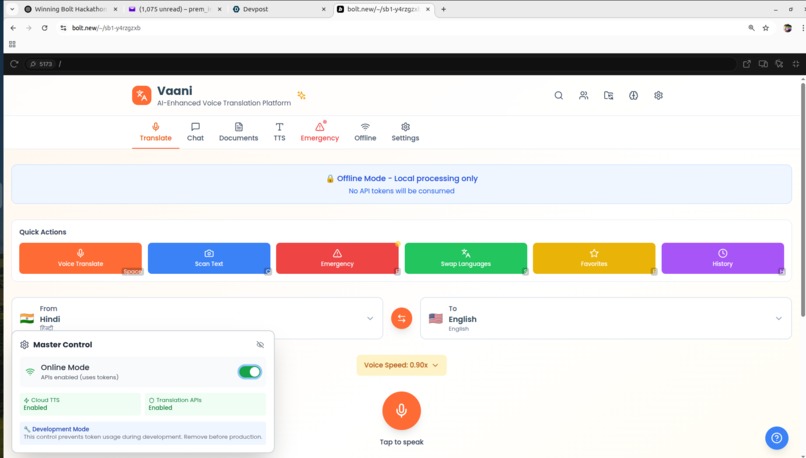
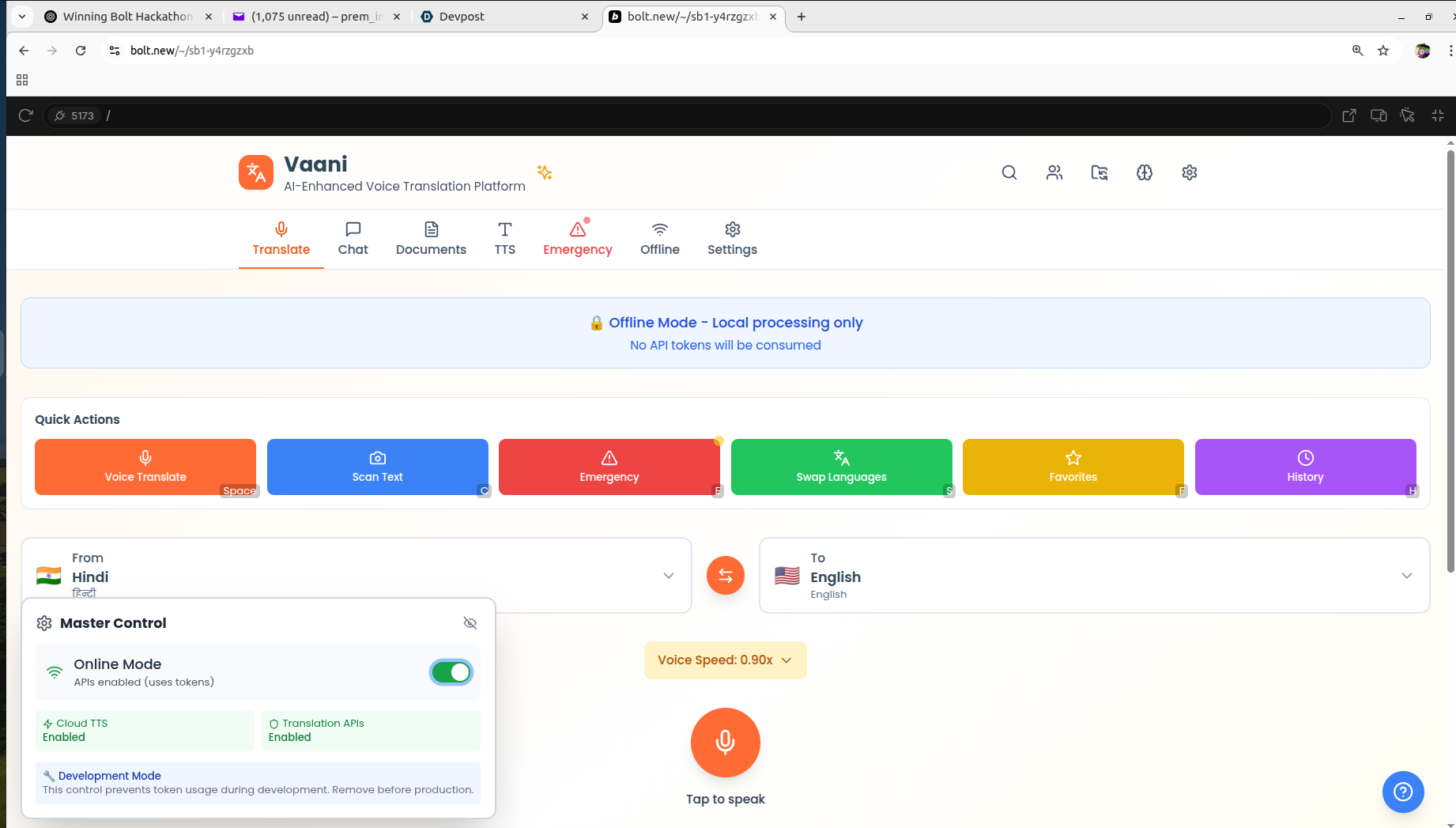
"Vaani Home screen with online mode on"
-
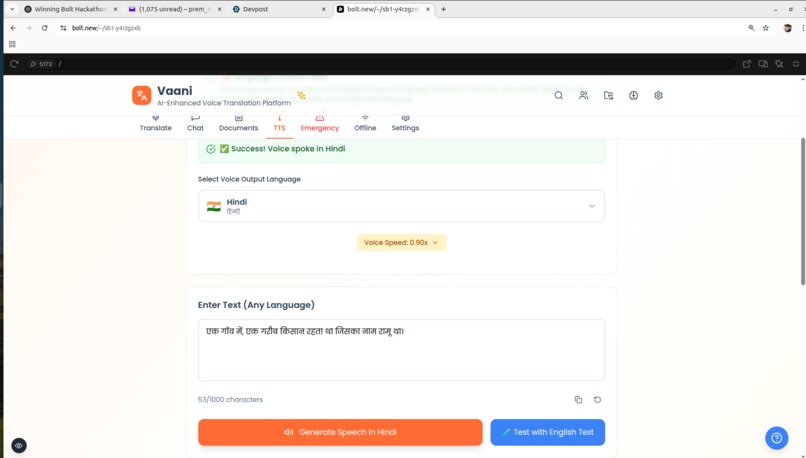
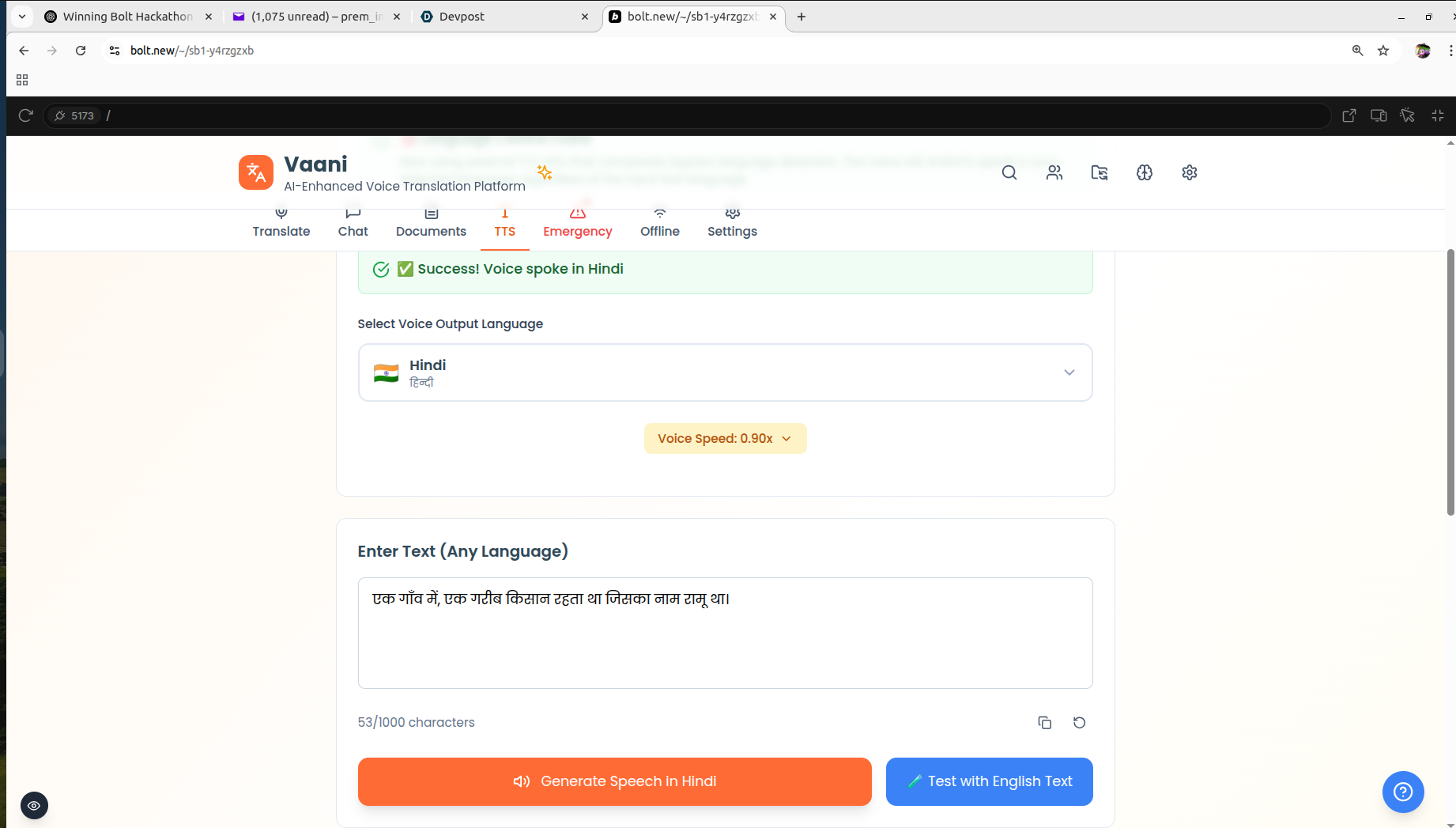
Text to speech translation
Inspiration
India is a nation of over 1.4 billion people with extraordinary linguistic and cultural diversity. With 22 official languages and hundreds of dialects, language barriers affect daily communication, emergency responses, education, tourism, and inter-state business.
We wanted to build something that truly captures the spirit of "Unity in Diversity"—helping people communicate across languages while still respecting cultural context.
Vaani was inspired by this need. It also serves foreign tourists who want to explore India but struggle with local languages.
What it does
Vaani is a real-time voice and text translation app designed for India.
Key Features:
- Real-time voice-to-voice translation between Indian languages and global languages
- Document translation from images (OCR-based)
- Emergency Mode with offline critical phrases
- AI voice learning that adapts to user pronunciation
- Accessibility support for visually and hearing-impaired users
- Offline functionality for use in low-connectivity regions
- Cultural context preservation, ensuring idiomatic and region-appropriate translations
How we built it
- Built entirely on Bolt.new
- Frontend: React with Tailwind CSS, shadcn/ui, and Framer Motion for UI/UX
- Backend Simulation: Node.js with Express
- APIs Used:
- WebSpeech API for speech recognition and text-to-speech
- Google Translate API for language translation
- WebSpeech API for speech recognition and text-to-speech
- Database: IndexedDB for offline storage
- Deployment: Netlify
We also designed specialized modes like Tourist Mode, Emergency Mode, and Document OCR Translation, making the app versatile for real-world use cases.
Challenges we ran into
- Multilingual dialect handling: India’s regional dialects made translation accuracy and pronunciation difficult to manage.
- API limits: Balancing free API quota while ensuring real-time performance was tricky.
- UI accessibility: Designing features that work for visually impaired and non-verbal users required extra testing.
- Submission hurdles: We encountered platform-level issues while submitting (Devpost account suspension, Bolt export challenges, etc.), but we documented and persisted.
Accomplishments that we're proud of
- Built and deployed a fully functional, multi-language voice translator for India within the hackathon timeframe.
- Successfully integrated speech recognition, TTS, and real-time translation pipelines.
- Developed offline emergency features for critical situations.
- Added accessibility layers for differently-abled users.
- Created a high-quality demo video and presentation, entirely AI-narrated.
What we learned
- How to rapidly prototype and deploy production-ready apps on Bolt.new
- Working with real-time speech APIs
- Addressing multilingual user experience challenges
- Building apps that are both functional and inclusive
- Importance of submission readiness and documentation when platform issues arise.
What's next for Vaani – Voice Translation App
- Expand support for more Indian dialects and languages
- Implement context-aware AI translation models
- Add sign language translation modules
- Build dedicated mobile app versions (Android/iOS)
- Explore integration with emergency response systems and tourism boards
- Scale backend for higher concurrency and more API-free translations


Log in or sign up for Devpost to join the conversation.