
V2X Shield Matrix
An intelligent, decentralized edge-security framework designed to protect Vehicle-to-Everything (V2X) communication networks from malicious data injection, coordinate spoofing, and sensor manipulation.
Executive Summary
The V2X Shield Matrix acts as a localized firewall and trust-verification engine running directly on a vehicle's onboard edge computer. As autonomous vehicle networks rely heavily on real-time data from infrastructure (V2I), pedestrians (V2P), and neighboring vehicles (V2V), a single compromised node can cause catastrophic traffic or safety failures. This system ensures that only validated, physically consistent data influences driving decisions.
Architecture Overview
The system is divided into three core sequentially executed modules:
Module 1: Sensor Fusion & Temporal Alignment
- Objective: Collects asynchronous inbound V2X data streams and cross-references them against the host vehicle’s local physical sensors (Radar, LiDAR, Cameras, GPS) using physics-based dead-reckoning interpolation to verify spatial consistency.
Module 2: Edge AI Threat Filtering
- Objective: A lightweight, low-overhead behavioral anomaly engine (utilizing Isolation Forests/sequential networks) that analyzes continuous rolling time-series telemetry windows to catch malicious signatures like Sybil attacks or kinematic violations.
Module 3: Matrix Trust & Mitigation Engine
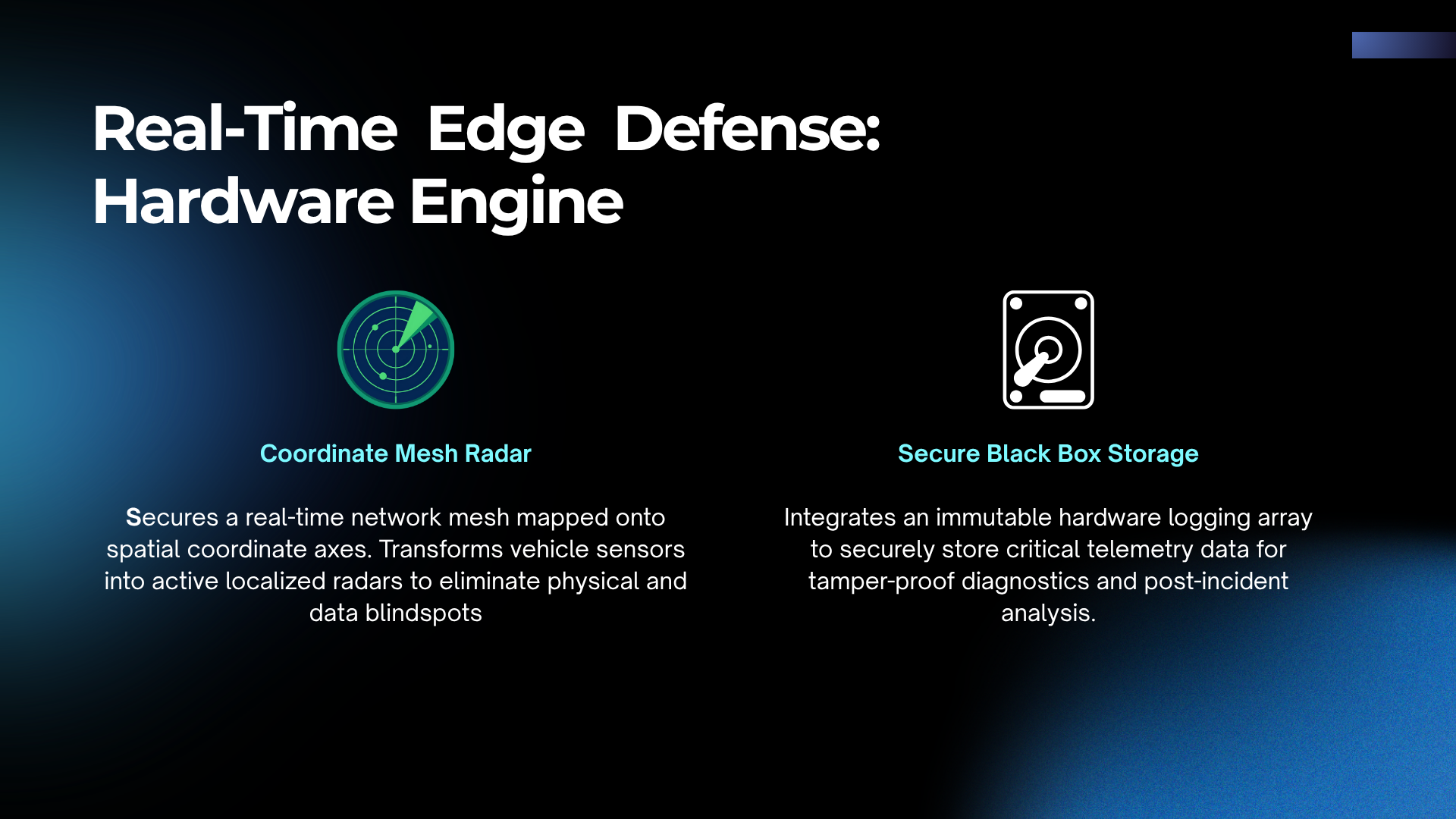
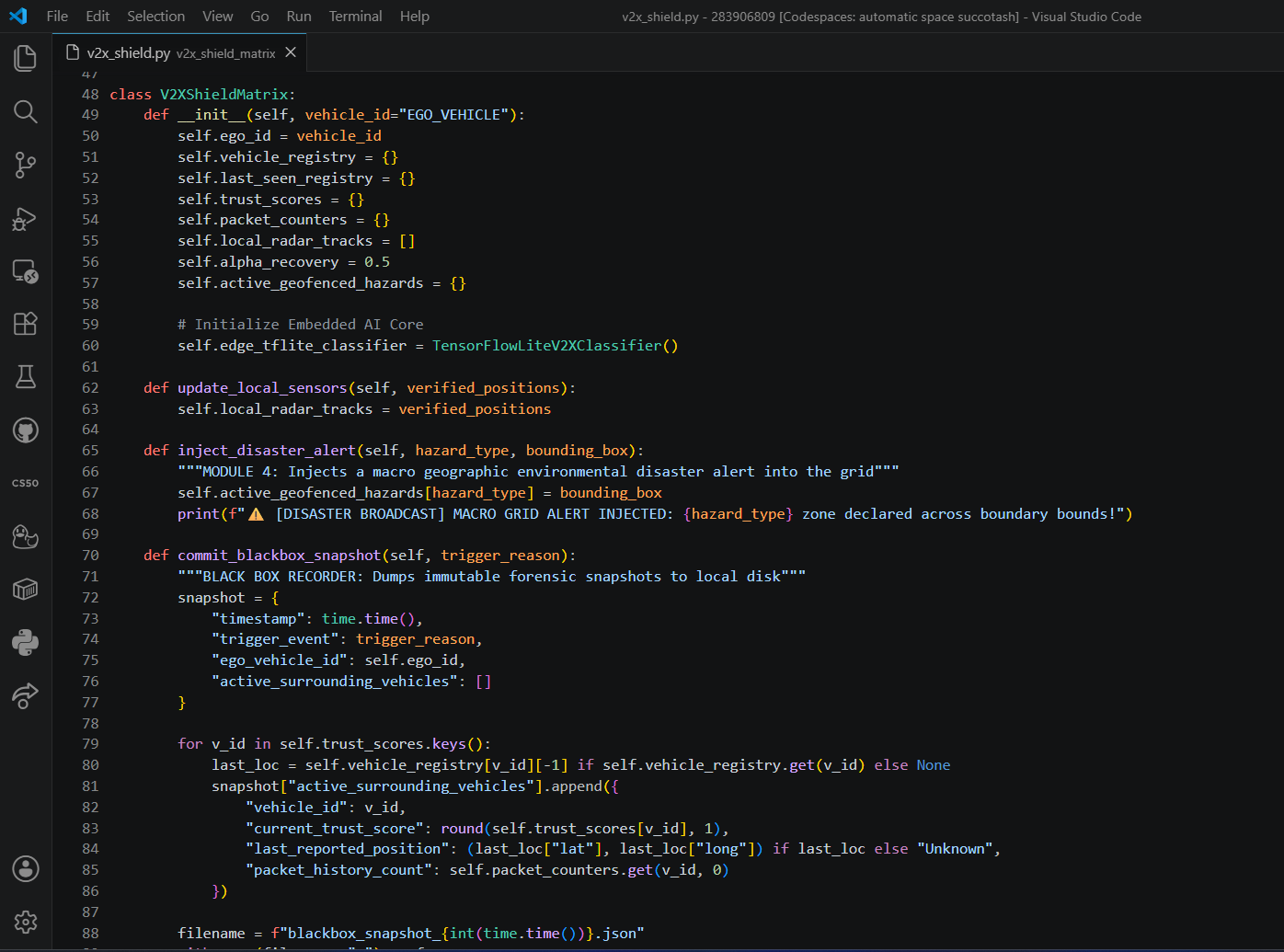
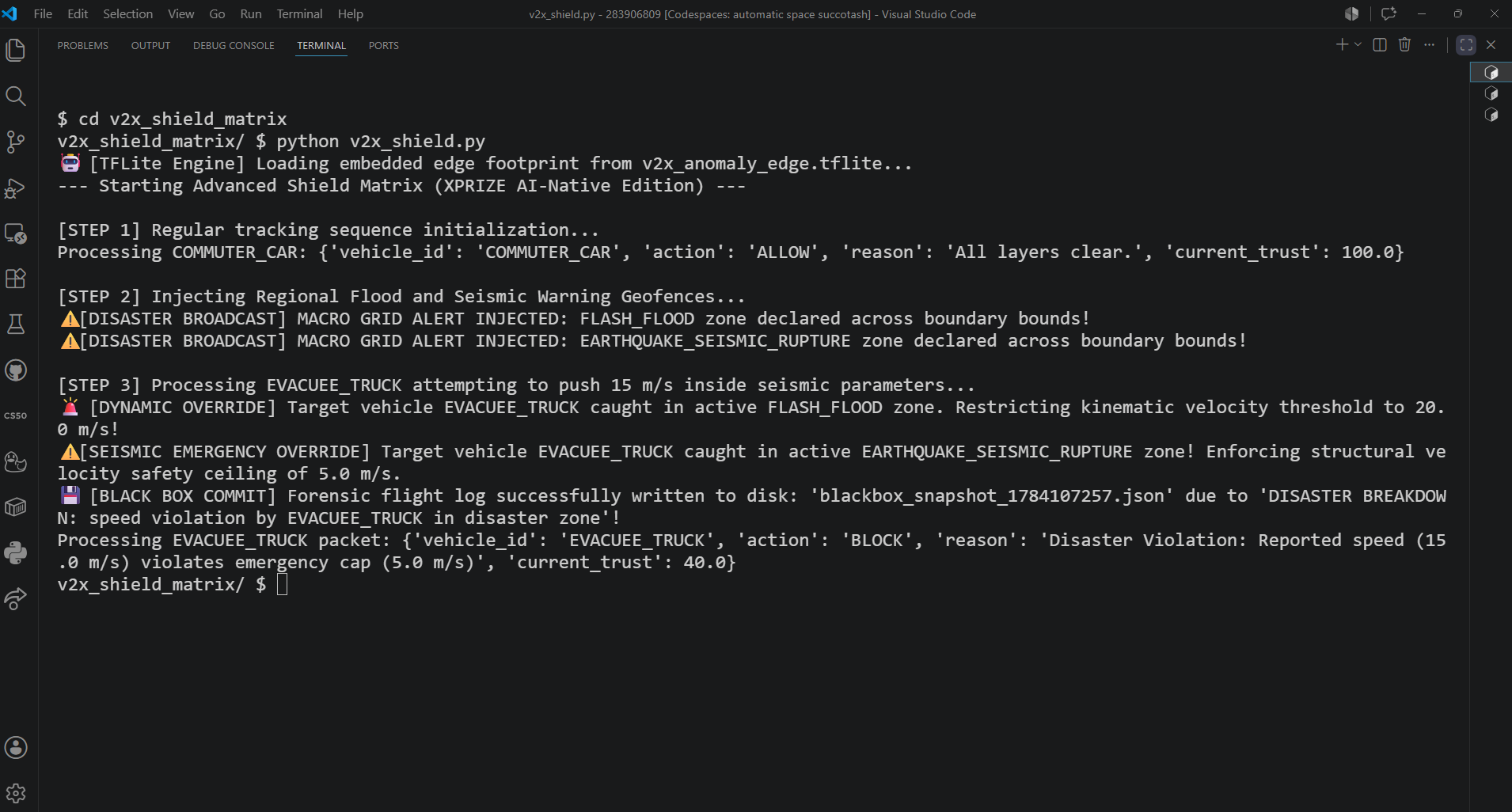
- Objective: Manages a fluid reputation system (Trust Scores) for surrounding nodes. When an anomaly is verified, this engine drops firewalls at the local OS level to block the attacker's network sockets and signs/broadcasts a cryptographic mesh warning to alert neighboring clean vehicles.
Technical Roadmap & Simulation Sandbox
Immediate development milestones focus on building out the testing framework:
- Simulation Environment (
/simulation/environment.py): A Python-based sandbox mimicking a high-density traffic intersection broadcasting simulated V2X telemetry streams. - Data Injection Pipeline (
/simulation/attack_injector.py): Automated scripts designed to purposefully inject malicious data packages (such as coordinate jump attacks) to evaluate system resilience. - Latency Optimization: Profiling codebase executions to guarantee an end-to-end processing threshold of under 10 milliseconds per data packet.
Open-Source Governance & Contributions
This project is being organized as a collaborative, open-source initiative under the Apache 2.0 License.
Developer Recognition:
- All contributing senior engineers will be prominently credited as Core Project Developers / Maintainers directly within this
README.mdand primary codebase files. - Foundational system architecture belongs to the repository owner under the Apache 2.0 framework.
How to Contribute:
- Fork the repository.
- Create your feature branch (
git checkout -b feature/module-optimization). - Commit your changes (
git commit -m 'Optimize numpy vector calculations'). - Push to the branch (
git push origin feature/module-optimization). - Open a Pull Request.
Built With
- cybersecurity
- edge-ai
- iot
- python
- simulation

Log in or sign up for Devpost to join the conversation.