-
-
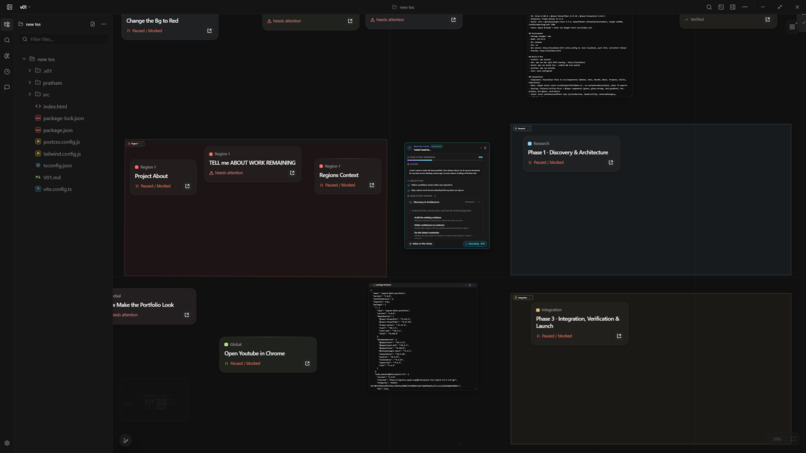
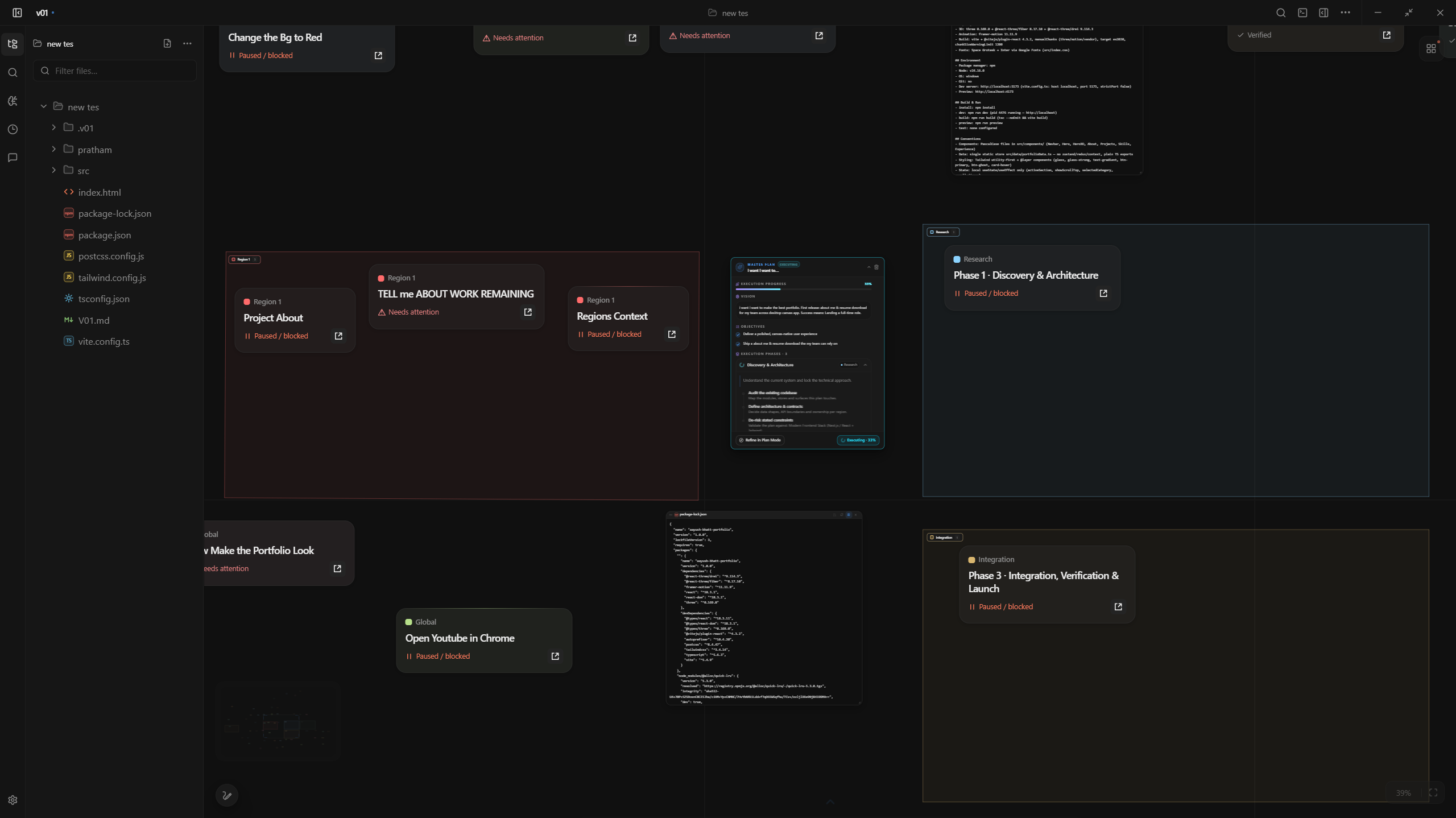
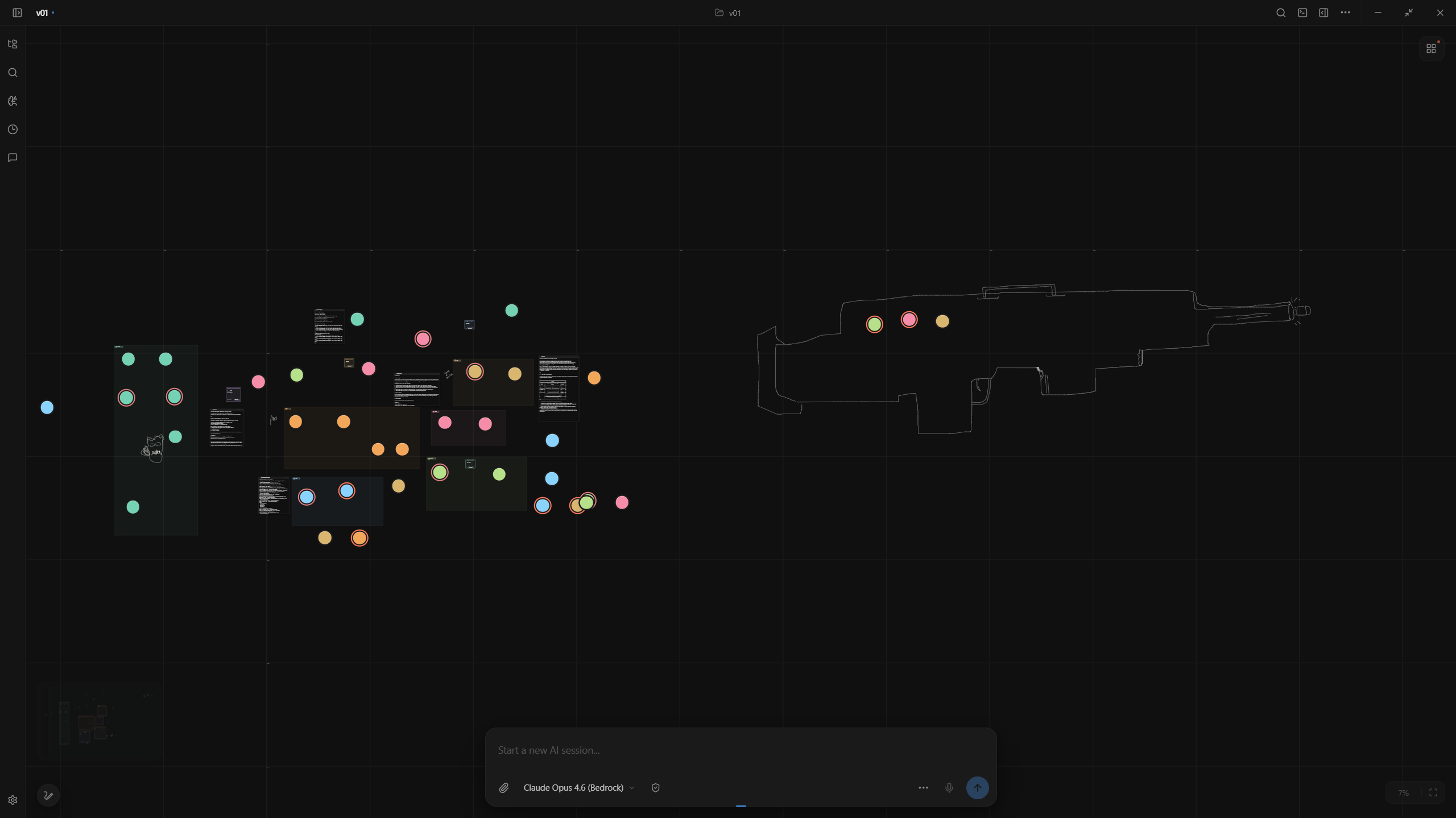
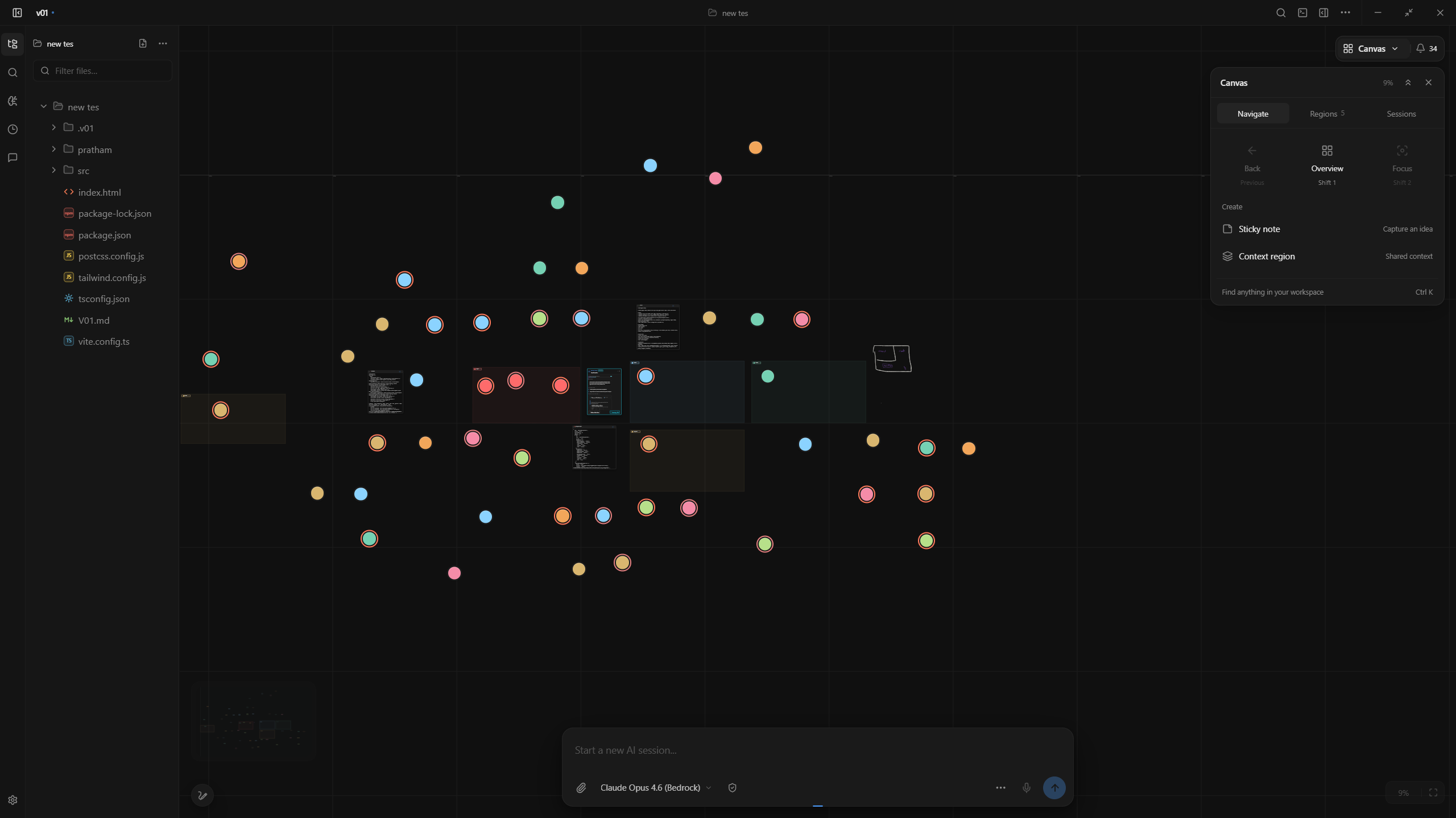
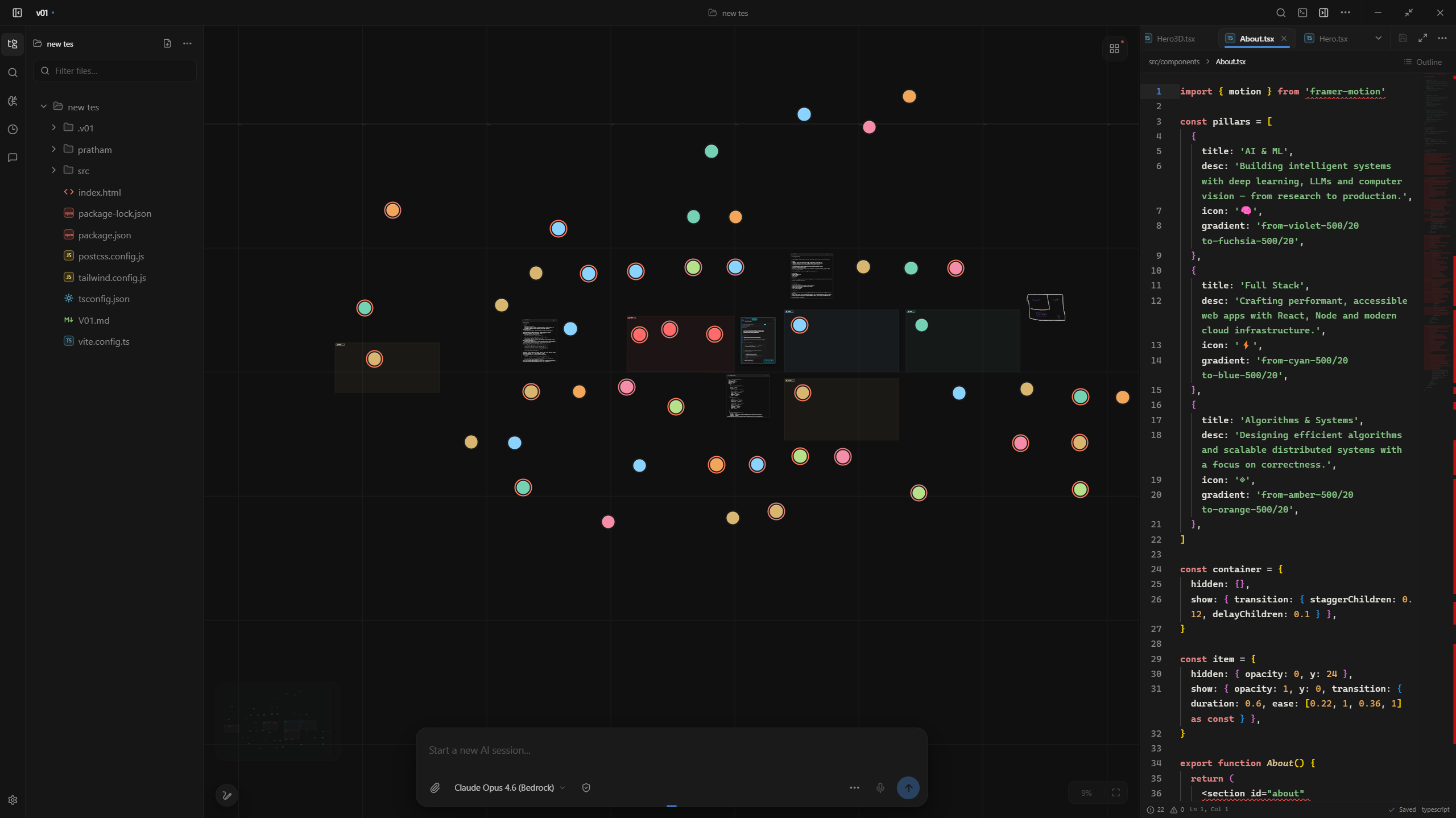
The Workspace
-
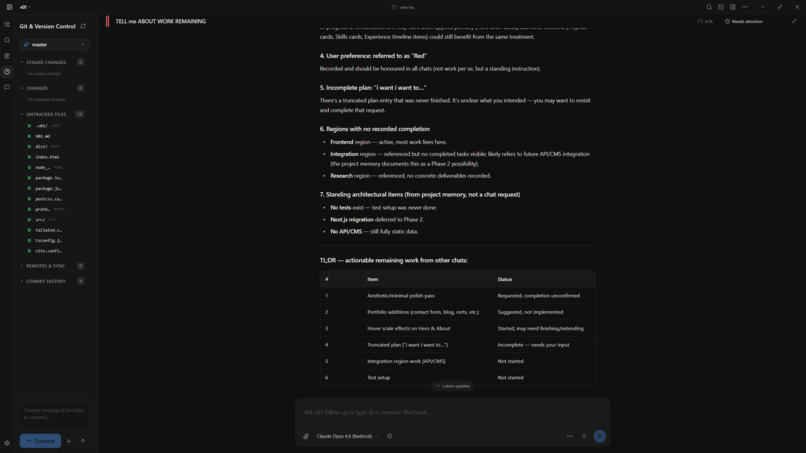
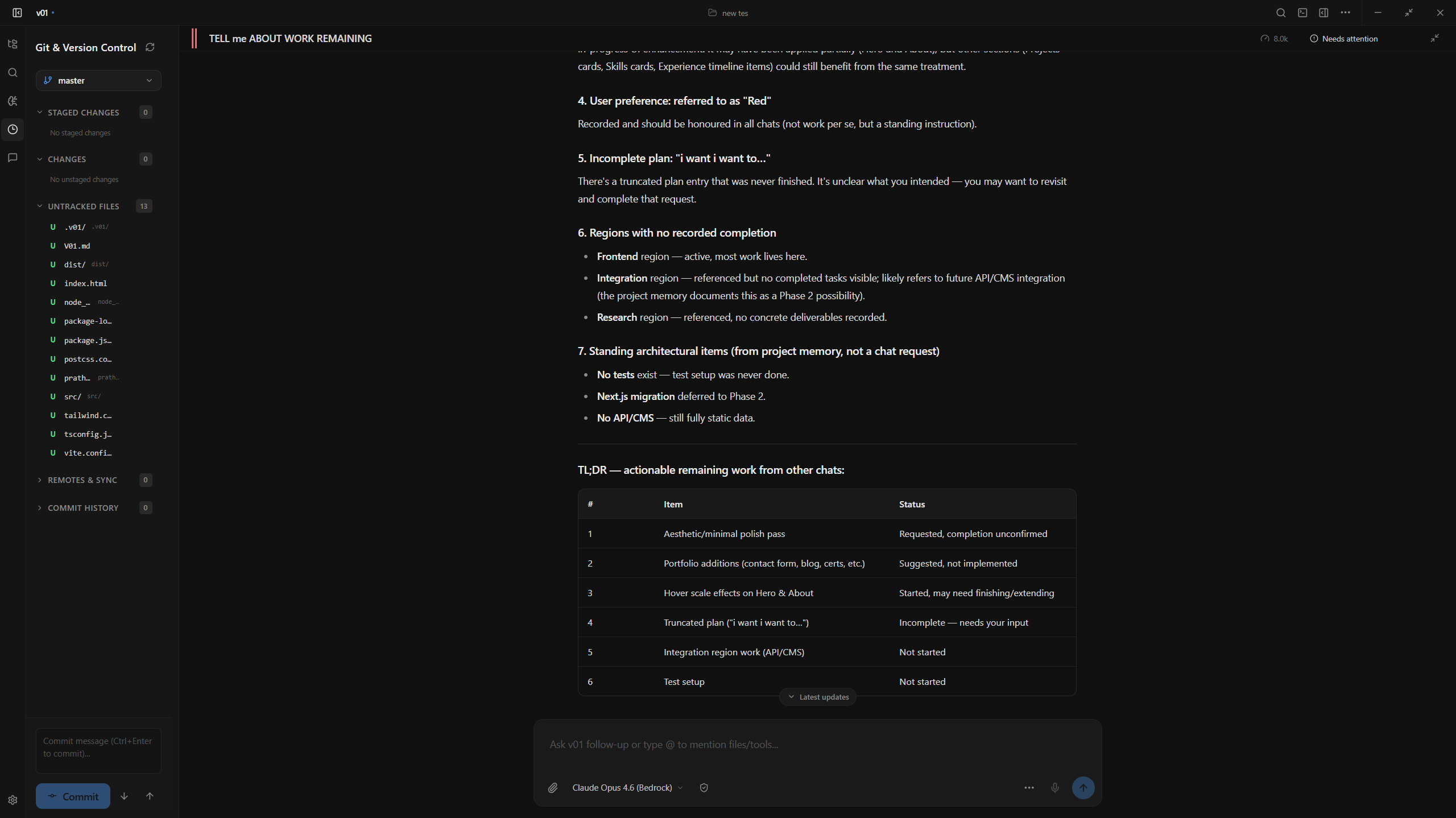
Expanded Chat Section
-
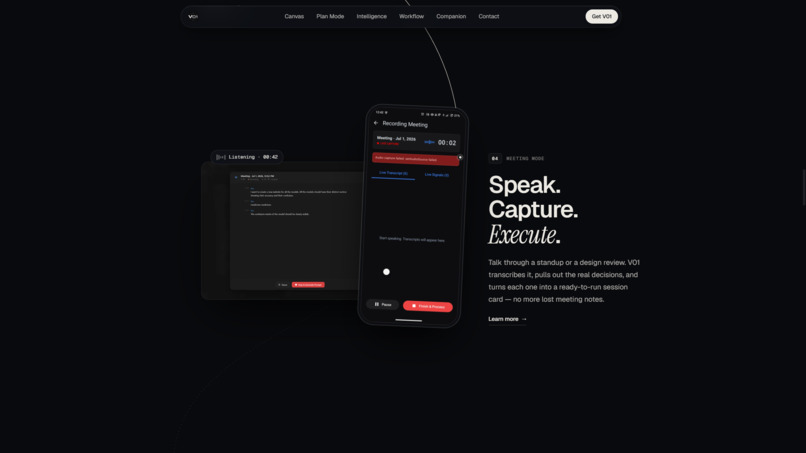
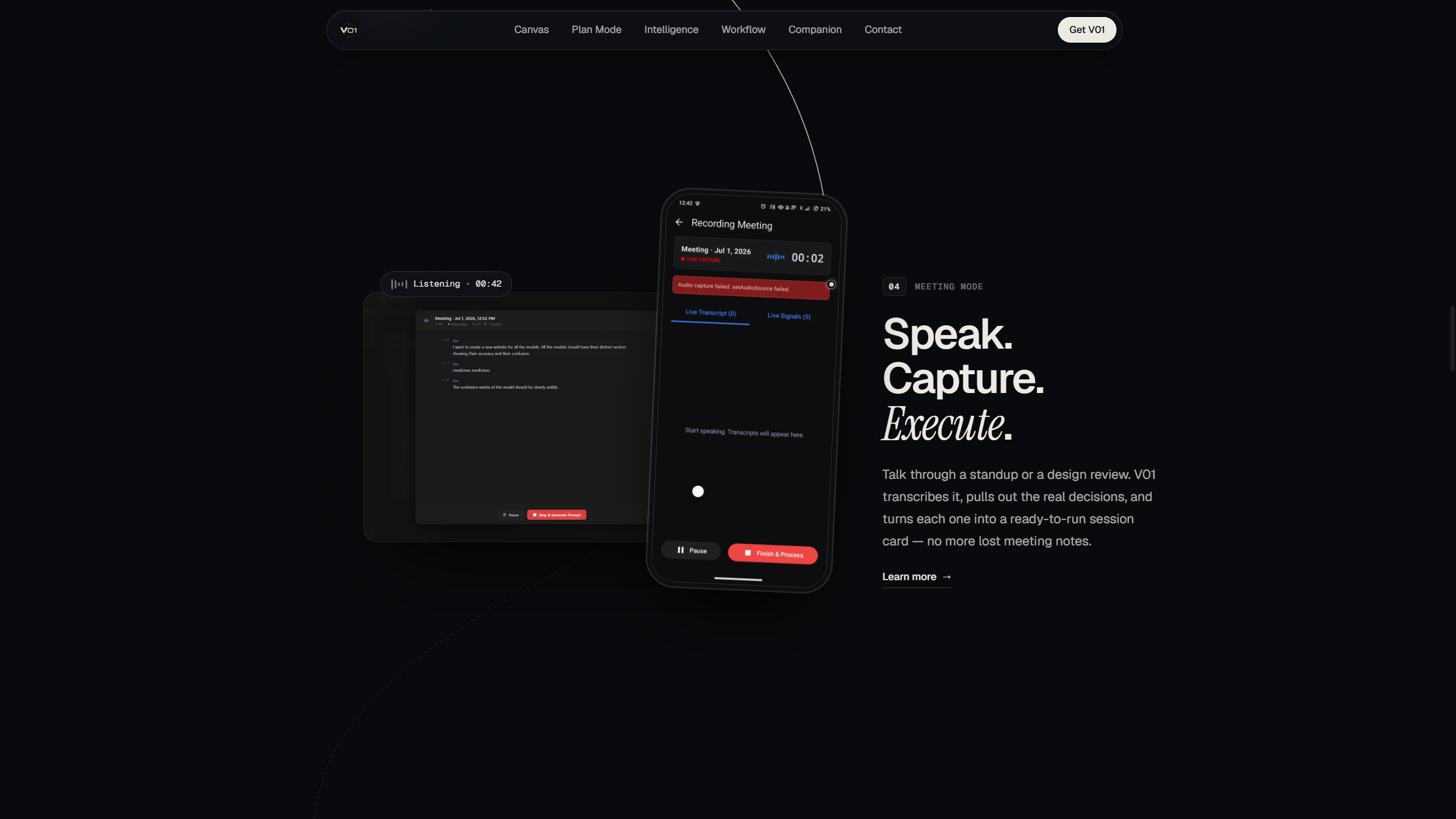
Mobile Application
-
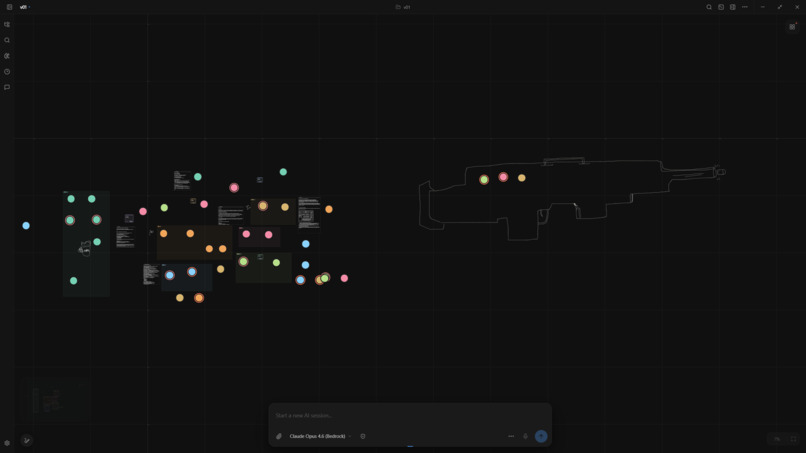
Creative ways to use V01
-
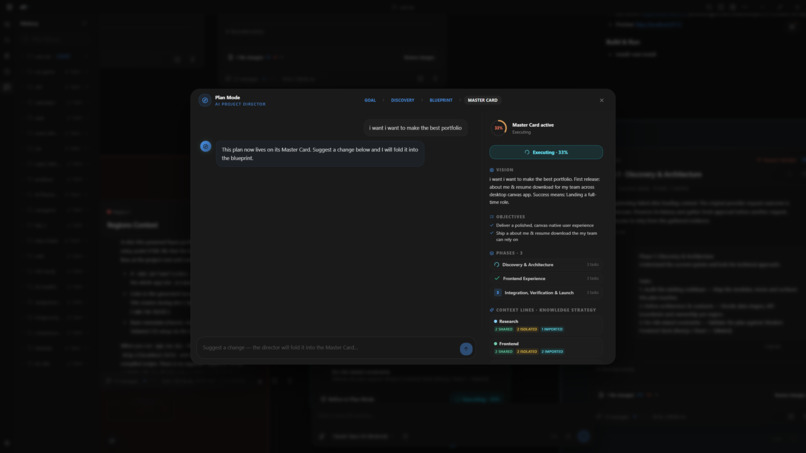
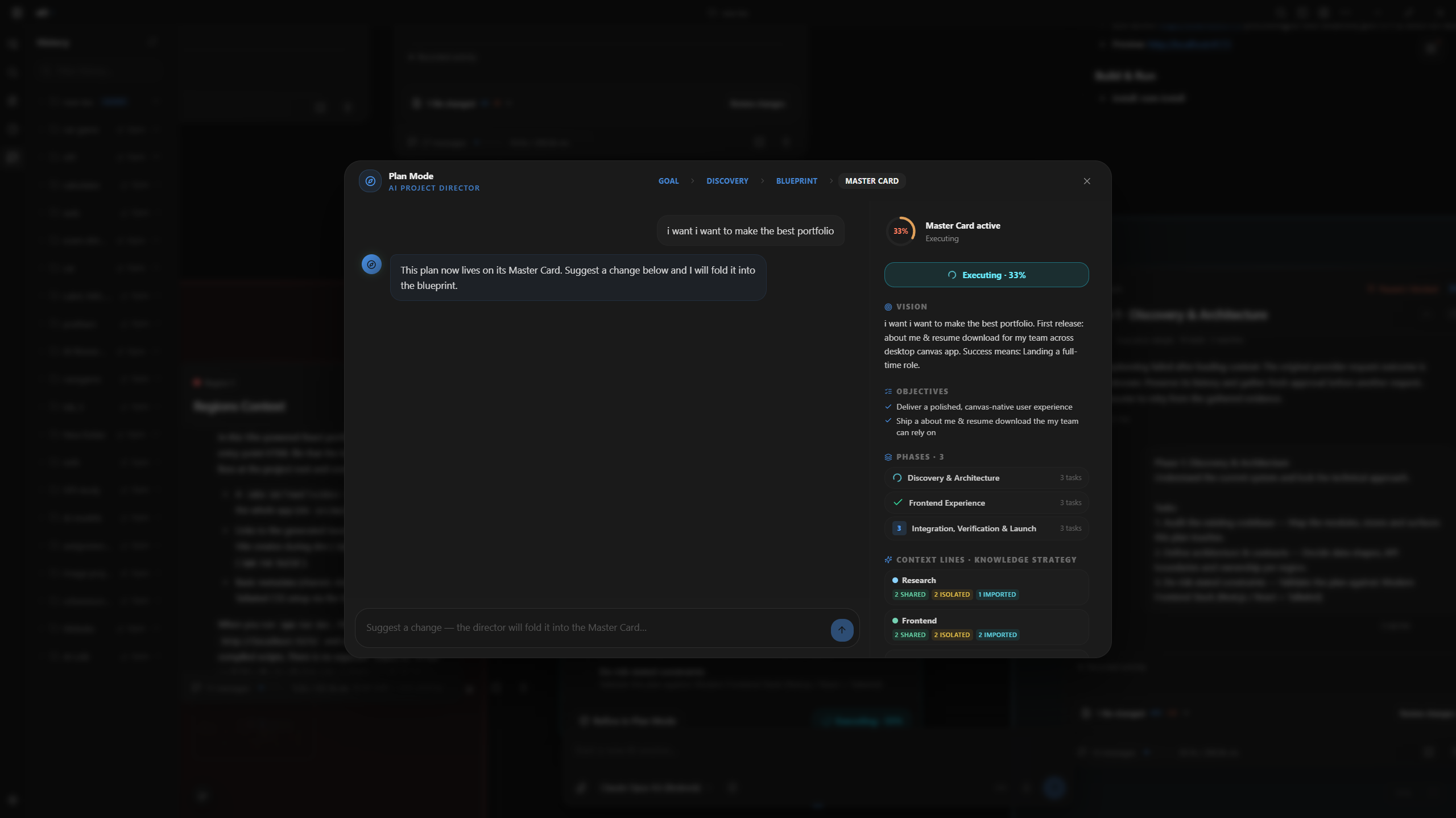
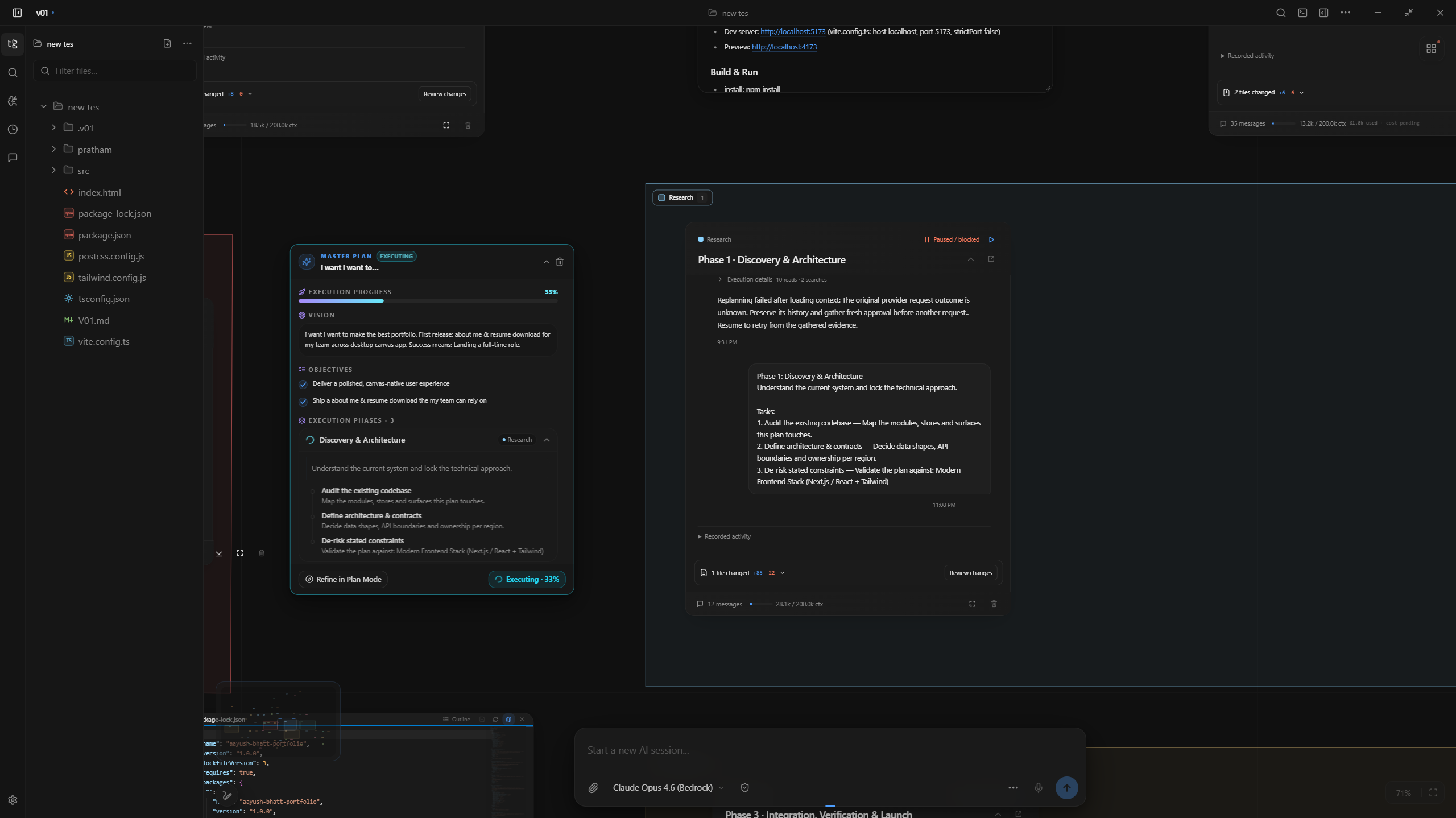
Plan mode
-
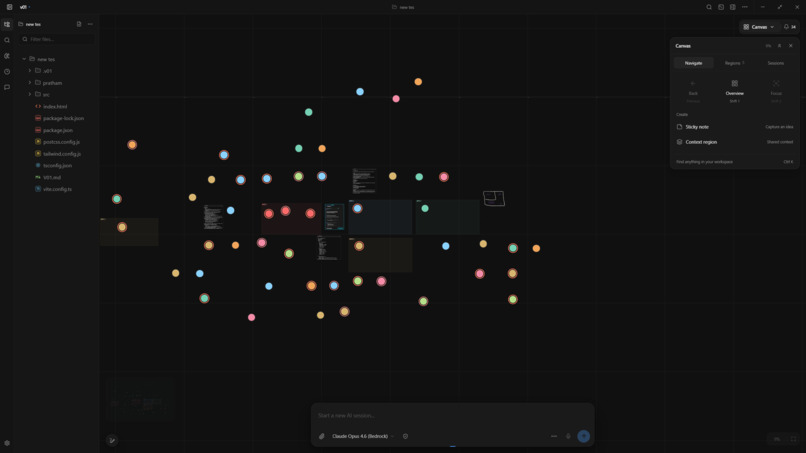
clean control center UI
-
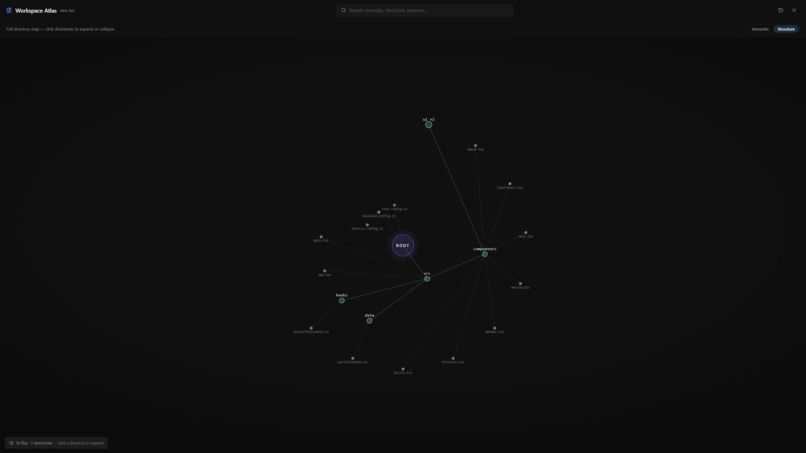
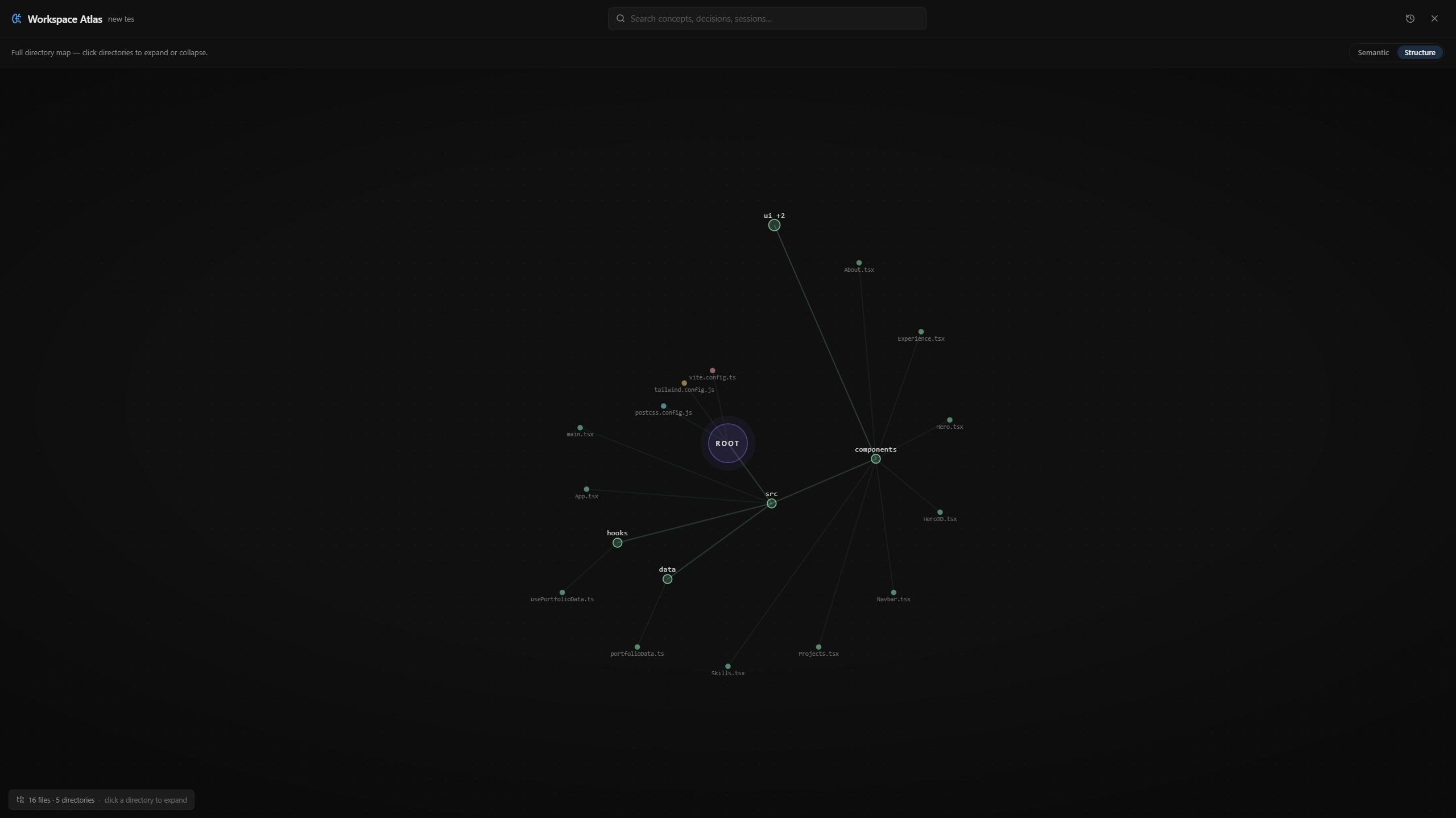
Repo Structure Graph
-
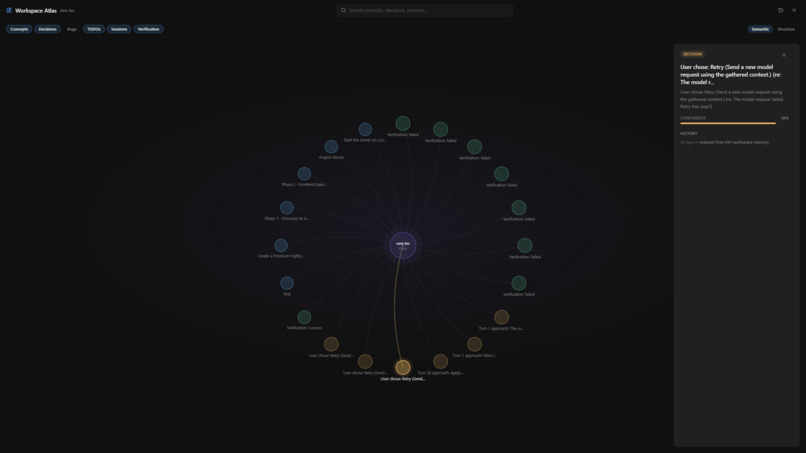
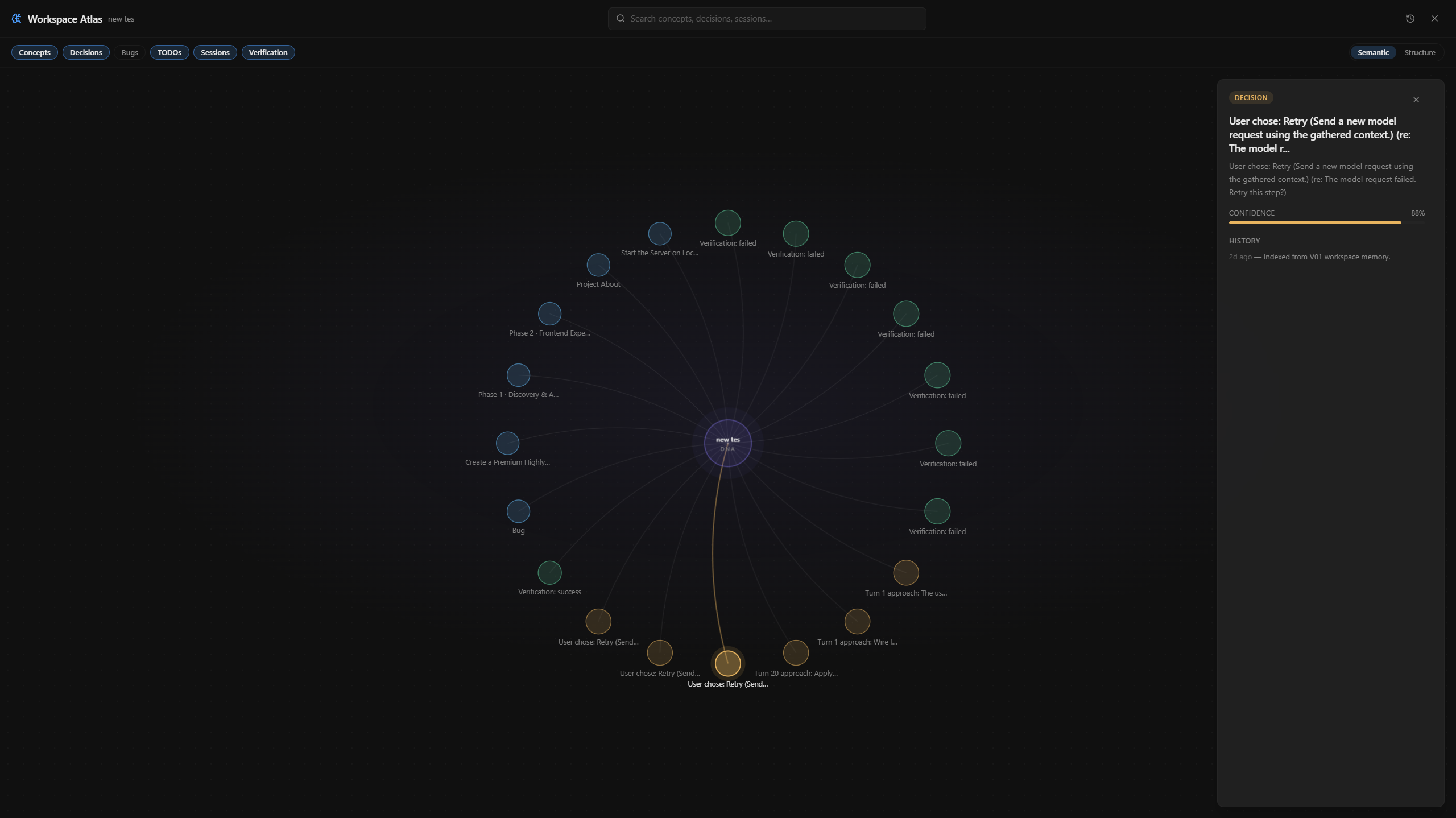
Semantic Graph
-
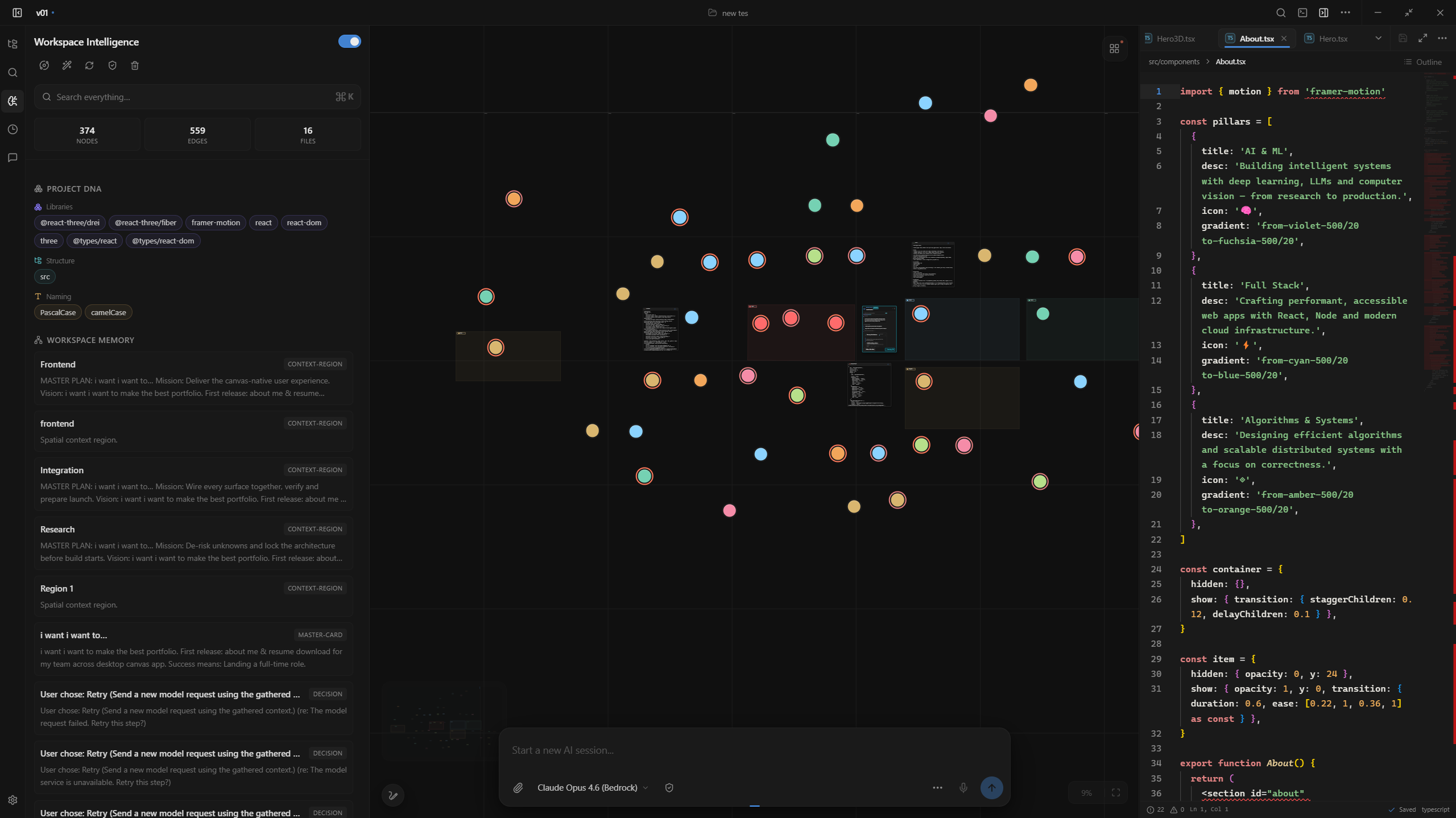
Workspace intelligence with editor opened
-
-
-
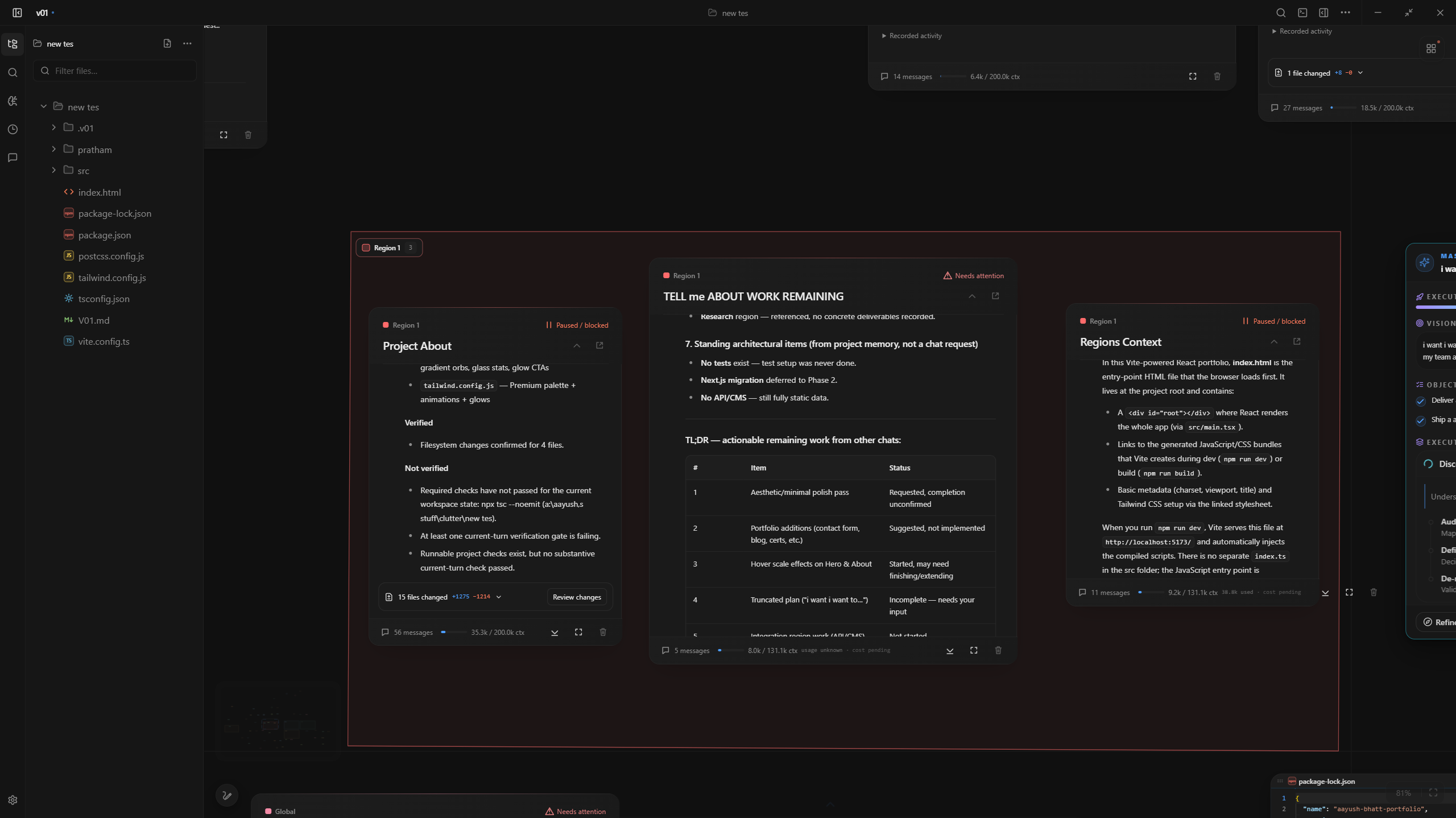
Context region demo and how chats share context
V01 — Rethinking How We Build Software with AI
The Problem
AI coding tools have become remarkably capable, but generating code is only one part of software engineering. Understanding an unfamiliar codebase, preserving architectural decisions, coordinating complex tasks, editing files safely, and verifying that an implementation actually works remain significant challenges.
I wanted to explore a different approach: what if an AI development environment were designed around the way developers think about and build projects, rather than treating every interaction as an isolated prompt?
That question inspired V01, a spatial AI-native development environment designed to make AI agents more context-aware, efficient, and execution-oriented.
A Different Way to Work with AI
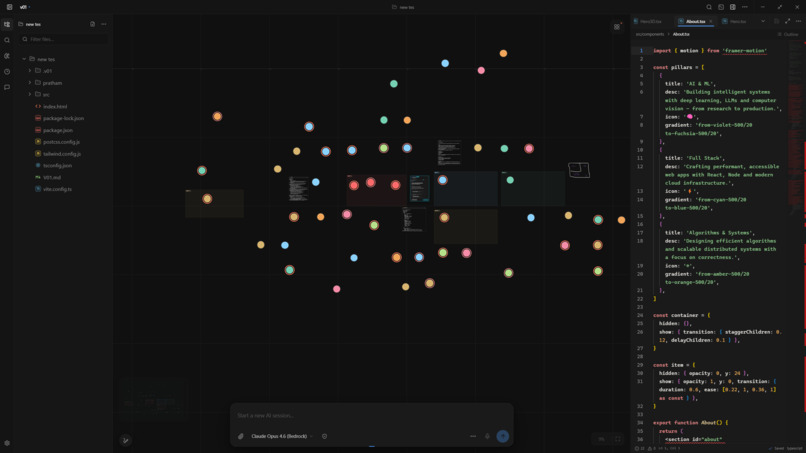
V01 combines a spatial workspace with an agentic development runtime. Instead of relying exclusively on conventional files, tabs, and chat conversations, developers can organize their work spatially and interact with AI agents through a persistent development environment.
The project brings together several connected capabilities:
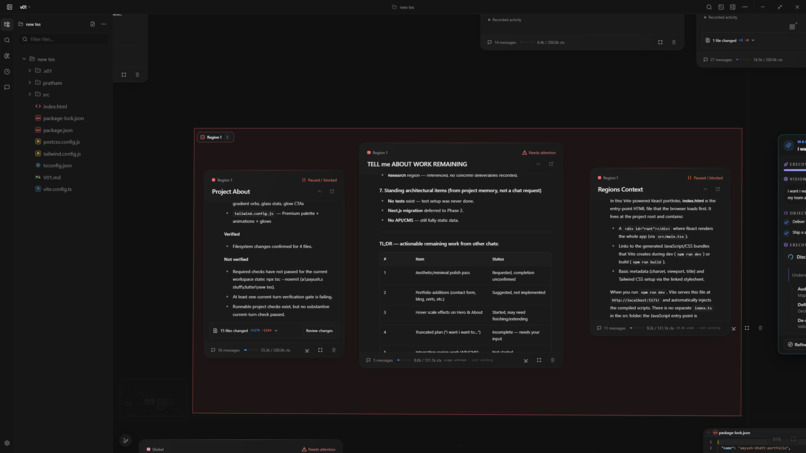
- Context Lines: A knowledge-sharing system designed to maintain continuity across conversations. It enables related sessions to share relevant project context, preserve important decisions, track recurring problems, and continue work in new chats without repeatedly reconstructing the past.
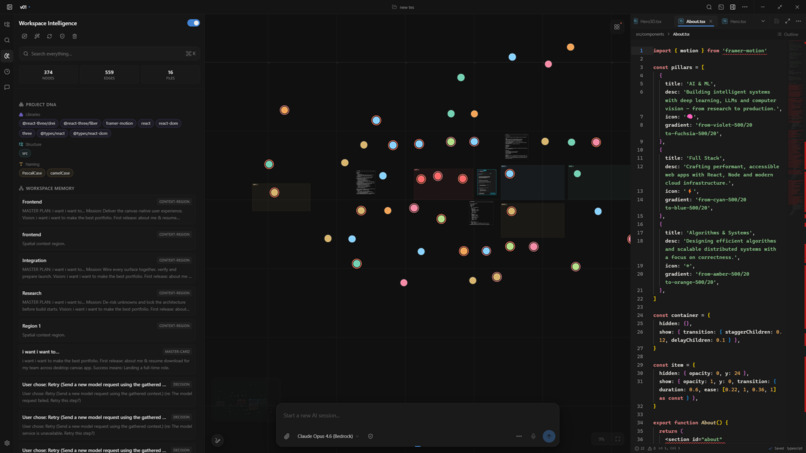
- Workspace Intelligence: A repository-understanding layer designed to connect files, code relationships, architectural concepts, and project knowledge. Its goal is to help agents retrieve the information relevant to a task rather than repeatedly exploring an entire codebase.
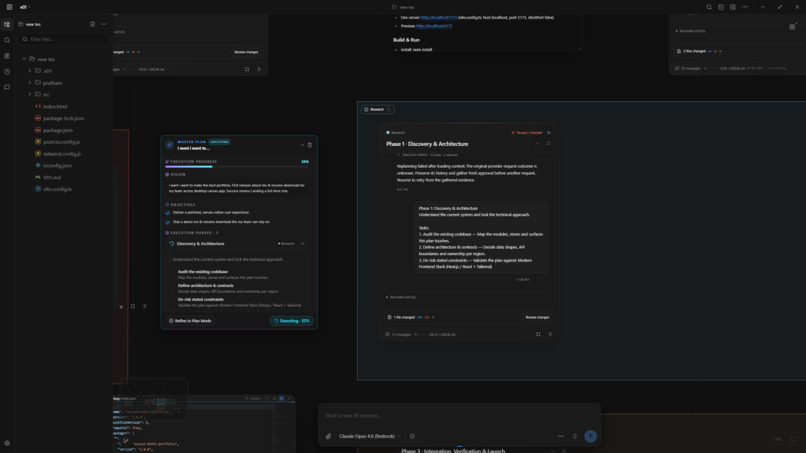
- Plan Mode: A structured planning experience that turns high-level ideas into requirements, architectural decisions, and actionable execution steps before implementation.
- Agentic Coding Harness: An execution-oriented workflow connecting model reasoning with repository search, code editing, terminal execution, testing, verification, and iterative correction.
- Bring Your Own Key (BYOK): A model-provider approach that lets developers connect compatible model API keys and choose models suited to their workflows.
These features are designed to work together. Context Lines manages continuity across conversations, Workspace Intelligence helps the agent understand the codebase, and the execution harness translates model decisions into actions that can be tested and verified.
Working with NVIDIA Models
V01 integrates NVIDIA-provided models into its agentic coding workflow. For this hackathon, I am integrating NVIDIA Nemotron through Nebius Token Factory into the existing model-provider architecture, connecting open-model inference to V01's agent runtime.
The objective is to use Nemotron for software-development tasks while V01 handles the surrounding workflow: preparing relevant context, coordinating tool interactions, executing actions, and processing verification results.
This separation is important. A model can generate a plausible implementation, but the development environment must still determine whether the code was applied correctly, whether the relevant checks passed, and whether further correction is necessary.
The Engineering Challenge
One of the biggest challenges has been context management. Giving an agent more information does not automatically make it better. Too little context leads to incorrect assumptions, while excessive or irrelevant context can waste tokens and obscure the information that matters.
This motivated the development of Context Lines and Workspace Intelligence as separate but connected components. Rather than treating every conversation as an independent source of truth, V01 aims to preserve useful project knowledge and retrieve it selectively when needed.
Reliability is another major challenge. A successful file write or a passing build does not necessarily prove that a feature behaves correctly. A capable coding harness must connect implementation with meaningful tests, interpret failures, identify missing evidence, make targeted corrections, and verify the result.
These challenges have shaped V01's direction: improving the system surrounding the model, not relying on model capability alone.
What I Have Learned
Building V01 has taught me that an effective AI development environment is much more than a model connected to a code editor. Context, orchestration, tool design, state management, execution feedback, and verification all influence the quality of the final result.
It has also reinforced the importance of measuring real task outcomes rather than trusting convincing model responses. The goal is not simply to generate more code, but to help agents complete useful work with less unnecessary context and stronger evidence of correctness.
The Vision
V01 is an ongoing effort to rethink the relationship between developers, AI agents, and the software projects they work on.
My long-term goal is to create a development environment where an agent can understand the project, plan its work, operate development tools, continue across conversations, recover from failures, and verify its changes—all within a coherent spatial workspace.
V01 is built around one principle: AI should not just generate code. It should understand the work, act on it, and verify the result.
Built With
- electron
- fastify
- jetpack-compose
- kotlin
- monaco-editor
- node.js
- nvidia-nim
- prisma
- react
- sqlite
- typescript
- xterm.js

Log in or sign up for Devpost to join the conversation.