-
-
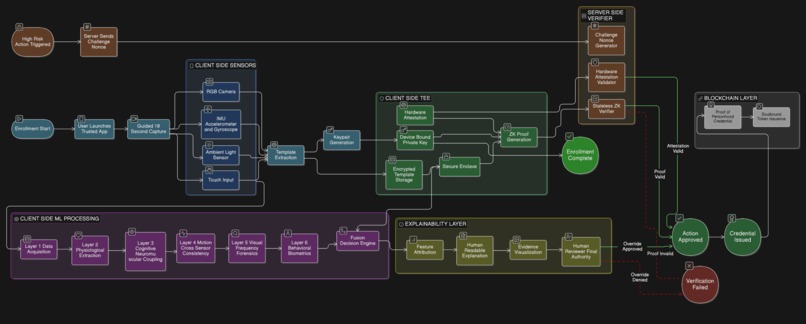
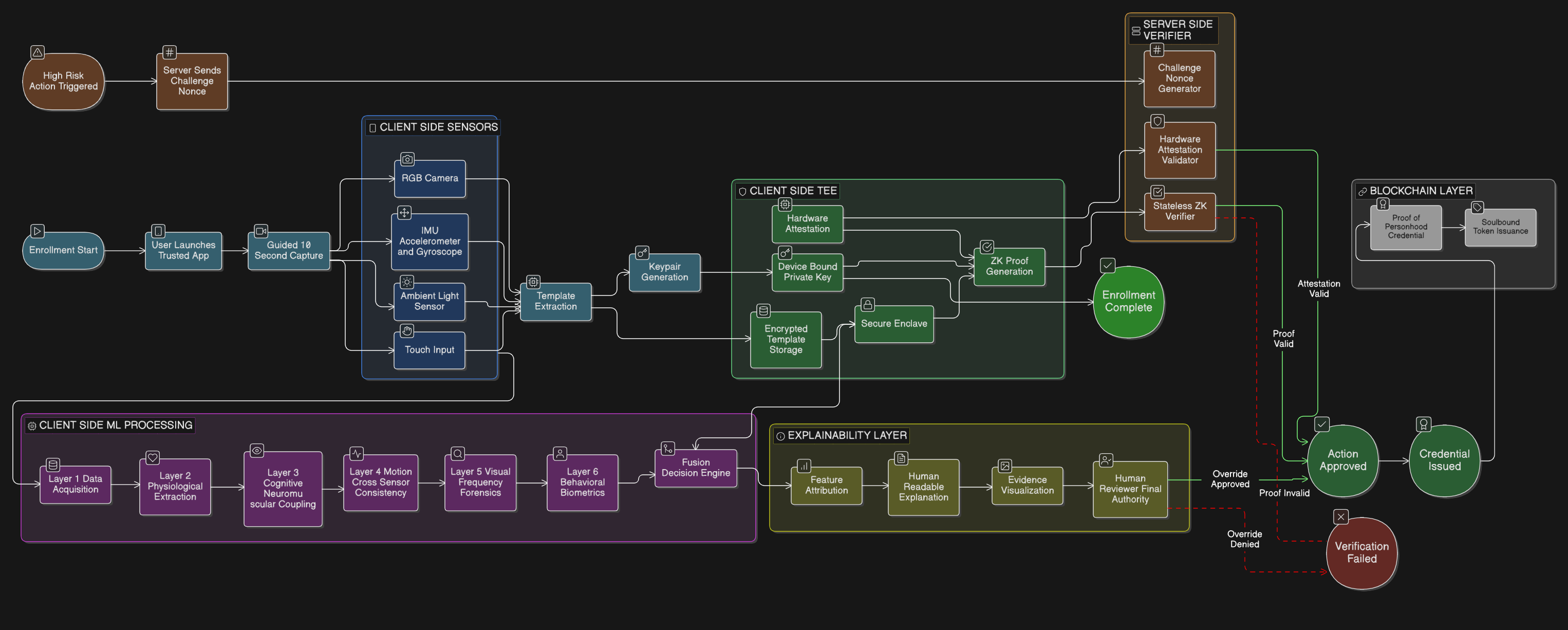
Main Technical Workflow
-
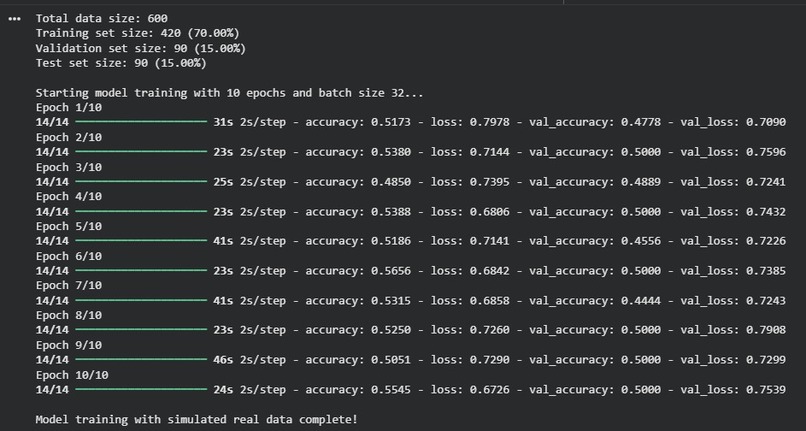
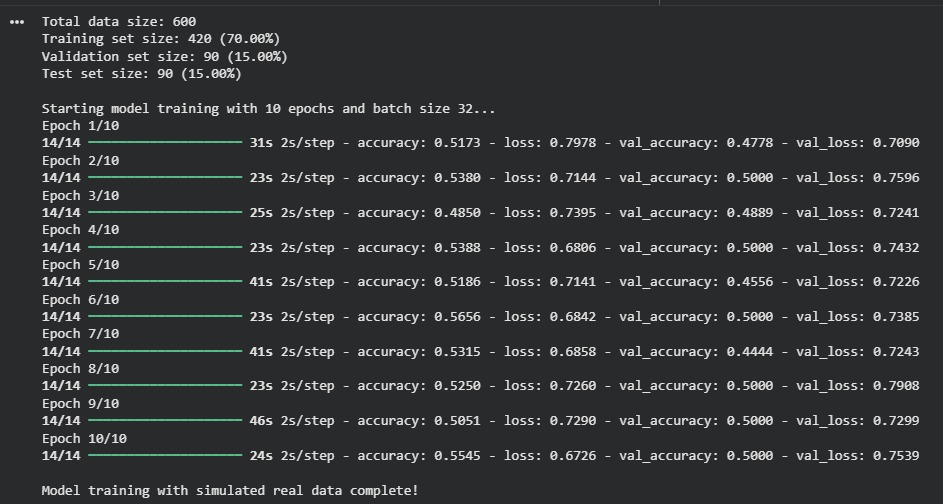
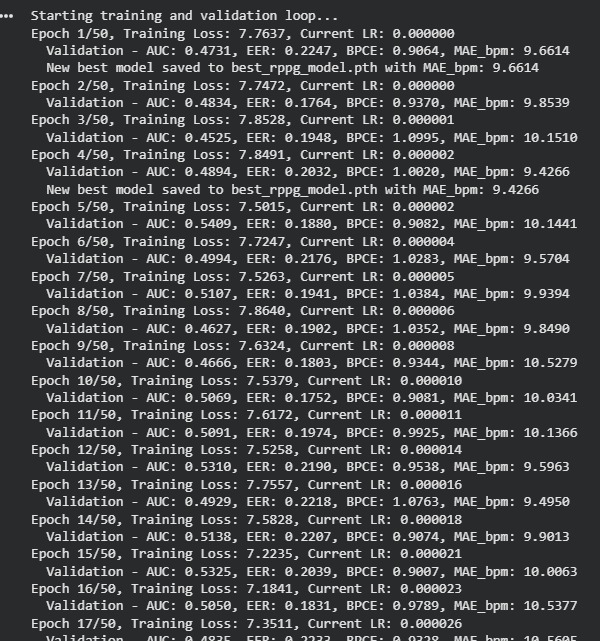
ML Model Training
-
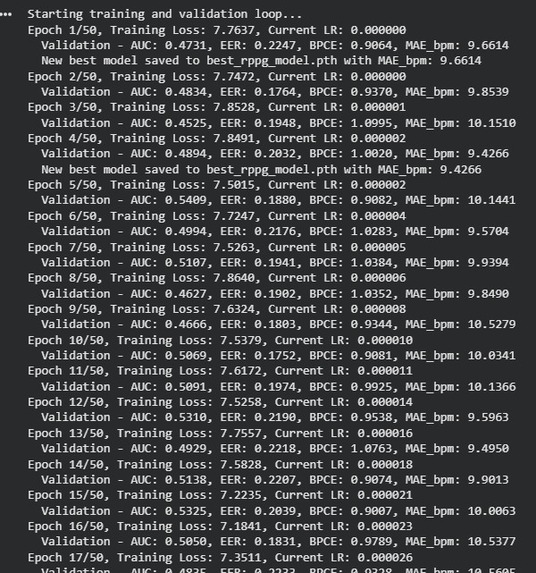
ML Model Training
-
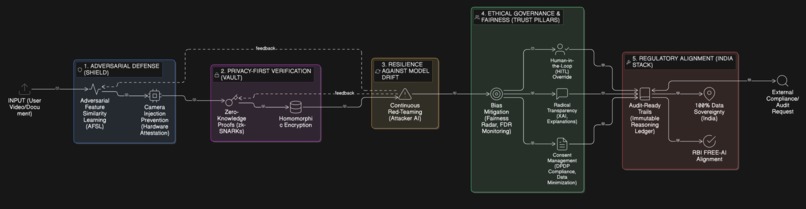
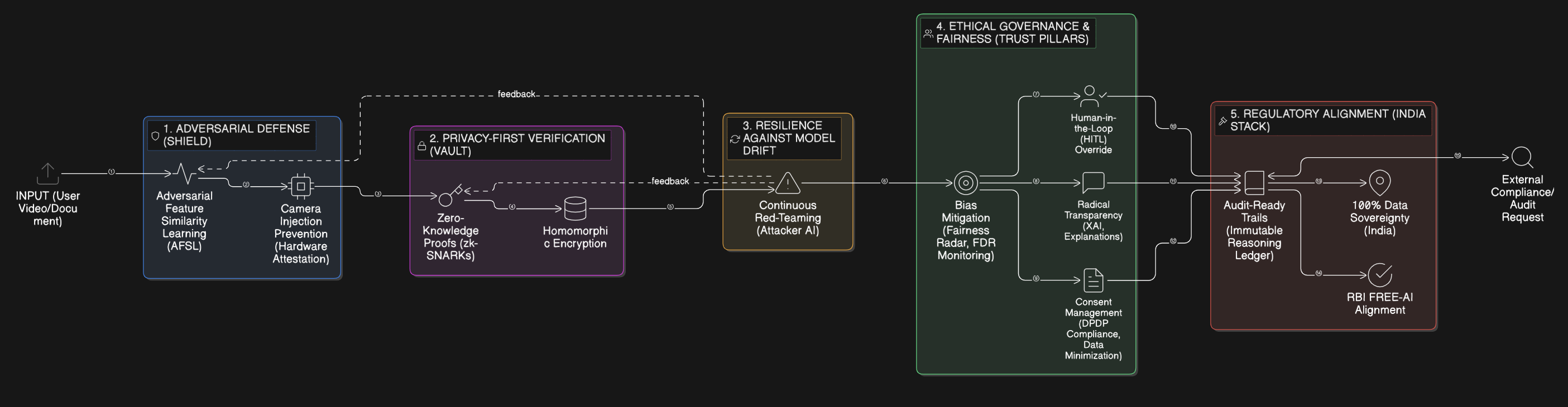
Security System Architecture
V-Ident — TASS-V
Tier-Adaptive, Risk-Calibrated, Accessibility-First Identity Verification
Built by Team PsychoBytes · IIIT Pune · February 2026
V-Ident is a mobile app identity verification engine that detects whether a user is a live, unique human — without storing raw biometrics, without blockchain overhead, and without locking out budget-device users. It dynamically selects the optimal combination of physiological signals per device, achieving < 3% human review rate and < ₹1 cost per verification.
Demo Video
See V-Ident in action and explore how the app performs in real-time.
V-Ident ML Model
The machine learning model powering this project is maintained in a separate repository.
Tech Stack
- Core: React Native & Expo (Managed Workflow)
- Language: TypeScript (Strict Mode)
- Navigation: Expo Router (File-based routing)
- State Management: Zustand
- Animations: React Native Reanimated 3
- Graphics: React Native SVG & Expo Linear Gradient
- Sensors: Expo Camera & Expo Sensors
- Storage: React Native MMKV
- Camera and Video Processing: react-native-vision-camera
- Machine Learning and rPPG: react-native-fast-tflite
- Zero-Knowledge Proofs (ZKP): snarkjs
Table of Contents
- Core Design Philosophy
- What Makes V-Ident Different
- Architecture: The Three-Axis Model
- Device Tier Classification
- Signal Portfolio (TASS Matrix)
- Trust Score Engine
- Verification Zones
- Accessibility System
- Security & Anti-Spoofing
- Enrollment Flow
- Per-Transaction Verification Flow
- Tech Stack
- Economic Model
- Regulatory Compliance
- Roadmap
- What's Excluded from Phase 1
Core Design Philosophy
The redesigned V-Ident is not a 6-layer ML monolith. It is a signal-selection engine governed by three runtime inputs:
Signal Set = f(Device Tier, Transaction Risk Level, User Accessibility Profile)
This single architectural shift — computing signal selection at runtime rather than statically — resolves over 60% of the flaws present in the original design, including computational overload on budget phones, biometric bias, and accessibility exclusion.
What Makes V-Ident Different
Three genuine innovations not found combined in any competitor product:
- Psychophysiological signal fusion — rPPG heartbeat detection combined with behavioral timing as the core liveness proof, running on-device with no video upload.
- XAI-based explainability — every rejection generates a plain-language explanation for both the user and the review officer, as required under RBI FREE-AI and the DPDP Act.
- Privacy-first ZK-proof output — the system attests "live unique human" without transmitting raw biometrics or creating a cross-service tracking vector.
Architecture: The Three-Axis Model
Every verification is governed by three axes, each independently set and tamper-resistant:
| Axis | Determined By | Values | Modifiable By User? |
|---|---|---|---|
| Device Tier | Hardware benchmark at install | T1 (Budget) / T2 (Mid) / T3 (Premium) | No |
| Transaction Risk | Calling service (bank / govt) | R1 (Low) / R2 (Medium) / R3 (High) | No |
| User Profile | Self-declared at enrollment | Standard / Motor / Visual / Neurological / Elderly | Declared once, encrypted |
Device Tier Classification
At first launch, a 3-second Device Profiler silently benchmarks actual hardware — not spec sheets — to prevent tier spoofing.
| Property | Tier 1 — Budget (₹10K–₹20K) | Tier 2 — Mid (₹20K–₹45K) | Tier 3 — Premium (₹45K+) |
|---|---|---|---|
| Example Devices | Redmi 13C, Realme C65, Samsung A15 | Realme 12, Samsung A55, Pixel 6a | iPhone 15+, Pixel 8 Pro, Samsung S24 |
| Front Camera | 8 MP, no OIS, ≤ 30 FPS | 16–32 MP, 30 FPS | 12–48 MP, PDAF, 60 FPS |
| ML Accelerator | CPU only / basic DSP | Mid-tier NPU (Helio G99 / SD 7s) | Apple Neural Engine / Tensor G3 / SD 8 Gen 3 |
| TEE | Basic TrustZone | TrustZone + Android Keystore | StrongBox (Android) / Secure Enclave (iOS) |
| RAM | 4–6 GB | 6–8 GB | 8–16 GB |
| Max On-Device Model Size | ~15 MB total | ~40 MB total | ~80 MB total |
| Profiler Benchmark | < 500 TOPS | 500–1500 TOPS | > 1500 TOPS |
Signal Portfolio (TASS Matrix)
Signals are selected automatically based on device tier. The app ships with only the Core Model (~12 MB); additional signal modules are downloaded once after device profiling.
| Signal | Available On | Compute Cost | Spoof Resistance (2026) |
|---|---|---|---|
| Visual Frequency Forensics (VFF) | T1, T2, T3 | Low — 3–5 MB model | HIGH — detects GAN/diffusion artifacts at frequency domain |
| Cognitive Response Timing (CRT) | T1, T2, T3 | Near-zero — rule-based | MEDIUM-HIGH — AI reaction timing lacks natural human jitter |
| Hardware Attestation (HA) | T1 (basic), T2/T3 (full) | Negligible | VERY HIGH — cryptographic; requires physical hardware compromise |
| Micro-tremor IMU Analysis | T2, T3 only | Low | HIGH — natural 8–12 Hz hand tremor is physically impossible to inject |
| rPPG Heartbeat Detection | T2, T3 (with lighting gate) | Medium — 8–12 MB model | MEDIUM (improving) — multi-region skin tone adaptation applied |
| Touch-Pressure Behavioral Biometrics | T2, T3 only | Low | MEDIUM — real-time force signature is hard to replicate |
| Micro-saccade Eye Tracking | T3 only | High — 15–20 MB model | VERY HIGH — sub-ms latency physically impossible to deepfake in real time |
Minimum Signal Requirements per Risk × Tier
| Risk Level | Tier 1 (Budget) | Tier 2 (Mid) | Tier 3 (Premium) |
|---|---|---|---|
| R1 — Low (≤ ₹5K / routine login) | VFF + CRT + HA-Basic | VFF + CRT + Micro-tremor + HA | VFF + CRT + Micro-tremor + HA-Full |
| R2 — Medium (₹5K–₹50K / account changes) | VFF + CRT + HA-Basic + Step-Up Challenge | VFF + CRT + Micro-tremor + rPPG + HA | All T2 signals + Touch Pressure |
| R3 — High (₹50K+ / SIM swap / KYC) | VFF + CRT + HA-Basic + Async Human Review | VFF + CRT + Micro-tremor + rPPG + Touch + HA | Full suite including Micro-saccade |
Note: For Tier 1 + R3, the system falls back to Async Human Review (within 4 hours) rather than blocking service entirely.
Trust Score Engine
V-Ident uses Bayesian Log-Odds Fusion — not a weighted geometric mean — because it handles missing signals (for accessibility profiles) gracefully and accounts for signal reliability variance across device tiers.
Computation Steps
1. Prior Log-Odds (neutral): LogOdds₀ = log[0.5 / 0.5] = 0

2. Per-signal LLR:
   LLR_i = log[ P(human | s_i) / P(spoof | s_i) ]
   (LLR > 0 = evidence for human; LLR < 0 = spoof detected; LLR = 0 = signal unavailable)

3. Weighted Bayesian Fusion:
   LogOdds_fused = LogOdds₀ + Σ (w_i × LLR_i)
   [Missing/inaccessible signals contribute 0 automatically]

4. Cross-Signal Temporal Consistency Bonus (T2/T3 only):
   Corr = Pearson correlation between rPPG rhythm and IMU tremor rhythm
   Bonus_LLR = 0.5 × max(0, Corr)

5. Rooted Device Penalty (if detected):
   LogOdds_fused = min(LogOdds_fused, 0.70) [caps TS at ~70]

6. Sigmoid Conversion → Trust Score:
   P_human = 1 / (1 + exp(-LogOdds_fused))
   TS = round(P_human × 100, 1)
Signal Weight Matrix
| Signal | Weight — Tier 1 | Weight — Tier 2 | Weight — Tier 3 |
|---|---|---|---|
| Visual Frequency Forensics (VFF) | 0.45 | 0.30 | 0.20 |
| Cognitive Response Timing (CRT) | 0.35 | 0.20 | 0.15 |
| Hardware Attestation (HA) | 0.20 | 0.15 | 0.10 |
| Micro-tremor IMU | 0.00 | 0.20 | 0.15 |
| rPPG Heartbeat | 0.00 | 0.15 | 0.20 |
| Touch Pressure Biometrics | 0.00 | 0.00 | 0.10 |
| Micro-saccade Eye Tracking | 0.00 | 0.00 | 0.10 |
| SUM | 1.00 | 1.00 | 1.00 |
Verification Zones
| Zone | Trust Score Range | Action |
|---|---|---|
| 🟢 GREEN | TS ≥ 80 (R1) / ≥ 90 (R2) / ≥ 95 (R3) | Auto-Approve. ZK-proof issued immediately. No human involved. |
| 🟡 AMBER | 65 ≤ TS < threshold | Secondary Challenge triggered automatically in a different modality. Target: converts 80% of Amber to Green. |
| 🔴 RED | TS < 65, OR attestation fail, OR rooted device + R3 | Async Human Review queue. User is never blocked — notified within 4 hours. |
At scale (100K verifications/day): ~88% Green → ~9% Amber → ~3% human review, manageable by a 50-person team at 4 minutes per case.
Trust Score Thresholds by Risk Level
| Risk Level | Green (Auto-Approve) | Amber (Challenge) | Red (Human Review) |
|---|---|---|---|
| R1 — Low | TS ≥ 80 | 65 ≤ TS < 80 | TS < 65 |
| R2 — Medium | TS ≥ 90 | 72 ≤ TS < 90 | TS < 72 |
| R3 — High | TS ≥ 95 | 82 ≤ TS < 95 | TS < 82 |
| Rooted Device | Never (capped at 70) | R1 only (65–70) | Always for R2, R3 |
Accessibility System
At enrollment, users optionally declare an accessibility profile. It is encrypted in the Secure Enclave and never sent to any server. Any signal inaccessible to a profile is automatically excluded, and the Trust Score formula re-normalizes weights across remaining signals — no user is penalized for a disability.
| Accessibility Profile | Alternative Signal Configuration |
|---|---|
| Standard (default) | Full TASS matrix per device tier |
| Motor Disability | Removes CRT gesture component; replaces with extended rPPG + voice pitch micro-tremor analysis |
| Visual Impairment | Removes all gaze-based challenges; replaces with audio-guided voice challenge + touch pressure biometrics + rPPG |
| Neurological (Parkinson's, MS, etc.) | Extended time windows (3×); IMU tremor model uses personalized baseline from enrollment; flags for human review only if deviation from personal baseline is large |
| Elderly Users | Extended challenge windows (2×); larger visual targets; voice challenge available; reduced gesture complexity |
Security & Anti-Spoofing
Rooted / Jailbroken Device Handling
- Layer 1 — Android Play Integrity API / iOS Jailbreak detection at every session start.
- Layer 2 — Root detection does NOT deny service. Instead, Trust Score is capped at 70, ensuring AMBER or RED zone for anything above R1.
- Layer 3 — Temporal consistency check: injected sensor data arrives with suspiciously uniform inter-sample timing. Real sensor data has 0.5–2 ms jitter from OS scheduling. Jitter analysis is performed inside the Secure Enclave.
- Layer 4 — Attestation timestamp validation: if IMU data claims to be captured before the camera started recording, it is flagged as a spoofed replay.
rPPG Bias Mitigation (Skin Tone & Camera Quality)
- Lighting Gate — Ambient lux is measured via camera histogram. If lux < 150, rPPG is skipped and weight redistributed to other signals.
- Fitzpatrick Classifier — A 400 KB one-frame model classifies skin tone on the forehead ROI. Fitzpatrick I–III uses green-channel primary; Fitzpatrick IV–VI uses red-channel primary with a 4-second extended averaging window for better SNR.
- Multi-Region Fusion — Forehead, left cheek, and right cheek are analyzed independently. A deepfake generates consistent artificial pulse; a real human shows natural cross-region variability. The Cross-Region Consistency Score (CRCS) feeds directly into the Trust Score.
- Camera Quality Compensation — On Tier 1, a noise-adaptive pre-filter calibrated to the specific camera sensor (from EXIF metadata) is applied. 15 FPS is accepted instead of 60 FPS.
Device Recovery (Split-Key Architecture)
If a device is lost, biometric templates are recoverable:
- Key Part A — Derived from the user's 8-word Recovery Code shown once at enrollment.
- Key Part B — Stored on V-Ident's server, associated with an anonymous ID (no PII).
Neither key alone decrypts the template. Full recovery on a new device takes under 3 minutes: enter Recovery Code → server sends Key B → template decrypted locally → new hardware attestation generated → old attestation invalidated.
ZK-Proof Privacy (Per-Service Nullifiers)
Each ZK-proof contains a service-specific nullifier: a hash of the user's identity commitment combined with the service's unique domain ID. The same user gets a different nullifier for their bank, telecom, and government portal — preventing cross-service tracking while enforcing per-service uniqueness.
Enrollment Flow
Enrollment is a one-time, 8-step process. No video or face images ever leave the device.
| Step | What Happens | Privacy / Security Note |
|---|---|---|
| 1. Device Profiling | 3-sec benchmark: camera FPS, NPU throughput, TEE capability, RAM, root status | Stored locally; only tier classification (T1/T2/T3) sent to server |
| 2. Accessibility Declaration | User optionally selects accessibility profile | Encrypted in Secure Enclave; never sent to server |
| 3. Guided 12-Sec Capture | Front camera captures physiological signals. Instruction: "Keep face in oval and follow the white dot for 12 seconds" | All processing on-device. No video transmitted. |
| 4. Template Extraction | ML models extract a numeric feature vector — not a biometric image | Feature vector stored in Secure Enclave encrypted with device key |
| 5. Recovery Key Generation | 8-word recovery passphrase generated and shown once | Key Part A of Split-Key Backup. V-Ident never sees this. |
| 6. Hardware Attestation | Device generates keypair; public key + attestation certificate sent to V-Ident server | Private key never leaves Secure Enclave |
| 7. PoP Credential Issuance | W3C Verifiable Credential issued linked to anonymous DID | No name, no face data on server — only device attestation + tier + enrollment timestamp |
| 8. Encrypted Backup Upload | Template encrypted with split key; encrypted blob stored on server | Neither server alone nor user alone can decrypt |
Per-Transaction Verification Flow
| Phase | Action | Time (T1 / T2 / T3) |
|---|---|---|
| Trigger | Calling app sends SDK payload: { risk_level, service_id, nonce } |
~0 ms |
| Signal Selection | TASS-V reads device tier + risk level + accessibility profile → computes mandatory signal set | ~10 ms |
| Cascade Execution | Signals run sequentially; early exit if threshold met before all signals complete | 2–4s / 4–7s / 6–9s |
| Trust Score Compute | Bayesian Log-Odds Fusion + zone classification | ~50 ms (on-device) |
| Green Zone | ZK-proof generated and sent to verifier server | ~200 ms |
| Amber Zone | Secondary Challenge triggered (different modality); re-scored; if still Amber/Red → queue | +2–4 seconds |
| Red Zone | Case queued for async review; user notified; partial credential for low-risk fallback | User wait: 0–4 hours |
Cascade Order — Tier 1 Example
Step 1: Hardware Attestation       [~50ms, no camera]
        └─ FAIL → Reject immediately

Step 2: Visual Frequency Forensics [~800ms, 3MB model, 15 FPS]
        └─ VFF_score < 0.3 → Reject (deepfake artifact)

Step 3: Cognitive Response Timing  [~1200ms, rule-based, no ML]
        └─ Partial TS ≥ R1 threshold → APPROVE (early exit)

Step 4: (Tier 2+ only) Micro-tremor / rPPG [if still needed]

─────────────────────────────────────────────
Total time  Tier 1, R1:  2.0–3.5 seconds
            Tier 3, R3:  7–9 seconds
Tech Stack
On-Device
| Component | Technology |
|---|---|
| iOS ML Runtime | Core ML 7 + BNNS (Tier 1 CPU fallback); Apple Neural Engine (Tier 3) |
| Android ML Runtime | TensorFlow Lite 2.15 with NNAPI delegate (NPU) + CPU fallback; ML Kit for device profiling |
| VFF Model | MobileNetV4-Small (INT8 quantized, 3.2 MB); frequency-domain features via on-device FFT; runs at 15 FPS |
| rPPG Model | Custom CNN (EfficientNet-B0 backbone, 8.5 MB INT8); adaptive skin-tone pre-filter |
| Micro-saccade Model | MediaPipe Face Mesh (T3 only) + custom temporal LSTM on eye landmarks (18 MB); Apple Vision on iOS |
| ZK-Proof Library | SnarkJS (WebAssembly / React Native); gnark (Go / native); Groth16 proof ~250 bytes |
| Secure Storage | iOS: kSecAttrTokenIDSecureEnclave; Android: Android Keystore + Titan M (StrongBox) |
| Hardware Attestation | iOS: DeviceCheck + App Attest API; Android: Play Integrity API |
| Root Detection | SafetyNet + custom binary checks + libc hooks detection + /proc/self/maps analysis |
| Recovery Crypto | AES-256-GCM (template encryption); PBKDF2 (200K iterations) for Recovery Code → Key Part A |
Server-Side (Minimal by Design)
| Component | Technology |
|---|---|
| API Layer | Go 1.22; gRPC (SDK) + REST (web portals) |
| ZK-Proof Verifier | Stateless Go service; Groth16 proof verified in ~2 ms; horizontally scalable |
| Attestation Validator | Apple DeviceCheck + Google Play Integrity APIs; results cached per device (24-hr TTL) |
| Credential Issuer | W3C DID + Verifiable Credentials; did:key (Phase 1); VC signed with Ed25519 |
| Human Review Queue | Kafka-based async queue; officer workstations as consumers; evidence auto-deleted after 90 days (DPDP Act) |
| Encrypted Template Backup | PostgreSQL (encrypted at rest); Key Part B associated with anonymous user ID (hash of attestation pubkey); no PII |
| XAI Explanation Engine | LIME + custom attribution rules; generates plain-language explanation for officer dashboard |
| Databases | PostgreSQL (credentials, audit logs) · Redis (nonce cache, rate limiting) · S3-compatible (review evidence) |
| Infrastructure | AWS Mumbai ap-south-1 (India data sovereignty); auto-scaling ECS; no server-side GPU required |
Economic Model
| Cost Component | Per Verification |
|---|---|
| On-device processing | ₹0 (user's device) |
| ZK-proof verification (server) | ₹0.08 |
| Attestation API call (cached 24hr) | ₹0.12 |
| Human review (3% of cases blended) | ₹0.42 |
| Infrastructure / CDN / S3 | ₹0.15 |
| TOTAL COGS | ~₹0.77 per verification |
| Revenue (SaaS) | ₹3–8 per verification |
| Gross Margin | 75–90% |
For context, traditional Video KYC costs ₹10–50 per verification. At 1 million verifications/day (achievable by Year 2 with two large bank partners), daily revenue is ₹3–8M against COGS under ₹0.8M — enabled by 97% full automation.
Regulatory Compliance
| Regulation | V-Ident TASS-V Approach |
|---|---|
| DPDP Act 2023 — Data Minimization | No raw biometric data stored anywhere. Feature vectors are processed derivatives. Forensic evidence auto-deleted after 90 days. |
| DPDP Act — Purpose Limitation | PoP credential proves only "live unique human." No inference about health, mood, or identity beyond verification. |
| RBI FREE-AI — Explainability | Every Red Zone decision has a machine-generated XAI explanation in plain English/Hindi. Officers must record reasoning. Full audit trail maintained. |
| RBI FREE-AI — Human Override | Human reviewers hold full override authority. AI score is advisory, not final, for Red Zone cases. |
| UIDAI — Aadhaar | V-Ident does not replace Aadhaar. It provides complementary liveness assurance for digital interactions and can be linked to Aadhaar via PoP credential binding. |
| Rights of Persons with Disabilities Act, 2016 | Accessibility profiles ensure no signal exclusion without an equivalent alternative. No user is penalized for a disability. |
| India Data Sovereignty | All data processed and stored in AWS Mumbai ap-south-1. No biometric data crosses national borders. |
Roadmap
| Phase | Timeline | Deliverables |
|---|---|---|
| Phase 0 — Validation | Month 1–3 | Single-signal MVP: VFF-only Android app. Benchmark against FaceForensics++ and Celeb-DF v2. Target: > 93% F1 score. Open-sourced on GitHub. IIIT faculty academic review. |
| Phase 1 — Core MVP | Month 3–8 | Full TASS-V for Tier 1 and Tier 2. ZK-proof output. Human review queue. Pilot with 1 fintech partner (target: DigiLocker-linked lending app). RBI Innovation Sandbox application. |
| Phase 2 — Scale | Month 8–18 | Tier 3 signals (micro-saccade). Accessibility profiles. Split-key recovery. W3C Verifiable Credential issuance. Banking and telecom API integrations. 1M verifications/day capacity. |
| Phase 3 — Ecosystem | Month 18–36 | Optional blockchain plugin (Polygon ID-compatible). Government PoP partnerships (UIDAI integration). Cross-border GDPR compliance. AR/VR identity for metaverse contexts. |
What's Excluded from Phase 1
These are intentional scope-control decisions, not oversights:
- Blockchain / Smart Contracts / Soulbound Tokens — added in Phase 3 as an optional plugin only for Web3 use cases. Core PoP credential uses W3C Verifiable Credentials (simpler, faster, equally interoperable).
- Homomorphic Encryption — computationally too expensive for mobile in 2026. Replaced by ZK-proofs, which offer the same privacy guarantee ~1000× faster.
- Decentralized Storage (IPFS, Ceramic) — replaced by server-side encrypted storage (simpler, more reliable, and auditable under the DPDP Act).
- Micro-saccade Tracking on Tier 1/2 — insufficient compute; signal is simply excluded and weights re-normalized.
- Voice-Based Deepfake Analysis — covered by the calling service's own audio pipeline; outside V-Ident's Phase 1 scope.
Summary
TASS-V is a Tier-Adaptive, Risk-Calibrated, Accessibility-First identity verification engine that solves the deepfake crisis without requiring expensive hardware, creating a privacy honeypot, or building an unscalable human review bottleneck. It achieves < 3% human review rate, sub-₹1 COGS per verification, and full compliance with RBI FREE-AI and the DPDP Act — launchable in 8 months, profitable by Month 18.
Document prepared by **Team PsychoBytes* — Indian Institute of Information Technology, Pune — February 2026*
Built With
- fastapi
- firebase
- github
- mobilenetv2
- node.js
- numpy
- pandas
- python
- pytorch
- react-native
- scikit-learn
- snarkjs
- tensorflow
- typescript
- zustand

Log in or sign up for Devpost to join the conversation.