-
-
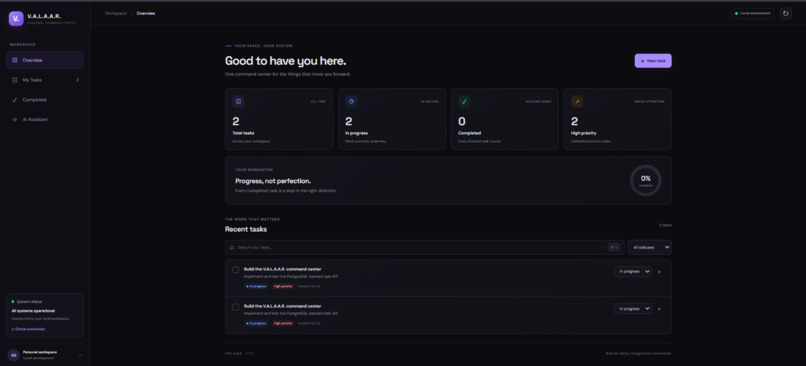
A unified command center for task management and AI-powered productivity workflows.
-
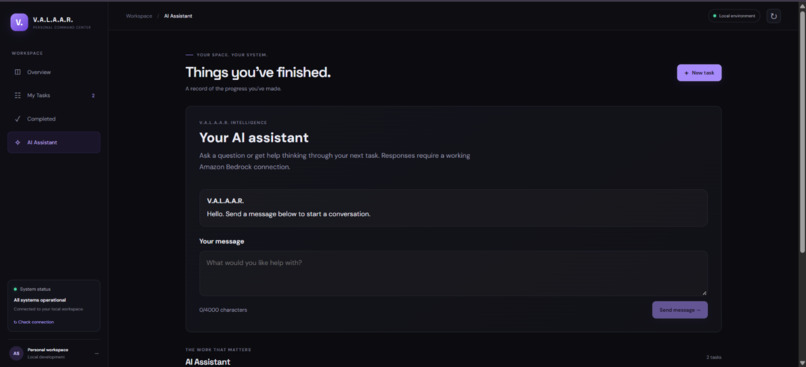
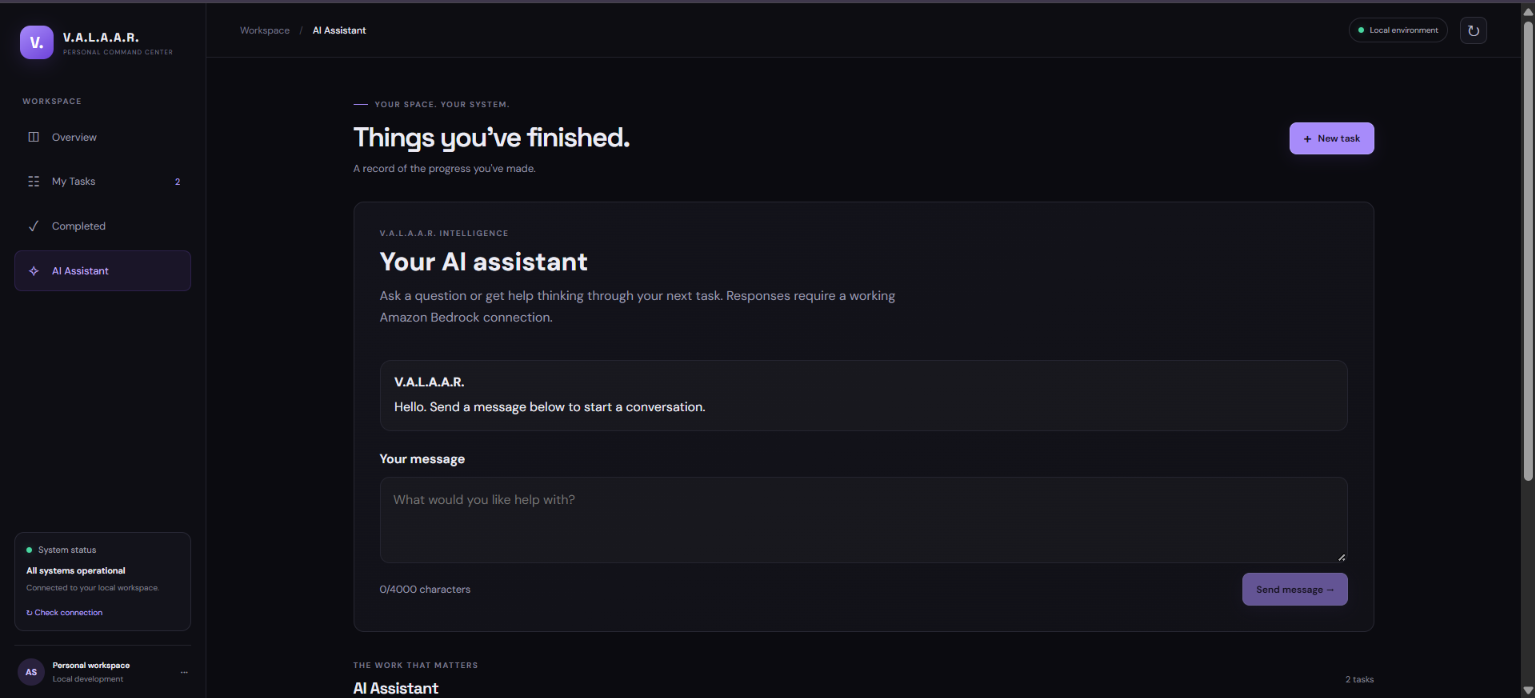
A conversational interface designed to connect AI capabilities with productivity workflows.
-
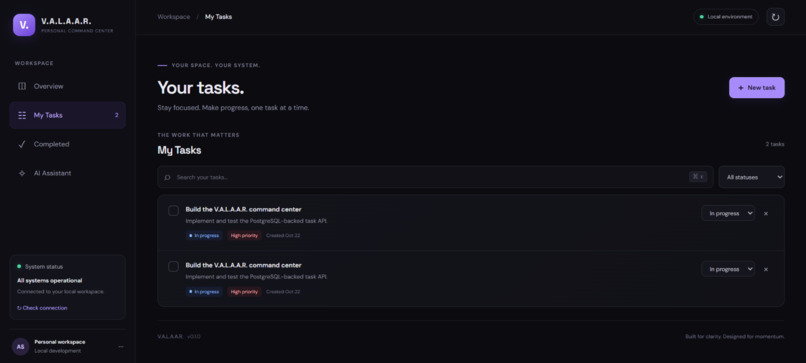
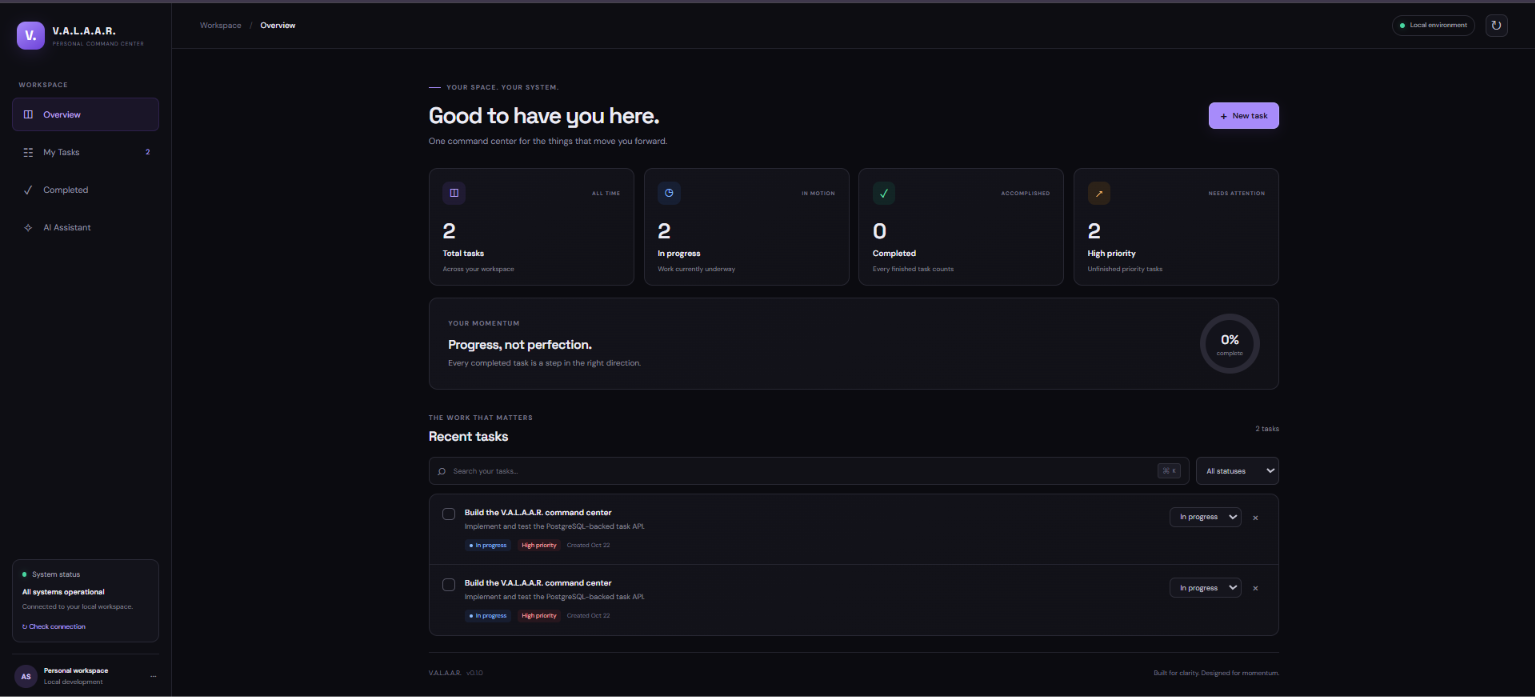
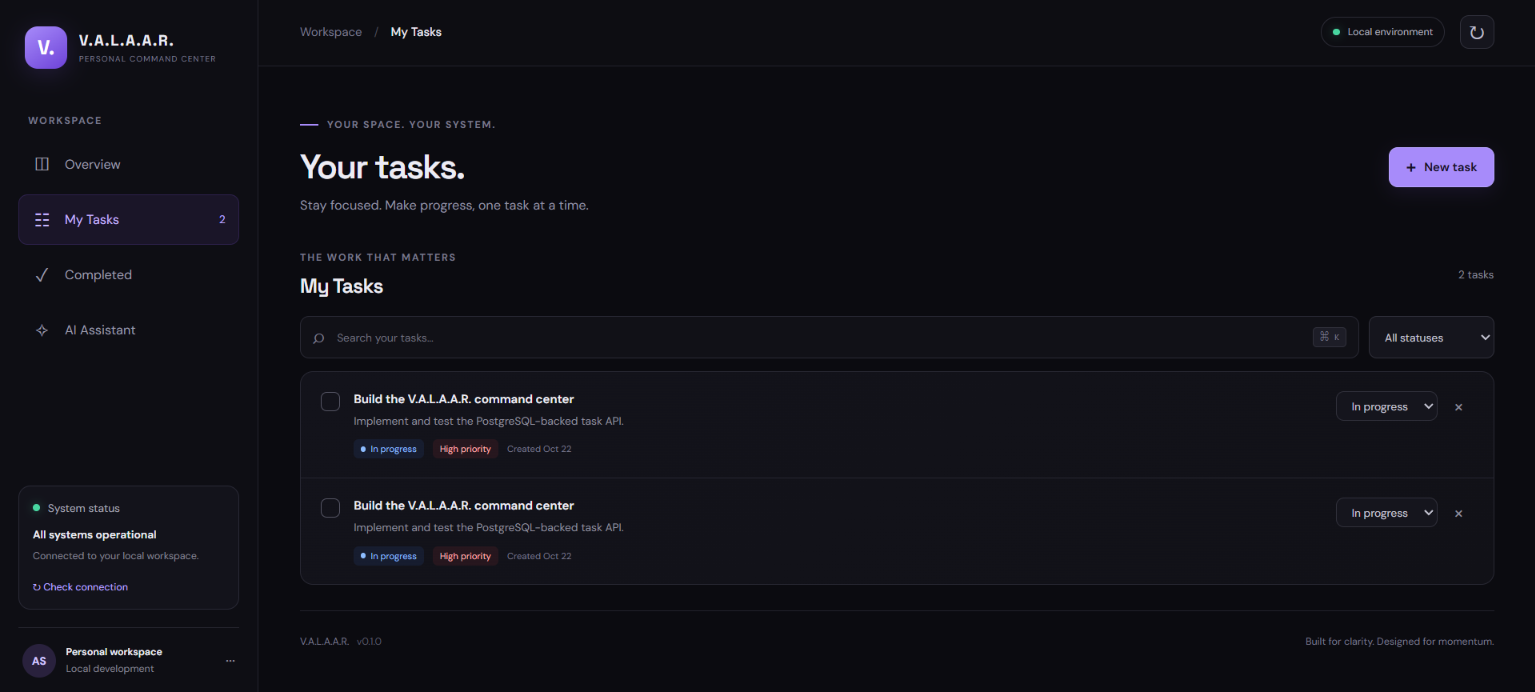
Organize tasks, track progress, and manage priorities through an interactive interface.
-
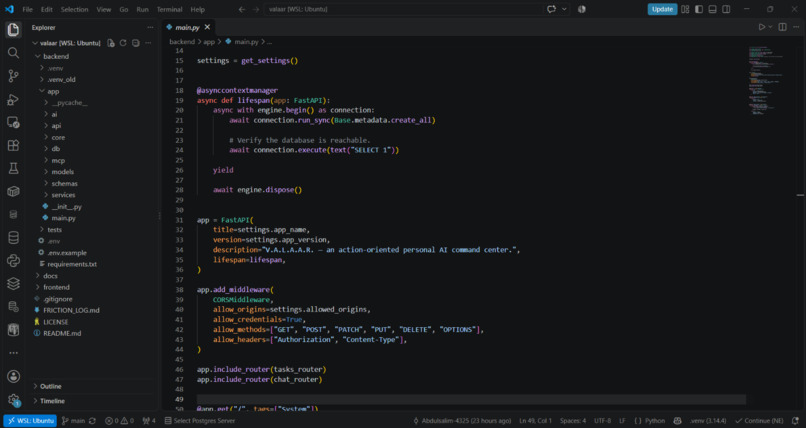
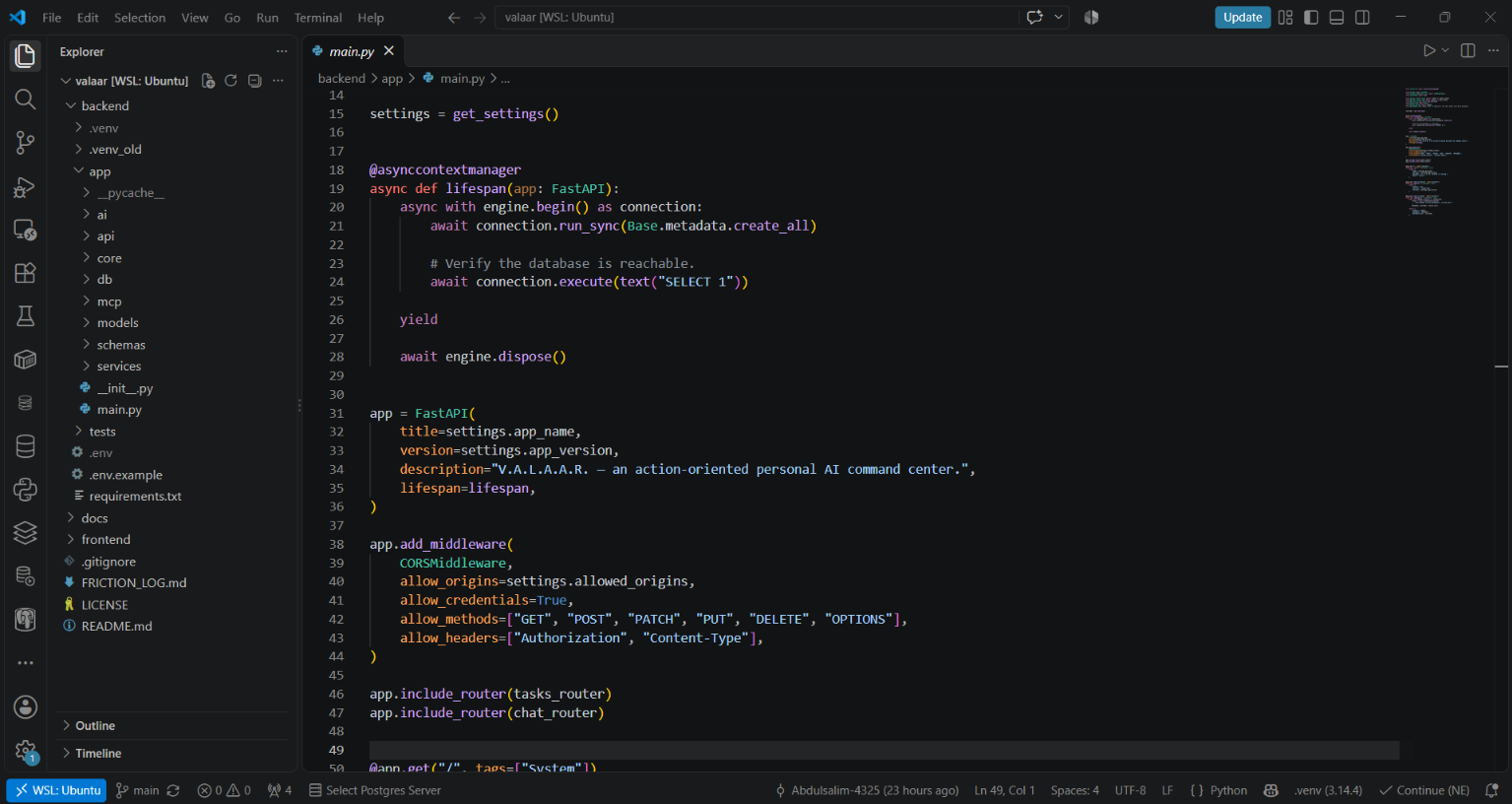
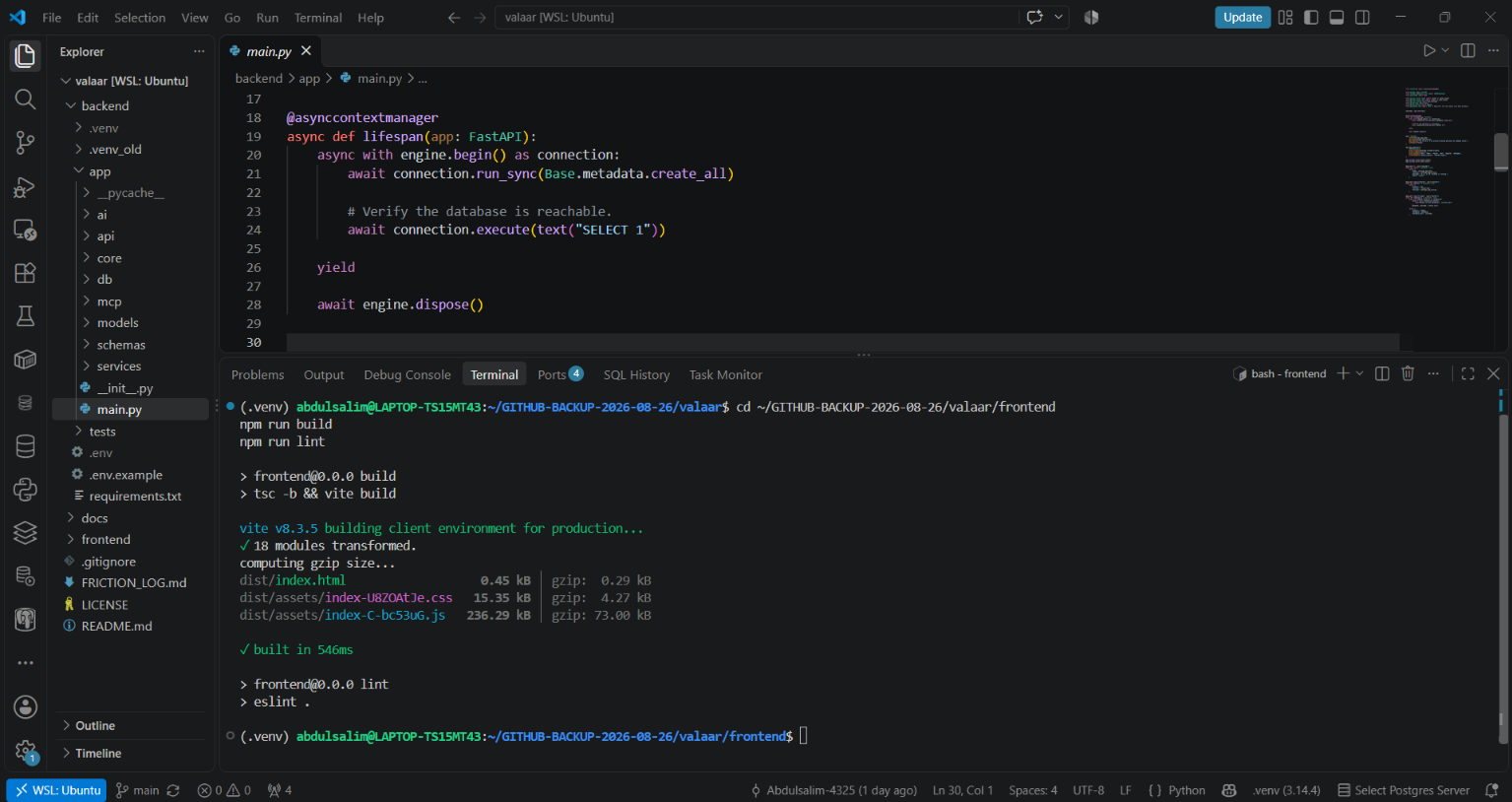
A modular Python backend connecting application routes, database initialization, and services.
-
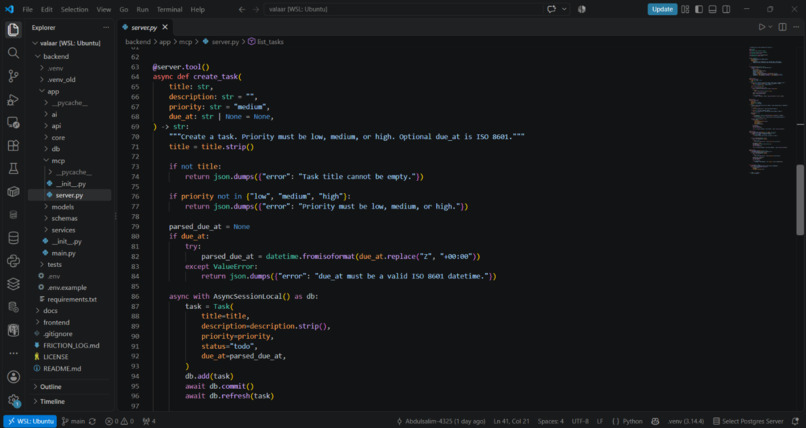
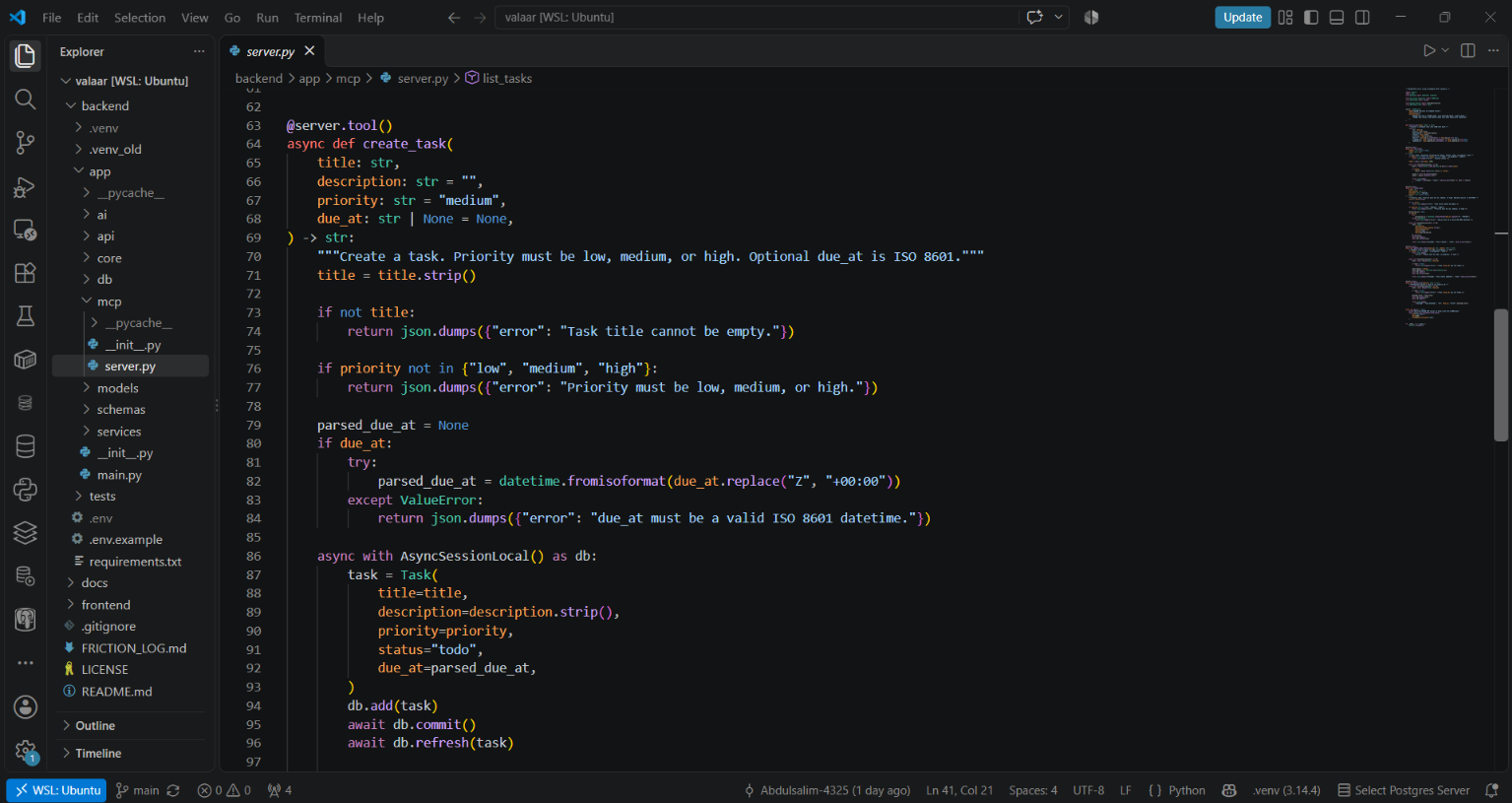
Exposes task-management tools through Streamable HTTP for compatible AI clients.
-
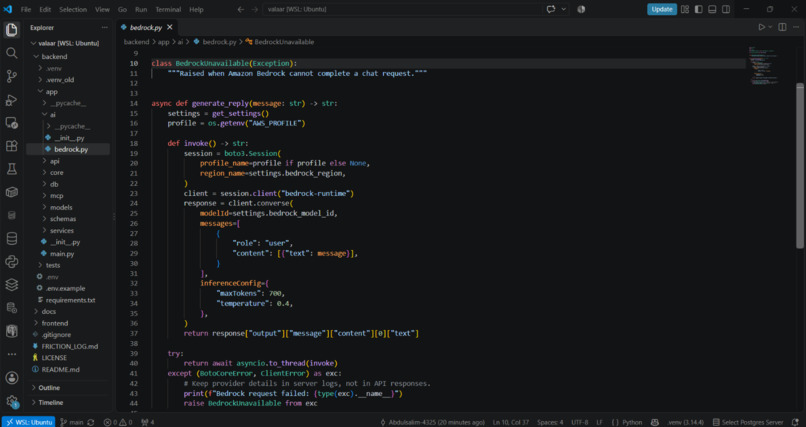
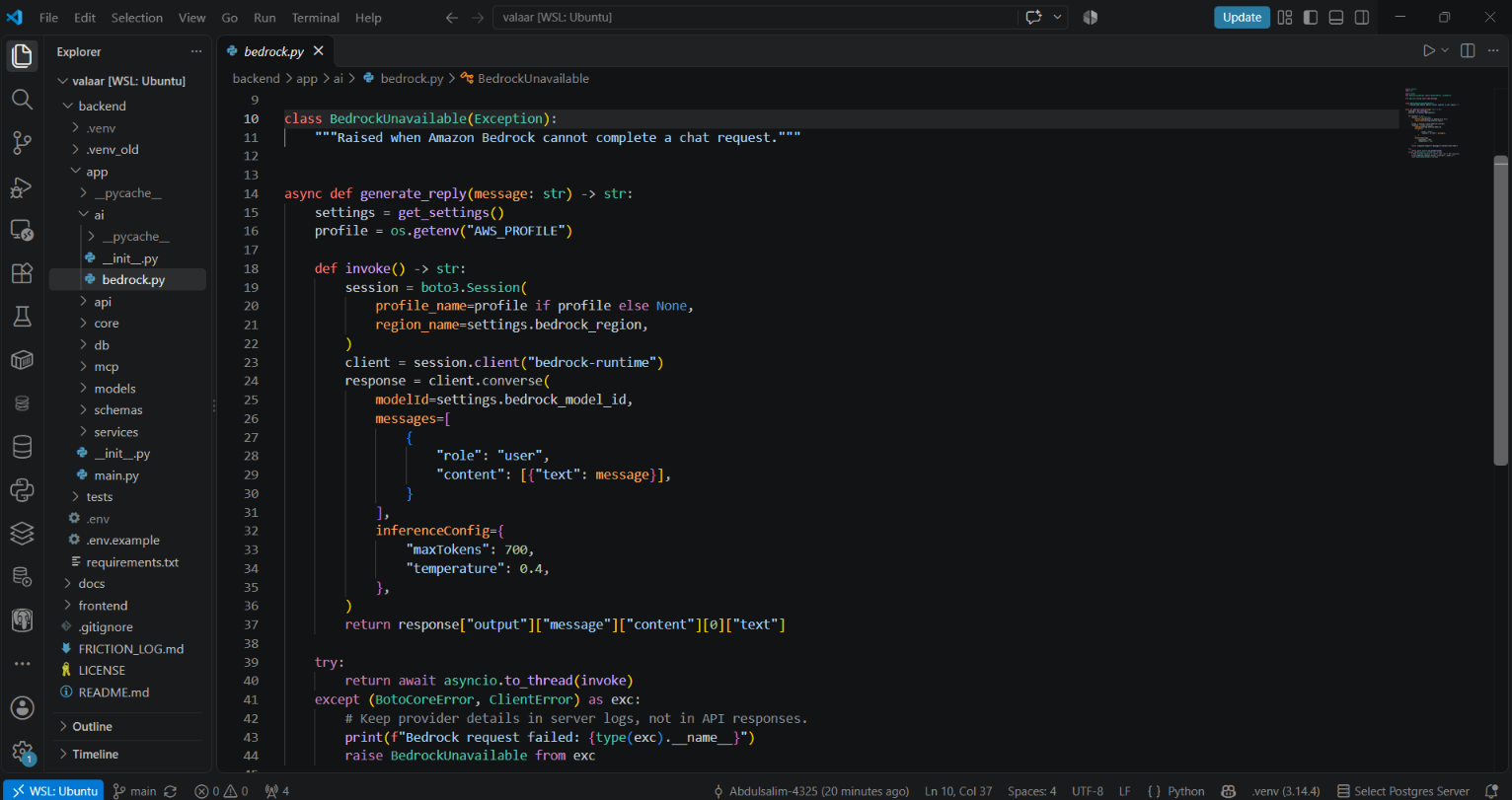
Integrates the AWS SDK and Bedrock Converse API into the assistant's backend.
-
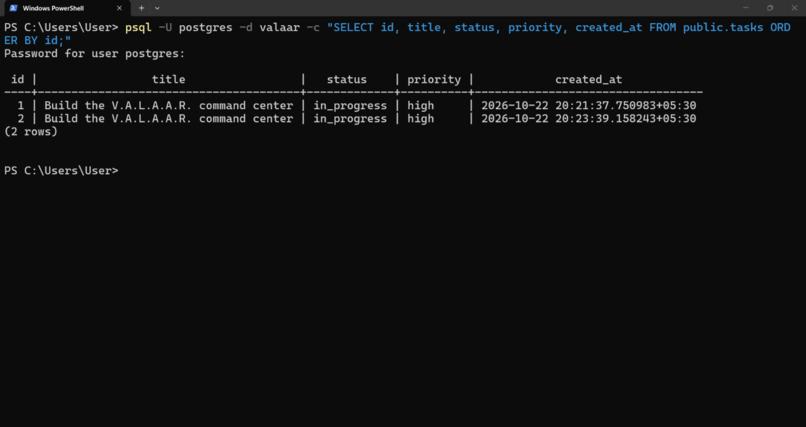
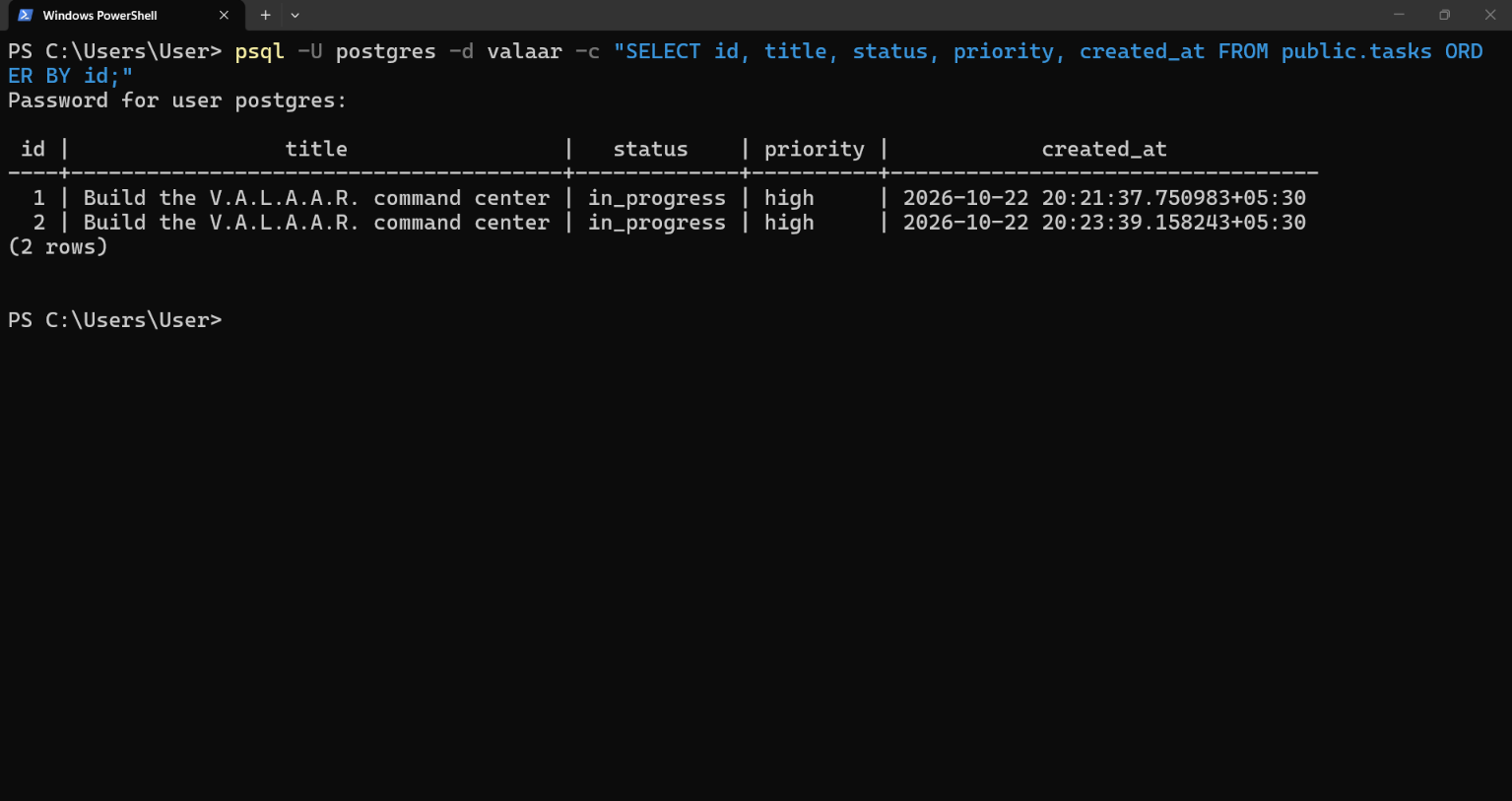
Demonstrates persistent task records with status, priority, and timestamps.
-
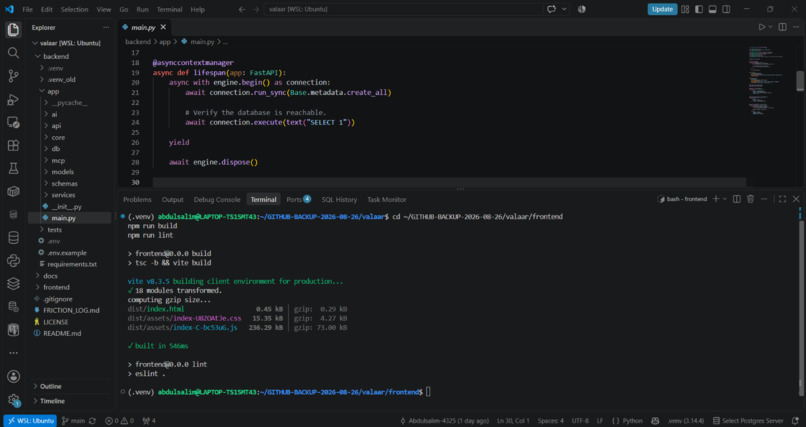
Evidence of frontend build and code-quality checks performed during development.
-
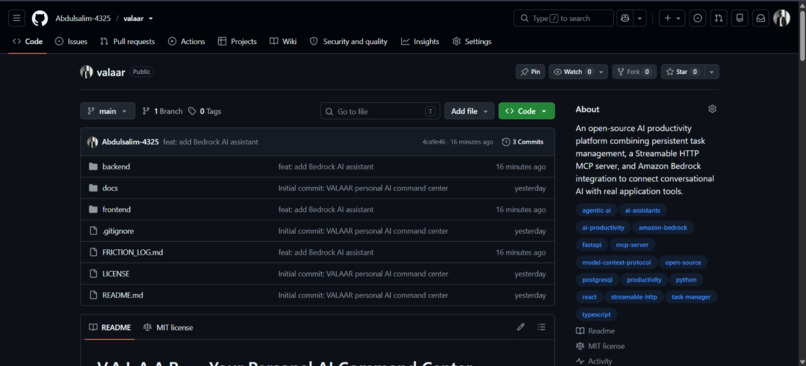
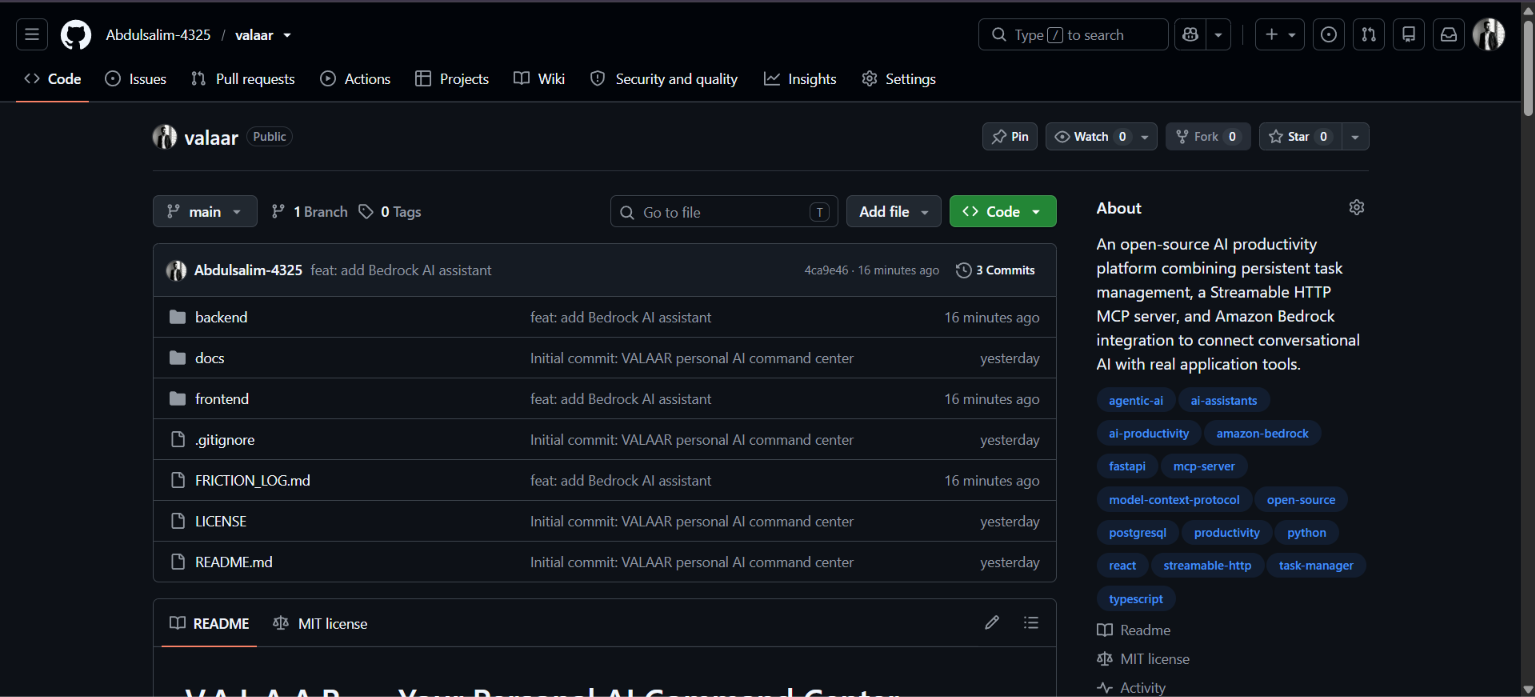
The public GitHub repository for V.A.L.A.A.R., showcasing the source code, project structure, latest commit, and open-source implementation
-
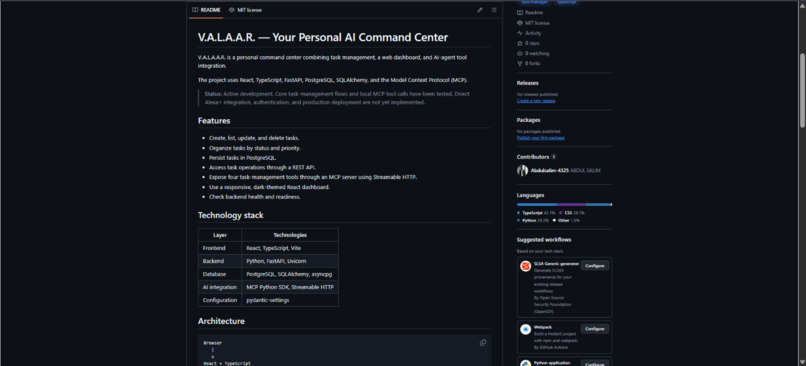
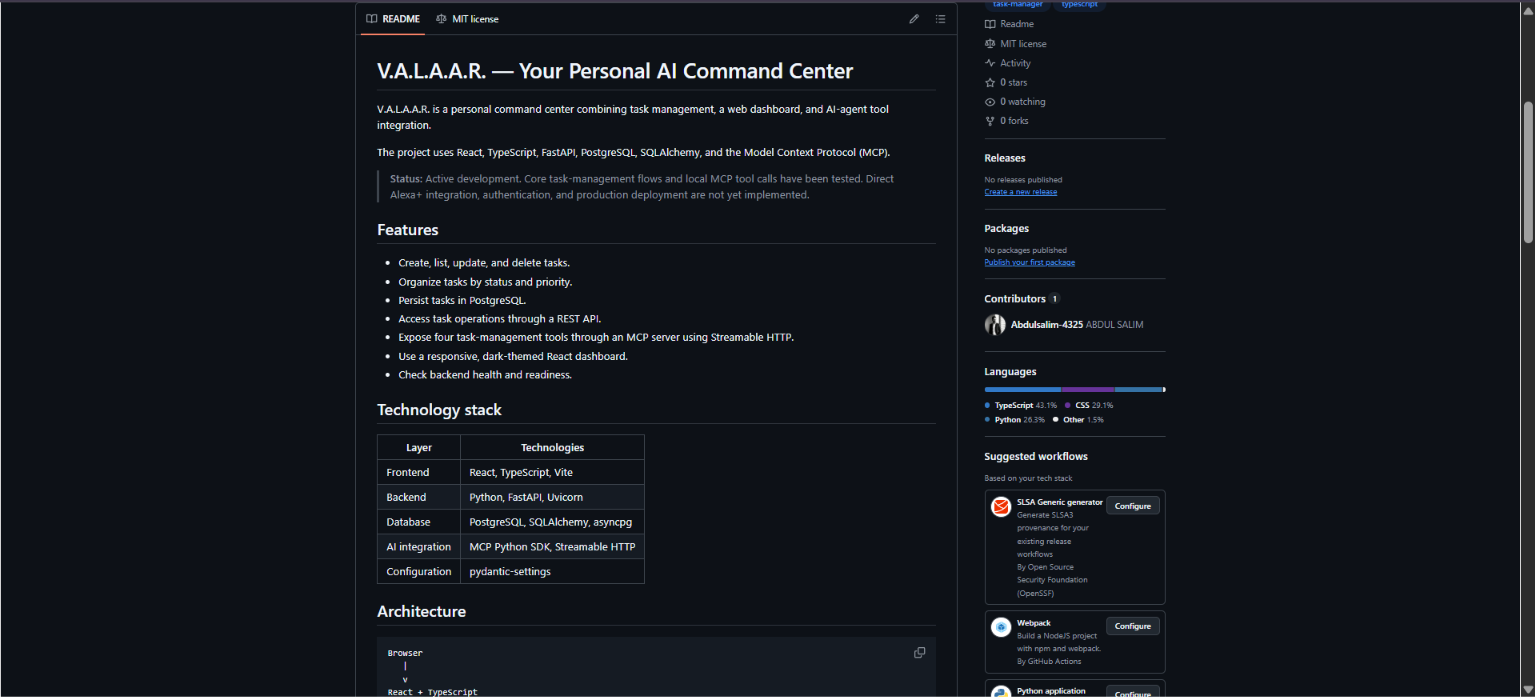
Architecture, technology stack, setup instructions, and guidance for contributors.
Inspiration
I wanted to build more than a conventional chatbot. I envisioned a personal AI command center that connects conversational assistance with real, persistent actions. This idea led to V.A.L.A.A.R. — a platform designed to bring task management, AI-assisted workflows, and tool integrations together in one place.
What it does
V.A.L.A.A.R. combines a web dashboard, a FastAPI backend, PostgreSQL persistence, a Model Context Protocol (MCP) server, and an Amazon Bedrock integration.
Its MCP server exposes four task-management tools:
list_tasks— retrieve existing tasks.create_task— create a task.update_task_status— change a task's status.delete_task— delete a task when explicitly requested.
The tools operate on persistent PostgreSQL task records shared with the application's backend. The MCP server uses Streamable HTTP transport at /mcp, allowing compatible MCP clients to interact with these task-management capabilities.
The project also includes an AI Assistant interface integrated with Amazon Bedrock through Boto3.
How we built it
We built the frontend using React, TypeScript, and Vite, with Python and FastAPI powering the backend. PostgreSQL stores task data, while SQLAlchemy manages database interactions. The MCP server is implemented using the Python MCP SDK and exposes task operations over Streamable HTTP. Amazon Bedrock integration uses the AWS SDK for Python (Boto3).
A central design goal was to let the dashboard, REST API, and MCP tools work with the same underlying task data instead of maintaining separate task stores.
Challenges we ran into
Bringing the frontend, backend, database, MCP server, and AI service together required coordinating multiple components and their configurations.
One significant challenge was getting Amazon Bedrock ready for live inference. We encountered account setup requirements and token-throttling errors during testing. This limited our ability to validate successful live AI responses, so we are careful to distinguish implemented integration from functionality successfully demonstrated end to end.
Accomplishments that we're proud of
We built a unified application that combines persistent task management with an MCP server exposing four practical tools. We are particularly proud of connecting the MCP tools to the same database used by the application's backend, making the tools capable of interacting with real task records rather than mock data.
We also established an integration path for Amazon Bedrock and created a web interface that brings the project's functionality together.
What we learned
We learned how MCP can expose application capabilities to compatible AI clients, how Streamable HTTP supports communication with an MCP server, and how a shared database can connect multiple interfaces to consistent application state.
We also gained experience integrating AWS services into a Python application and learned the importance of separating successful implementation from successful live-service validation.
What's next for V.A.L.A.A.R. — Personal AI Command Center
Our next priorities are to complete protocol compatibility validation, improve the reliability of the AI Assistant, strengthen setup and deployment documentation, and expand automated testing.
We also plan to improve the experience of connecting compatible MCP clients and eventually explore direct Alexa+ integration where supported. Production deployment, authentication hardening, and further reliability improvements remain future work.
V.A.L.A.A.R. is an open-source project under the MIT License and is actively being developed.
Built With
- amazon-bedrock
- amazon-web-services
- boto3
- fastapi
- model-context-protocol-(mcp)
- postgresql
- python
- react
- sqlalchemy
- typescript
- vite

Log in or sign up for Devpost to join the conversation.