-
-
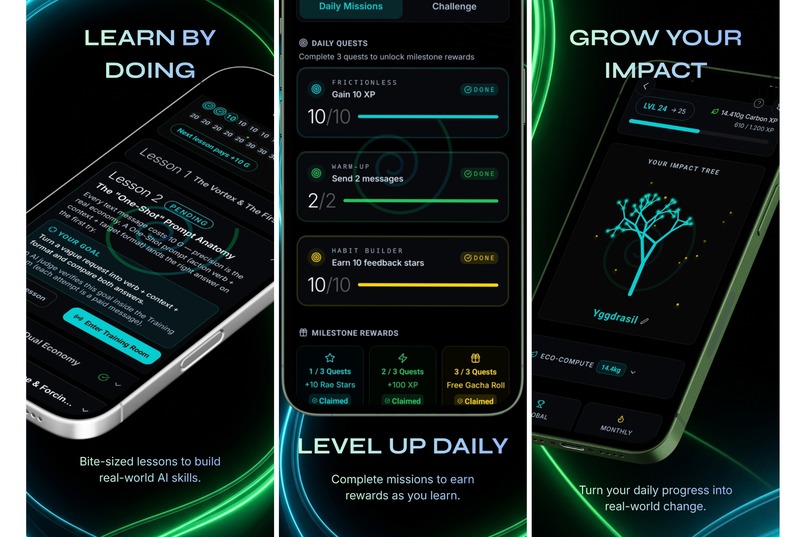
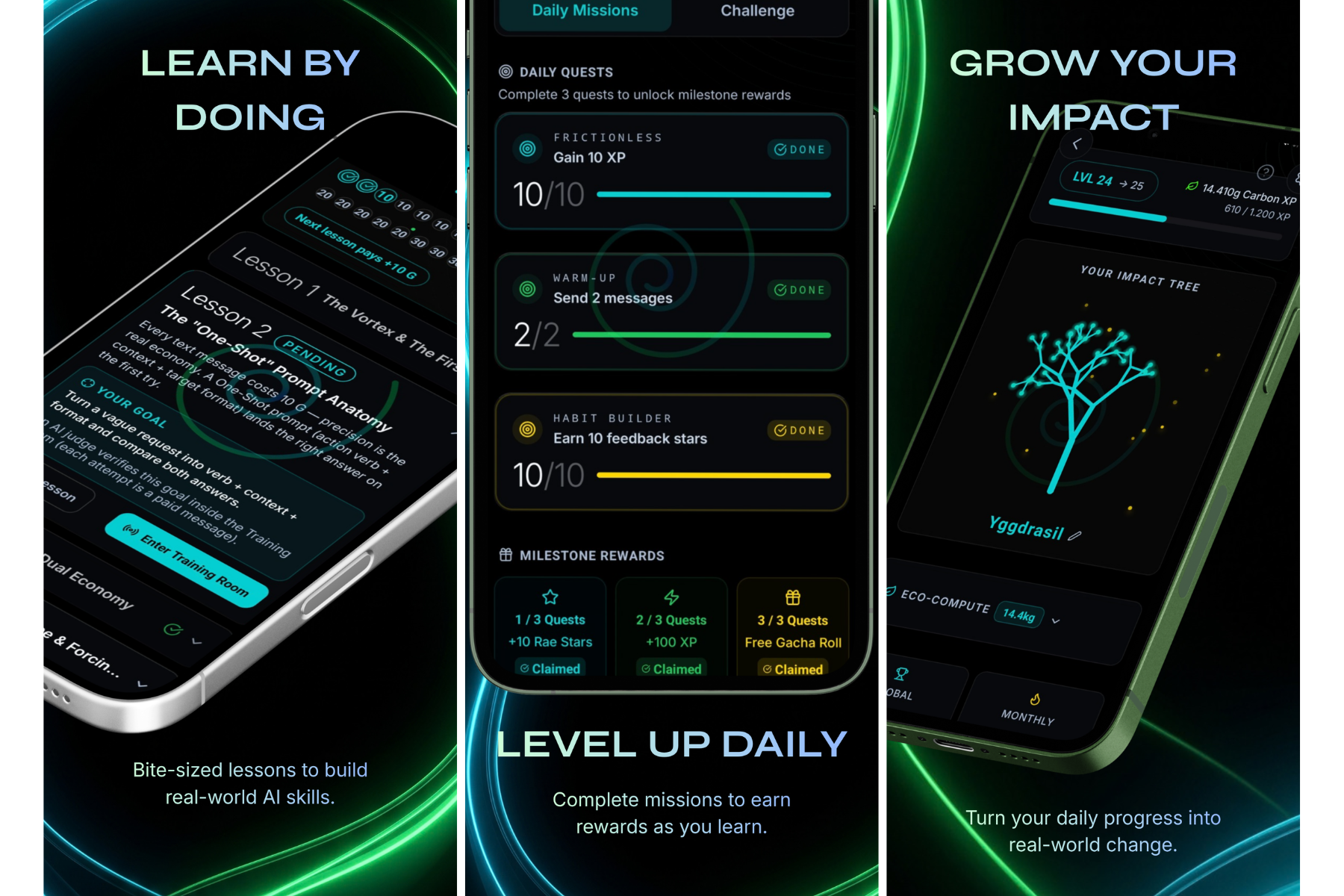
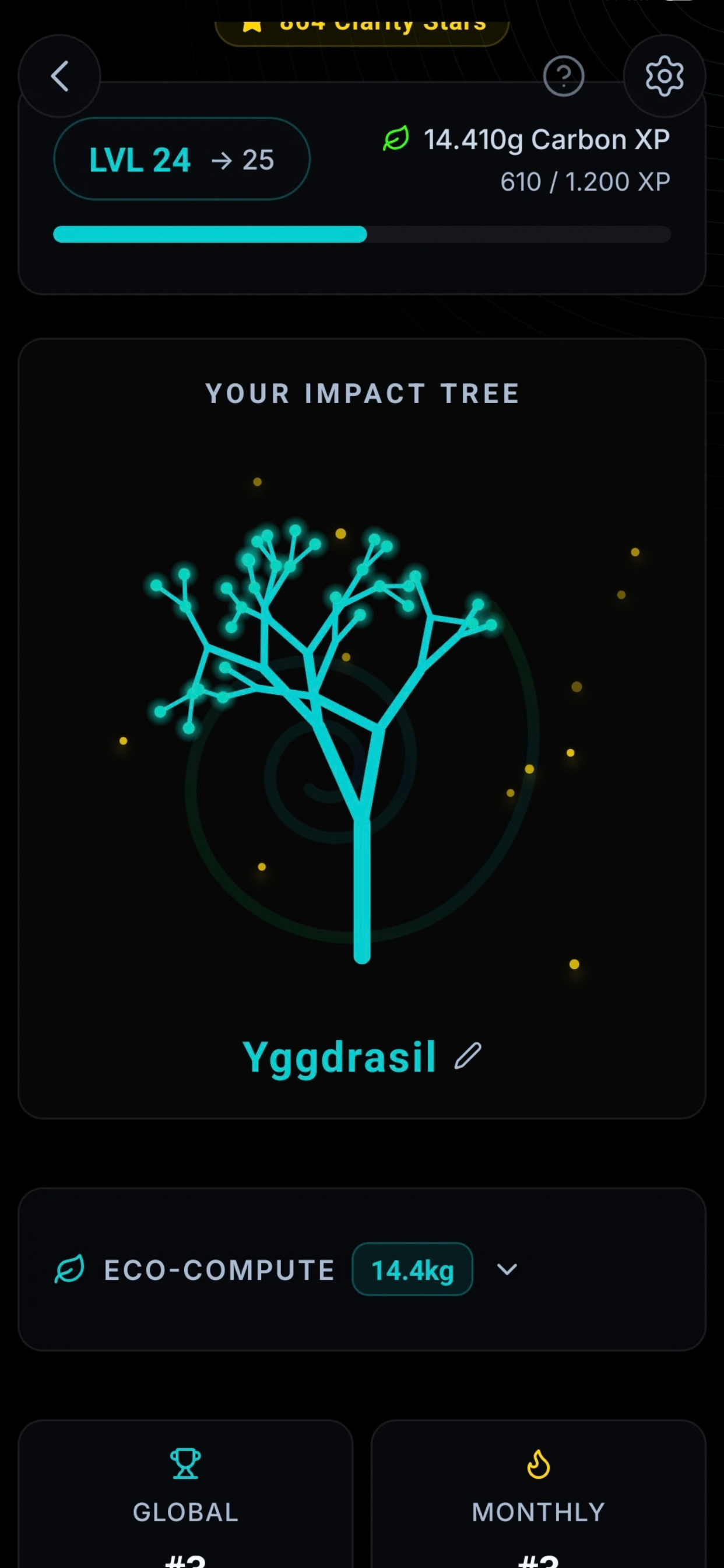
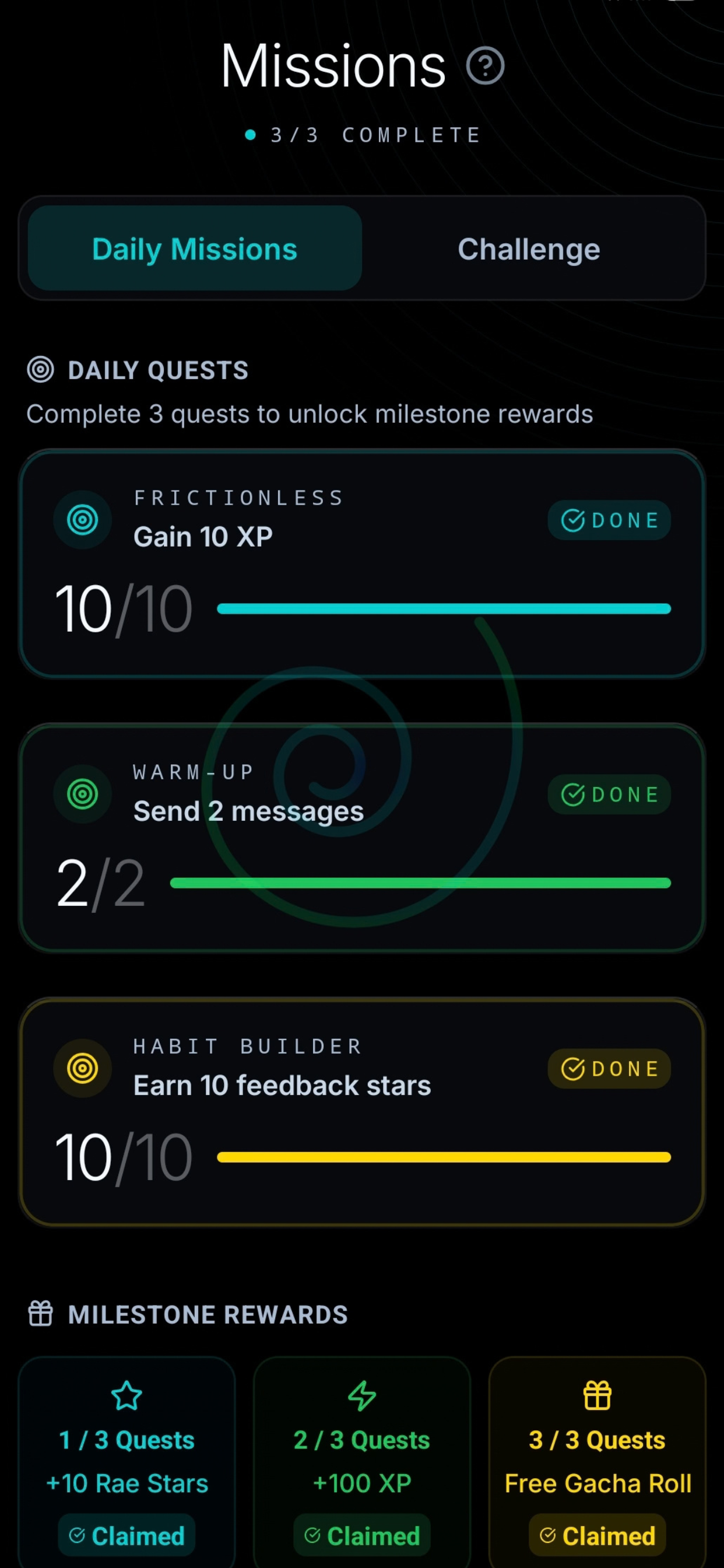
Gamified for impact. Complete daily missions to level up, and turn your digital progress into real-world carbon offsets with our Impact Tree
-
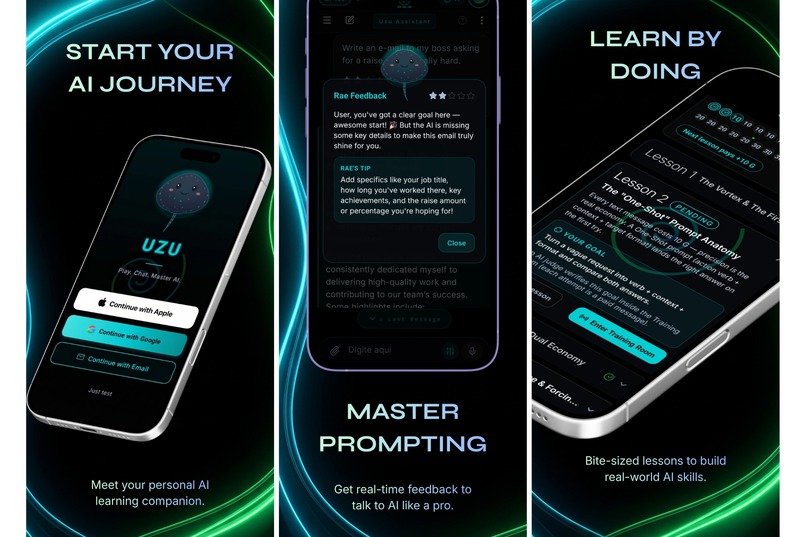
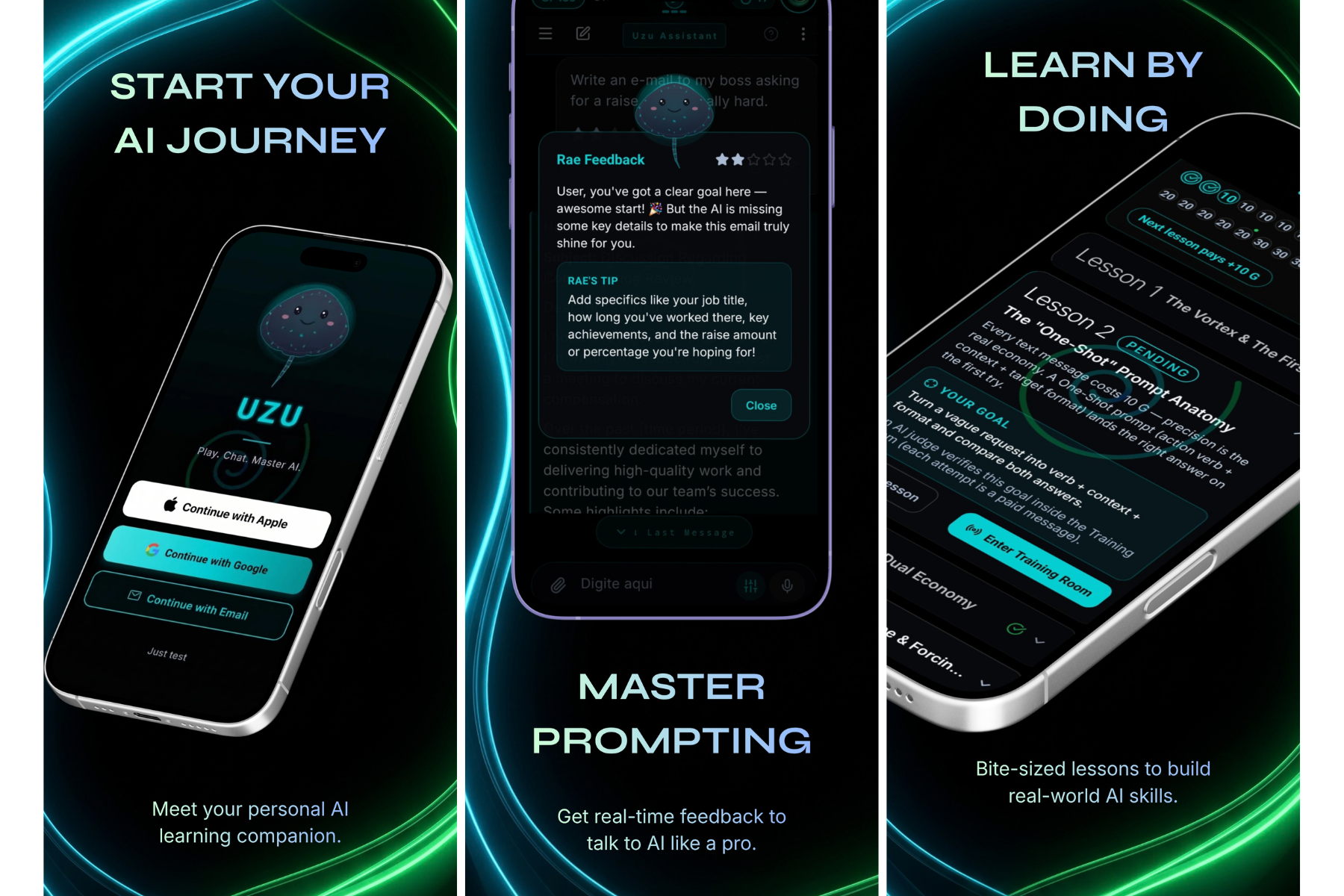
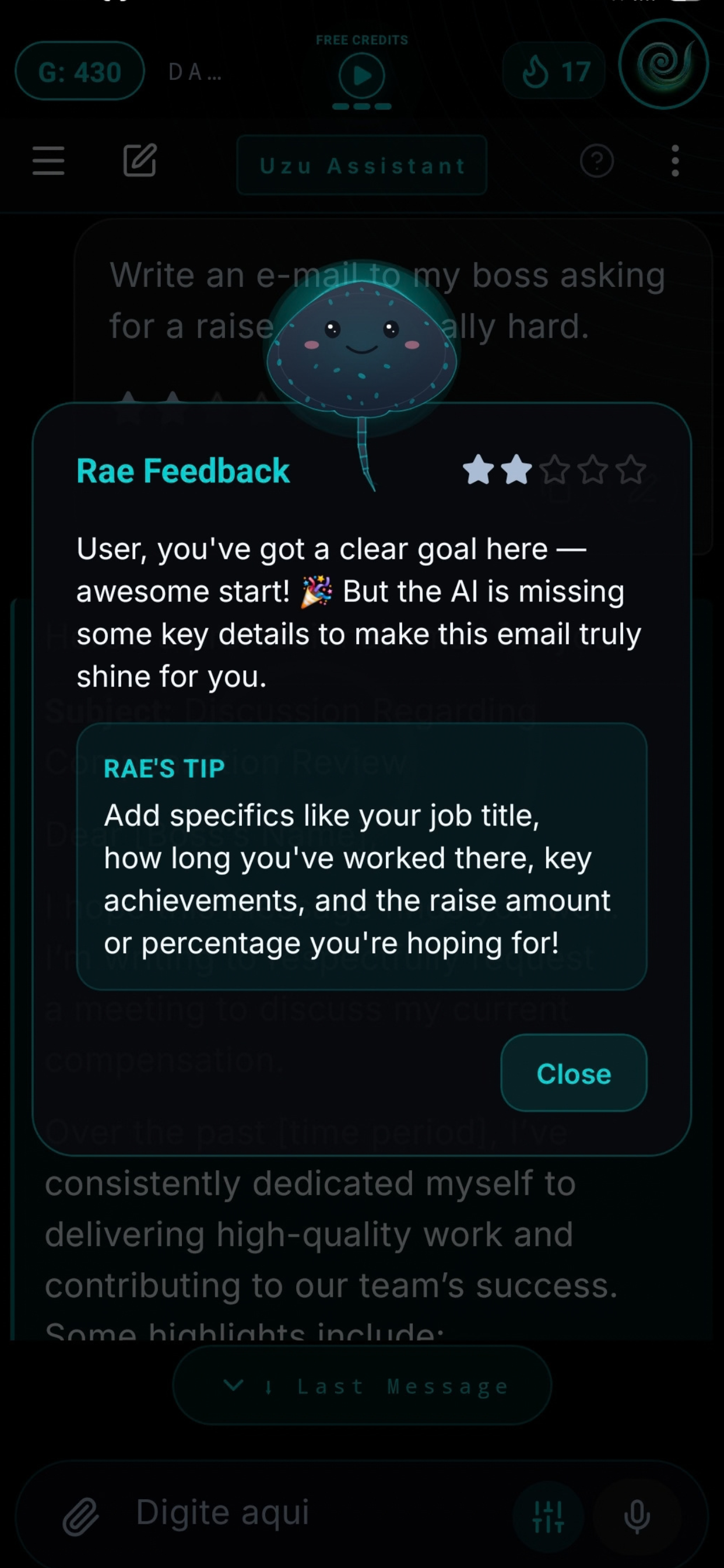
The core of Uzu: Start your journey and learn to craft perfect AI prompts with Rae, our mascot, through real-time feedback and mini-lessons
-

app icon
-

Screenshot Welcome
-
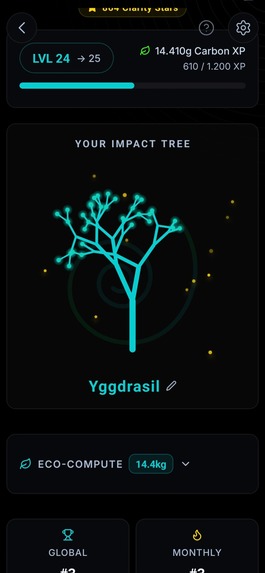
Screenshot Profile
-
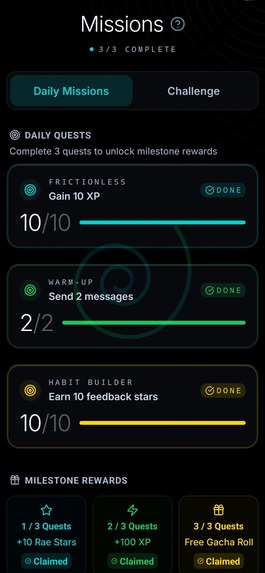
Screenshot Missions
-
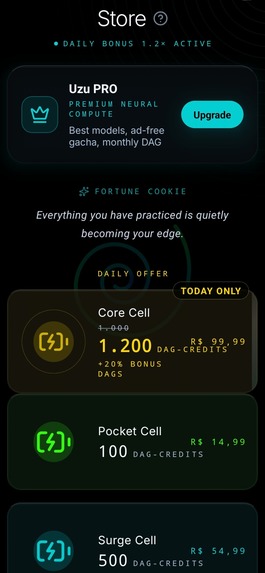
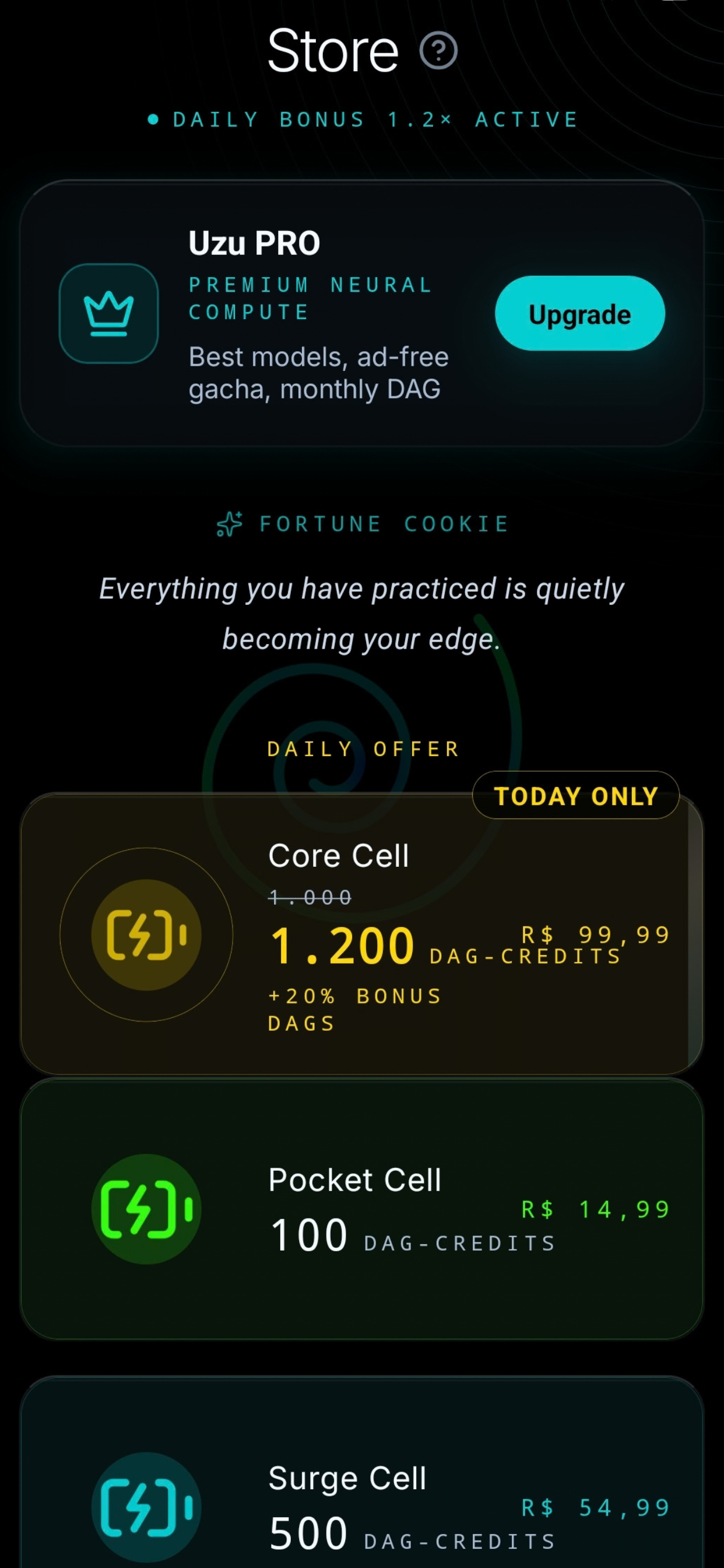
Screenshot Store
-
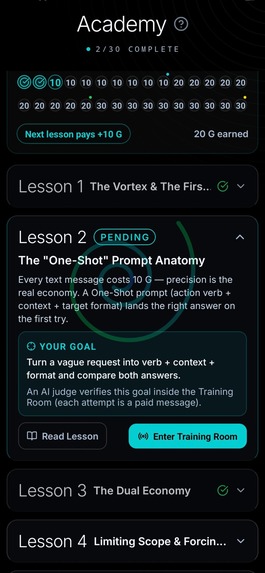
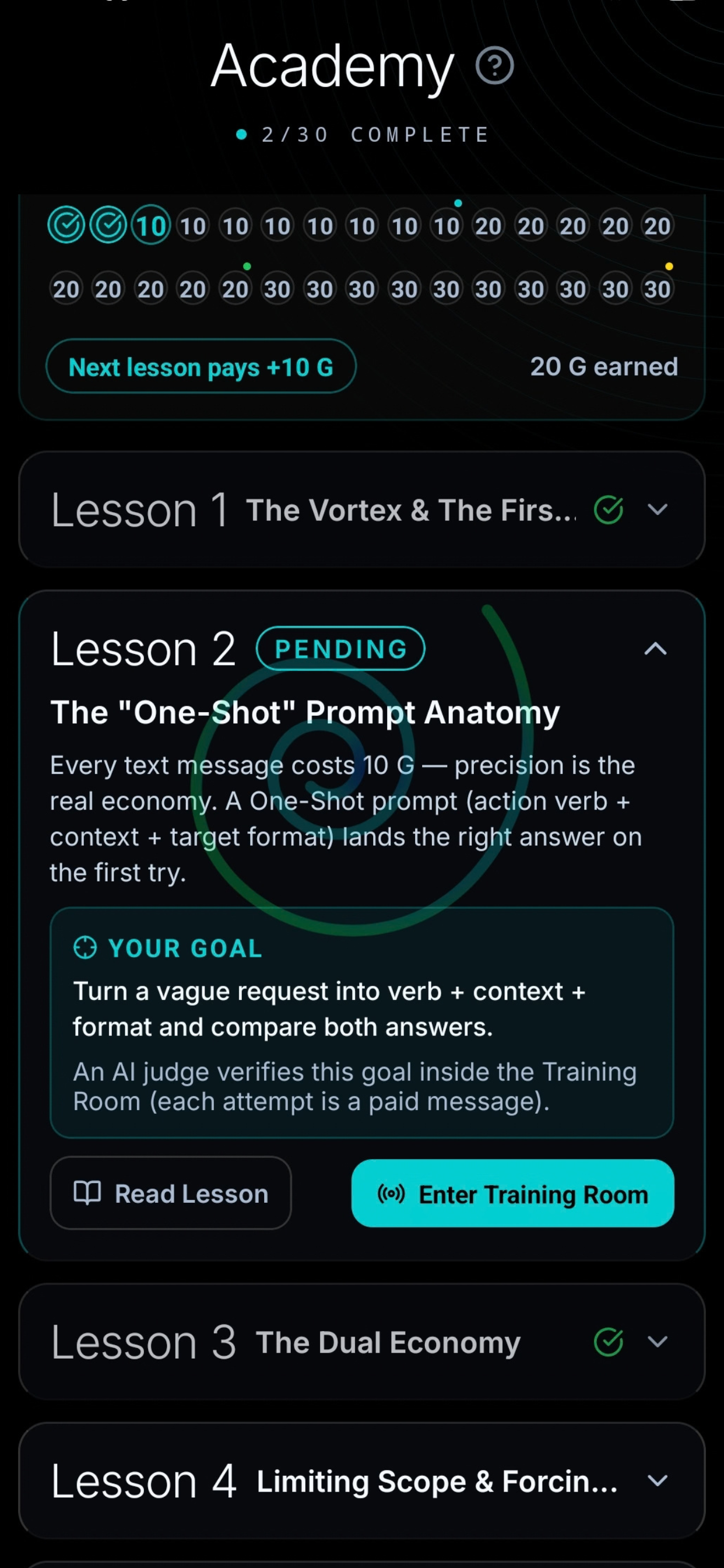
Screenshot Lessons
-
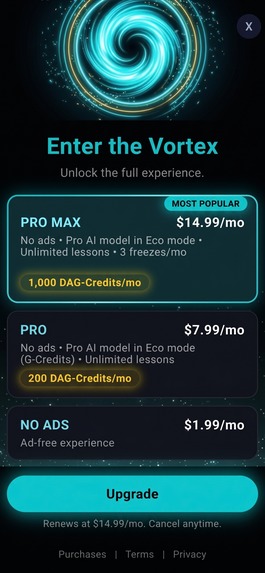
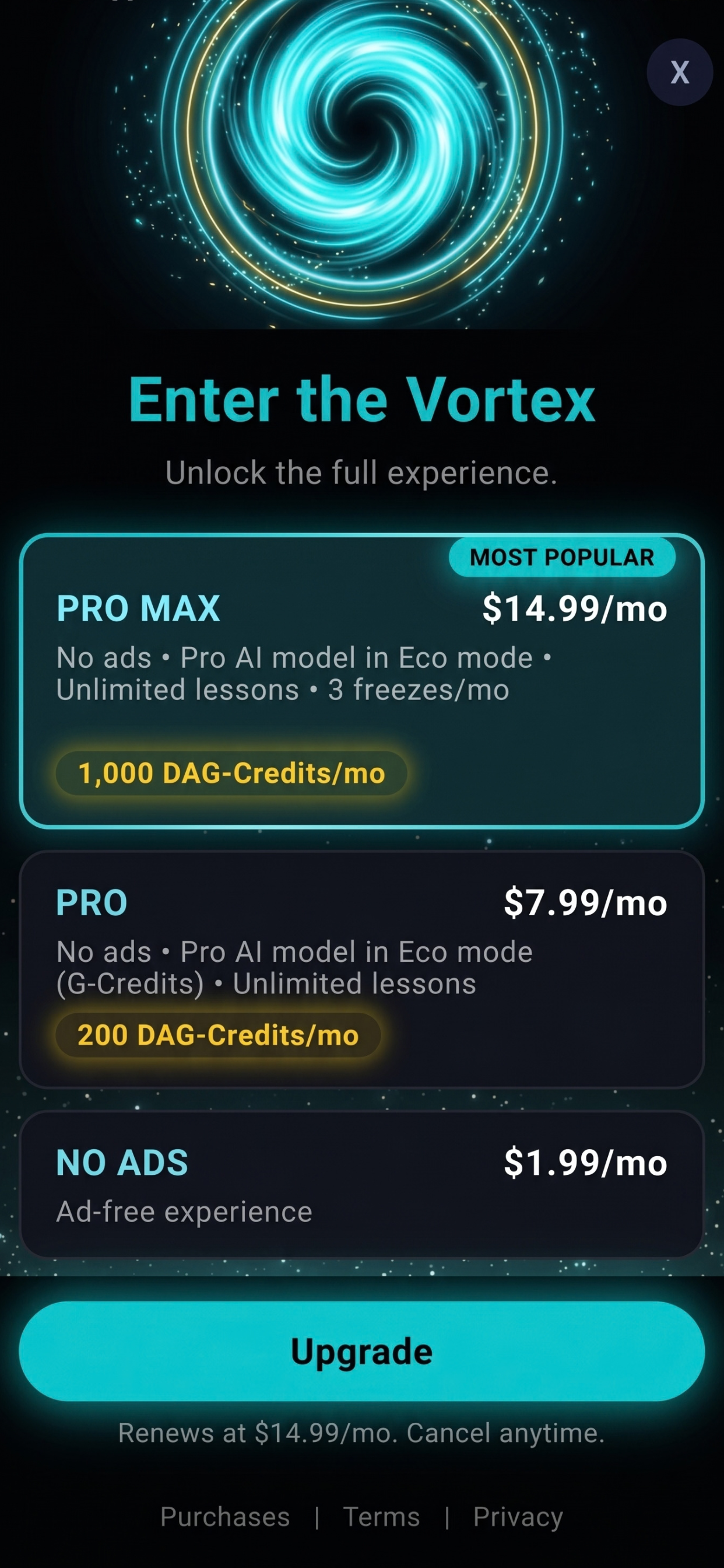
Screenshot Paywall
-
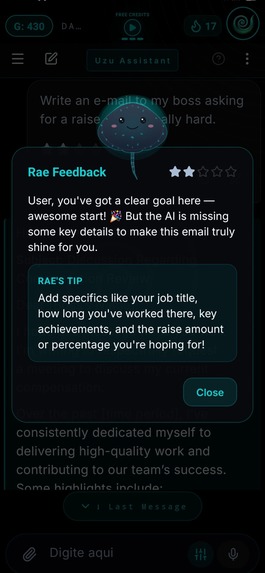
Screenshot Rae's Feeback


Inspiration
The biggest barrier in Artificial Intelligence today isn't the technology itself; it's education and accessibility. As a public servant in Macapá, in the Brazilian Amazon, I realized that the fear of job displacement and the misuse of AI can only be mitigated by learning how to use the tool.
My original goal was to build a decentralized assistant to address other critical AI barriers: the massive concentration of energy and water usage in centralized data centers, and the centralization of user data. However, when I noticed that close family members didn't know how to use AI for even the most basic tasks, I pivoted. I decided to make an educational prompt-improvement agent the core of the project, borrowing mechanics from the gaming industry to make the learning curve inviting and accessible, all while maintaining our decentralized and privacy-first ethos.
What it does
Uzu is a multimodal AI assistant that merges productivity with gamified education and environmental sustainability. When a user sends a prompt, our Amazonian stingray mascot, Rae, evaluates it, provides a score, and gives feedback on how to improve the context. Users learn by doing.
Beyond education, Uzu is a powerful privacy-focused productivity hub. It features local vector memory via SQLite, giving users total transparency and control over what the app remembers. It also includes hands-free bidirectional voice, file analysis, and a Personas Hub for specialized agents. Finally, Uzu is eco-friendly: every credit spent generates "Carbon XP," growing an Impact Tree that we convert into real-world carbon offsets, helping to mitigate the environmental footprint of AI globally.
How we built it
Balancing a full-time job, budget limitations, and a lack of proper local computing infrastructure, I built Uzu entirely in the cloud using Project IDX and the Cline extension. I acted as the architect, using an AI-assisted "vibe coding" approach powered by open-weights models via APIs.
The front-end is built with React Native and Expo. For the backend, we utilized Supabase for scalable operations. To mitigate the environmental impact of centralized data centers, we consciously chose a decentralized routing approach via OpenRouter and Chutes.ai, tapping into decentralized, open-source models. Monetization is handled via RevenueCat for PRO subscriptions and AdMob for rewarded ads, orchestrated by a custom global push notification system built on OneSignal.
Challenges we ran into
Our most significant challenge was a complete architectural pivot to ensure user privacy. Initially, the app relied entirely on a server-side architecture. To guarantee data ownership, enhance transparency, and reduce server reliance, I migrated the core memory and context systems directly to the user's device.Implementing local vector RAG (Retrieval-Augmented Generation) search using SQLite on a mobile device was incredibly complex. We had to map text embeddings and compute the cosine similarity—mathematically represented as $similarity = \cos(\theta) = \frac{\mathbf{A} \cdot \mathbf{B}}{\Vert{}\mathbf{A}\Vert{} \Vert{}\mathbf{B}\Vert{}}$—entirely on the edge. Balancing query performance, memory limits, and search accuracy without relying on powerful cloud processing tested the limits of our AI-assisted development workflow.
Accomplishments that we're proud of
Going from zero traditional coding experience to deploying a production-ready, globally scalable application under strict infrastructure and time constraints is our biggest triumph. We successfully implemented complex features like local vector memory, automated cron-driven server sweeps, and secure backend paywalls.
I am incredibly proud of designing a decentralized system that empowers users in 16 languages to improve their AI literacy. It gives anyone, anywhere in the world with a smartphone, the chance to boost their productivity—freeing up time for friends and family or opening doors to new income—while seamlessly converting digital engagement into tangible environmental action.
What we learned
The learning curve has been wild. We learned that moving complex processes to the edge requires meticulous optimization, but the payoff in user privacy is entirely worth it. More importantly, I learned that the core philosophy of Uzu—learning by doing and iterative efficiency—is exactly how the app itself was built. We also realized that decentralization is a highly practical way to build privacy-first apps and distribute resource consumption globally.
What's next for Uzu
We have an ambitious roadmap:
Automated Offsets: Integrating APIs for automated carbon offsetting to make our Carbon XP ecosystem completely seamless.
Global Community Events: Designing features where in-app credits can be pooled to fund ocean plastic removal, acting as a credit sink and driving engagement through global leaderboards.
Academy Expansion: Deep improvements to the educational section, adding more comprehensive and interactive lessons on context engineering.
On-Device Agents: Expanding our Personas Hub with intelligent agents capable of using built-in smartphone features to read, organize, and utilize local files privately, further bridging the gap between AI accessibility and real-world productivity.
Built With
- admob
- cline
- edge-functions
- expo-router
- expo.io
- github
- llm
- nativewind
- onesignal
- openrouter
- postgresql
- project-idx
- rag
- react-native
- react-native-reanimated
- revenuecat
- sql
- sqlite
- sqlite-vec
- supabase
- typescript
- zustand

Log in or sign up for Devpost to join the conversation.