-
-
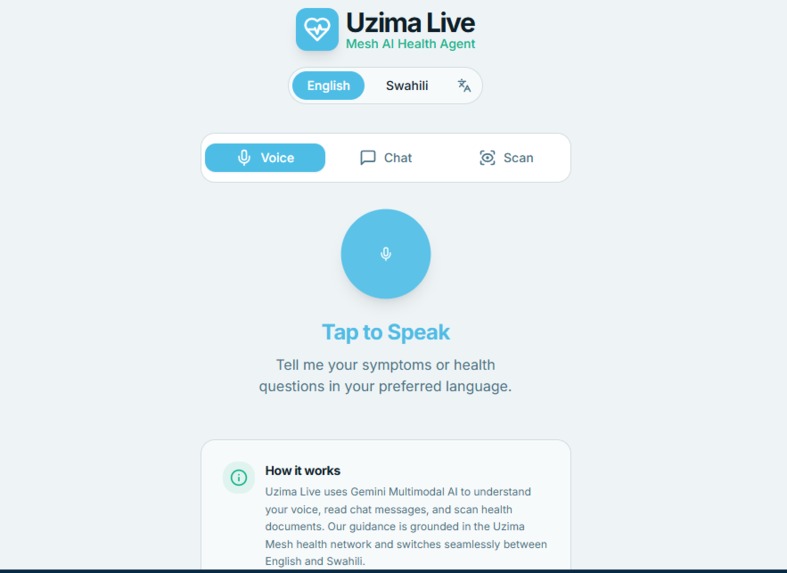
live talk
-
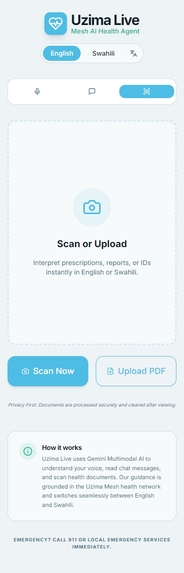
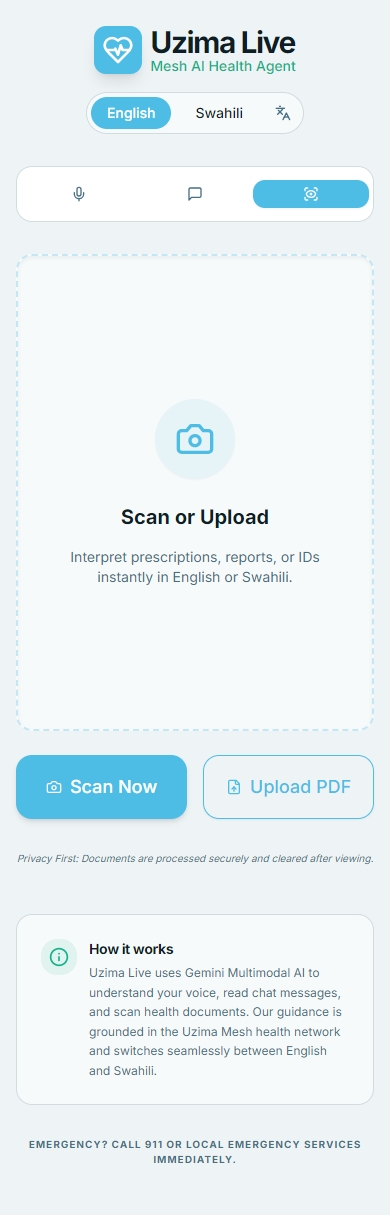
mobile view
-
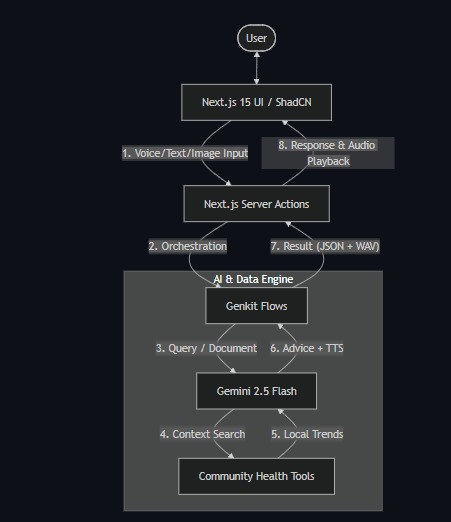
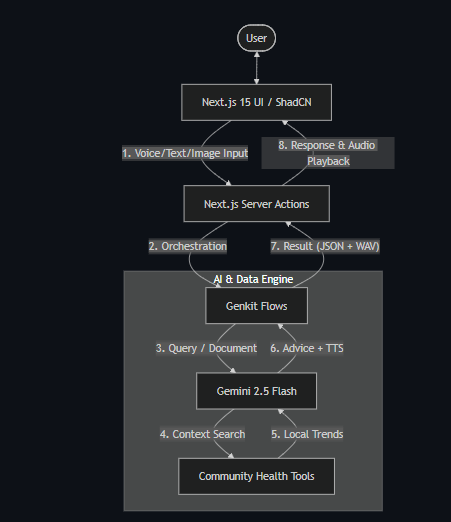
Architecture Diagram
Inspiration
In many regions across Kenya, healthcare information is often trapped behind complex digital dashboards or static physical records. While I was building Uzima Mesh—a platform designed to aggregate community health data—I realized that data alone isn't enough. For a mother in a rural clinic or a community health worker in the field, a traditional UI is a barrier. I was inspired to build Uzima Live to "break the text box," creating a companion that doesn't just store data but actually sees, hears, and speaks to the people who need it most.
What it does
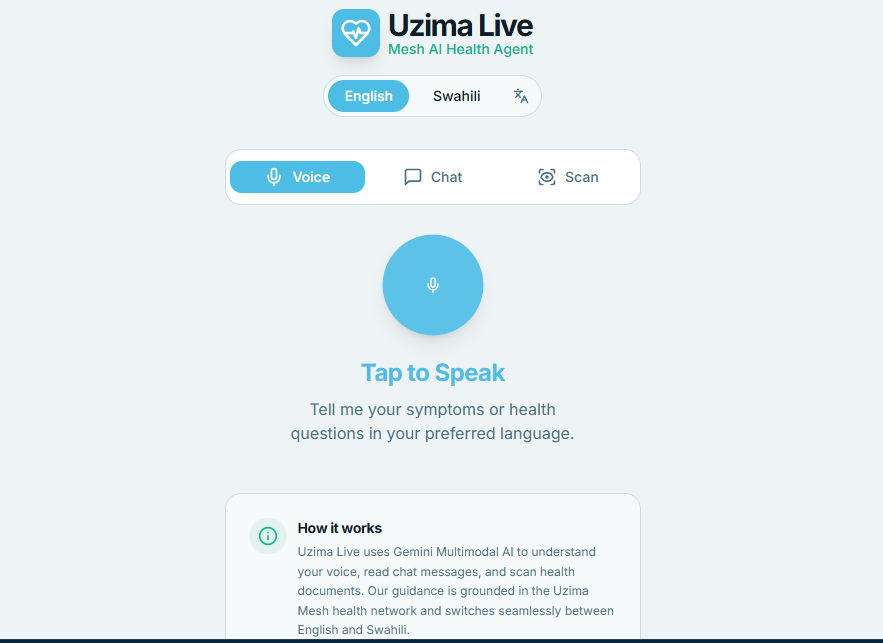
I built Uzima Live to be a real-time, multimodal AI health agent. It moves beyond simple text-in/text-out interactions by allowing users to have natural, interruptible voice conversations about their health. I’ve enabled instant bilingual support in English and Swahili and implemented Live Vision so the agent can interpret medical documents like prescriptions or lab reports via camera or PDF upload. By connecting it to my Uzima Mesh backend, I ensure the agent provides grounded advice based on localized health trends, such as regional malaria outbreaks.
How we built it
I developed this project using Firebase Studio, leveraging a cutting-edge, agentic stack:
- Framework: I used Next.js 15 (App Router) for a high-performance, responsive frontend.
- The Brain: I integrated Gemini 2.5 Flash via the Gen AI SDK to handle low-latency multimodal interaction.
- AI Orchestration: I utilized Firebase Genkit to manage structured AI flows and secure tool calling.
- The Data: I used Firebase Data Connect to link the agent to a Cloud SQL for PostgreSQL database for community health insights.
- Speech: I implemented Gemini 2.5 Flash TTS for high-quality, empathetic audio synthesis.
- Deployment: I automated the entire process via Firebase App Hosting, running natively on Google Cloud infrastructure.
Challenges we ran into
My primary challenge was orchestrating real-time multimodal streams within a web environment. Transitioning to Next.js 15 and Genkit required me to dive deep into stateful AI flows to ensure the voice agent could handle "barge-ins" (interruptions) gracefully. I also had to optimize my GraphQL queries via Data Connect to ensure that "grounding" the AI in community data didn't add latency to the live conversation.
Accomplishments that we're proud of
I successfully built a truly multimodal experience where a user can show the agent a document and discuss it via voice simultaneously. I am particularly proud of the Privacy-First vision architecture I designed, which interprets sensitive medical data in real-time but purges it from client memory immediately after use, ensuring patient confidentiality in community settings.
What we learned
I learned that in healthcare, empathy is a technical requirement. Through prompt engineering with Genkit, I discovered how to balance clinical accuracy with a supportive, culturally aware tone. I also gained significant experience in Infrastructure as Code (IaC) by automating my entire deployment pipeline from GitHub to Google Cloud using Firebase App Hosting.
What's next for Uzima Live
I plan to expand Live Vision to support real-time interpretation of diagnostic rapid-test kits (e.g., Malaria or Strep). I also intend to deepen the integration with localized "Mesh" data to provide predictive health alerts. Ultimately, I want Uzima Live to be the primary, voice-first health navigator for every household in the region.
Built With
- node.js
- tailwind(css)
- typescript

Log in or sign up for Devpost to join the conversation.