-
-
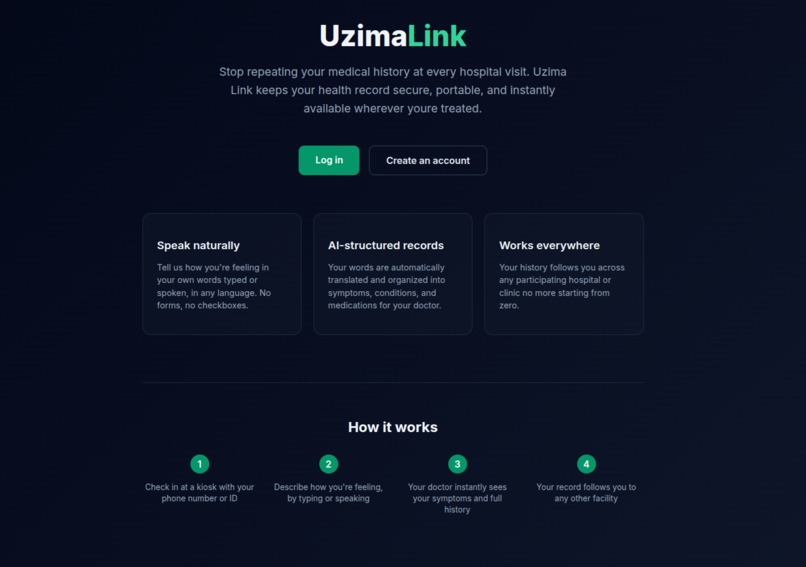
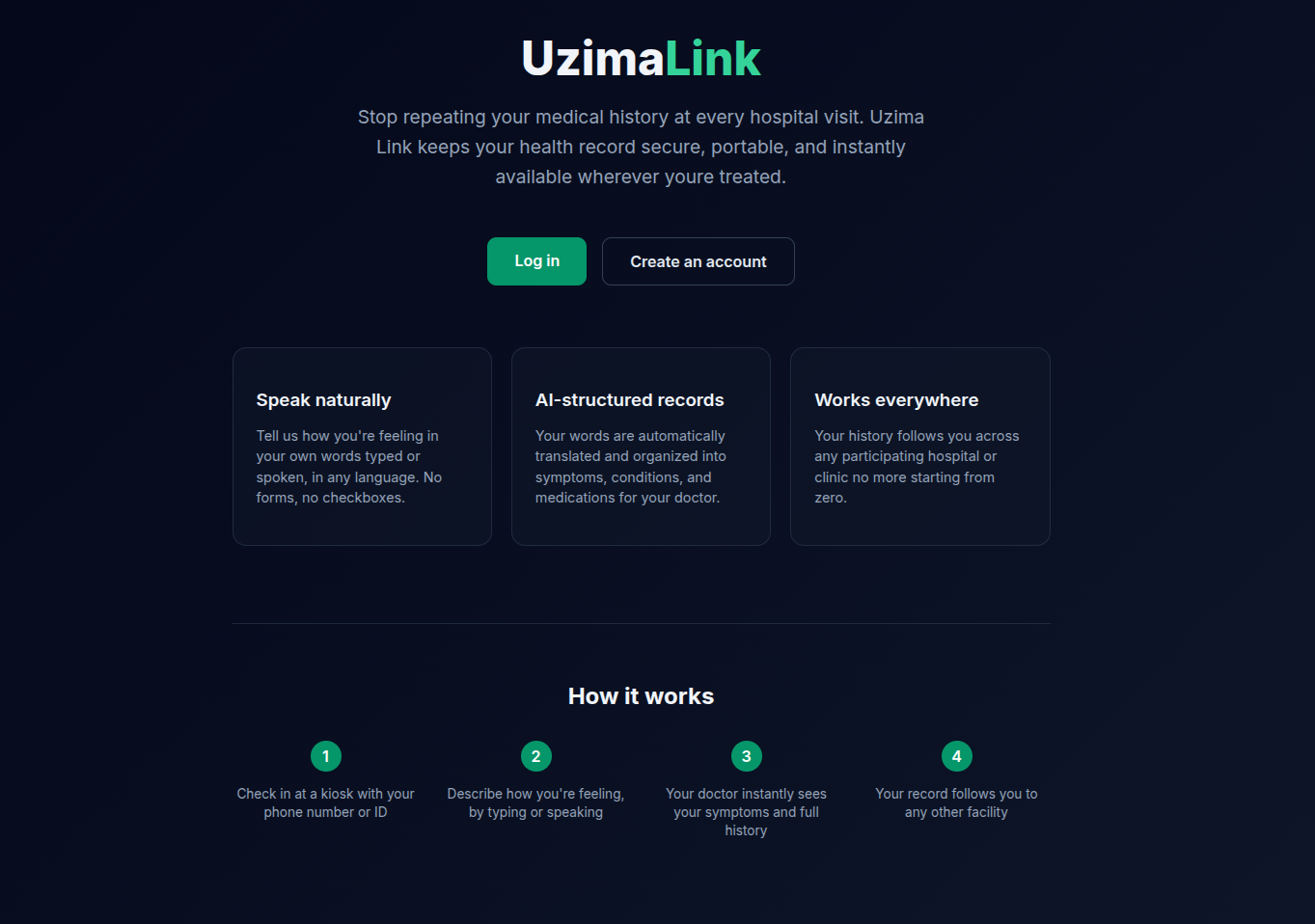
Uzima Link Landing Page
-
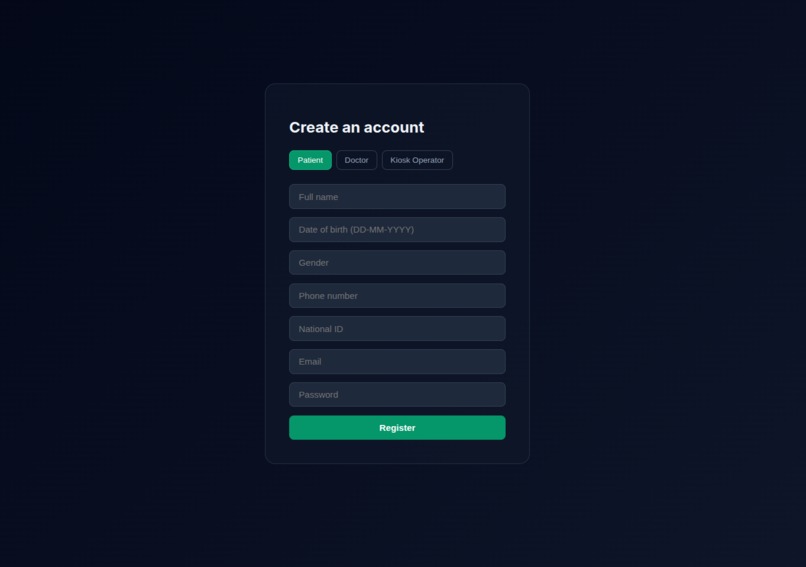
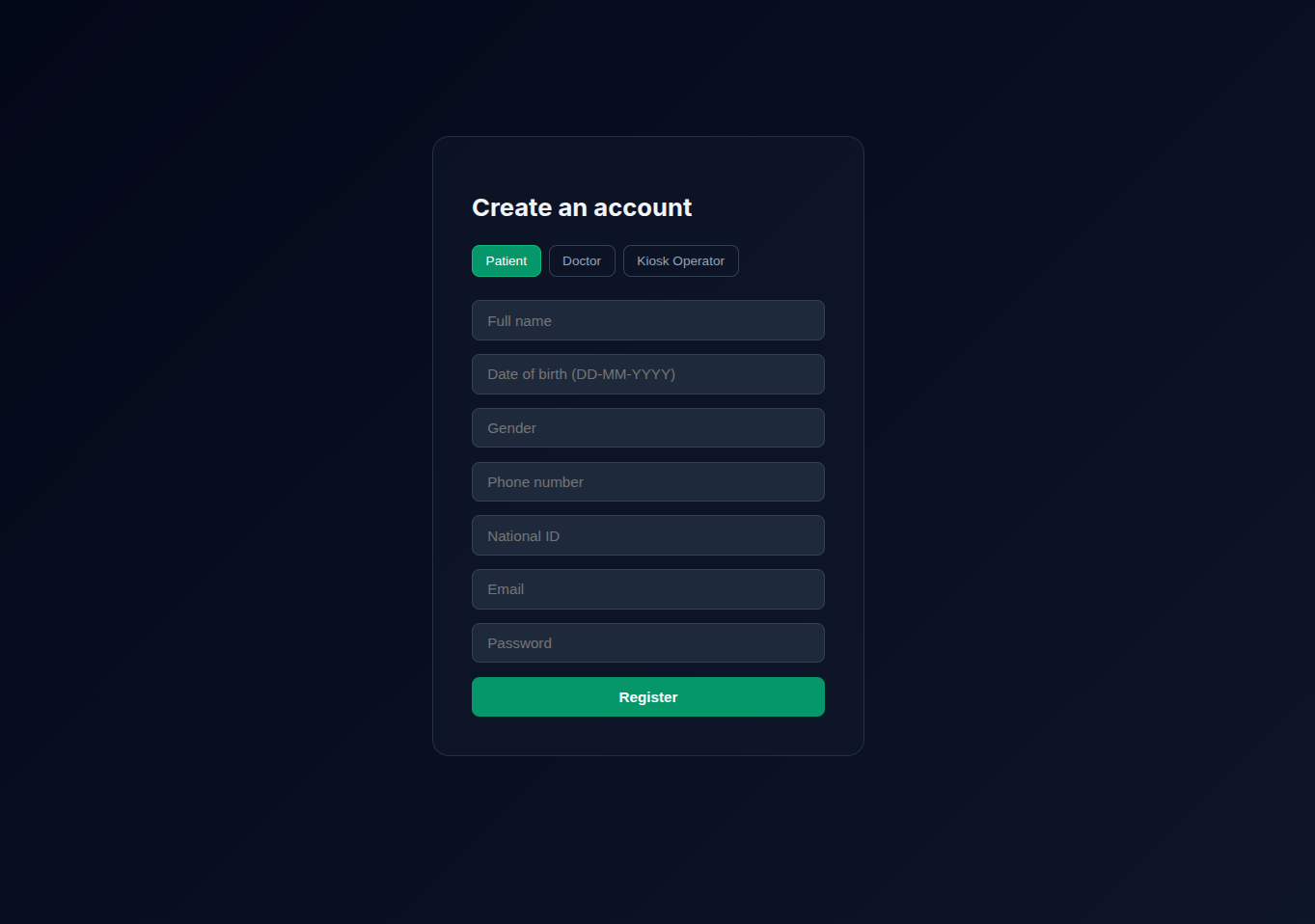
Uzima Link Onboarding Page
-
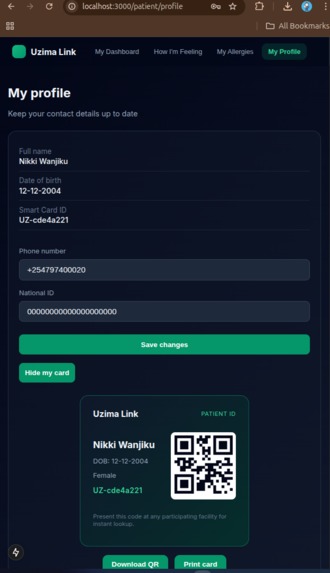
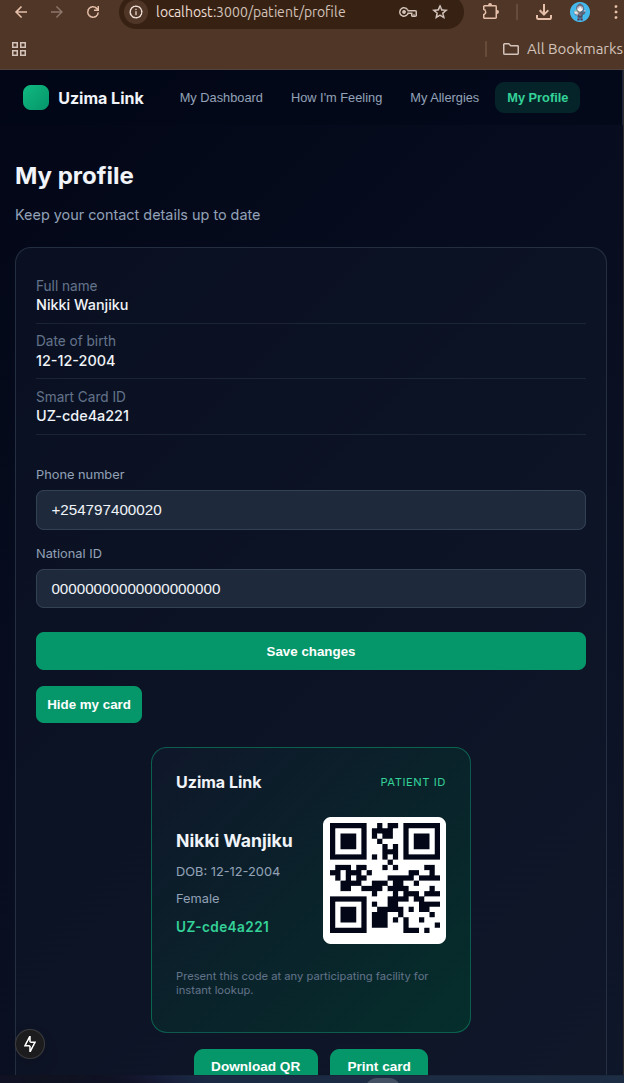
Uzima Link Patient Interface
-
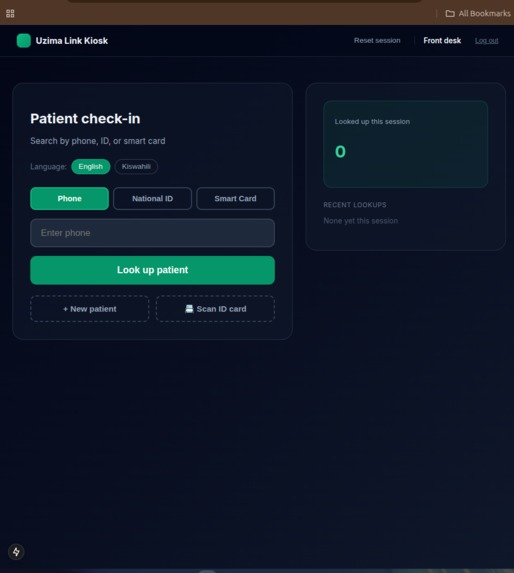
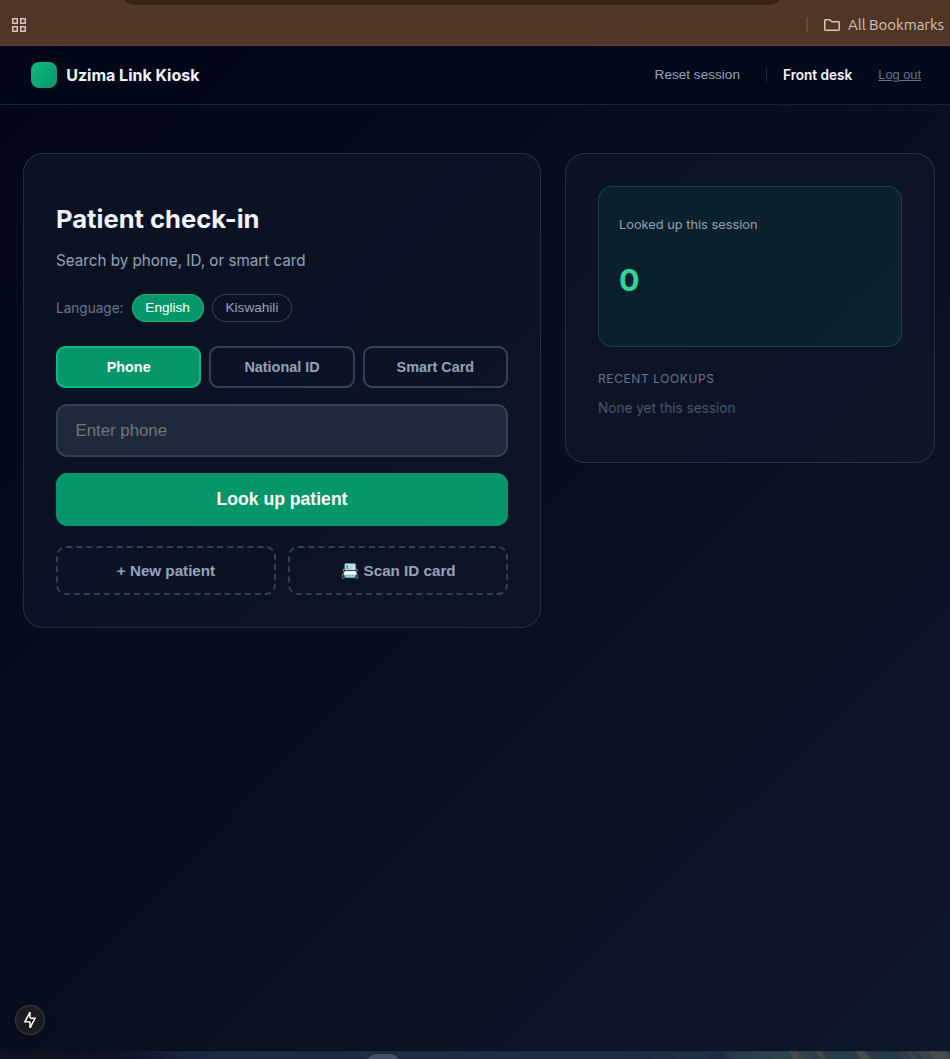
Uzima Link Frontdesk Operator
-
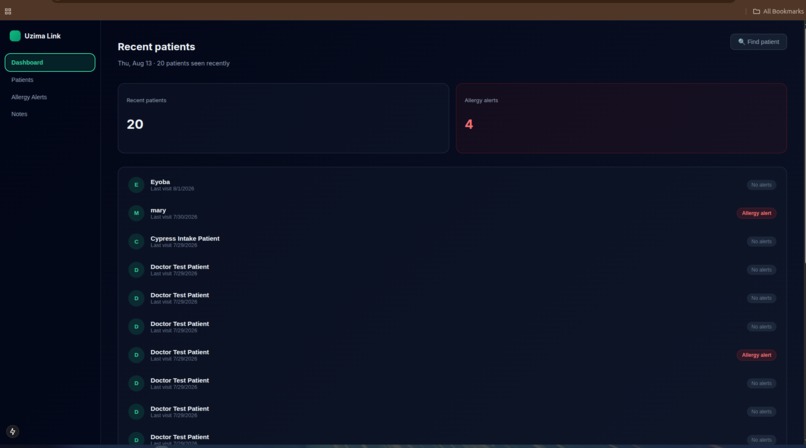
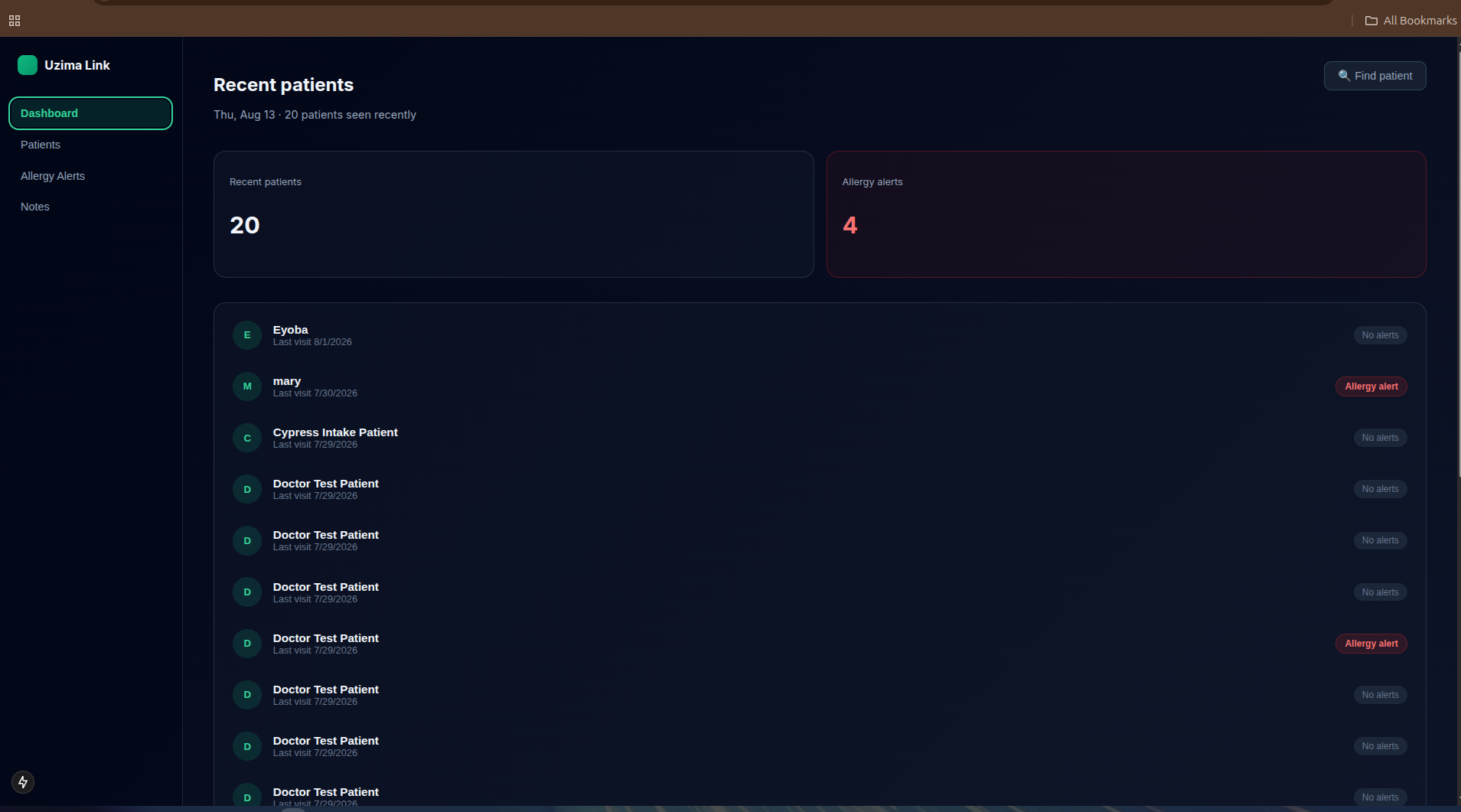
Uzima Link Doctor Interface
Inspiration
The idea for Uzima Link came from watching how disconnected healthcare really is on the ground in Kenya. A patient walks into a hospital, gets treated, and that record often dies there trapped in a paper file or a system that doesn't talk to any other facility. What struck me most was the language gap underneath it all: nurses and clinical officers think and speak in Swahili, but every digital health record system assumes they'll document in English. That mismatch is where care breaks down not because staff don't care, but because the tools were never built for how they actually work. I wanted to build something that met health workers where they already are, instead of asking them to change how they communicate in order to be recorded at all.
What it does
Uzima Link is a multilingual, AI-powered digital health records platform. A health worker documents a patient interaction in Swahili or English spoken or typed and the system automatically transcribes, translates, and extracts structured clinical data: diagnoses, medications, allergies, and history. That structured record becomes portable across visits and facilities, accessed through role-based authentication for doctors, nurses, admins, and patients, so continuity of care doesn't depend on a patient physically carrying their own paper trail from hospital to hospital.
How we built it
We built Uzima Link, end-to-end. The backend runs on FastAPI with a PostgreSQL database for structured, queryable clinical records, and the frontend is built in Next.js for a fast, accessible interface usable in low-bandwidth clinical settings. The core of the system is an AI pipeline that handles transcription, translation, and clinical entity extraction from natural conversation, turning unstructured speech into structured medical data automatically. Role-based JWT authentication controls access across four distinct user roles, so sensitive patient data is only visible to the people who need it. The system was backed with a over 500-test suite to validate reliability across the transcription-to-record pipeline before submitting.
Challenges we ran into
Building with a small team meant every layer backend architecture, AI pipeline design, frontend, testing, and the actual healthcare domain research fell on a few people and a tight timeline. The hardest technical challenge was getting clinical entity extraction to work reliably across two languages without losing critical medical meaning in translation a mistranslated allergy or dosage isn't a minor bug, it's a patient safety issue, so accuracy had to be treated as non-negotiable, not a nice-to-have. We also had to design the system to work for real clinical workflows we don't personally live inside, which meant grounding every design decision in how documentation actually breaks down at the point of care, not just building what looked good on paper.
Accomplishments that we're proud of
I'm proud that Uzima Link isn't just a UI wrapped around a form it's a working pipeline that actually removes the translation burden from health workers instead of digitizing the same broken workflow. Shipping a tested, functioning product built by few individuals, end-to-end, backend to AI pipeline to frontend inside a very tight timeline is something I'm genuinely proud of.
What we learned
Building Uzima Link taught us that the biggest barriers to health tech adoption in underserved markets usually aren't feature gaps they're friction at the exact moment of care. We also learned to design for the nurse mid-shift, not the administrator reviewing a dashboard later, because that's where documentation actually succeeds or fails. We also learned a lot about the real complexity of multilingual clinical NLP medical language doesn't translate cleanly, and building for safety meant being conservative and deliberate about where AI could be trusted versus where human review still matters.
What's next for Uzima Link
The next phase is expanding Uzima Link beyond records into care access itself. Having a digital health record solves continuity but patients still hit a wall when they show up at a hospital and the care or medication they need isn't available there. The next layer we're building maps patients to the nearest hospitals actually equipped to treat their specific condition, based on real facility capability data, not guesswork. Alongside that, we're building a pharmacy mapping layer because right now, patients who can't find a prescribed medication at one pharmacy are left manually going door to door searching for it. Uzima Link will help surface the nearest pharmacies that actually stock the medication a patient needs, turning a stressful, time-costly search into a guided one. Together, these features move Uzima Link from being just a records platform to being the layer that actually connects patients to the right care, at the right place, the first time.
Built With
- ai
- css
- fastapi
- gemini
- git
- github
- javascript
- jwt
- natural-language-processing
- next.js
- postgresql
- postman
- python
- react
- rest
- speech-to-text
- sqlalchemy
- tailwind
- typescript
- uvicorn


Log in or sign up for Devpost to join the conversation.