UXAudit was inspired by a simple problem: when building a new digital product, UX issues are often discovered only after development has already started. I wanted to create a tool that could help identify potential UX problems earlier, starting with something as simple as a product idea. The goal was to make early-stage UX analysis more structured and accessible for students, designers, developers, and founders.
I built UXAudit as an interactive web application using React, TypeScript, Vite, and Tailwind CSS.
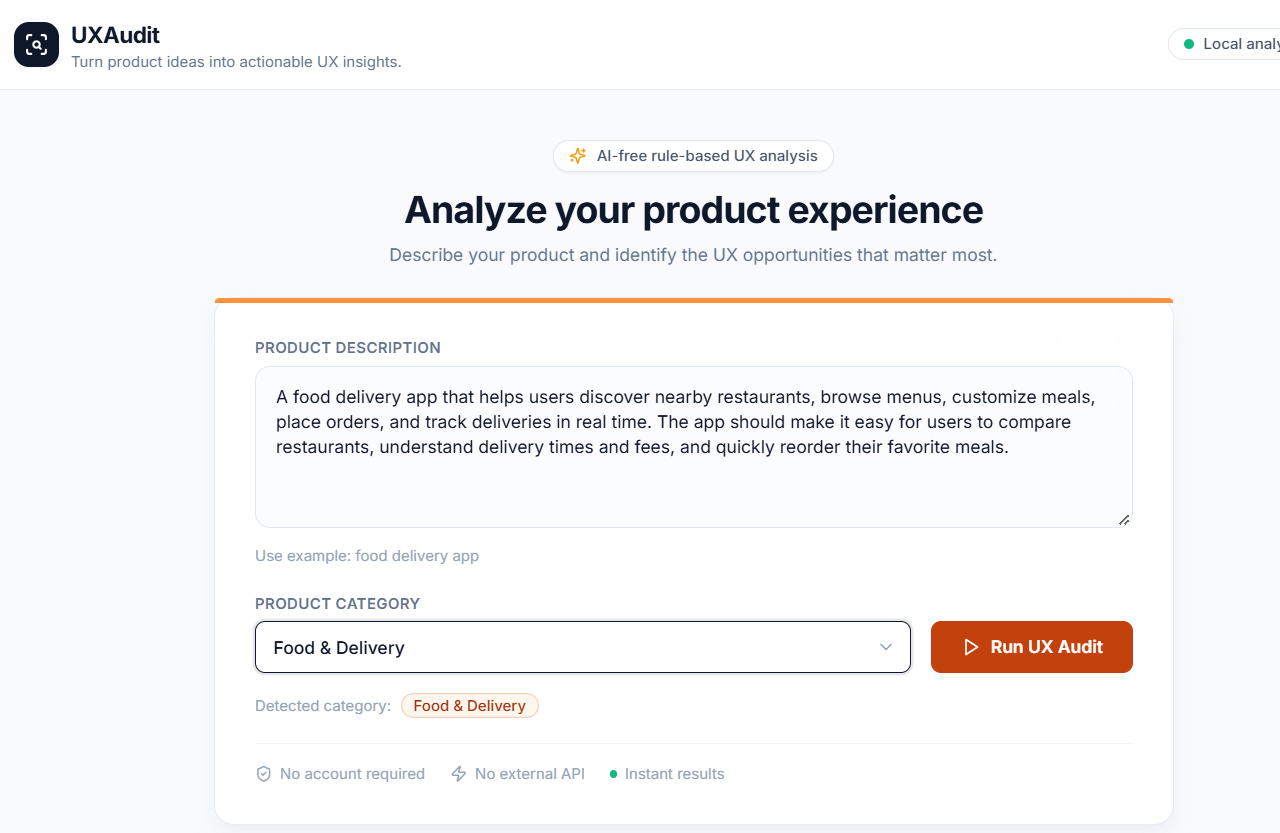
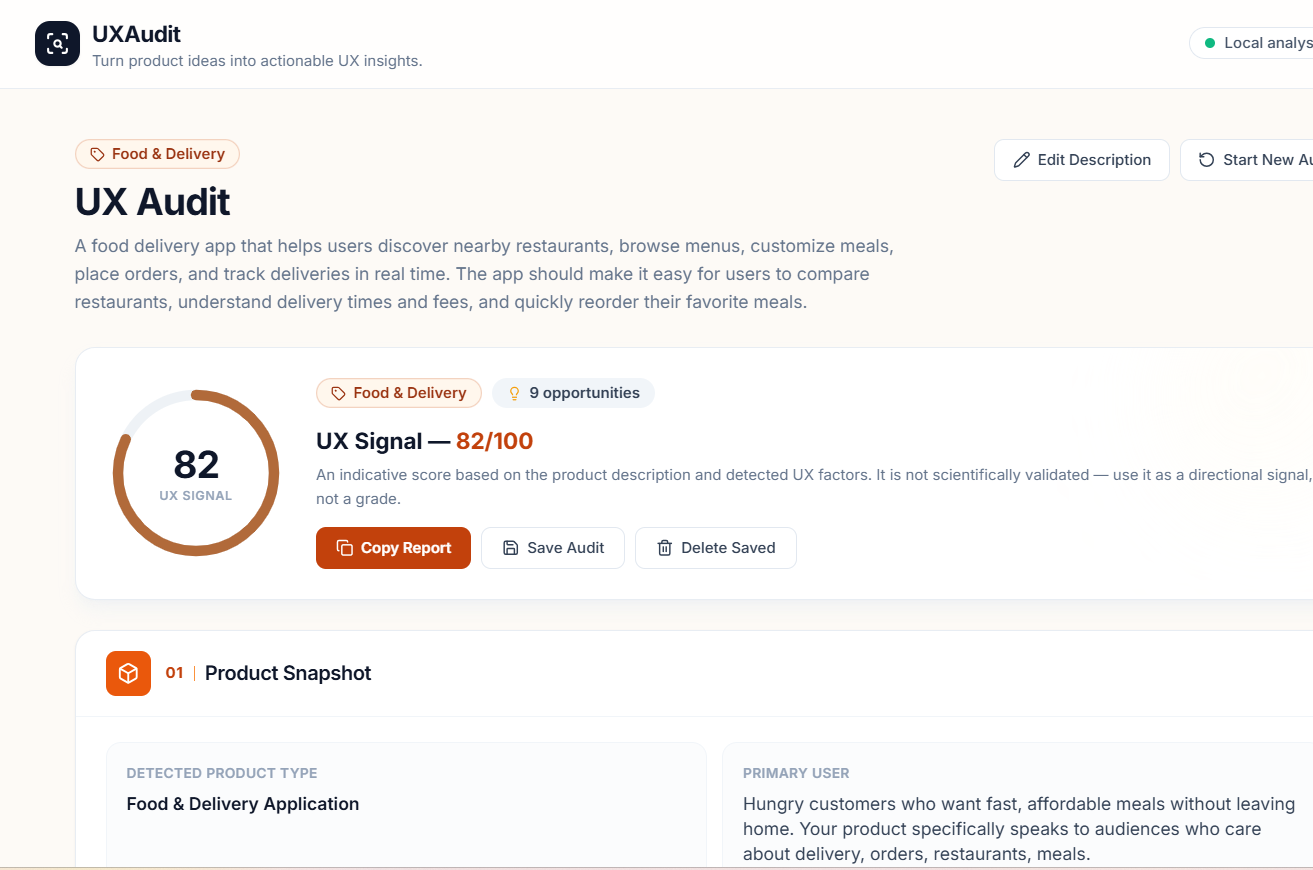
Users enter a product idea and select a product category. UXAudit then processes the description through a local rule-based analysis engine and generates a structured UX audit.
The analysis includes:
- UX Signal
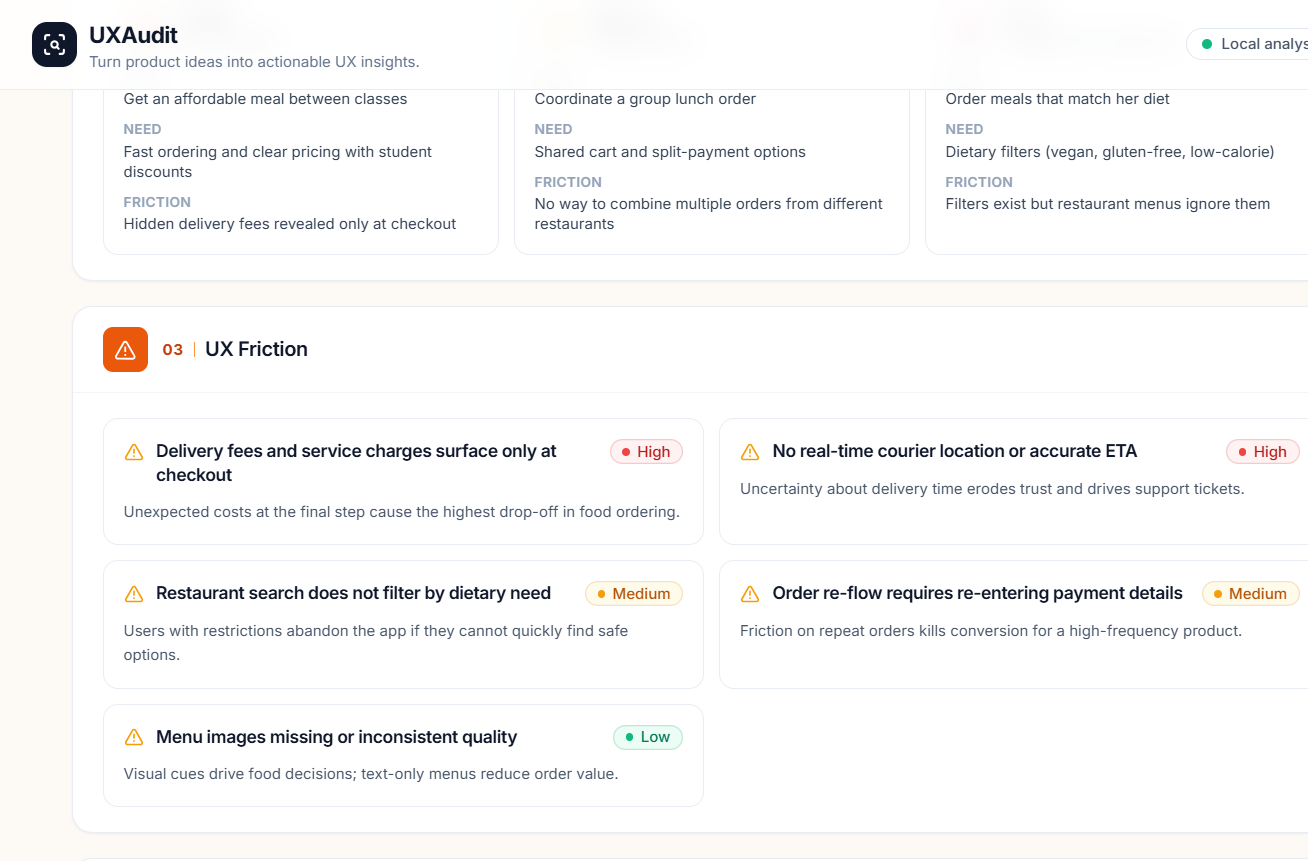
- UX Analytics
- User Personas
- UX Friction
- User Journey Analysis
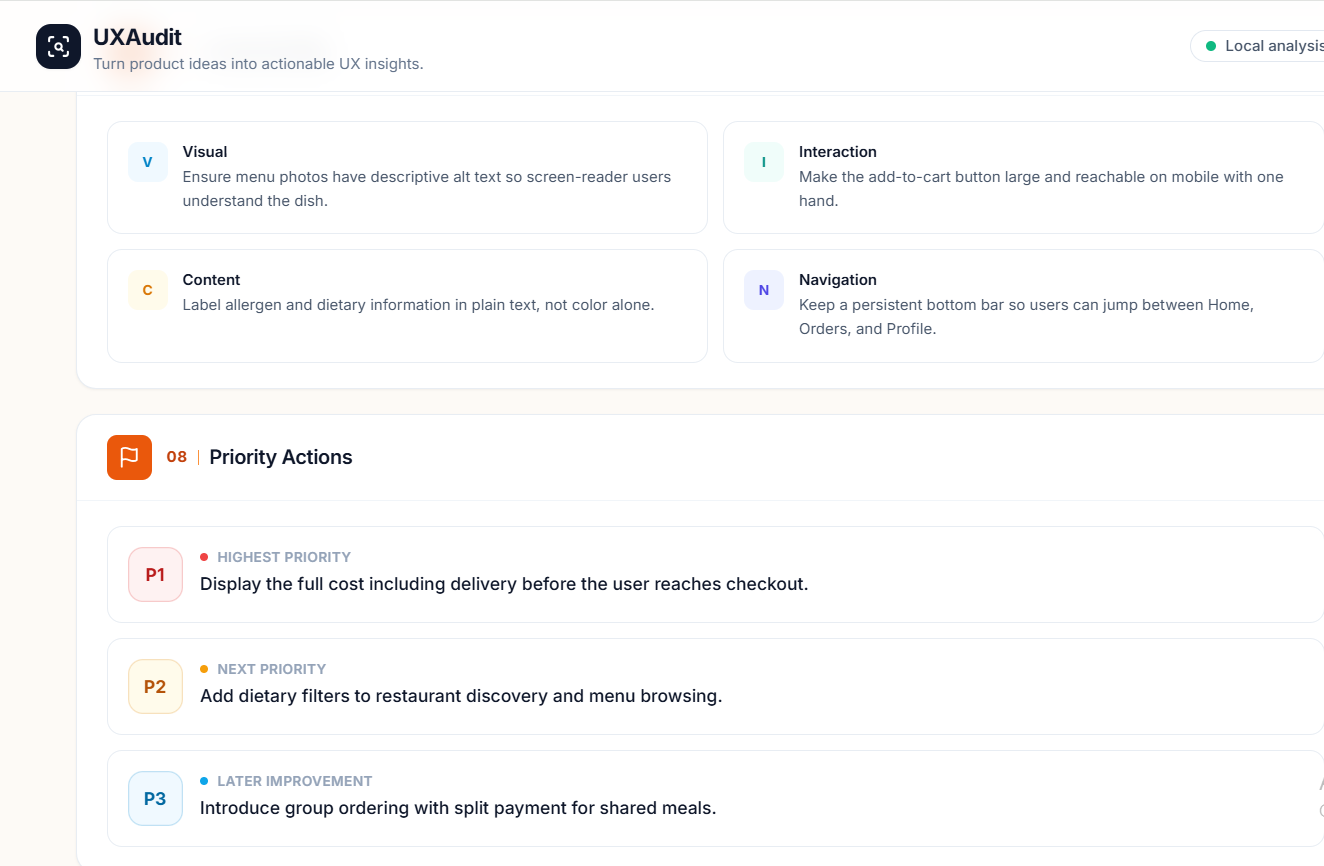
- UX Opportunities
- Suggested Screens
- Accessibility Considerations
- Priority Actions
The analysis adapts to different categories, including Food & Delivery, Fitness & Health, Education, E-commerce, Finance, Travel, Social, and Productivity. The interface also changes its visual theme based on the selected category. I chose a local rule-based approach so the application could work without relying on an external AI API or API keys Building UXAudit taught me how to translate UX concepts into structured software logic. I learned how different product categories can require different UX considerations and how to organize those considerations into a clear analysis flow. I also learned that presenting information effectively is an important part of UX itself. Instead of returning one long list of recommendations, I separated the results into focused sections that help users move from identifying potential problems to understanding opportunities and prioritizing actions.
One of the biggest challenges was creating meaningful variation between product categories without using a generative AI API. I needed the analysis to feel relevant to the product being evaluated rather than producing the same generic recommendations every time.
Another challenge was deciding how much information to display. UX analysis can become overwhelming quickly, so I focused on organizing the results into clear sections and highlighting actionable findings.
UXAudit is a lightweight UX analysis tool that turns a product idea into a structured starting point for UX decision-making.
The project is open source and was built as a student project to explore the intersection of software development, UX analysis, and product thinking.

Log in or sign up for Devpost to join the conversation.