-
-
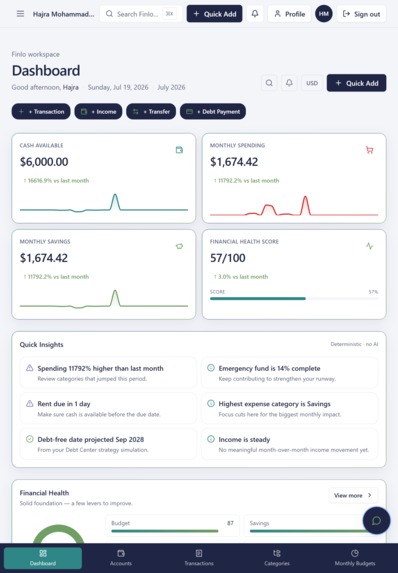
Review cash, spending, savings, financial health, and key insights anywhere with the mobile dashboard.
-
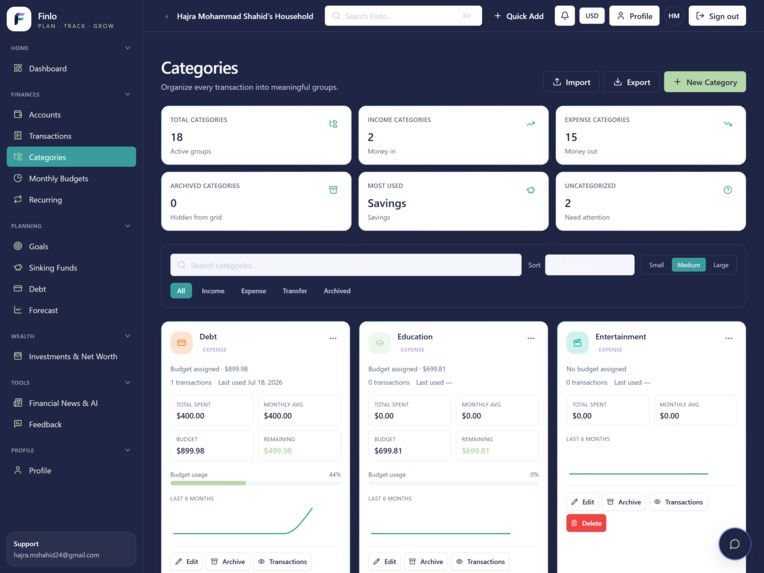
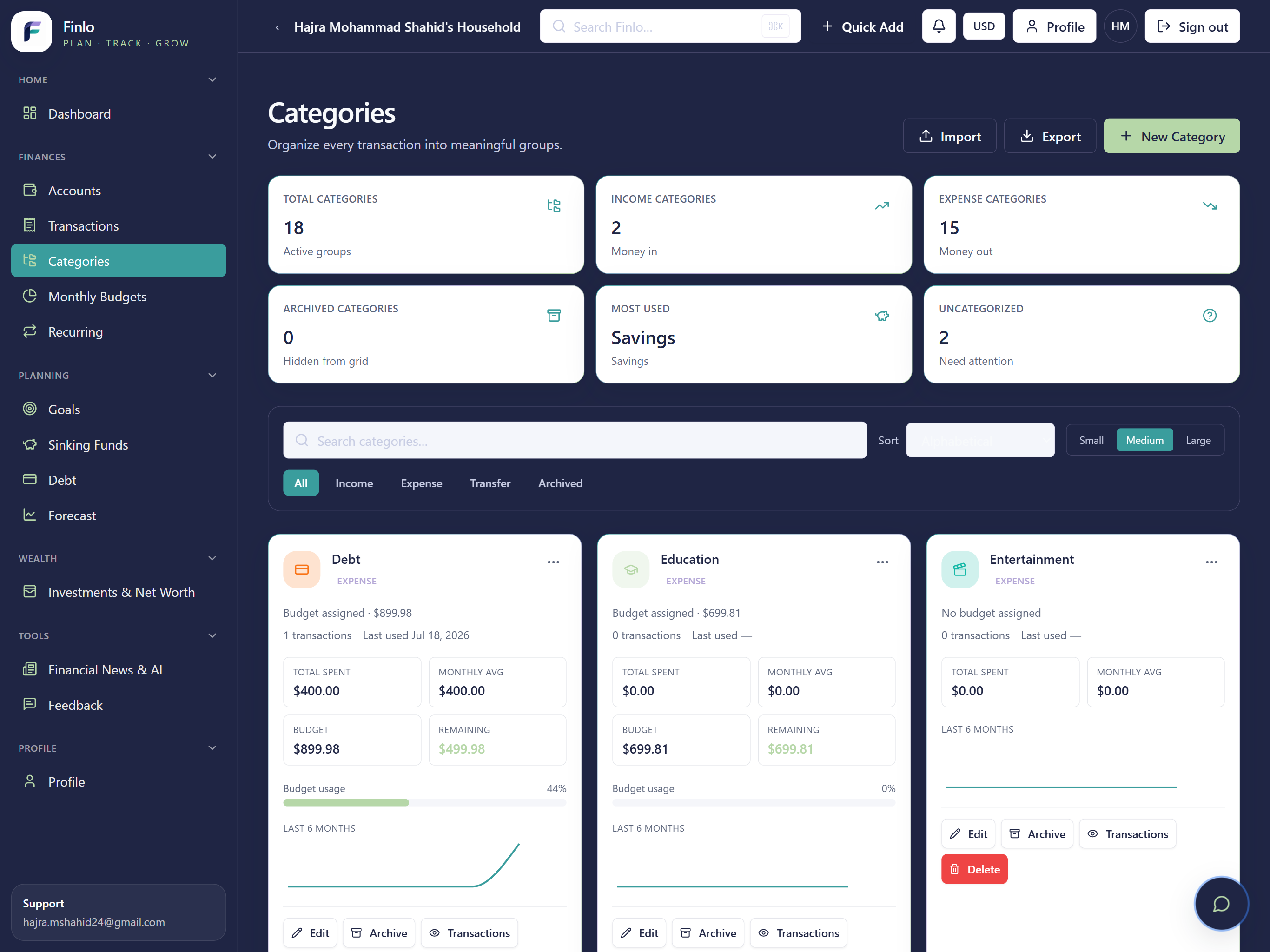
Organize categories with budgets, spending insights, progress tracking, and quick actions in a clean card layout.
-
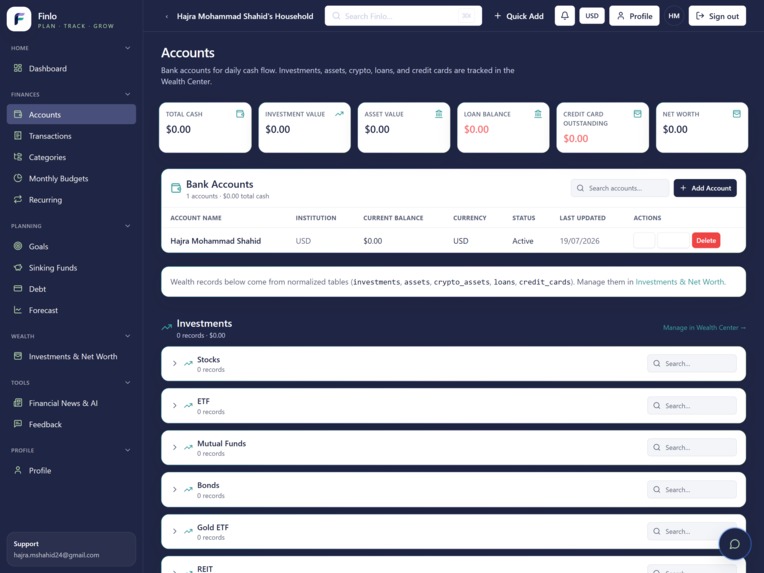
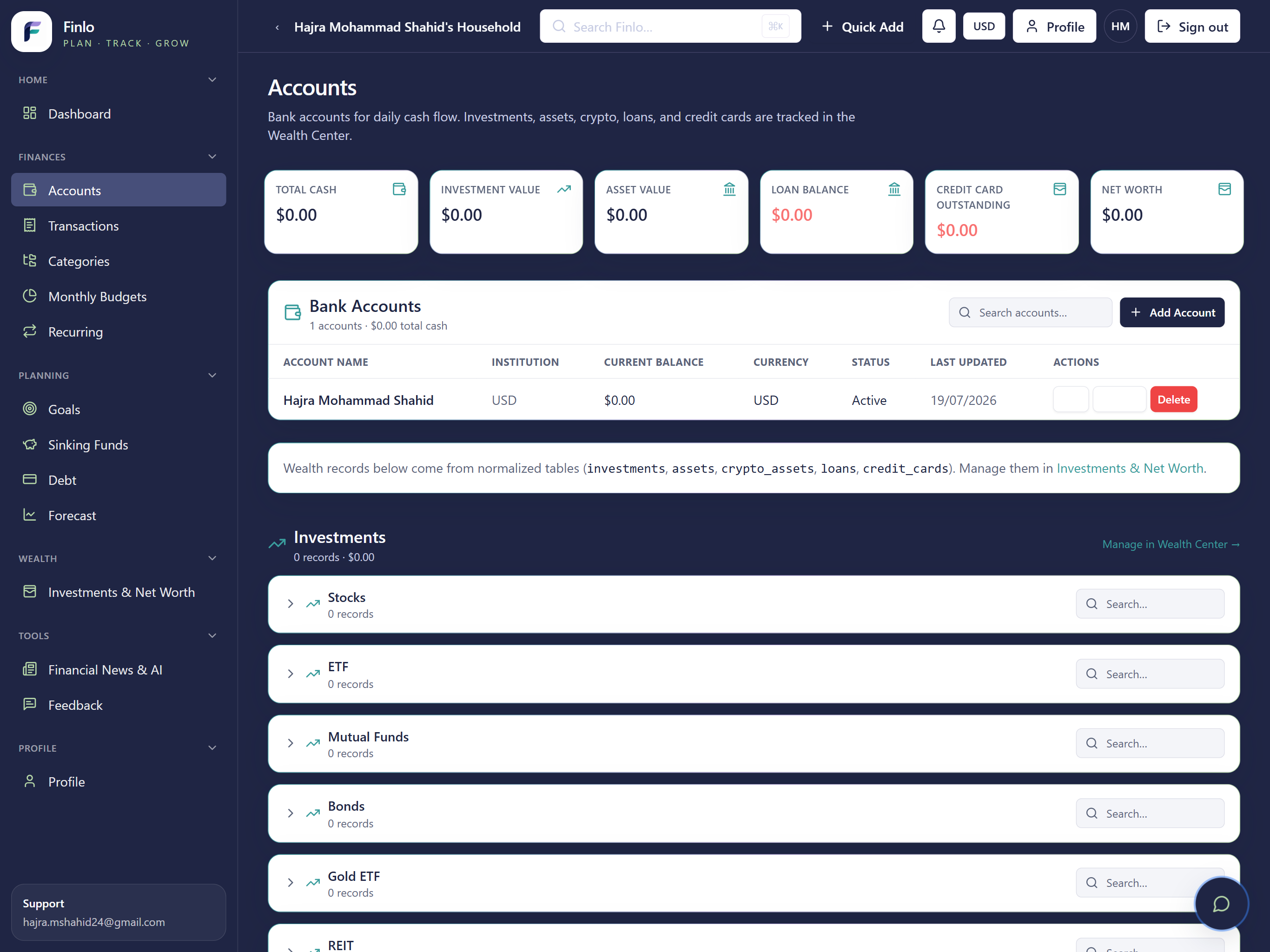
Manage bank accounts, investments, and net worth in one place with live balances and portfolio insights.
-
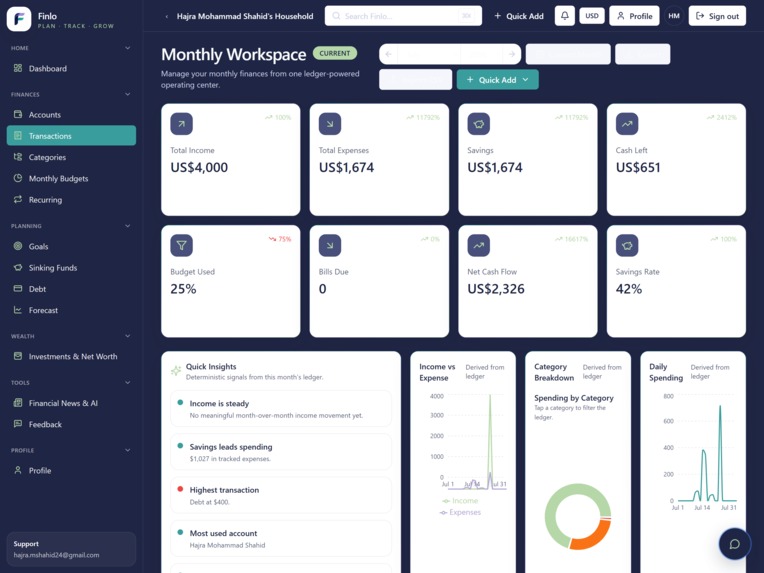
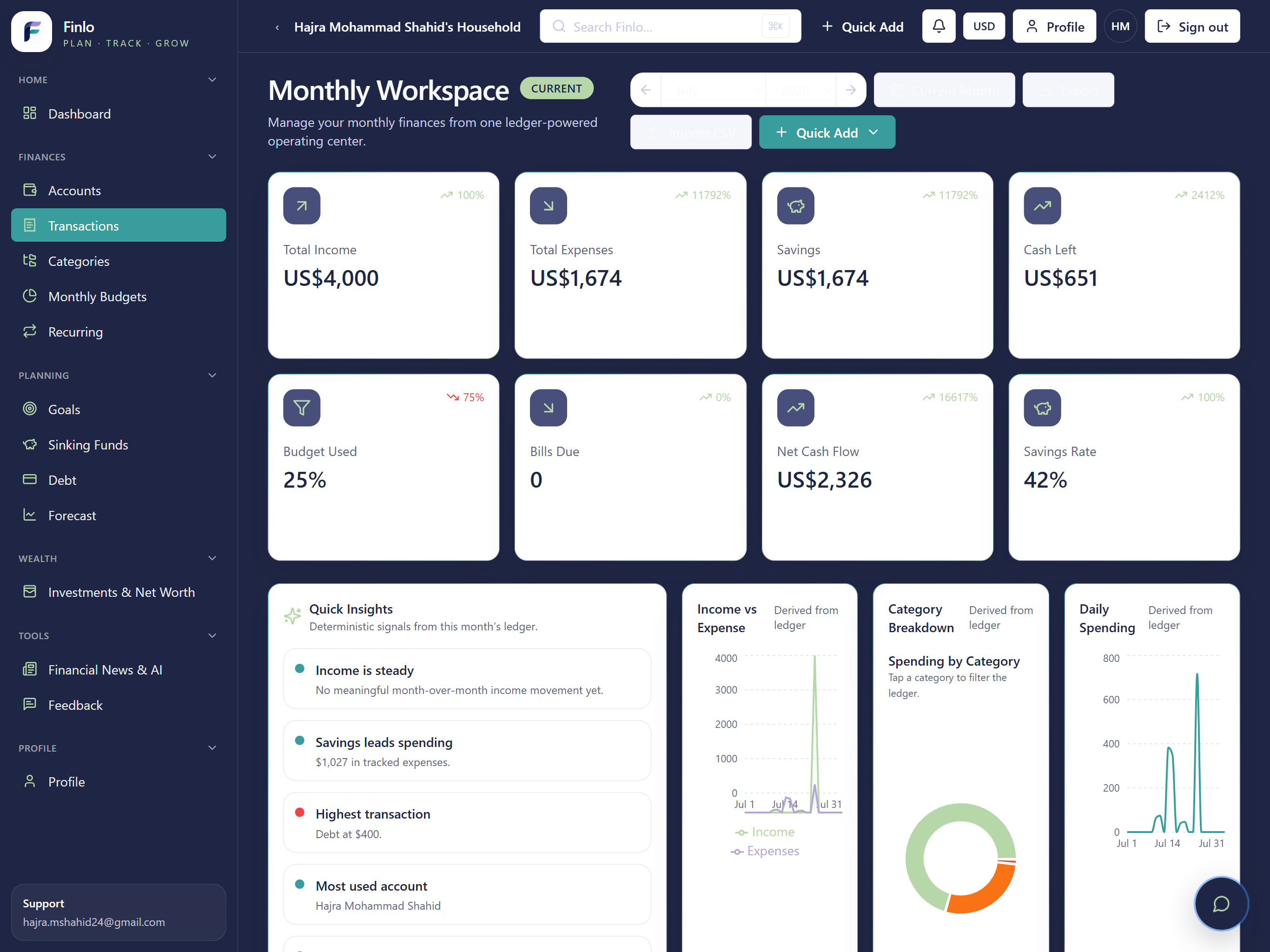
Track monthly income, expenses, budgets, savings, cash flow, and trends with interactive charts and insights.
-
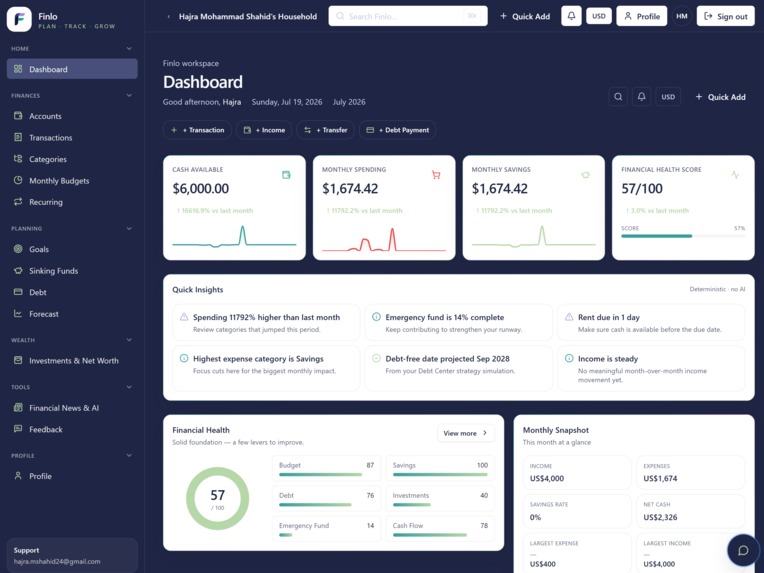
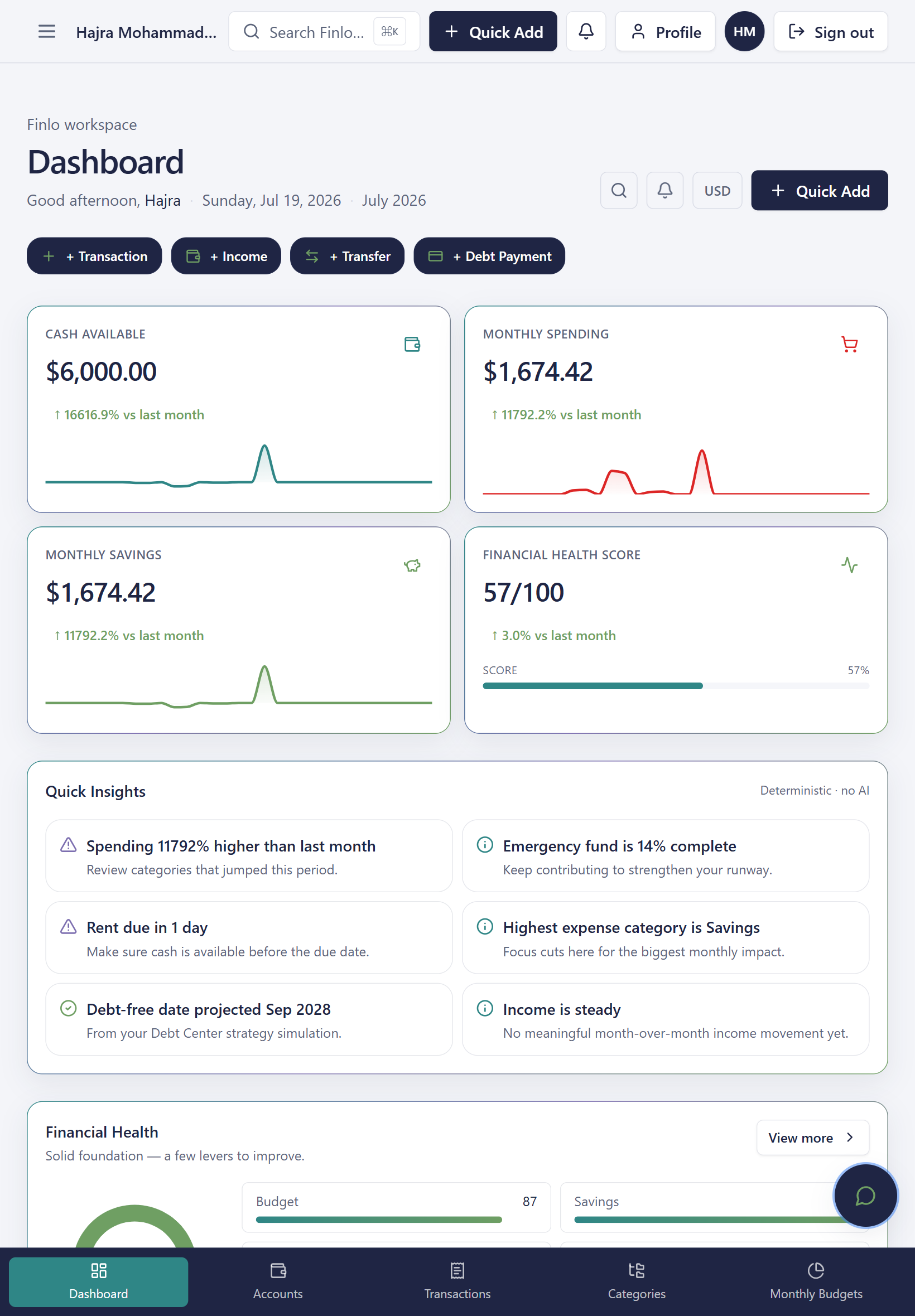
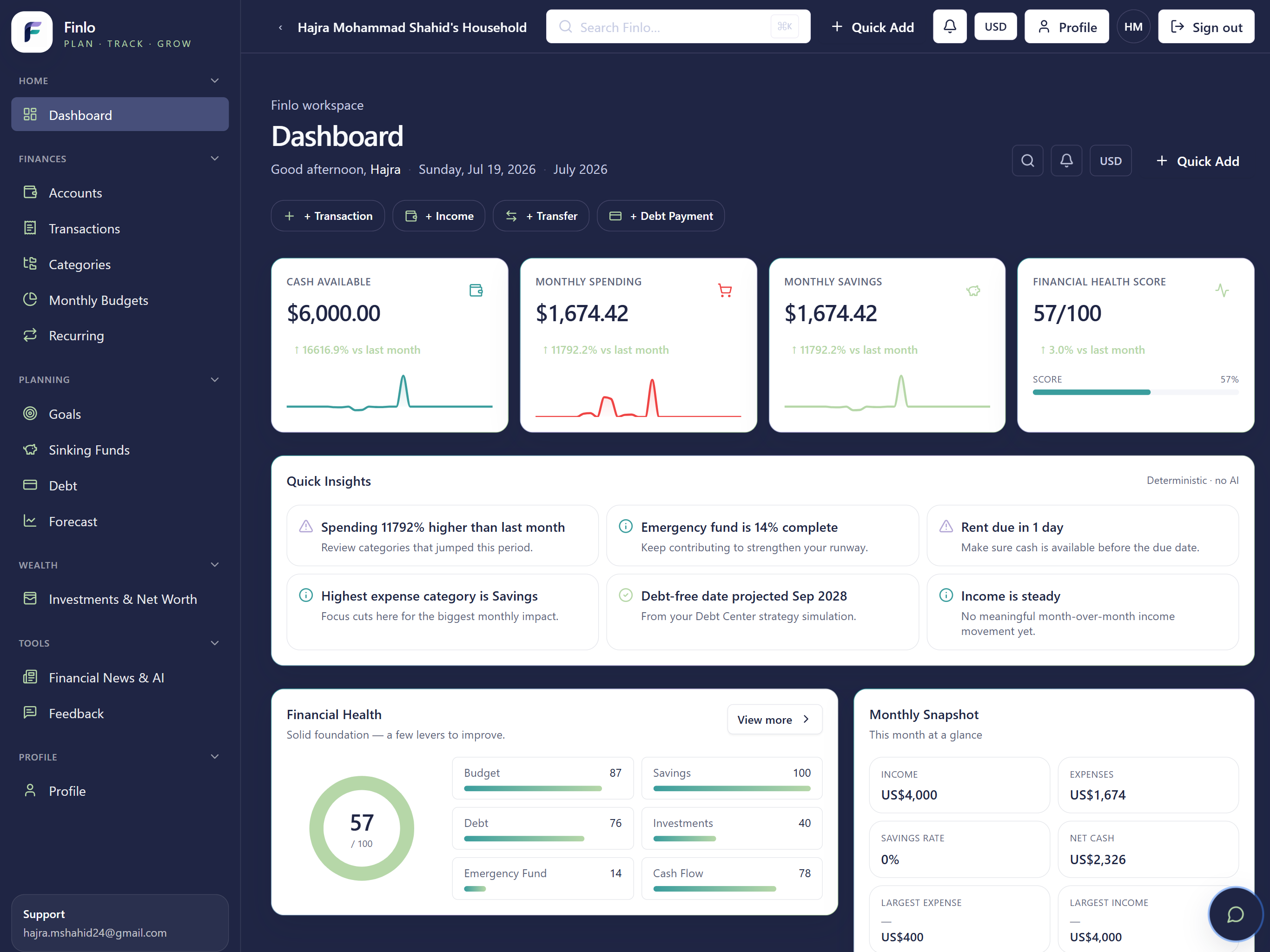
View your financial overview with cash, spending, savings, health score, and actionable insights.
-
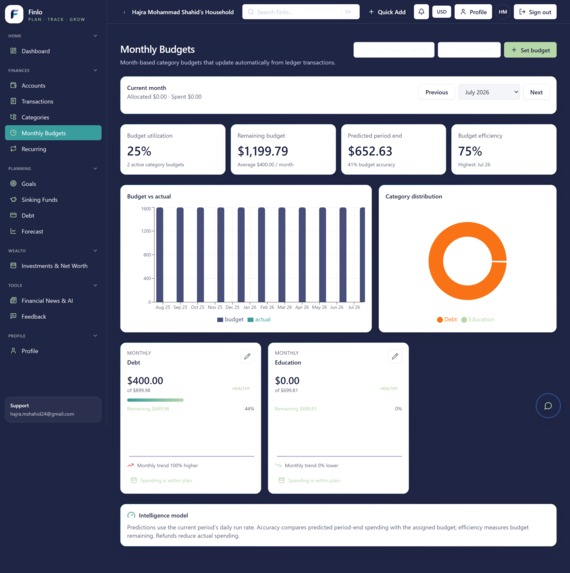
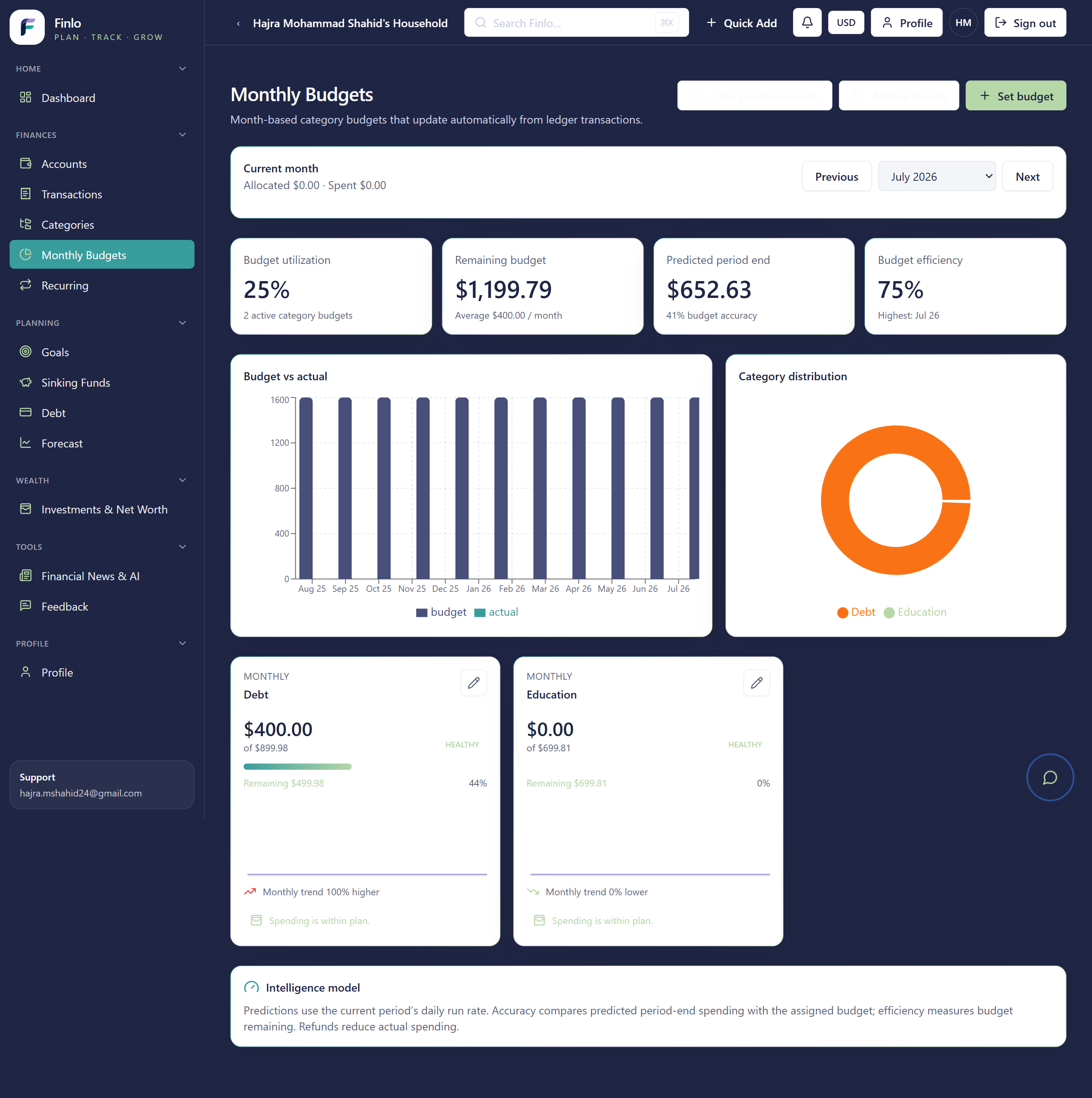
Plan monthly budgets, compare actual spending, track progress, and improve budget efficiency easily.
-
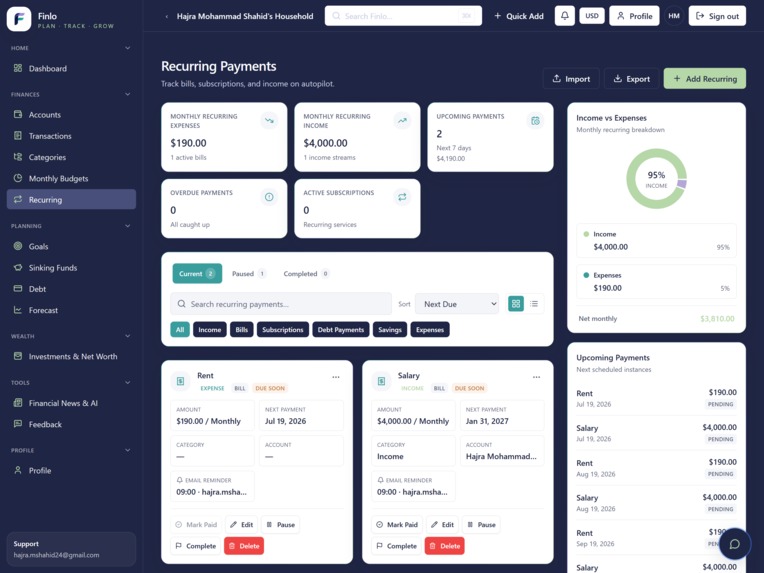
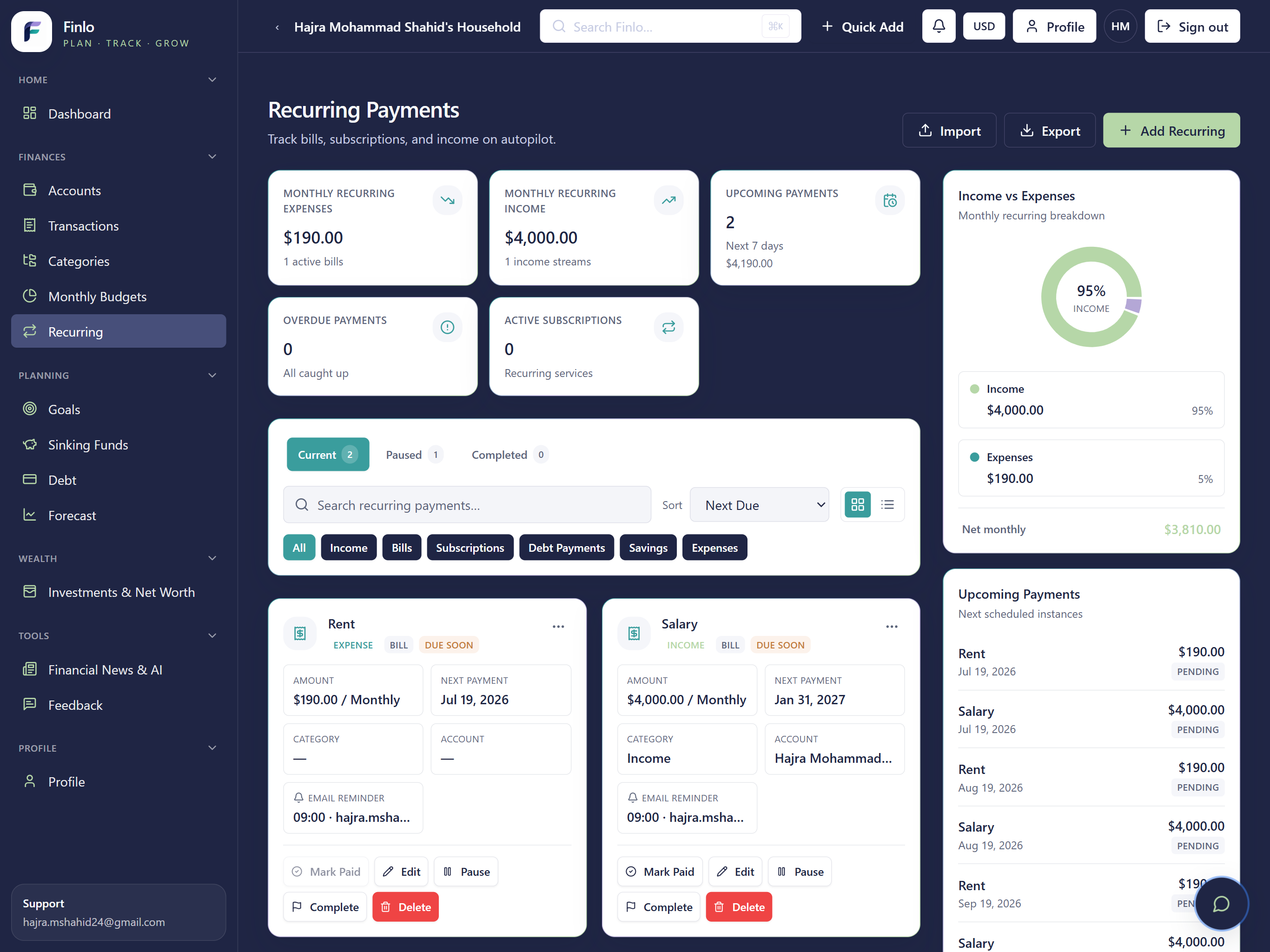
Manage recurring bills, income, subscriptions, payment schedules, and upcoming reminders with ease.
-
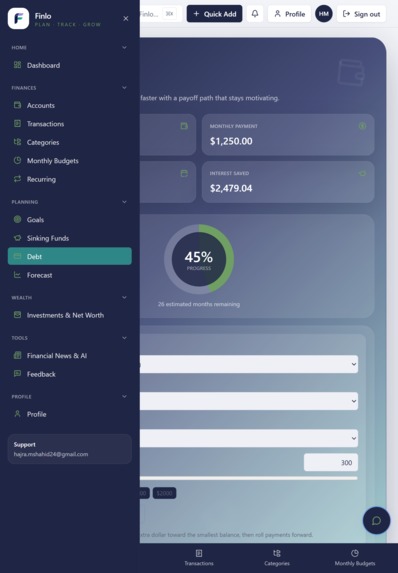
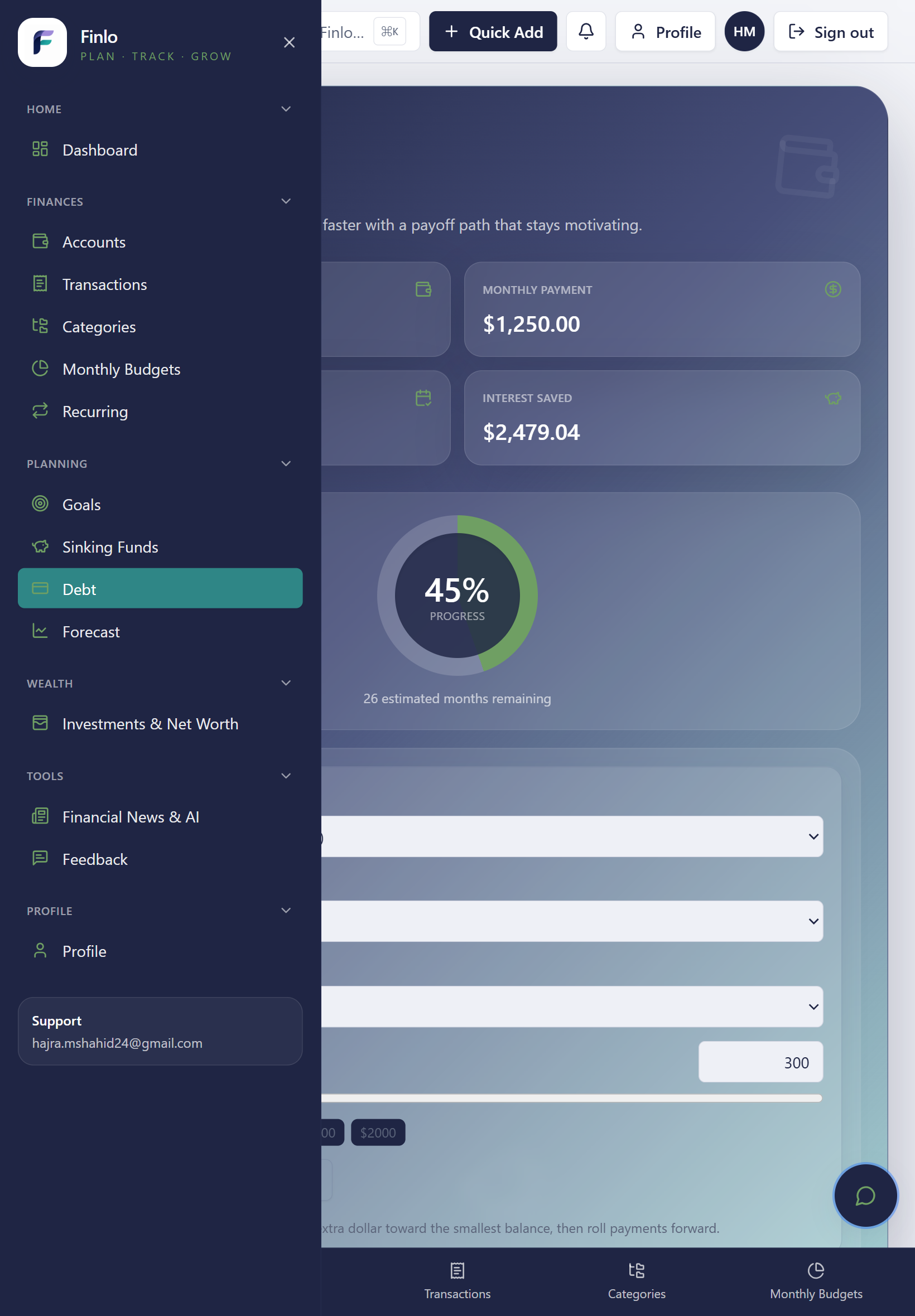
Access accounts, budgets, debt, investments, and planning tools from the responsive mobile sidebar.
-
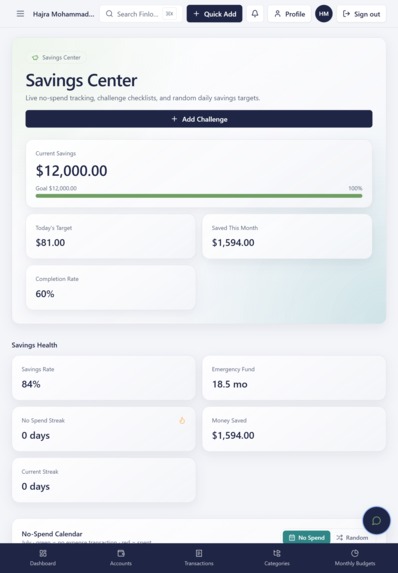
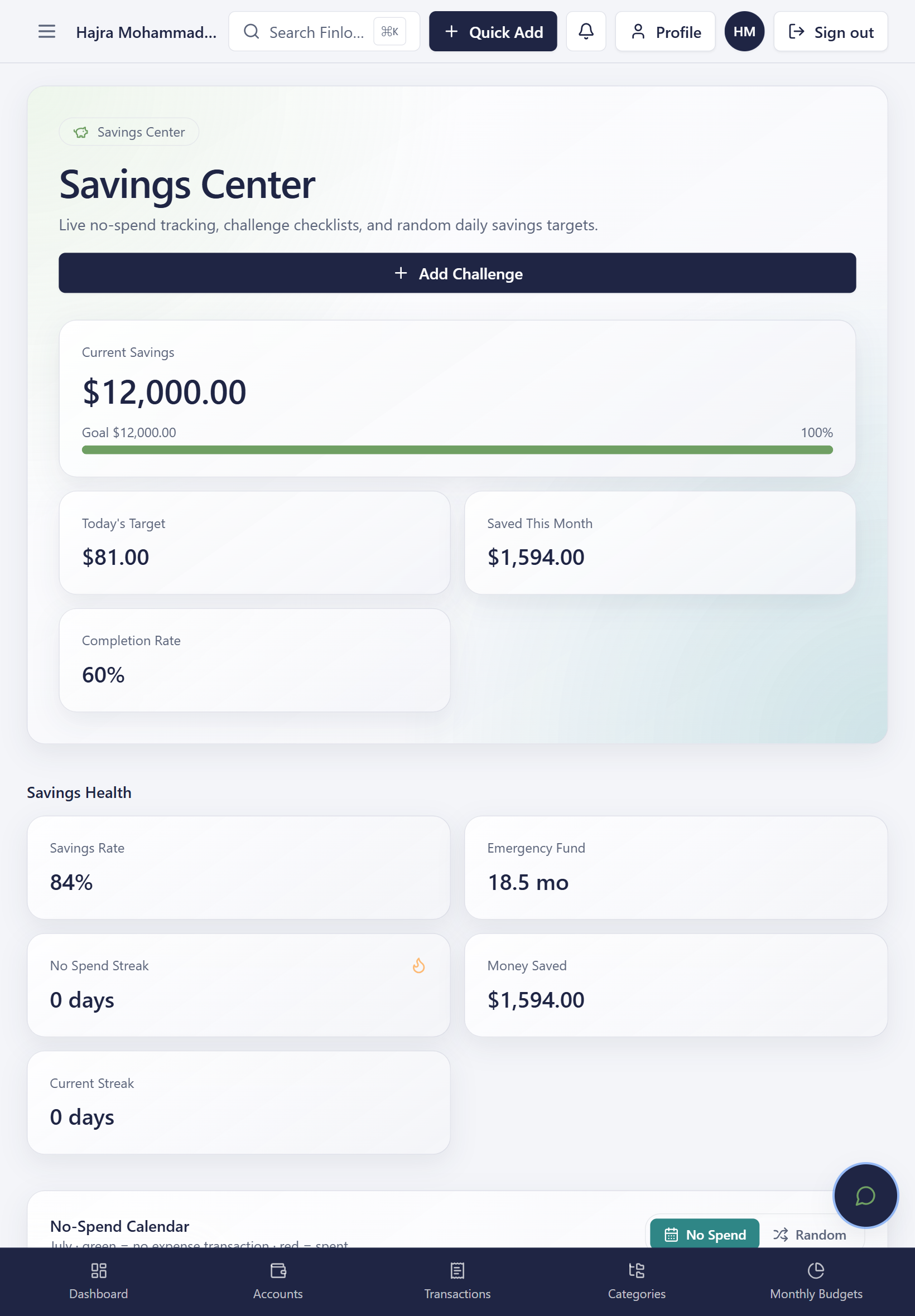
Build savings goals, monitor progress, complete challenges, and improve your savings habits daily.
-
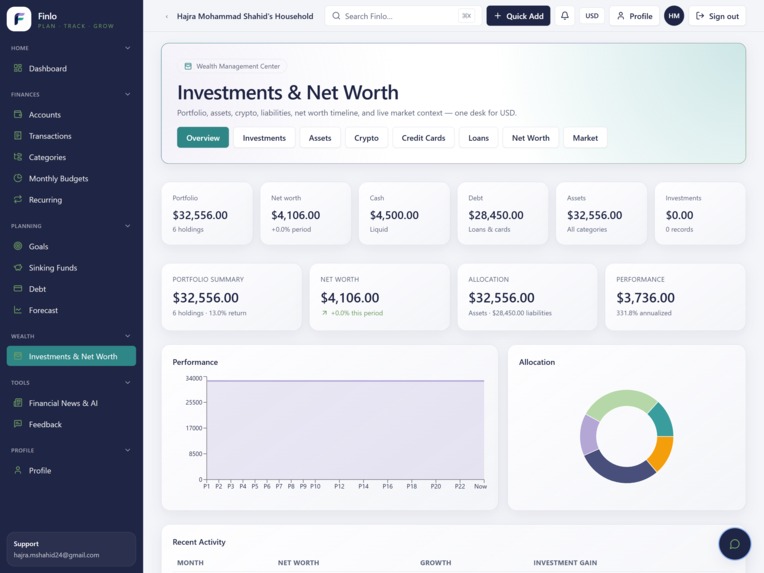
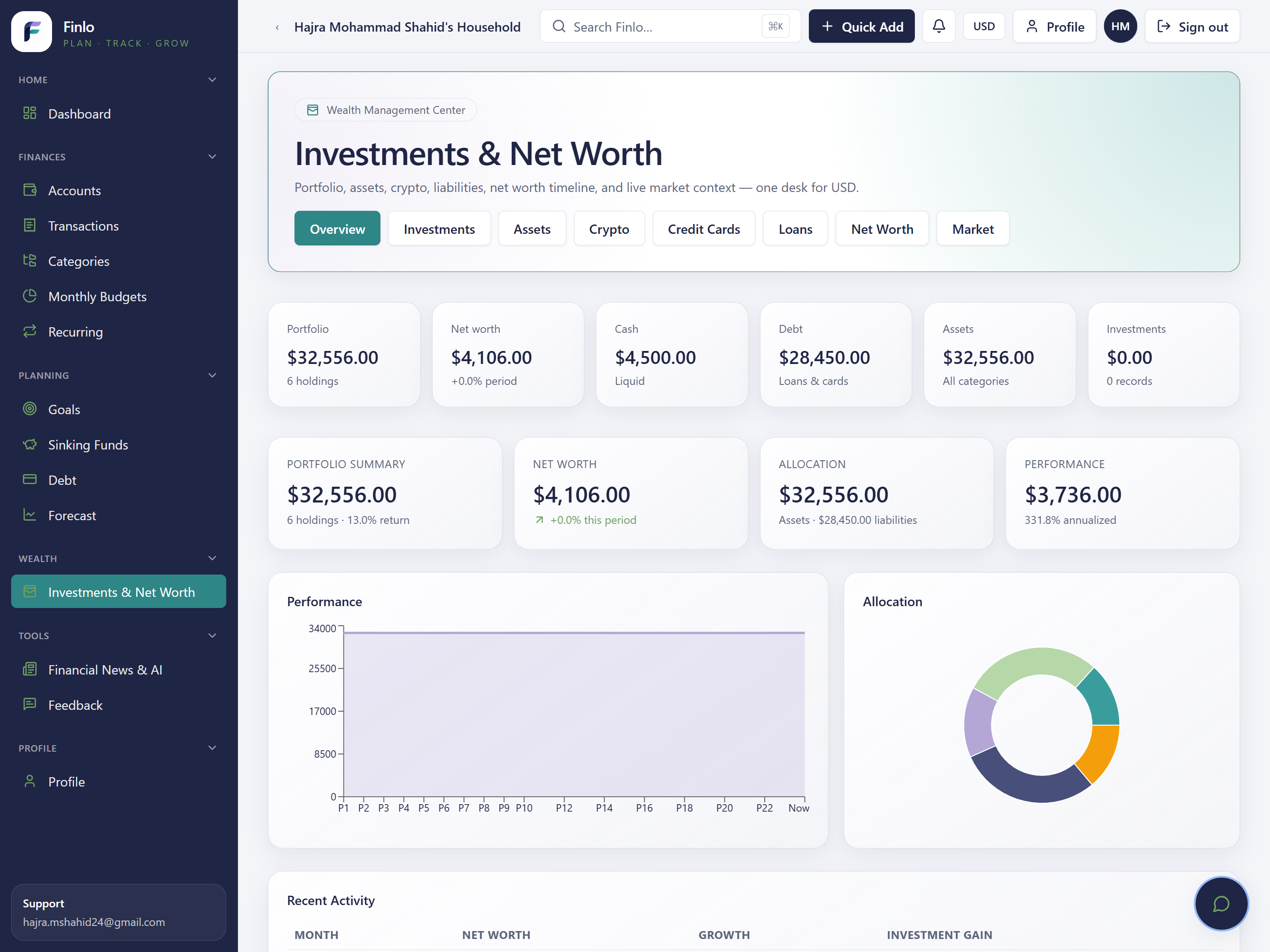
Track investments, assets, liabilities, portfolio performance, allocation, and net worth in one place.
About the Project
Inspiration
The idea behind Finlo finance project started with something I personally experienced. Whenever I wanted to manage my finances, I found myself downloading different spreadsheet templates—one for budgeting, another for tracking expenses, another for savings goals, debt repayment, investments, and so on. Every template solved one problem, but none of them worked together. After a few weeks, maintaining them became more work than managing my actual finances.
That made me wonder:
Why isn't there a single application that combines everything people usually track in spreadsheets?
Finlo was built to answer that question. The goal wasn't to create another expense tracker, but to build one place where someone can organize every aspect of their financial life without constantly switching between spreadsheets and multiple apps.
While validating the idea, I researched the personal finance software market and compared existing solutions. Search trends, industry reports, and user discussions consistently showed that personal finance remains a rapidly growing market with millions of users worldwide. Existing products such as YNAB (You Need A Budget), Monarch Money, Copilot Money, Quicken Simplifi, Rocket Money, EveryDollar, Empower Personal Dashboard, PocketSmith, Goodbudget, and Tiller Money solve individual parts of personal finance, but many users still rely on spreadsheets or multiple applications to cover budgeting, investments, debt tracking, forecasting, and financial planning together.
This research confirmed that there is still significant potential for a unified finance platform. Rather than replacing one budgeting app, Finlo aims to replace an entire collection of spreadsheets and disconnected financial tools with a single, intelligent workspace.
What Finlo Does
Finlo is an ultimate finance platform that helps users understand and manage their finances from a single dashboard.
Users can:
- Track income and expenses
- Create and manage budgets
- Monitor savings goals
- Manage debts and loan repayments
- Track investment portfolios
- View net worth and cash flow
- Explore financial KPIs and interactive analytics
- Forecast future balances and spending trends
- Organize recurring payments using a financial calendar
- Scan receipts using OCR to create transactions faster
- Ask questions about their own financial data
Instead of maintaining separate spreadsheets for each financial activity, everything is connected inside one application.
How I Built It
Finlo was built using React, TypeScript, Vite, Tailwind CSS, shadcn/ui, Supabase, React Query, Zustand, Recharts, and Progressive Web App (PWA) technologies.
During OpenAI Build Week, I decided to use Codex and GPT-5.6 as development partners instead of using them only for code generation.
The project started with planning rather than coding. I used GPT-5.6 to break the idea into smaller milestones, define the application architecture, and prioritize the order in which features should be built. Once the roadmap was ready, I implemented one module at a time that includes accounts, transactions, budgeting, analytics, OCR, forecasting, calendar, chatbot, and reporting.
Codex helped speed up implementation by generating reusable components, API logic, database queries, and boilerplate code. As the project grew, it also helped with debugging, refactoring, improving performance, and keeping the codebase organized. Every generated solution was reviewed, tested, refined, and integrated manually.
GPT-5.6 also became a product design partner. I used it to brainstorm feature ideas, generate dashboard concepts before implementation, improve user flows, and continuously refine the UI and UX throughout development.
Challenges
The first challenge wasn't technical; it was learning how to communicate effectively with Codex. Since every prompt consumes credits, I quickly realized that vague prompts often produced incomplete or unnecessary results. Spending a little more time writing precise prompts saved both credits and development time.
The biggest technical challenge was designing an architecture where budgeting, transactions, investments, debts, savings, forecasting, analytics, OCR, and AI could all share a single financial ledger without becoming tightly coupled.
Another challenge was balancing functionality with simplicity. Adding features is easy; making them intuitive is much harder. Considerable effort went into refining dashboards, KPIs, navigation, responsiveness, and overall user experience.
What I Learned
This project taught me that building a finance platform isn't just about writing code. It requires understanding how people actually manage money and designing workflows that simplify their lives instead of adding more complexity.
I also learned that AI-assisted development is most effective when it's collaborative. Codex and GPT-5.6 worked best as planning, brainstorming, implementation, debugging, and review partners—not as replacements for engineering decisions. The quality of the results depended heavily on the quality of the prompts.
What I'm Proud Of
The thing I'm most proud of is turning an idea that started with replacing spreadsheet templates into a complete personal finance platform.
Finlo brings together budgeting, expense tracking, debt management, investments, savings, forecasting, analytics, OCR receipt scanning, calendar planning, and a RAG-powered financial assistant into one connected application. Watching these independent modules work together through a shared financial engine has been the most rewarding part of the project.
I'm also proud of how much the project evolved during Build Week. What started as a finance tracker gradually became a much broader financial operating system through continuous iteration and AI-assisted development.
Project Scope & What's Next
Finlo is designed to become much more than a budgeting application. Its architecture supports future expansion into a complete financial operating system for individuals and households, including:
- Secure bank synchronization
- Automatic transaction categorization
- Collaborative family finance
- Investment portfolio management
- AI-powered financial coaching
- Advanced forecasting and scenario simulation
- Tax planning
- Financial document vault
- Retirement planning
- Estate planning
- Cross-device synchronization
Because every module is powered by a unified financial ledger, new capabilities can be added without creating disconnected experiences.
The long-term vision is to eliminate the need for multiple spreadsheets and separate finance applications by providing one intelligent platform that grows alongside the user's financial journey.
The long-term vision is simple:
One application. One financial ledger. Complete control over every aspect of personal finance.
Built With
- api
- chatgpt
- codex
- react
- supabase
- tailwind
- typescript
- vercel
- vite


Log in or sign up for Devpost to join the conversation.