Inspiration
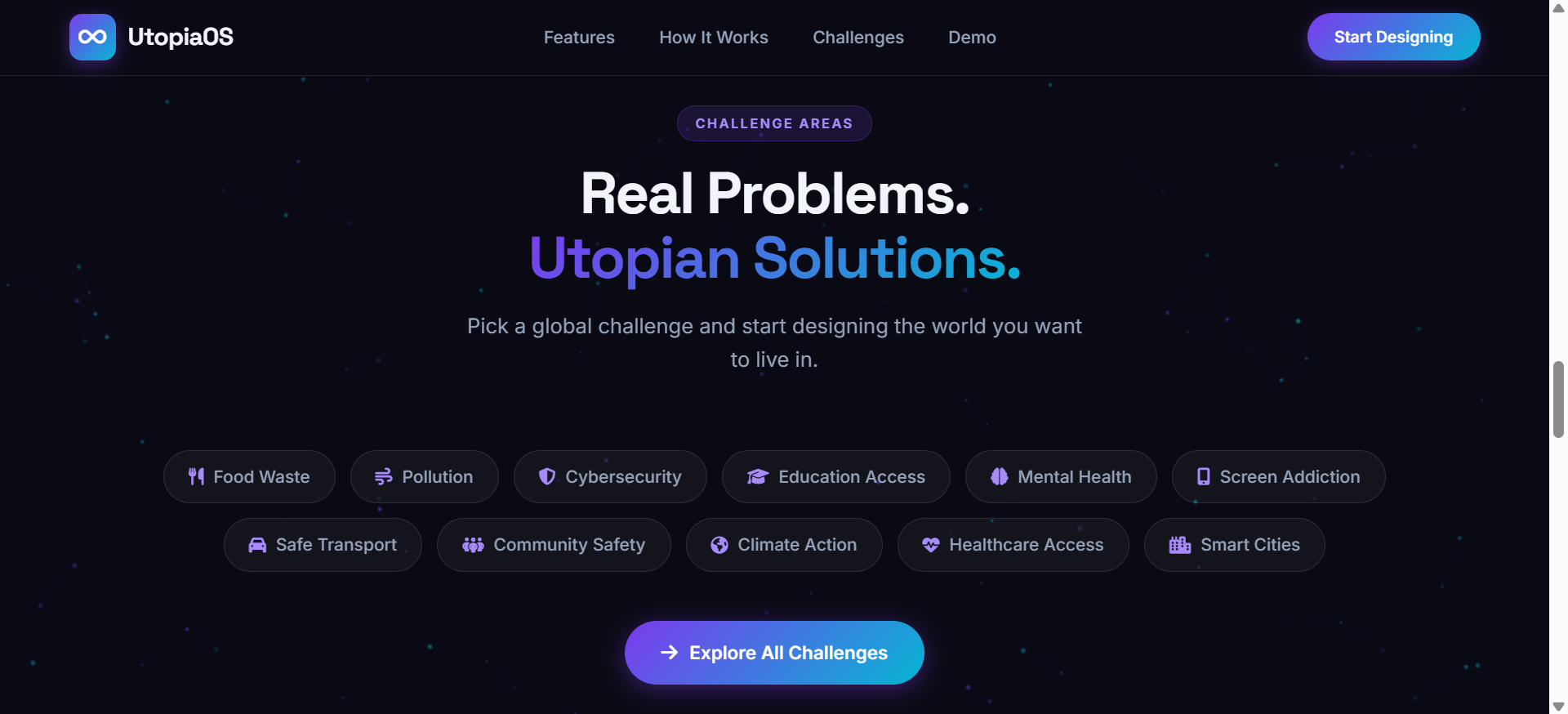
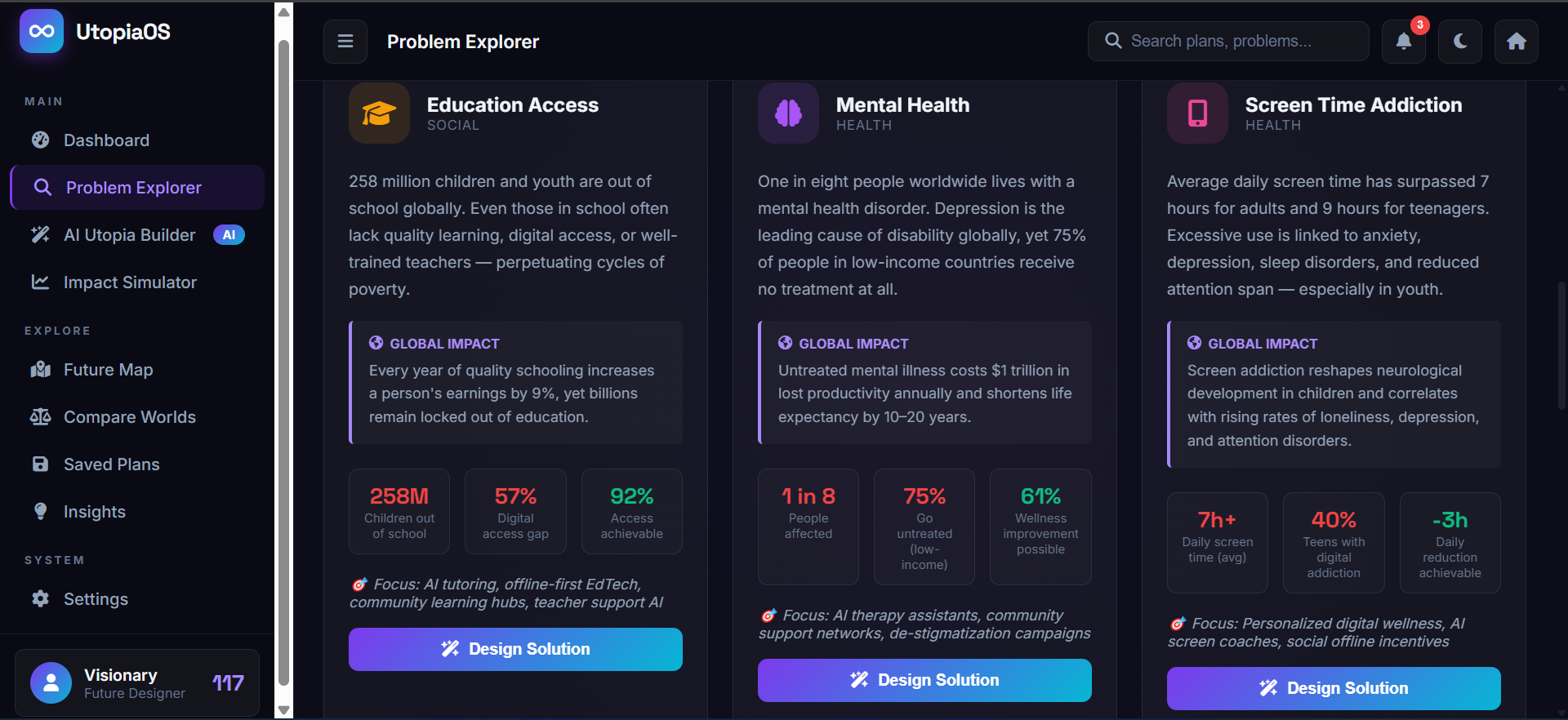
We are surrounded by global challenges — food waste, pollution, digital addiction and unequal access to opportunities. While many people have ideas for a better future, there are very few tools that allow them to explore those ideas in a structured and visual way.
UtopiaOS was inspired by a simple question:
“What if anyone could design and simulate the future they want to live in?”
Instead of only imagining solutions, I wanted to create a platform where users can interact with their ideas, experiment with possibilities and see how their decisions could shape a better world.
What it does
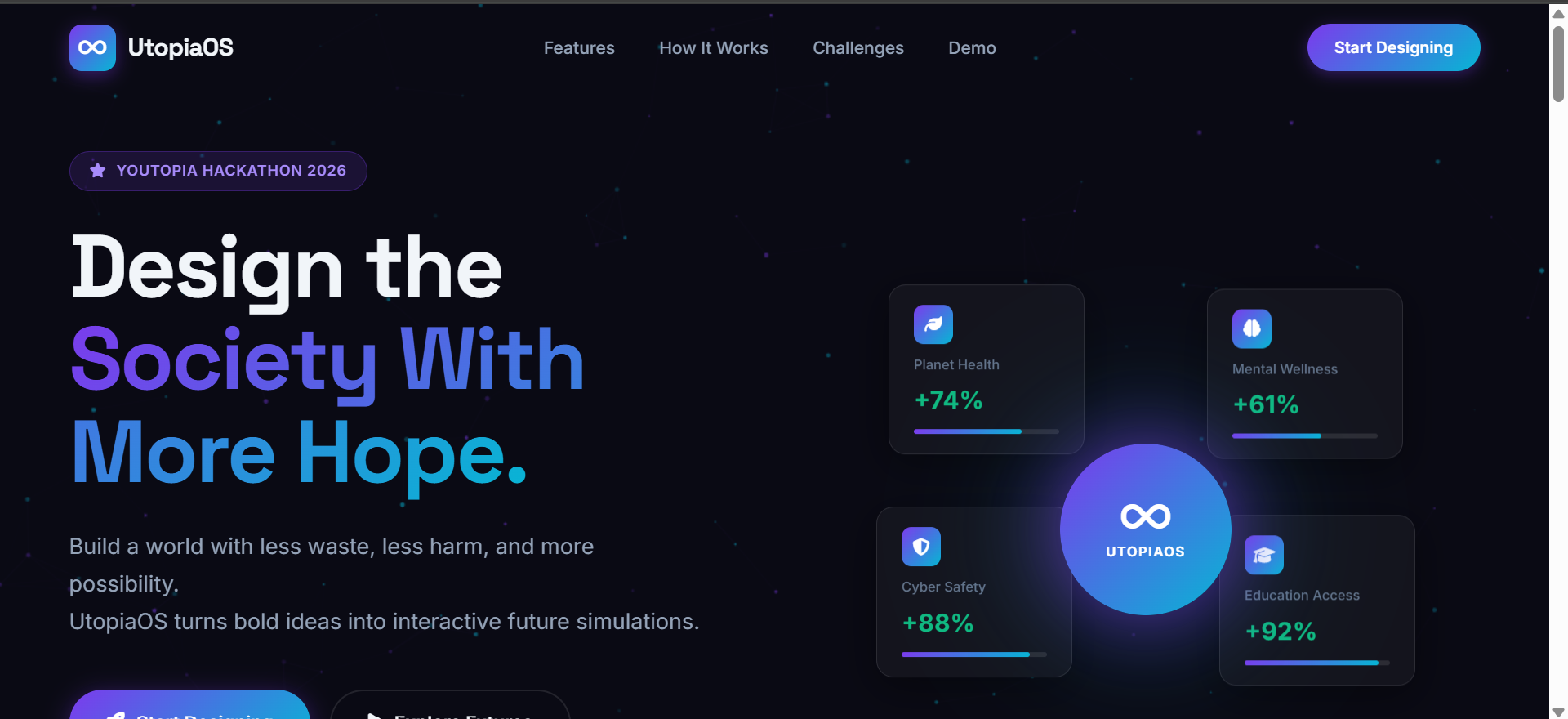
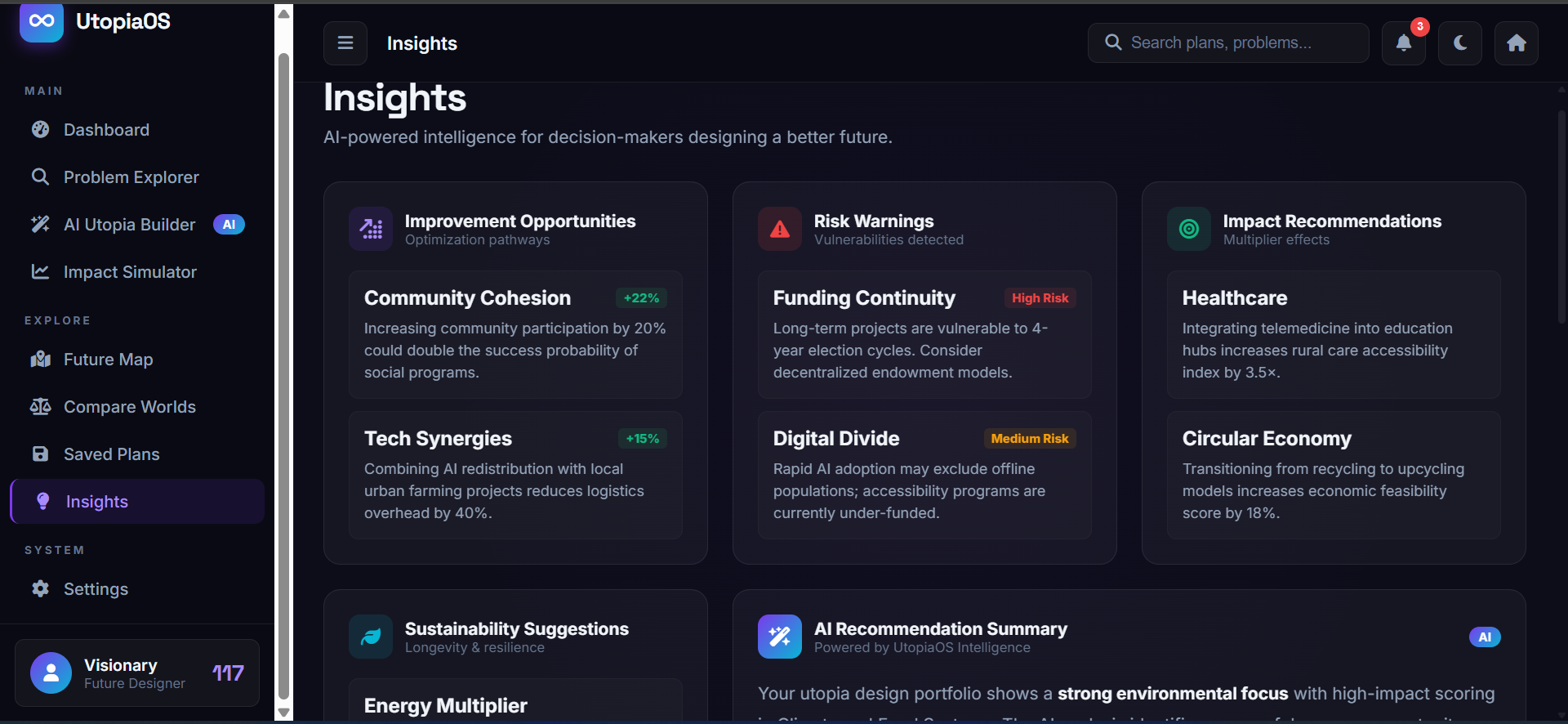
UtopiaOS is an interactive platform that allows users to design and simulate solutions to real-world problems.
Users can:
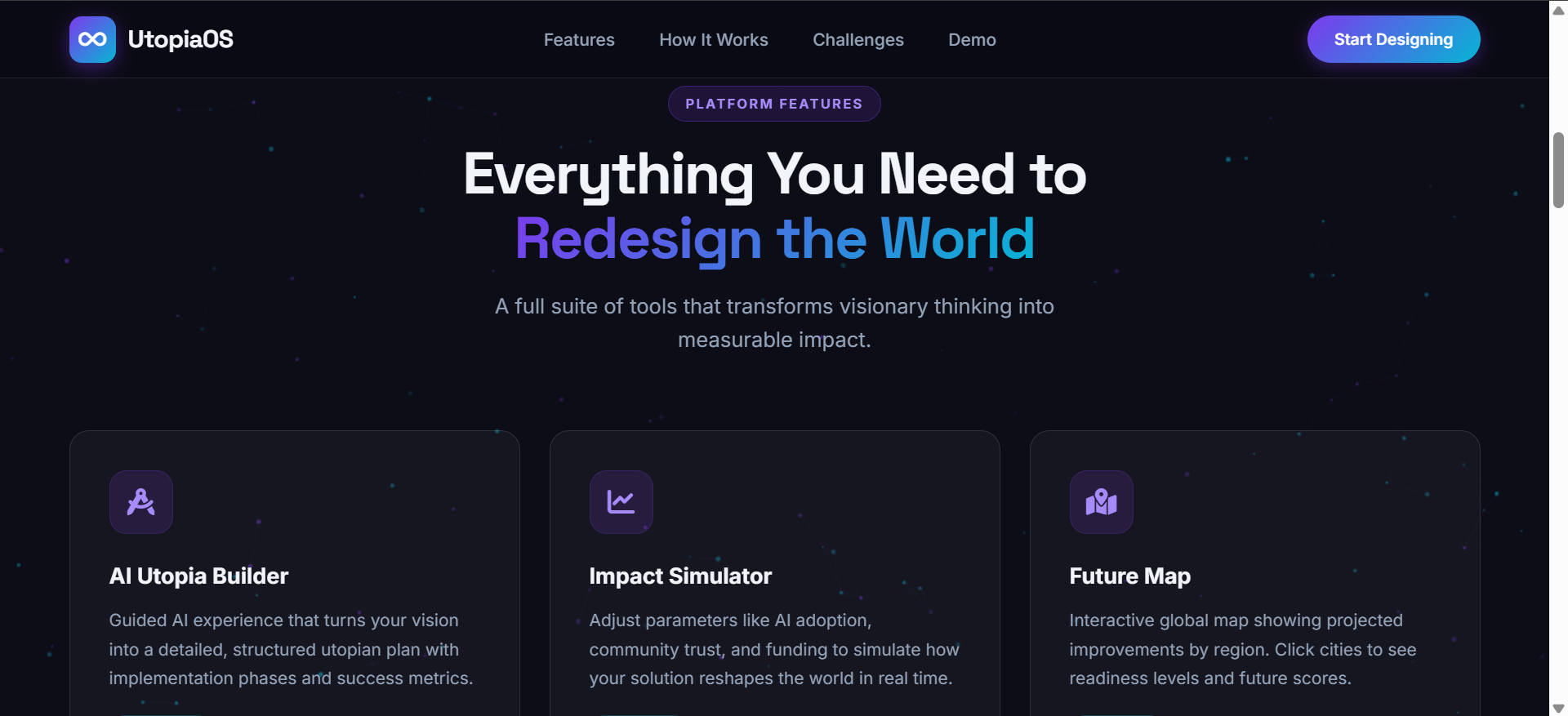
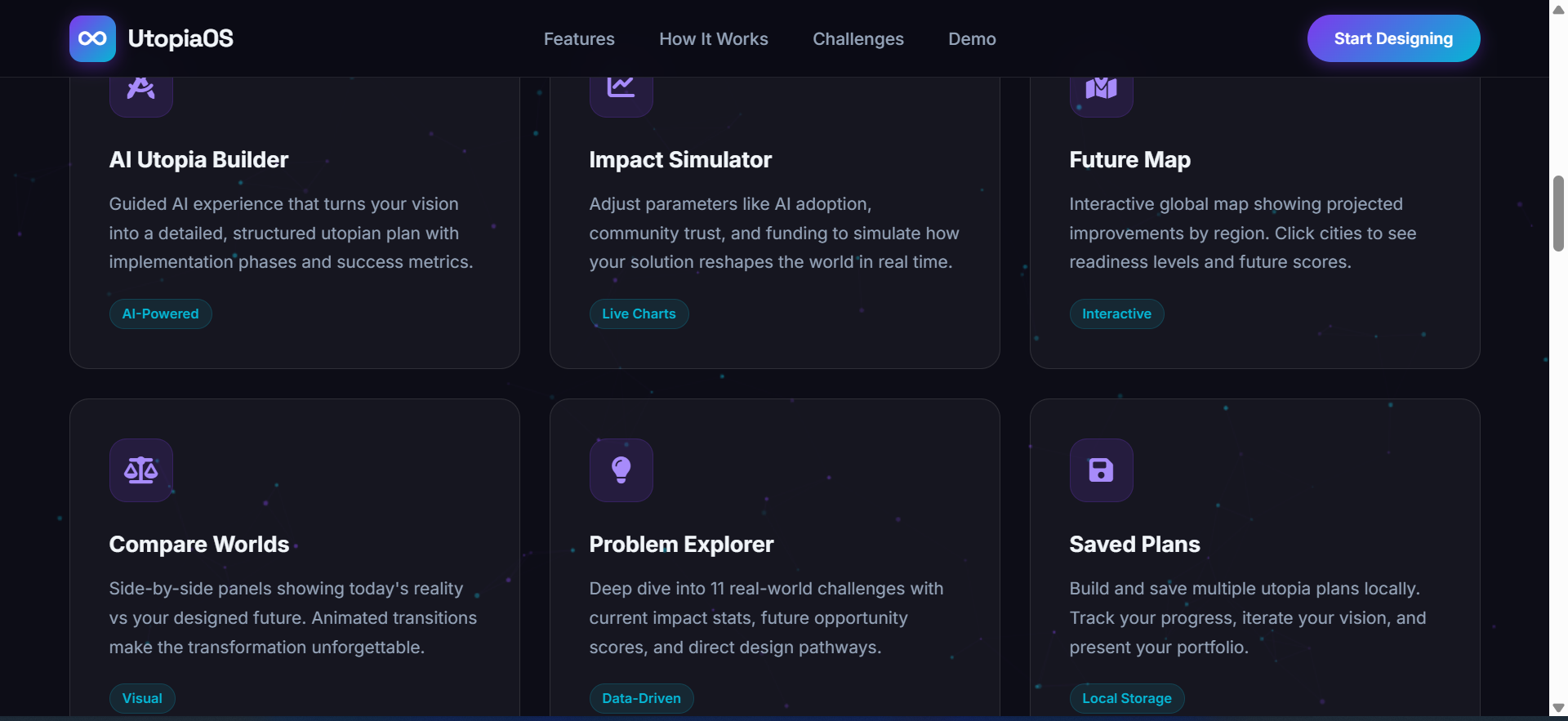
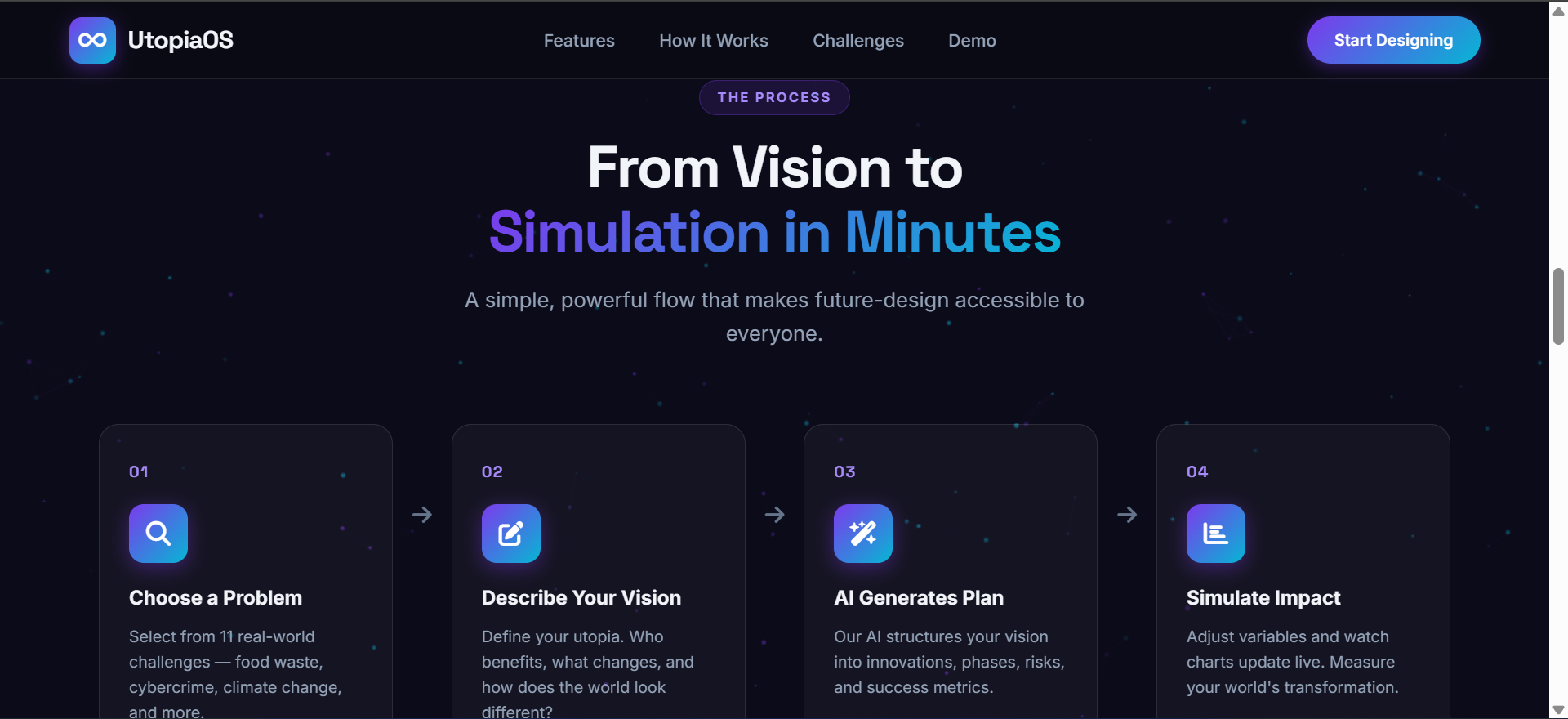
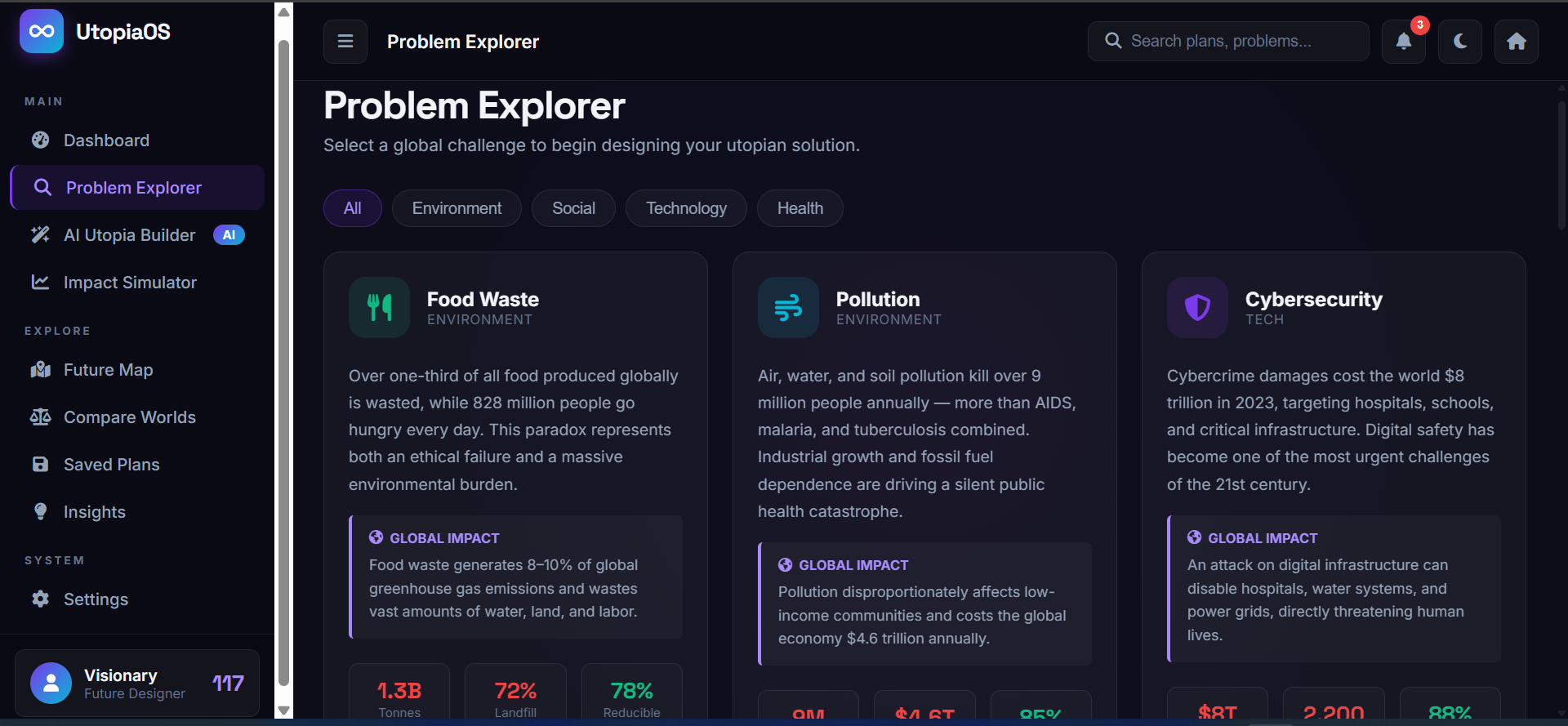
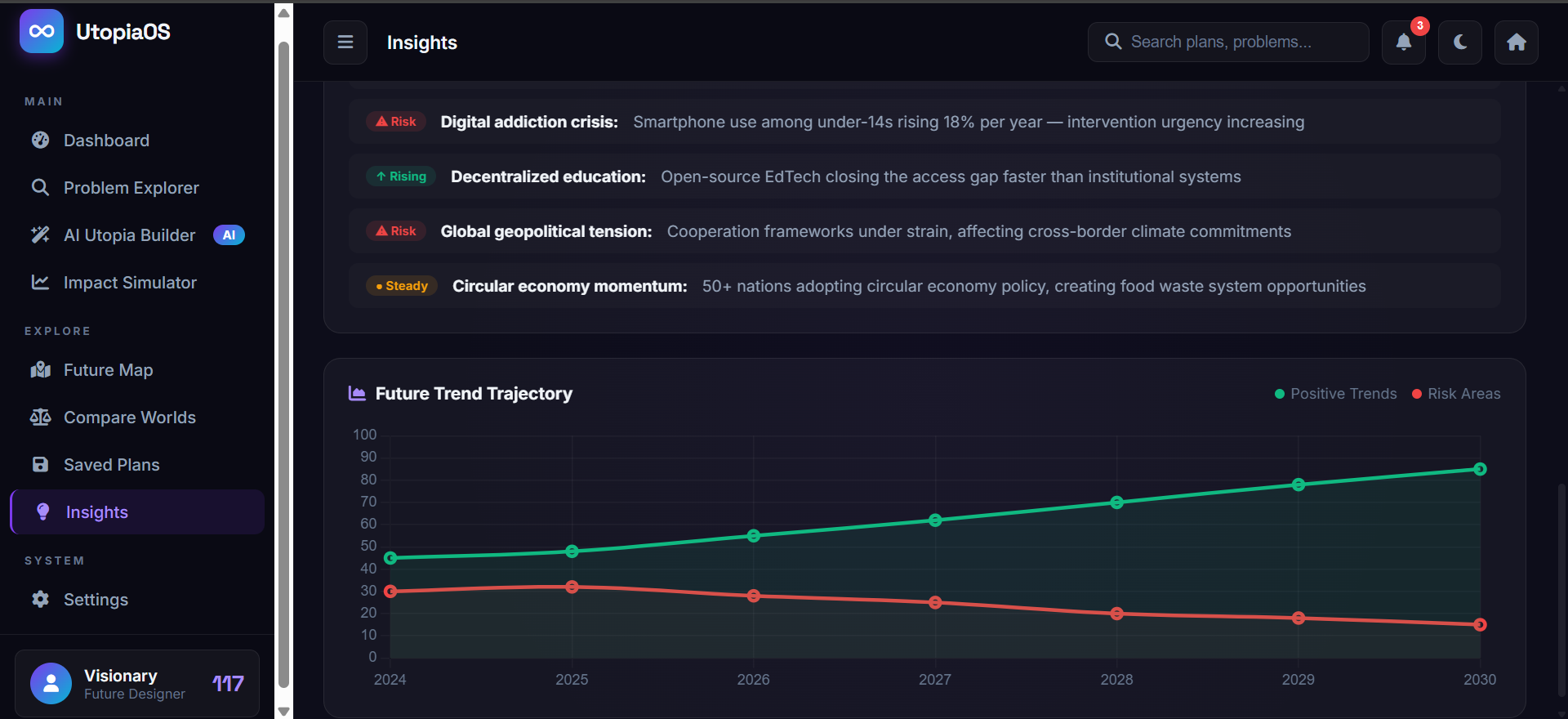
- Explore global challenges such as food waste, pollution, and digital addiction
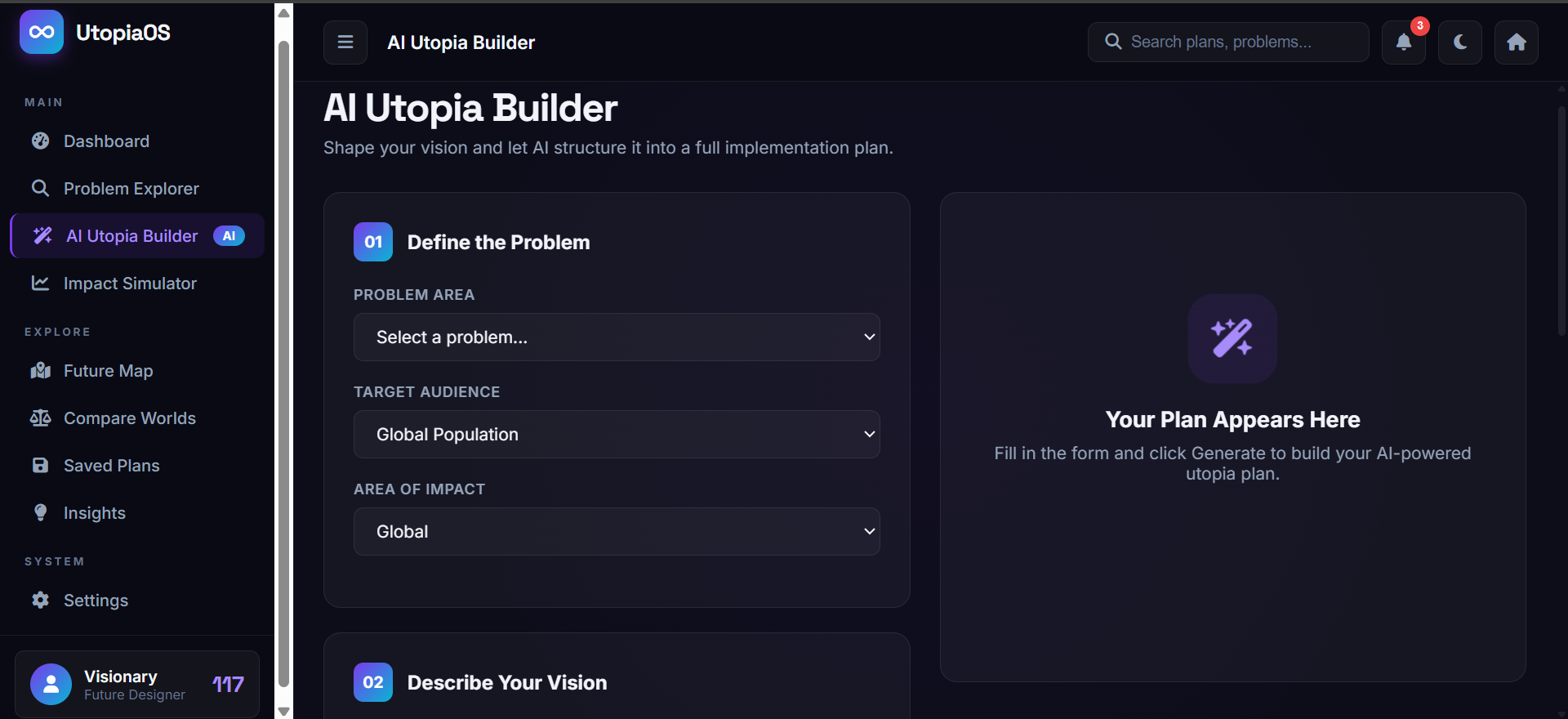
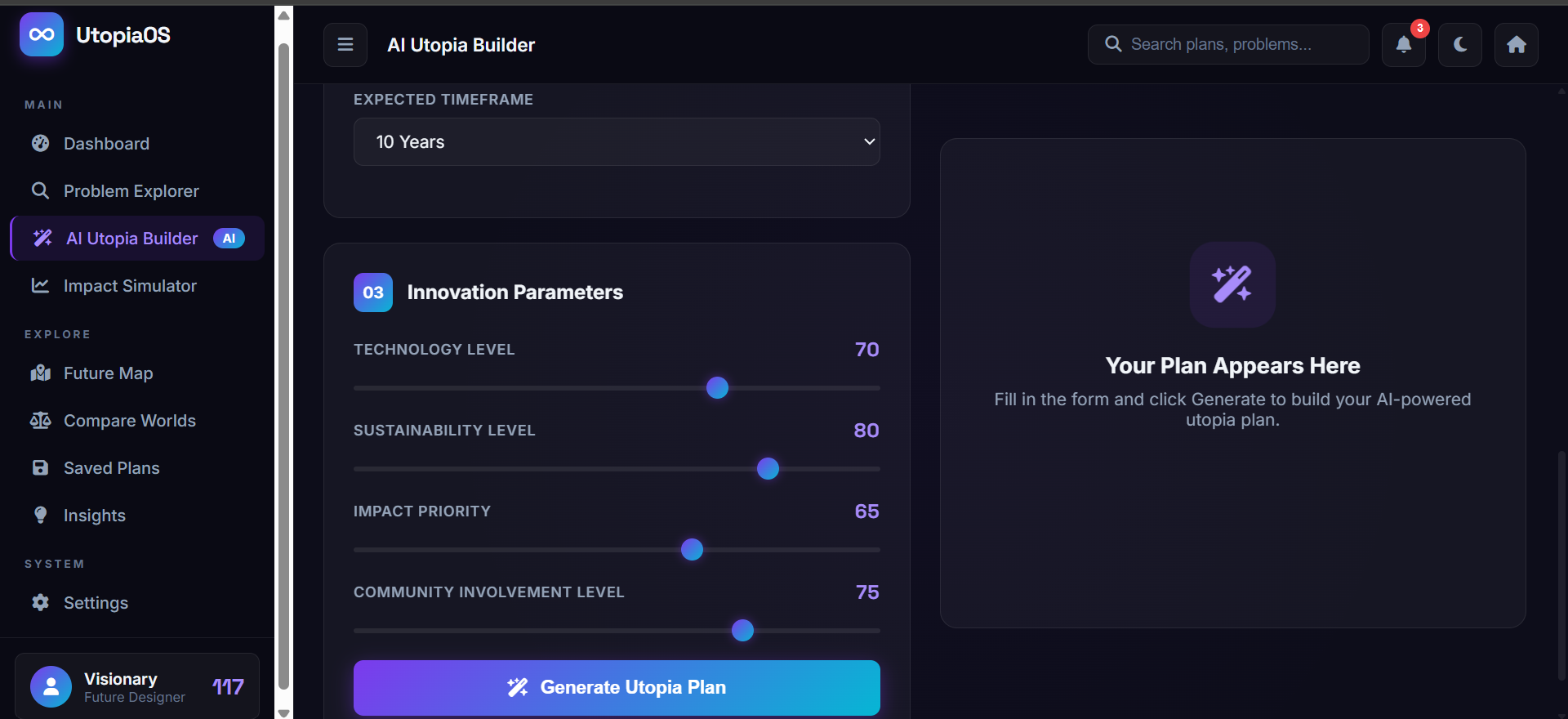
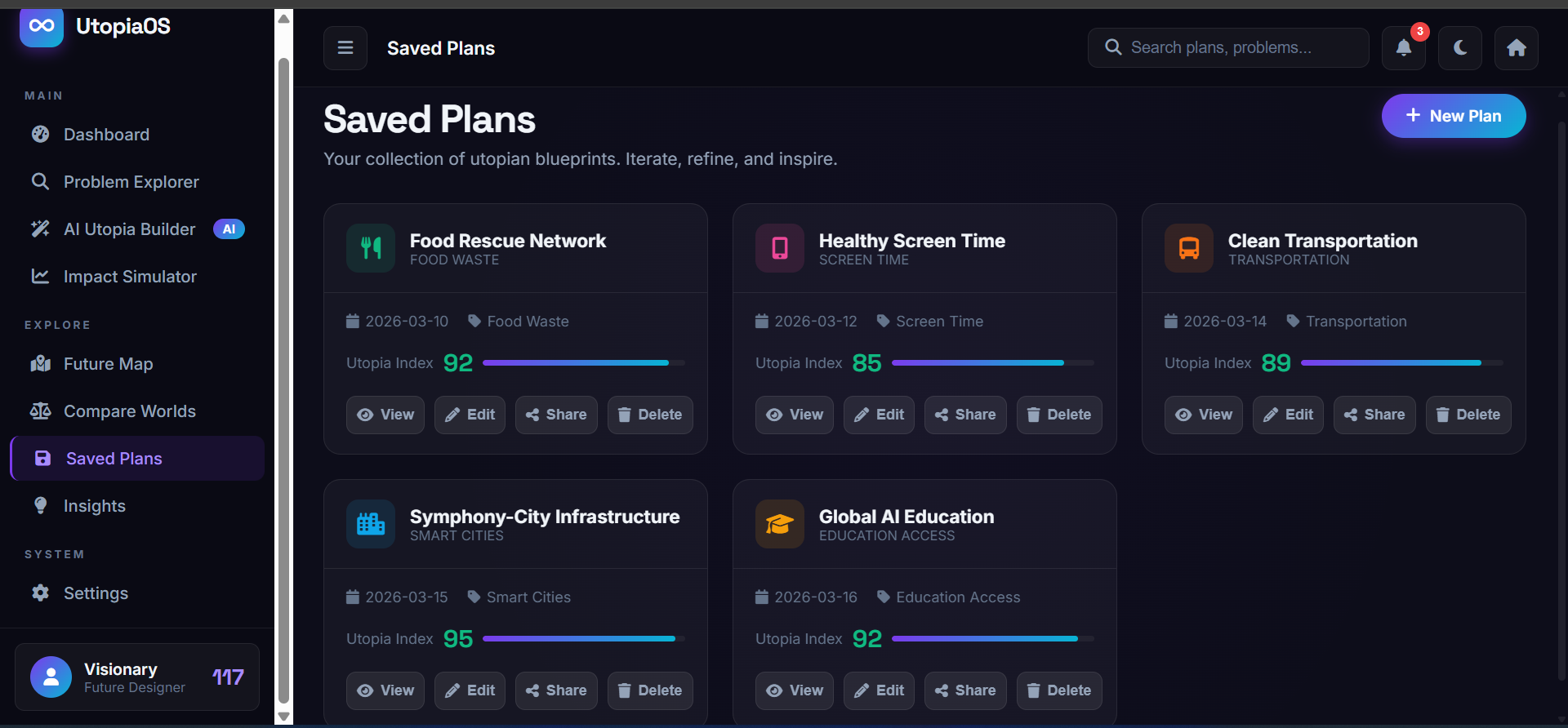
- Create their own “utopia plans” by describing the future they want
- Generate structured solution ideas through an AI-inspired builder
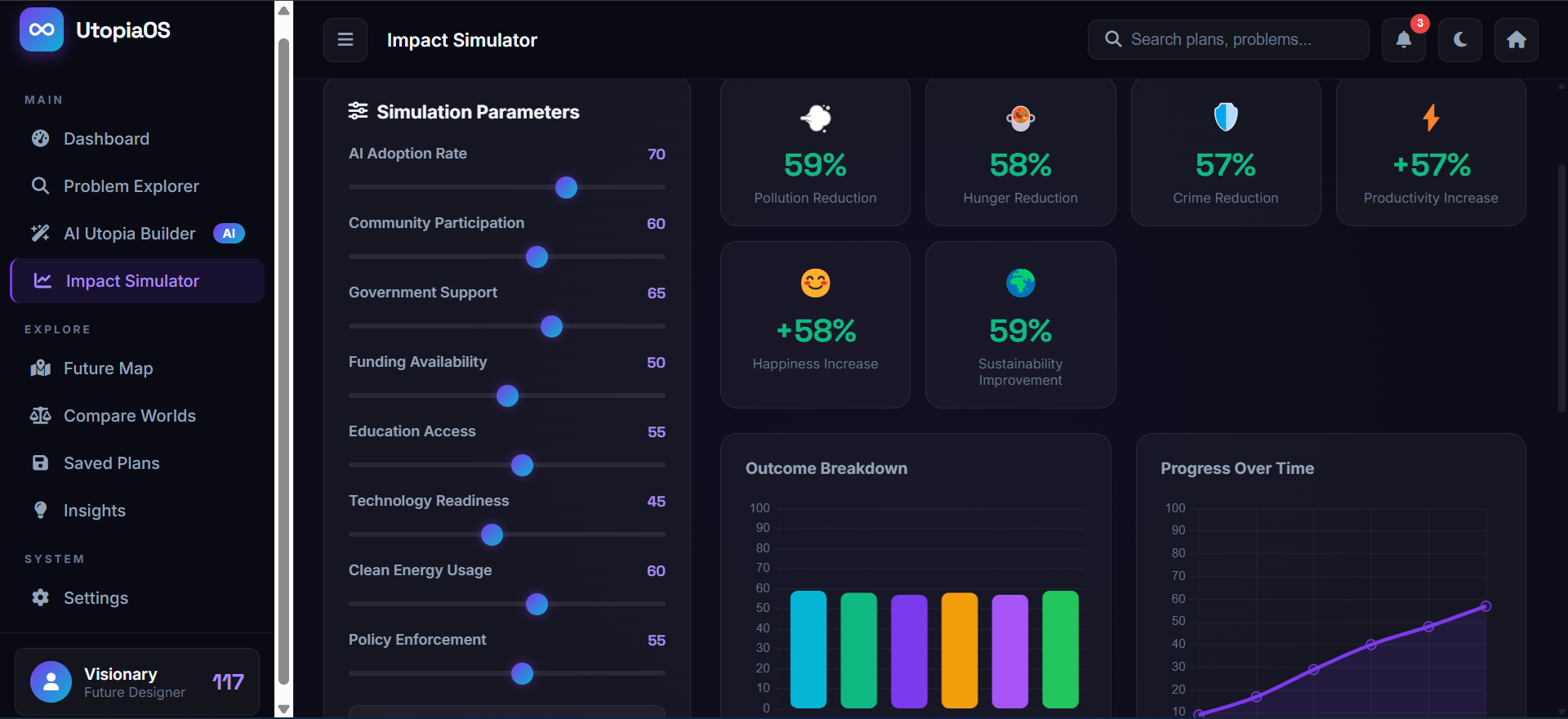
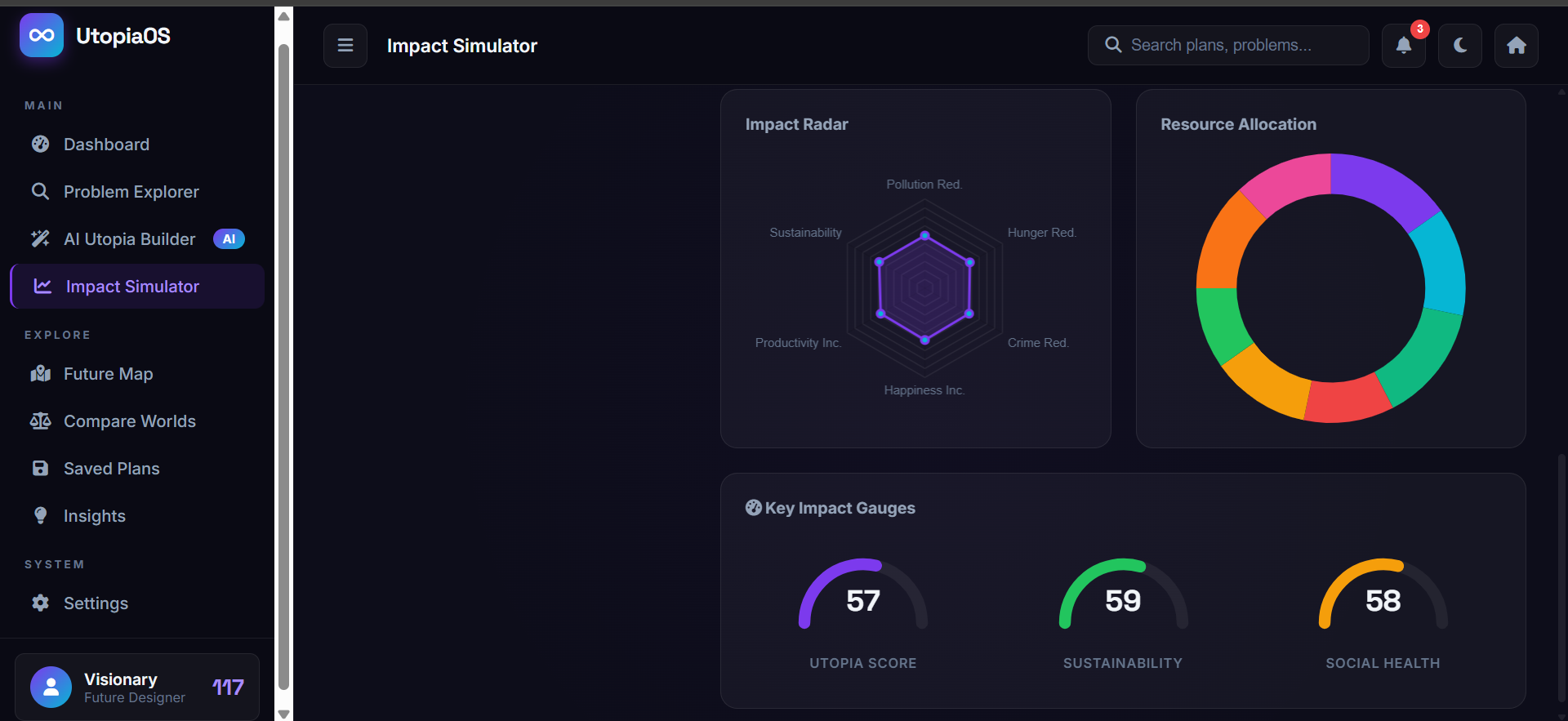
- Simulate the impact of their decisions using adjustable parameters
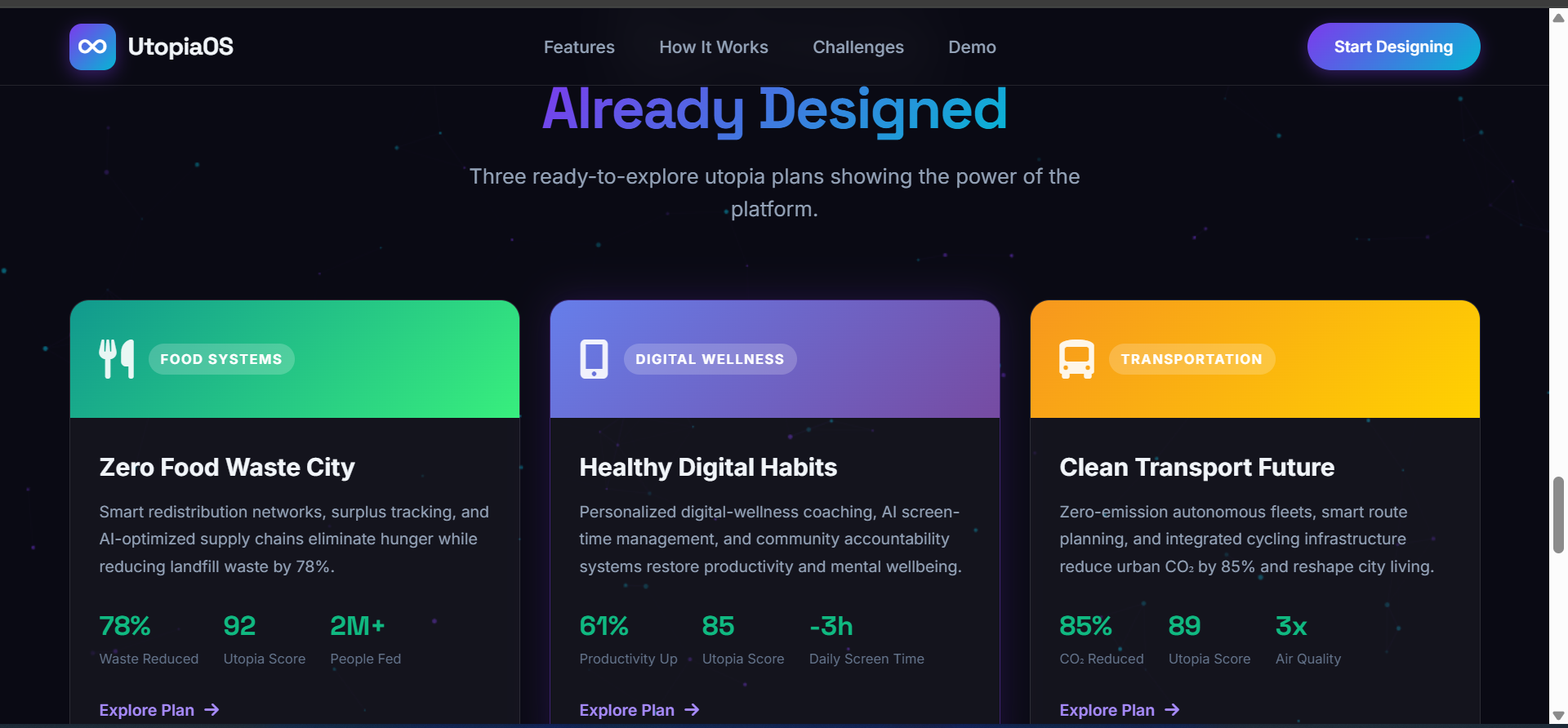
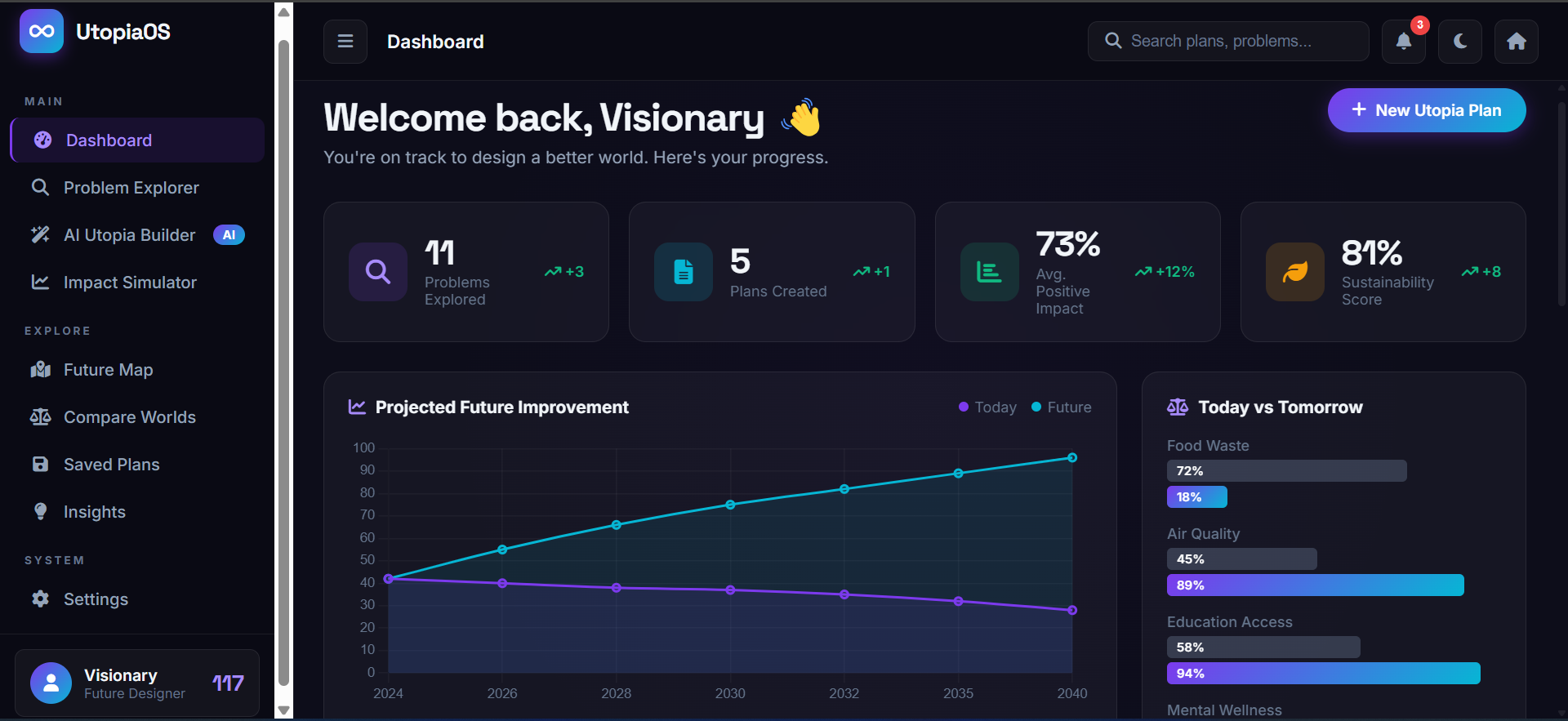
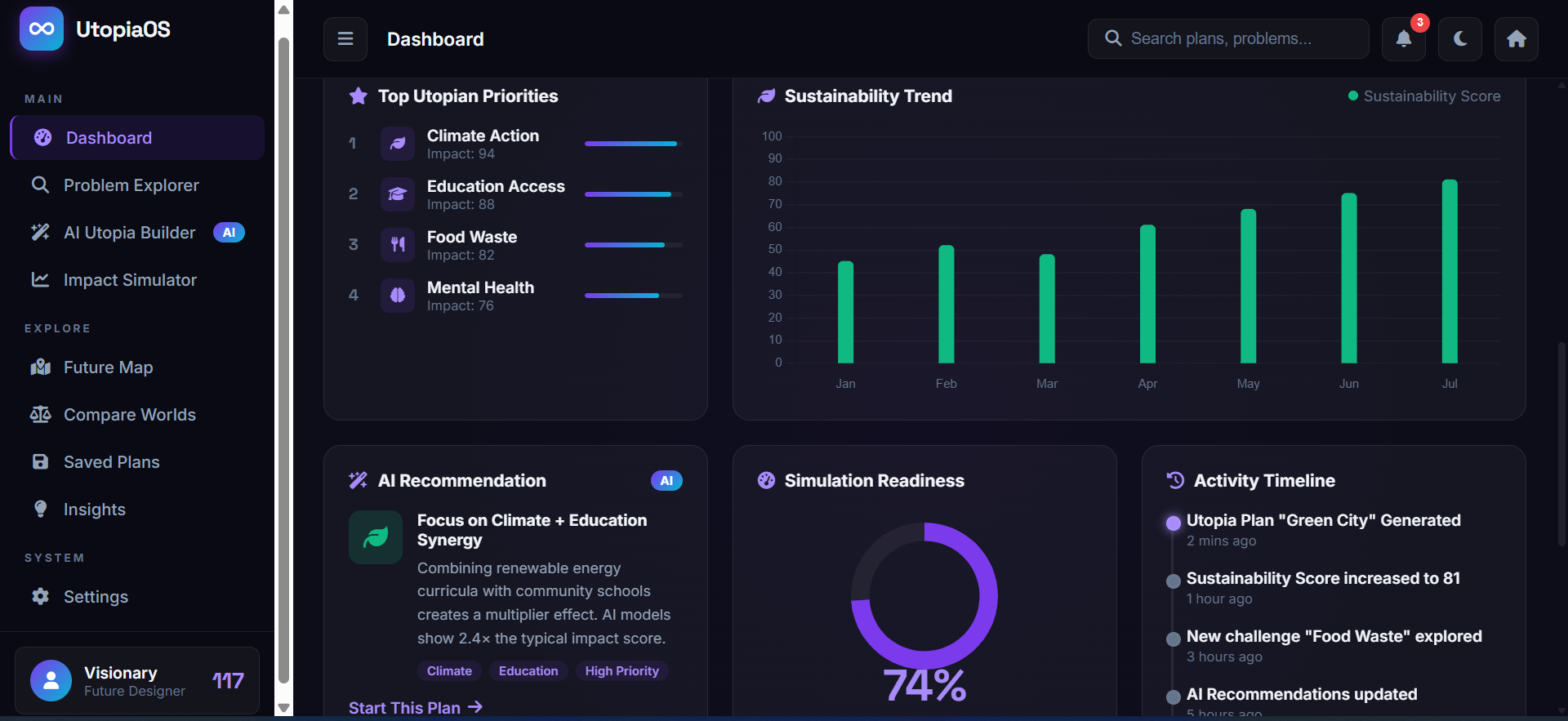
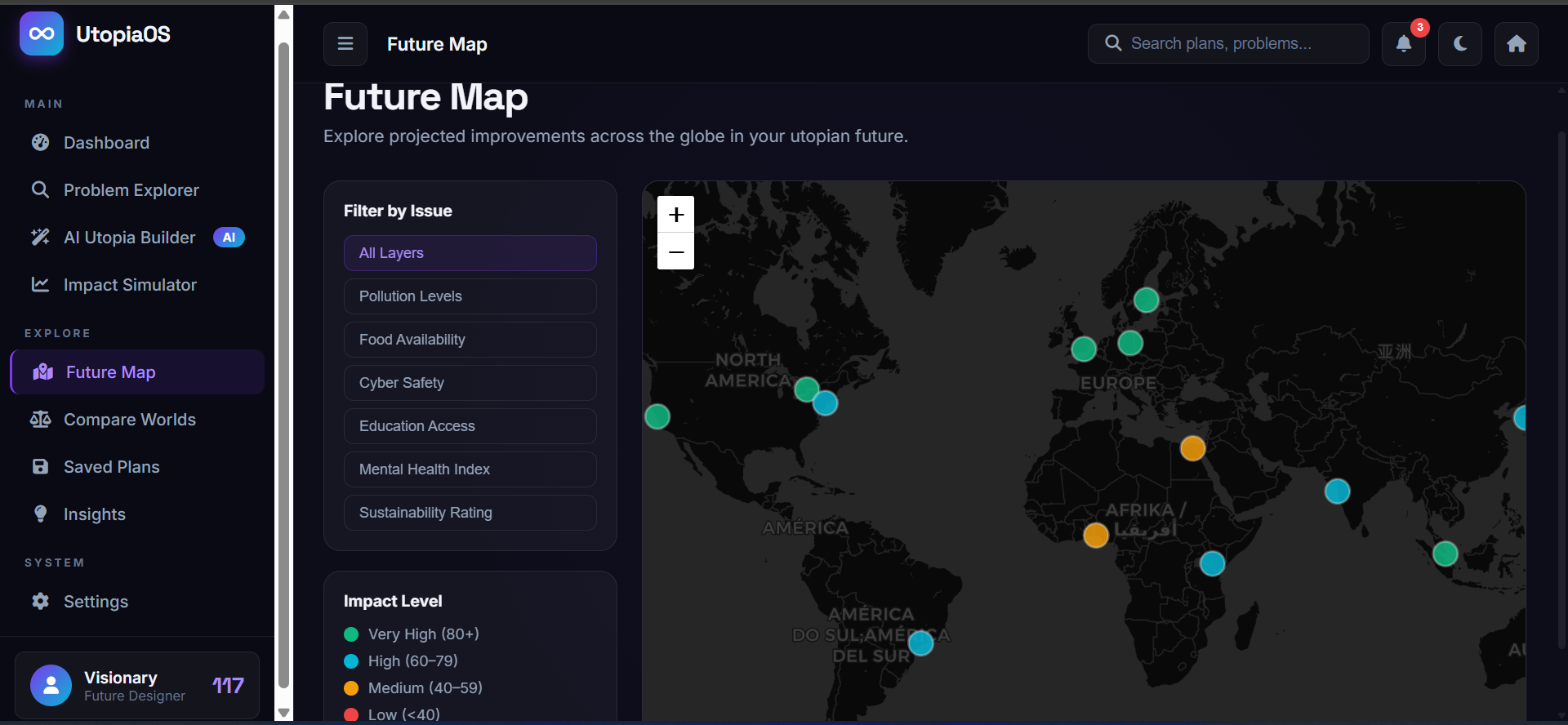
- Visualize outcomes through charts, comparisons and interactive elements
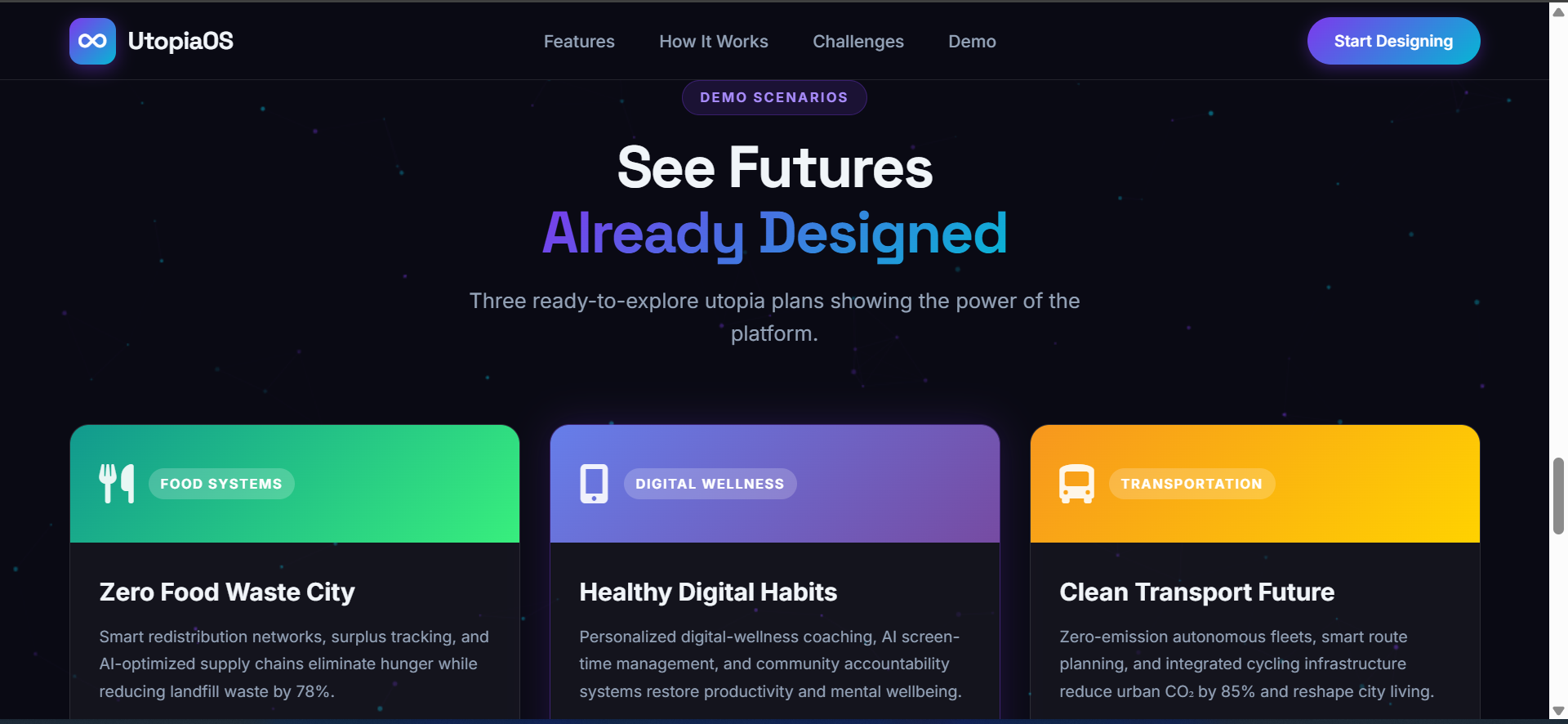
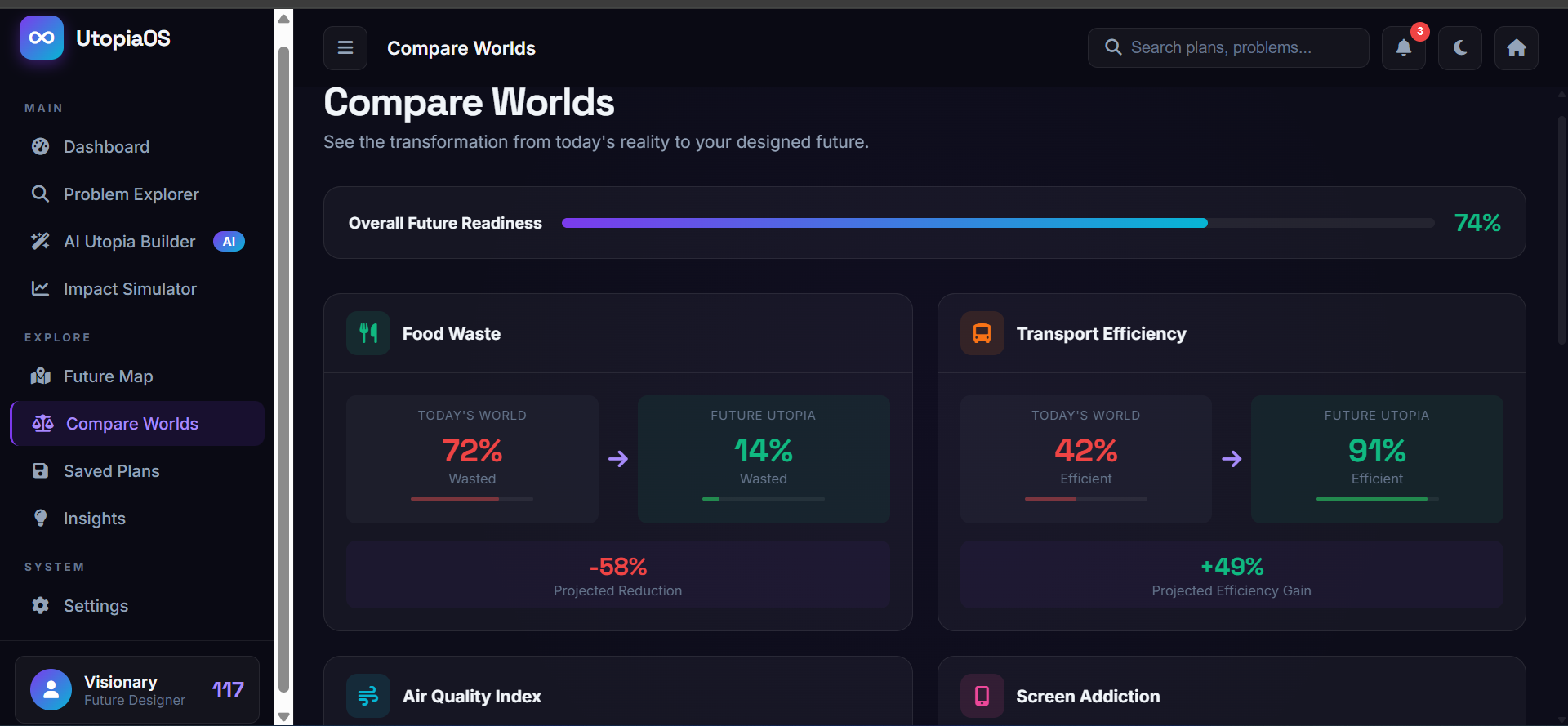
- Compare today’s world with a possible future world
The platform transforms abstract ideas into interactive experiences, helping users better understand how innovation can create meaningful impact.
How I built it
UtopiaOS was built as a frontend-focused web application designed for speed, interactivity and strong visual experience.
Technologies used:
- HTML, CSS and JavaScript for the core application
- Chart.js for dynamic data visualization
- Leaflet.js for interactive map features
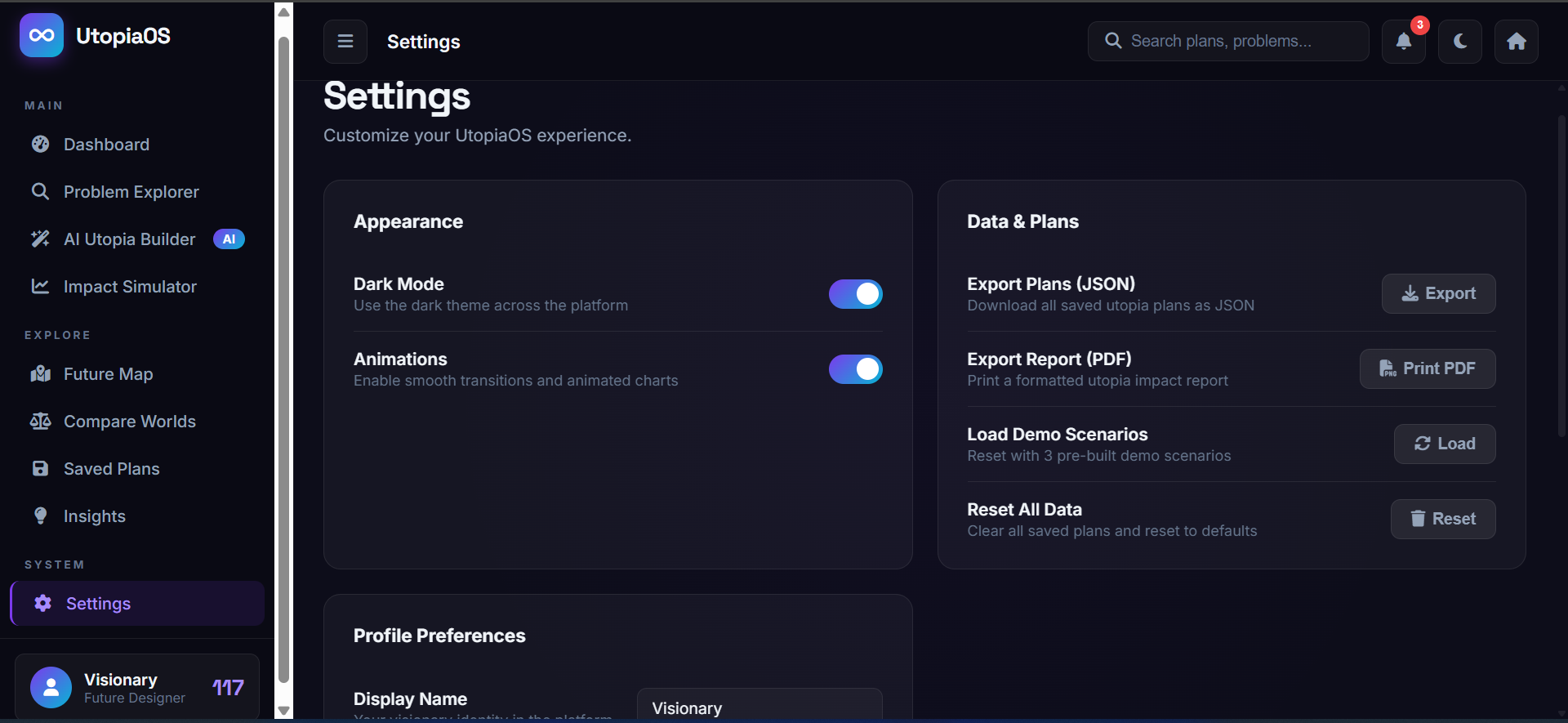
- Local storage for saving user-generated utopia plans
The system uses structured logic and simulation models to generate realistic outputs based on user inputs, creating an AI-like experience while ensuring reliability during demonstration.
The architecture is designed to be easily extended with backend systems and AI integrations such as Gemini in future iterations.
Challenges I ran into
One of the biggest challenges was balancing complexity with reliability within the limited time of a hackathon.
I initially explored integrating real-time AI APIs, but this introduced challenges related to security, latency and stability. To ensure a smooth and consistent user experience, I designed a structured simulation system that mimics intelligent outputs while remaining fast and dependable.
Another challenge was designing an interface that is both visually appealing and intuitive. Since the platform includes multiple features like simulation, comparison and planning, organizing the user flow clearly was critical.
Ensuring that all features worked seamlessly together without overwhelming the user required careful design decisions.
Accomplishments that I'm proud of
I'm proud of creating a platform that feels both innovative and practical within a short time frame.
Key accomplishments include:
- Designing a complete future simulation system from scratch
- Building a clean and interactive user interface
- Developing a dynamic impact simulator with real-time visual feedback
- Creating a compelling “compare worlds” feature that clearly shows transformation
- Delivering a smooth and engaging demo experience
Most importantly, I built a project that encourages people to think creatively about solving real-world problems.
What I learned
This project reinforced the importance of focusing on user experience and clarity when building complex systems.
I learned that:
- A strong concept combined with a clear visual experience can make ideas more impactful
- Simplicity and reliability are critical in a hackathon environment
- Structuring user flows properly greatly improves usability
- Prototyping smart systems does not always require full backend complexity
I also gained deeper insight into how simulation and visualization can help people better understand real-world problems and solutions.
What's next for UtopiaOS
UtopiaOS has strong potential to evolve into a full-scale platform.
Next steps include:
- Integrating real AI services such as Gemini for dynamic content generation
- Adding backend support for user authentication and data persistence
- Expanding the simulation engine with real-world datasets
- Enhancing the map with live global data and regional insights
- Allowing users to collaborate and share their utopia plans
- Introducing advanced analytics and impact forecasting models
My vision is to turn UtopiaOS into a platform that empowers individuals, communities and organizations to design and build better futures together.
Built With
- chart.js
- css
- git
- github
- html
- javascript
- leaflet.js
- local
- storage


Log in or sign up for Devpost to join the conversation.