-
-
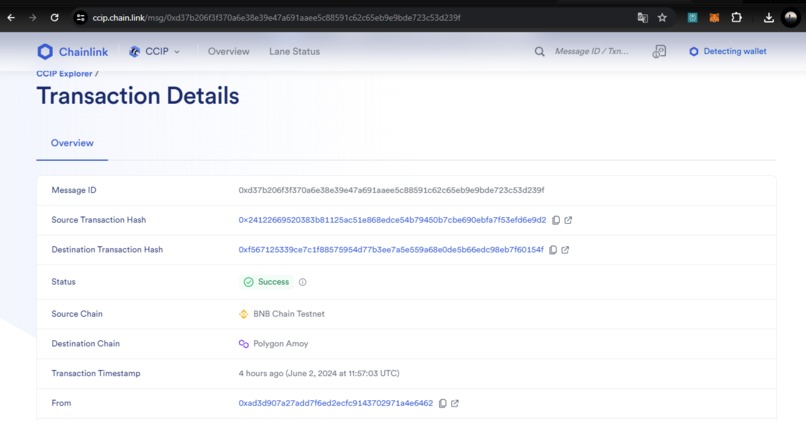
CCIP Messagae Transaction
-
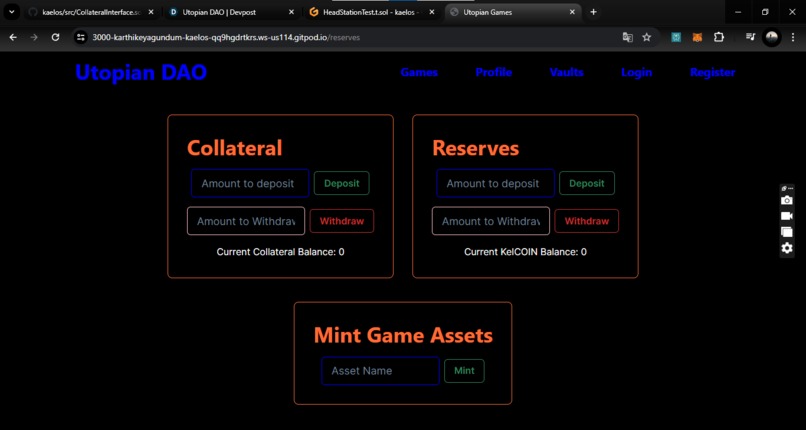
UTopian Dao front-end
Inspiration
A Reddit post sparked the creation of Utopian DAO. The post highlighted critical issues with current Web3 gaming trends, including:
Limited Ownership: Players feel they don't truly "own" in-game assets, as they're restricted to specific games. Unsustainable "Play to Earn": The post questioned the long-term viability of "Play to Earn" models heavily reliant on other players' spending. Potential for Inflation: Concerns were raised about games issuing unlimited assets, potentially devaluing them. These issues inspired Utopian DAO to create a more user-centric Web3 gaming experience. redditPost
What it does
The Kaelos DAO (Decentralized Autonomous Organization) is the governing body of the Kaelos Protocol, ensuring the seamless operation and evolution of the ecosystem. The DAO oversees and manages the various components of the protocol, ensuring transparency, security, and community participation in decision-making processes.
Key Functions of Kaelos DAO
Cross-Chain Over-Collateralized Liquidation:
- Cross-Chain Interoperability: The Kaelos DAO leverages Cross-Chain Interoperability Protocols (CCIP) to enable seamless transactions across different blockchain networks. This allows users across multiple chains to deposit the accepted collateral and mint KelStableCoin.
- Over-Collateralization: To maintain stability and reduce risk, the Kaelos Protocol requires collateral to be over-collateralized. This means that the value of the collateral deposited must exceed the value of the stablecoins minted. This approach ensures that the system remains solvent even in the event of market volatility.
- Liquidation Mechanism: If the value of the collateral falls below a certain threshold, the Kaelos DAO initiates a liquidation process. The Auction House component is triggered to start or restart auctions, transferring assets and handling deposits to ensure that the protocol remains stable and secure.
Game Asset Minting as Under-Collateralized Loans:
- Asset Vaults: Game developers can create and manage their in-game assets through Asset Vaults. Unlike traditional game developers have to collateralize their assets by KEL Stable coin, Asset Vaults operate on an under-collateralized basis. This means that games can mint assets with collateral that is less than the value of the assets created, providing them with greater flexibility and the ability to generate revenue.
- Collateral Management: To mint new assets, game developers deposit stablecoins into the Asset Vaults. The value of the assets minted must be a multiple of the stablecoins deposited, ensuring a controlled and sustainable asset creation process.
Assets Backed by Stablecoins:
- Stablecoin Usage: The Kaelos Protocol utilizes a reliable crypto stablecoin, KELStableCoin, for all transactions within the gaming ecosystem. This stablecoin is pegged to a stable value, providing users with a reliable medium of exchange.
- Asset Backing: All in-game assets created within the Kaelos ecosystem are backed by stablecoins. This ensures that the assets have intrinsic value and can be traded or liquidated reliably within the marketplace.
Asset Liquidation When a Game Suspends Its Players:
- Suspension and Liquidation: If a game within the Kaelos ecosystem suspends its players or ceases operations, a decentralized governance process is initiated. A DAO proposal is created to liquidate the assets associated with the game.
- Liquidation Process: Upon approval of the proposal, the assets are liquidated through the Liquidation Station. Players can liquidate their in-game assets for stablecoins at a fraction of their original value, ensuring that they can recover some of their investment even if the game is no longer operational.
Reliable Crypto Stablecoin for Trading:
- Stablecoin Integration: KELStableCoin is deeply integrated into the Kaelos ecosystem, providing a stable and reliable currency for all transactions. Whether players are trading assets in the marketplace, purchasing game passes, or engaging with the decentralized ad network, KELStableCoin ensures smooth and secure transactions.
- Economic Stability: The over-collateralized nature of the Game Vaults and the robust liquidation mechanisms ensure that KELStableCoin maintains its peg and stability, fostering trust and confidence among users.
Governance and Community Participation
The Kaelos DAO empowers the community to participate in the governance of the protocol. Token holders can propose and vote on key decisions, such as protocol upgrades, parameter adjustments, and new feature integrations. This democratic approach ensures that the Kaelos Protocol evolves in a way that aligns with the interests and needs of its users.
How I built it
I developed the Kaelos Protocol on the Polygon blockchain, leveraging its high throughput and low transaction costs to create a scalable and efficient ecosystem for blockchain gaming and DeFi. Here are the key components and technologies I used:
Blockchain and Smart Contracts
Polygon Blockchain:
- Why Polygon: I chose Polygon for its scalability, low fees, and robust support for Ethereum-compatible smart contracts. This ensures that the Kaelos Protocol can handle a large number of transactions efficiently.
- Deployment: All the core contracts, including Game Vaults, Asset Vaults, the Auction House, and the Liquidation Station, were deployed on the Polygon network.
Smart Contracts:
- Solidity: The smart contracts were written in Solidity, the programming language for Ethereum-based smart contracts.
- Key Contracts:
- Game Vaults: Manage collateral and mint stablecoins using an over-collateralized system.
- Asset Vaults: Allow games to mint in-game assets using an under-collateralized system.
- Auction House: Handles the auction process for liquidating assets.
- Liquidation Station: Manages the liquidation of assets when necessary.
- Head Station: Central contract for managing collateral, stablecoin, and KSC operations.
Chainlink Integration
Chainlink Price Feeds:
- Real-Time Data: I integrated Chainlink Price Feeds to fetch real-time price data for various assets. This ensures accurate and up-to-date valuations for collateral and stablecoin minting.
- Security and Reliability: Chainlink's decentralized oracle network provides secure and tamper-proof price data, enhancing the reliability of the protocol.
Chainlink CCIP (Cross-Chain Interoperability Protocol):
- Cross-Chain Liquidation: To enable cross-chain liquidations, I utilized Chainlink CCIP. This allows the protocol to interact with multiple blockchains seamlessly.
- Workflow:
- Destination Chain Contract: On the destination chain (where the collateral token exists), I deployed a smart contract that initiates the cross-chain liquidation process.
- Message Sending: This contract sends a message to the receiver contract on the Polygon chain, recording the liquidation request.
- Pending Transactions: The receiver contract on Polygon records the message and adds it to a list of pending transactions.
- Keeper Incentivization: A Keeper node monitors these pending transactions. When a transaction needs to be executed, the Keeper performs the necessary actions and is incentivized for doing so.
- Acknowledgement: After execution, the receiver contract sends an acknowledgment message back to the destination chain, confirming the completion of the process.
Security Measures:
- Incentives: Implemented various incentives for Keepers and other participants to ensure the smooth operation of the protocol.
Conclusion
Building the Kaelos Protocol involved integrating several advanced blockchain technologies and ensuring seamless interoperability across chains. By leveraging Polygon's capabilities and Chainlink's secure oracle services, I was able to create a robust and scalable ecosystem that fosters innovation and sustainability in blockchain gaming and DeFi.
Challenges I ran into
Building the Kaelos Protocol presented several challenges. One of the biggest hurdles was understanding and implementing liquidation auction mechanisms. This aspect was complex and required a deep dive into existing DeFi protocols to learn how they manage auctions. By studying whitepapers, technical documentation, and analyzing smart contracts from established protocols like Aave and MakerDAO, I gained the necessary knowledge to design a robust auction system for Kaelos.
Another significant challenge was managing the cross-chain liquidation process. The high execution costs on the receiving end often caused transactions to fail after the message was blessed in the cross-chain messaging process. To tackle this, I reached out to the Chainlink community on Discord. Their support was invaluable, helping me debug the issue. A community member suggested using Keepers to execute transactions, which significantly improved reliability and efficiency. This Keeper method was new to me but proved essential for handling gas-intensive operations.
Additionally, integrating Chainlink’s Cross-Chain Interoperability Protocol (CCIP) for the first time came with a learning curve. While the documentation was helpful, hands-on experience and community support were crucial. By participating in forums and studying example implementations, I was able to effectively incorporate CCIP into the Kaelos Protocol.
These challenges required extensive learning, debugging, and community collaboration, ultimately leading to a robust and scalable DeFi gaming ecosystem.
Accomplishments that I'm proud of
Completing the Kaelos Protocol within 20 days is a significant accomplishment for me. The rapid development timeline required intense focus and efficient work. Despite the tight schedule, I managed to design and implement a complex DeFi gaming ecosystem that integrates various advanced technologies like Chainlink's CCIP and price feeds.
Additionally, throughout this project, I gained a deep understanding of DeFi mechanisms and web3 gaming. This hands-on experience expanded my knowledge and skills significantly. Learning how to handle liquidation auctions, cross-chain communications, and decentralized governance in such a short period was challenging but immensely rewarding. Completing this project not only showcased my technical abilities but also demonstrated my capacity to learn and adapt quickly in a rapidly evolving field.
What we learned
Throughout the development of the Kaelos Protocol, I gained extensive knowledge in several key areas. First and foremost, I delved deeply into DeFi and web3 gaming, understanding their underlying principles and how to effectively integrate them into a unified ecosystem.
I also became proficient with Chainlink oracles, particularly their price feeds and Cross-Chain Interoperability Protocol (CCIP), which were crucial for ensuring real-time data accuracy and enabling cross-chain functionalities. Additionally, I learned many best practices in DeFi protocol programming, including secure smart contract development, efficient gas usage, and robust auction mechanisms.
This project not only expanded my technical expertise but also enhanced my problem-solving skills and adaptability in the rapidly evolving blockchain space.
What's next for Utopian DAO
The next phase for the Kaelos Protocol is to develop a decentralized gamer graph. This feature will enhance the social aspect of the ecosystem by connecting players in a way similar to the profiles in the Lens Protocol.
The decentralized gamer graph will allow players to create profiles, interact with each other, and build a community within the protocol. This will foster greater engagement and collaboration among gamers, adding a social layer to the existing economic and gaming functionalities. By integrating this graph, we aim to create a more interconnected and vibrant gaming ecosystem where players can share experiences, trade assets, and participate in decentralized governance more effectively.
Developing this feature will involve leveraging decentralized identity solutions and social graph technologies to ensure privacy, security, and scalability. This addition will further solidify Kaelos Protocol as a comprehensive platform for blockchain gaming and DeFi.
Built With
- binance
- ccip
- chainlink
- chakraui
- datafeeds
- nextjs
- polygon
- solidity

Log in or sign up for Devpost to join the conversation.