-
-
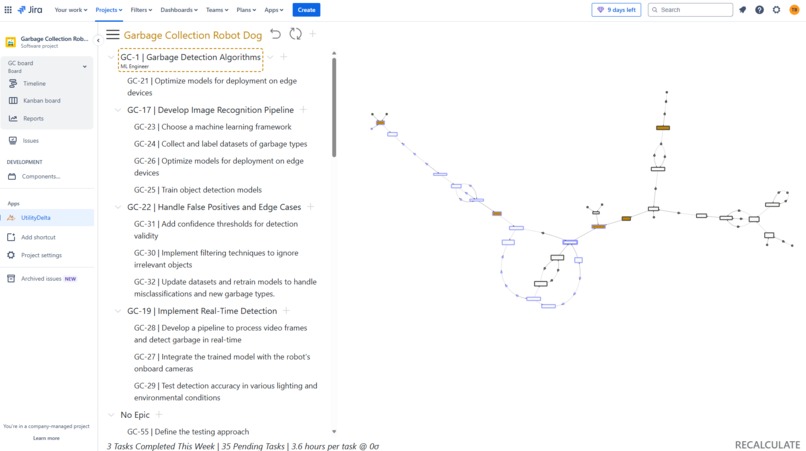
Breakdown tasks, establish dependencies & visualise your project
-
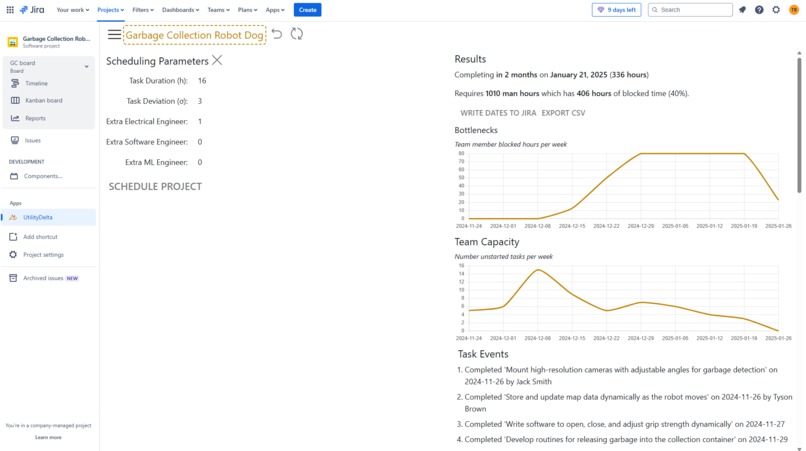
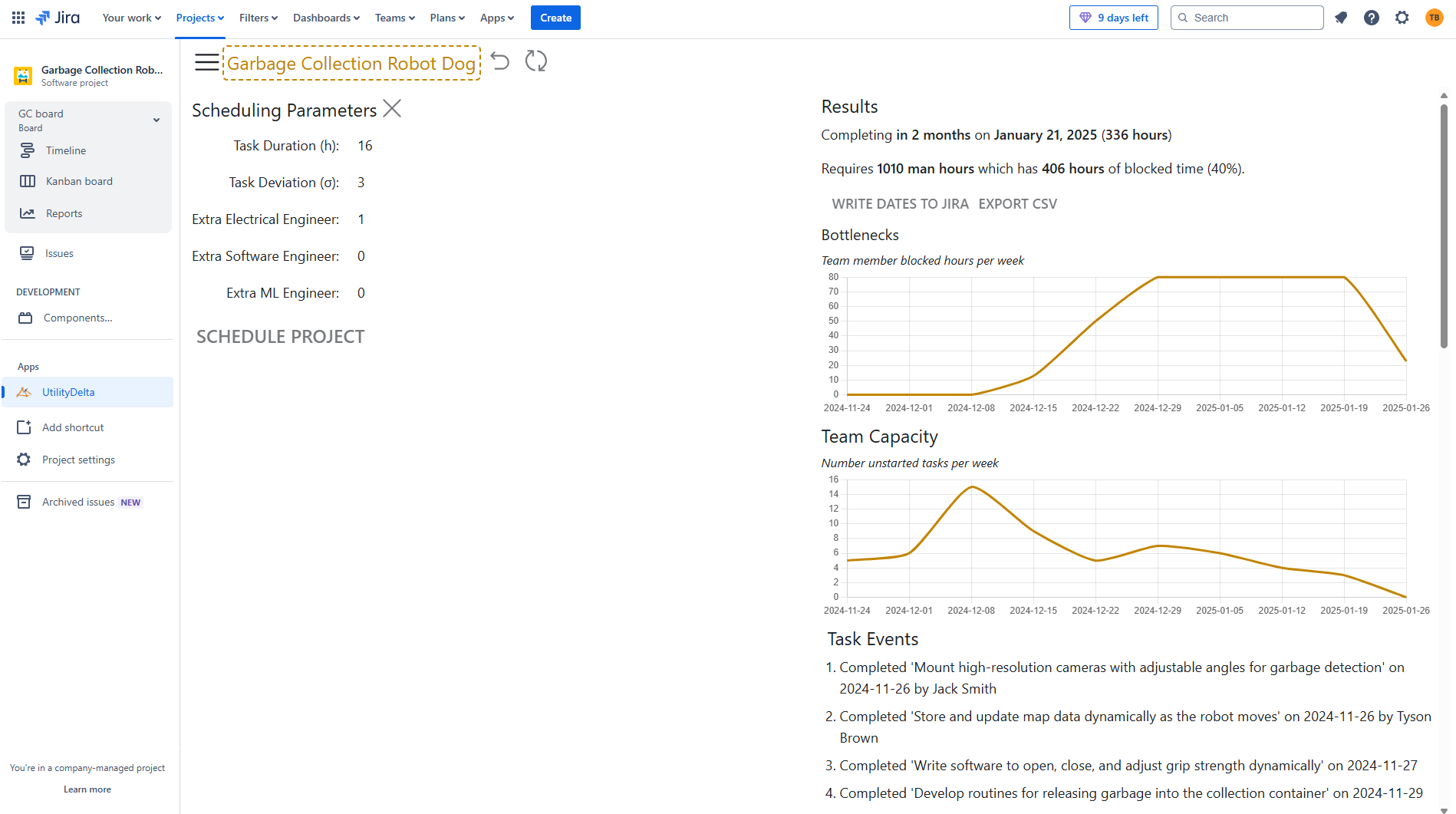
Automatically calculate start and finish dates for each task with our scheduler.
-
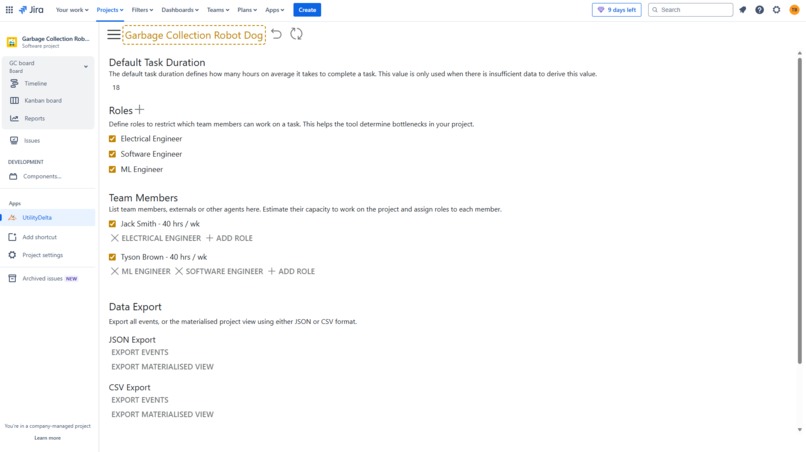
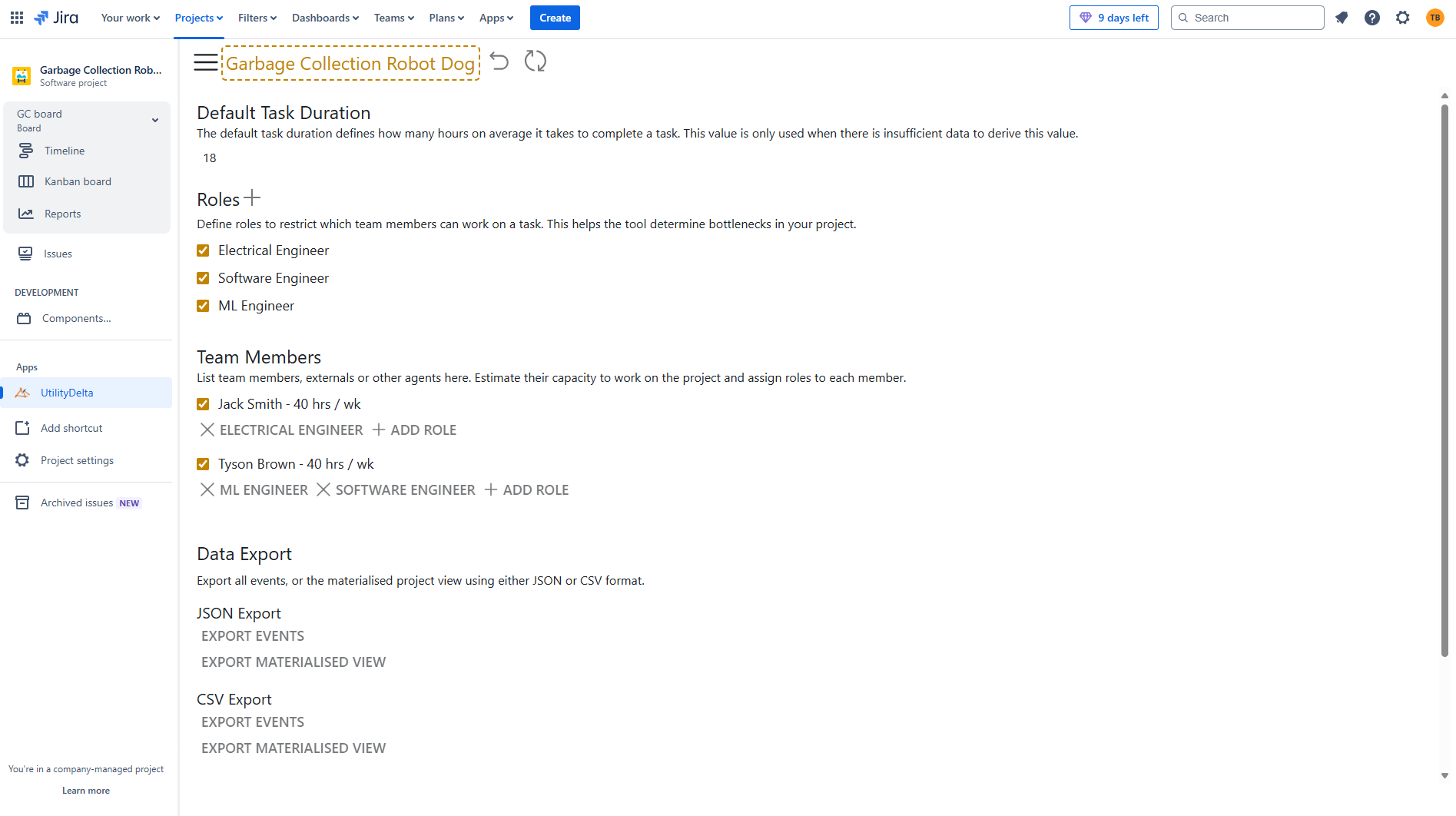
Define roles and setup your team for the scheduling engine.
Inspiration
Working in agile software development teams for many years, I have often come across the same problems - backlogs lacking dependencies & structure, time consuming sprint planning sessions, unreliable estimation methods, and inability to forecast roadmap timelines. Inspired by #noestimates, ShapeUp and graph theory, I set out to build something to make this better!
What it does
UtilityDelta's intelligent scheduling engine streamlines your Kanban workflow. Explore team resource allocation scenarios, predict completion dates, and eliminate the need for manual estimates!
Task Breakdown Replaces Estimating
UtilityDelta enhances Jira by extending the issue hierarchy to unlimited depth. Break down and right-size tasks effortlessly with keyboard shortcuts—no dialogs, mouse interaction, or screen navigation required. Just open UtilityDelta and start working!
Visualise Dependencies
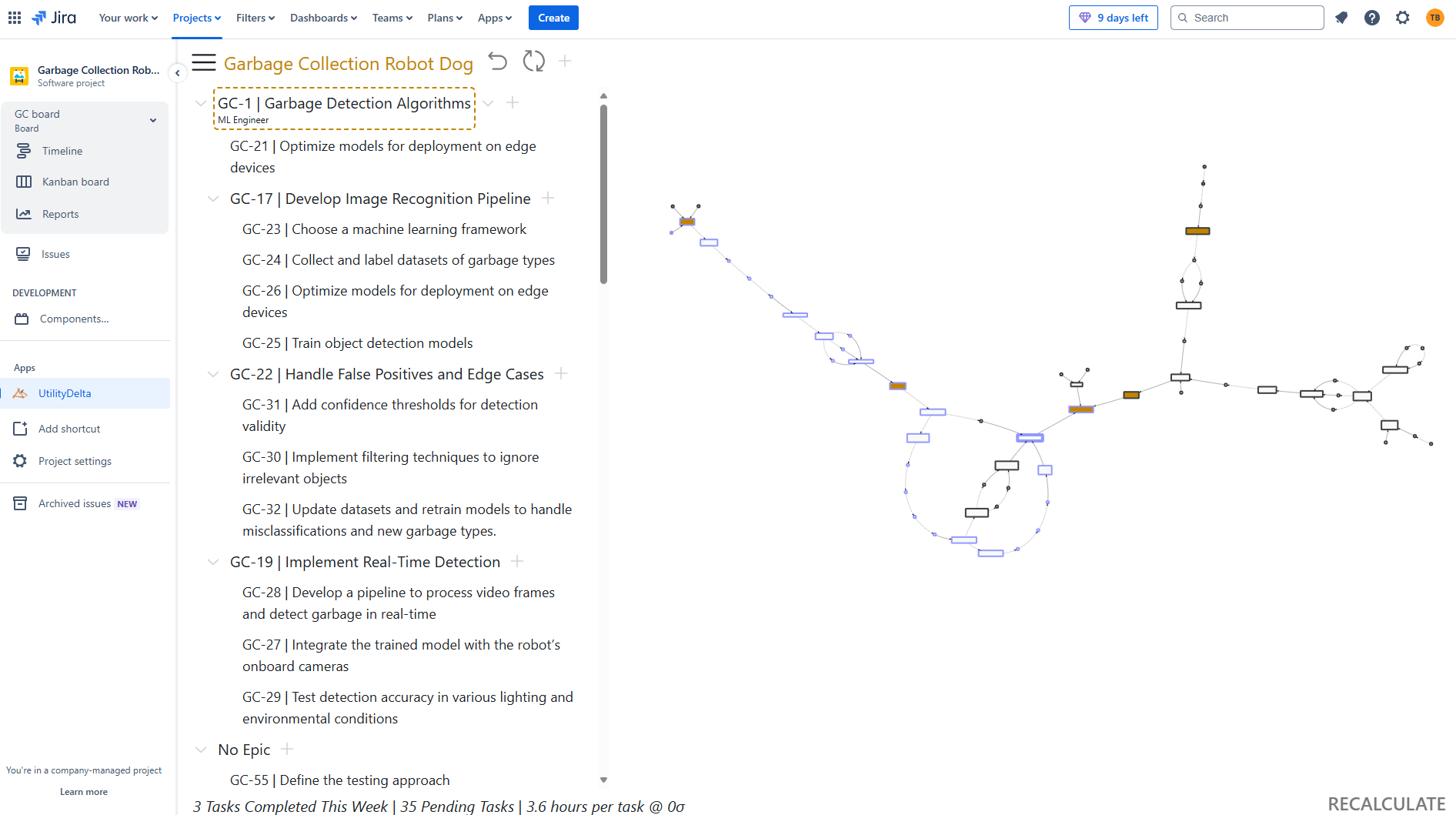
Easily link dependencies at any level - UtilityDelta traverses the tree and works out the task execution order during scheduling. Use the 2D canvas to visualize your project structure, identify bottlenecks, and refine areas needing more structure.
Intelligent, Minimalist KanBan Board
UtilityDelta provides a KanBan board that only shows tasks that can be started - based on dependency information. No more cluttered Pending lists with team members unsure which tasks to pick up next. Enjoy our minimalist take on the KanBan board!
Calculate Start & Finish Dates
Use UtilityDelta to automatically calculate start and finish dates for each task with our timeline simulation. Seamlessly update your Gantt chart in the Jira Timeline with the results. Need to account for different skill sets? Assign roles to tasks and team members, then re-run the simulation to see the updated schedule.
Flow Analysis & What-if Scenarios
UtilityDelta analyzes task completion rates and active team members to calculate average task duration. Explore how changes, like adding or removing team members, impact your project timeline. Measure your team's efficiency with our 'blocked percentage' metric, tracking time lost to dependency issues.
History & Data Export
With UtilityDelta's event-sourcing model, your project's entire history is preserved. Use the activity calendar to revisit any past date, view the project structure, and check completion estimates from that time.
How we built it
UtilityDelta uses the Atlassian Forge development tooling, combined with a custom React based UI to deliver a project-page plugin for your Jira project. It uses the Forge storage API as an event-sourcing store to track changes to your project and extend Jira functionality.
Challenges we ran into
- Event sourcing models often rely on an incremented id to store unique events. We had to fall back to a Unix Epoch timestamp instead as the Storage API was lacking this functionality
- Being a FAAS platform, Forge was unable to allow us to connect users using UtilityDelta in realtime using WebSockets. Hopefully this will be introduced in the future!
Accomplishments that we're proud of
We are proud to realise our thoughts and concepts so well inside of a Jira plugin. We hit 80% of our goals on this project without hitting any major blockers on the Forge development platform. This was able to be achieved without any data leaving Atlassian - critical for a lot of organisations.
What's next for UtilityDelta
We would love to get this out to some real agile teams - software or otherwise - and gain some feedback to allow us to iterate on the next release!


Log in or sign up for Devpost to join the conversation.