-
-
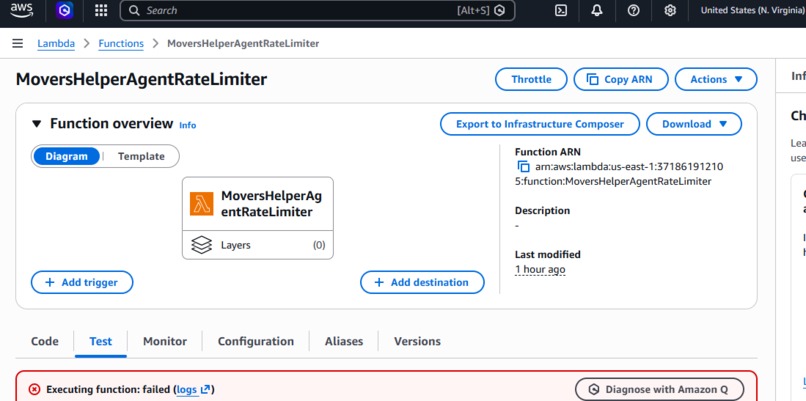
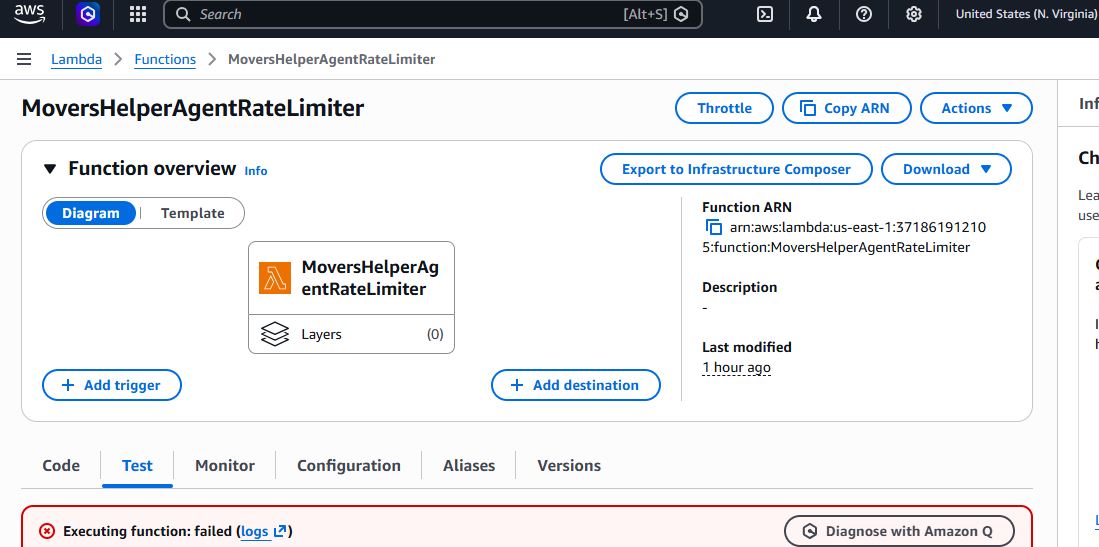
Lamda function RL
-
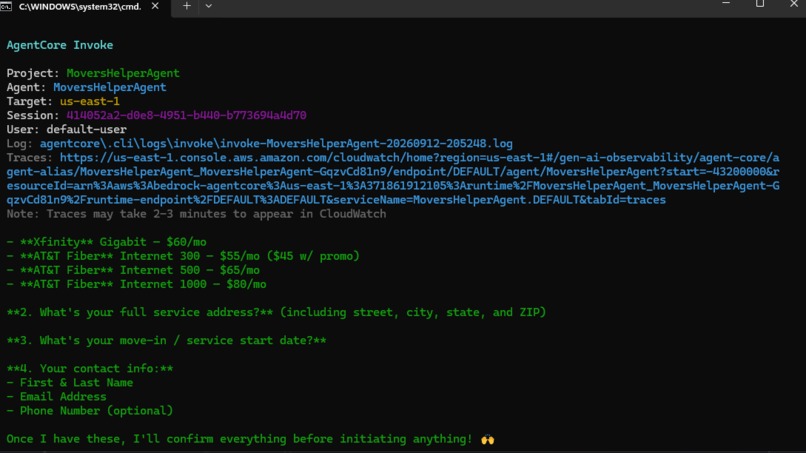
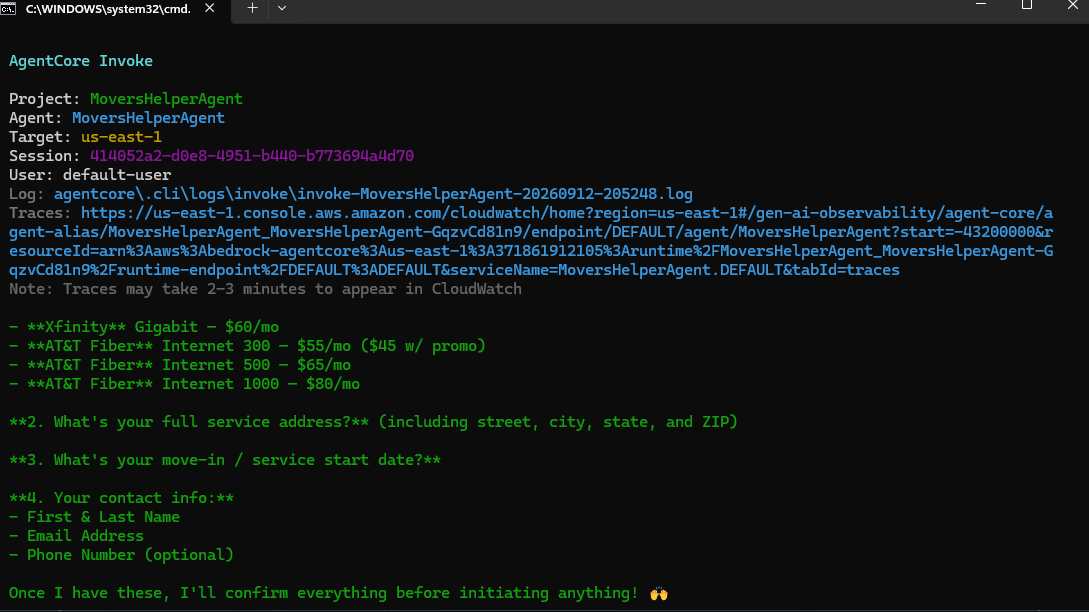
CMD Agent Invoke
-
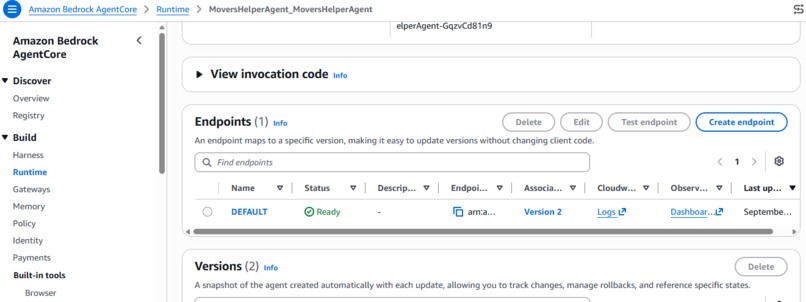
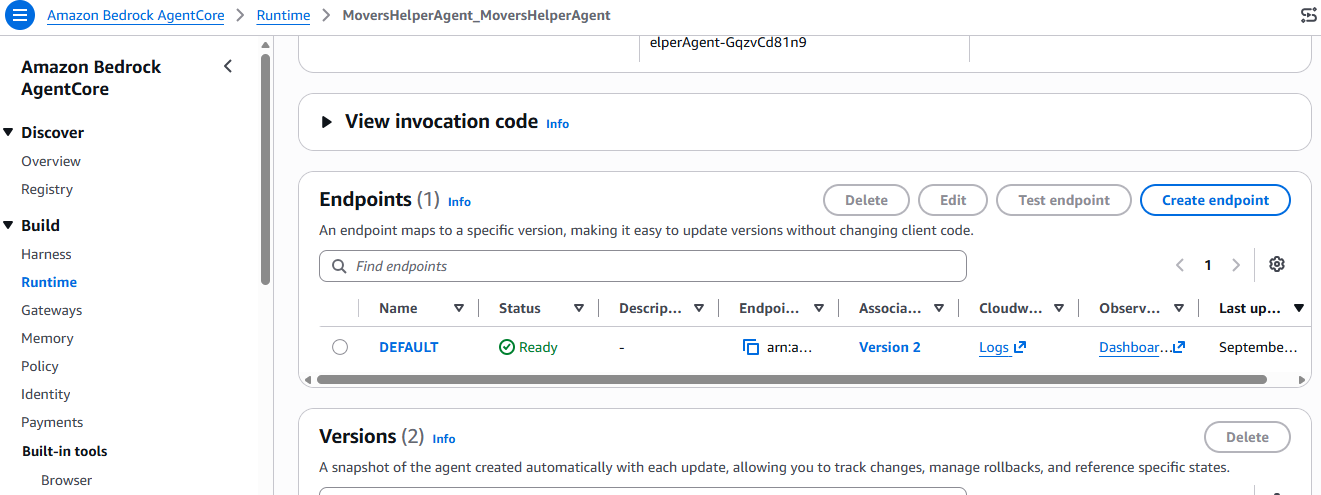
AgentCore runtime
-
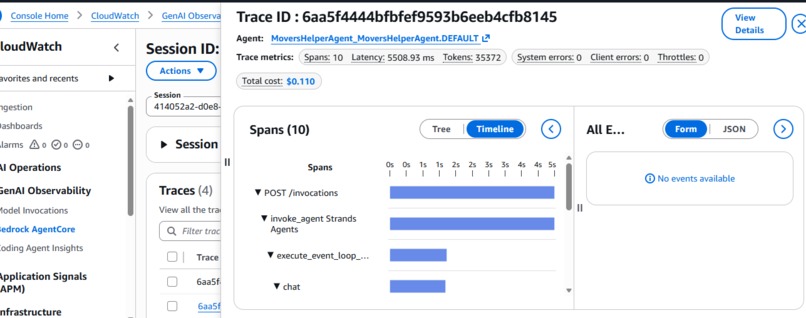
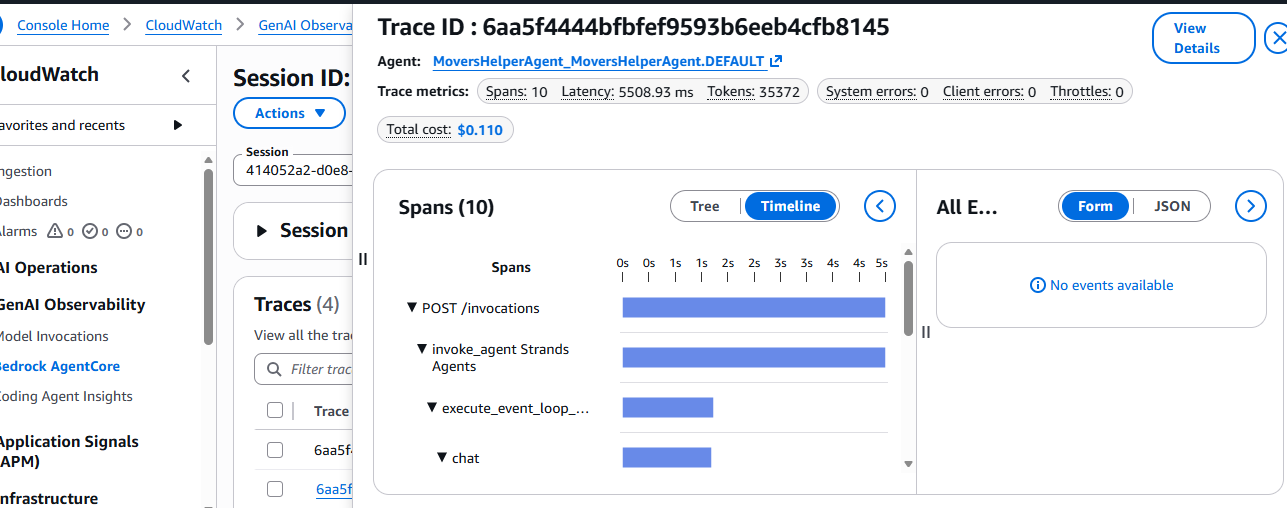
CW Session Log
Inspiration
Shopping for utilities means five browser tabs: find who even serves your address, dig through pricing pages for promotions that are still active, do the math to combine services into a monthly number, then enroll separately with whoever you picked. That's a lot of manual cross-referencing for something that should be one conversation.
Fresh off the Strands Agents Hands-On Workshop, we saw the real question: not whether an agent could do this, but whether it could be trusted to — never inventing a provider, never enrolling someone without asking. Movers Helper Agent is our answer: an agent that goes from "what's near me?" to "you're enrolled" without crossing that trust line.
What it does
For a Texas address, Movers Helper Agent:
- Searches real, live plans — electricity, internet, gas, water, sewer, trash, even solar — via Utilify's MCP server.
- Compares options and surfaces active promotions.
- Builds a move-in checklist.
- Enrolls — once the customer has picked a plan.
That last step got the most care: enrollment has real consequences, so the agent must summarize exactly what it's about to do and get explicit go-ahead first — and even then it only hands back a signup link, because finishing on the provider's own site stays a human's job.
How we built it
Built on the Strands Agents SDK, agent loop, hooks, skills, steering — plus a live MCP integration gated by our own human-in-the-loop guardrail.
- Tools: one
MCPClientwired to Utilify's public MCP server (no API key) brings in eight tools for real Texas data. We started with a parallel mock multi-city toolset too, but consolidated onto Utilify alone so every answer is real, not a demo of the pattern. - Hooks:
RateLimiterHookcaps every tool at 4 calls/turn so a confused model can't loop forever. - Skills: one
SKILL.mdworkflow (utility-enrollment) — search, compare, confirm, enroll. - Steering:
EnrollmentConfirmationHandlerdeterministically blocks signup/solar tools unless the customer's most recent message explicitly confirms — no acting on an earlier "I'm interested."ToneGuardrailHandleris an LLM check catching overpromising and false "enrollment done" claims. - Deployment:
main.pyis one entrypoint, run two ways — a local HTTP server (python main.py) or, viadeploy.sh, packaged onto Amazon Bedrock AgentCore Runtime through a CDK-managed CloudFormation stack. - Testing: offline pytest for the rate limiter and request parsing; an opt-in live suite that hits a real model and checks the human-in-the-loop guardrail actually holds.
Challenges we ran into
- Blocking the right thing, not everything. We needed the enrollment gate to trigger on the customer's current message, not just anywhere earlier in the conversation — otherwise an old "I'm interested" reads as standing consent.
- Mock data was a liability, not a shortcut. Running mock and live tools side by side meant two answers to the same question. We cut the mock layer entirely — one source of truth, even at the cost of Texas-only coverage.
- Trust, but verify the MCP contract. Utilify's docs describe its tools, but only connecting live and listing them confirmed our guardrail's tool-name allowlist would actually match at runtime.
- Real AWS costs. AgentCore Runtime isn't free tier and teardown is a
two-step CloudFormation dance, so
deploy.shdefaults to idempotent, with--dry-run/--diffbefore anything touches billing.
Accomplishments we're proud of
- An agent that acts, safely — not a chatbot that just talks about plans.
- Human-in-the-loop as a testable guardrail, verified against a live model, not just a polite system-prompt request.
- Two guardrails, two failure modes: a deterministic consent check plus an LLM check for tone and false completion claims.
- The discipline to delete our own mock-data layer once the real thing worked.
What we learned
- Human-in-the-loop is a design decision, not a flag — the hard part was defining which actions need one and what counts as confirmation.
- MCP makes real data trivial to wire in; the real work is governing how the agent's allowed to use it.
- A demo-only mock layer erodes trust — better an honest Texas-only scope than quietly blended real and fabricated answers.
- Deploying is its own discipline: AgentCore's warm-container model changes how session state and cost behave versus local dev.
What's next for Movers Helper Agent
- Beyond Texas via broader or additional regional MCP sources.
- A real budget estimate, summing actual Utility rates across services.
- Post-enrollment follow-up using
utilify_check_signup_status. - Structured confirm/cancel UX, not just a phrase match.
- Multi-agent split — shopping advisor and enrollment agent as separate agents, shrinking the enrollment agent's tool surface by construction.
Built With
- agentcore
- cloudwatch
- sonnet
- strand-agents

Log in or sign up for Devpost to join the conversation.