-
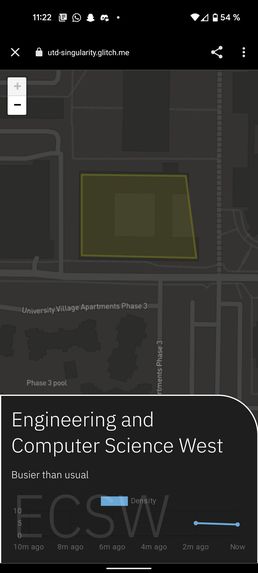
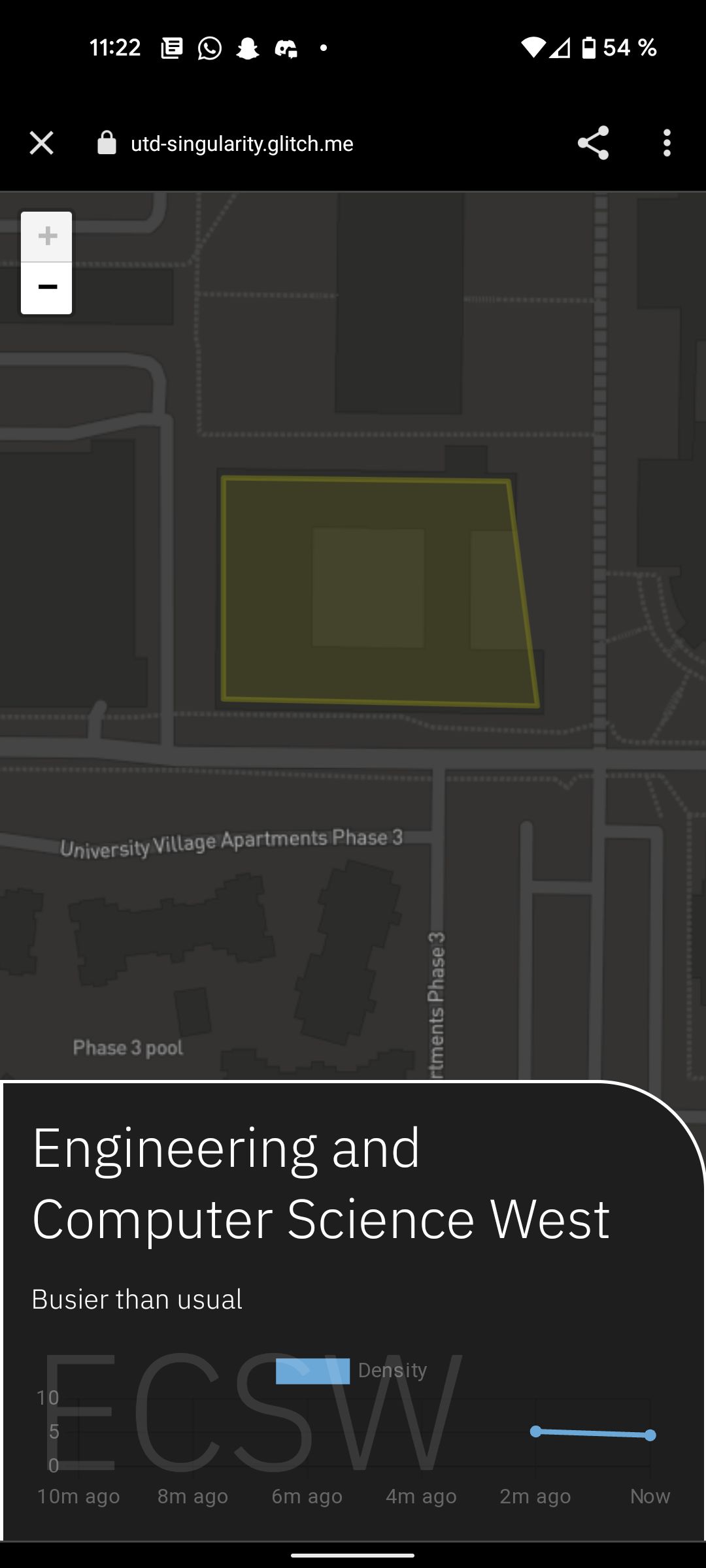
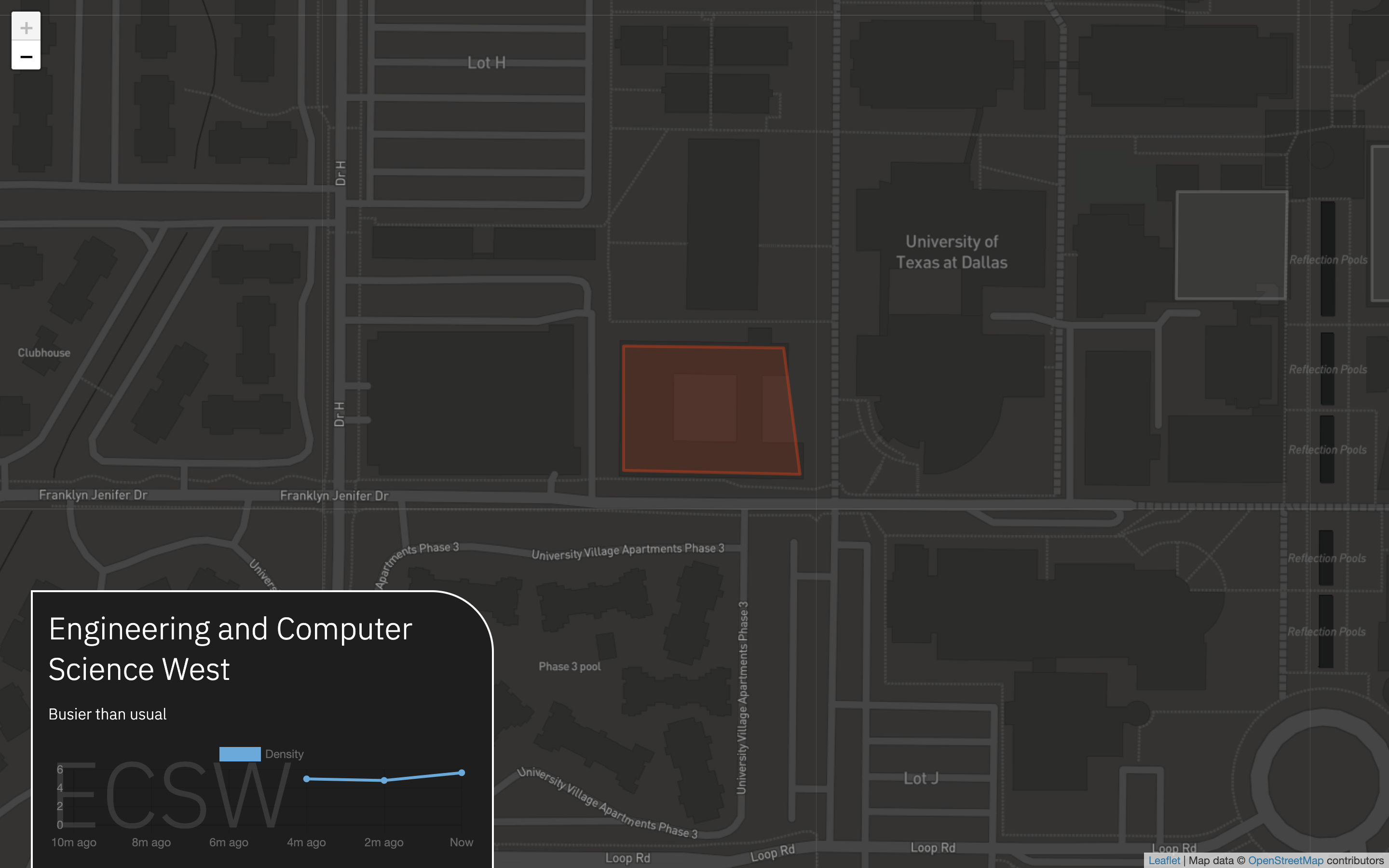
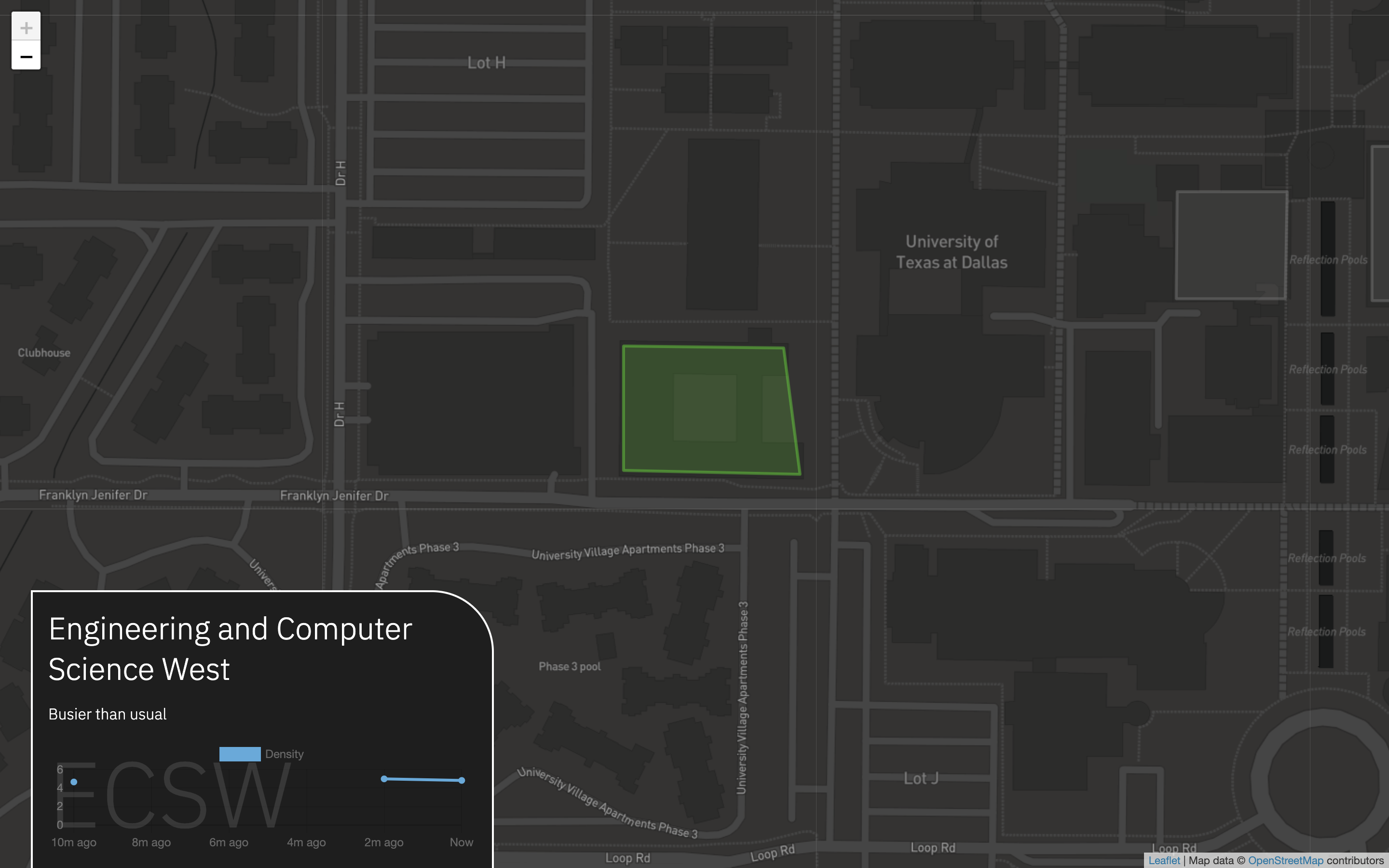
Mobile screenshot, average number of users on network
-
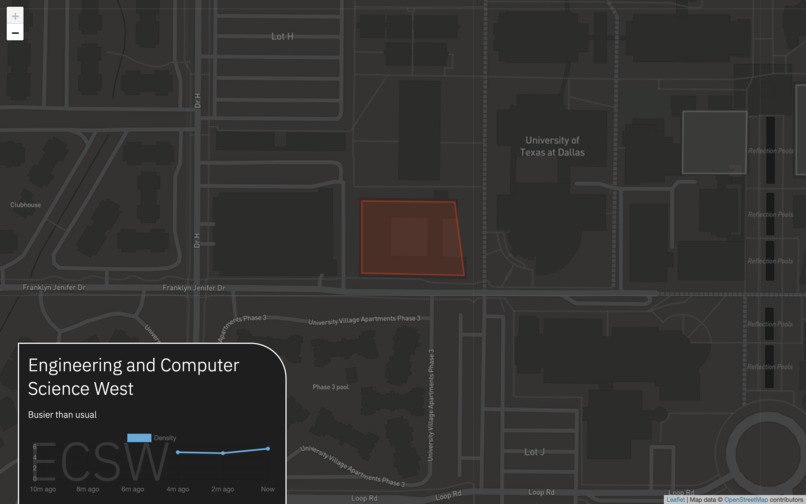
Many users on network
-
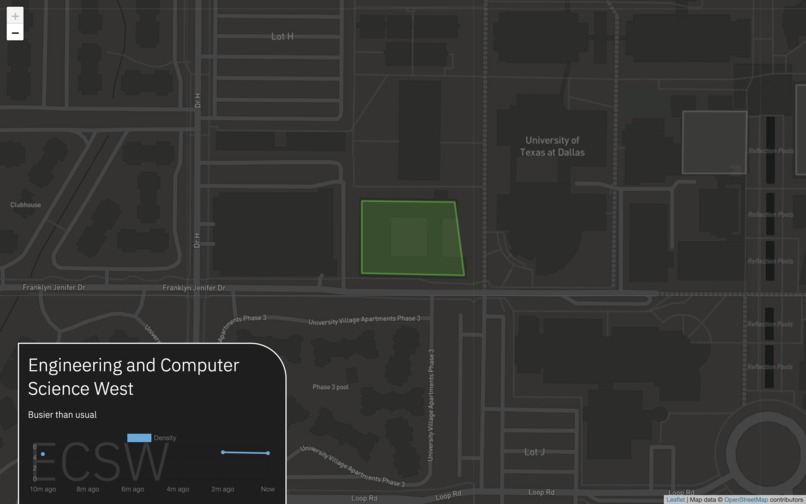
Less users on network
Inspiration
With the university returning to in-person classes, many students who commute to UT Dallas need to stay on campus to study between classes/work. However it's difficult to find a good study spot on campus as many of the best spots are crowded with people who also need to study. Instead of walking through every floor of every building, wouldn't it be nice to be able to see what building are full/vacant?
What it does
Every student in the 2020s relies on the internet to study, so we decided to measure the number of users currently on a WiFi network. It then sends the quantity of users to a website that automatically updates (no refresh needed) a map of the campus. What is considered busy and not busy is relative to recent averages.
For obvious legal and ethical reasons, this project was used and developed on a private hotspot.
How we built it
We had a Raspberry Pi run a bash script to periodically ping the number of devices connected to a WiFi source using nmap. We then sent that data to a glitch website to visualize the data and show a recent activity graph.
Challenges we ran into
Originally we were going to maintain a database using AWS but we ran into issues connecting to it/communicating with it, so instead we just removed the database middleman and just sent data between the website and the Pi directly.
We also had issues verifying that the data collected by the Pi and nmap was accurate, because some devices (such as the laptop I'm writing this on) would not register.
Accomplishments that we're proud of
The dynamically drawing boxes on the website :sunglasses:
What we learned
We learned how to make two devices directly communicate with each other
What's next for utd-singularity
To properly implement this, we would need to get a lot more Raspberry Pis to place around the school with permissions to directly scan the UTD network.


Log in or sign up for Devpost to join the conversation.