-
-
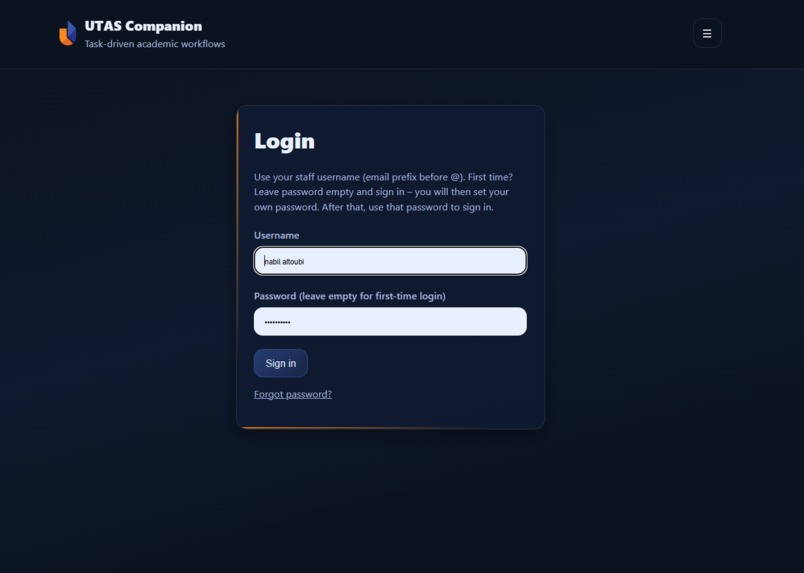
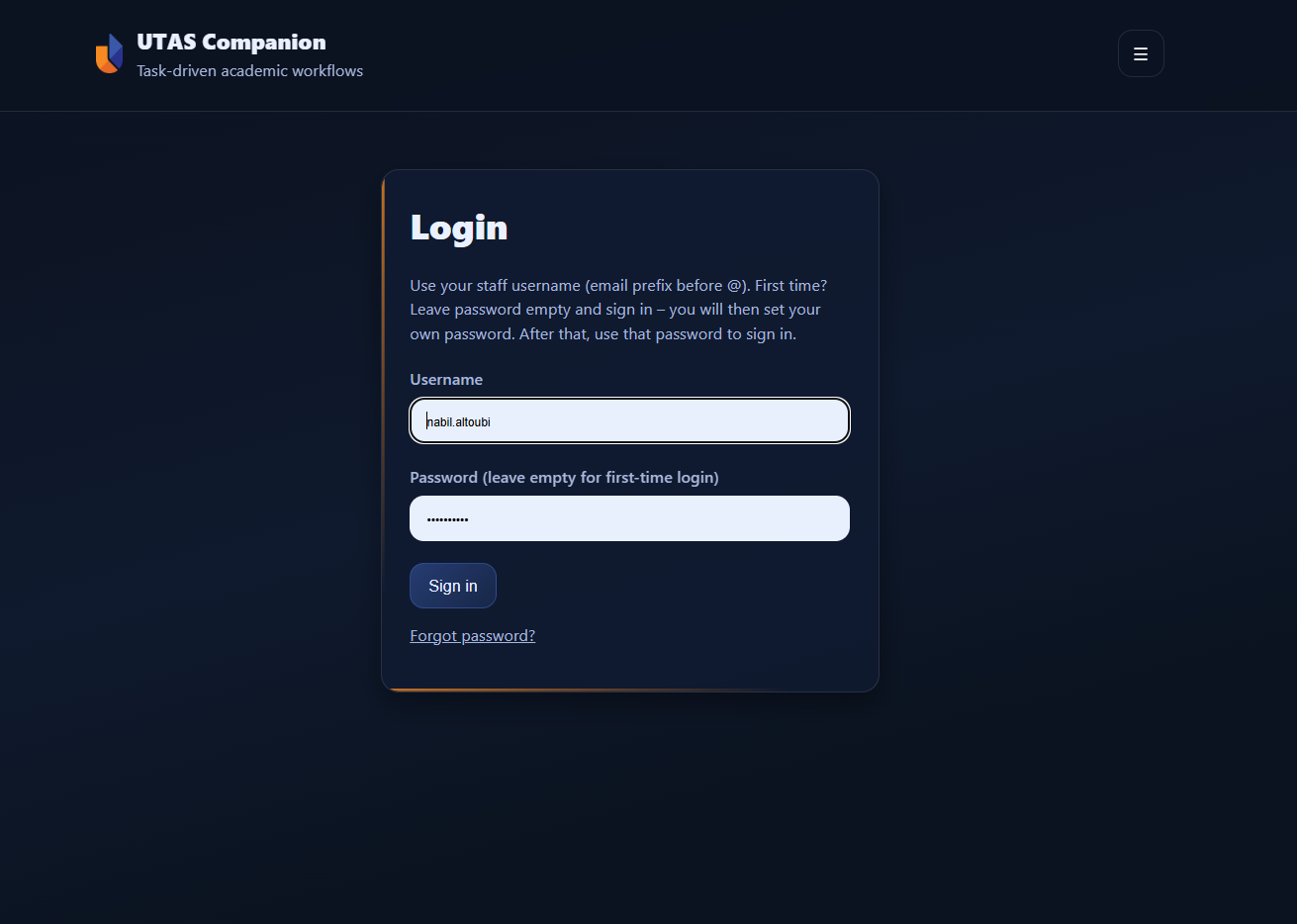
Secure staff login providing access to role-aware academic workflows, dashboards, approvals, and institutional tools.
-
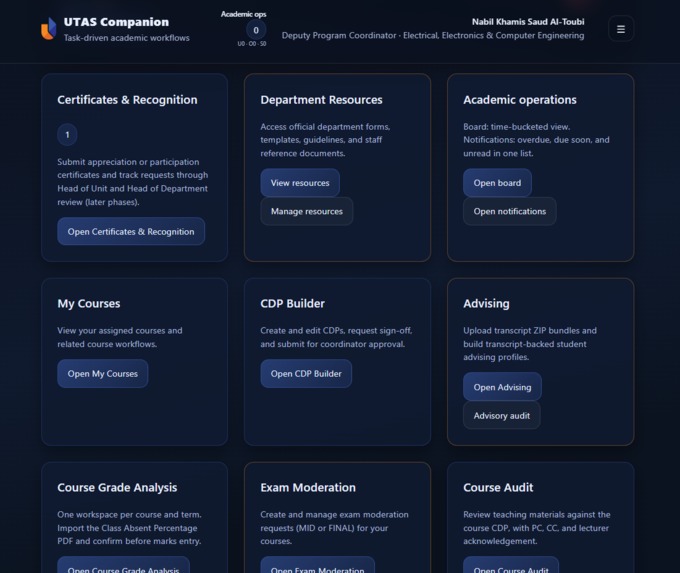
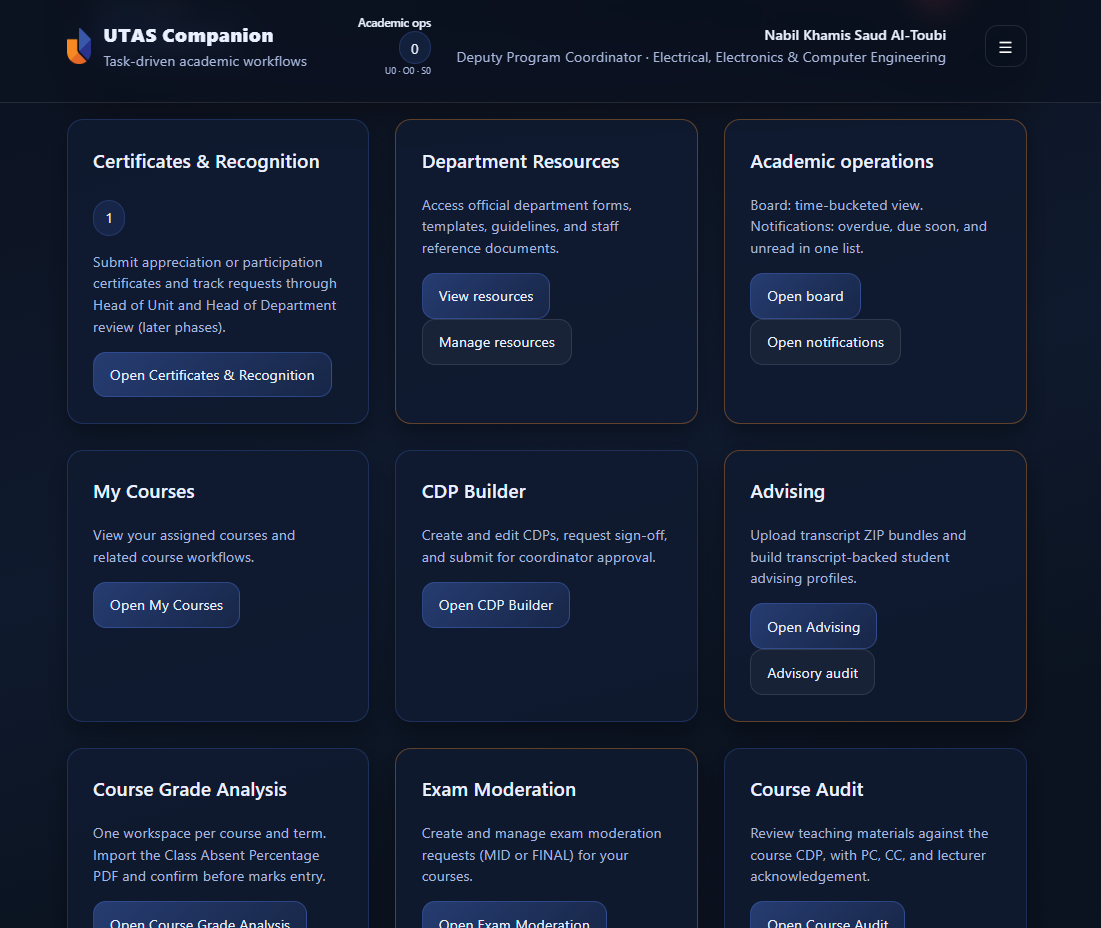
A role-aware faculty dashboard highlighting assigned tasks, issued actions, and quick access to core academic modules.
-
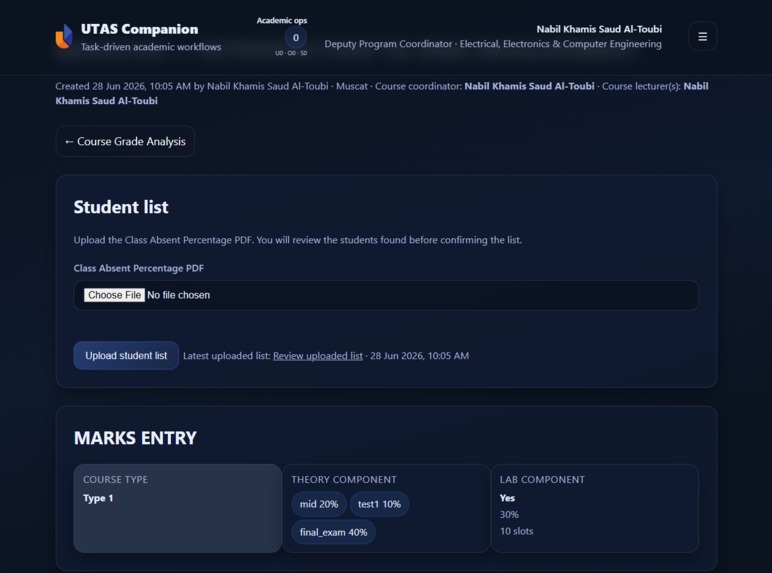
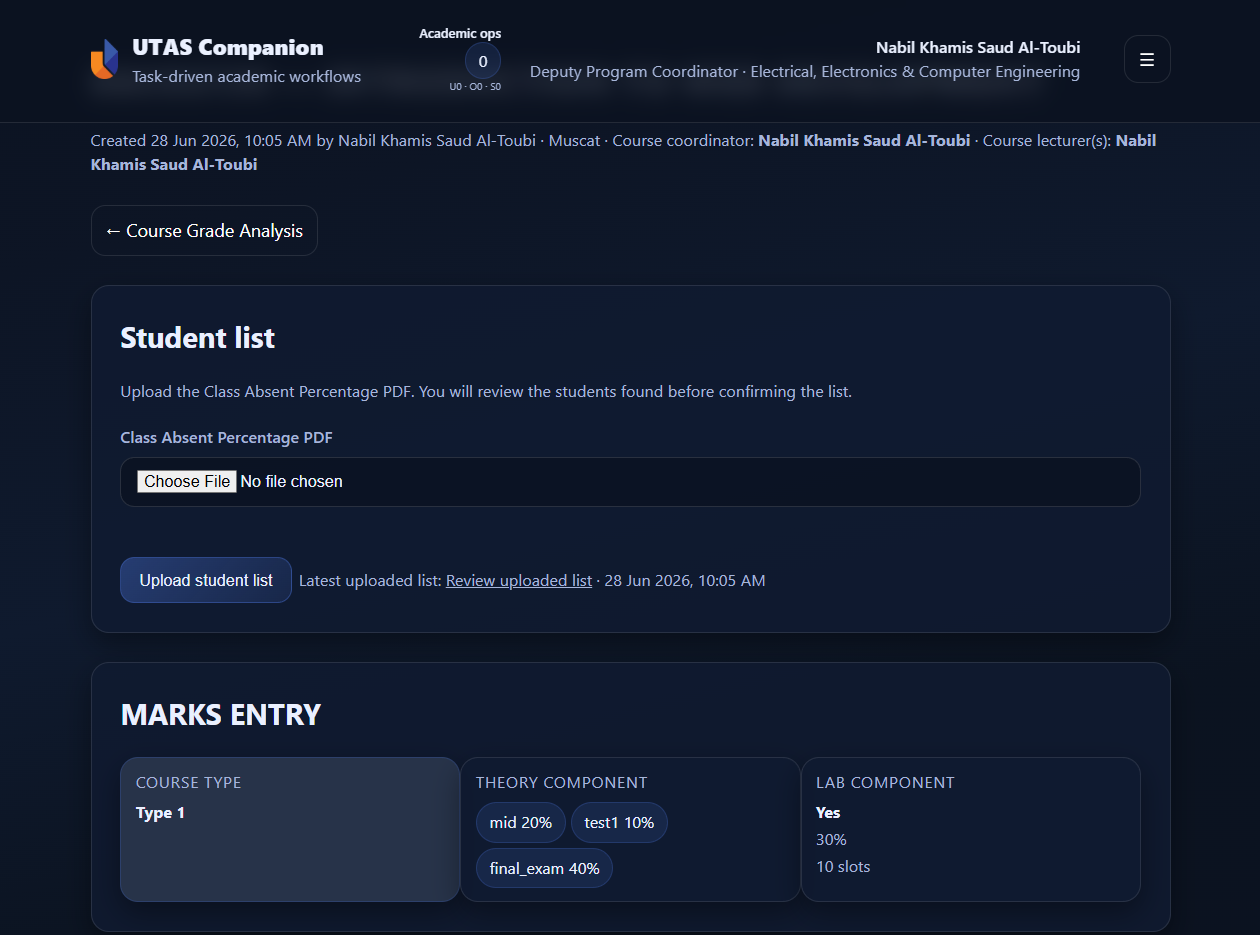
Faculty upload an official class list and configure theory and lab assessment components before entering marks.
-
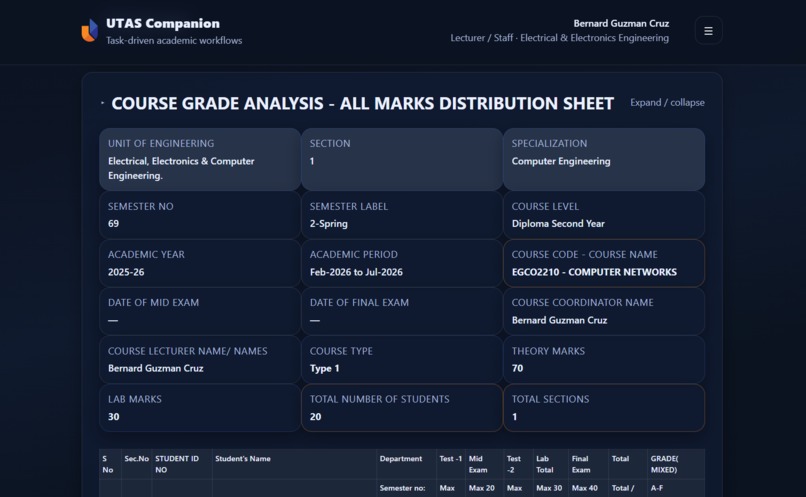
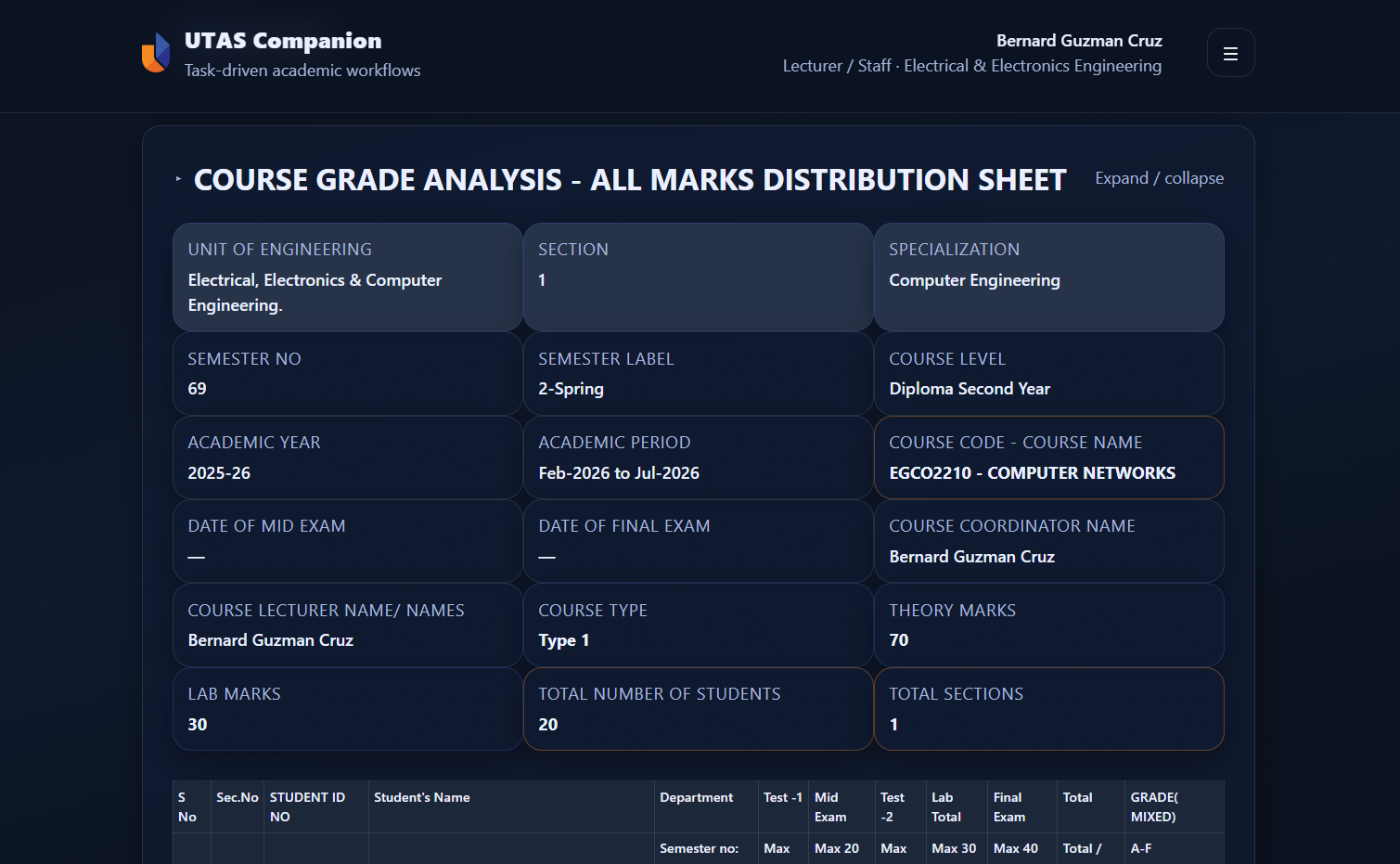
A structured course results sheet combining student marks, grade distributions, course details, and academic analysis.
-
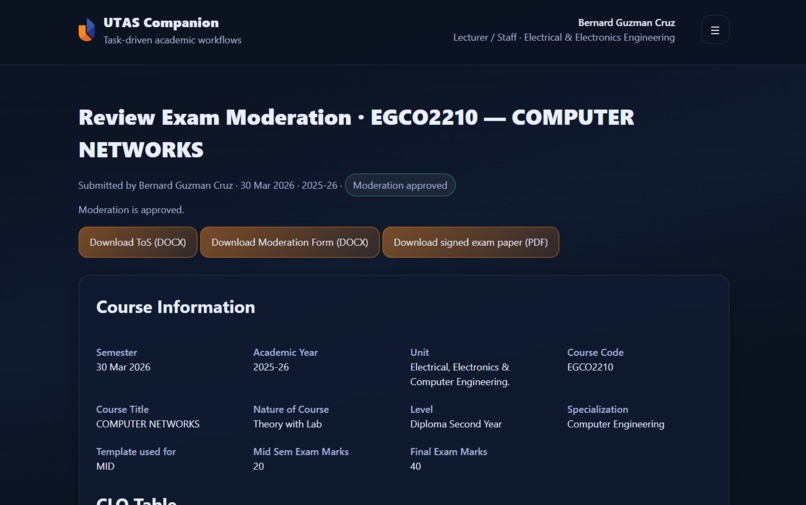
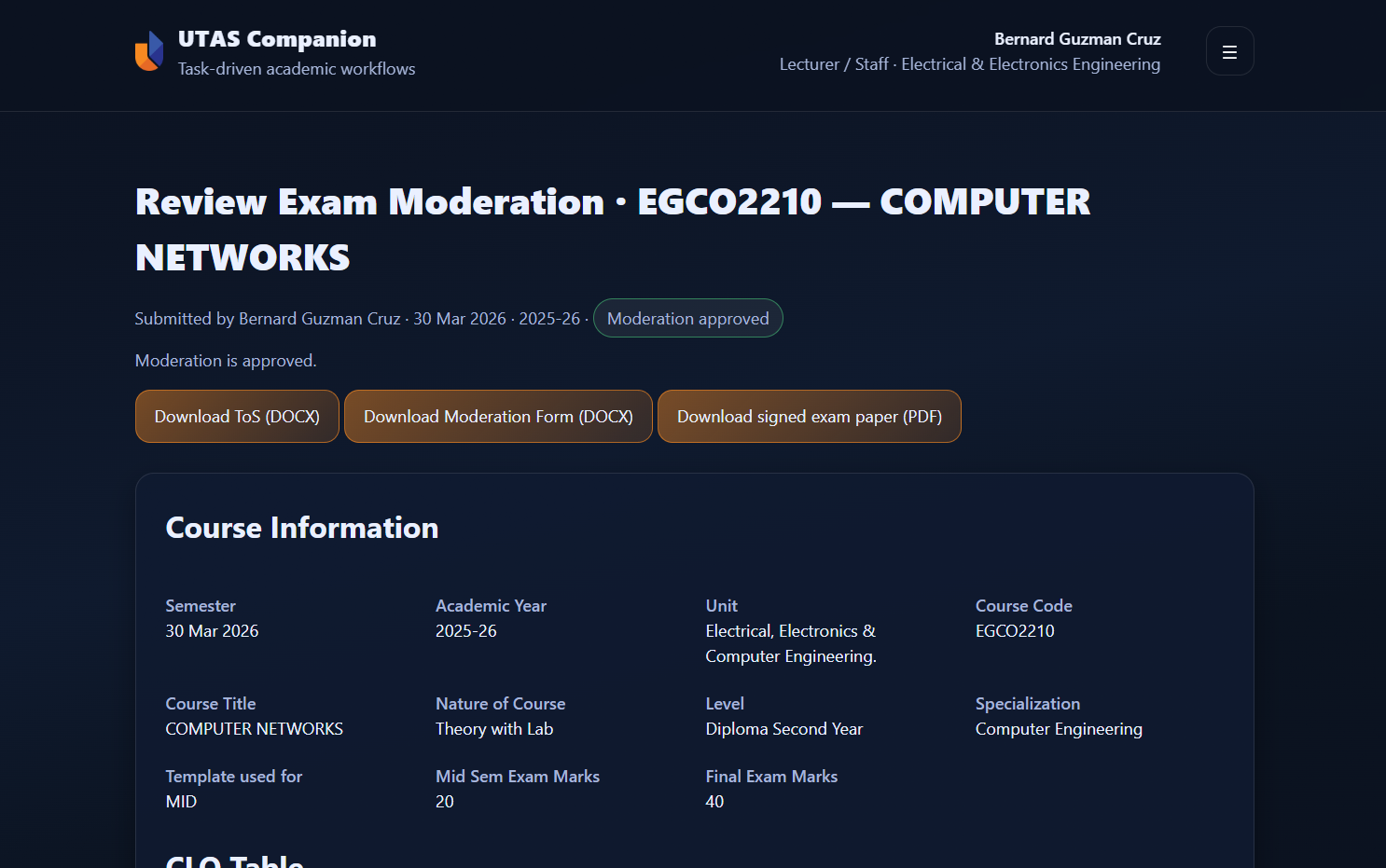
A completed exam moderation workflow with approval status and downloadable forms, evidence, and signed exam files.
-
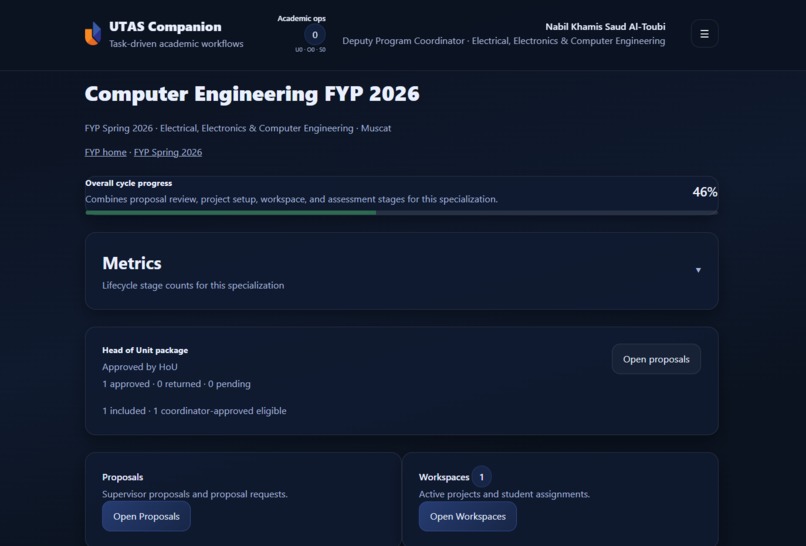
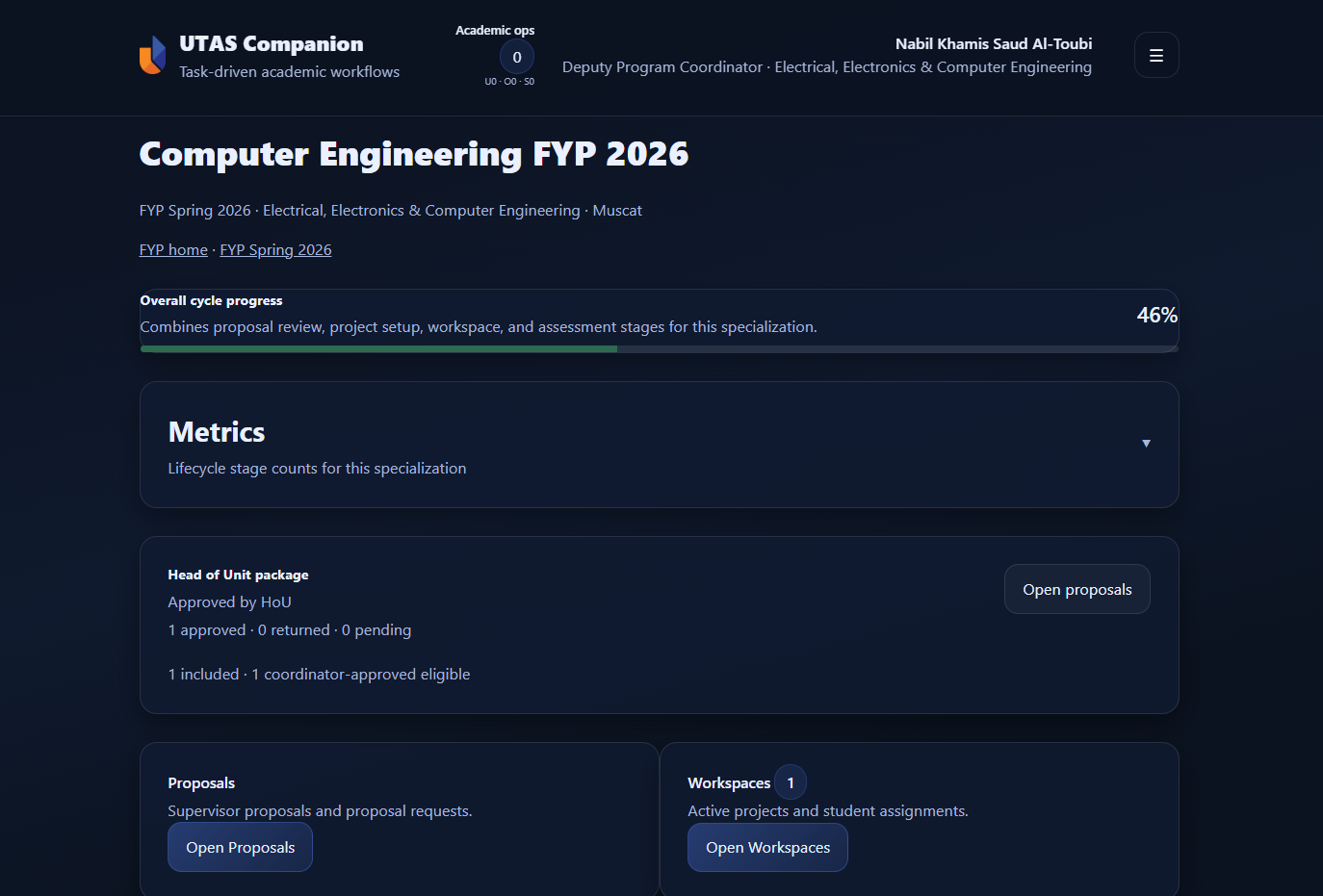
A complete FYP lifecycle workspace tracking proposals, approvals, student assignments, progress, and project workspaces.
-
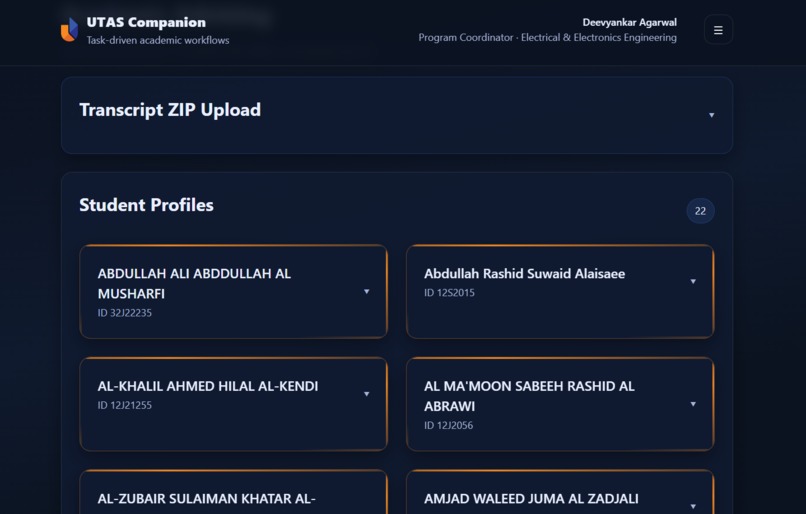
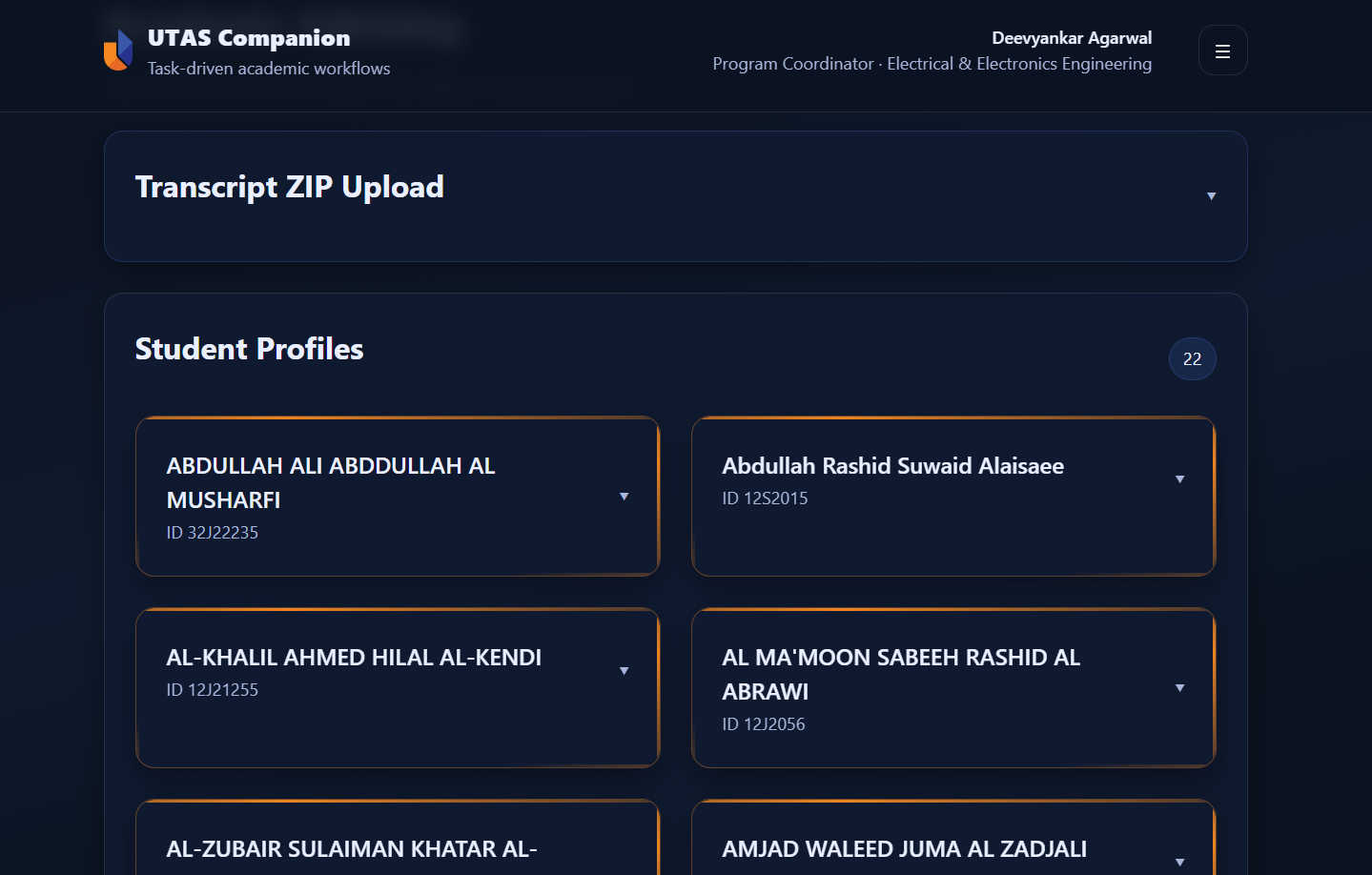
Transcript ZIP files are processed in the background with OpenAI API calls for analysis to create structured student profiles at scale.
-
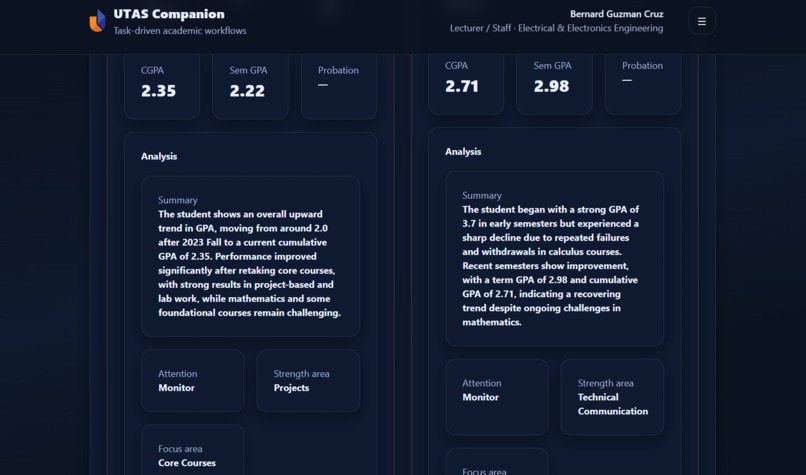
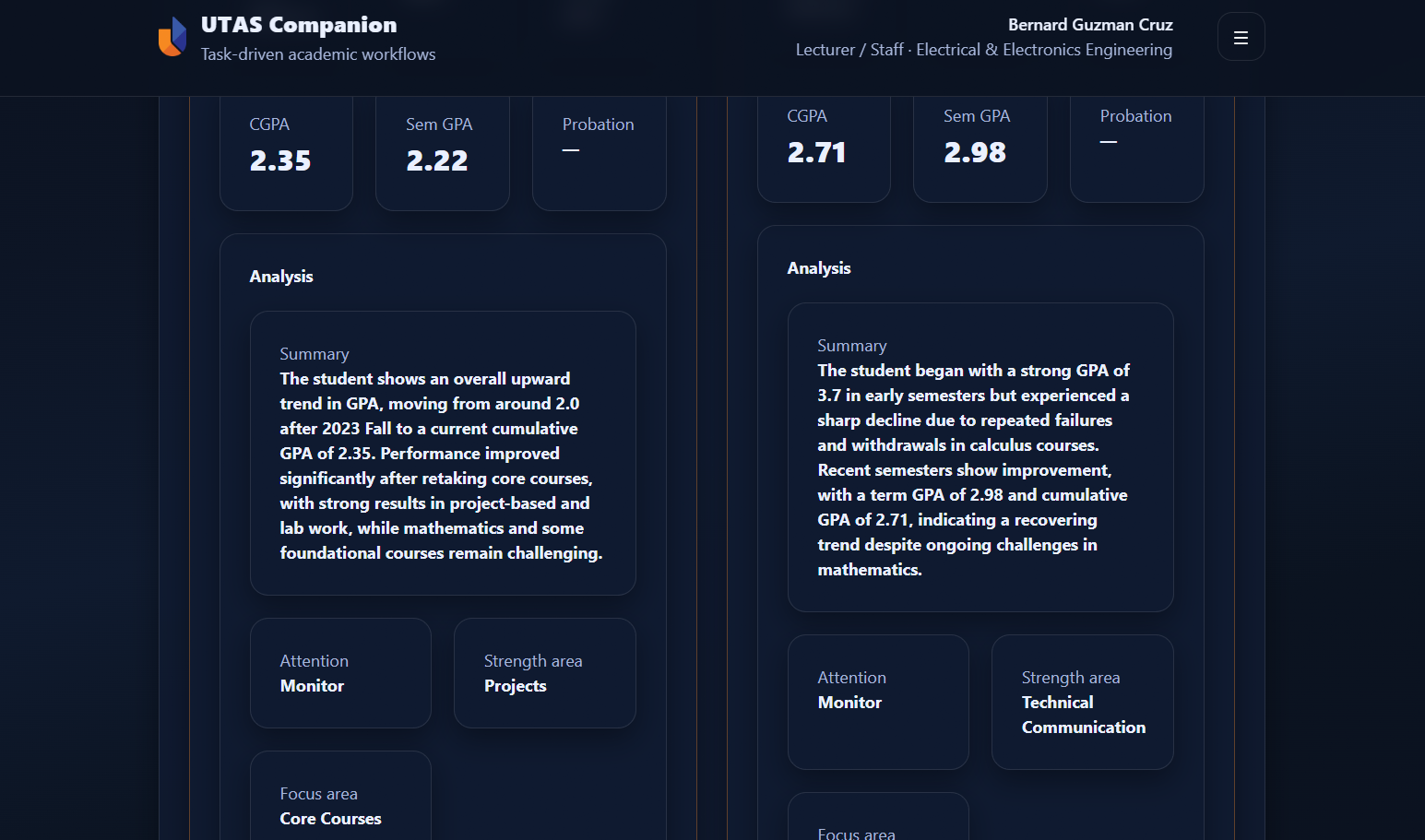
OpenAI-powered advising summaries highlight GPA trends, strengths, risks, and recommended areas of academic focus.
-
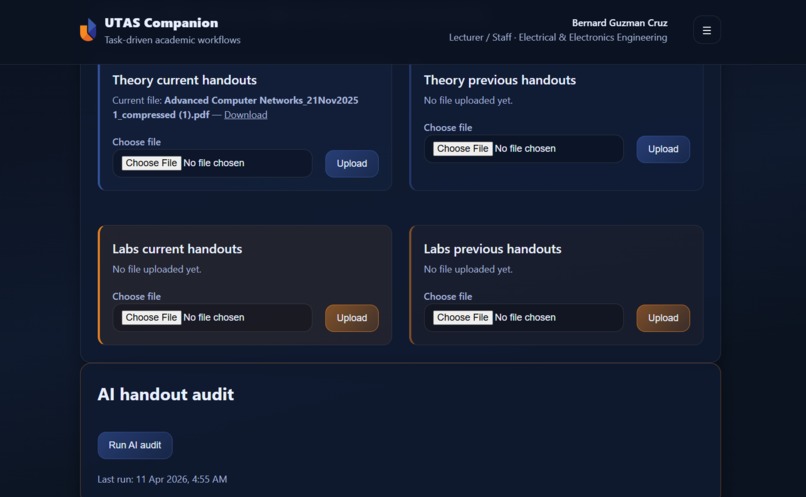
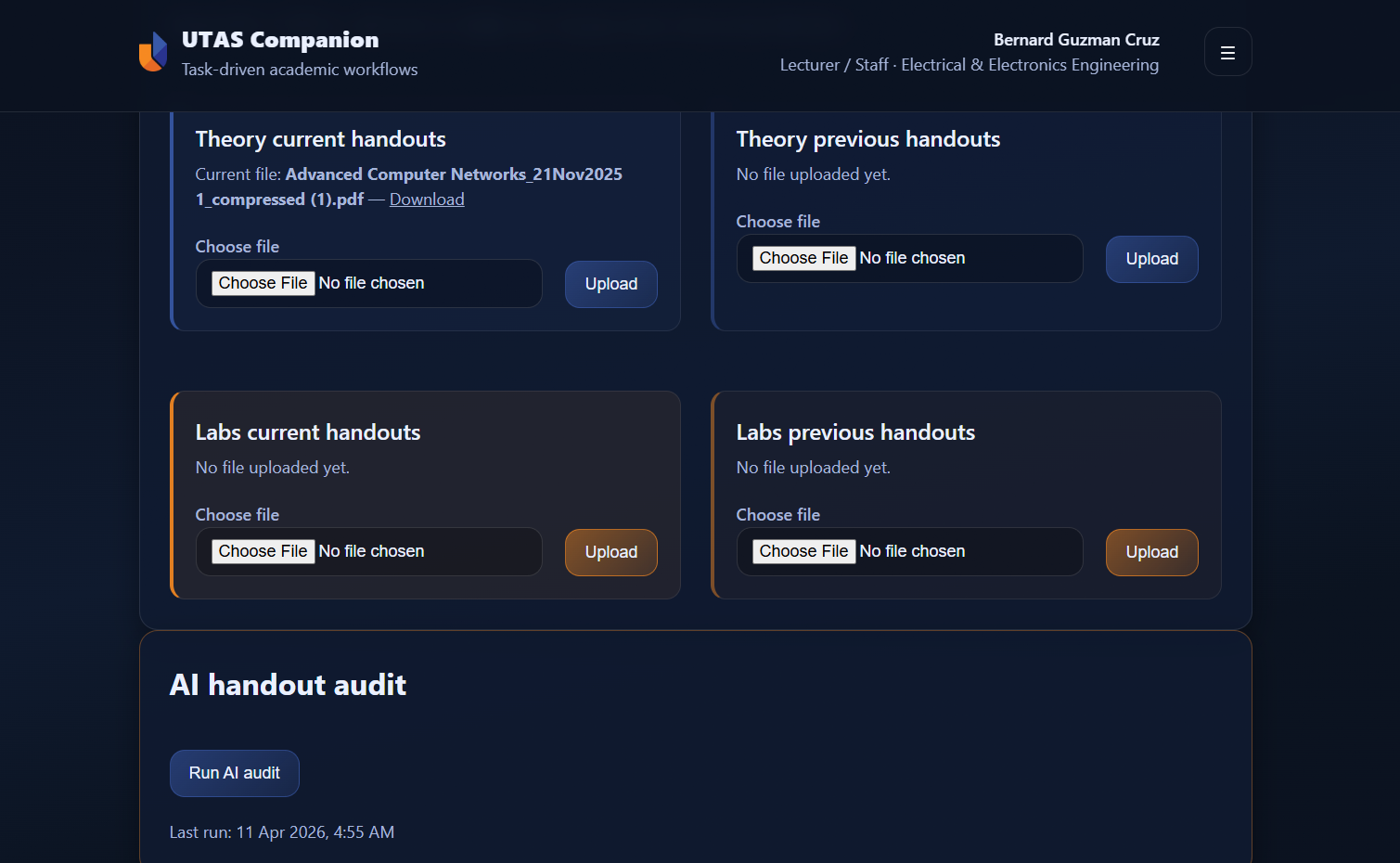
Faculty upload current and previous teaching materials, then run an AI-assisted handout quality and compliance audit.
-
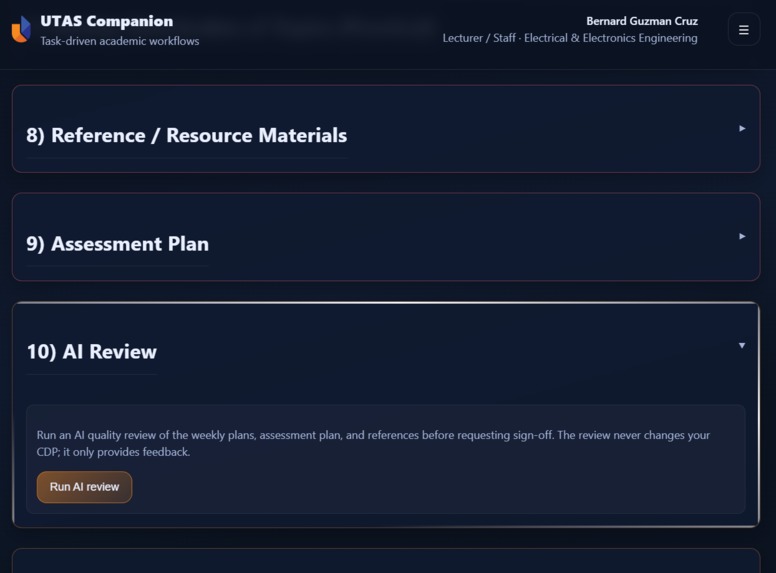
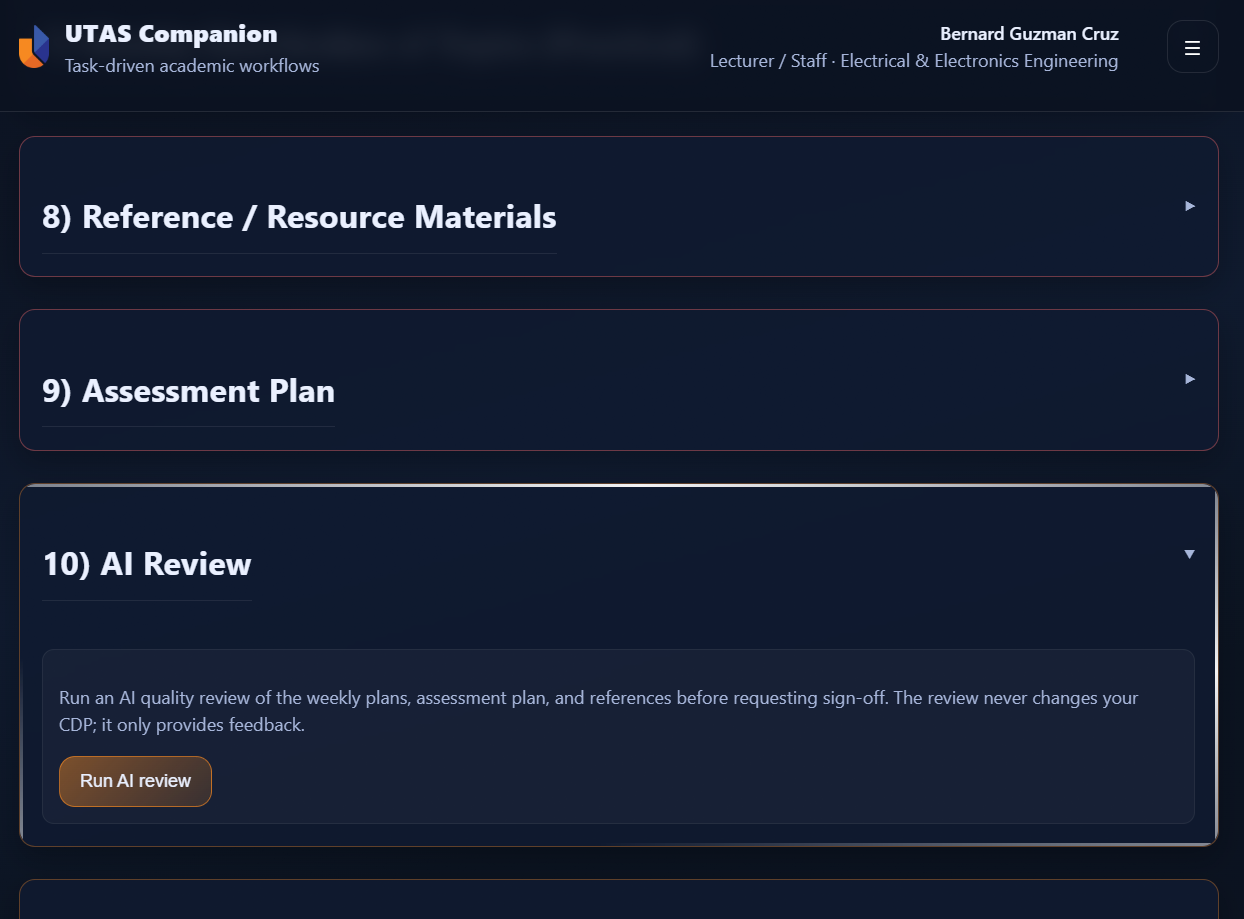
OpenAI reviews the Course Delivery Plan for quality, completeness, consistency, and improvement opportunities.
-
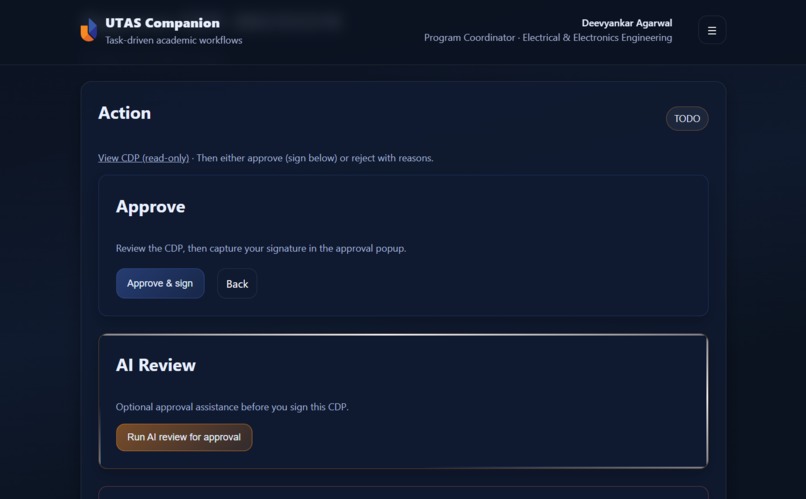
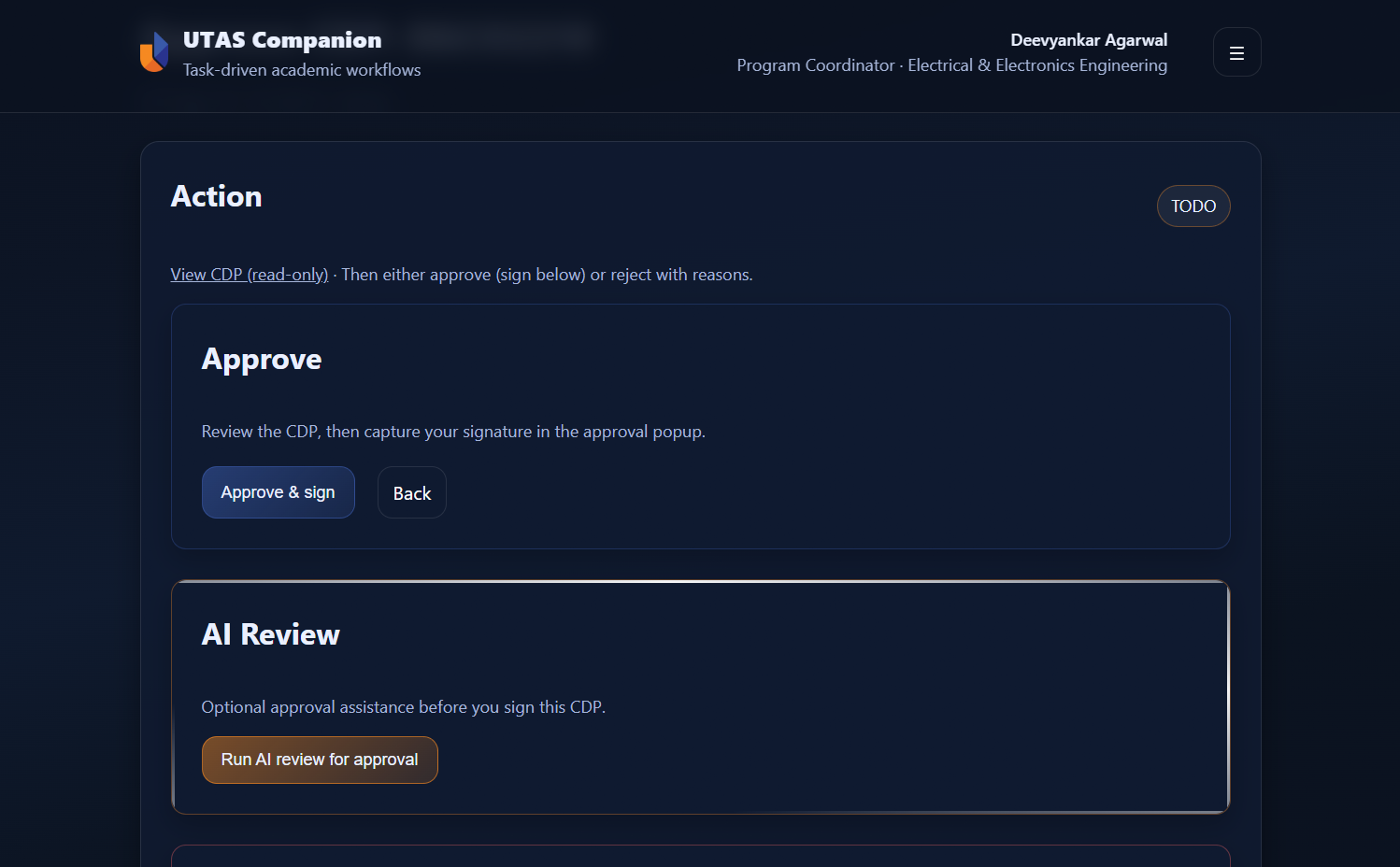
Coordinators can request AI-assisted review before approving and digitally signing a Course Delivery Plan.
-
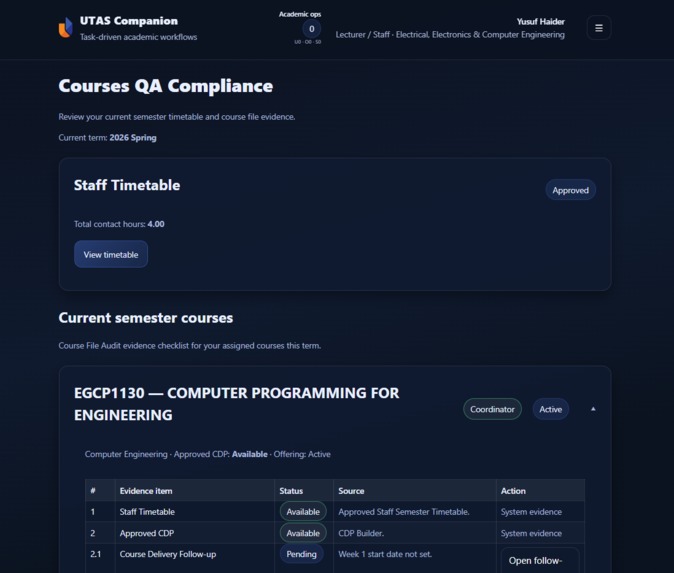
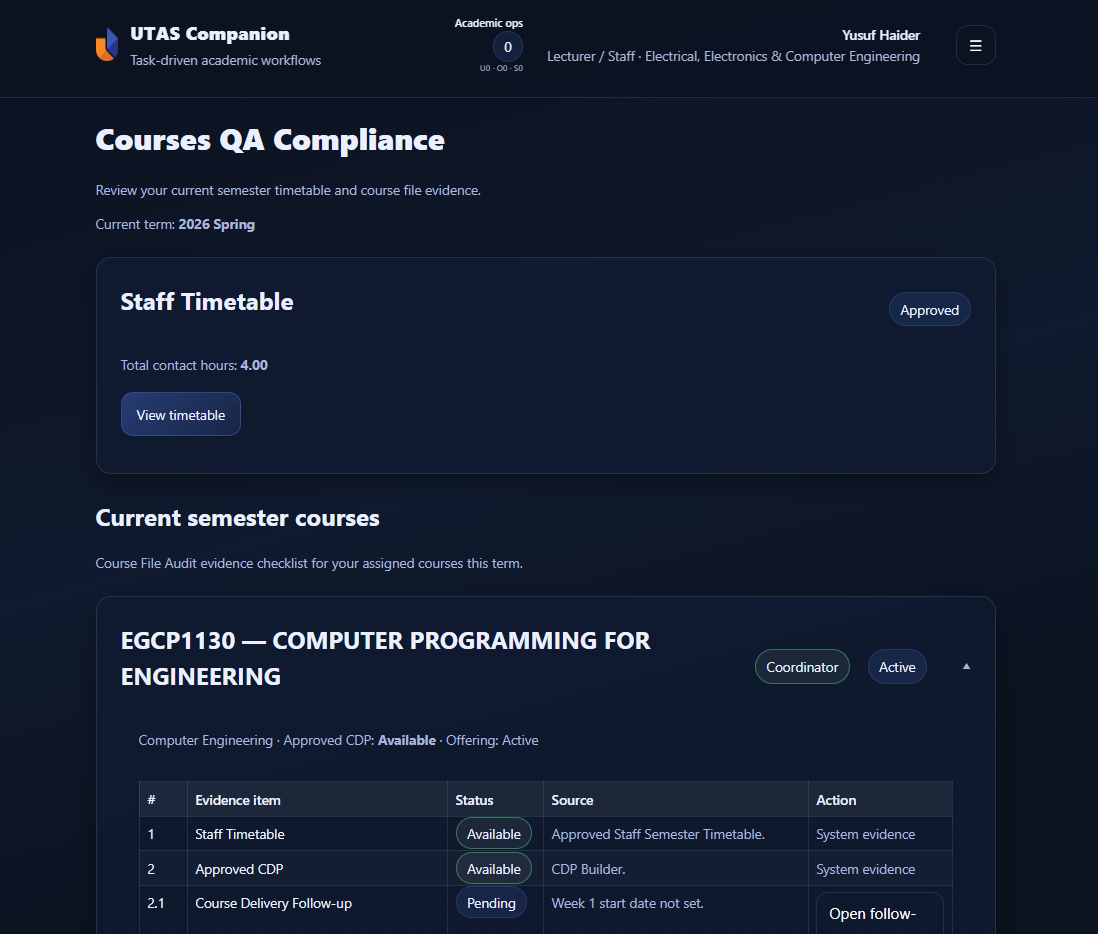
Faculty can track timetable and course-file evidence status, with system-linked items, pending actions, and role-aware QA checks.
-
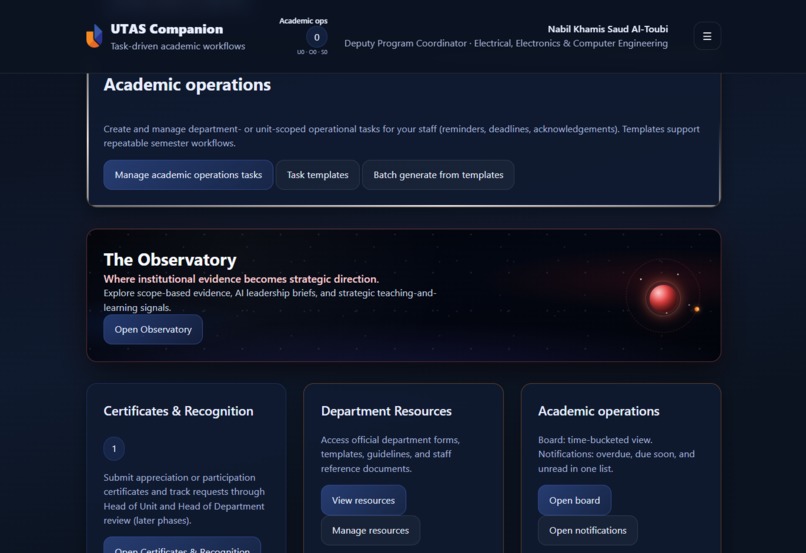
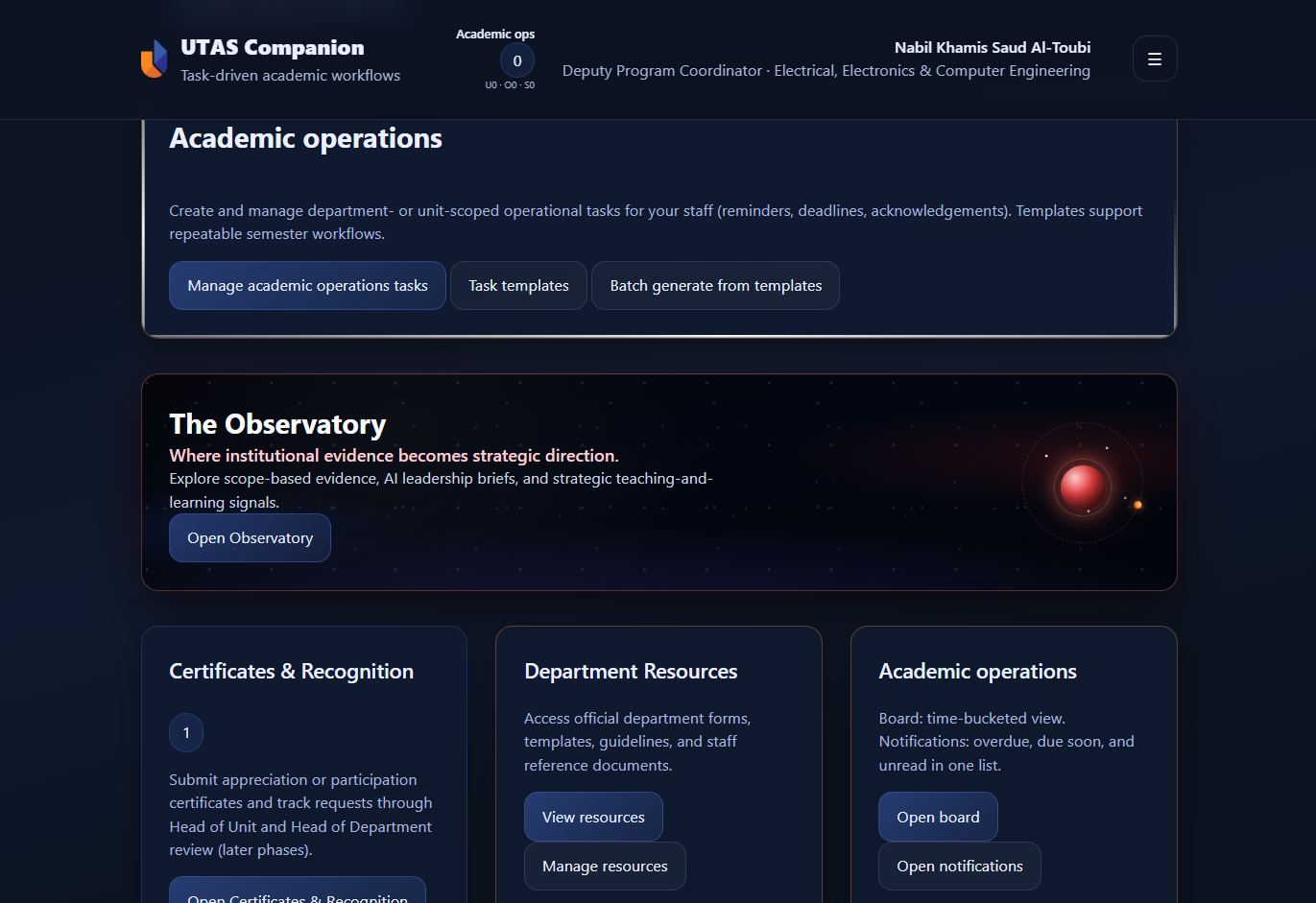
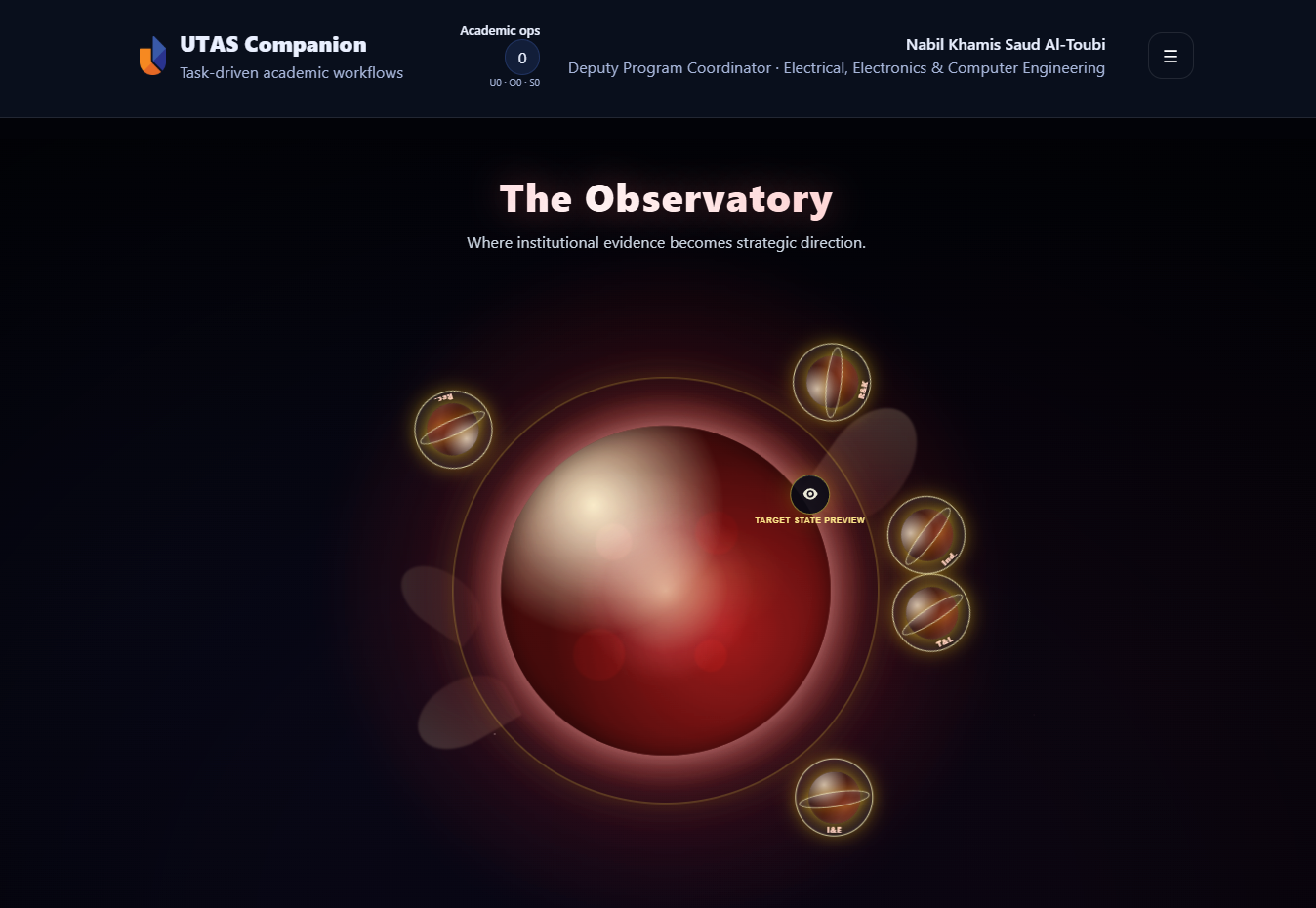
The Observatory connects academic evidence, AI leadership briefs, and institutional signals to strategic direction.
-
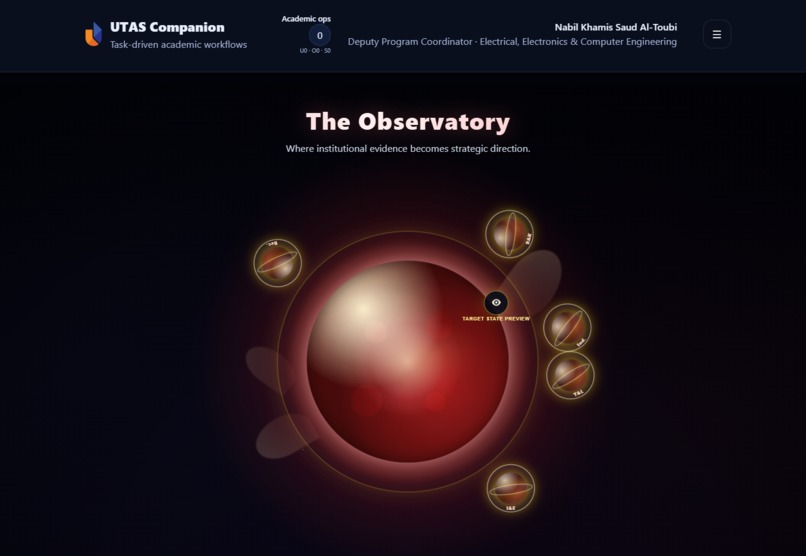
The Observatory visualizes institutional progress across strategic pillars and exposes areas needing greater attention.
-
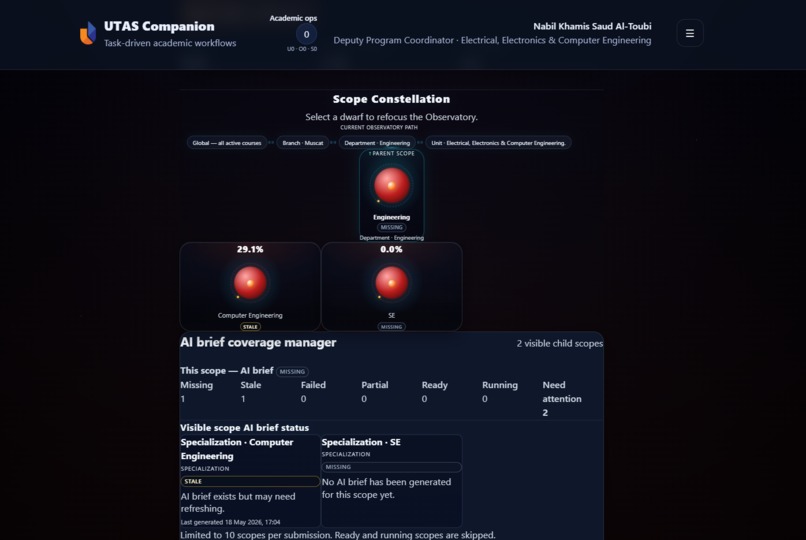
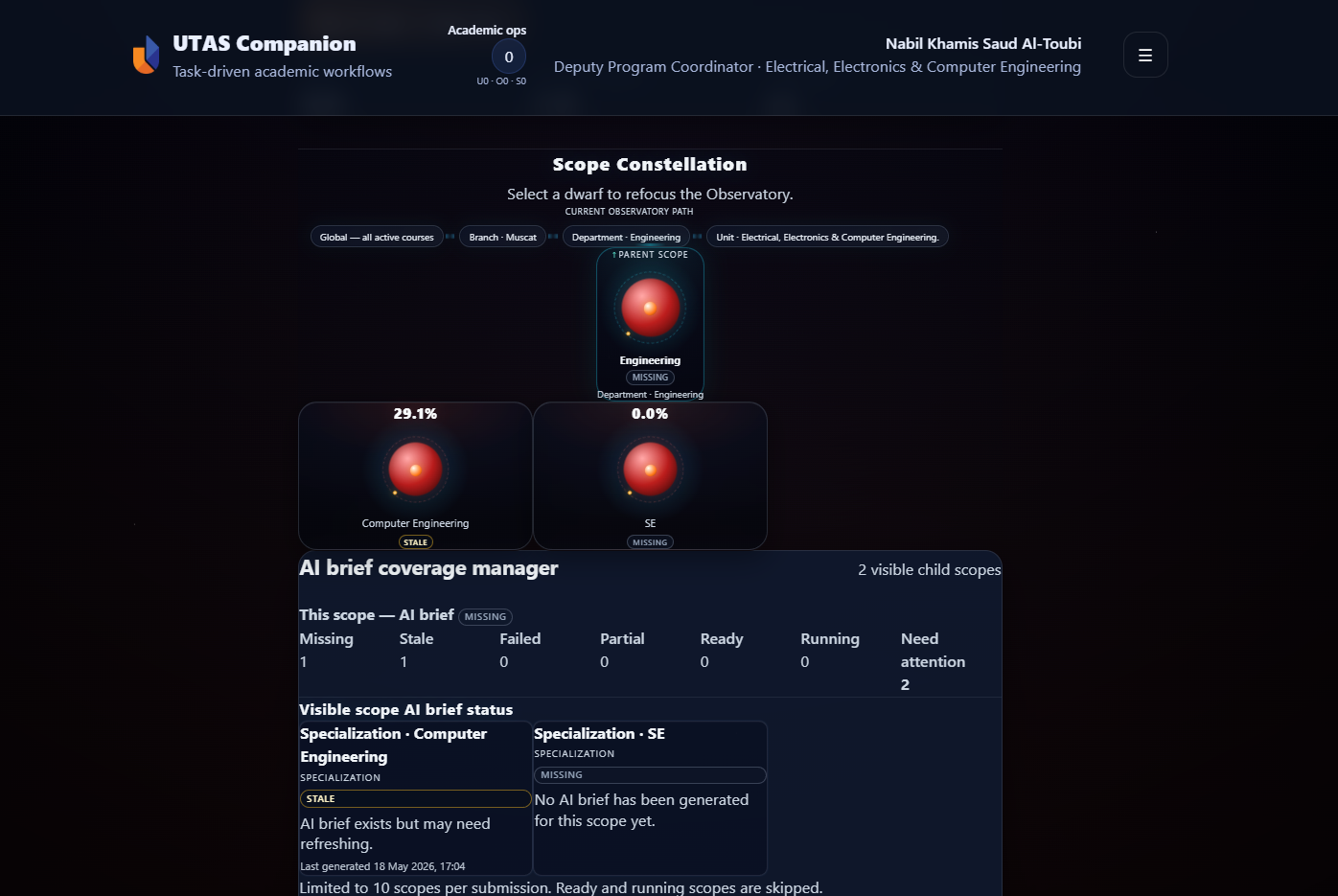
Scope constellations reveal evidence coverage across departments and specializations, including missing or stale AI briefs.
Inspiration
UTAS Companion began with a practical frustration: too much valuable academic time is lost to repetitive forms, disconnected spreadsheets, emails, manual approvals, and administrative follow-ups.
But the deeper inspiration came from a much bigger question:
Why is our university not yet among the other recognized universities in the world, and how can the data generated through our daily academic work help us understand where we are and guide us toward greater regional and global recognition?
Universities generate valuable evidence every day through course planning, student advising, assessment, quality assurance, audits, research, projects, and staff activities.
The problem is that much of this evidence is scattered across Word documents, spreadsheets, inboxes, shared folders, and separate systems.
It helps complete today’s task, but rarely helps answer tomorrow’s question:
Where are we improving, where are we falling behind, and what should we do next?
I built UTAS Companion to connect those pieces.
It is not simply an attempt to digitize paperwork. It is an attempt to turn routine academic work into structured evidence that can reduce administrative burden, strengthen quality, support accreditation, and guide institutional improvement.
What I Built
UTAS Companion is a multi-user academic operations platform built for faculty, coordinators, academic advisors, quality-assurance teams, heads of units, and institutional leaders.
It brings together workflows that are normally handled separately, including course delivery planning, academic advising, assessment analysis, exam moderation, quality audits, final-year projects, approvals, verification, reporting, and institutional follow-up.
Users do not all see the same system.
The platform is role-aware. A faculty member, coordinator, quality reviewer, head of unit, and administrator each receive the tools, tasks, and records relevant to their responsibilities.
The dashboard begins with a simple question:
What requires my attention now?
From there, users can open the academic workspace they need, complete their work, assign actions, review submissions, and follow the history of what happened.
OpenAI Inside the Product
One of the clearest examples is the Course Delivery Plan Builder.
Faculty members select a course already stored in the database and prepare the plan through a structured workflow rather than repeatedly rebuilding the same document from scratch.
The completed plan can then be reviewed using the OpenAI API.
The AI checks for missing information, weak wording, inconsistencies, and possible academic-quality concerns. It returns structured observations that the faculty member can review and act on.
The AI does not approve the plan.
It supports academic judgment without replacing academic responsibility.
This principle matters throughout the platform: AI should assist the person accountable for the decision, not quietly become the decision-maker.
Academic Advising at Scale
Academic advising created a different technical challenge.
Student transcripts often arrive in bulk, and manually converting them into usable advising profiles takes time.
In UTAS Companion, an authorized user can upload a ZIP file containing multiple transcripts. The files are validated, queued, parsed, and converted into structured student profiles through background jobs.
The application remains responsive while Celery workers process the files through Redis.
The result is not just extracted text. It is a usable advising workspace where advisors can identify failed courses, repetitions, probation risks, progression concerns, and students who may need early support.
The Observatory
The Observatory is the idea that connects the entire platform.
Every module generates evidence.
A course plan completed. A student risk identified. An audit action closed. A quality concern verified. A project approved. A recommendation followed up.
Normally, these events remain trapped inside their individual workflows.
The Observatory asks a different question:
What do all of these activities tell us about the institution as a whole?
It presents institutional progress through an orbiting visual system.
The planets represent strategic areas such as teaching quality, research, employability, innovation, and external recognition.
The dwarf planet represents something equally important: areas that remain overlooked, underdeveloped, or unsupported by enough evidence.
The long-term purpose of the Observatory is to help institutions connect daily academic operations with accreditation requirements, regional standards, global higher-education expectations, and strategic recognition goals.
How I Built It
UTAS Companion is a Dockerized Django application using PostgreSQL, Redis, Celery, and OpenAI APIs.
Docker Compose runs the web application, database, message broker, and background worker as coordinated services.
The platform includes persistent data, role-based permissions, institutional scoping, asynchronous processing, verification states, audit histories, automated tests, and reusable workflow services.
I began building the platform before OpenAI Build Week, then meaningfully extended it during the competition using Codex and GPT-5.6.
Codex helped me move from detailed institutional requirements to working implementations across models, migrations, permissions, services, templates, background jobs, testing, debugging, and documentation.
But using Codex effectively introduced another challenge.
UTAS Companion became too large and interconnected for a single prompt to understand safely.
So I built a development system around it.
UTAS Companion Orchestrator — Nabil Mode
I created a custom GPT called UTAS Companion Orchestrator — Nabil Mode.
Its purpose is not to write random code.
It acts as the system’s implementation coordinator.
The Orchestrator understands the platform’s architecture, product direction, permission rules, development protocol, existing modules, delivery history, open backlog, testing expectations, and user-interface contract.
Before generating a Codex implementation prompt, it helps define the scope, protect existing functionality, identify affected modules, preserve institutional boundaries, require targeted tests, and specify the final implementation report.
This was created after learning an important lesson:
The larger an AI-assisted codebase becomes, the more important context discipline becomes.
Without that discipline, an AI coding agent may solve the visible request while unintentionally damaging another workflow.
The Orchestrator helps keep the build coherent.
UTAS Template Factory
I also created the UTAS Template Factory.
Many university workflows begin with official Word or Excel templates. These documents contain institutional structures, sections, tables, approval fields, reporting expectations, and formatting conventions that cannot simply be ignored.
The Template Factory helps analyze those source documents and convert them into implementation-ready specifications.
It identifies the structure of the form, the data that should be captured, the fields that can be automated, the roles involved, the expected outputs, and the parts that must remain faithful to the original institutional template.
This helped bridge the gap between:
“Here is the official form”
and:
“Here is how this should behave as a governed digital workflow.”
The Orchestrator, Template Factory, Codex, and the platform’s knowledge files became part of a wider AI-assisted development workflow rather than a collection of isolated prompts.
The Knowledge Layer
To support that workflow, I created and maintained knowledge files covering the system architecture, product principles, module registry, delivery ledger, open backlog, development protocol, smoke-testing procedures, interface rules, and institutional scope.
These files gave Codex and my custom GPTs a shared source of truth.
They also allowed me to preserve decisions across a growing application instead of explaining the entire platform again in every prompt.
This became one of the most important lessons of the project:
AI coding becomes much more reliable when the project has memory, boundaries, and a clear operating system around it.
Challenges and Learning
The hardest part was not writing Django views.
The hardest part was translating real university procedures into software without flattening their complexity.
Academic workflows involve hierarchy, responsibility, evidence, exceptions, institutional scope, approval authority, and accountability.
A process that looks like one form may actually involve five roles, three decision points, historical records, and an audit obligation.
Another challenge was learning how to collaborate with AI at the scale of a real platform.
Prompts alone were not enough.
I needed architecture rules, knowledge files, testing discipline, task boundaries, implementation reports, and custom GPTs that understood how the system should evolve.
I learned that AI works best when it is treated neither as a shortcut nor as an authority.
It works best as a capable engineering partner operating inside a well-defined system.
Scope and Impact
UTAS currently operates across 13 branches in Oman.
A platform like UTAS Companion could help create more consistent academic workflows across branches while still respecting local units, departments, responsibilities, and permissions.
Its potential is not limited to one institution.
Other universities in Oman and the region face many of the same problems: fragmented academic evidence, duplicated forms, manual quality processes, disconnected advising records, and institutional data that is collected but not fully used.
UTAS Companion could provide a common foundation that institutions adapt to their own structures, standards, accreditation frameworks, and strategic priorities.
For faculty, the impact is less repetitive administration.
For advisors, it is earlier and better-informed student support.
For quality teams, it is stronger evidence and clearer accountability.
For leaders, it is a more honest picture of where the institution stands and what must improve next.
What Makes It Different
UTAS Companion is not another university chatbot.
It is not a generic learning management system.
It is not a group of AI features attached to online forms.
Its core idea is this:
Daily academic work should become structured institutional evidence, and that evidence should guide continuous improvement and recognition.
The product connects operational workflows, human accountability, OpenAI-powered assistance, background automation, quality assurance, and strategic institutional insight.
The Observatory makes that connection visible.
What Comes Next
The next stage is to deepen the connection between the operational modules and the Observatory.
That includes mapping evidence to accreditation standards, measuring evidence maturity, expanding AI-assisted reviews, improving institutional analytics, identifying gaps earlier, and helping universities understand which actions genuinely move them closer to their strategic goals.
The long-term ambition is simple to state, even if it is difficult to build:
An intelligent academic operating system that gives faculty time back and gives universities a clearer path toward quality, accreditation, and recognition.
Built With
- analytics
- api
- artificial
- background
- bootstrap
- celery
- codex
- css3
- data
- django
- education
- gpt-5.6
- html5
- intelligence
- javascript
- openai
- postgresql
- processing
- python
- redis
- rest
- role-based
- technology


Log in or sign up for Devpost to join the conversation.